HotMart's Pivot: From Snatching Bargains to Creating Low Prices
The 5-year-old long-running store is about to close down.
On November 7, the HotMaxx store at Joy City Chunfengli in Daxing, Beijing was officially closed. This outlet, which had long ranked high on the popular supermarket and convenience store list in Huangcun, had most of its shelves in the beverage section emptied on the eve of its closure.
The timing of the store closure is somewhat subtle. Back on October 23, the official account of HotMaxx just released an article to celebrate that the number of its operating stores has exceeded 1,000, covering more than 70 cities across the country; its turnover in 2025 exceeded 5 billion yuan, and same-store sales are still growing.
On one hand, it has just hit the milestone of 1,000 stores, on the other hand, its 5-year-old old stores are exiting. The coexistence of store opening and closure is a common occurrence in the chain retail industry, but if we put these two events into the context of HotMaxx's years of rapid expansion, this business that started by "snatching leftover deals" is standing at a crossroads after reaching 1,000 stores.
From 0 to 1,000 Stores, All Rely on Efforts to "Snatch Deals"?
The starting point of HotMaxx just landed in a special stage.
In April 2020, when HotMaxx opened its first offline store, major brands were facing inventory backlogs during the special period. HotMaxx took over unsold leftover stocks and near-expiry food from brands at extremely low prices, and then sold them to consumers at prices far lower than the regular selling prices.
Co-founder Zhang Ning once said bluntly in an interview, "The volume of leftover orders is large enough, and it is a hundred-billion-level market." To put it plainly, brands were eager to clear their inventory, and HotMaxx just stepped in to take the stock off their hands.
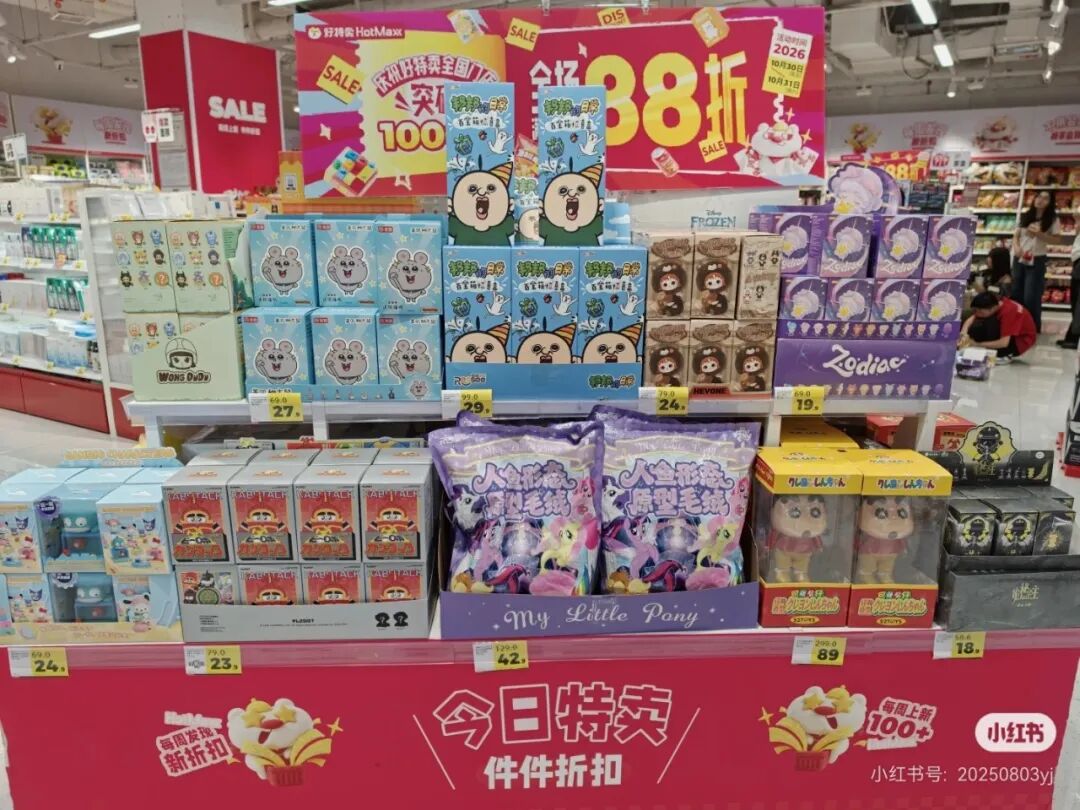
Offering big brands at low prices, as the "Outlets in the snack industry", HotMaxx expanded extremely rapidly.
Public data shows that HotMaxx's first store in Shanghai recorded a single-day turnover of over 90,000 yuan in 2020; its revenue reached 1.7 billion yuan in 2021 with 401 stores, and it was listed for the first time in the "2021 Top 100 Chinese Supermarkets" released by the China Chain Store & Franchise Association, with a year-on-year sales growth of 618.2% and a year-on-year store number growth of 264.5%, both ranking the first in the list.
The soft discount business of HotMaxx has quite impressive gross profit margin. According to the calculation of the research report from Minsheng Securities, the purchase price of near-expiry products for HotMaxx's stores in business districts is usually only 20% to 30% of the official retail price, and the marked price in the store is 40% to 50% of the official price. After deducting costs such as labor and utilities, the gross profit margin is about 25%-30%, which is more than 10 percentage points higher than that of hard discount.
However, this profitability does not come from the efficiency of selling goods, but from the fact that "others are eager to sell, and I have the ability to take over the goods". From the very beginning, the ceiling of this business depends on the warehouses of upstream brand owners.
Since 2024, the growth of HotMaxx has slowed down significantly. According to data from the China Chain Store & Franchise Association, HotMaxx achieved sales of 4.85 billion yuan that year, with a year-on-year increase of 33.4%, a clear drop compared to the 51.5% growth rate in 2023. In terms of the number of stores, there were 960 stores in June 2024, and 954 stores in December 2025. In the past year and a half, the number of stores not only did not grow, but even declined.
The growth momentum of the single-store model can no longer be replicated. In the early years, the first store could reach a single-day turnover of 90,000 yuan, but now, according to public franchise investment promotion materials, the daily revenue of ordinary single stores is generally around 17,000 yuan.
At present, the commission drawn by HotMaxx's headquarters has been reduced from 2% of the total turnover to 1.5%, and the commission for multi-store franchise can even drop to 1%. The continuous reduction of the commission may convey the signal that the headquarters' bargaining power over franchisees is gradually weakening, and lower thresholds are needed to maintain franchisees' willingness to open stores.
Upstream Supply Cutoff, HotMaxx Faces "Supply Shortage"
The biggest dilemma at the moment lies in the upstream supply end.
In the past, brand owners' anxiety about clearing inventory was exactly the business opportunity for HotMaxx. Near-expiry products, inventory backlogs, and OEM leftover orders could continuously flow into HotMaxx's stores.
In the past two years, more and more leading food brands have implemented production based on sales, and strengthened dynamic control over channels. Large batches of concentrated near-expiry goods are visibly decreasing, and many brands even directly clear their inventory through their own channels at a discount.
The supply of goods has decreased, but the scale of discount retailers has not shrunk synchronously. The competition for goods among multiple retailers has pushed the purchase price higher and higher.
Relevant supply chain practitioners said that the purchase price of brand leftover goods has risen from the previous 20% discount to the current 50% to 60% discount, and the cost of wholesale near-expiry goods has increased by 30%-40% year on year. The statement from HotMaxx's investment manager is more intuitive, the proportion of near-expiry products in the store is only 5%-20%, about 70% are leftover stocks, and the remaining 10% are new brand products for sales testing.
In this case, the operating accounts of stores in business districts can hardly break even. Take the recently closed store at Joy City Chunfengli in Daxing as an example, the monthly rent of the store with an area of more than 100 square meters costs tens of thousands of yuan. With unstable supply and shrinking gross profit margin, once the passenger flow on weekends is lower than expected, the break-even point can be easily broken.
At the same time, there are more and more alternative options in the outside market.
Bulk snack stores are diverting customers with more frequent consumption scenarios. Mingming Mangmang successfully went public in early 2026, becoming the "first bulk snack stock" on the Hong Kong Stock Exchange; instant retail allows consumers to buy low-priced snacks with a few taps on platforms such as Meituan; the hard discount track is expanding even faster, the domestic hard discount market size exceeded 2 trillion yuan in 2024, with a penetration rate of only 8%, compared with 42% in Germany and 31% in Japan in the same period, showing a more prominent growth momentum.
In fact, the ebb of soft discount is not limited to HotMaxx.
According to data from Zhaimen Canyan, HiGo had nearly 500 stores at its peak, and as of July 2026, there were only 39 operating stores left, with more than 90% of stores closed, and its parent company has even been listed as a person subject to execution.
Fresh Food Stores, Will It Be the Second Growth Curve?
On May 22, 2026, HotMaxx opened its first national "OK Fresh Food Concept Store" on Pingshun Road, Jing'an District, Shanghai.
The store is located in the ground-floor commercial space of a residential community, covering an area of 2,000 square meters. On the basis of the original discounted products, it launched self-owned brands, mainly focusing on three categories: fresh food, cooked food and bakery. The bakery section has 20 SKUs baked fresh on the same day, with prices ranging from 4.9 yuan to 15.9 yuan. The store also sets up a mechanism for automatic price reduction for unsold products at the end of the day, which is somewhat similar to the operation mode of Aldi.
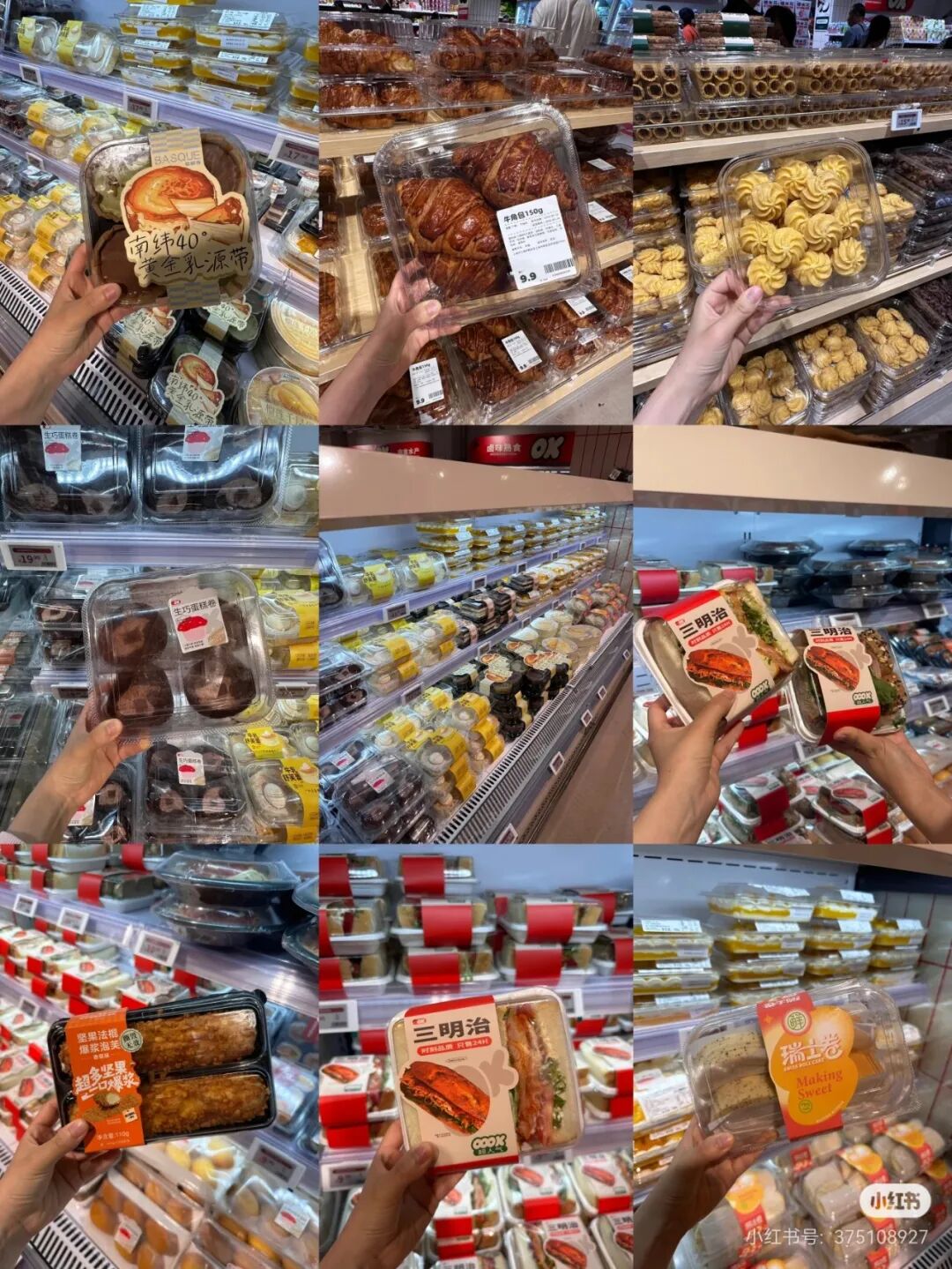
The logic of choosing the fresh food track is quite simple: according to the calculation of CIC, the scale of China's fresh food retail market reached about 6.57 trillion yuan in 2024, of which the GMV of community scenarios accounts for more than 60%.
Attract consumers to enter the store through more frequent and rigid-demand categories, and drive the transaction of commodities such as snacks and daily chemical products by the way. For example, Superbox NB, which focuses on community hard discount, has exceeded 600 stores in total as of October 2026.
However, fresh food is a brand new field for HotMaxx. Capabilities such as direct procurement from origins, cold chain distribution, and loss control are all abilities that have never been trained in its previous leftover stock business. HotMaxx's five logistics warehouses follow the logic of standard products, rather than the logic of fresh food products.
HotMaxx's move to the community is not a temporary decision. As early as November 2024, it opened a super warehouse with an area of over 10,000 square meters in Nanjing, and later its store locations are increasingly inclined to the ground-floor commercial spaces of residential communities. But the community fresh food track is already crowded with competitors.
Within a radius of 50 meters of HotMaxx's first OK store, there is Haoxianglai; more than 200 meters away, there is a local community fresh food supermarket; 700 meters away, there is Lingshi Mangmang, not to mention that Aldi and various community group buying platforms are all doing the same thing.
The difference is that the low price of hard discount mainly relies on self-owned brands and supply chain. The proportion of Aldi's self-owned brands exceeds 90%, that of Superbox NB is about 60%, while HotMaxx's OK self-owned brand has just started, and currently only covers several categories including fresh food, cooked food and bakery.
HotMaxx has spent 6 years proving that clearing inventory for brands can support the operation of 1,000 stores, but it cannot prove that this business can operate sustainably. In the past, it only needed to find cheap goods and sell them out, but now HotMaxx needs to "create" cheap goods on its own.
The difficulty of shifting from traffic priority to calming down to build its own supply chain is not at the same level.
HotMaxx's transformation is still ongoing. The only thing that is certain is that taking advantage of cheap deals can help it achieve its first 1,000 stores, but it is almost impossible to replicate the success for the second 1,000 stores in the same way.
This article is from the WeChat Official Account "Banza Consumption" (ID: banmaxiaofei), written by Ren Jianxin, published with authorization from 36Kr.