Now that the hype over celebrity photocards has fizzled out, can celebrity collectible cards really gain substantial traction and become a thriving mainstream market?
In 2026, "the celebrity photocard market has collapsed."
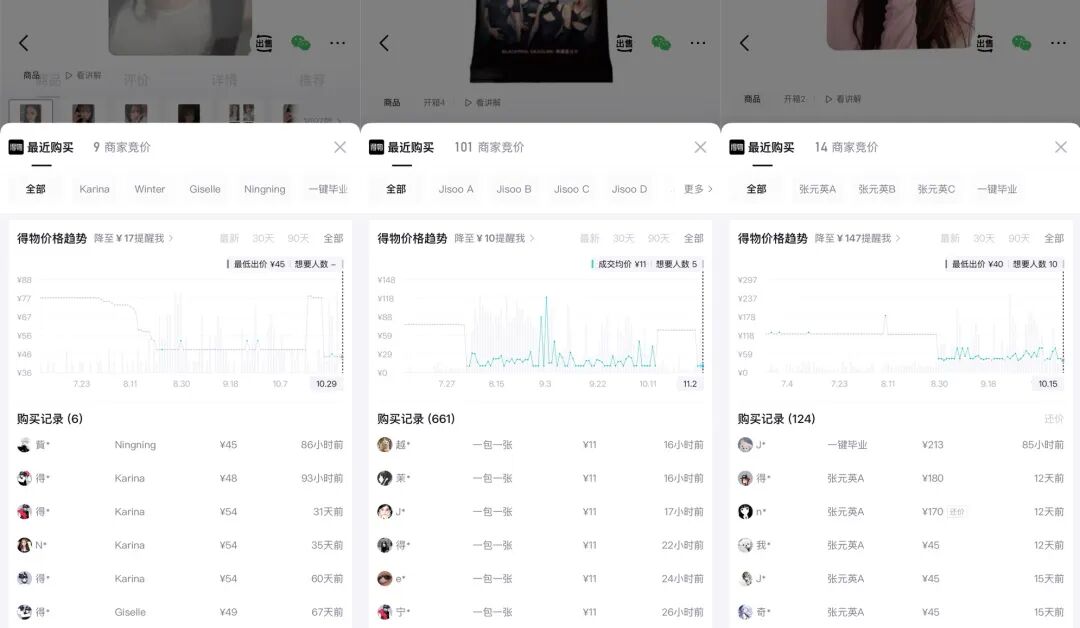
This statement first spread through photocard-selling posts on social media. Click on any tag related to celebrity photocards, and you will see nearly identical complaints: "It's impossible to sell my photocards", "I can't get rid of them even at a rock-bottom price", "No one wants them even if I practically beg to sell". The transaction performance on second-hand trading platforms is largely the same: trading in the photocard category continues to slump, and many photocards that used to be traded stably now either see a sharp price plunge, or fail to close a deal for a long time.

While fan communities are worrying about photocards, a new boom has emerged in the collectible trading card sector.
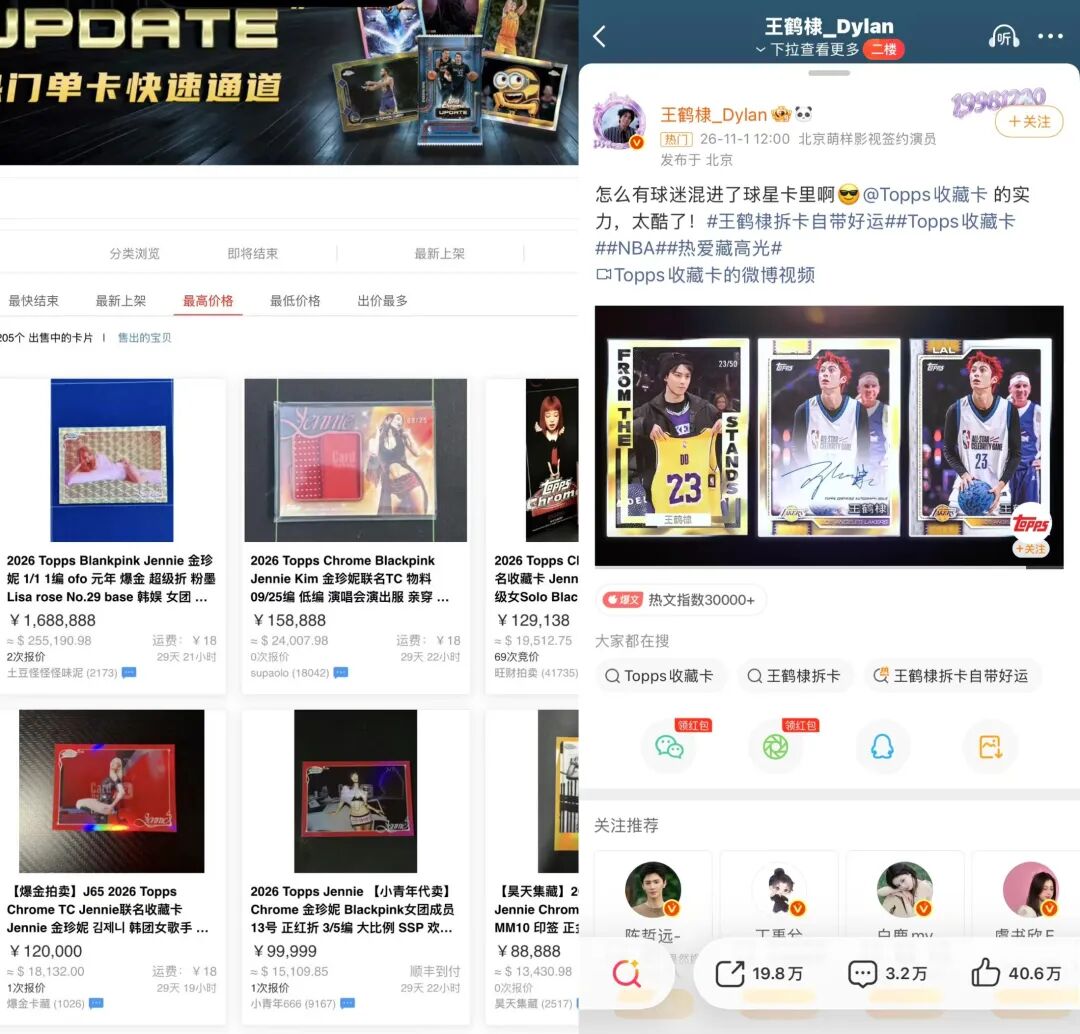
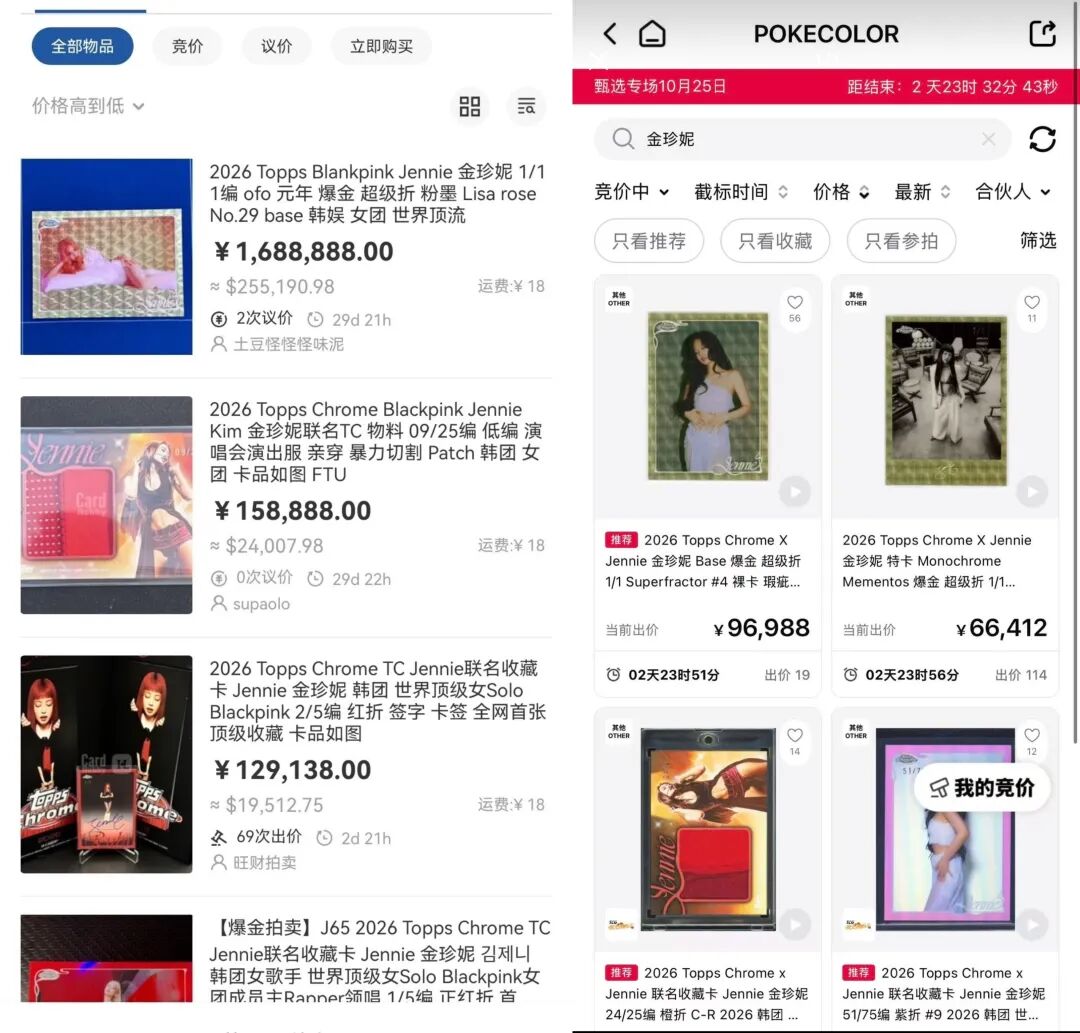
On October 20, the co-branded collectible trading card series of Topps and Jennie, a member of BLACKPINK, went on sale in China at a price of 699 yuan per box, and was sold out across all platforms in seconds. Some netizens shared that when they arrived at the physical store at 1 a.m., there were already more than 50 people queuing ahead of them, and some even brought quilts to prepare for overnight queuing. A transaction record of 158,000 yuan and a listing of 1.688 million yuan later appeared on KaTao.
On November 1, Topps officially announced that Wang Hedi would be included in the 2026-27 NBA Flagship China Exclusive Edition, and the related Weibo post got more than 600,000 combined reposts, likes and comments.
At first glance, this looks like another viable path for celebrity IP trading cards: if regular photocards can't sell well, upgrade them to a set of collectibles with scarcity tiers. For a moment, capital, platforms and distributors all shifted their full attention to this track.
But is the real situation really as optimistic as people imagine?
Why did the celebrity photocard market "collapse"?
Now, to judge whether collectible trading cards are a new viable path for celebrity IP cards, we first need to understand why the celebrity photocard market lost its momentum.
According to the visits and observations of Lei Report, a common feeling among players in the card collecting circle is that since the second half of 2025, the overall price gradient of celebrity photocards has dropped by one to two levels. Basic cards that used to be steadily priced at 70 to 80 yuan have now largely fallen into the single-digit price range; mid-range platform-exclusive cards and cards with eye-catching styling have slipped from three-digit prices to two-digit prices; it is not uncommon for once-hot cards that were hyped repeatedly to be traded at single-digit prices. Only a very small number of photocards, which are limited to single-digit quantities globally or are traded under impulsive auction sentiment, can still be priced at four digits or higher.
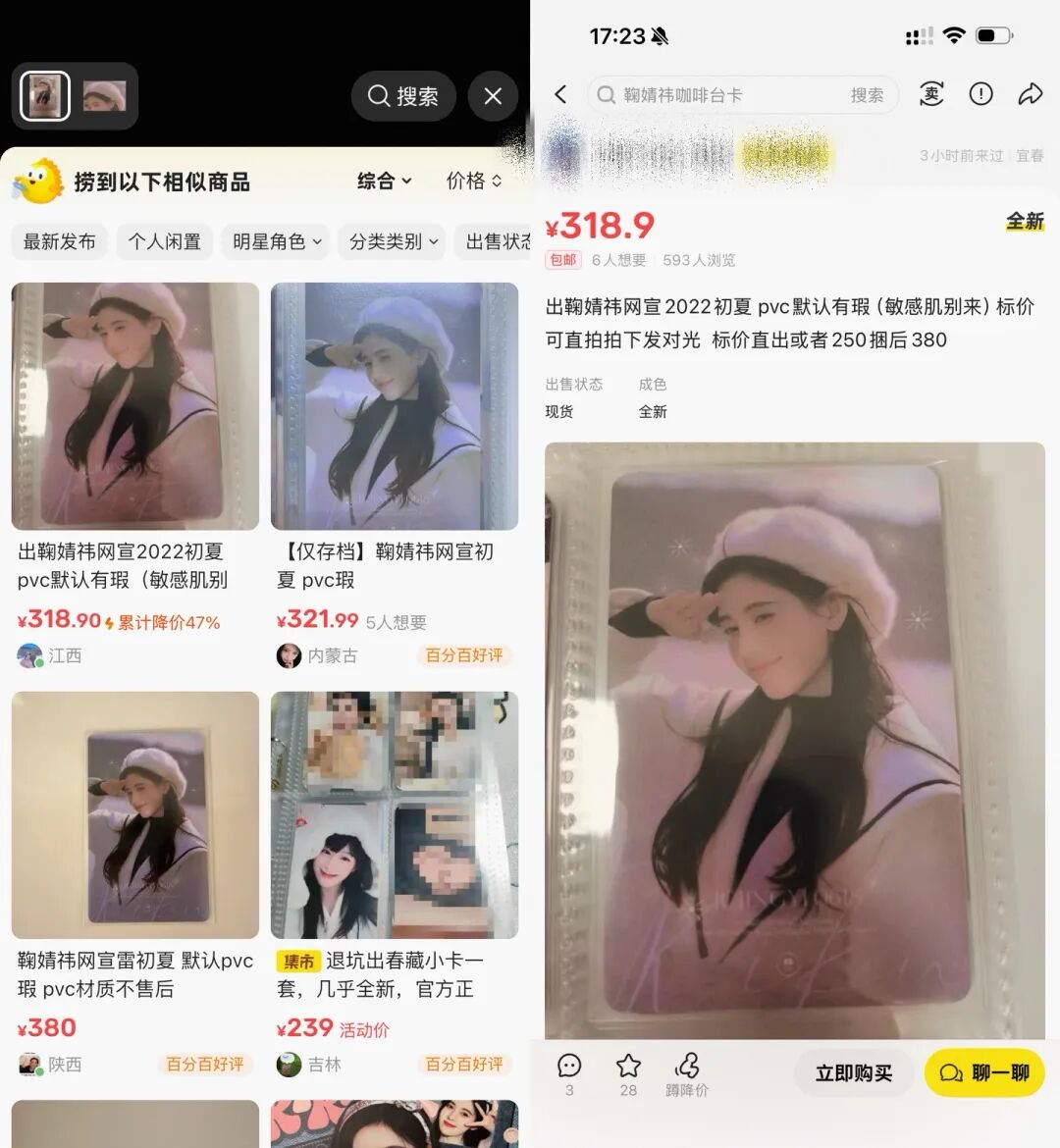
For example, a "Early Summer Online Promotion" photocard of Ju Jingyi, with an initial release price of about 20 yuan, once reached a peak second-hand price of 500 to 1000 yuan. By the second half of 2026, its price has dropped to the range of 200 to 300 yuan, and there are many listings on second-hand platforms priced above 300 yuan that have not been sold yet. It is worth noting that it still has stable views, collections and transactions, and its liquidity is still reliable, but the price is far lower than before.
When prices drop to this level, people usually explain it as the fading of public enthusiasm. But if we look at product supply and demand together, it is more like there is a structural problem in the industry.
First, the supply side only keeps growing without any exit mechanism. Old cards never disappear from the market, while new cards are continuously released. The total amount of cards in circulation in the market keeps expanding, and even the absolute number of rare cards and high-quality cards is increasing. Consumers' patience will eventually be exhausted, and their expectation for a single card will naturally keep going down. In the words of card collecting players, "There will always be new and better-looking cards coming out."
Second, the entire buyer demand side is shifting. The peak card prices during the pandemic period were rooted in restricted travel and suspended performances, so these paper cards served as emotional compensation. Now, fan signings, meet-and-greets and performances are easily accessible, and consumers are more inclined to allocate their budgets to offline activities, so paper card consumption naturally becomes demand-driven.
Third, some sellers are offloading their stocks at any cost. The performance of new works of celebrity IP and the operation plans of related agencies will all be transmitted to card prices: if the performance is poor, the IP fails to attract new fans and loses existing fans, the card price will go down accordingly; negative incidents of artists and public opinions about bad offline meetup experiences will also be reflected in card prices. These photocard sellers often only want to sell out their stocks as soon as possible, the market circulation surges in a short period of time, and the card price will further drop to the bottom.
To a certain extent, this may also be attributed to the fact that celebrity photocards have never established a universally recognized system to guarantee scarcity: there is no unified condition grading standard, and scarcity relies on verbal promises of "limited time and limited quantity", which are often actively broken by distributors. The securities market has cycles of ups and downs, but the celebrity photocard market faces a stock pool that only keeps growing without exit, a group of buyers who are shifting their consumption focus, and a group of sellers who clear their inventory at any cost.
Jennie's collectible cards became a hit, but their secondary market price dropped by 70% in two days?
So, if we add serial numbers, probability settings, exquisite craftsmanship and grading systems to these "celebrity photocards" and turn them into "celebrity collectible trading cards", can they become valuable assets? In 2026, many people started to discuss this topic.
In fact, celebrity collectible trading cards are not a new concept that emerged out of nowhere. It has been operating quietly in the Chinese market for several years.
For example, last October, 118,000 boxes of Jay Chou "Carnival" concert collectible trading cards were sold out rapidly after global release; companies including Kayou, Hitcard, EterSource and Jikasha have made intensive layouts in the film, variety show and artist sectors of China's entertainment industry, and autograph cards have almost become standard configuration. iResearch Consulting predicts that the size of China's collectible trading card market will reach about 27.66 billion yuan by 2025, among which the consumer group for sports star cards and celebrity cards is about 3.587 million people, corresponding to a market size of nearly 10 billion yuan.
It was not until the second half of 2026 that celebrity collectible trading cards were suddenly pushed to the spotlight of the entire IP derivative industry because of Topps' entry into the market.
In August, Topps officially announced Jennie's personal Chrome series; on October 20, 2026 Topps Chrome × Jennie went on sale in China and was sold out across all platforms in seconds, and the asking price of limited-edition numbered cards on the second-hand market soared all the way; on November 1, Topps officially announced that Wang Hedi would be included in the 2026-27 NBA Flagship China Exclusive Edition, which is about to go on sale on November 8, and the news also shocked the entire card collecting circle.
Objectively speaking, previous celebrity collectible trading cards also have serial numbers, limited quantities and exquisite craftsmanship, but none of them have ever attracted attention of this magnitude. The main reason is that Topps is naturally embedded in a unified pricing system that has been operating for decades.
Internationally, PSA, BGS and SGC are collectively known as the three major grading agencies. These three agencies exist independently of any card dealers, and their main businesses are authenticity verification and condition scoring. Cards encapsulated by these grading agencies can be accepted by total strangers in the global market, buyers do not need to know the sellers, and they do not even need to understand this circle. This network is the real foundation for collectible trading cards to be "collected", which enables a card to be priced even among strangers. Topps' collectible cards are widely recognized within this system.
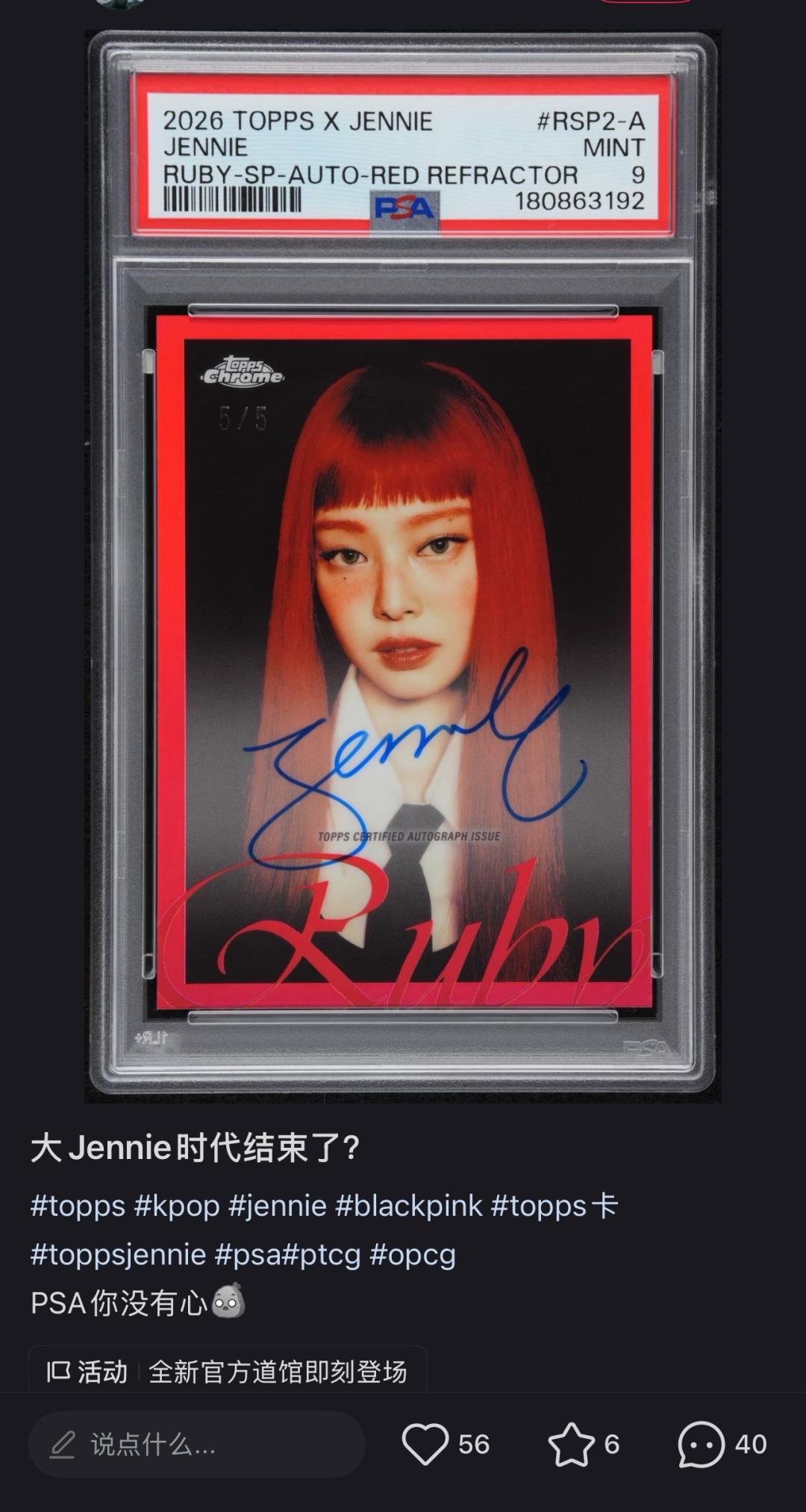
Netizens sent Jennie's collectible cards for review and obtained PSA grading
The authority of this network can also be seen from another perspective. For example, Kayou successively reached cooperation with two international grading agencies PSA and CGC in 2024, and obtained the "international pass" for card circulation. Before that, the certification of the vast majority of domestic card series relied on local grading agencies such as CCG, BaoCui and PGS for a long time. These agencies have limited recognition in the international market, so it is difficult for domestic IP cards to enter the global market.
In short, the story of "celebrity collectible trading cards" is quite complete up to this point. But there is an easily overlooked premise: the grading system ensures that a card can be priced, but it does not guarantee the transaction price of this card. The former is a technical problem, while the latter is a demand problem.
In other words, even with the "pass", the card collecting circle may not continue to buy in for a long time, and Jennie's collectible cards are a typical example.
After the restock was put on shelves and sold out again in the evening of October 22, the price of the same card on KaTao dropped by 70% within 24 hours, and this was not an isolated case. A large number of panic selling appeared in the secondary market, and some buyers applied for return and refund on the grounds of card defects, which is not common in collectible card transactions. Some netizens even jokingly called this stage "the era of massive refunds".
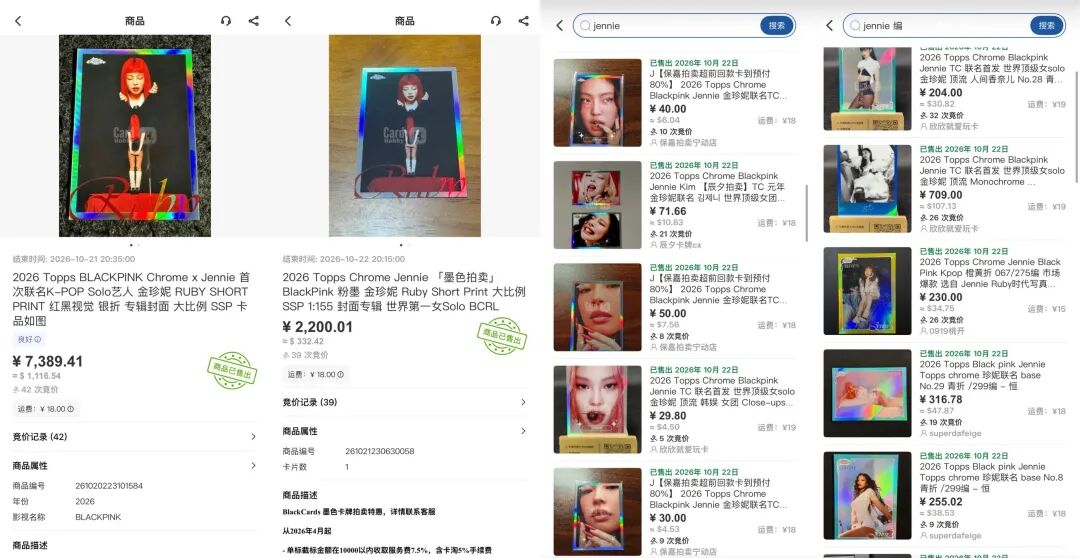
By the afternoon of October 29, the cumulative number of transactions on KaTao had approached 20,000. Except for refractor cards and autograph cards with a print run of less than 50 copies whose prices remained relatively stable, prices of other types of cards generally fell back, and the price of unopened whole boxes dropped from 2499 yuan to around 1200 yuan.
The distributor is authoritative enough, the serial numbers are clear enough, the grading channel is unobstructed, and every procedure to ensure scarcity is impeccable, but the price still collapsed sharply. Topps' collectible cards did not prop up the value of these celebrity paper cards as the market expected.
What exactly went wrong with celebrity collectible trading cards?
What exactly is the problem with Jennie's collectible cards? In the final analysis, the group of people who rushed in to speculate and the group of people who were supposed to take over the orders are not the same at all.
After follow-up investigation, Lei Report found that the main driving force of these cards in the secondary market are sports card collectors and speculative capital. They bet on the purchasing power of fan communities, and their logic is that collectible cards produced by the world's top collectible card company will definitely be more attractive than the paper cards in the fan circle, so fan communities will definitely buy them.
But fans do not act according to this logic. They do not care whether the cards are produced by Topps or not; instead, they pay more attention to the substitutability of the card surface, and the value of reused "official shot cards" (cards made from official shooting images) is far less than that of "selfie cards"; many people have never even heard of what platform KaTao is; even the number of cards fans bought is less than that in the hands of these resellers.

As a result, the price can only be maintained by the game of passing the parcel among speculators. Without sufficient capital from fan communities to take over, any small disturbance will trigger a stampede. This actually returns to the collapse logic of celebrity photocards: when market expectations weaken, sellers will offload stocks at any cost, and the collection value will naturally collapse.
However, the industry has not stopped moving forward because of the sharp price crash of this batch of cards. At present, all parties are still trying to find new paths for celebrity IP cards, and the direction can be summarized as finding an anchor point for celebrity IP beyond the celebrity themselves.
For example, the card surface of Wang Hedi's collectible cards is taken from real basketball courts. From 2024 to 2026, Wang Hedi was invited to participate in the NBA All-Star Celebrity Game three times and achieved certain results. Now, he is included in the main line lineup of 300 base cards of the 2026-27 Topps NBA Flagship series, and he is also the first Chinese artist to enter the main line of this series. The logic of this cooperation is close to that of sports star cards, but we also have reason to worry: when the product is officially launched, will the people willing to pay for this collectible card be Wang Hedi's own fans, or NBA sports card collectors? If neither side recognizes its value, it will be difficult to achieve considerable collection value.