Google: The "money printing machine" ghost story is back again, can it stay afloat by staking all its assets and selling shovels?
Google released its 2026 Q3 earnings report after U.S. stock market hours on October 29 Beijing time, with core metrics including search, cloud and profits all falling short of market expectations, which undoubtedly adds insult to injury to Google whose narrative was already relatively unfavorable.
Specific details:
1. Search growth decelerates, AI erosion narrative begins to materialize
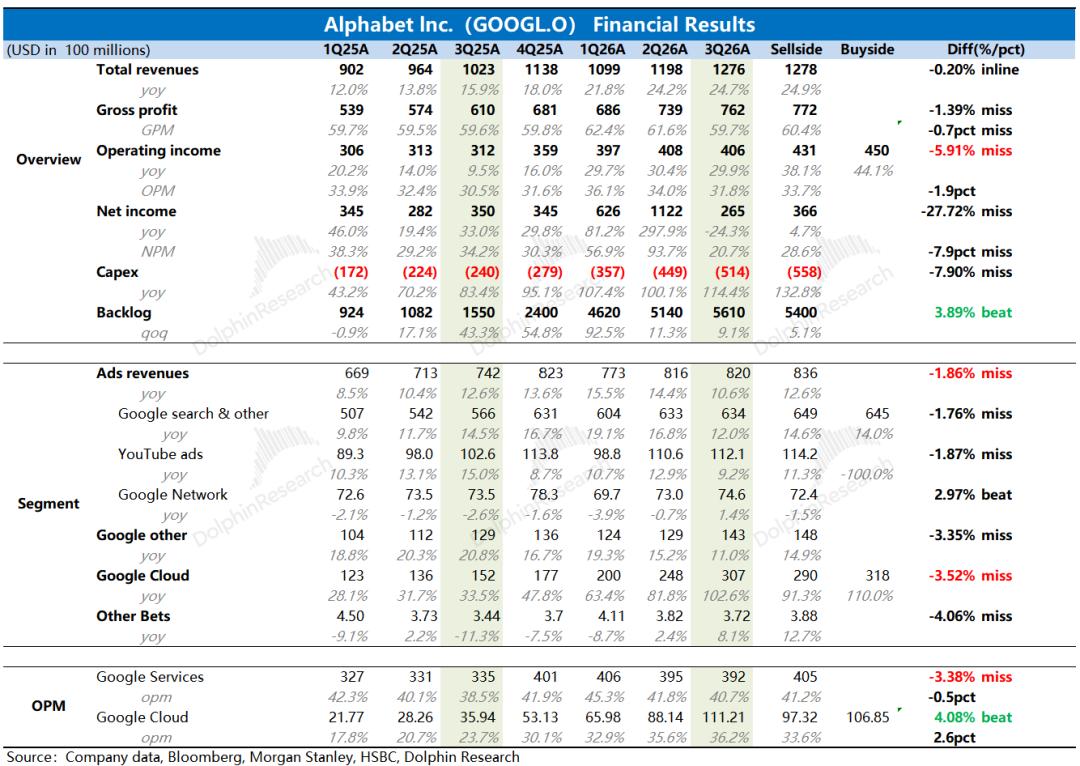
The growth rate of search ad revenue in Q3 was only 12%, with a clear sequential slowdown. Under the expectation of weakened profits and cash flow during the high AI investment period, the stall of its core business has dealt the biggest blow to Google's fundamental logic, confirming the AI erosion narrative.
However, comparing with the performance of search share improvement driven by AI in past quarters, Dolphin Analyst believes that the underperformance in Q3 may also be related to the lag of the Gemini model, which undermined product experience and led to user churn. The lag of the Gemini model is closely related to the tilt ratio of internal and external allocation of computing power resources. In the first half of the year, GCP tilted computing power to external customers, so there were constant reports that employees of Deepmind (the department responsible for cutting-edge model training) did not have enough internal computing power for their use.
At the same time, as the World Cup dividend faded, YouTube ad growth also slowed down significantly under the pressure of a high base.
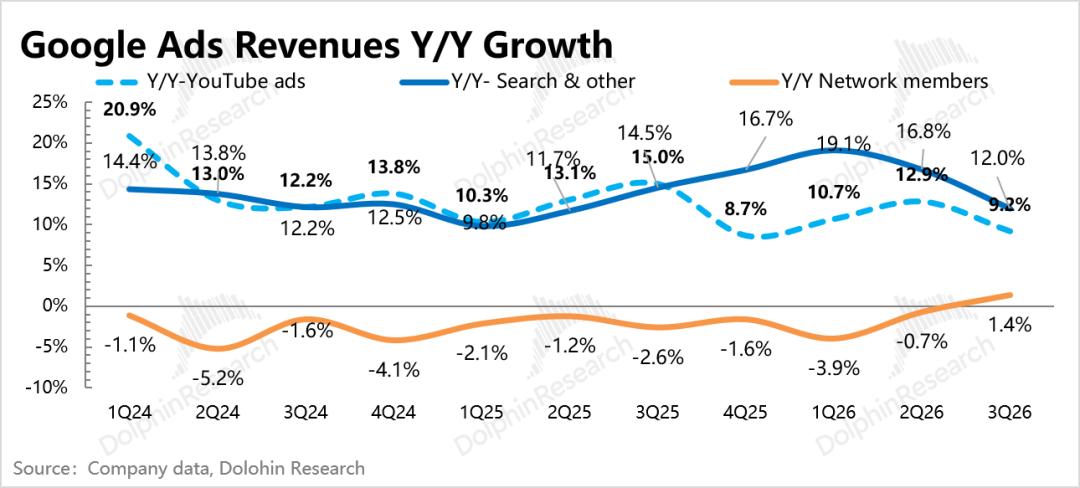
Before the earnings release, third-party data showed that Google's search volume growth slowed down and its share declined. Meanwhile, the DMA Act led to a drop in Google's travel and hospitality search volume in the EU region. The consecutive pullback of the stock price has already reflected the market's concerns and expectation adjustments, but the actual performance turned out to be even worse.
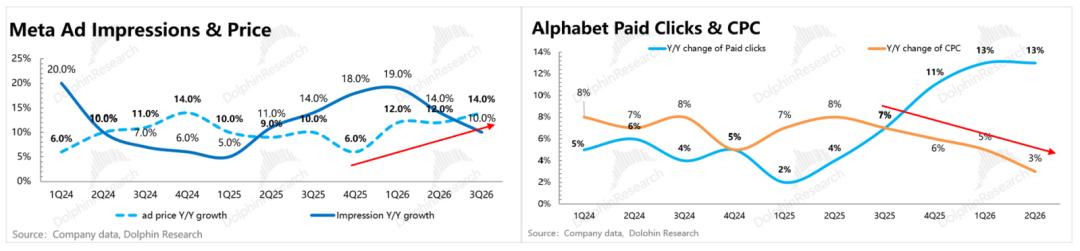
Compared with Meta's ad revenue which keeps growing driven by rising ad unit price, Google Search's hard power advantage is no longer prominent. After entering 2026, the growth rate of Google Search's CPC unit price slowed down rapidly, which also indicates that the AI era may further amplify the industry trend that ad budgets are shifting from search to social platforms.
In particular, as Muse penetrates Google's core scenarios such as travel and finance where Google Search used to excel, Meta has the opportunity to step into this offline service field where it had no advantage in the past.
2. Cloud and TPU continue to grow at high speed, but high expectations have already been priced in
The cloud business (including TPU sales, mainly v7 delivery in Q3) recorded a 103% year-on-year growth in Q3, accelerating sequentially. However, institutional expectations were even higher. The BBG consensus expectation of +91% in the chart below cannot fully reflect the expectations after the first confirmation of TPU hardware sales (+105% from sell-side, +110% from buy-side).
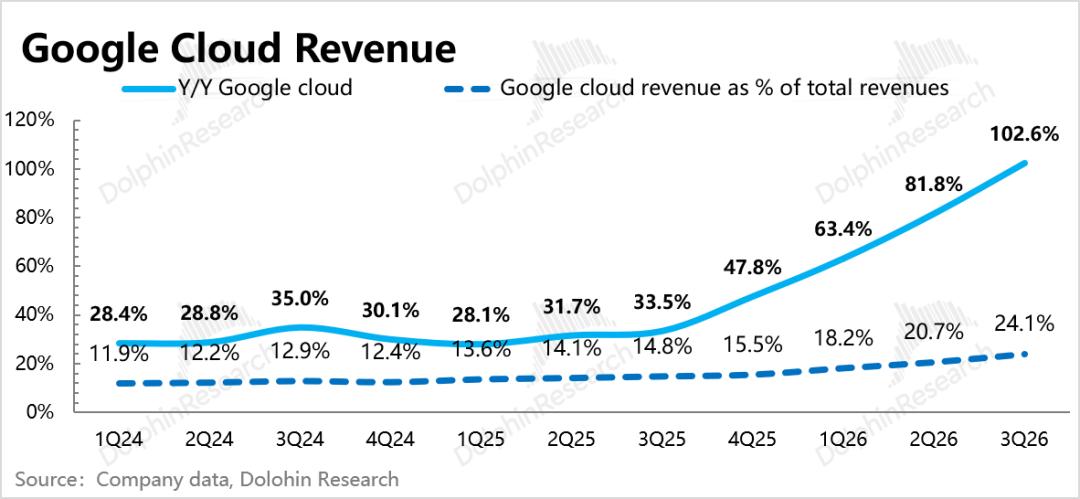
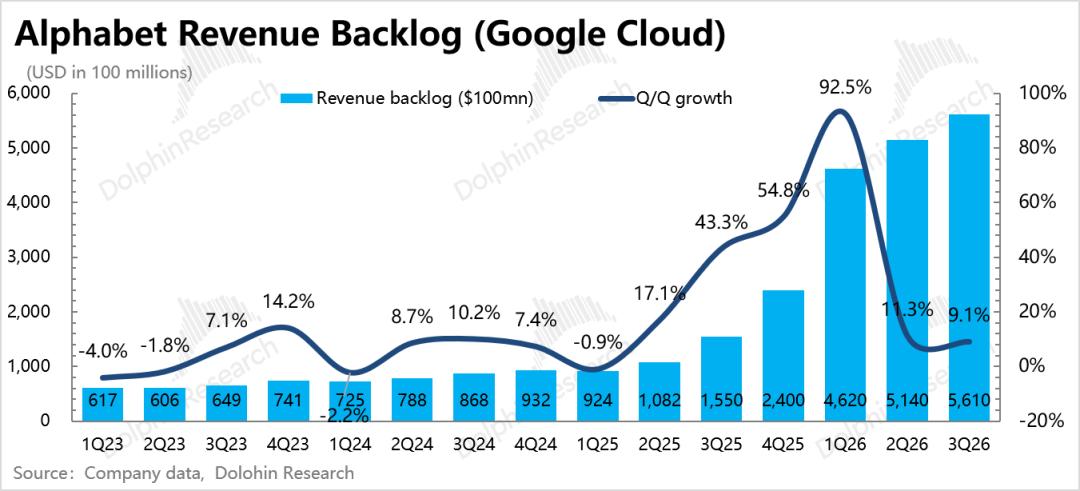
The backlog in Q3 reached 561 billion. Adding the revenue recognized in the current period, the new contract amount is simply restored to 77.7 billion, which is similar to that in Q2, slightly higher by 1 billion, indicating that the demand remains strong.
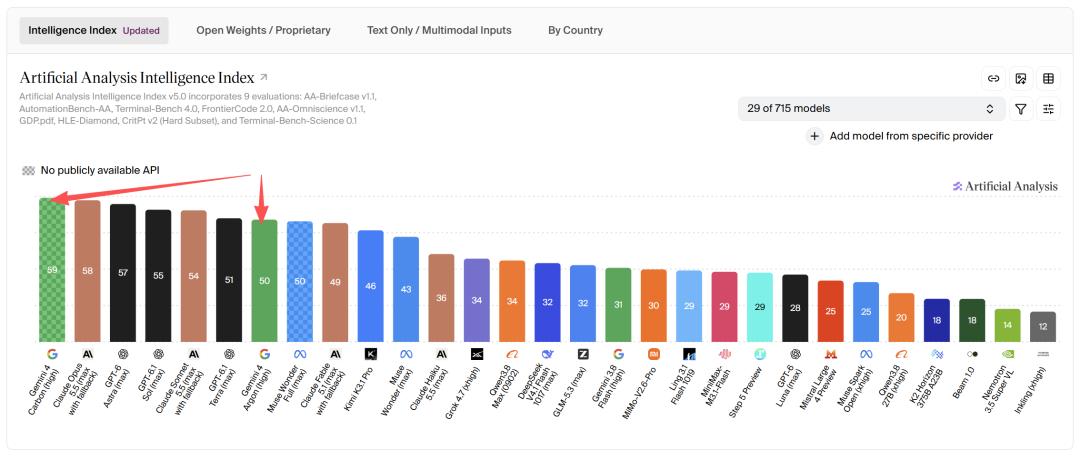
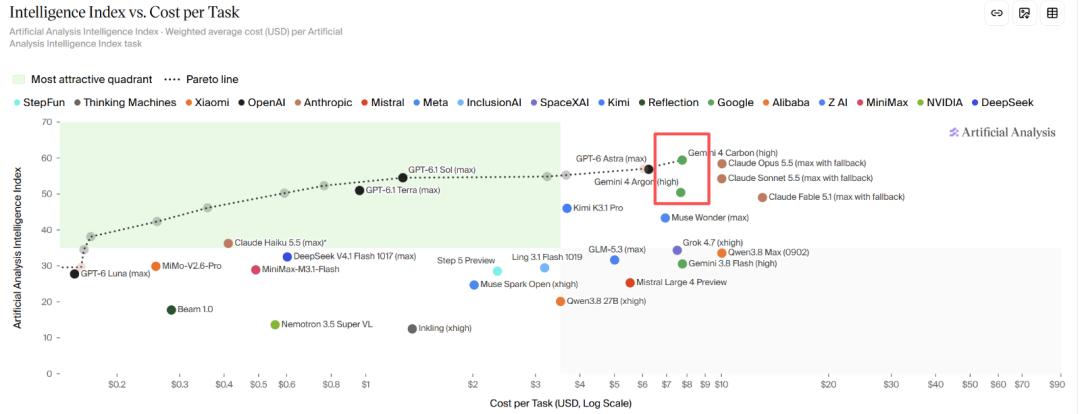
Dolphin Analyst believes that on the one hand, the reason why cloud revenue fell short of expectations is that the lag of cutting-edge model iteration for two consecutive quarters will affect API revenue. Gemini 4 Argon, which was launched at the end of September and opened to the public in mid-October, has been greatly improved compared with its previous version.
However, compared with SOTA peers, there is still a gap in coding performance and its cost performance is not in the optimal range. For details, you can refer to the comments previously released by Dolphin Analyst on the Longbridge App.
However, right after the earnings report was released, Gemini 4 Carbon was launched. Judging from the overall performance alone, it has quickly jumped to the SOTA tier. The cost per task is still not in the optimal cost-performance range, but it is lower than Opus 5.5. We can continue to pay attention to the actual user test performance.
On the other hand, according to research information, Dolphin Analyst believes that the expectation gap here may also be related to the TPU shipment rhythm (for example, the large-scale delivery of v8i is clearly postponed by one quarter to the end of the year). The specific split of cloud business is not disclosed in the earnings report. You can follow the earnings call to see how much contribution TPU makes to growth (the earnings report states qualitatively that it has a significant contribution) and how much impact the v8 delay has.
3. Profit is weakened, "dragged down" by high AI investment
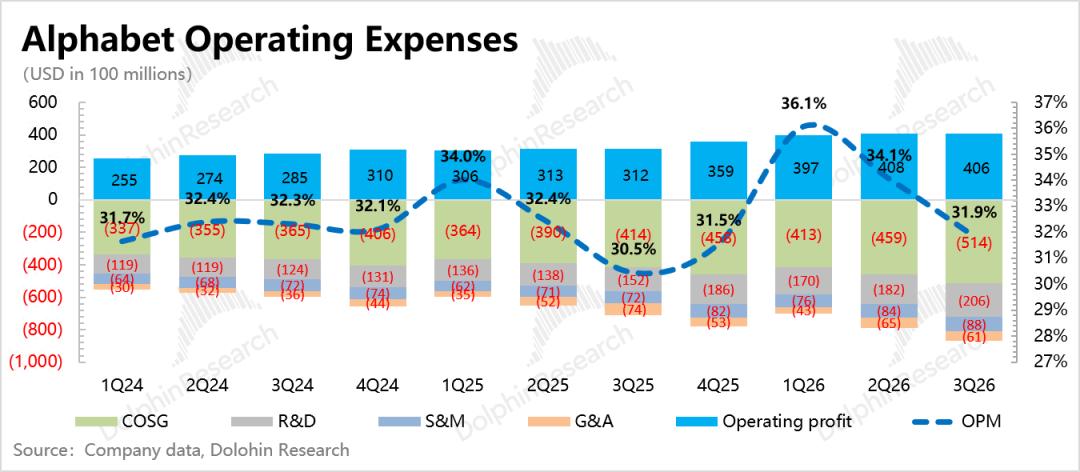
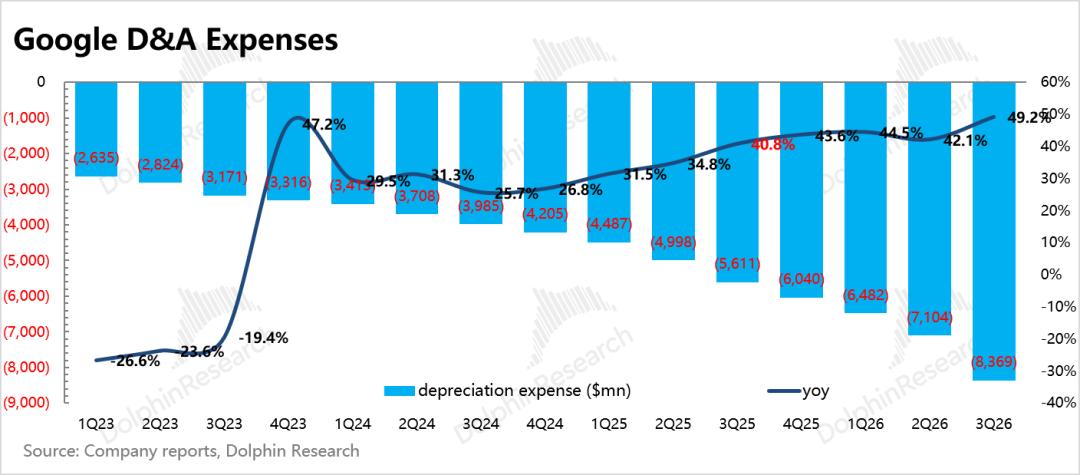
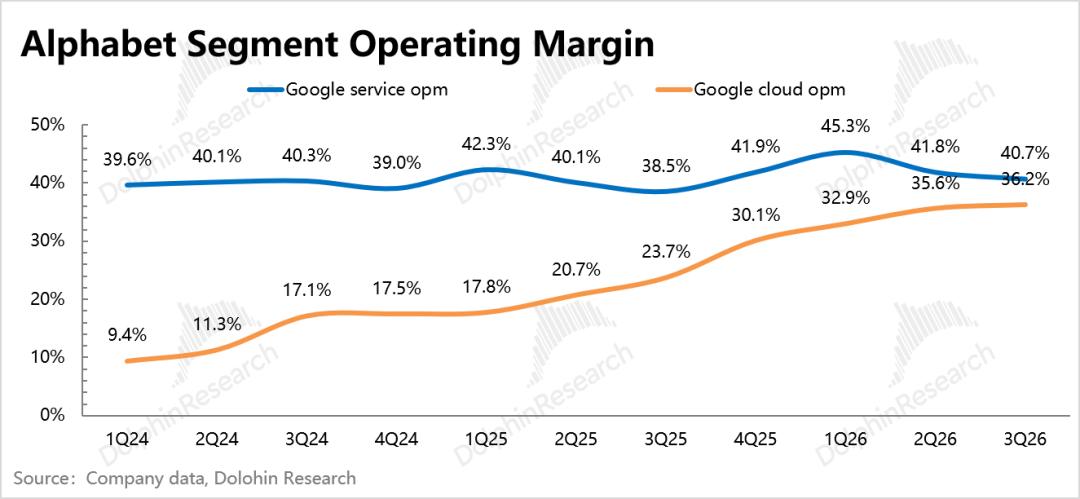
The overall operating profit margin of the company in Q3 weakened by 2 percentage points sequentially, which is related to the sharp increase in depreciation and R&D expenses, representing the investment in computing power infrastructure and large model training respectively.
In addition to the TPU hardware sales profit margin being lower than the original group level, the company stated that due to insufficient computing power supply, it will expand the use of third-party computing power in the short term. For example, the short-term leased computing power from SpaceX has high rent due to immediate demand, which will also push down the profit margin.
By business segment, the profit margin of Google Services such as advertising decreased by 1 percentage point sequentially, while the cloud profit margin rose sequentially (note that this does not include model training expenses, and Google includes part of the expenses in the R&D expenses of the group department), which is one of the few parts that exceeded expectations in the whole earnings report.
4. Under high Capex investment, the cash flow gap continues to expand
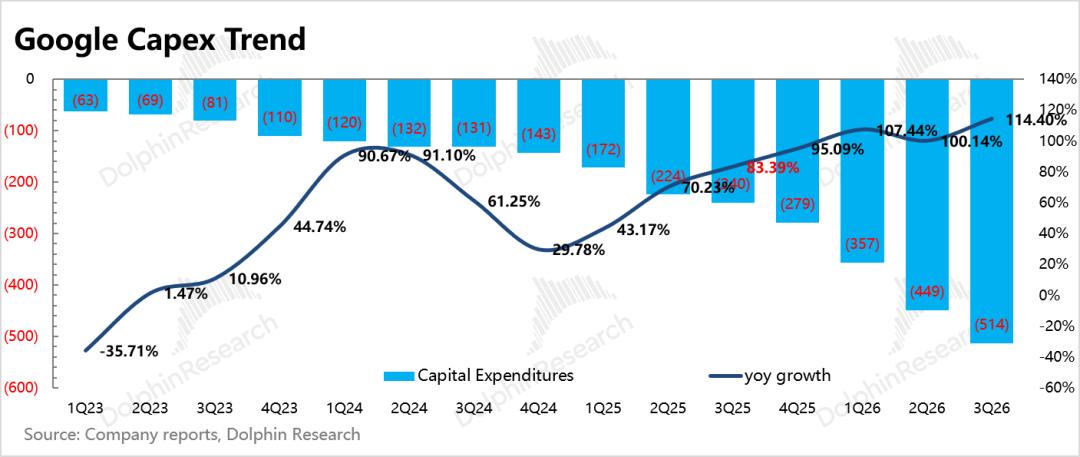
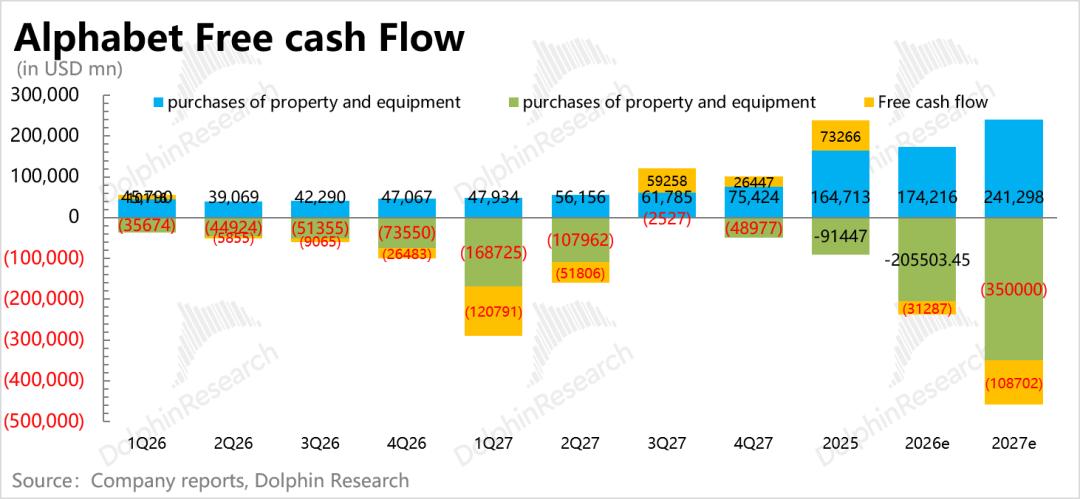
Capital expenditure in Q3 reached 51.4 billion, doubling year-on-year and continuing to accelerate, accounting for 40% of the current period revenue, which directly led to the further expansion of the negative free cash flow to 9.1 billion in the current period.
At present, the market's expectations for Capex for this year and next year are 2.2 trillion and 3.5 trillion respectively (company caliber: the guidance for 2026 Capex of 195-205 billion remains unchanged, implying 63-73 billion in the fourth quarter, continuing to accelerate sequentially, while maintaining significant growth in 2027). According to the revenue and expenditure situation next year, the full-year cash flow will most likely remain negative.
In Q3, the company continued to implement the 850 billion financing plan set at the beginning of the year, issued 12.5 billion US dollars of additional equity in the quarter, leaving 276 billion of remaining additional financing quota. At the same time, it also issued 287 billion of unsecured notes in the third quarter. Theoretically, the current cash on book + short-term investment + remaining financing quota can basically cover the capital gap in the past two years.
5. Comparison between key indicators and expectations
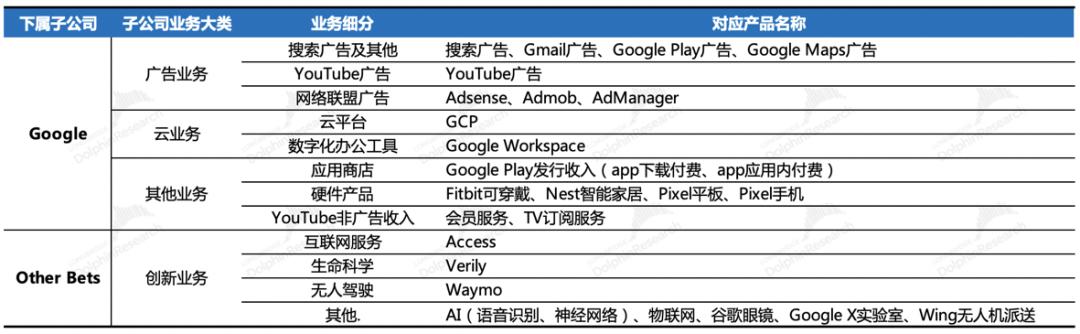
Google's parent company Alphabet has a wide range of businesses, and its earnings report structure has changed many times. Users who are not familiar with Alphabet can first look at its business architecture.
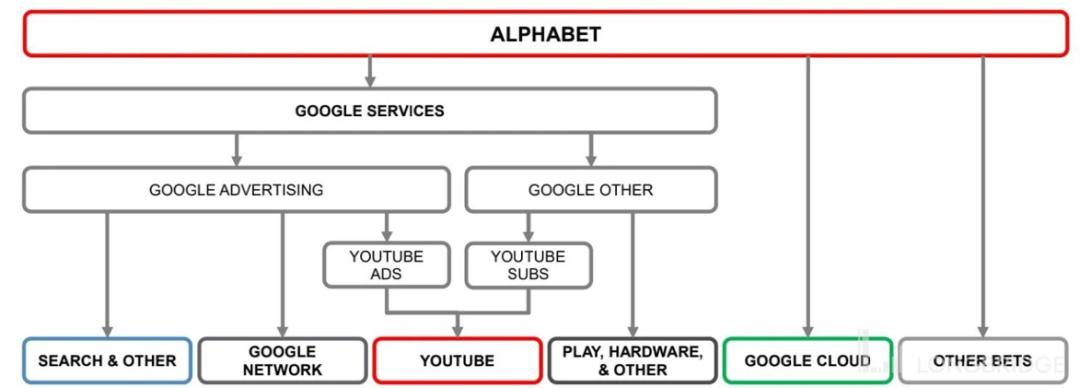
Briefly explain the long-term fundamental logic of Google:
a. The advertising business, as the largest revenue source, contributes the main profits of the company. Search advertising faces the crisis of being eroded by feed advertising in the medium and long term, which is supplemented by the high-growth streaming media YouTube.
b. The cloud business, including TPU hardware sales, has become the company's current main growth logic and growth story, and is also the most direct embodiment of AI benefits.
Dolphin Analyst's View
In the past two quarters, Google has continued to adjust, and its short position among Big Tech companies has risen rapidly. The core reason is that as the impact of AI eroding search gradually deepens, the AI full-stack logic that was sought after at the end of last year has also aroused doubts and divergences from the market, as top talents left and the iteration of cutting-edge models obviously lagged behind.
It is not difficult to catch up at the technical level. Especially when the application end focuses more on Agent and ecology, Google, which has advantages in scenario data, channels and multimodal models, can also build some competitive advantages.
However, the core problem brought by this earnings report is that — AI makes Google more like a pick-and-shovel seller, but makes the search cash cow start to decelerate. The advertising core business, which accounts for more than 60% of the total, has been confirmed to be affected by AI erosion. It is too big to turn around. Will the performance during the transformation period deteriorate further than expected?
At the same time, the company qualitatively states that Capex will grow significantly next year. Based on the expectation of adding 6-7GW of computing power deployment, with an average unit cost of 43 billion per GW, plus 500-600 billion of maintenance and other expenditures for existing data centers, institutions estimate that the total Capex will be around 3.5 trillion.
Calculated in this way, the expected free cash flow deficit next year will reach 1 trillion. Excluding long-term debt, the short-term capital is theoretically sufficient. However, if the investment becomes more aggressive, the search performance worsens further, and from the medium and long-term perspective after 2028, Google still has nearly 1 trillion of payable contract amount, of which more than 700 billion is "semi-rigid"