The days of making easy money by venturing into the African market are over.
Is Africa truly a new blue ocean for Chinese enterprises going global? In the summer of 2026, Professor SU Xijia from China Europe International Business School (CEIBS) joined the CEIBS EMBA study tour to Ghana, a West African country. In just one week, from the streets of Accra to local factories, from Chinese entrepreneurs who have settled down for many years to practical challenges involving land, logistics and labor, he witnessed broad opportunities, and also felt the hardships of local operation.
Is Africa really brimming with business opportunities everywhere? How can Chinese enterprises bridge cultural and institutional gaps and establish a solid foothold in local markets? With these questions, Professor SU wrote this observation on Africa which is far more nuanced than words can describe, based on his first-hand experiences and vivid real cases. Going global is not only about pursuing growth, but also about thinking about how to create value for the local community.
Prelude
There are no direct flights from China to Ghana, and passengers usually transfer in the Middle East or Europe. For my outbound trip, I chose Turkish Airlines, traveling to Ghana via Istanbul; for the return trip, I chose Qatar Airways, transferring in Doha. When checking in, I was almost denied boarding because I could not provide the ticket number of my return flight, and only barely passed the check-in one minute before the counter closed.
This time in Istanbul and Doha, I was shocked by the huge scale of international transfer operations at the airports. Even at midnight, a flight takes off every five or six minutes; the absurdly large business class lounge is crowded with people, bustling with activity.
What is even more incredible is that Turkish Airlines arranges free city tours, free meals and even free overnight accommodation for transferring international passengers to cater to them. Turkish Airlines arranges four or five such city tours every single day.
In contrast, the international transfer business of domestic Chinese airlines has still made little progress after years of efforts. According to statistics from August 2025, no Chinese mainland city is listed among the 32 busiest international air routes in the world. For China, the world's second largest economy, this is more or less unexpected and also disturbing.
It seems that to play a more active role in international business and trade exchanges and secure more participation opportunities, the only way to achieve this is to uphold opening-up and embrace the world.
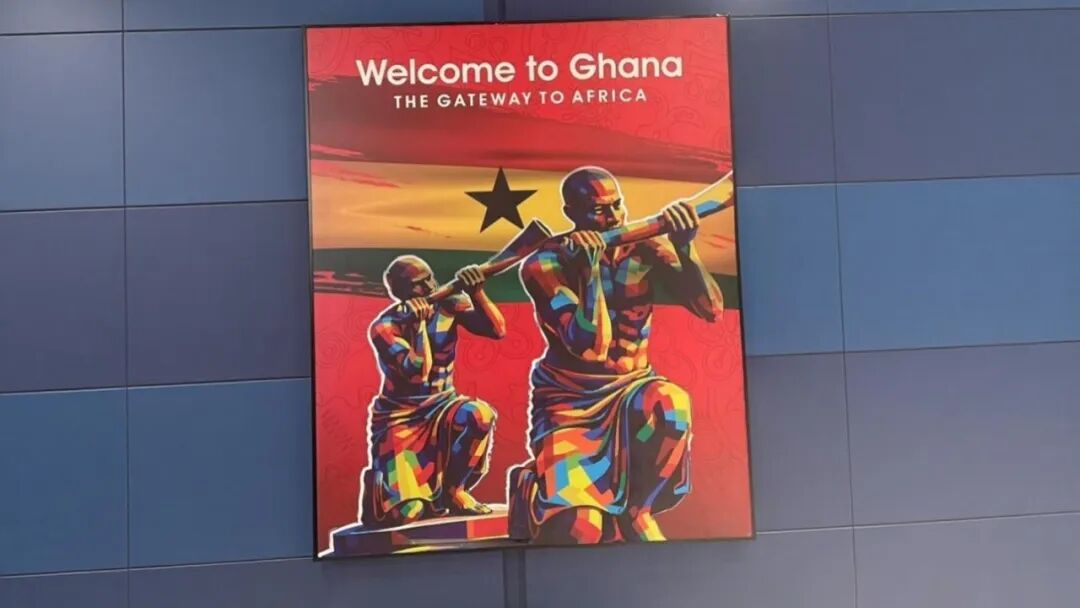
Ghana, Here We Come
"Welcome to Ghana, the connectivity hub of Africa." This is the poster that travelers see the first moment they step out of Accra Airport.
Located in West Africa, Ghana borders Côte d'Ivoire, Burkina Faso and Togo, and faces the Atlantic Ocean to the south. It is an important distribution center for cargo trade in West Africa. The capital of Ghana is Accra, and English is the commonly used language.
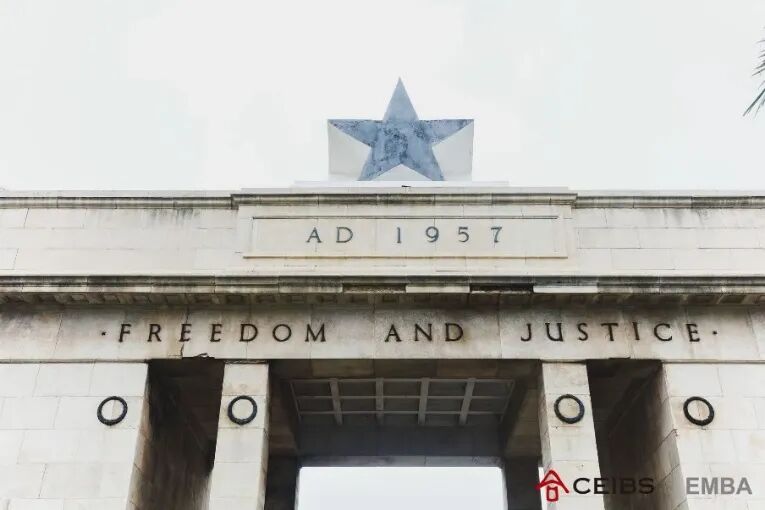
When I was young, I only knew there was a country called "Gold Coast" in West Africa, and the name "Republic of Ghana" was adopted only after the country gained independence in 1957. As a former British colony, Ghana's legal system and government administrative practices are deeply influenced by the UK.
The reason why we chose Ghana for our African study tour, apart from its good public security, political stability and friendly relations with China, is that CEIBS has a campus in Accra with local faculty and staff. When we arrived in Ghana, we more or less felt like we were on our "home turf"; our colleagues in Ghana made elaborate arrangements and provided thoughtful logistical support for our study tour.
Ghana is not a traditional tourist destination, with unremarkable natural landscapes and few notable historical sites. Almost all of our nearly 40 group members visited Ghana for the first time. There are countless countries in Africa that are larger and have greater international influence than Ghana; in comparison, Ghana is not a very prominent presence even within Africa.
But Ghana is a very important node for China-Africa trade and China's Belt and Road Initiative. Back in the 1960s, Ghana's then President Kwame Nkrumah visited China twice, and Chinese Premier Zhou Enlai also visited Ghana. The two countries share a long-standing relationship.
The economic ties between China and Ghana can be roughly summarized with a few figures. The total bilateral trade in goods between the two countries in 2023 reached 11.04 billion US dollars.
Now you can easily understand that the Ghanaian government does not simply want external investment; what it urgently needs is investment that can create a large number of jobs and generate government tax revenue.
Ghana and several other African countries have recently introduced new regulations banning foreign investors from engaging in offline retail and service industries, the underlying reason of which is to prevent foreign capital from squeezing local people's employment opportunities. Expatriate workers entering Ghana need to pay a considerable visa fee, which is high enough to dissuade many Chinese-funded enterprises from recruiting skilled workers from China.
We visited a local model enterprise called Blue Skies, which was founded by a British entrepreneur in 1997. Its business involves fresh-cutting, packaging and exporting fruits to Europe. The company employs more than 5,000 local staff; no machinery is used for simple processing, and workers, mostly middle-aged women, each hold a small knife, filling the workshop completely, which is a spectacular sight.
From the perspective of fulfilling social responsibilities, this is a very advanced enterprise, but from a profit-oriented business perspective that prioritizes efficiency, it is an extremely backward company. Such a contradictory scene made the CEIBS students fall into deep reflection.
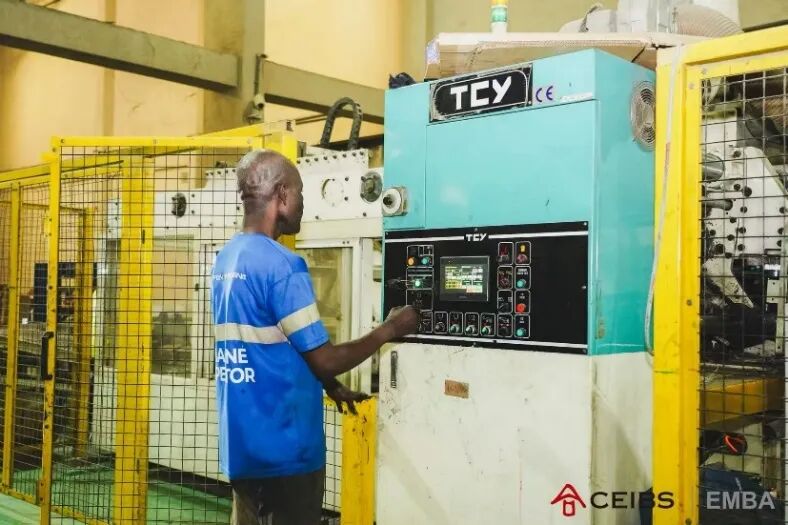
Of course, Ghana also has quite modern enterprises. We visited two local enterprises that have been established for more than 20 years, one produces cardboard boxes and household paper, and the other conducts deep processing of cocoa beans. The owners of both enterprises received their education in the United States, and both have deep religious beliefs, so their factory management styles are no different from those in European and American countries. But even for modern enterprises, many production links still retain a large number of workers.
Ghana's economic status in Africa can be summarized as: top in total volume (the 8th largest economy in Africa), medium in per capita terms (GDP per capita was 2,406 US dollars in 2024, and 3,193 US dollars in 2025), with coexisting potential and risks.
The potential is reflected in its growth rate: the GDP growth in 2026 is expected to reach 5%, higher than the average growth rate of West African countries. The risk is reflected in aspects such as debt burden, inflation and currency depreciation.
In December 2022, Ghana officially announced the suspension of repayment of most of its external debts, and its sovereign credit rating was downgraded to "selective default", falling into the most severe debt crisis in decades. At that time, Ghana's inflation rate exceeded 50%, the local currency depreciated by more than 50% within the year, and debt interest expenditure once accounted for 70% to 100% of government revenue.
Then came the long debt restructuring process, which entered the final stage in July 2026. Ghana's macro economy has gradually got back on track and grown steadily, the inflation rate has dropped to 9%, the exchange rate has stabilized, and the positive trend is obvious.
When Ghana gained independence in 1957, its per capita income was comparable to that of South Korea, but today it is far behind. Ghanaian economists cannot help but sigh with emotion when talking about this.
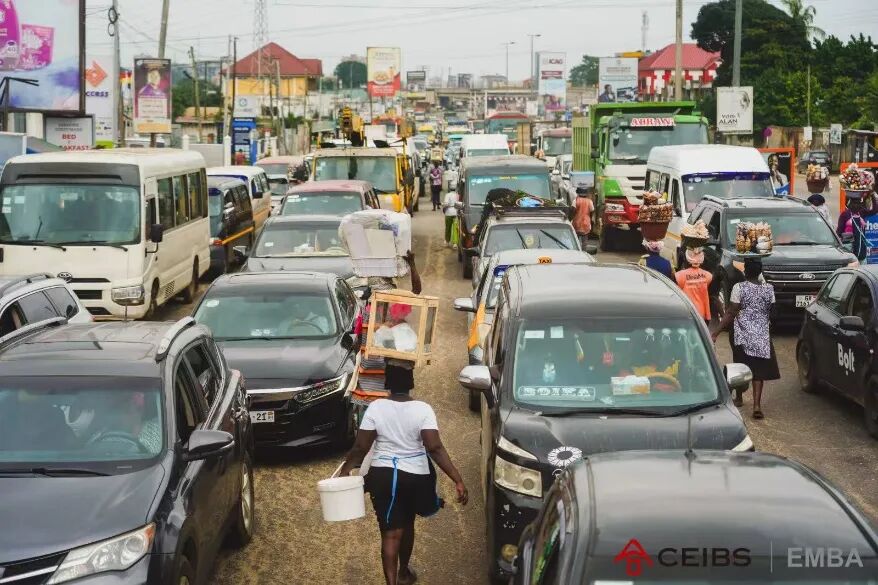
Walking on the streets of Accra, signs of the extreme wealth gap can be seen everywhere. The hotel we stayed at is located in the embassy district, where rich people gather, and exquisite villas and apartments can be seen over the walls. But even in the wealthy area, the roadside is full of bare soil, with weeds mixed with scattered stones.
The slums are even more unbearable to look at, with extremely simple housing that is essentially just a rainproof tarpaulin draped over an iron sheet fence. On sunny days, dust blocks the sight, and on rainy days, sewage flows everywhere. There are small vendors setting up stalls along the street. Many women place the goods they sell (bottled water, snacks, sunglasses, phone cases, etc.) in plastic basins balanced on their heads, and step forward to peddle when the traffic slows down a little.
Once when our bus passed a messy neighborhood, a classmate suddenly remarked: 40-odd years ago, when Americans came to visit China, they probably felt exactly the same way. His words struck a chord with everyone on the bus, evoking sympathy and resonance from people who have gone through similar journeys.
Chinese People Striving in Africa
How many Chinese people are there in Ghana? Some say 50,000, others say nearly 100,000, but the number is definitely considerable. Popular African countries such as Nigeria, South Africa, Zimbabwe, Kenya, etc., all have a large number of Chinese people striving for a living there. Many of them are "old Africa hands" with more than 20 years of experience on the continent.
After China's reform and opening-up, economic and trade exchanges with countries around the world have become increasingly frequent, and economic ties have become closer, which has given rise to two interesting phenomena.
First, a group of inherently globalized enterprises have emerged, such as Transsion for mobile phones, J&T Express for express delivery, Anker for chargers, etc. People in China may have heard of these few enterprises, but there are far more enterprises that we have probably never heard of. These enterprises carry Chinese genes, but operate with a local look and follow local practices; they started their businesses overseas, and their products, marketing, management and compliance systems are all adapted to the local market environment.
Second, a group of entrepreneurs and professional managers deeply rooted in overseas markets have emerged, whose connections, product knowledge, marketing experience, and even living habits have been deeply localized. They thrive and achieve great success locally, but if they return to their home country, they will likely feel out of place and unable to make progress. Even if they encounter setbacks overseas, they will switch to another enterprise to continue working hard locally, and are unwilling to return home; for them, coming back means admitting failure.

Sharing from an alumni based in Ghana helped me understand why they do not give up easily. This alumnus used to be a senior executive at a central state-owned enterprise in China. After several job rotations, he wanted to try a different lifestyle, and after careful consideration he thought Africa was a relatively untracked track, so he bravely came to Africa to start his own business.
After arriving in Ghana, he squeezed himself into a shabby dormitory shared by 8 people, and went around promoting his products every day. In high temperature of more than 40 degrees Celsius, there was not even a toilet in the market, but he gritted his teeth and persisted, and finally made it through the hard times. How could he possibly go back to his old life?
Furthermore, a far-reaching impact of continuous and extensive global expansion is the continuous growth of China's overseas assets. Half of Japan's assets are located domestically, and the other half are overseas; China is also moving in this direction.
The surge in overseas assets brings both positive and negative outcomes. On the one hand, it serves as a solid backing for the country's strategic influence, expanding the space for strategic maneuver; but on the other hand, overseas assets can easily become "hostages" and weaknesses that others can use to restrict you. The nickel ore export quota adjustment incident that took place in Indonesia this year is a typical example.
High Winds, Rough Seas, Deep Waters, Big Fish
Are Ghana and other African countries still good destinations for going global? What should you do if you decide to go there?
One alumnus answered this question with two sentences: "High winds, rough seas, deep waters, big fish"; "No bread, no love". The first sentence depicts the current state of the African market: the good old days of making easy money are gone, and more and more people are falling into traps; but if you take the right path and use the right methods, Africa still holds huge potential. The second sentence reminds us that you cannot do business just by building personal rapport, and mutual benefit and complementary advantages are the only sustainable rule.
Land: Who Exactly Owns This Plot?
If you want to build a factory in Ghana, the first problem to solve is land. Approximately 20% of Ghana's land is owned by the government, with clear ownership and transparent transactions, but the government generally does not release this land to commercial entities. The other 80% of the land is owned by chiefs and traditional tribes, whose ownership is often unclear. Multiple people may claim to own the property right at the same time, and all of them can produce some kind of proof.
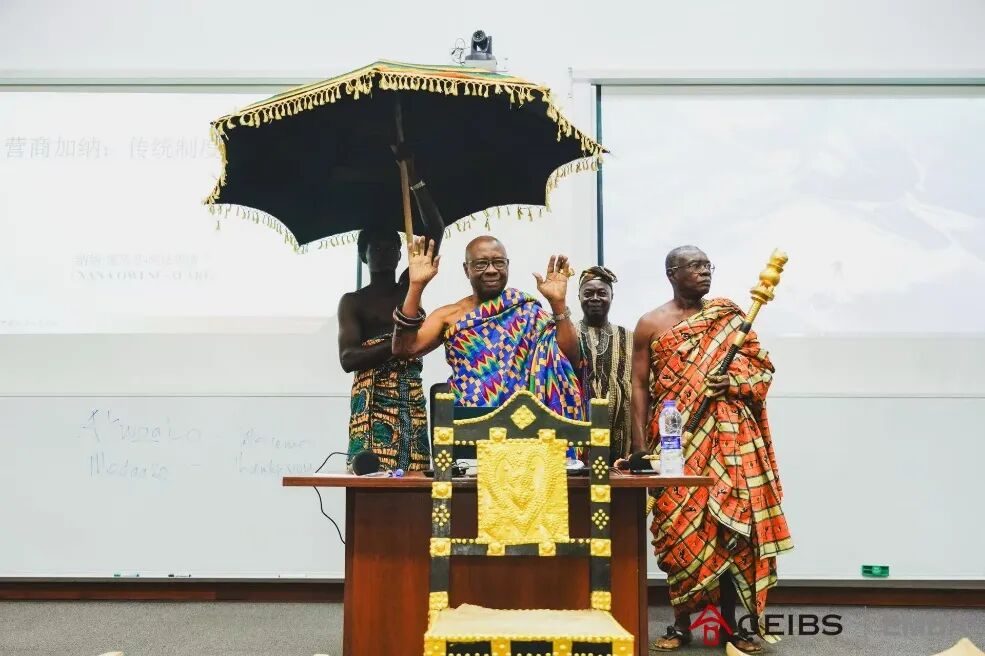
During the study tour courses, we specially invited a chief and his entourage to the classroom to explain how the chieftaincy system operates. He reminded us that do not trust anyone's promises easily, you must find a reliable professional lawyer, conduct thorough due diligence, and make sure every document you sign is legally valid.
Site Selection: Cheap Land Can Be the Most Expensive
Apart