15 Years, 1.3 Million Apartments: How Does Ziroom Live Up to Its Name?
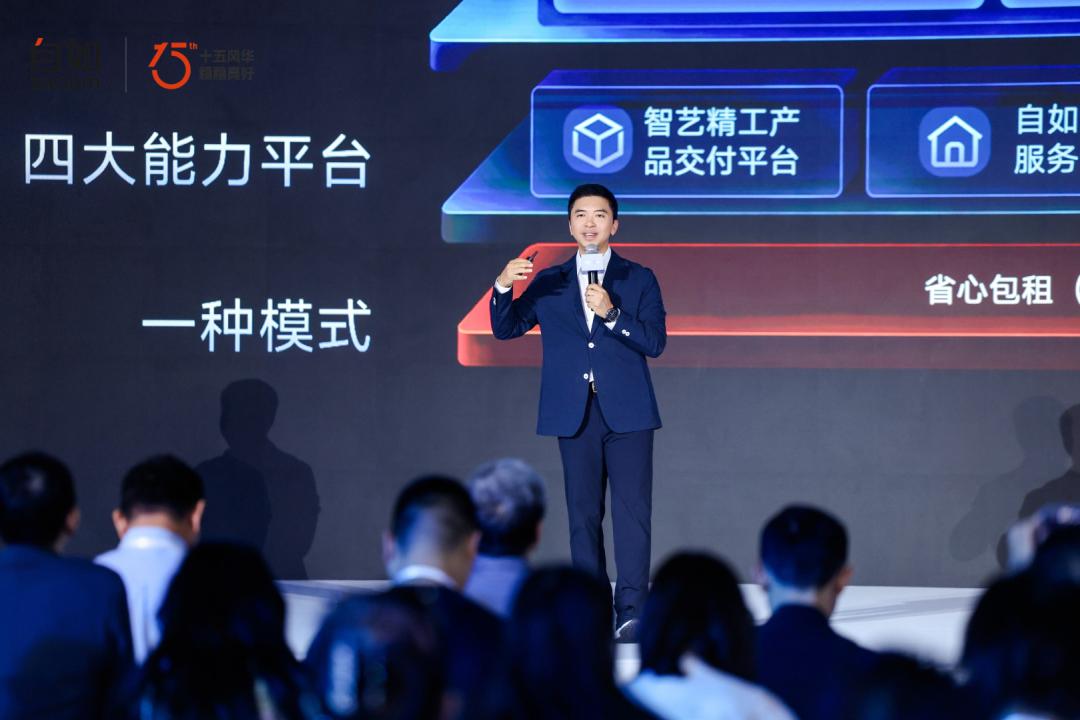
On October 18, the 15th anniversary of Ziroom and the launch event of urban asset management and quality living solutions was held in Shanghai. Over the past 15 years, Ziroom has cumulatively managed more than 1.3 million decentralized housing units and around 70,000 whole-building housing units, with the total asset value of managed housing exceeding 1 trillion yuan. At the 15-year milestone, Xiong Lin, the founder, did not aim for a larger scale, but put forward a set of methods on "how to manage": three major solutions, four capability platforms, and one operating model.
01
The Stock Asset Era: How Ziroom Achieves Sustainable Growth
Nowadays, people's expectations for "home" are no longer defined by floor area, ownership status (rent or purchase) and location, but largely depend on the feeling the moment they step into the house. In China, more than 300 million renters inject such expectations into the rental properties they live in.
However, it is never easy to steadily deliver such expected living experiences. China's urban housing stock totals around 374 million units, of which over 27% have a building age of more than 30 years; the institutionalization rate of the housing rental industry is only 15%, while the figure in Japan, the United States and Europe generally exceeds 60%.
"Large volume, high dispersion, non-standard", Xiong Lin summarized the difficulties in six words: housing resources are in the hands of individual owners, who have different willingness to renovate, renovation budgets and rental return expectations. In the past five years, the average rental period of housing resources in the housing rental market has extended from 42 days to 51 days, with the cumulative rent dropping by 17%. On one hand, a large number of old housing resources are left idle; on the other hand, new citizens and young people cannot find stable, safe and quality-controlled rental spaces. This is no longer a problem of "whether there are available houses", but a proposition of how to operate urban stock assets.
Ziroom's solution was summarized by Xiong Lin as "one model, three major products and four core capabilities". He realized long ago that the rental sublease model earns the price difference and relies on continuous market growth: in the upward market cycle, owners cannot share the asset appreciation, while in the downward cycle, the platform has to bear rigid repayment obligations, which means "the larger the scale, the more asymmetric the risks are". In 2021, when all operating indicators of the company reached the best level, Ziroom voluntarily abandoned the sublease model and launched the value-added rental model with no price difference. The cost was that the number of properties taken over in the first month dropped from five-digit to three-digit, and the revenue and profit were under short-term pressure. But in the following five years, Ziroom gradually recovered the growth: 85% of the 700,000 managed housing units are under the value-added rental model, and the revenue from whole-rental and family-oriented housing units accounts for more than 50%. The Housing Rental Regulations implemented in September 2025 explicitly supports the cultivation of market-oriented and professional housing rental enterprises, which is highly consistent with the direction of this transformation.
The essence of "professional asset management + high-quality living service" is to bring the decentralized, one-off individual housing rental business into a system that supports long-term operation and quantifiable value management. The rental business no longer makes profits from information asymmetry and scale expansion, but becomes an asset management business that covers renovation, pricing, operation and even exit. Only the party that can turn non-standard housing resources into products that can be priced, delivered and replicated can obtain stable long-term dividends.
At the launch event, Xiong Lin and his product team divided the asset management of stock housing resources into three categories, and put forward three corresponding solutions: urban long-term rental, high-end luxury residential long-term rental and whole-building rental.
02
Decentralized Ordinary Residential Properties: Turn Houses into Standardized Products First
This type of housing resources features large volume and high dispersion, which is the segment with the most concentrated pain points. Two adjacent units in the same building may require full renovation for one, while the other only needs cleaning service before being put on the market, so it is impossible to define their value with a single set of standards.
Ziroom's solution is to clarify the product definition first, and then complete personalized delivery through a flexible supply chain. "Any enterprise that wants to meet large-scale market demand cannot solve personalized demands without in-depth product definition," said Xiong Lin.
15 years ago, three-bedroom apartments in Beijing were extremely difficult to rent out, as they had large area, multiple rooms, high rent and few target tenants, leading to a long average rental period; while young people who just graduated wanted to rent apartments at around 2000 yuan, there was almost no such supply in the market. The initial product logic of Youjia (Ziroom's shared apartment product) is to split a three-bedroom apartment into three separate rooms. Since then, Ziroom has launched multiple product lines to cover different housing resources and living demands in a layered manner: Youjia for young shared renters has been iterated to version 7.0, the whole-rental product line has launched "Superior Home 3.0" and "Zen Home 3.0", and this time Ziroom newly launched "Girl's Nest 1.0" for female shared renters.
Superior Home 3.0 focuses on one-stop full-house configuration within 7 days, and the process is divided into three steps: housing resource diagnosis, quality improvement and home furnishing renewal, targeting at refined empty apartments and old self-occupied houses. According to Ziroom, the reason why many houses cannot be rented out is not a major problem - the problems such as floor drain odor and wall graffiti can be solved with costs ranging from dozens to hundreds of yuan, and the actual main cost comes from the subsequent home furnishing renewal.
Zen Home 3.0 is a full-renovation product, which realizes delivery in 33 days through product-based customization and intelligent integrated renovation. The renovated properties are available for rent, sale or self-occupation, with the quotation starting at around 1899 yuan per square meter for one-bedroom units, which can bring a 20% to 32% increase in rental income for property owners. This set of quotations turns the long-existing "different price for each house" in the decoration industry into a price range close to standard products. The real threshold is not design, but stable delivery within 33 days, which tests the capability of supply chain, skilled workers and project management.
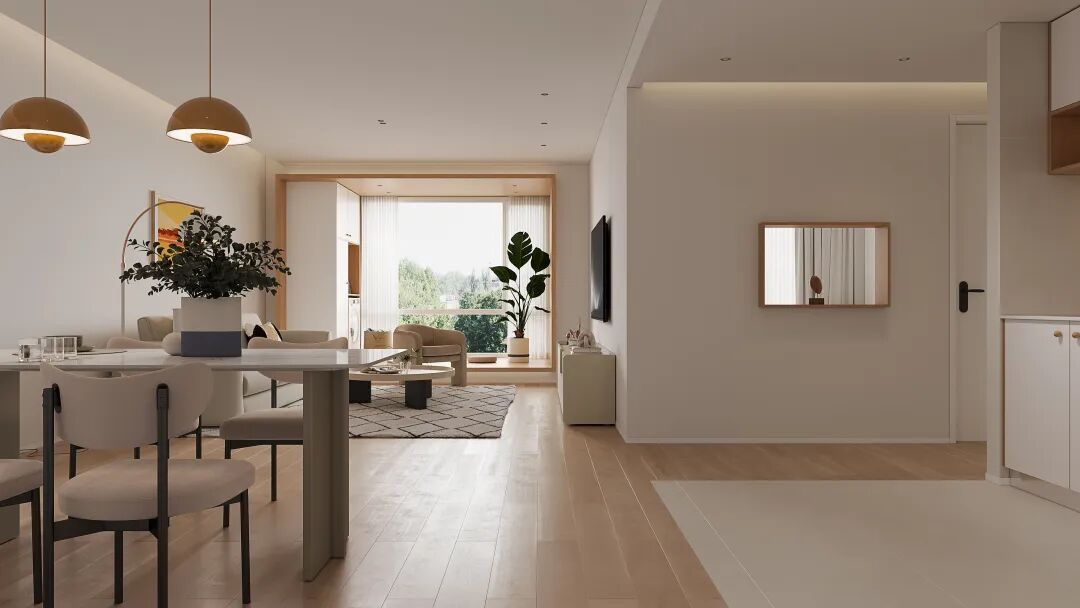
Zen Home 3.0
"Girl's Nest 1.0" is designed for exclusive shared rental for women in core urban business districts, and most of the target properties are old public housing units with favorable location and mature supporting facilities, but with small living & dining space and a bathroom of only over 1 square meter. The renovation focuses on five aspects: style renewal, space reconstruction, kitchen & bathroom upgrading, safety protection and customized design, and is equipped with visual door locks, intelligent smoke & gas detectors, bi-weekly exclusive cleaning service for women and 30-minute response maintenance service.
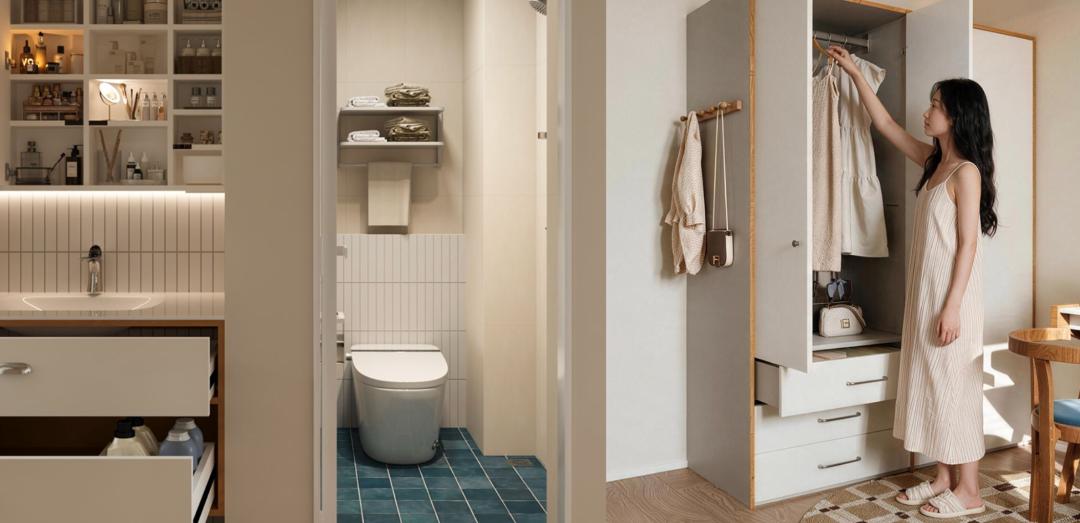
Girl's Nest 1.0
Yuan Zidan, the screenwriter of *Ode to Joy*, attended the event as a tenant of Zen Home: "Rental housing is no longer a temporary compromise before buying a house, but a long-term lifestyle that young people actively choose."
03
High-end Luxury Properties: Value Comes Exactly From "Non-standard"
If decentralized residential properties pursue efficiency under standardized frameworks, luxury properties go the exact opposite way. Mansion is Ziroom's high-end luxury residential long-term rental brand. According to Chen Kan, CEO of Mansion, there are more than 6000 luxury residential projects and around 600,000 luxury housing units in Beijing, Shanghai and Shenzhen, which can be divided into three categories by building age with completely different pain points: properties over 20 years old face high renovation cost and large cash flow pressure; properties aged 8 to 20 years old have concentrated supply and serious homogenization; most owners of properties aged 0 to 8 years old are asset allocation buyers, who have clear requirements for return on investment.
The tenant structure is also changing. Mansion originated in Hengfu Historical Conservation Area in Shanghai, and in the early stage it mainly served foreign enterprise executives, with the proportion of expatriate tenants once reaching 90%, which has now dropped to around 30%. Local high-net-worth families and entrepreneurs have become the main tenant group, mostly aged 30 to 36, with a relatively high proportion of women. Their demands are no longer simple rental, but the balance of asset maintenance, value preservation and rental income. Their requirements for products are not limited to "large space" and "luxury decoration", but also include international aesthetic, transformable space functions and butler-style services.
Two cases can illustrate the degree of "non-standard". For a luxury property in Dongcheng District, Beijing with many competing products in the market, Mansion placed a double-sided sofa in the center of the living room, which not only divided the functional areas but also weakened the abrupt feeling of the load-bearing column. The property was renovated and put on the market within 15 days, with the rental income increased by 10%. For a 500-square-meter river-view penthouse in Shimao Riviera Garden, Shanghai, the owner invested a lot in the original decoration but the property was left vacant for a year, and the expected rent was reduced from 80,000 yuan to 60,000 yuan but still failed to be rented out. Mansion demolished it to the rough state and re-decorated it, completed the project in 6 months, and the property was booked 2 months before completion, with the rental income doubled. This is also the most difficult segment to scale up among the three solutions: it cannot be replicated through product lines, but can only be realized through the combination of design capability, supply chain resources and high-net-worth tenant network.
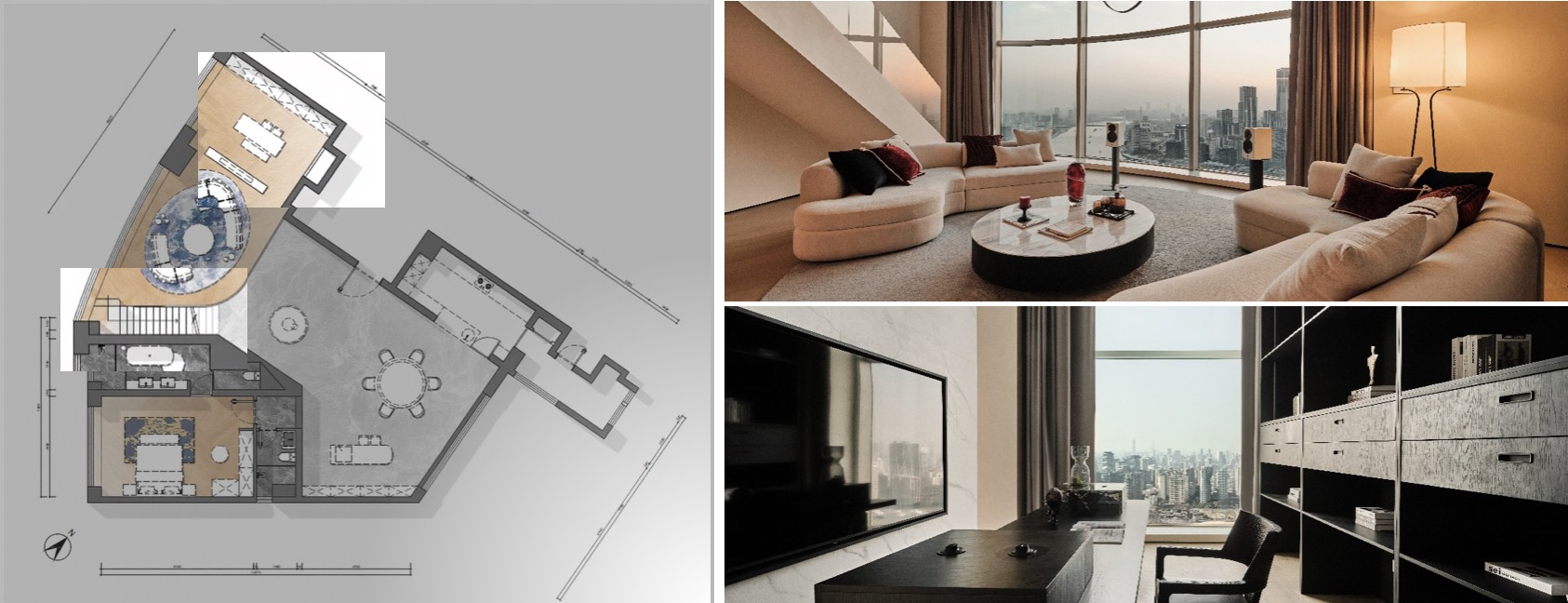
Mansion - River-view Penthouse Case in Shimao Riviera Garden, Shanghai
04
Whole-building Properties: From "Managing a Single Building" to the Full Cycle of "Investment, Financing, Construction, Operation and Exit"
Whole-building assets feature large volume, complex renovation, and are directly linked to urban renewal. According to Meng Yue, General Manager of Ziroom Asset Management, Ziroom Asset Management started from the first Ziroom Apartment in Beijing in 2012, and has expanded to 16 cities, managing more than 300 properties, around 70,000 housing units with a total floor area of over 2 million square meters. Its heavy asset scale exceeds 2 billion yuan, forming three operation modes: trusteeship, value-added and heavy asset. The trusteeship mode outputs brand, system and operation capability; the value-added mode adds design, construction and supply chain services; the heavy asset mode completes the full chain of "investment, financing, construction, operation and exit" through fund platforms. The corresponding product lines are divided into large full-time rental community "Ziroom Park", urban single-building youth community "Ziroom Apartment" and high-end serviced apartment "Mansion Residence".
Huisheng Ziroom Apartment in Yangpu, Shanghai is a referable sample. The project was formerly the No.7 Department Store of Yangpu, and was transformed into a combination of white-collar apartments and commercial spaces. In the past two years, its occupancy rate has remained above 97%, achieving a 4% rent increase under the overall pressure of falling rent, with a net operating yield of 7%. Meng Yue mentioned that the issuance threshold of public REITs in China is around 3.8%, and the 7% yield means this type of asset already has the foundation for securitization, which is the prerequisite for the realization of the "exit" link.
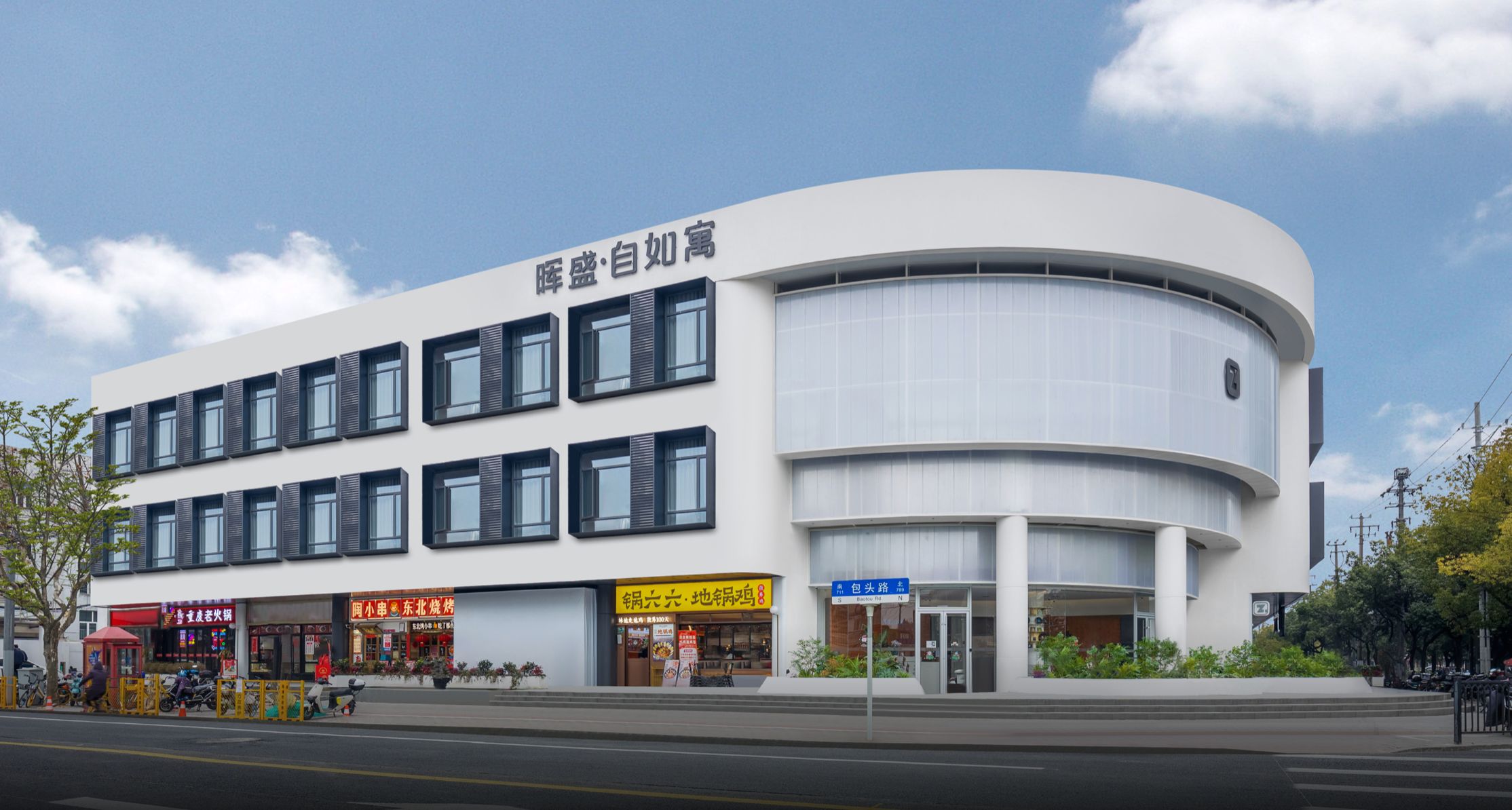
Huisheng Ziroom Apartment in Yangpu District, Shanghai
A larger sample is located in Beijing. Ziroom cooperated with a well-known fund to establish an asset management platform "Xingyao Rujing", and launched the large rental community "Xingyao Ziroom Park" in Shougang Park, Shijingshan District. Built according to the three-star green building standard, it is equipped with full-house intelligent systems, floor heating and a 400-square-meter HYROX gym. Young people can get supporting facilities close to high-end residential properties with a monthly rent of around 4000 yuan. The project carried out architectural and product design according to operation requirements from the land acquisition stage, with China Overseas Land & Investment responsible for development, and Xingyao Rujing responsible for project management and asset management, and will realize exit through bulk transaction or REITs in the future. Compared with the single-point operation of "only management" in the industry in the past, this is a complete asset cycle.
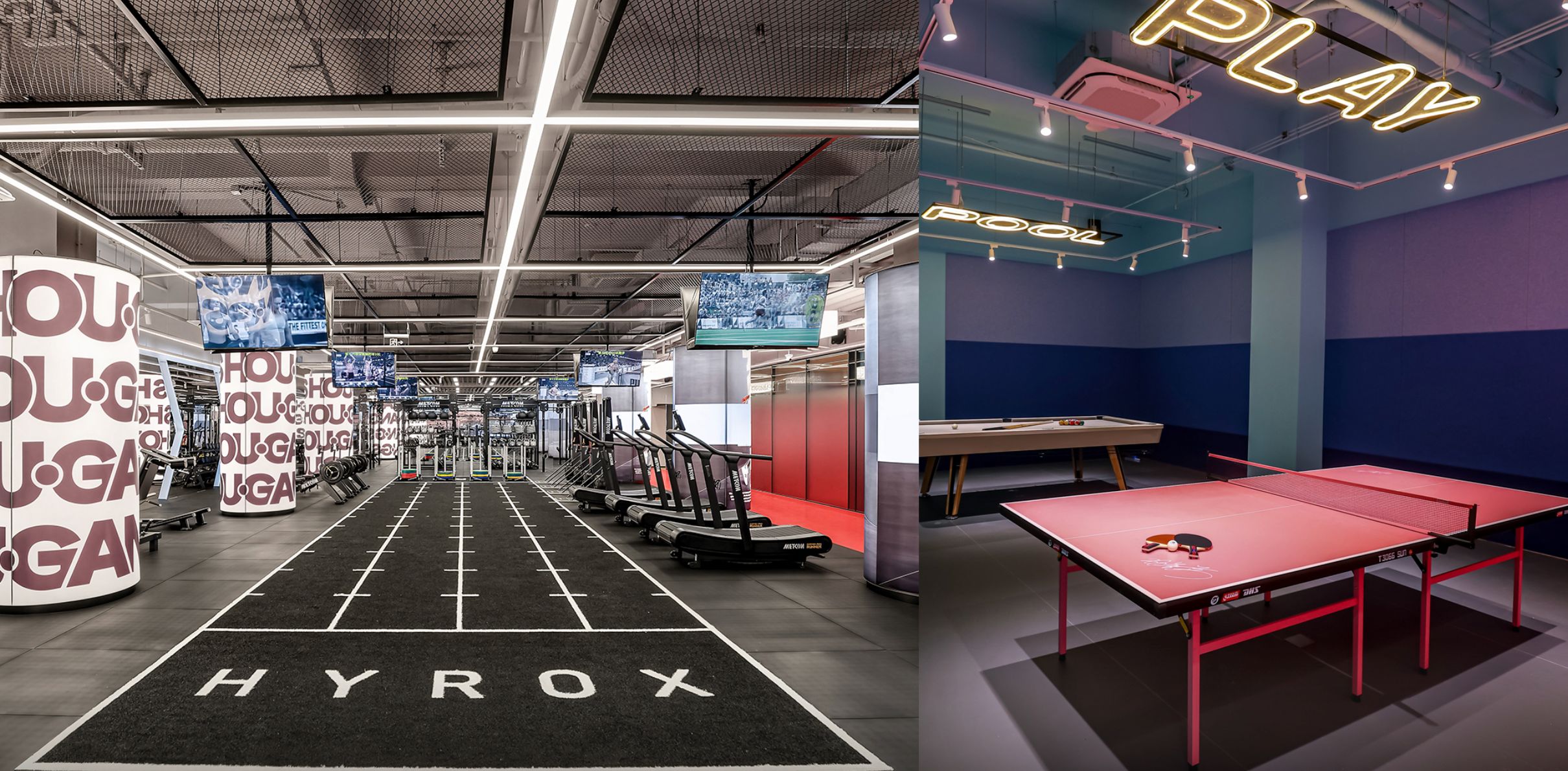
HYROX Themed Gym in Xingyao Ziroom Park, Shougang Park, Beijing
05
Behind Productization: A Standardized Underlying System
"One solution for one house" does not mean relying on individual cases and human-based management. The difficulty in operating China's stock assets exactly lies in their non-standard feature; to achieve large-scale and long-term operation, enterprises cannot only rely on scattered project experience. The three solutions seem to be three separate businesses, but in the implementation process they are three reuses of the same set of capabilities, supported by four core platforms.
Ziroom Smart Craft Precision Manufacturing Platform solves the problem of "how to deliver". With more than 1 million housing units cumulatively delivered in 15 years, its core is the C2M mode: applying standardized product definition to every different house through personalized design, supply chain and construction.
The life service platform solves the problem of "what to do after moving in". It meets the layered demands of families through three types of plans: "Enjoy", "Premium Enjoy" and "Exclusive Enjoy", with a total of 110 million orders delivered and more than 10 million families served. Tens of thousands of certified service providers cover 10 categories and more than 200 services including cleaning, maintenance, moving and pet care, which also covers urban commercial spaces such as stores and office buildings in addition to residential families.
Lingzhi