The salaries in the gaming industry have shrunk by 13% over four years, and 46% of the people earn less than before after re-employment. Is AI the cause?
The wave of layoffs in the gaming industry has lasted for many years, and more and more practitioners have to face a realistic problem: after losing their jobs, even if they successfully find the next job, can they still get the original salary?
The latest analysis from Amir Satvat, founder of ASGC, a gaming industry organization, points out that from November 2022 to October 2026, the estimated nominal salary corresponding to the same working experience in the gaming industry has dropped by about 13%. Measured against the U.S. inflation level, this means that the purchasing power of relevant salaries has decreased by about 23%.
The special feature of this set of data is that it not only focuses on whether practitioners still have jobs, but also tries to answer a problem that is easily overlooked: after years of industry adjustment, can the experience, ability and labor of gaming practitioners still get the same economic return?
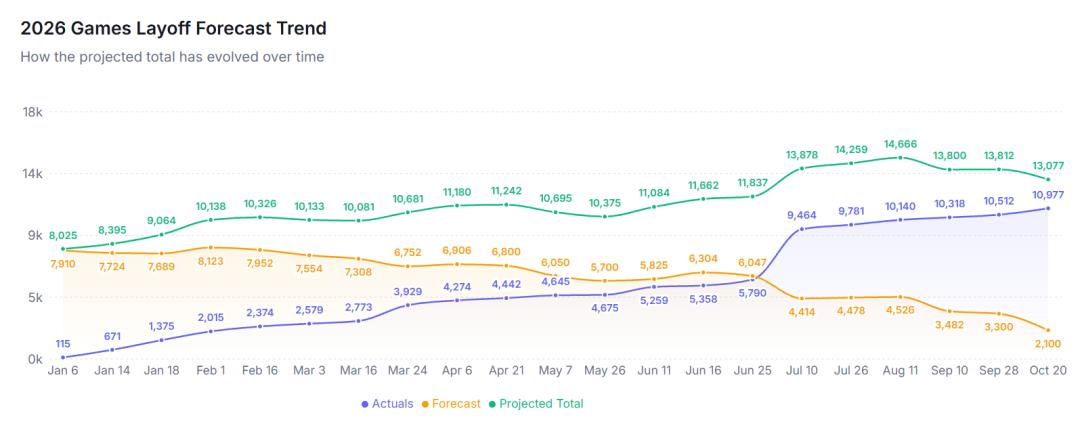
Number of layoffs in the gaming industry in 2026 (purple line) and ASGC's total forecast (green line)
It should be noted that the 13% and 23% are working estimates put forward by Satvat based on his community dataset, not official salary statistics covering the entire gaming industry. However, surveys released by institutions such as GDC, Skillsearch and InGame Job also present layoffs, salary satisfaction and re-employment pressure from different perspectives.
A number of studies jointly point to a warning trend: for gaming practitioners, the employment crisis may not only mean losing a job, but also mean that after re-entering the job market, they need to accept lower salaries, worse position conditions, or a longer job search cycle.
01
13% drop in four years: Is the salary in the gaming industry shrinking?
According to Satvat's analysis, from November 2022 to October 2026, the nominal salary corresponding to the same working experience in the gaming industry has dropped by about 13%. If calculated based on U.S. inflation, the decline in purchasing power reaches about 23%.
These two figures reflect different issues.
Nominal salary refers to the actual monetary income received, without considering changes in commodity prices; actual purchasing power further considers how many goods and services these incomes can buy. When salary growth cannot keep up with the rise in commodity prices, even if the salary figure does not change, the actual living standard of practitioners may decline.
Therefore, the 13% nominal decline is already worthy of attention, and the 23% decline in purchasing power further highlights the impact of long-term salary stagnation.
But there is a more noteworthy dimension in this set of data: Is the value of work experience also declining?
Satvat said his community dataset covers tens of thousands of people. One phenomenon presented by the data is that employers may now recruit talents with about three more years of work experience for similar positions at basically the same salary.
In other words, if a position used to pay a certain level of salary to candidates with five years of experience, today employers may expect candidates to have about eight years of experience, but are unwilling to provide a corresponding salary increase.
This does not mean that every gaming position has undergone the same change, but it reveals a potential recruitment trend: enterprises may continue to raise the experience requirements for candidates, but the salary may not increase synchronously.
For job seekers, this means that the competition criteria may be changing. In the past, the accumulation of work experience was usually regarded as an important basis for striving for higher salaries; in an environment where job supply is insufficient and candidate competition intensifies, more experience may not necessarily bring better offers.
02
After layoffs, re-employment may also mean a salary cut
If the overall salary change in the industry reflects the long-term trend of the market, then the re-employment situation after layoffs more directly presents the realistic pressure faced by practitioners.
Satvat cited a number of independent studies in his analysis:
GDC's 2025 survey of the U.S. gaming industry shows that among the respondents who were re-employed after layoffs, 25% reported that their salaries had decreased by at least 10%.
Skillsearch's 2026 report shows that among the re-employed respondents, 46% currently earn less than before.
Relevant salary surveys by InGame Job and Values Value show that from 2024 to 2025, the median salary for senior art and design positions in Europe, the United Kingdom and Switzerland decreased by 15%, and that for senior programming development positions decreased by 8%.
A survey by GameSoundCon shows that in the gaming audio field in the United States and Canada, the median salary of practitioners with no more than two years of work experience decreased by 6% between 2023 and 2025.
These figures do not come from the same survey, involving different regions, positions, work experience and statistical cycles, cannot be directly added up, and cannot be used to conclude that all positions in the entire gaming industry are synchronously reducing salaries.
But they at least reveal a noteworthy phenomenon: among some surveyed groups, the income recovery after layoffs is not ideal, and the salary level of some specific positions has also declined.
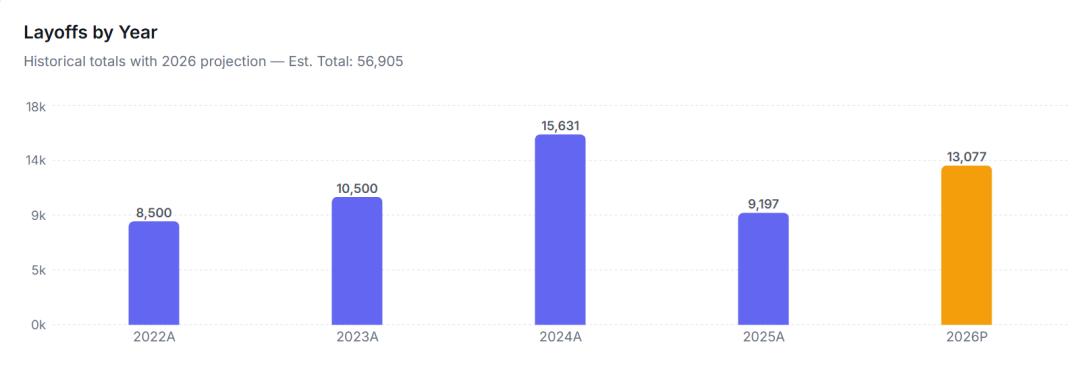
ASGC shows the number of layoffs each year
It is particularly noteworthy that the salary drop after re-employment and the income interruption caused by unemployment itself are two different types of economic losses.
Assuming a practitioner originally earned $80,000 a year, found a new job after several months of unemployment, but the annual salary dropped to $70,000. Even if he has been re-employed, his annual salary is still reduced by 12.5%. If we further consider the income lost during the unemployment period and the changes in living costs during the same period, the actual economic loss will be more obvious.
More importantly, this impact may last for several years in the future. If the starting salary of the new position is lower, and subsequent salary increases are calculated based on a lower salary base, then a single layoff may affect the cumulative income of practitioners in the following years.
Therefore, when measuring the recovery of the job market, simply counting the number of re-employed people is not enough — finding the next job only means that the employment relationship has been restored; whether the salary, position and career development can be restored are three other separate questions.
03
Is AI the cause of the salary drop?
When layoffs, intensified job competition and salary pressure appear in the gaming industry, artificial intelligence naturally becomes the focus of discussion.
Generative AI is changing part of the work process, including program assistance, prototyping, content generation and repetitive task processing. Some practitioners worry that enterprises will use these tools to improve production efficiency and reduce personnel demand accordingly; other practitioners believe that AI can reduce development costs and help teams complete work that was difficult to undertake in the past.
Satvat clearly pointed out when releasing the salary estimates that the data he used cannot determine whether AI has had an impact on the salary decline. This point is very important, because the industry has also experienced many other factors in the same period, such as expansion during the epidemic and subsequent adjustments, project cancellations, studio closures, corporate restructuring and changes in recruitment demand.
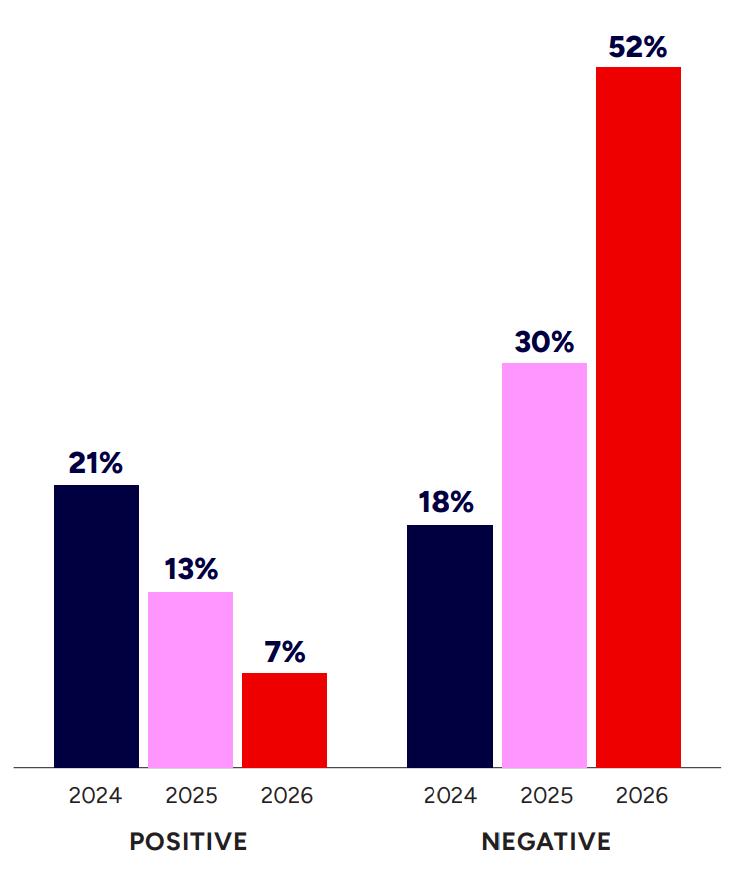
GDC's 2026 survey shows that 52% of respondents believe that generative AI is having a negative impact on the gaming industry, which is higher than the proportion in previous annual surveys. This reflects that practitioners' concerns about AI are deepening, but it measures the subjective judgment of respondents, not the actual causal effect of AI on the number of positions or salary levels.
To prove that AI is suppressing salaries in the gaming industry, more specific evidence is needed, such as the number of recruitments, salary changes, productivity changes of different positions before and after the popularization of AI tools, and whether enterprises have reduced personnel demand due to the adoption of AI.
But there is no doubt that AI will continue to be an important discussion topic for changes in the gaming industry labor market.
04
The employment crisis in the gaming industry is not just about whether there is a job
From the estimates of a 13% drop in nominal salary and an approximate 23% drop in purchasing power, to the income loss of re-employed people after layoffs, to the extended job search cycle and worse working conditions, a number of surveys present the pressure that gaming industry practitioners are facing from different perspectives.
These data cannot prove that all gaming positions are cutting salaries, nor can they show that every practitioner's income is declining. There are still significant differences among different regions, positions, seniorities and enterprises.
But they collectively remind the industry of a noteworthy issue: The recovery of the job market should not only be measured by whether practitioners have found new jobs, but also by whether their salary, position and career development after re-employment have been restored.
If enterprises can recruit talents with more experience at basically the same salary, if some job seekers need to accept lower salaries or positions to get re-employed, then even if a person eventually returns to the gaming industry, the economic return of his career development may have changed.
For practitioners, this means that the relationship between job stability, salary negotiation and skill accumulation may need to be re-evaluated; for enterprises, the larger choice space in the recruitment market should not overshadow the issues of long-term talent development and salary equity.
As for whether AI will further change this market, no clear answer can be drawn from the existing data at present.
But at least one point is worthy of attention: to measure the employment situation of the gaming industry, we can not only ask how many people have lost their jobs, nor can we only ask how many people have found new jobs. We also need to ask: when they return to their positions, can the experience, ability and time they have accumulated in the past still get corresponding returns?
Source of citation: 《Game industry pay has fallen 13% since 2022 | Amir Satvat》
This article is from the WeChat official account "DataEye" (ID: DataEye), written by DataEye Research Institute, and published with authorization from 36Kr.