145 IP co-branding collaborations, 4.3 billion yuan in marketing expenses: Are new-style tea brands trapped in the dilemma of "being unable to stop launching co-branding campaigns"?
IP co-branding mishaps are not uncommon, but it is still surprisingly conspicuous for a brand to step into trouble four times in a row within two months. This brand, oddly enough, is none other than Luckin Coffee, a heavyweight in IP co-branding. Since August 3, it has successively rolled out co-branding campaigns with four IPs: "Big Fish & Begonia", "Zhang Binzhi and Wang Huanjun", "MIND.A.DAY" and "Link Click", but has encountered a series of problems one after another, including netizen boycotts triggered by the IP director's controversial remarks, public resentment caused by the forced promotion of a little-known couple IP whose packaging materials were accused of being vulgar, disputes over the political stance of the IP's original team, and multiple printing errors in co-branded materials.
In an era when IP co-branding has become a normalized marketing method for brands, the frequency of co-branding is getting higher and higher, but what is ultimately exchanged is not necessarily a sharp increase in sales, but may instead damage the brand's reputation. Especially for the freshly made tea and coffee track, the more severe problem is not that out-of-circle co-branding cases are increasingly scarce, but that after rounds of IP co-branding hype and hundreds of millions or even billions of yuan in annual marketing investment, the core characteristics of the brands themselves have become increasingly blurred. Everyone is doing co-branding, even co-branding with the same IP, but the group of consumers who came for the IP have not stayed for the brand after a single co-branding activity.
When co-branding changes from a scarce marketing event to a fixed schedule, is it still really effective? When everyone is doing co-branding, how can brands find their own differentiation? In this issue, Lei Report sorts out the IP co-branding events of major domestic freshly made tea and coffee brands from January to September, reviews the core crux of co-branding failures, and discusses the growth anxiety and differentiated exit paths for freshly made tea and coffee brands under the normalization of co-branding.
145 co-branding activities in 9 months, 4.3 billion yuan in marketing expenses for 7 companies,
Is IP co-branding really cooling down?
Let's first look at the overall market situation. According to incomplete statistics from Lei Report, from January to September this year, 19 major freshly made tea and coffee brands launched a total of 145 IP co-branding activities, with an average of one co-branding every 1.9 days. Considering that there are far more than 19 freshly made tea and coffee brands in the market, the news of IP co-branding is almost non-stop for consumers.
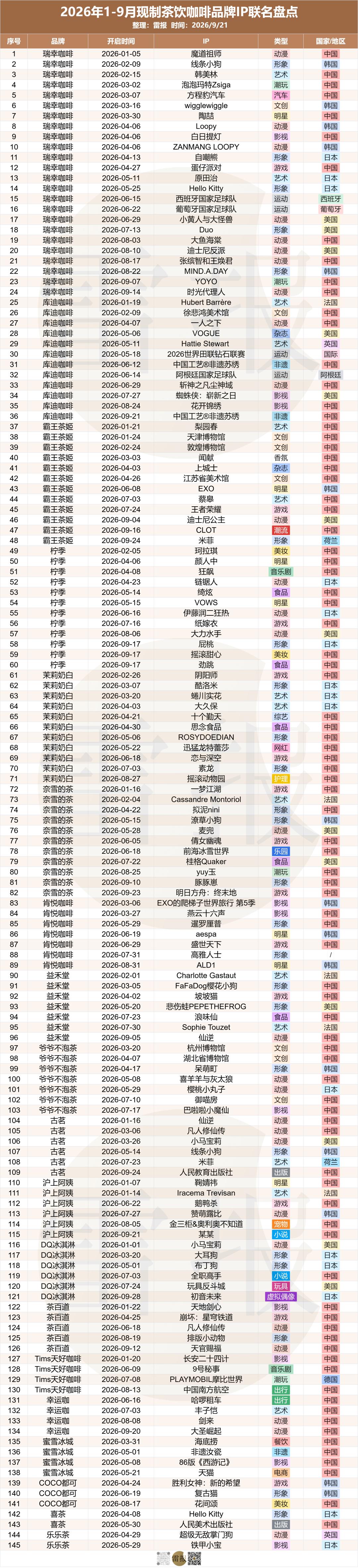
In terms of co-branding frequency, Luckin Coffee, which suffered 4 mishaps, still leads the track by a large margin, with a total of 24 co-branding activities. As the saying goes, "he who often walks by the river will inevitably get his shoes wet". Among other brands, the highest co-branding frequency is only half of Luckin's: Cotti Coffee, Bawangchaji and Ningji each have 12 co-branding activities, Moli Nai Bai and Nayuki each have 11 co-branding activities, and the rest of the brands have less than 9 co-branding activities, which has not reached the average frequency of once a month.
Meanwhile, compared with the same period last year, among the 14 brands tracked by Lei Report for a long time, 6 have increased their co-branding frequency, 6 have decreased, and 2 have remained flat. However, only from the dimension of co-branding frequency, last year was already the inflection point of the industry, and many brands have reduced their co-branding frequency. Therefore, compared with the peak in 2024, 9 of the 12 brands with available data have reduced their co-branding frequency. Among them, Heytea's change is the most remarkable: its co-branding frequency reached 27 times from January to September 2024, but it has dropped to 1-2 times in the recent two years. Other brands that have reduced their co-branding frequency by more than half include Guming, Mixue Ice Cream & Tea, Nayuki, Aunt Fu's, ChaPanda, Lelecha, etc.
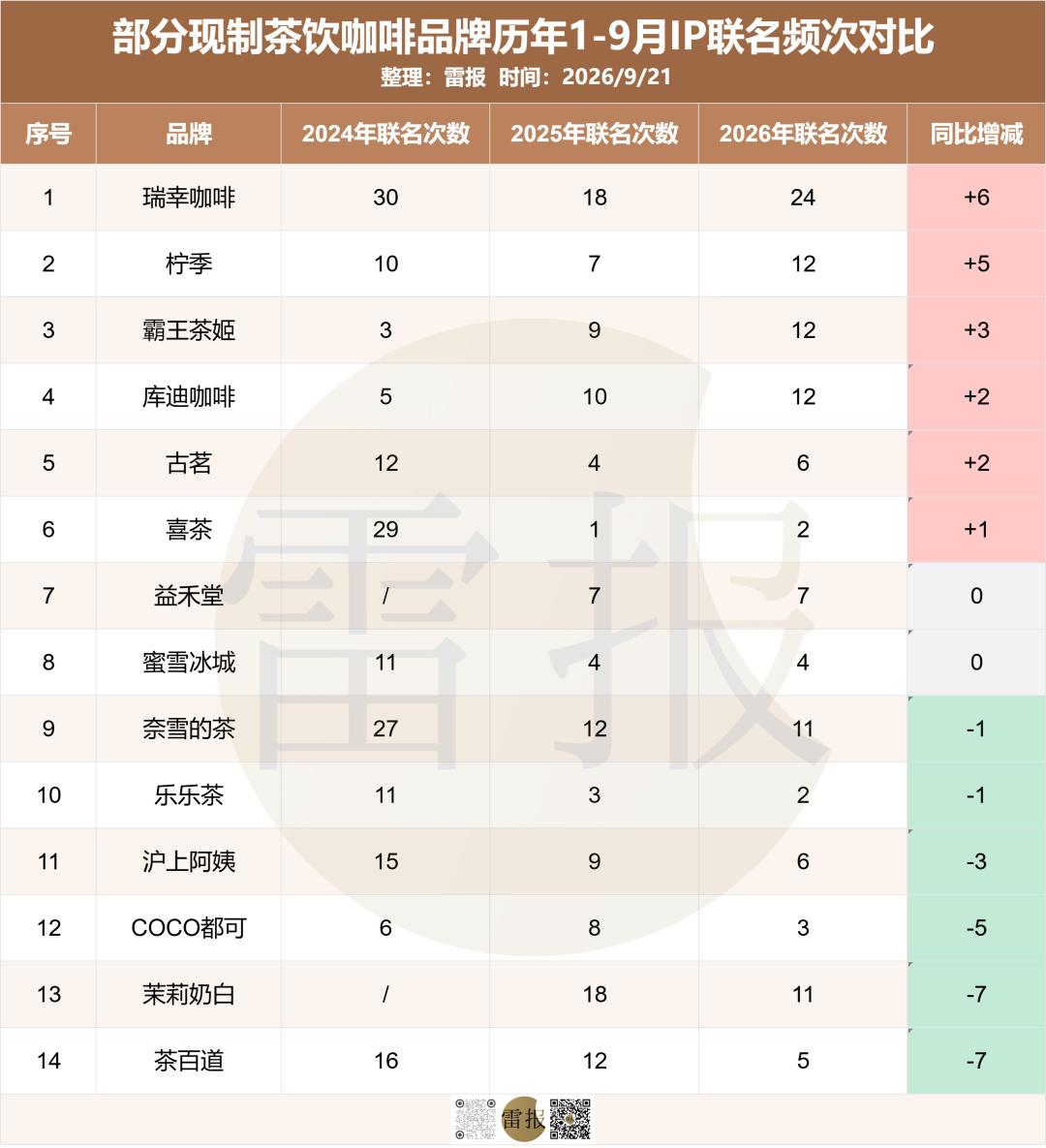
It can be seen that although the industry and consumers generally believe that there are too many IP co-branding activities (iiMedia Research survey data shows that 61.1% of respondents believe that the overflow of co-branding is the main problem existing in the new tea beverage industry), when it comes to individual brands and compared with the peak period in 2024, the co-branding frequency of most brands is actually not high now.
However, under the influence of some high-frequency co-branding brands in the past few years, consumers' perception of co-branding of the whole category has been significantly raised. This leads to the fact that even brands that rarely do co-branding are easily involved in the general impression of "co-branding overflow". In addition, consumers have long been "full" or even "fed up" with high-frequency co-branding for many years. Today, the effect of IP co-branding is far from the phenomenal out-of-circle success of "Luckin x Moutai" and "Heytea x FENDI" in the past. Even the conversion within the target circle is often greatly reduced because the IP circulates among multiple brands.
The effect is declining, but the investment has not decreased.
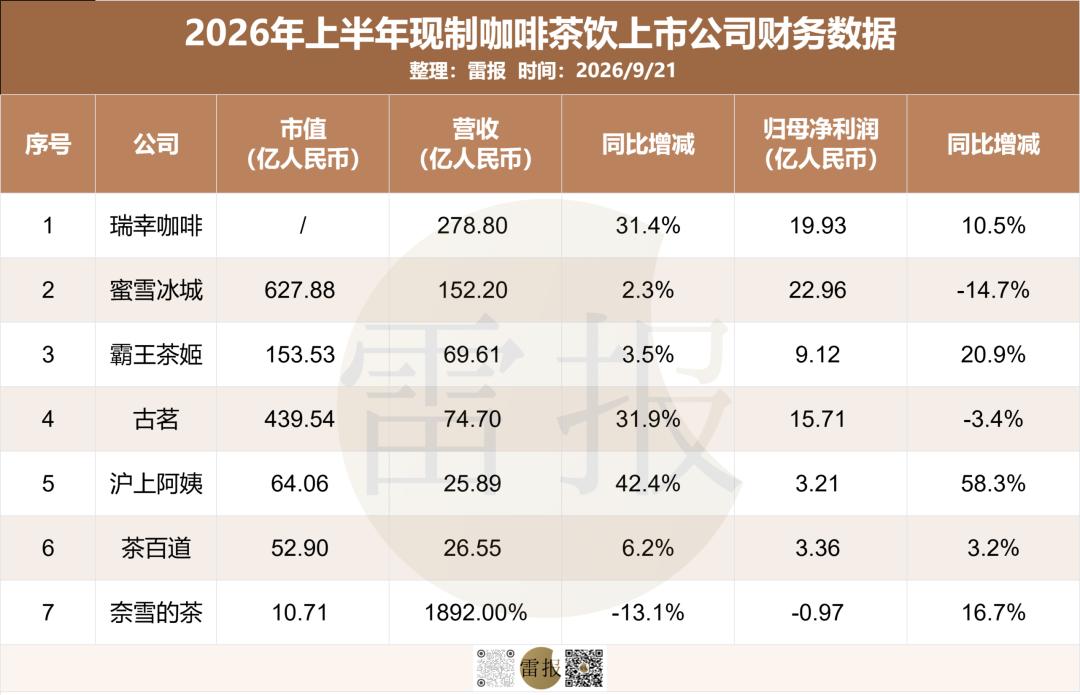
Lei Report's statistics on the semi-annual reports of 7 major listed companies in this track show that in the first half of 2026, the cumulative marketing expenses of the 7 companies (including sales, distribution, advertising and promotion and other related expenditures) reached as high as 4.3 billion yuan. Among them, except for ChaPanda, the marketing expenses of 6 companies have increased, and Luckin Coffee and Aunt Fu's have even increased by more than 50% year-on-year. In terms of marketing expense ratio, all 7 companies exceeded 5%, of which Aunt Fu's and Bawangchaji reached 11.3% and 8.7% respectively, and Mixue Ice Cream & Tea also reached 7.4%.
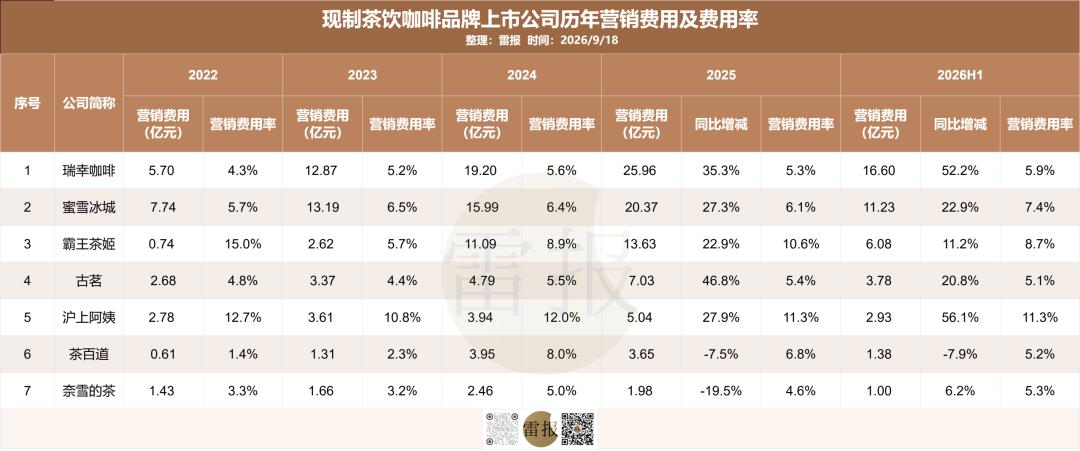
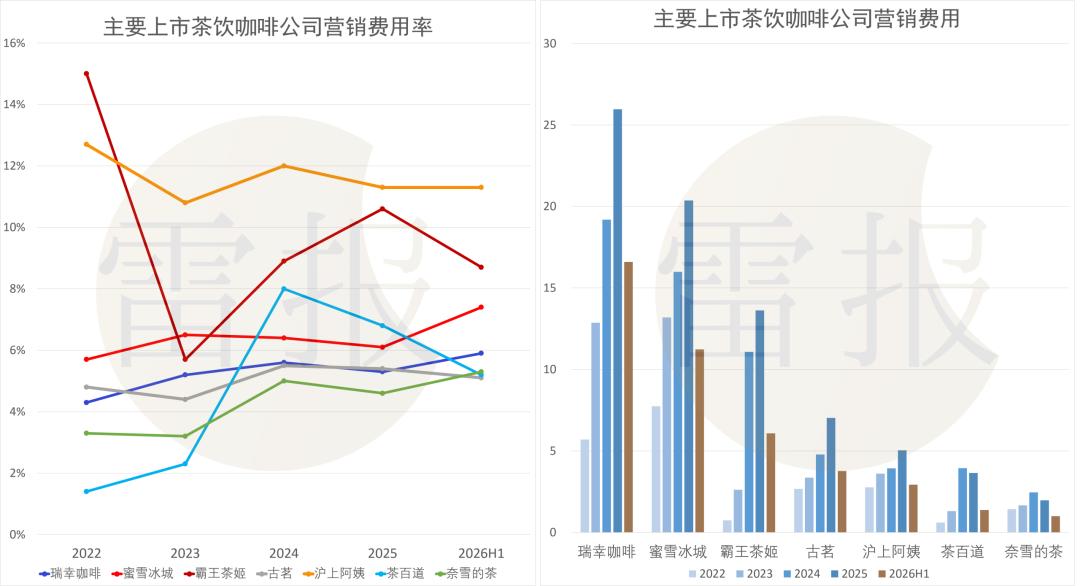
In terms of performance, 6 of the 7 companies achieved profitability in the first half of the year, among which Luckin Coffee, Bawangchaji, Aunt Fu's and ChaPanda achieved year-on-year growth in net profit. However, both Luckin Coffee and Bawangchaji are facing a decline in the average monthly GMV per store: the former decreased by 5.3%, while the figure in the same period last year was a 13.8% increase; the latter decreased by 16.3% year-on-year (stores in China).
Deep cultivation of niche circles, regional limited releases, long-term binding:
Are the new tactics saving co-branding or saving the brand?
Of course, in the face of weak market feedback, freshly made tea and coffee brands are not indifferent, but have begun to try some new co-branding tactics:
First, since it is impossible to achieve out-of-circle influence, brands take the initiative to go deep into small vertical circles and focus on short-term conversion. Therefore, in addition to the common animation, image, game, film and television IPs, more art design, intangible cultural heritage cultural and creative, internet celebrities, sports events, and even food, clothing, travel, publishing, pet and other fields have also been included in the scope of IP co-branding. For example, in May this year, Moli Nai Bai cooperated with the well-known internet celebrity @Trexler Teresa, not only launching limited peripherals and themed activities, but also launching large-screen promotions simultaneously in 20 cities across the country.
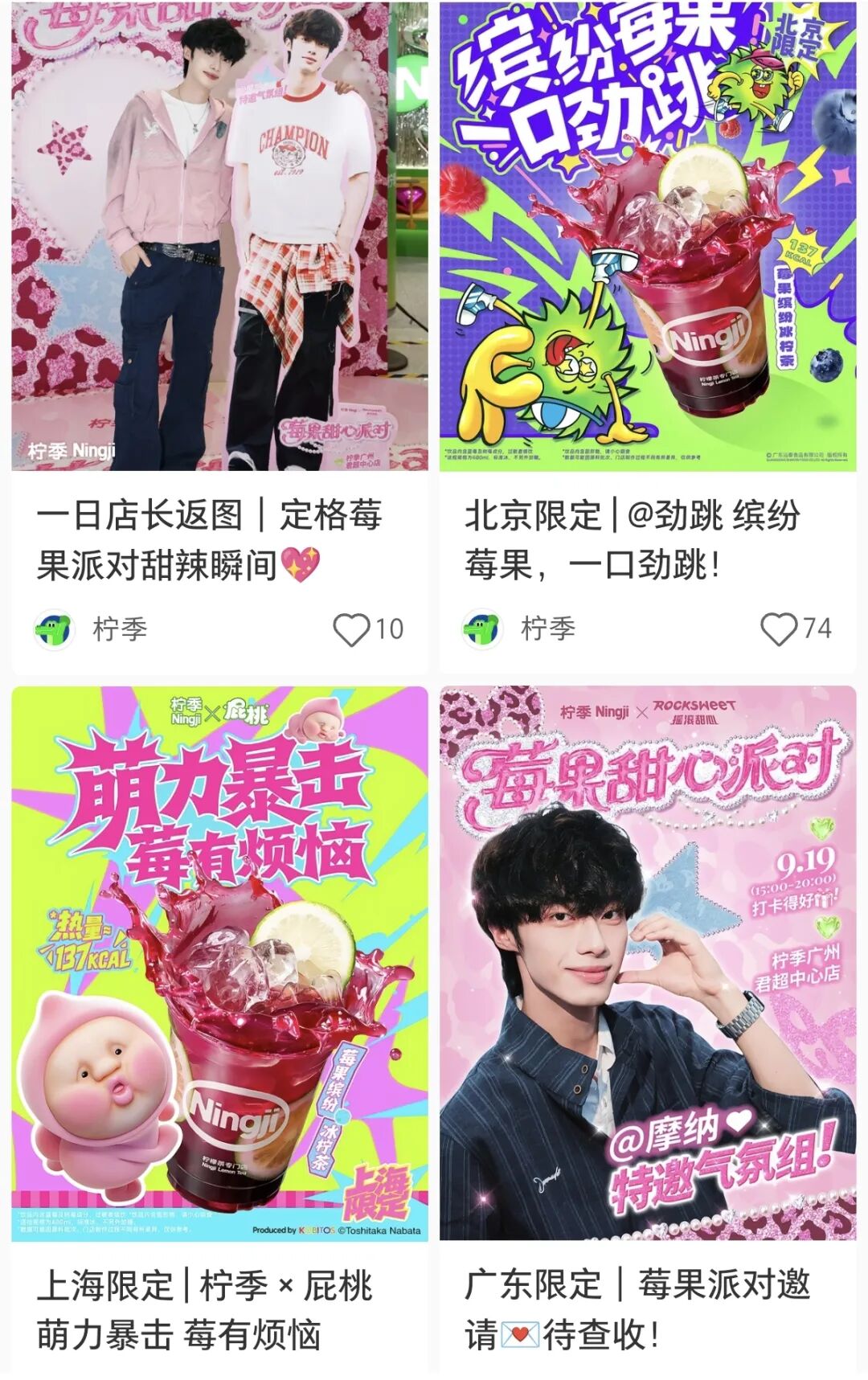
Second, since the scarcity of IP co-branding no longer exists as before, brands artificially create scarcity. Compared with the previous national co-branding campaigns, many current co-branding campaigns are focused on regional limited releases. For example, Bawangchaji has created regional limited peripherals for Jiangsu Provincial Art Museum and Tianjin Museum this year, and also cooperated with the South Korean boy band EXO to launch co-branding activities limited to Hong Kong and Macao regions. Ningji recently launched regional limited co-branding activities in Guangdong, Beijing and Shanghai with the cosmetics brand Rock Sweetheart, snack brand Jump Pop and Peach IP respectively.
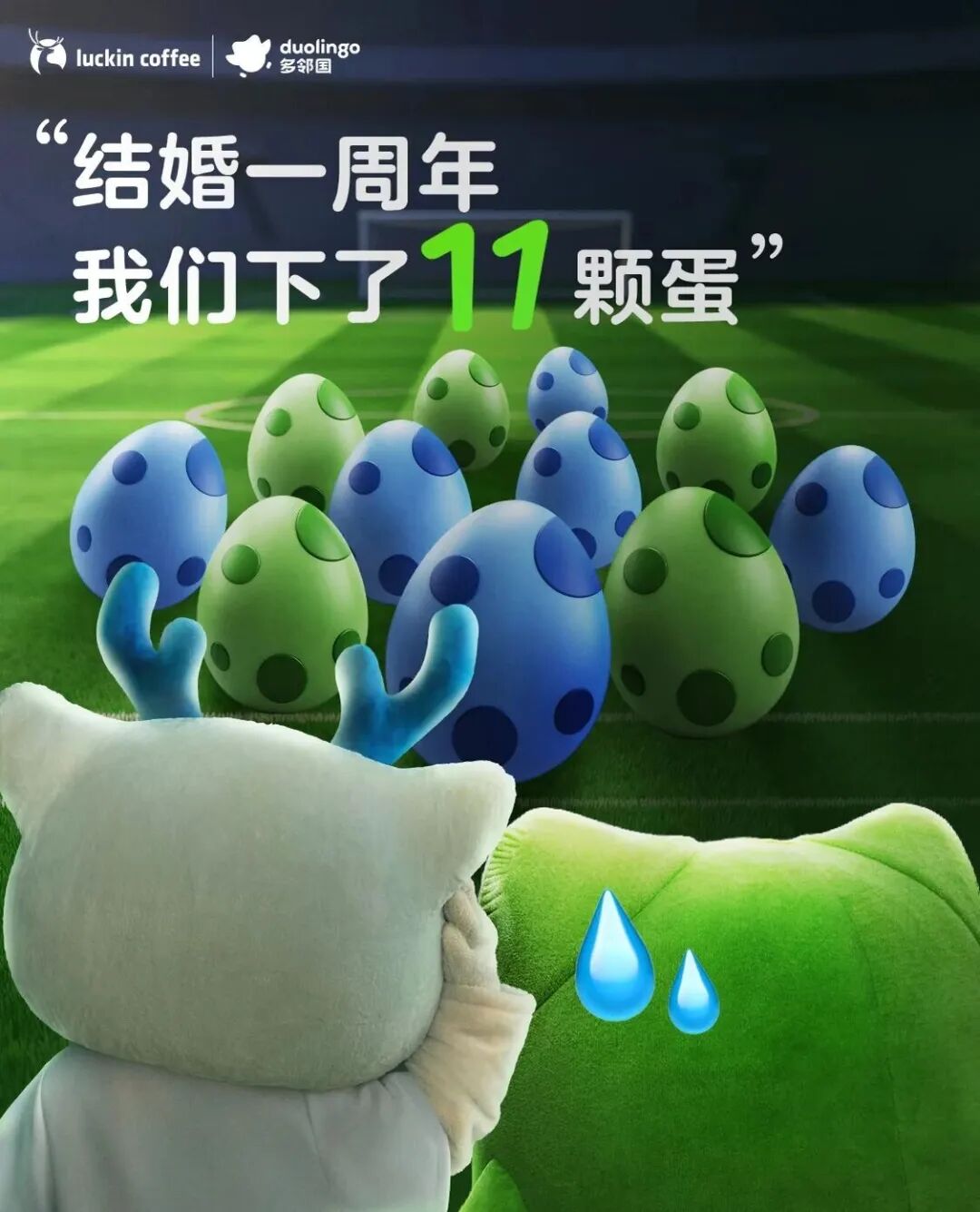
Third, since head IPs are limited, it is better to turn the co-branding with a single IP into a long-term binding relationship. Luckin's case is the most typical in this aspect: on the one hand, its own IP image has formed a CP relationship with Duo on the Internet, from "getting married" and "going on honeymoon" to various daily life after marriage, and then announcing that "they have 11 children" on the first anniversary of their marriage this year, turning co-branding into a serial-style co-creation. Consumers look forward to the next episode like chasing a drama, and the brand also continues to create topics, drive exposure and repurchase. In addition, since Luckin first co-branded with Line Friends on Valentine's Day in 2023, the two sides have cooperated stably for three years, and the co-branding activity is deeply bound to Valentine's Day and comes as scheduled every year.
However, the above new trends are mostly minor revisions to the IP co-branding model, and their impact on the overall IP co-branding market is limited after all.
On the one hand, these adjustments have not made the co-branding strategies of the above brands truly form differentiated characteristics. For most IP consumers, the current pain point of the industry's co-branding is not only that a certain brand does too much co-branding, but that the whole track is doing co-branding, so that consumers can't tell the difference between brands. Leaving aside the differences in products, in terms of IP co-branding alone, the choice of co-branding IPs of various brands is often random, and they co-brand with whatever is popular, without any systematization.
Even if a brand occasionally focuses on linking a certain type of IP for a period of time to create a sense of series, under the logic of traffic, it will soon turn to chase new popular IPs. As a result, popular IPs are co-branded by one brand after another, and the main assets left by each co-branding activity belong to the IP, while the brand's own role disappears.
It should be noted that co-branding is essentially a strategy of "renting external recognition". Brands borrow the existing user emotion and symbolic value of IP to obtain short-term attention and conversion. But brands should not only focus on the short term when doing co-branding, but also ask: will these users who come for the IP stay for a long time? When the brand launches the next co-branded product with a new IP, will the users who came for the previous IP still place orders for the brand?
On the other hand, when more and more IP co-branding activities focus on the so-called "scarcity", "limited release" and "niche circle", it is easy to make the brand's marketing coverage smaller and smaller. The result is often that except for a few projects with fairly good conversion rates, most co-branding activities are launched quietly and then taken off the shelves quietly, without any splash, just making the brand look like it is "doing something".
But what on earth can this busy state bring to the brand? For the large number of pan-circle users, the high-frequency co-branding of brands does not bring more choices, but decision-making burden, and even a kind of "entropy increase" (the more co-branding activities, the more noise and interference, and the less effective information between brands and consumers). They do not have clear IP preferences like core fans, and every time they see a co-branding activity, they have to re-judge "what does this have to do with me".
The result is that the core information that the brand can really retain users is covered, and all consumers can remember is that the brand has co-branded with another "IP I don't know".
But for these tea and coffee brands, every co-branding activity is supported by a series of real costs such as licensing fees, product development, peripheral production, media placement, store training, and material inventory.
4 mishaps in two months, what happened to Luckin? What common problems have been exposed?
As for Luckin Coffee's 4 co-branding mishaps, they have intensively exposed the risks in all links of IP co-branding.
The "Big Fish & Begonia" co-branding in August had problems with the speech risk of the characters associated with the IP. Animation director Liang Xuan published a ten-thousand-word long article on the 10th anniversary of the work, describing Zhou Shen as an alternative that "we only thought of when we had no other choice", and publicly stated that "I'm sorry Zhou Shen, I like Liang Bo". This highly controversial speech aroused public outrage, and a large number of Zhou Shen's fans boycotted activities such as the re-screening of the animation and related concerts, which further affected the co-branding activity. In addition, "Big Fish & Begonia" itself has long-standing disputes in terms of script, lines and values, so the co-branding ended hastily in the end.
For the subsequent Qixi Festival co-branding, Luckin chose the animation IP "Wang Huanjun and Zhang Binzhi" which is based on the real love experience of real-life bloggers. A large number of names, images and daily love stories of the two protagonists are printed on the cup sleeves and handbags. Consumers' first reaction was not romance, but confusion: "Who are these two people?" Complaints like "paying to watch strangers fall in love" and "it's like giving money to others as a wedding gift" quickly went viral. What's more serious is that public opinion quickly escalated from dissatisfaction with the IP's low popularity to criticism of the IP itself - some netizens pointed out that the composition and storyboard of this animation are highly similar to many Japanese and Korean comics, suspected of being a "patchwork comic", and some pictures of the co-branded packaging materials were also