As Apple celebrates its 50th anniversary, are its original aspiration and unwavering dedication still intact?
In 2026, Apple celebrates its 50th anniversary.
The "Tao of Wealth" book series proudly launches Apple: The 50-Year Legend. This is the first unrestricted authorized corporate biography of Apple since its founding. Written by David Pogue, Emmy Award winner and New York Times bestselling author, the book features in-depth interviews with 150 key Apple figures, drawing on authoritative and exclusive first-hand information to restore the true development history of Apple.
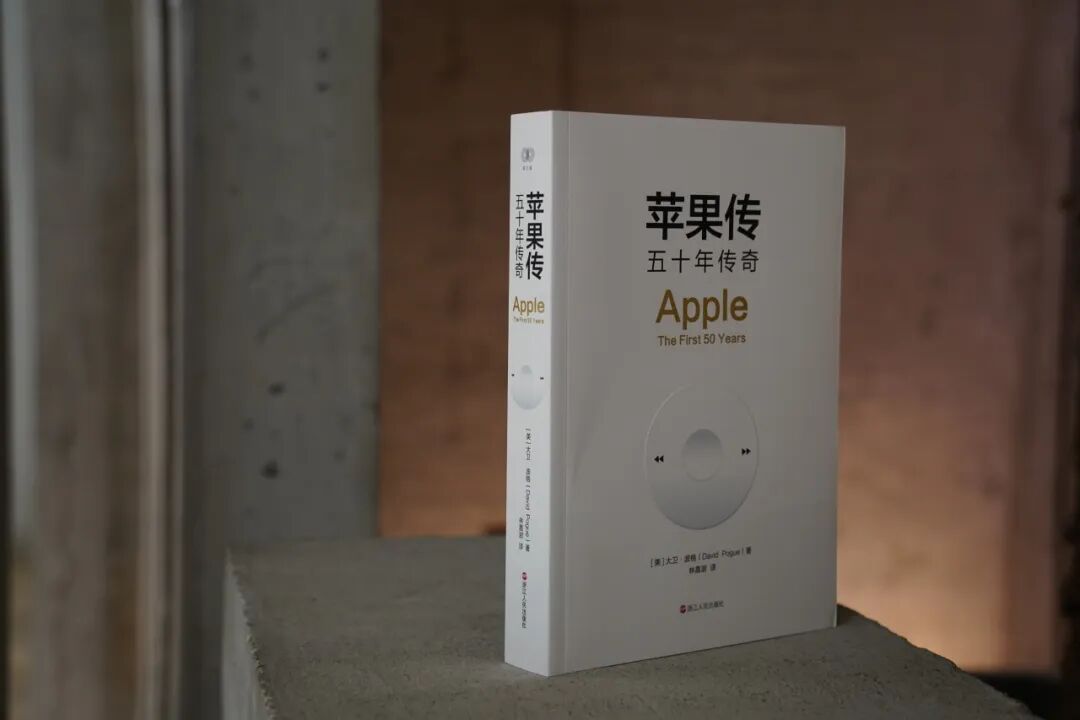
Over the past 50 years, Apple has created a series of exquisite, minimalist, elegantly designed products including Mac, iMac, iPod, iTunes, iPhone, iPad, AirPods, Apple Watch, redefining people's perception of the beauty of technology.
This book delves into the complete 50-year history of Apple, with around 350 photos. It not only records Apple's glories, but also does not shy away from its failures and lessons. The book is interspersed with countless stories of all-night work marathons, genius engineers and creative rebels that are too numerous to take in all at once.
This is not just a book about Apple, but also an epic documentary work about innovation, persistence and cultural reshaping, suitable for all technology enthusiasts, design fanatics, and readers who have ever been inspired by Apple products.
This article is excerpted from Apple: The 50-Year Legend
Text by [US] David Pogue
Apple
Two Steves
"I have worked for five companies," says Myra Haggerty, "and all of them are called Apple."
Haggerty has worked at Apple since 1993 and is currently Vice President of Sensor Software and Prototyping. Her words make perfect sense. In its first 50 years, Apple has changed its logo three times, moved its headquarters four times, and had five CEOs. In 1976, Apple was just two scruffy guys named Steve selling circuit boards. By 2026, its annual revenue is approaching 400 billion US dollars — more than the sum of Meta (formerly Facebook), Netflix and Intel.
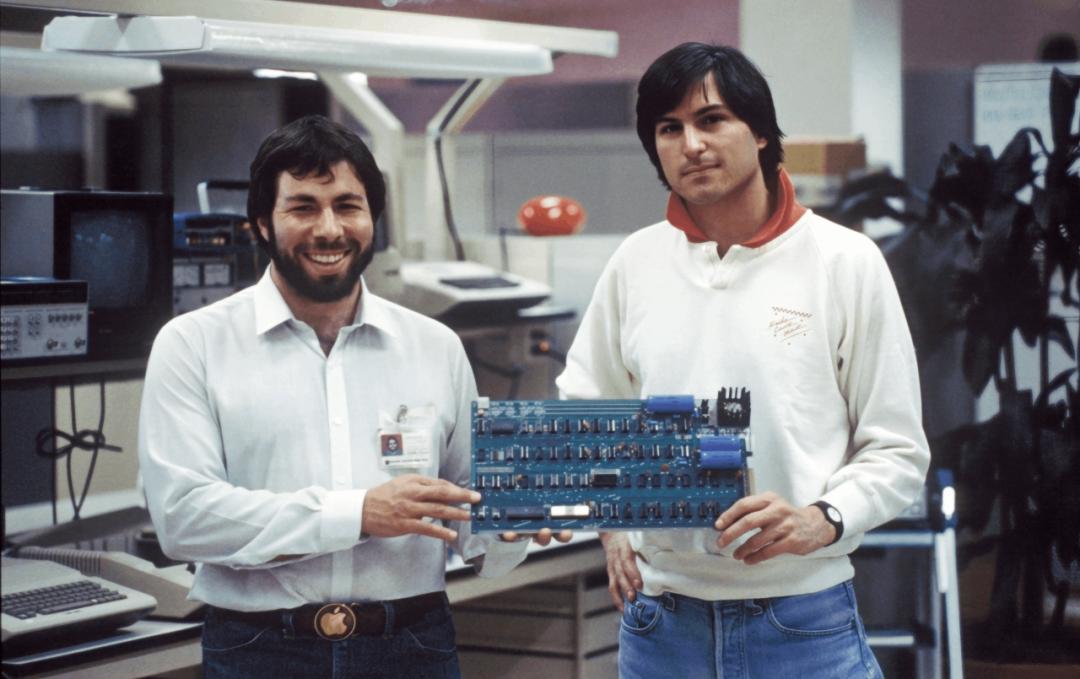
The two Steves showing one of the first completed Apple I circuit boards
Is Apple still the same company it used to be?
To a large extent, you can find the answer in the story of Steve Jobs. In its first 50 years, he spent less than half of that time at Apple, but many of Apple's consistent threads can be traced back to him: minimalist, aesthetic and elegant design; full control of both software and hardware; focusing only on a very small number of products; closed systems; and a culture of confidentiality.
This formula seems to work. Today, 27% of the global population uses Apple products — that is 2.2 billion people. If they were treated as a country, it would be the most populous country in the world, larger than India or China.
In 1976, the two Steves sold 150 Apple I circuit boards and were already over the moon with excitement. By 2026, Apple sells 220 million iPhones every year, raking in 1 million US dollars on average every 90 seconds.
These figures are already staggering, but they pale in comparison to another miracle: Apple has managed to survive to this day. In the dark years without Steve Jobs, the company was falling apart. There was a period when the company was less than six weeks away from bankruptcy, and executives were desperately trying to sell it off — dumping the once highly respected brand at a flea market price. Even then, no one was willing to take it over.
Everything went wrong: products, corporate structure, distribution channels, marketing, the board of directors, and the hordes of fools running rampant across the company — everything was completely broken.
Then Jobs returned to Apple and turned everything around in just one year.
No matter what you think of Steve Jobs — his genius, his mercurial temperament, his passion, his narrow-mindedness — you have to admit that he pulled off one of the greatest turnarounds in American history.
You probably already know what happened next: iMac, iPod, iTunes, iPhone, iPad. The App Store, the Apple Store. Then the music industry was reshaped. Later, under Tim Cook's leadership, AirPods and Apple Watch came out one after another. The business territory continued to expand into areas such as payments, health technology, streaming media, chip design, and digital services. During Cook's tenure, Apple became the first company in history to reach a market capitalization (the total value of all its shares) of 1 trillion US dollars. Then 2 trillion, then 3 trillion. In 2025, it hit 4 trillion US dollars.
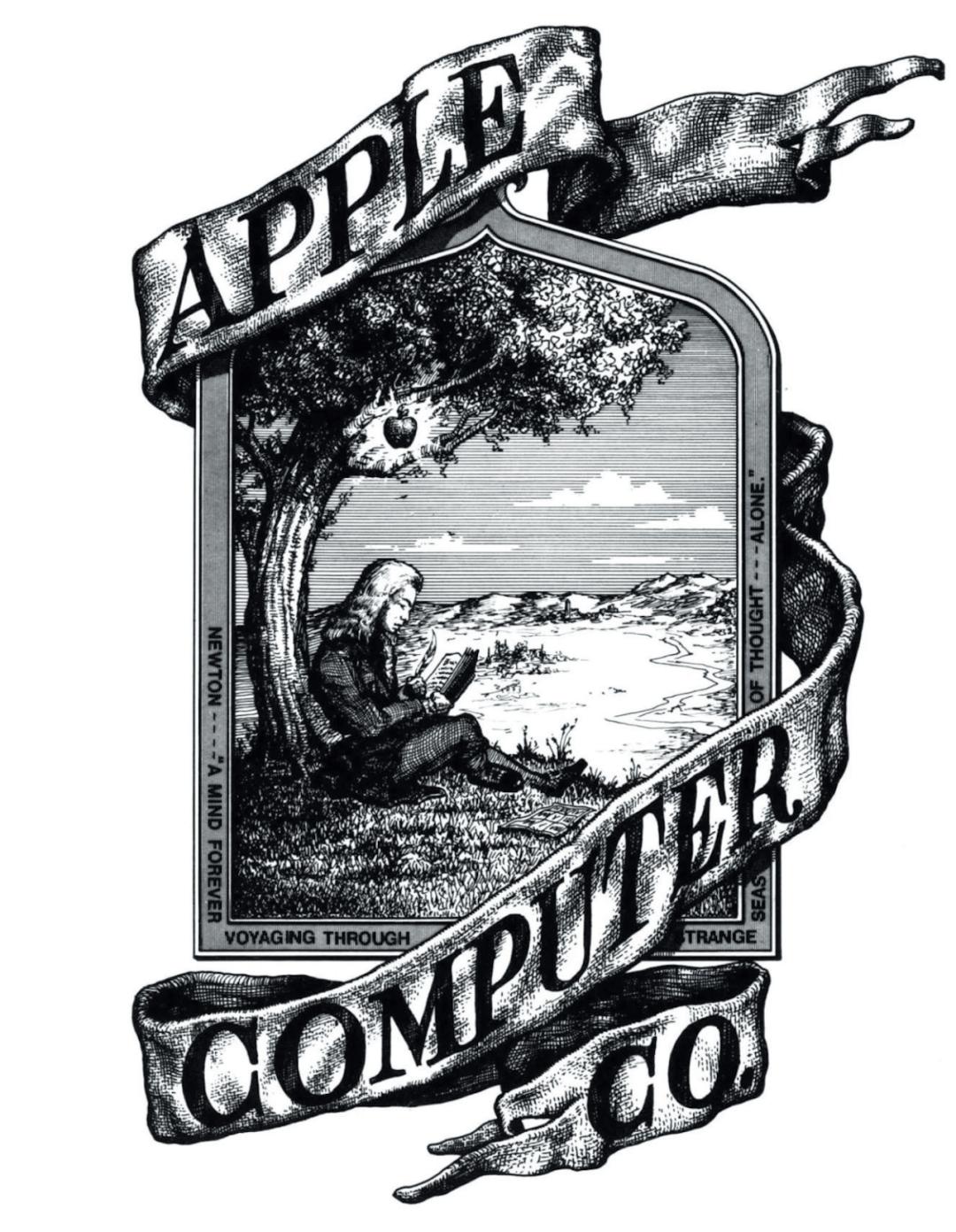
Ron Wayne's original Apple logo design
The brand that no one wanted back then has now become one of the most valuable brands in the world.
Apple
What This Book Is About
To tell the full story of Apple, I ended up interviewing 150 key figures. (Apple did not review this book before publication, but did grant me access to multiple current executives and designers.)
As you can imagine, the interviews were full of people taking credit for successes and settling old scores, none of which interested me. However, some wonderful origin stories caught my attention. I also heard some unexpected facts in the process:
· Apple did not start out in a garage.
· Apple was the fourth startup founded by Steve Wozniak and Steve Jobs.
· Apple had a third co-founder.
· Steve Jobs was not Apple's first CEO — nor the second, third, or fourth.
· The Macintosh was not invented or named by Steve Jobs; in fact, he pushed out the person who actually did those things.
· John Sculley did not fire Steve Jobs.
· The tablet computer appeared before the smartphone.
· Jobs never randomly fired a stranger he just met in an elevator.
· He also did not write the "Think Different" advertising slogan.
· The Newton saved Apple.
Apple's story is an epic filled with frantic all-nighters and creative rebellion. It features remarkable successes (iPod, iPhone, iPad), thought-provoking failures (Lisa, Apple III, MobileMe), and a group of humorous, idealistic, terrifyingly smart workaholics — nearly three generations of people who wanted to make better products to make the world a better place.
It is about management, marketing and strategy, as well as creativity, self-motivation and obsession. It is about how computers kept shrinking — from machines that filled entire buildings to devices that fit in your ear canal, and how Steve Jobs founded Apple twice, left twice, and ultimately left behind one of the most successful, influential, controversial, hated and beloved companies in human history. It is also about how Apple changed the devices we use, and changed us at the same time, as well as how we communicate, consume and create — complex changes that we are still trying to understand and master to this day.
This is the story of countless companies, all of which are called Apple.
Apple
The 50th Anniversary of Apple's Founding
As a landmark commemorative work for the 50th anniversary of Apple's founding, this full-color, beautifully printed book perfectly integrates technology and aesthetics.
The book contains around 350 precious photos — from the Apple I prototype circuit board, early team work scenes, to the architectural details of Apple Park, design sketches of products across generations and the evolution of classic logos, every picture perfectly reproduces the visual DNA of Apple products.
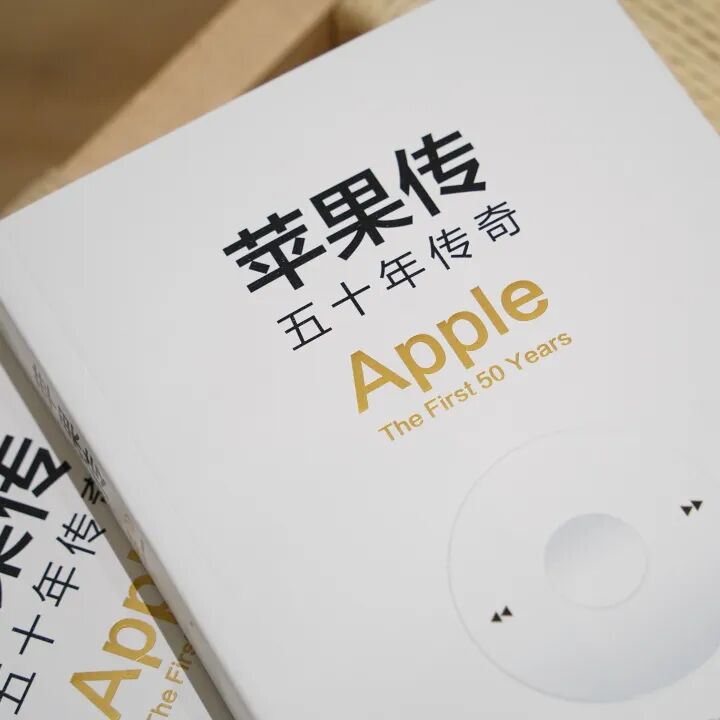
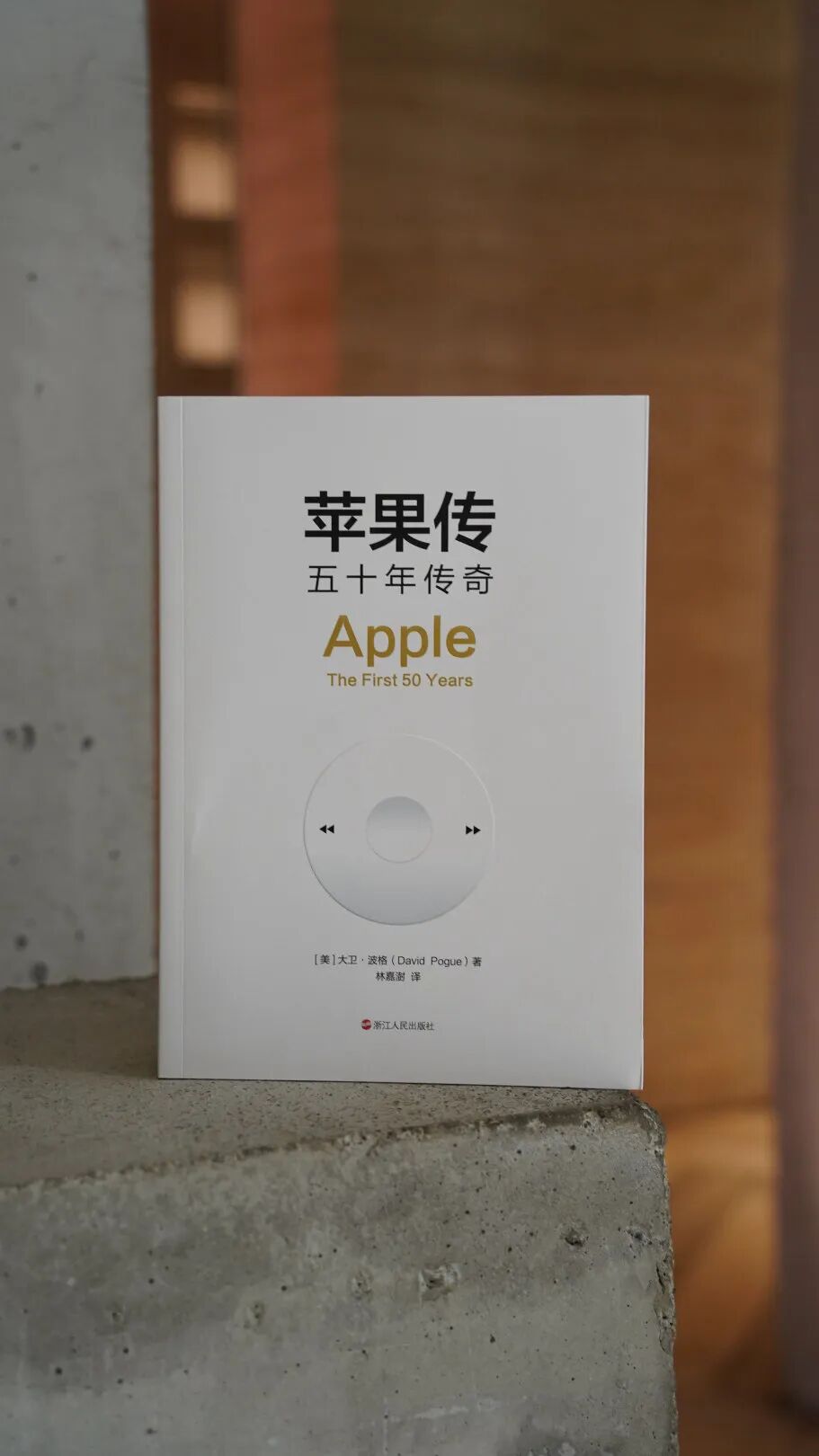
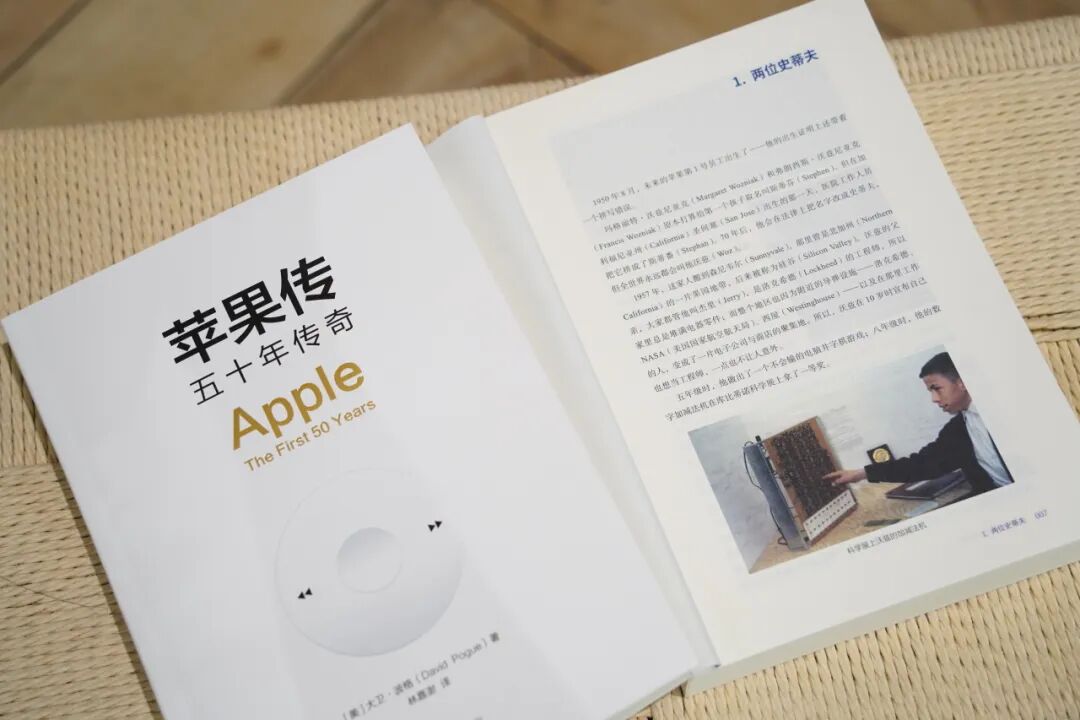
The book not only records the thrilling moments of technological breakthroughs and the cruel games of business competition, but also portrays the ideals and paranoia of entrepreneurs such as Jobs, as well as the persistence and compromises of team members. While letting readers understand Apple's business achievements, it also makes them feel the humanistic power behind technology, and the original aspiration and obsession of generations of Apple staff to "change the world with products", and even provides a referable innovation methodology for enterprises and entrepreneurs.
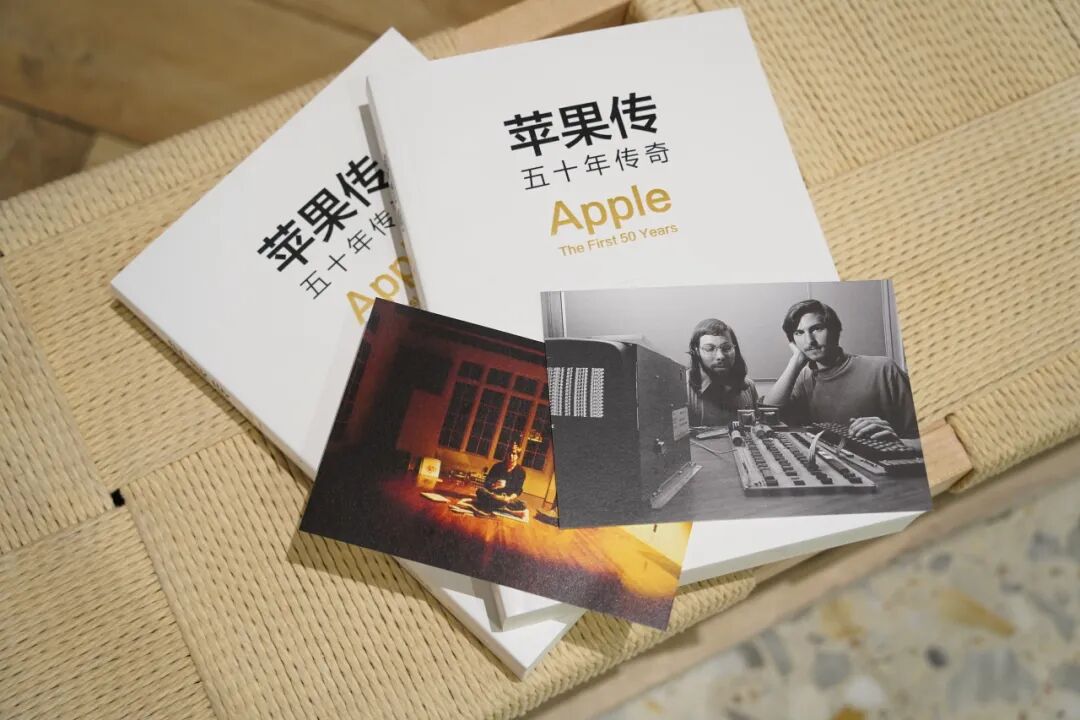
Two exquisite postcards are included as a free gift with the book
For Apple fans and technology enthusiasts, this is not only a detailed corporate biography, but also a highly collectible 50th anniversary commemorative item. Flipping through the pages allows you to immerse yourself in the brilliant 50-year journey of Apple from its founding to becoming a global tech giant.
Author [US] David Pogue
Translator Lin Jiazhu
Publication Date August 2026
About the Book
This book delves into the complete 50-year history of Apple, includes brand new interviews with 150 key Apple figures, and is equipped with around 350 photos. It not only records Apple's glories, but also does not shy away from its failures and lessons. The book is interspersed with countless stories of all-night work marathons, genius engineers and creative rebels that are too numerous to take in all at once.
This is not just a book about Apple, but also an epic documentary work about innovation, persistence and cultural reshaping, suitable for all technology enthusiasts, design fanatics, and readers who have ever been inspired by Apple products.

[US] David Pogue (David Pogue) is a Yale graduate, New York Times bestselling author, long-time contributor to CBS News Sunday Morning, seven-time Emmy Award winner, five-time TED speaker, and host of 20 NOVA special programs on PBS. Throughout his career, he has always focused on the development and ecosystem of Apple, served as a Macworld columnist for 13 years, and a New York Times technology columnist for 13 years, and has been the #1 bestselling author of books related to Apple Mac and iPhone for 20 consecutive years. He lives in New York with his family.

Lin Jiazhu, online alias flypig, used to be a business reporter for Economic Observer, and has long written technology columns for Southern Weekly and the Chinese version of The Wall Street Journal. As a long-term observer of Apple and its products, he has interviewed many Apple executives including Tim Cook, Craig Federighi, and Greg Joswiak. At the same time, he is a software developer in the Apple ecosystem, and has earned tens of millions of users around the world thanks to the success of several imaging apps. Tim Cook visited his design and development studio in 2023. He lives in Beijing with his family.
This article is from the WeChat official account "Zhejiang People's Publishing House", authorized for release by 36Kr.