The war is more costly than expected: three cracks in Insta360's semi-annual report
On the evening of August 27, Insta360 released its first semi-annual report after listing. The revenue performance remains impressive, with total operating revenue reaching 5.517 billion yuan in the first half of the year, a year-on-year increase of 50.29%. However, profits have almost been wiped out, with net profit attributable to shareholders of only 30.4073 million yuan, down 94.15% year-on-year; after deducting non-recurring gains and losses, the actual loss reached 15.3392 million yuan, shifting from profit to loss.
Between the book profit of 30.4 million yuan and the actual loss of 15.34 million yuan, there are non-recurring gains and losses of about 45.75 million yuan. Excluding this layer of adjustment, Insta360 did not make any money from its main business in the first half of the year.
The quality of profits
Looking at the second quarter alone, the problem becomes clearer. Revenue in the second quarter reached 3.04 billion yuan, a year-on-year increase of 31.1%, net profit attributable to shareholders recorded a loss of 54.21 million yuan, and the loss after non-recurring items deduction stood at 77.59 million yuan, marking the first loss-making quarter since Insta360's listing.
Revenue in the first quarter was 2.481 billion yuan, up 83.11% year-on-year, and net profit attributable to shareholders was 84.62 million yuan, halved year-on-year. It took only three months to go from "revenue growth without profit growth" in the first quarter to "revenue growth leading to losses" in the second quarter.
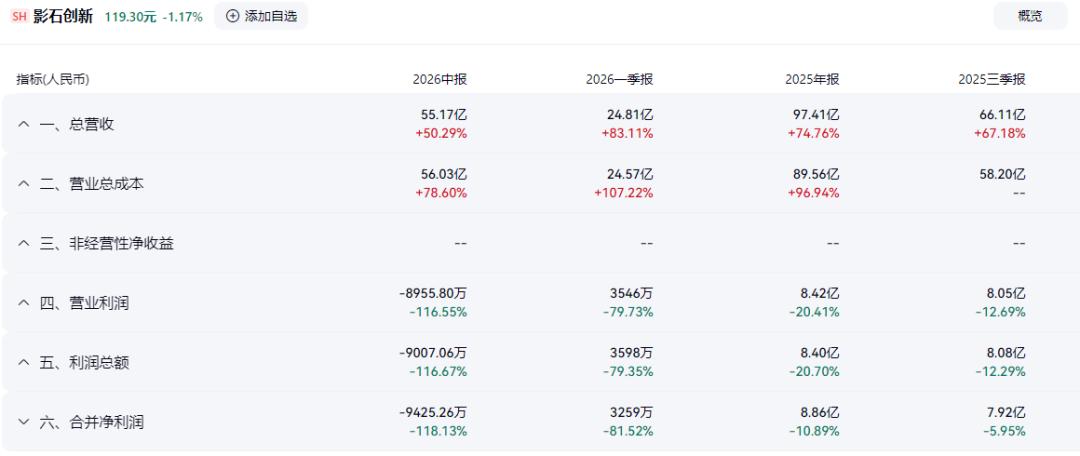
What is more alerting than the profit decline is the shift in growth rate. Revenue grew by 83% in the first quarter and dropped to 31% in the second quarter. Of course, there is a base effect, as Insta360's revenue scale has risen significantly since the second half of last year. However, costs and expenses did not slow down synchronously. Throughout the first half of the year, operating costs rose by 80% year-on-year, R&D expenses by 79%, administrative expenses by 87%, and financial expenses surged 32 times. The growth rates of all four items outpaced the 50% revenue growth.
Revenue growth has halved while costs and expenses remain at a high level, and this scissors difference is directly reflected in the losses.
Another glaring figure is hidden in financial expenses. Exchange losses in the first half of the year amounted to 55.1 million yuan, while the company's total net profit attributable to shareholders was only 30.41 million yuan. A single exchange item ate up all the book profit. 63.4% of Insta360's revenue comes from overseas. In addition to exchange rate fluctuations, the repeated US tariff policies and pending parallel litigation with GoPro are turning the uncertainties of overseas business into real costs on the income statement.
The company's official explanation is that storage chip prices have risen, new categories such as panoramic drones are in the market education stage, and large investments in R&D, production lines and channels have not yet generated scale effects. This explanation is valid but incomplete. It answers where the money was spent, but not whether the money was well spent, let alone when these investments will start to generate returns.
The RMB 2.7 Billion Cash Flow Gap and RMB 2 Billion Chip Bet
The most striking figure in this semi-annual report is not profit, but cash flow. The net cash flow from operating activities in the first half of the year was negative 2.761 billion yuan, compared with a positive 241 million yuan in the same period last year and a positive 1.386 billion yuan for the whole of last year. In half a year, cash flow shifted from inflow to outflow, which is twice the total inflow of last year.
The main source of the gap is an unconventional operation. The company's strategic procurement of storage chips is nearly 2 billion yuan, aimed at locking in supply volume and costs. The expansion of inventory can confirm this: inventory at the end of 2025 was 2.919 billion yuan, 3.79 billion yuan at the end of the first quarter of this year, and surged to 6.2 billion yuan at the end of the second quarter, up 113% from the beginning of the year, accounting for 43.7% of total assets. More than 40% of the total assets are stored in warehouses in the form of inventory, and a large amount of capital is tied up in stock. Once the sales of new products fall short of expectations, inventory impairment and capital chain tension will come at the same time.
The essence of this procurement is to take the balance sheet as a weapon. UBS estimates that the price increase of SoC, DSP, DRAM and other chips has raised material costs by about 9%, dragging down gross profit margin by about 4 percentage points. Instead of passively accepting the situation, Insta360 chose to stock up in advance. If the storage price rise cycle continues and competitors face chip shortages and price hikes, Insta360, holding low-cost inventory, will amplify its gross profit margin advantage. This is a well-founded bet, but the other side of the bet is equally clear: If DDR prices peak and fall, or sales fall short of expectations, the high inventory will directly turn into impairment on the income statement.
Traces of leverage are also clear on the liability side. Short-term borrowings surged 763% from the beginning of the year, mainly from discounted bills and credit loans; other non-current liabilities rose 262%, mainly due to equity repurchase obligations and interest, which is another source of the surge in financial expenses. As of the end of the second quarter, the company's total assets amounted to 14.209 billion yuan, up 27.6% from the end of last year, while net assets attributable to shareholders stood at 5.264 billion yuan, down 9.3%. Assets are growing while net assets are shrinking, and expansion is increasingly dependent on liabilities.
Two-front Operation and 796x P/E Ratio
Insta360 is currently fighting a war in two directions.
The defensive front is its core business of panoramic cameras, with a 66% global market share and a 57% share in the thumb camera segment, which is its cash cow. However, since the second half of last year, DJI, which accounts for more than 70% of the global consumer drone market, has entered the panoramic camera field and launched a price war. The gross profit margin records the intensity of the war: 52.20% in 2024, 45.74% in 2025, and 45.20% in the first quarter of this year, down 7 percentage points in two years. Behind this is dual pressure: the price war lowers selling prices, while there is no buffer on the cost side, as core chips rely on international suppliers such as Sony and Ambarella with low substitutability, and price increases are almost fully passed on to gross profit margin.
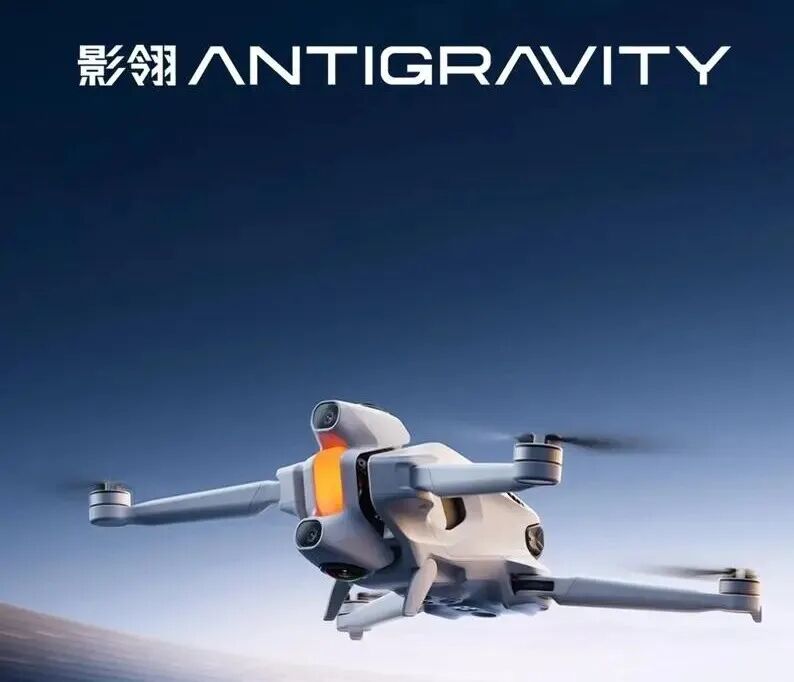
The offensive front is the second growth curve. Insta360's Antigravity panoramic drone and handheld gimbal camera Luna directly entered DJI's core market. From the whole of last year to the first quarter of this year, the company's total strategic investment in drones, gimbal cameras, microphones, new categories and three custom chips reached 762 million yuan. However, drone revenue accounts for less than 5% of total revenue to date. The defensive business is squeezed in profit by the price war, while the offensive business is still burning money to capture the market, and the second growth curve has not taken over yet.
To be fair, Insta360's competitiveness has not been lost. Revenue in the first half of the year still increased by 50%, and its market share remains the first. Liu Jingkang's statement of "exchanging short-term profits for long-term technological barriers" is strategically reasonable. What is lost is not competitiveness, but the visibility of profitability.
Yet the market is still pricing for that visibility. At the close of August 27, Insta360's total market value reached 48.4 billion yuan, with a dynamic P/E ratio of about 796 times. This price does not correspond to a company that recorded a loss of 15.34 million yuan after non-recurring items deduction in the first half of the year, but to the imagined Insta360 after the war ends: falling costs, surging new product sales, and recovering profit margins.
Before the release of the semi-annual report, the 90-day target average price given by institutions was 241.23 yuan. Goldman Sachs also predicted in February that this year and next year's net profit would exceed the market consensus expectation by 9% and 16% respectively, all based on the old narrative of positive profits. After the shift to loss after non-recurring items deduction, the downward revision of earnings forecasts is likely to have just started, while 56.5% of the total share capital of restricted shares were lifted in June. The pressure of valuation, earnings and chips will coexist in the second half of the year.
Insta360 is not without a chance to win. In 2025, it just proved that it can make profits during high growth: the total annual revenue was 9.741 billion yuan, net profit was 929 million yuan, and operating cash flow was 1.386 billion yuan. Now that profits and cash flow have disappeared at the same time, the only difference is whether it is an active bet or passive blood loss. Judging from the decision of 2 billion yuan in chip procurement, the management obviously believes it is the former. But all winning possibilities are conditional, while the market has taken the conditions as facts. The fact presented by the semi-annual report is: the war is more costly than expected, and victory is further away than expected.
This article is from the WeChat official account "Singularity Pai" and is authorized for release by 36Kr.