Li-Ning: Strategic Layout Ahead of Growth Divergence
Li-Ning recently released its semi-annual report: revenue in the first half of the year reached 15.24 billion yuan, up 2.8% year on year; gross margin rose 0.9 percentage points to 50.9%, and net profit attributable to shareholders was 1.82 billion yuan, up 4.5% year on year[1].
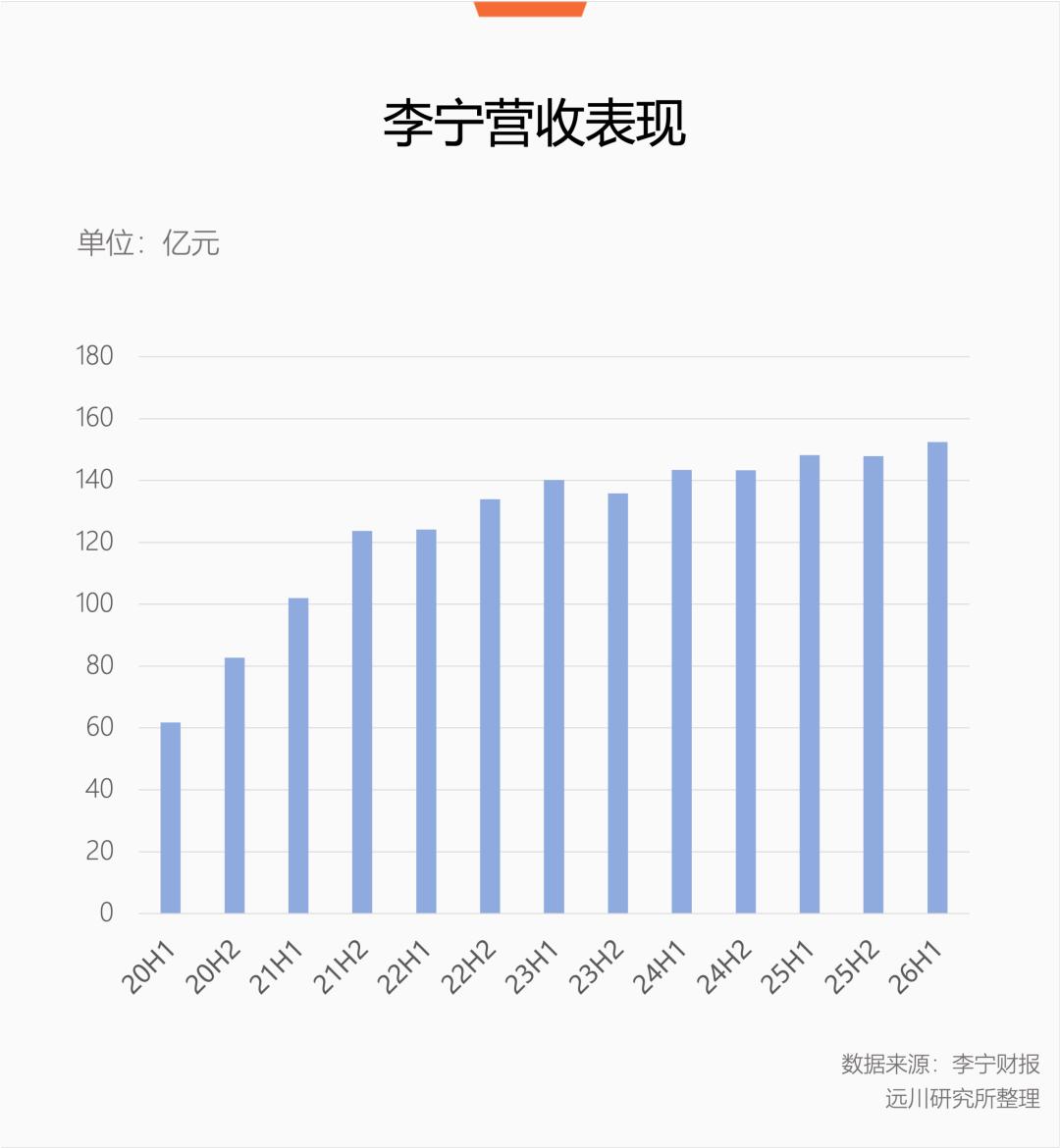
From the perspective of core financial indicators, both Li-Ning's revenue and profits maintain growth, but the terminal performance is relatively flat, and the overall retail flow of the group increased by 2% in the first half of the year[1].
The management of Li-Ning stated that the market performed well in the first quarter, but under the market challenges, the performance in the second quarter was lower than expected. After entering the third quarter, the market pressure and challenges have not been significantly alleviated for the time being. Coupled with the increase in brand and marketing investment in the second half of the year, the company maintains a cautious and pragmatic attitude towards subsequent operations and takes risk control as its core work[1].
Looking at Li-Ning alone, this may just be a brand preparing for the upcoming changes. But if you expand your vision to the entire sports industry, you will find that similar signals are appearing at the same time.
In the past few years, sports consumption has been one of the few businesses that can allow large companies and small companies to share dividends together. Running, outdoor sports, and cycling have heated up in turn. As long as you are on the sports track, you can more or less take advantage of the favorable trend.
Now, the favorable trend is obviously not as strong as before. The situation where the overall market rises and everyone generally benefits is changing.
Growth is hidden in "niche" tracks
Looking at the global sports industry, there is a very interesting picture.
On the one hand, Nike is still in the recovery stage. From March to May this year, the company's revenue decreased by 4% on a currency-neutral basis[2]; CEO Elliott Hill also stated that the recovery speed of different businesses is not consistent, and adjustments are still ongoing.
On the other hand, adidas has started to celebrate its achievements. In the second quarter of this year, the company recorded record quarterly revenue, and raised its full-year revenue growth forecast to 9%-10% at the end of July[3].
Selling the same sports shoes and apparel, the two companies have taken completely different paces of development.
Back to the domestic market, brands are also moving in different directions, and the past market environment that could support most participants to move upward together is fading.
According to data from the National Bureau of Statistics of China, the retail sales of sports and entertainment products of entities above designated size still increased by 15.7% year on year in 2025. In the first seven months of 2026, this growth rate has turned to a 3.5% decline, and the month of July alone saw a 10.6% drop.
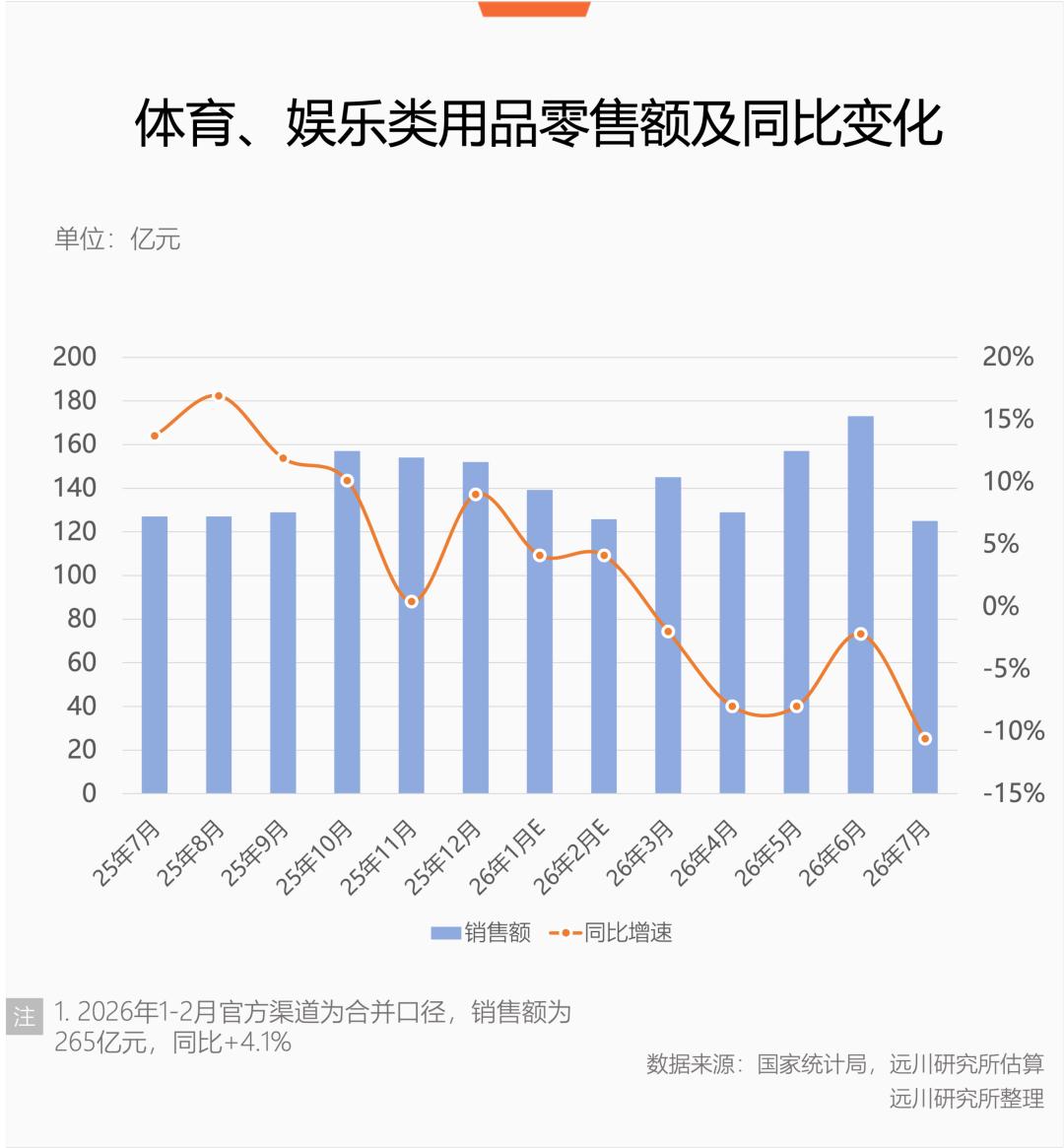
In less than a year, the growth of the sports industry has dropped from double digits to negative, and its popularity is obviously not as high as before.
However, the demand for sports has not actually disappeared. If you look closely, the growth is scattered in completely different segments.
Outdoor sports is undoubtedly the most outstanding top performer in recent years. Pelliot's revenue rose from 908 million yuan in 2023 to 2.793 billion yuan in 2025, with a year-on-year increase of 58.1%[4]; Mammut's sales in China also continued to maintain a growth rate of over 80%[5].
Growth does not only belong to the outdoor track. On Running's sales in the Asia-Pacific region increased by 44.4% in the first quarter of this year[6]; although lululemon is under overall pressure, its revenue in Chinese mainland increased by 30%[7].
These brands cannot represent the entire industry, but the question is why growth falls on these brands specifically.
These businesses seem to occupy their own respective markets, but their underlying profit logic is actually the same — consumers are shifting from buying a single sports product to purchasing a complete solution that addresses specific sports scenarios.
In the past, sports brands had demographic dividends, expecting a pair of shoes to be suitable for running, shopping, and taking the subway. At present, it is difficult to impress consumers only by basic models.
The sports community itself is also splitting. Running is divided into road running and cross-country running, and outdoor sports is split into hiking and rock climbing. The more detailed the scenarios are divided, the more specific requirements consumers have for equipment.
This change has been incorporated into Li-Ning's product and category structure. In the first half of 2026, Li-Ning's apparel revenue increased by 12% year on year, and its revenue proportion rose to 38%[1]. New categories for different scenarios such as comprehensive training, outdoor sports, and the Gold Label series have begun to contribute new increments to the apparel business.
With the emergence of new increments, the internal resource allocation of enterprises also needs to be adjusted accordingly. In 2025, Qian Wei, Co-CEO of Li-Ning Group, publicly stated that the overall business needs to "attack where it should attack, and defend where it should defend".
At the mid-term performance meeting, Qian Wei further explained that consumers are not simply shifting from traditional categories to new categories, but are beginning to pay attention to both at the same time. In other words, the original advantages cannot be relaxed, and new sports scenarios cannot be missed either.
Next, it remains to be seen who has the ability to make profits from these increasingly segmented niches.
Step on the brakes selectively
Li-Ning has a seemingly abnormal performance in the past two years: the pace of multi-category development has not stopped, the investment in sports resources has continued to increase, and every move is of considerable scale.
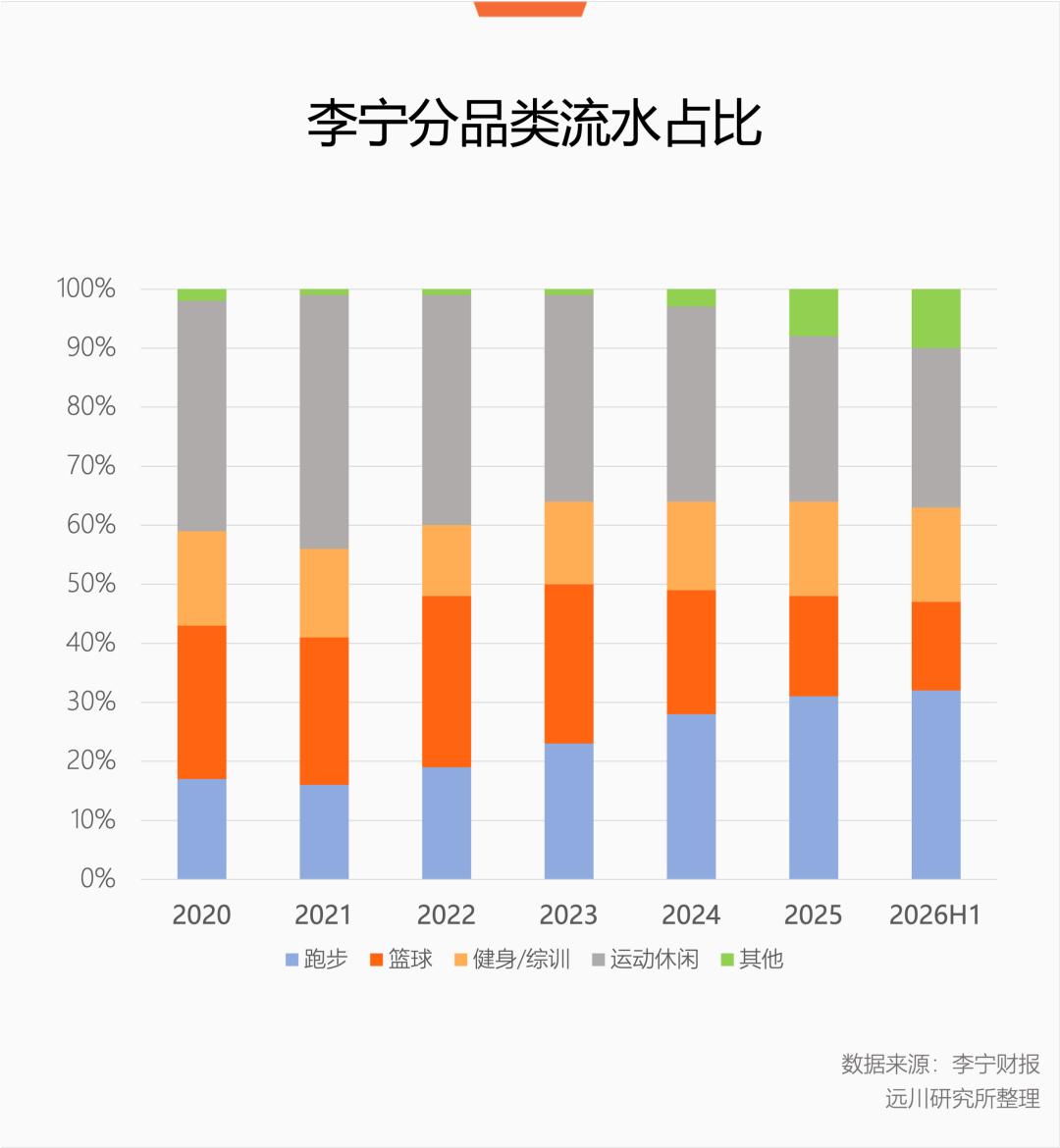
In the 2025 annual report, the proportion of running in Li-Ning's overall retail flow rose from 16% to 31% within five years, taking the position of the largest category. Now, comprehensive training continues to receive increased investment, and new tracks such as outdoor sports, pickleball, and tennis have also been successively put on the agenda.
However, by the end of June this year, Li-Ning had 6063 brand stores (excluding Li-Ning YOUNG), 28 fewer than at the end of last year.
The tracks are expanding wider and wider, while the number of physical stores is being optimized and reduced.
Behind this is actually a very clear approach that Li-Ning is adopting now: invest more in mature businesses, observe the newly started businesses first, and for businesses whose profitability is not yet clear, do not prove determination by opening more stores.
Taking outdoor sports as an example, since Li-Ning laid out this category in early 2024, its retail flow has continued to grow rapidly, and its proportion in the first half of 2026 has reached a mid-single digit[1]. Even with good development momentum, Li-Ning has not chosen to open a large number of stores on a large scale.
This set of rules is also the result of Li-Ning paying tuition fees for lessons learned. Fourteen years ago, it also suffered losses from blind expansion.
Early Li-Ning once went through a stage of expanding scale first and then improving efficiency. After the industry inventory crisis broke out in 2011, Li-Ning started channel restructuring, and gradually prioritized inventory management and efficiency over scale.
Mr. Qian explained the order clearly at the performance meeting. For outdoor sports and the Gold Label series, Li-Ning will first use the existing store wall space for trial operation, then gradually test independent stores; only after the profit model and single-store efficiency are verified, will it enter the stage of replication and expansion.
For Li-Ning, opening stores is not a gesture of determination, but a matter of financial accounting. As a result, operating quality and certainty have been implemented from principles to actual business operations.
To put it bluntly, it is to close inefficient stores, control channel inventory, and stabilize terminal discounts as much as possible.
As competition intensified this year, Li-Ning's terminal discounts have actually deepened to a certain extent. While withstanding market pressure, the company avoids further inventory accumulation through rolling replenishment and dynamic order adjustment.
This efficiency accounting not only applies to goods, but also to every physical store.
In previous years, opening large-format stores was popular in the industry. Large stores look magnificent and have impressive retail flow, but their rent and labor costs are higher. After a busy year, the revenue may only go to the landlord. Li-Ning's current choice is more pragmatic: it does not reject large stores, but no longer pursues large stores for the sake of scale.
From the results, channel adjustment has not dragged down the growth of direct sales revenue. In the first half of 2026, with the number of directly operated stores reduced by 106, Li-Ning's direct sales business revenue still increased by 3.4% year on year, and same-store sales returned to positive contribution[1].
After all, for scale, if you bet correctly, it is leverage; if you fail, it becomes a burden.
Li-Ning is becoming more and more prudent and pragmatic in links that can calculate input and output such as store and inventory management; but in areas where returns are hardest to calculate in the short term but are related to long-term competitiveness, it has never stopped investing.
Vision goes beyond the sports field
The reason is not difficult to understand.
The sports industry has a very special business logic: some investments make no visible splash when spent, but if you wait until the market matures to invest, you will often be one step too late.
Sports resources are one of such areas. Signing an athlete, sponsoring an event, or becoming a partner of a national team, these investments are difficult to bring visible sales growth the next day like opening a new store.
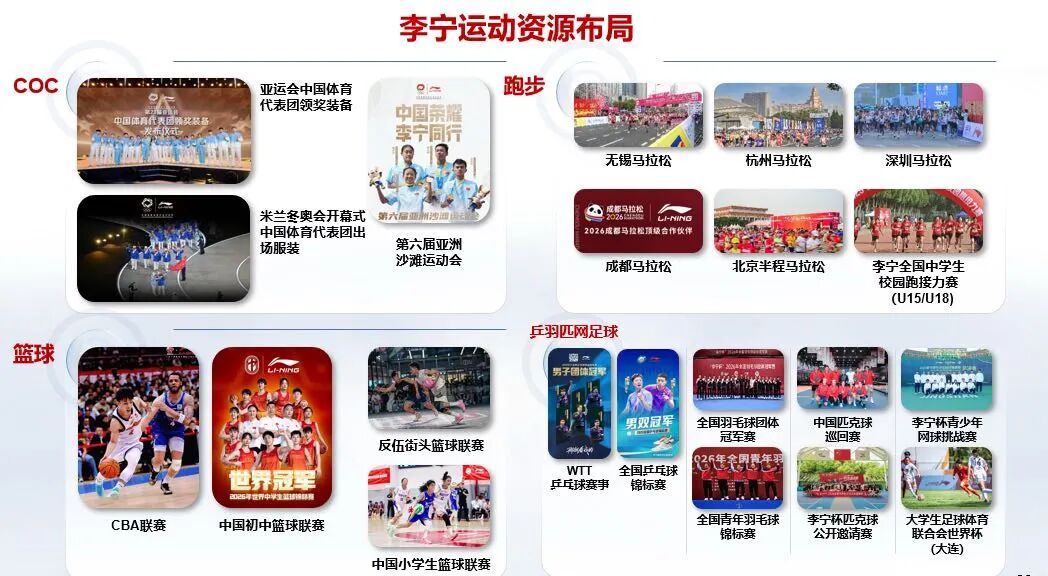
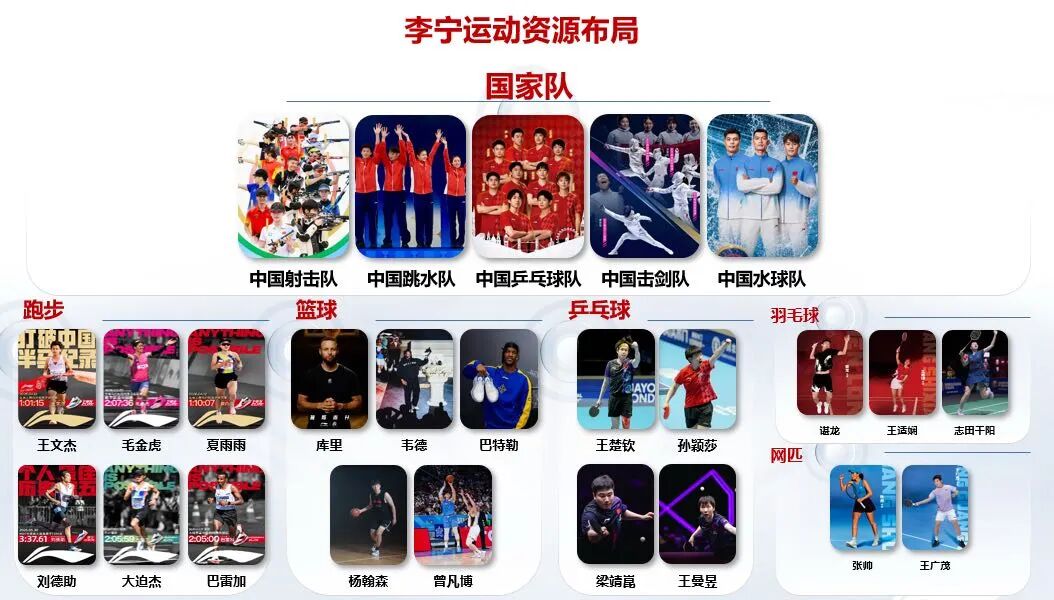
Image source: Li-Ning official website (swipe right to view more)
For sports brands, the exposure on the field is just an appetizer. What is more important is whether the brand can enter the real sports scenarios.
Whether the running shoes are light enough, whether the rebound performance can last to the second half of a marathon, and whether basketball shoes can provide corresponding support and cushioning for different positions, these performance issues are most directly felt by top athletes in actual combat.
To some extent, the sports field is more like a pressure testing workshop for products.
This is like car manufacturers investing heavily in F1 racing. No one expects to drive an F1 car to buy groceries, but how much lighter the car body can be, and what the maximum limit the chassis can withstand, can all be tested and figured out on the track. After the technology is fully mastered, it will be gradually applied to civilian family cars.
Li-Ning's long-term investment in professional sports essentially aims to build the connection between the brand and real sports scenarios.
Looking back at 2012, when Li-Ning was overwhelmed by the industry inventory crisis, the company still gritted its teeth and won the official sponsorship of CBA and signed Dwyane Wade.
At that time, from the outside perspective, these investments were more like "throwing money" in sports marketing. But looking back today, some of them have retained event resources, some have grown into independent product lines, and some have gradually precipitated into brand assets. Their value has gradually emerged over time.
This year, Li-Ning placed another long-term bet on Stephen Curry.
In the first half of the year, the proportion of Li-Ning's advertising and marketing expenses increased by 2.2 percentage points to 11.2%. The company's CFO explained that the expense growth mainly came from investments such as the cooperation with the Chinese Olympic Committee, related marketing activities, and professional sports signings; the new expenses brought by the Curry cooperation will be mainly reflected from the second half of the year.
This "long-term investment" is different from previous ones. The long-term strategic cooperation between Curry and Li-Ning is defined by the company as "a medium and long-term strategic layout centered on professional sports equipment, connection with young consumers, and global development".
Qian Wei also emphasized at the mid-term performance communication meeting: "This time our cooperation with Curry and the Curry Brand is not the traditional mode of a brand signing an athlete. We hope to empower the entire Li-Ning brand through all-round, systematic and strategic cooperation, which is completely different from the traditional practice of launching a pair of signature shoes and holding a promotional event. Of course, all the necessary traditional work will still be done, but the core of the cooperation is based on the long-term mind-building of a professional sports brand, hoping to lead business growth with brand mindshare in the future."
What can be seen at present are still some early signals. After the cooperation was officially announced, Li-Ning has begun to promote around Curry in physical stores, core business districts and e-commerce channels; and Curry has worn Li-Ning's products many times to attend golf events, and the cooperation has begun to extend from basketball to more categories.
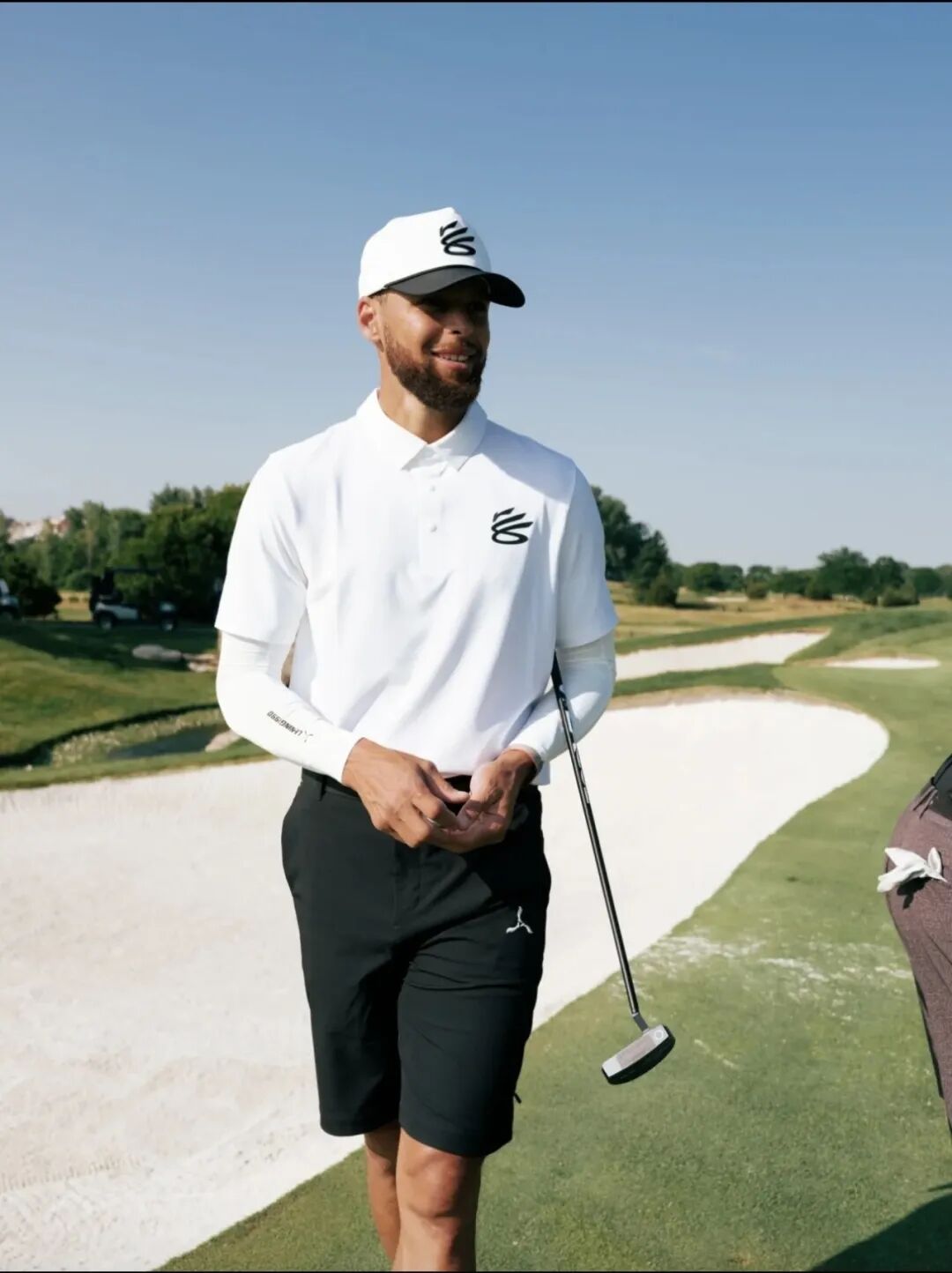
Image source: Xiaohongshu
Big-name stars are willing to nod for cooperation not just because of the signing bonus you offer. They care more about whether you know the industry well and whether you can deliver products that can withstand actual combat tests.
Curry also mentioned during the cooperation that what impressed him most at first was the innovative and comfortable experience brought by Li-Ning's equipment.
The products worn by athletes represent the R&D capabilities accumulated by the brand for many years behind the scenes.
In the first half of 2026, Li-Ning's R&D investment reached 367 million yuan, a year-on-year increase of 6.5%. The cumulative R&D investment in ten years has exceeded 4 billion yuan[1].