Zhu Jiangming of Leapmotor has ventured into no-man's-land.
2In the summer of 2026, China's auto market is scorching yet quiet. On one hand, a large number of new vehicles hit the market, on the other hand, sales are dismal, with a nearly 20% year-on-year deep decline in the first half of the year.
Amid this pervasive haze of gloom, a new Chinese EV startup has emerged unexpectedly, with its monthly sales exceeding 100,000 units in July, equivalent to 2.2 times that of Harmony Intelligent Mobility and 3.2 times that of Li Auto, taking a leading position with a clear gap from other peers.
It is Leapmotor.
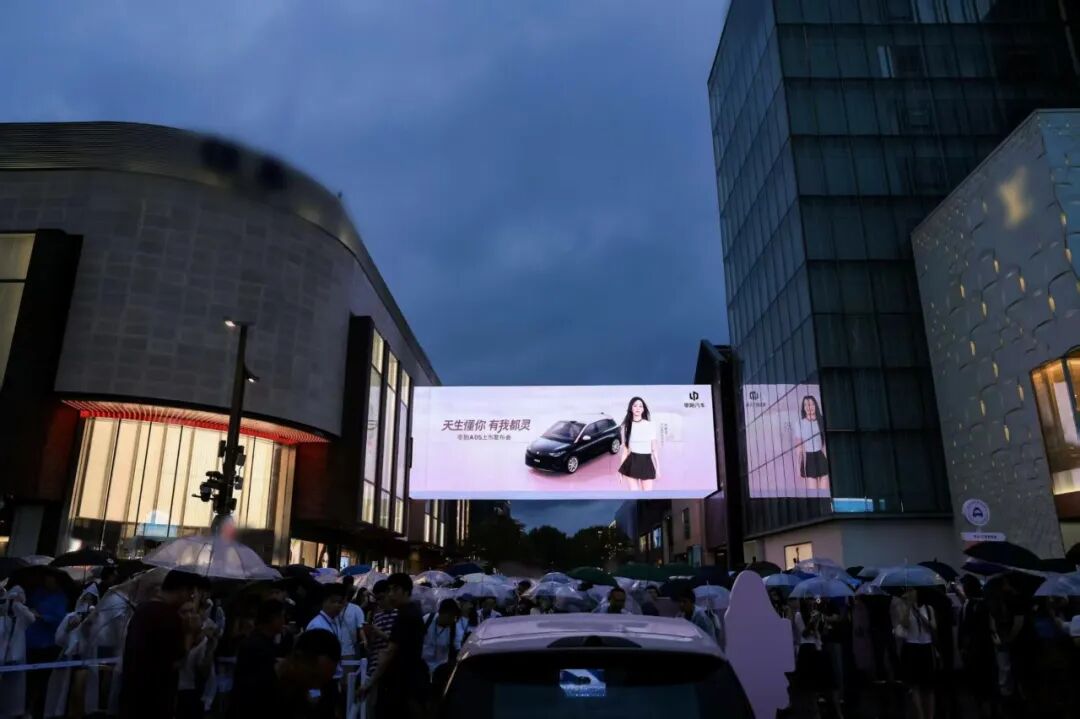
Just like Uniqlo and Miniso in the period of consumption downgrade in previous years, or BYD in its early stage, Leapmap has blazed a path through low pricing and stood out in the extremely involute competition.
In sharp contrast to the surging sales, Leapmotor's share price has dropped by about 20% this year, and the market does not seem to recognize the value of this new EV king.
The biggest hidden trouble is the increase in revenue without corresponding growth in profit. Leapmotor turned from profit to loss in the first quarter, its gross margin dropped sharply, and its private placement triggered an inquiry from the China Securities Regulatory Commission.
More fundamentally, the valuation anchor of the entire new energy vehicle sector has changed. New EV startups have returned to the essence of the manufacturing industry from the pioneer tech stocks a decade ago.
The capital market no longer pays for the strategy of "burning money for scale", but requires positive free cash flow.
Leapmotor has not yet proved the sustainability of its profitability.
Different from the founders of Internet-style new EV startups, Zhu Jiangming is the head of an auto enterprise who is the least like a "new power" representative. His engineer thinking and manufacturing logic have created today's Leapmotor.
But 100,000 units of monthly sales is not the end, it only pushes Leapmotor into an uncharted zone. No other new EV startup has ever reached this zone, and the only reference is BYD, but Leapmotor may no longer have the time and space that BYD once had to exchange scale for profit.
Ahead is the life-and-death line of annual sales of one million units, underfoot is the fragile ice surface of profits, and behind are the competitors who are catching up closely. An engineer who is not good at making up stories is standing alone in the center of the uncharted zone.
1、
Monthly sales of 100,000 units is a height that Chinese new EV startups have strived for 12 years but never reached. Li Bin, Li Xiang and He Xiaopeng have not achieved it, but Zhu Jiangming has made it.
Leapmotor got here by following one path: learning from BYD, and full-stack self-development.
The three-electric system, electrical and electronic architecture, thermal management, and intelligent driving, all technologies that can be developed in-house are independently developed. The proportion of self-developed and self-produced parts exceeds 65%, and the target for 2026 is 80%. 17 factories are arranged in a line along both sides of the expressway from Jinhua to Hangzhou.
Under the extreme cost strategy, Leapmotor's pricing is simple and straightforward. For the same level of configuration, other brands sell for 200,000 yuan, while Leapmotor sells for 120,000 yuan. "Technology equality" has become Leapmotor's most successful narrative and label in the past three years.
This story is extremely familiar. In 2003, Wang Chuanfu started his business by making batteries and entered the auto manufacturing industry, and was ridiculed for ten years. Then relying on full-industry-chain self-development and extreme cost control, its monthly sales exceeded 100,000 units in March 2022, and it sprinted all the way to annual sales of 4 million units.
Compared with Nio, Li Auto, Xpeng, Huawei and Xiaomi, Leapmotor is the company among new EV startups that is most like a large traditional auto enterprise. It adopts an asset-heavy model, covers the whole industrial chain, adheres to manufacturing thinking, and exchanges scale for efficiency.
Wang Chuanfu has taken this path, so has Akio Toyoda and Henry Ford. For a hundred years of the automobile industry, all surviving auto companies have taken the same path.
But behind the surging sales is the roller-coaster decline of profits.
In 2025, Leapmotor achieved profit for the first time, but fell into loss again in the first quarter of this year. Its gross margin plummeted from 15% in the fourth quarter of last year to 9.4%, operating cash flow was negative 6.6 billion yuan, and free cash flow was negative 7.4 billion yuan.
The capital market has also expressed doubts. Since the beginning of this year, Leapmotor's share price has fallen from HK$76.3 to HK$36, and its market value has evaporated by more than HK$55 billion.
In June, the China Securities Regulatory Commission issued feedback on Leapmotor's 6.7 billion yuan private placement, with a total of four points: whether the profit can be sustained, whether there is pressure on dealers to stock up, why additional financing is needed, and whether the control right will be lost, with the core pointing directly to the profit dilemma.
Up to now, Leapmotor has not released an official written reply document, only stating that this is a routine review link, not a special concern or negative judgment on the company.
Facing the falling share price, Zhu Jiangming chose to continue increasing his holdings to boost confidence. On June 4, Leapmotor announced that Zhu Jiangming, Chairman and CEO, and shareholder Fu Liquan increased their holdings of the company's shares, with a total amount of about HK$490 million, and the average increase price was about HK$41.99 per share.
After the increase, the shareholding ratio of persons acting in concert rose from 23.89% to 24.71%, which responded to the regulator's concern about control rights with real money.
2、
The sharply fluctuating gross margin and net profit reflect the fragility of Leapmotor's operating quality, and its profit inflection point has not yet arrived.
In contrast, Tesla, the originator of new energy vehicles, had achieved positive net profit, operating cash flow and free cash flow at the same time as early as Q2 2020 when its average monthly delivery was only 30,200 units, and this state has been maintained ever since.
When it truly crossed the average monthly sales of 100,000 units (Q1 2022, average monthly sales of 103,000 units), its single-quarter net profit had reached 3.318 billion US dollars, which is simply a super profit machine.
BYD, the current king of new energy vehicles, had achieved the double positive of attributable net profit to parent company and operating cash flow in the first half of 2020 when its average monthly sales was only 26,500 units, and has maintained this state ever since.
In March 2022, BYD's monthly sales first exceeded 100,000 units, its annual attributable net profit reached 16.6 billion yuan, and its operating cash flow reached an astonishing 140.8 billion yuan.
That is to say, the profit inflection points of Tesla and BYD occurred when their monthly sales were far below 100,000 units. This means that the establishment of profitability does not rely on the peak of sales, but on the combined force of cost control, product structure and pricing power.
This is the underlying logic of the market's valuation of Leapmotor. As of August 2026, Leapmotor's market value is about HK$54.7-55.9 billion, corresponding to a rolling P/S ratio of about 0.80-0.85 times, and a static P/E ratio of about 90 times. In contrast, BYD's A-share P/S ratio is about 1.05 times, and its P/E ratio is about 30 times.
The P/S ratio is lower than that of BYD, but the P/E ratio is much higher than that of BYD. This contradictory valuation combination is the market's fair pricing for Leapmotor's state of "monthly sales of 100,000 units but unproven profit sustainability".
Valuation is temporary and adjustable. The deeper problem is that the market and era environment Leapmotor faces are completely different from those of BYD and Tesla.
When the two giants achieved monthly sales of 100,000 units, China's new energy penetration rate was soaring from 25% to 35%. That was a pure incremental market, where all produced vehicles could be sold, dealers rushed to stock up, and consumers queued up to pick up cars. Cash return was faster than investment, and the larger the scale, the better the cash flow.
Wang Chuanfu only spent more than a year to grow from monthly sales of 100,000 units to annual sales of 3 million units, and the flywheel of scale effect spun faster and faster.
Leapmotor is facing a different world. In 2026, the new energy penetration rate is 63%, the overall market shrinks by 20% year-on-year, all auto companies are fighting a brutal price war, and the operating profit margin of the whole industry is only a pitiful 3.8%.
Leapmotor's 100,000 units of sales are not of the same quality as BYD's 100,000 units. Unfortunately, it has not enjoyed the premium of growth stocks.
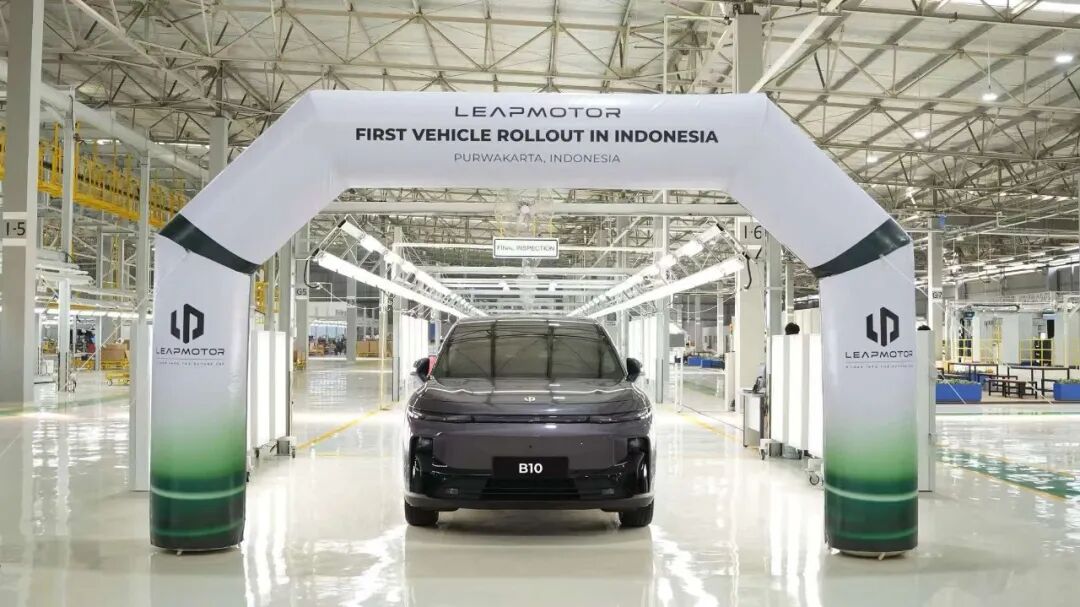
When Elon Musk and Wang Chuanfu sold 30,000 units per month, they had already made huge profits. Zhu Jiangming sold 80,000 units per month (Q2) but is still in loss.
The times are different.
3、
Leapmotor's dilemma is not a special case.
China's new energy vehicle industry has developed for more than ten years, but vehicle manufacturers have not made money, and are fighting in the price war. New EV startups including Nio, Li Auto, Xpeng, as well as AITO and Xiaomi which transformed from the technology industry, all suffered losses collectively in Q1.
It seems that money burning will never end. Nio's accumulated losses exceed 100 billion yuan, Xpeng 43 billion yuan, and Leapmotor's accumulated losses are about 17.3 billion yuan.
When chatting with Luo Yonghao at the end of July, Zhu Jiangming sighed, "If I had known that making cars would burn so much money, I would not have done it."
But Zhu Jiangming is a person who refuses to admit defeat.
He knew very early that the knockout round would come soon. Leapmotor must become one of the last few surviving enterprises. Scale is the life-and-death line, and profit is the pass. He set the target for this year as 1 million units of annual sales and 5 billion yuan of net profit.
At present, it is very difficult to achieve this goal.
The loss in Q1 was 390 million yuan, and the market expects the loss in H1 to still be 700 million to 1.1 billion yuan. To finally reach the 5 billion yuan net profit target, it needs to achieve a net profit of about 6 billion yuan in the second half of the year, which means that under the condition of selling 640,000 cars, the net profit per car should reach 9,400 yuan. But Leapmotor's net profit per car last year was only 904 yuan.
Looking at the most profitable private auto companies in China at present, BYD and Geely's net profit per car in Q1 2026 is between 5,000 and 6,000 yuan, Tesla's net profit per car is only more than 1,000 yuan, and Nio, Li Auto and Xpeng have not made any profit, with negative net profit per car.
This means that in 2026 when the whole industry is caught in the dilemma of "sales increment without profit increment", Leapmotor needs to create the highest profit per car (9,400 yuan) with the lowest average product price (about 100,000 yuan).
This is almost an impossible task, even a bit absurd.
At the performance meeting, Li Tengfei, Leapmotor's CFO, also said: "There are certain risks in the realization of this goal."
In the context of a CFO, this is already a very candid warning.
This is a race against time, and also a gamble on scale. The disclosure of the Q2 financial report on August 26 will be a test point.
The market generally expects that this financial report will be accompanied by a substantive response to the CSRC's inquiry, especially the core issue of "profit sustainability".
4、
2026 may be a life-and-death battle for Leapmotor.
Zhu Jiangming is lucky. At least he has made Leapmotor the No.1 among new EV startups. There are other enterprises that have burned money in vain, such as HiPhi, WM Motor, Hozon and so on, which have already collapsed.
In the global sales ranking of new energy brands, Leapmotor ranks fifth. The top four are Tesla, BYD, Geely, and SAIC-GM-Wuling, all of which are behemoths with annual sales of millions of units.
Zhu Jiangming is very clear that the gap between the fifth place and the giants is not only the sales volume, but also the high wall built by a whole set of century-old industrial systems.
The transformation from sales to profit requires a qualitative change in the business model, not just a quantitative change in scale. Leapmotor's future is not to become another BYD, but to become itself.
This means Leapmotor can no longer be just a manufacturing company. Zhu Jiangming has calculated an account over and over: Leapmotor has four cards in hand: complete vehicles, electronics, electric drives and batteries. It is not only a vehicle manufacturer, but also can sell core components to other auto companies. The total valuation of the four major businesses should reach 200 billion yuan.
By the middle of 2026, Leapmotor has signed component supply contracts with more than ten domestic and foreign auto companies, entering their BOM lists as a tier-1 supplier.
This dual identity of "vehicle manufacturer + supplier" is extremely rare in the traditional automobile industry.
This is where Leapmotor's opportunity lies. The global automobile industry is undergoing a structural power transfer, the moat of fuel vehicles is collapsing inch by inch in the face of electrification, and the new rules of the game, electrification and intelligence, are exactly the fields that Leapmotor has bet on for ten years.
It is not learning how to become an auto company, but redefining what an auto company should look like.
But all visions must first pass the life-and-death test.
The market always says Leapmotor is like BYD. But when BYD rose, China's new energy penetration rate soared from single digits to 50%, and the incremental market pushed it forward.
Zhu Jiangming did not catch the best era, and there will be no second BYD.
When he said that if he had known money would be burned he would not make cars, he was not regretting, but an engineer seeing the full picture of the game: making cars is the