China Literature's profit has nosedived by 84%, the ByteDance ecosystem is expanding aggressively, can Hou Xiaonan lead China Literature to successfully pull off its full business overhaul?
After the market closed on August 11, China Literature released its performance report for the first half of 2026. A quick check online shows that there are many voices saying the results fell short of expectations.
However, its share price surged sharply on the 12th right after the financial report was released. This is thought-provoking — did the market read something different from the data?
The revenue hit 3.53 billion yuan, up 10.7% year on year. The gross profit reached 1.79 billion yuan, representing a 11.1% year-on-year increase. Judging solely from these two figures, the performance is not bad.
The profit statement is far less impressive. The net profit attributable to owners of the company stood at 135 million yuan, plummeting 84.1% year on year. Even after excluding non-cash items and one-off events, the net profit attributable to owners of the company under non-International Financial Reporting Standards was 259 million yuan, marking a 49% year-on-year decline.
The market reaction was straightforward. Before and after the performance release, investment banks collectively cut their target prices for the stock.
CLSA lowered its target price from HK$42.3 to HK$24.3, a 42.6% reduction, and also revised down its adjusted net profit forecasts for 2026 and 2027 by 44% and 34% respectively.
Jefferies adjusted its target price from HK$31 to HK$24.4, citing reasons including changing industry trends, the shift to a free model on WeChat channels, and the market's focus leaning toward short dramas and AI-generated animation dramas.
China Renaissance Securities took a relatively mild stance, cutting the target price from HK$35.4 to HK$24.7 while maintaining a "buy" rating.
A financial report with revenue growth ended up with an 80% shrinkage in profit and collective target price cuts by investment banks. This raises a question: Is China Literature facing a sudden major loss, or undergoing business restructuring and transformation?
I
Without the 300 million yuan back tax payment, China Literature's performance is not that bad
First let's break down why the profit dropped so sharply, and there are several unavoidable factors behind it.
The first and biggest influencing factor is the back tax payment. One of China Literature's subsidiaries, following the notice of the tax authority, conducted self-inspection on tax-related risks of its subsidiary in Khorgos, Xinjiang, and made supplementary payment of 166 million yuan in corporate income tax for the period from 2020 to 2022, plus 134 million yuan in late payment surcharges, totaling about 300 million yuan, which was fully recorded into the current profit and loss as a one-off item.
The company emphasized that no administrative penalty is involved, and the full amount has been paid off. This sum directly cut 300 million yuan off the net profit attributable to the parent company.
The second factor is the high base number of last year. In the first half of 2025, China Literature recognized a deemed net gain of 598 million yuan from the disposal of an invested company. This sum does not exist this year. The two items alone created a profit gap of nearly 900 million yuan between the two periods.
However, the above two factors are actually in the past. What really brings uncertainty is the greatly increased upfront investment. In the first half of the year, the total production cost of TV dramas, online dramas, animations, films, short dramas and AI animation dramas reached 433 million yuan, compared with 195 million yuan in the same period of last year, more than doubling.
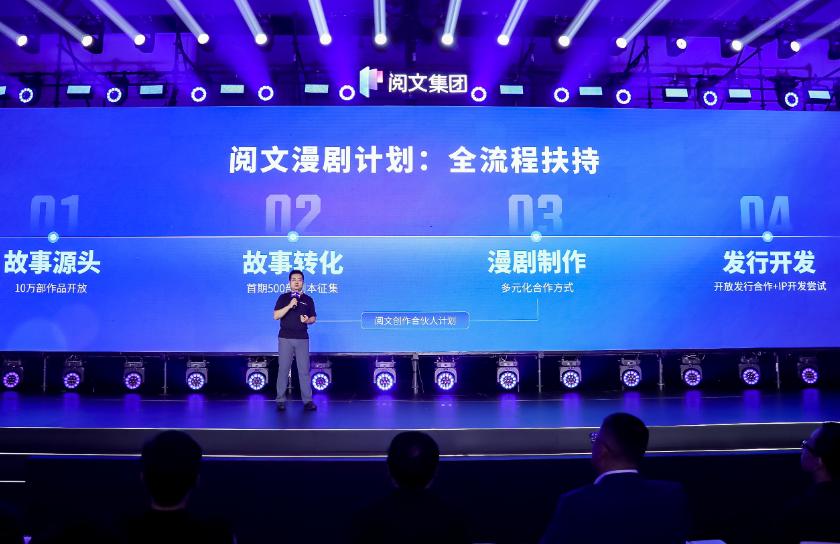
The production cost of short dramas and AI animation dramas increased by about 220 million yuan. A large number of these projects are scheduled to be launched in the second half of the year, the funds have been spent first, while the corresponding revenue has not yet been generated, which leaves uncertainty for the future.
What about the performance after excluding one-off factors? Adding back the 300 million yuan back tax payment, the net profit attributable to the parent company under non-IFRS is about 559 million yuan, compared with 508 million yuan in the same period of last year, representing a year-on-year increase of about 10%. In other words, after deducting the impact of past accounts and the base number, China Literature's actual operating capability has not deteriorated, and even improved slightly.
But the 135 million yuan net profit attributable to the parent company is still lower than the previous market expectation of around 200 million yuan. The impact of upfront cost investment is greater than many people expected.
Sales and marketing expenses reached 1.01 billion yuan, up 9.6% year on year; general and administrative expenses hit 560 million yuan, up 15.5% year on year; R&D expenses stood at 300 million yuan, up 39.8% year on year. The growth of these expenses is directly related to the expansion of IP business.
An unattractive profit statement does not mean there is a major problem. But it cannot be said that all the negative factors are one-off.
It is true that upfront cost investment is an active choice, but the result of this choice has to be verified by the revenue in the second half of the year.
It is still uncertain whether the money spent can be earned back.
II
The monthly paying users decreased by 1 million in real terms
The part of the financial report that deserves in-depth analysis is the business structure.
Online reading revenue was 1.84 billion yuan, down 7.3% year on year, and its proportion in total revenue dropped from 62.2% in the same period of last year to 52.1%.
This is the basic business that supported the growth of China Literature, and also the core business of the company in the past two decades.
The user data is very intuitive. The average monthly active users reached 134 million, down 5.1% year on year. The monthly paying users stood at 8.2 million, down 10.9% year on year, with a full 1 million paying users lost in one year.
This is the lowest value in the past five years.
The decline has passive reasons: free novel platforms such as Fanqie and Qimao continue to divert users, and short videos and short dramas are seizing users' time.

China Literature itself wrote a frank statement in the financial report: "Online reading is facing increasingly diverse and rapidly expanding competition from the IP visualization market."
To cope with this situation, the company increased the proportion of free reading content in its self-operated products on the WeChat ecosystem, while the monetization efficiency of free content is much lower than that of paid content.
The monthly active users on Tencent channels decreased by 20.5% year on year, which is also related to the company's active diversion of core content to its own platforms.
Interestingly, the average monthly revenue per paying user rose from 31.3 yuan to 32.7 yuan, up 4.5% year on year. Users who are willing to leave have left, while the remaining users spend more. This can be regarded as user purification, but the premise of this purification is that the total user base is shrinking.
The decline also has active reasons. China Literature is diverting the traffic and content of online reading to short dramas and AI animation dramas.
The financial report clearly states that "content distribution is shifting from online reading to short dramas and AI animation dramas". This is equivalent to transferring resources within the company: the reading revenue decreases, but the copyright revenue increases.
On the other hand, copyright operation revenue reached 1.61 billion yuan, up 41.9% year on year. Together with other revenue, the total revenue from copyright operation and other businesses stood at 1.69 billion yuan, up 40.3% year on year, and its proportion in total revenue rose to 47.9%.
The most prominent part of the 1.69 billion yuan is short dramas and AI animation dramas. Their revenue in the first half of the year reached 430 million yuan, more than 3 times that of the same period of last year, with a year-on-year increase of 230%.
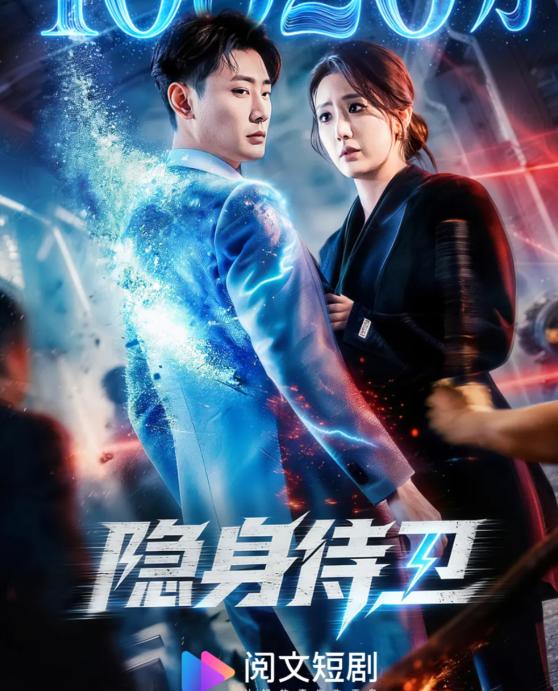
Specifically, more than 90 short dramas were launched, the male-oriented work *Invisible Bodyguard* recorded over 5 billion views across all platforms, with the platform popularity value exceeding 100 million, becoming a phenomenal top drama in the industry.
The cumulative profit of the female-oriented original IP "Sweet Wife" series exceeded 50 million yuan, which realized the serialized monetization of original short drama IPs.
One male-oriented IP and one female-oriented IP, one adapted and one original, prove that China Literature's success in the short drama track is not just luck, but it already has replicable production capabilities.
The performance of AI animation dramas is even more outstanding. In the first half of the year, thousands of online novels were adapted into AI animation dramas, 46 of which recorded over 100 million views, 367 of which recorded over 10 million views, and the 1 million-view rate is 5 times the industry average.
The top project *Three Thousand Blessings* recorded over 3 billion views across all platforms, and even drove the original novel into the top 10 of the Qidian bestseller list.
According to data from DataEye, China Literature ranked No.1 among the top IP copyright owners of AI animation dramas on major platforms in the first half of the year, with a total popularity value exceeding 1.6 billion.
In addition, the GMV of IP derivatives reached 780 million yuan, up 60% year on year, hitting a record high.
During the 618 shopping festival, the GMV of China Literature's official flagship store for cultural and creative products increased by more than 300% year on year, the GMV at the BW Comic Con site increased by 84%, and the GMV of offline pop-up events from January to July increased by 203%.
From figurine blind boxes to towels and bed sheets, IPs are being integrated into more high-frequency daily life scenarios.
The film and animation businesses also made good progress. According to data from Yunhe Data, 4 of the top 10 hit long dramas in the first half of 2026 are adapted from China Literature IPs, and 8 of the top 10 hit animations are from China Literature.
*The Outcast* Season 6 recorded a popularity score of over 21,800 on Tencent Video, hitting the highest record for 2D animations in the past three years.
One business line is receding while the other is growing. The two trends are not isolated.
The decline of online reading and the boom of copyright operation are two sides of the same coin. China Literature is moving its content from text form to visual form, and the traffic of online reading is being redistributed to short dramas, animation dramas and derivatives.
This is not a zero-sum game, but an active gear shift of the company.
III
It may be a golden cross, or it may be a death cross
Putting the two business lines together, a key signal emerges.
The revenue of online reading is 1.84 billion yuan, the revenue of copyright operation is 1.61 billion yuan (the total revenue of copyright operation and other businesses is 1.69 billion yuan), and the gap between the two is only 230 million yuan.
According to the growth rate in the first half of the year, with online reading revenue down 7.3% and copyright operation revenue up 41.9%, it is expected that in the next quarter, copyright operation revenue will most likely overtake online reading revenue and become the largest revenue source of China Literature.
This is not just a numerical cross. It is a rewrite of the company's identity.
We can take Disney as a reference.
Disney relied on box office revenue of animated films for its early development, and later the revenue from derivatives and authorization overtook box office revenue and became its largest revenue source.
From that moment on, Disney truly transformed from a content production company into an IP operation company.
The box office is no longer the end point, but the starter of IP value.
China Literature is going through a similar inflection point, transforming from an online novel platform that charges subscription fees to an industrialized IP development company. If this transformation is completed, the valuation logic of the company will change accordingly.
In its latest research report, China Renaissance Securities gave China Literature a 20x PE ratio, which is slightly higher than the 17.4x average of global IP operation companies.
The reason is that China Literature has advantages in the upstream IP source, the platform has millions of authors and more than 18 million works, and its model is relatively asset-light: it starts with low-budget animation dramas and short dramas, and then selectively adapts long dramas.
But there is a deeper question that needs to be clarified: Does the decline of online reading revenue mean that the value of online reading is disappearing?
We believe the answer is no. The role of paid reading is changing, transforming from a profit center to an IP filter.
An online novel will go through layers of screening including collection, continuous reading, monthly ticket and reward from the time it is launched to the time it is completed.
Every click and subscription from readers is a real-money vote.
This mechanism has been running for 20 years, and its essence is an IP screening system fed by massive user behavior data.
The 1 million-view rate of China Literature's animation dramas is 5 times the industry average, and the proportion of hit short dramas is 4 times the market average. This hit rate does not come from AI, but is screened out by the upstream paid reading system.
When AI lowers the threshold of content production and the supply explodes, the ability to select high-quality stories becomes even more scarce.
A small team of 3 to 5 people can produce an animation drama in one week. Production capacity is no longer the bottleneck, but judgment is.
However, the filter itself also needs fuel. If online reading continues to decline, the willingness of new writers to settle in and the supply of high-quality content will be affected.
Although 240,000 new writers were attracted in the first half of the year, 460,000 new works were created, and the total number of newly added words exceeded 30 billion, the trend of losing 1 million paying users in one year cannot be ignored.
The monthly active users on China Literature's own platform increased slightly by 0.8%, indicating that core readers are still retained, but the monthly active users on Tencent channels dropped by 20.5%, and the total traffic base is shrinking.
It is also uncertain whether the high growth of