The peak season is here, but the sweet soup has gone cold.
In the summer of 2026, the traditional sweet dessert soup market is shrouded in a cold chill.
Theoretically, when the temperature is approaching 35°C, sweet dessert soup brands should have welcomed their peak period of the year, which is expected to generate over 60% of their total annual revenue.
However, if you look at the actual foot traffic data, you will find that these sweet dessert soup brands not only failed to ride the market momentum, but also collectively hit the emergency brake. Major brands have unanimously slowed down their store expansion pace, and the stores that once occupied the prime C positions in shopping malls have begun to quietly close down and withdraw from their premises.
The recent widely publicized collective rights protection incident among franchisees of Maiji Milk Company is just a microcosm of this sudden slowdown in the sweet dessert soup track. In less than a year, the brand expanded its store count from less than 100 to 1000 directly, and then quickly fell into the quagmire of blocked profitability, excessive fines, and public trust crises.
What exactly went wrong with the sweet dessert soup business? Why did this traditional industry in China with a history of hundreds of years, extremely high gross margins and a solid mass consumer base, quickly hit a dead end once it was prematurely matured by modern capital and the ambition of large-scale expansion to thousands of stores?
Putting aside the macro backgrounds such as consumption downgrade and abnormal climate, the slowdown of the sweet dessert soup market is essentially a systemic failure caused by misaligned category genes, excessive industrial involution in the supply chain, and a deformed franchise ecosystem.
This is not only a tragedy for the sweet dessert soup category, but also a bitter pill that the entire new catering track has to swallow in the process of blindly pursuing large-scale expansion.
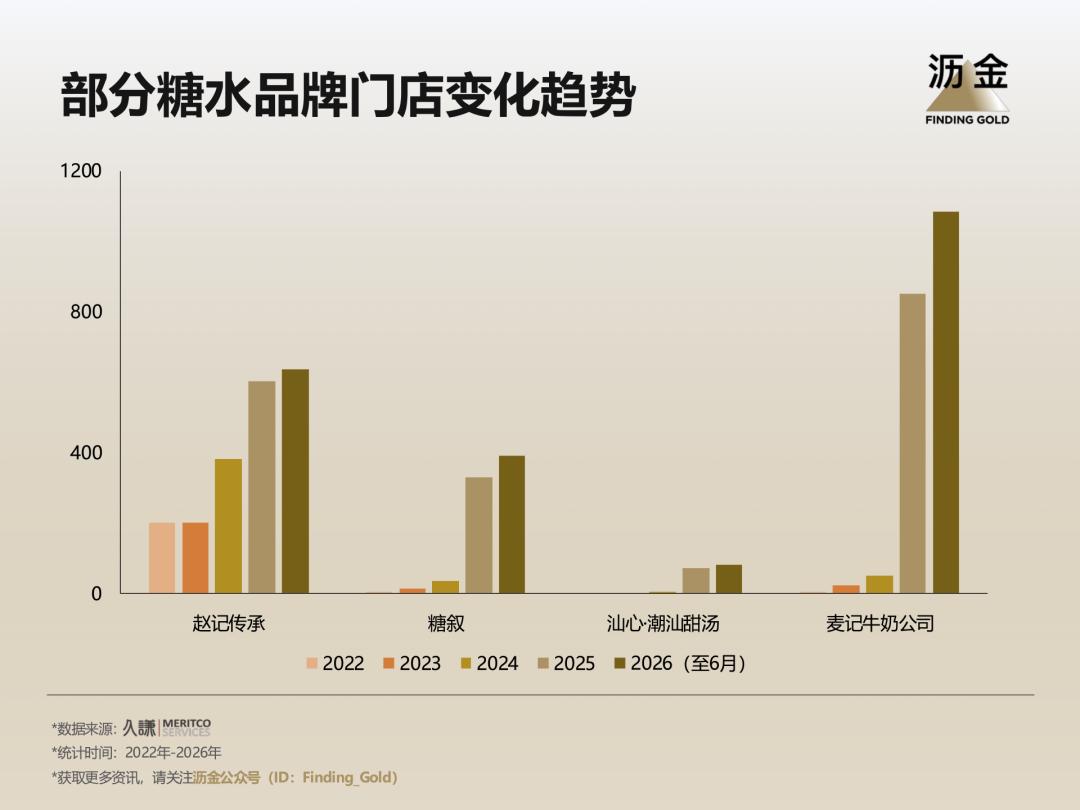
Sweet dessert soup is different from tea drinks, its single-store profitability model has been overestimated
In the past three years, almost all sweet dessert soup brands that have opened up franchising have been telling the same story — to become the Mixue or Chagee equivalent in the sweet dessert soup industry. Many brands including Maiji hope to replicate the 10,000-store model of the new tea drink sector, but they have underestimated the huge difference in category genes between the two.
The first difference lies in the consumption scenario of "takeaway to go" vs "in-store dine-in", which directly determines the upper limit of per-square-meter revenue.
Milk tea is essentially a fast-moving consumer beverage that can be consumed directly with a straw, which naturally fits all dynamic scenarios such as shopping, commuting, and going to the cinema.
A new tea drink kiosk with an area of only 15 square meters can easily sell more than 500 cups a day with a streamlined workflow and standardized SOPs. But sweet dessert soup is a traditional dessert that highly relies on bowls, spoons, and a table for customers to sit down at.
Once separated from the dine-in space, the emotional value and experience of sweet dessert soup will be greatly reduced. This means that sweet dessert soup stores cannot achieve high-frequency output with a very small area like milk tea shops, and they have to bear heavy space costs.
In order to match the brand momentum of new tea drink brands, new-style sweet dessert soup shops spare no effort to squeeze into core shopping malls. A standard store usually covers 70-120 square meters, with high-end decoration in national trend, new Chinese style or minimalist style, and the upfront capital expenditure for a single store often starts at 600,000 to 1,000,000 RMB.
In core shopping malls, rent and property fees are extremely rigid operating expenses, while the average customer unit price of sweet dessert soup generally only stays at 15-25 RMB. Because it is a dine-in focused business, even during the prime time on weekend afternoons, the store looks crowded with people, but the actual table turnover rate is extremely low.
Consumers who order a 20-yuan bowl of sweet dessert soup can sit and chat for two hours with the air conditioning on. The per-square-meter revenue of a single store is restricted by the very limited number of seats and the extremely long customer stay time. On workdays, the foot traffic in shopping malls drops sharply, and the high fixed costs further squeeze the already meager profits.
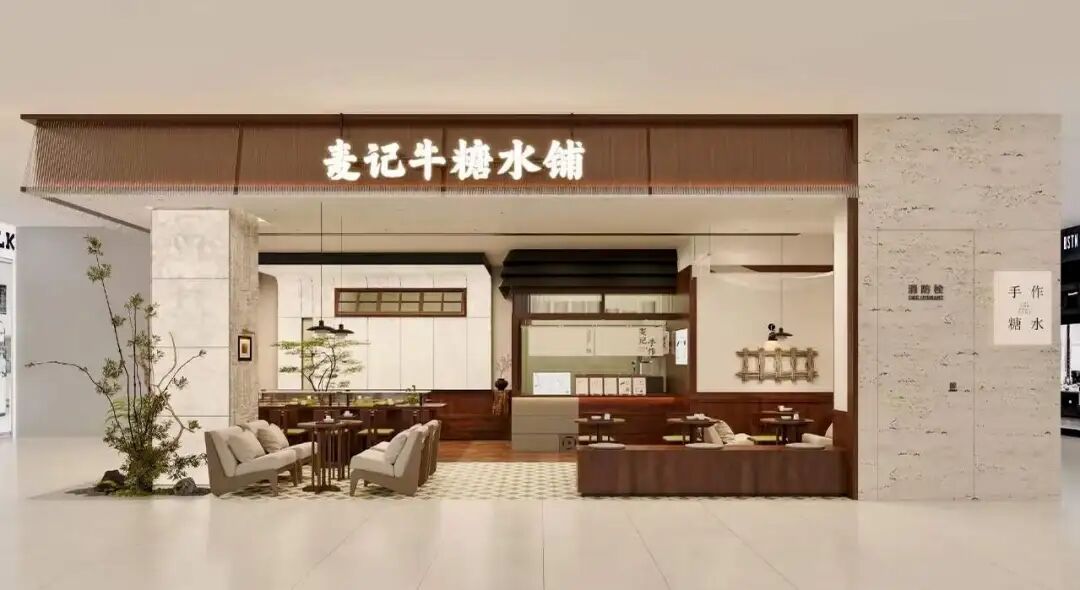
Maiji Sweet Dessert Soup Shop, Suzhou Joy City Store Source: Xiaohongshu
The second difference is the contrast between high addiction and strong satiety, which directly affects the repurchase rate.
Coffee and tea drinks contain caffeine which is highly addictive, and the liquid has very little satiety. For heavy consumers, drinking two cups a day is a normal part of their daily life, leading to an extremely high repurchase rate.
In contrast, no matter it is the dense taro paste, solid glutinous rice, chewy mochi, or traditional red bean and lotus seed, sweet dessert soup is essentially a solid carb bomb. This strong satiety determines that it can only be positioned as a light afternoon meal. This makes it almost impossible for consumers to eat two bowls of sweet dessert soup a day, and even eating it once a week will feel overly sweet and greasy.
In order to match the brand momentum of new tea drink brands, new-style sweet dessert soup shops squeeze into core shopping malls, pursuing large store areas and exquisite decoration. Brands often describe a very high dine-in gross margin of around 70% to their franchisees, but this is only an ideal state.
In reality, after deducting the takeaway platform commission and frequent promotions, the actual gross margin often hovers between 45% and 50%. Under the heavy pressure of high rent in shopping malls, coupled with the extremely low table turnover rate on weekends and the sharp drop in foot traffic on workdays, a large number of stores like those of Maiji have a daily turnover of less than 3,000 yuan, which cannot even reach the break-even line.
Low repurchase frequency, heavy asset investment, and large space demand are the inherent traits that cannot be changed for the sweet dessert soup category. Applying the logic of high-frequency new tea drinks to the low-frequency sweet dessert soup business has already planted a hidden danger from the very beginning.
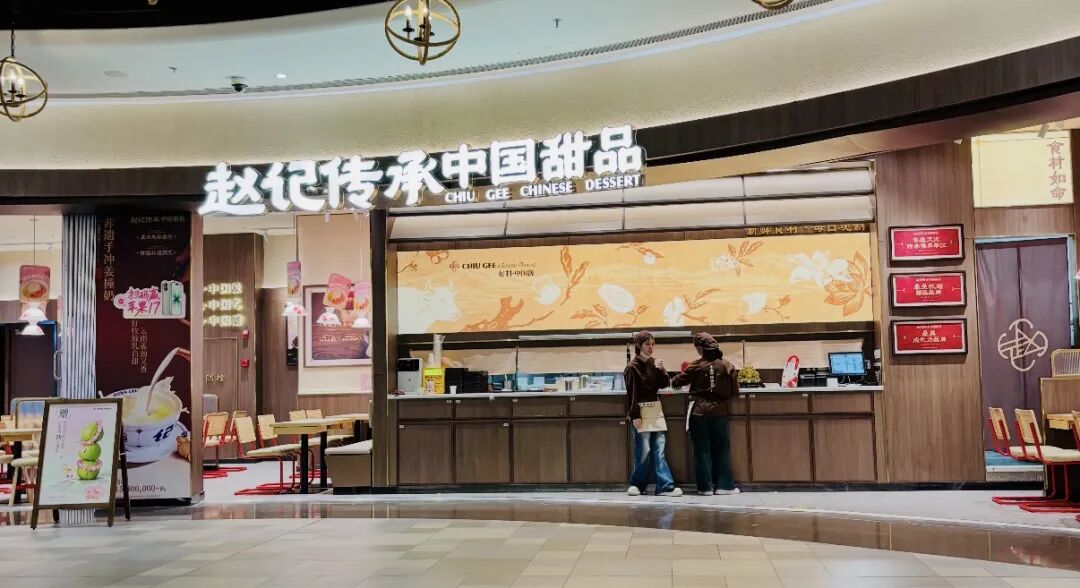
Zhao Ji Chuancheng Shenyang K11 Store Source: Xiaohongshu
Merchants keep piling up ingredients, and products are becoming increasingly homogeneous
If the fragile category model is an external injury, then product homogeneity is an internal injury that is hard to cure for the sweet dessert soup industry.
Nowadays, the sweet dessert soup business has long gone beyond the scope of traditional artisans, and has essentially evolved into an extremely simple game of piling up ingredients. Its universal product development routine is nothing more than: light-tasting base + differentiated side ingredients = so-called new products.
For the base part, it is nothing more than Guangdong buffalo milk, Chaoshan white fungus soup, Sanya coconut milk, or the plant-based rice milk that has become popular in recent years; for the side ingredients part, it is permutations and combinations of regional ingredients such as cassava, grass jelly, adzuki bean jelly, and fiddlehead jelly.
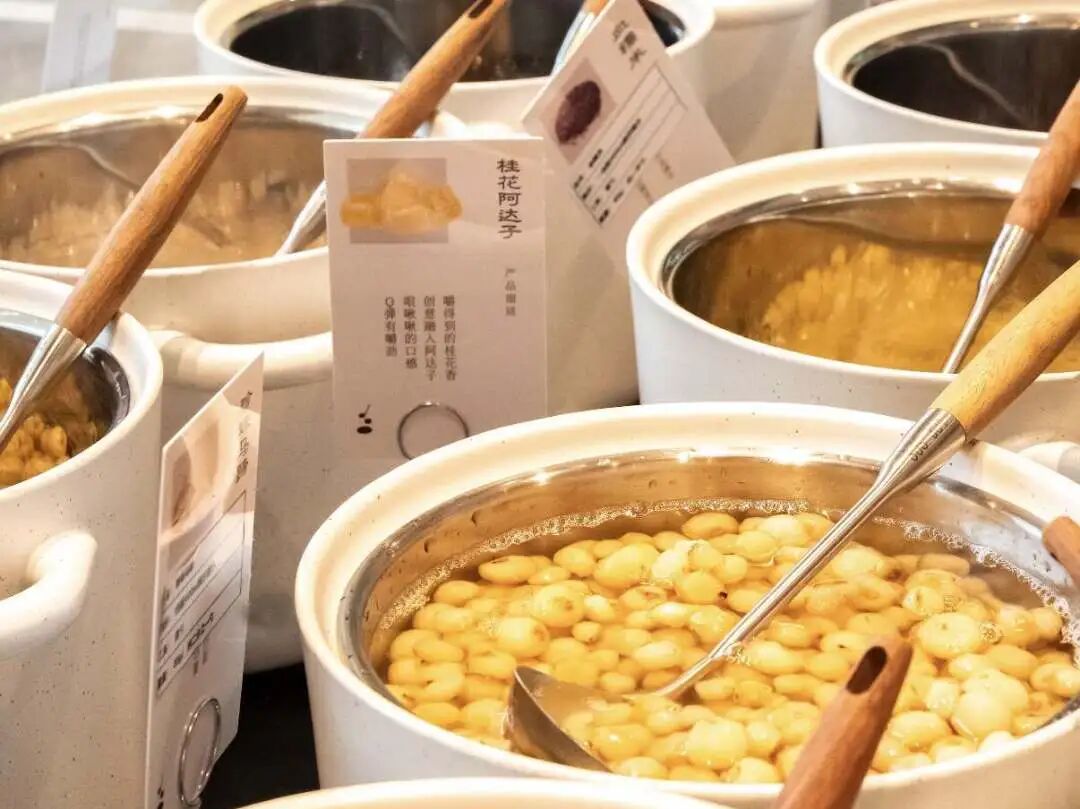
Ingredient piling logic of Shanxin · Chaoshan Dessert Source: Xiaohongshu
In the past, the moat of such combinations lay in the time-consuming manual boiling process of time-honored brands and their undisclosed regional formulas. But in front of China's extremely mature and involuted catering supply chain today, these so-called barriers have long been broken through by the highly developed food industrial system.
Consumers sitting in the exquisitely decorated stores may think that the back kitchen is slowly boiling white fungus over low heat, but in fact, the staff just opened a ready-to-use package of cold-chain pre-boiled white fungus. Consumers may think that the adzuki bean jelly is an exclusive specialty that the brand sourced from the deep mountains of southern Fujian, but in fact, upstream supply chain factories have already made it into a standard SKU that can be eaten directly after opening the bag with a shelf life of up to half a year through standardized compounding.
Even the popular "food and medicine homology" concept that has gone viral on social media in recent years, which turns whole ginseng, Xinhui tangerine peel, poria cocos, and monk fruit into crystal clear gel jellies, has no secrets at all at the supply chain end, it is nothing more than placing a custom production order of several tons minimum with an OEM factory.
This extreme transparency of the supply chain leads to almost no product difference between Brand A and Brand B.
As long as Brand A successfully launches a new product of tangerine peel red bean soup with water chestnut popping boba, the R&D director of Brand B can make a phone call to the supplier, and the substitute product with 95% similar taste can be deployed to stores nationwide in as fast as one week.
Everyone is sharing the same base and piling up the same side ingredients, and the entire track has fallen into endless micro-innovation and extremely inefficient homogeneous involution.
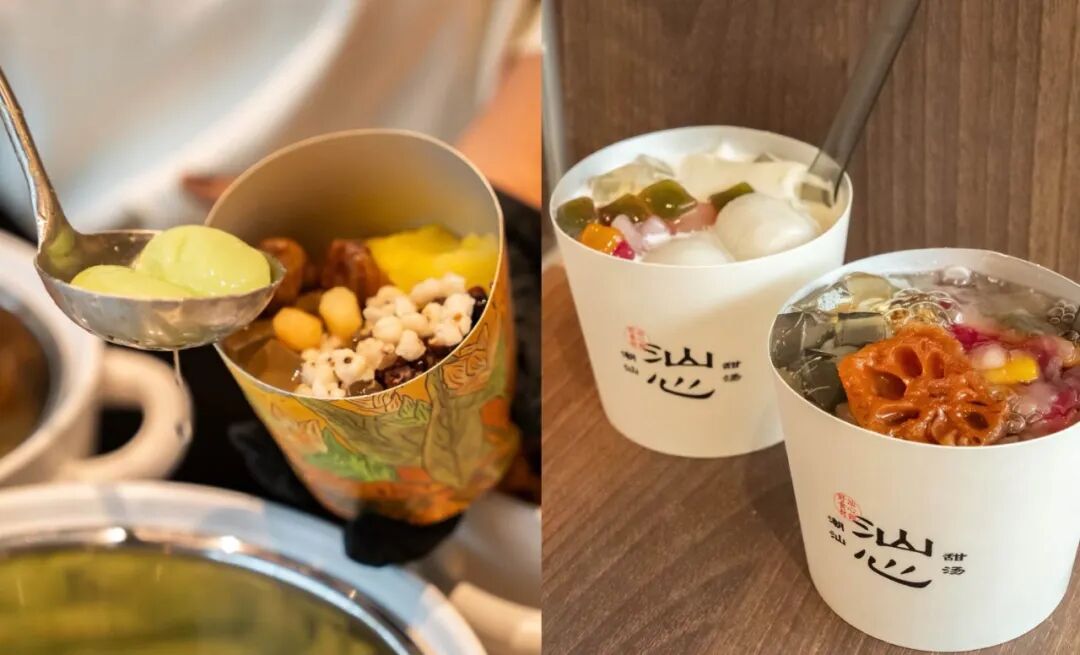
Ingredient-piled products of Shanxin · Chaoshan Dessert Source: Xiaohongshu
When there is no difference in taste, brands lose the pricing power of their products, and can only make up for it in visual presentation and portion size.
In order to make consumers feel that their 20+ yuan is worth the money, and to cater to the social media check-in trend of "ingredients overflowing from the bowl", shop owners have fallen into the logic of frantically piling up ingredients. Half a bowl of thick taro paste as the base, plus three large scoops of mochi, a layer of water chestnut popping boba, and finally pour thick coconut milk on top.
This is no longer a bowl of sweet dessert soup to cool off the summer heat, but a bowl of mixed congee that makes people feel full after eating only half of it.
This practice not only greatly increases the cost of ingredients and further squeezes the profit of single stores, but also drives consumers away in reverse. The already low-frequency consumption is further reduced due to the overly sweet taste and extreme satiety, which puts a heavy burden on consumers' stomachs, and eventually sweet dessert soup becomes a marginal option that people only force themselves to eat once every few months.
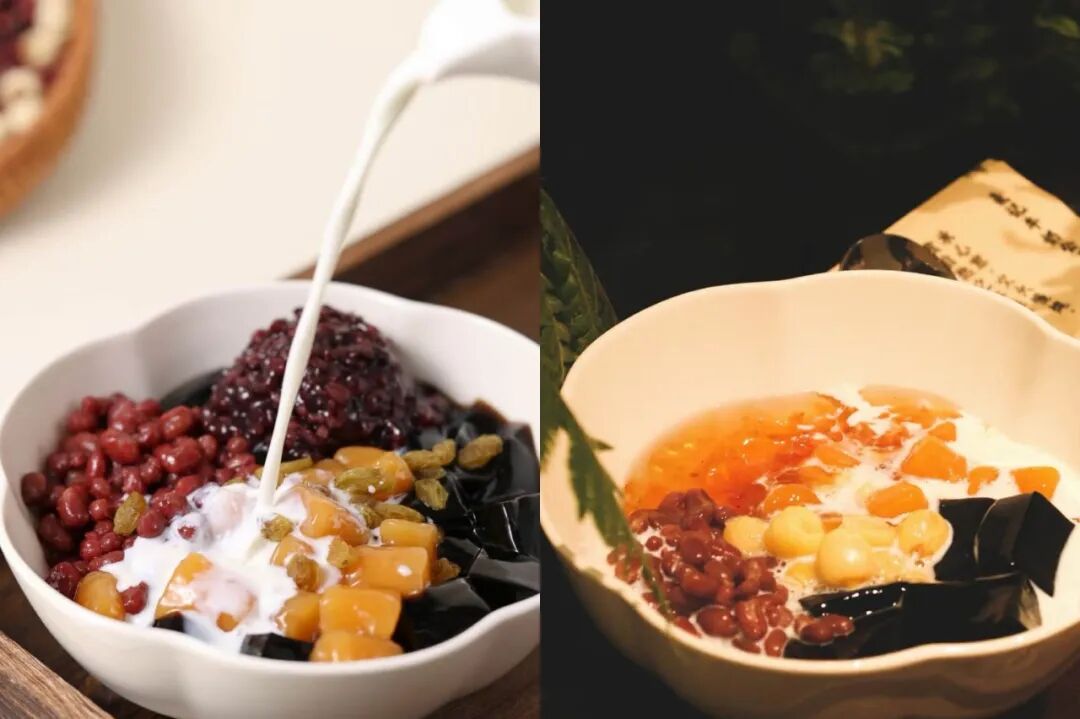
Ingredient-piled sweet dessert soup products of Maiji Milk Company Source: Xiaohongshu
Management actions are distorted, and franchisees become the ones who pay the bill
When the single-store profit model cannot work, and the product end falls into ingredient-piling involution, the commercial actions of the brand will inevitably be severely distorted.
At this stage, the aggressive large-scale expansion is no longer the moat of the brand, but a death sentence that completely crushes the franchise ecosystem. The collective rights protection incident of Maiji Milk Company is exactly a standard sample of this pathological commercial evolution.
In less than a year, Maiji forcibly expanded its store count to 1000 with an aggressive investment promotion strategy. What supported this terrifying growth rate was the perfect picture of high gross margin and fast payback that the investment promotion team drew for franchisees.
Brands often describe a very high dine-in gross margin of around 70% to franchisees, but this is only an ideal state that exists on spreadsheets.
In reality, after deducting the high markup charged by the brand side at the supply chain end, the huge commission of takeaway platforms, and the low-price group buys and frequent promotions that have to be participated in for drainage, the actual gross margin in the hands of franchisees often struggles between 45% and 50%.
Under the heavy pressure of high rent in shopping malls and high labor costs, a large number of single stores have a daily turnover of just over 1,000 yuan, and are continuously in a net loss state. The so-called six-month payback is completely impossible.
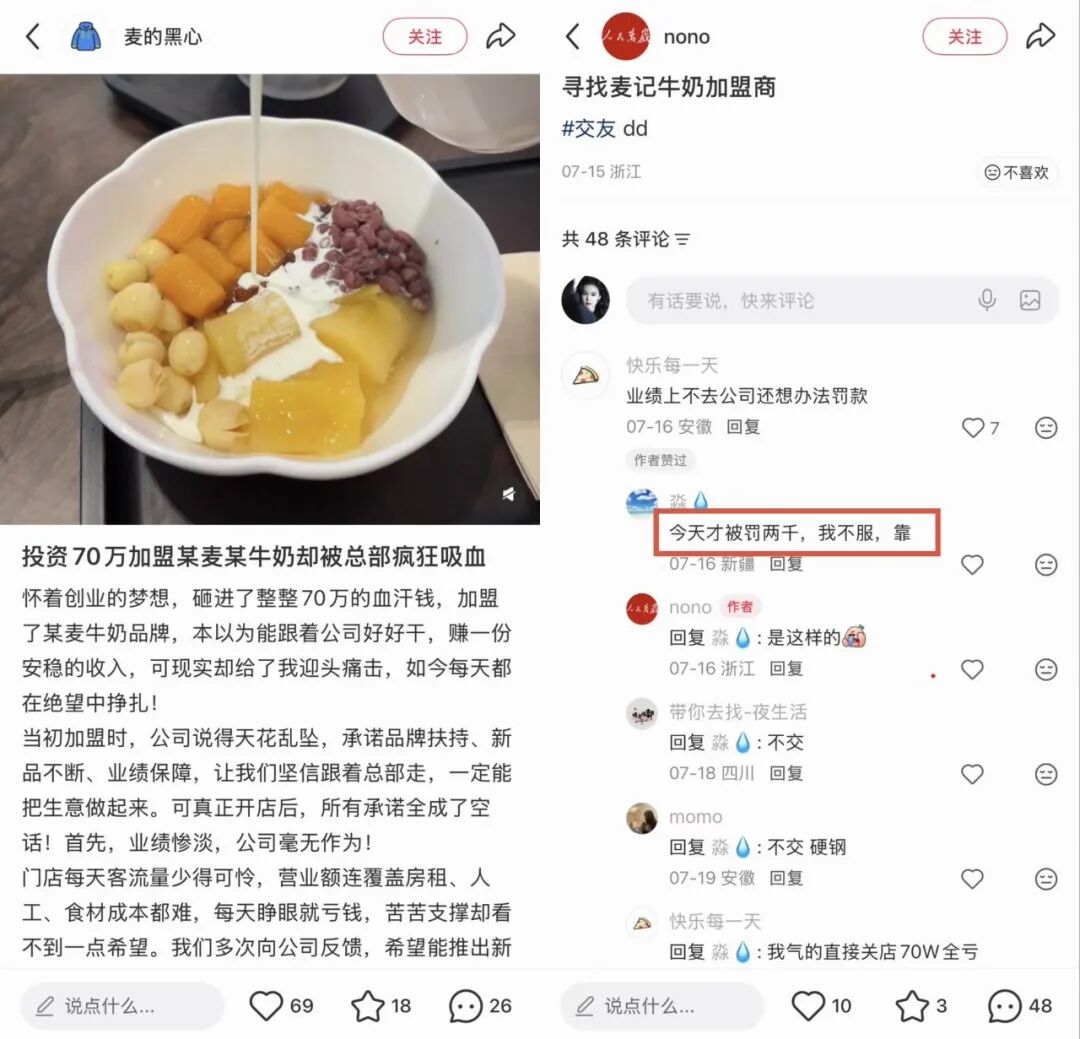
Complaints from franchisees of Maiji Milk Company Source: Xiaohongshu
When single stores cannot make money, truly long-term oriented brands will choose to slow down, tide over difficulties with franchisees, and re-polish the profit model. But under the pressure of capital and performance VAM agreements for rapid expansion, the refined operation at the back end is often completely disconnected. In order to maintain the bright financial statements of the brand itself, management actions begin to go to extremes, replaced by a strict almost pathological inspection system.
Minor invisible damage to the refrigerator seal, a 1cm deviation in the placement angle of materials on the operating table, or even the thickness of sliced fruits not meeting the standard will lead to heavy fines ranging from hundreds to thousands of yuan, and even direct deduction of the high security deposit.
This "fine instead of management" mechanism that franchisees denounce bitterly actually reflects the deep profit anxiety of the brand side. When the brand cannot sell enough sweet dessert soup at the front end, it can only put pressure on the existing franchisees in disguised forms, and use fines under various names to maintain the company's cash flow and revenue data.
This completely tears off the fig leaf of many current popular sweet dessert soup brands: when the single-store model cannot support terminal profitability, the essence of this business has fundamentally shifted.
The brand no longer earns money from consumers buying sweet dessert soup at the retail end, but earns money from franchisees buying equipment, paying for decoration, purchasing overpriced materials, and paying fines.
In