The ability that young people envy the most in the prefabrication era can be summed up in two words.
Cover Image | CFP
Author | Fleming
Editor | Taozi Jiang
A series of videos titled *Essential Lessons for Prehistoric Humans* has quietly gained popularity online. The video creator uses no modern tools, only a single stone as their implement, chipping and shaping it little by little until they finally craft a stone arrowhead or a stone axe. Viewers joke that "the prehistoric human mode has activated" while eagerly following each new episode, with some even calling it "a sign that the internet has entered the Neolithic Age."
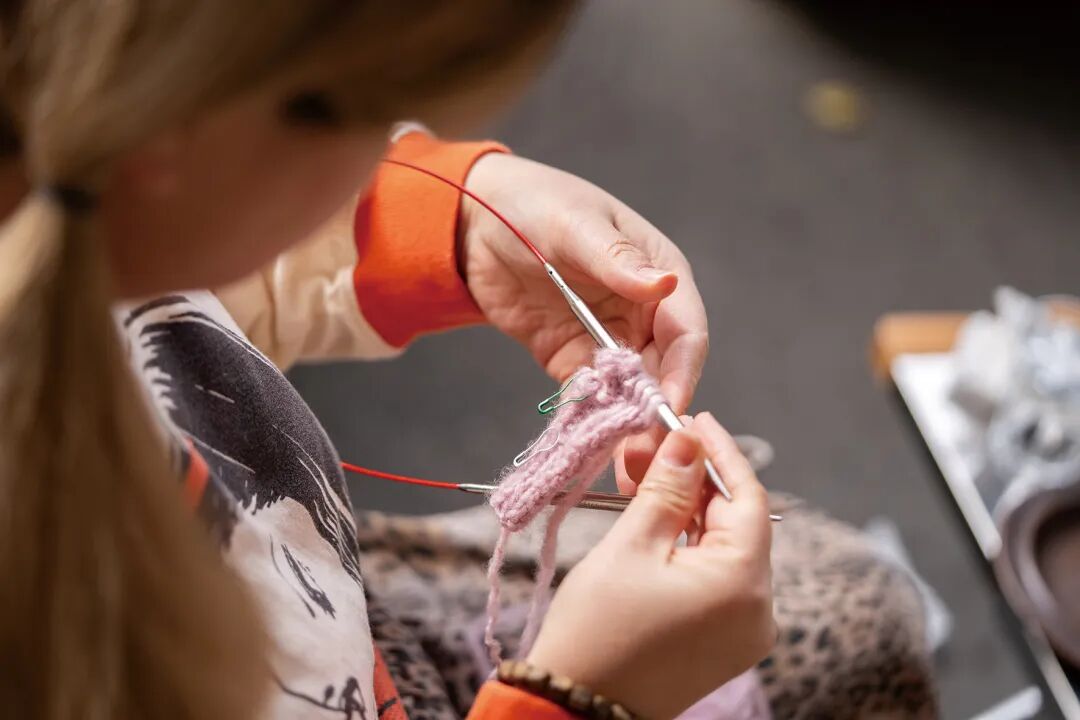
Offline, more and more young people are also devoting time to seemingly "inefficient" activities: spending an entire afternoon assembling a palm-sized fuse bead keychain, crocheting a lopsided wool hat following tutorials, or visiting pottery studios to play with clay and make small handmade items. While these products can be purchased cheaply for just a few dollars online, once labeled as "self-made," many people are willing to pay 10 times the price and spend days working on them, enjoying every minute of the process.
This "handmade creation" trend has long transcended the small circle of craft enthusiasts. In shopping malls, fuse bead, crochet, and tufting studios occupy prime retail spaces, with bookings fully reserved on weekends. On social platforms, tufting tutorial videos easily earn millions of likes, and independent brands advertising "hand-crocheted" products at premium prices are no longer rare. Labels like "100% Handmade," "DIY," and "Make It At Home" have become traffic-driving passwords.
This is truly an era where every conceivable demand can be satisfied. On one hand, AI lets us skip the thinking process and get instant results; on the other, we immerse ourselves in the process of "hand-making everything," paying for the state of flow it brings. What kind of experience is handmade creation really selling? Where will this business go once the hype fades?
01 The Scarcity of Handicrafts
Data from Qichacha shows that 6,955 craft-related enterprises were registered in 2025, a year-on-year increase of 31.08%. Experience stores offering pottery, fuse bead art, crochet, silver jewelry DIY, and other activities are springing up everywhere, turning once obscure small shops into popular weekend destinations for young people. At first glance, this seems like a retro trend, but in essence it represents a reversal of the values of industrial society.
In the era before machines became widespread, handmade production meant low efficiency, small output, and long, repetitive labor. Today, with the development of global supply chains, almost all daily necessities can be mass-produced at low cost with standardized quality, available in large quantities at affordable prices. Mass production, however, leads to uniform, generic products with no distinct personality. As a result, people are turning to pursue the uniqueness and scarcity of handmade goods, imbuing them with aesthetic value and associating them with "quality."
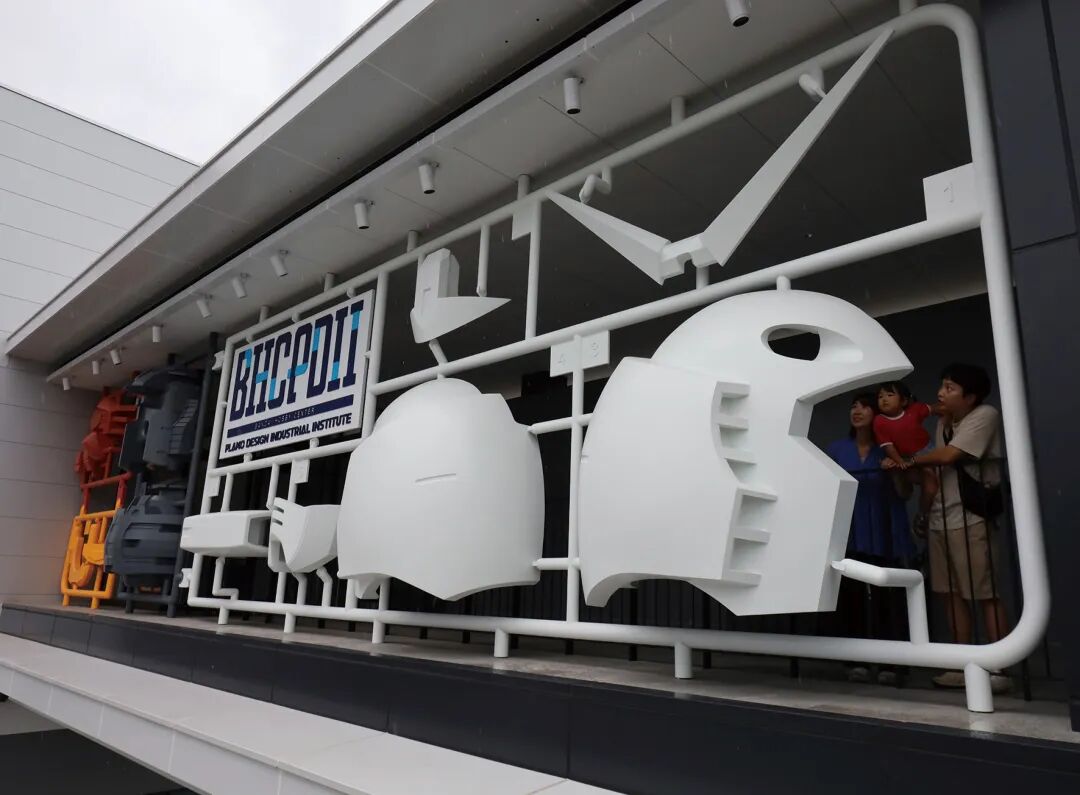
September 2, 2025, Shizuoka, Japan. A Gundam model monument stands at the entrance of the Bandai Model Center Plastic Model Design Industrial Research Institute (BHC PDII) Museum, located in the new Bandai Model Center factory. Visitors can tour the factory to witness the planning and development process of plastic models. (Photo / CFP)
Whether people value "handmade" products depends entirely on their mindset. I once spent some time in Siwa, Egypt, a small desert town where many local industries still rely on manual production. At first, I assumed the local artisans' handmade products would be expensive, but the opposite was true: the distinctive handmade salt lamps sold far below expectations, and vendors rarely used the familiar marketing tactics of emphasizing "100% handmade" or "artisan crafted" that work so well in tourist cities. In contrast, industrial goods like electric kettles and electric fans were more expensive than in large cities due to high transportation costs.
Urban residents are different. When countless mass-produced goods are readily available, they deliberately choose the harder path, hoping to create items from scratch with their own hands. Where there is demand, there is business. For popular handmade activities like fuse beading and crochet, raw materials cost only a few dozen yuan when purchased online, but once set up in a shopping mall with a physical store, shops can charge customers hundreds of yuan for a two- to three-hour experience session.
The knitwear brand SEVY HAUS, which has gone viral on social media recently, occupies an entire building in Seoul's Seongsu-dong district: the first and second floors are filled with thousands of colors of yarn balls; the third floor is an art exhibition space; the fourth and higher floors are a "Knitting Lounge" equipped with a self-service bar, private creation areas, and photo booths. Many domestic crochet enthusiasts even travel to Seoul specifically to visit the store, sharing their experiences on social media with captions like "I traveled all the way to Seoul just to knit a sweater for the first time in my life."
When efficiency is taken for granted, "slowing down" has become a lifestyle worth traveling for.
This is the most fascinating aspect of the "handmade economy." It does not stand in opposition to industrial civilization; instead, it is a product of highly mature industrial development, representing a new level of consumption upgrading.
02 Regaining a Sense of Control Over Life
Aya walked into the fuse bead shop not out of simple curiosity. The craft had been popular for over a year, with friends posting their finished works online, but she had never felt drawn to it. Earlier this year, she became a fan of a fictional couple from a show, and wanted to make something for them — the specific project didn't matter, as long as it was made by her own hands.
One weekend, she went to a fuse bead shop with a friend for the first time, spending 8 hours placing each tiny bead one by one to recreate the image of her favorite couple. When she peeled off the masking tape at the end, she was stunned, thinking "I actually made this — it's completely unique."
For Aya, her affection for the characters was given tangible form through the fuse bead art. Now, she hangs the finished keychain on her bag, carrying it with her every day. Even though the craft put a strain on her wrist, she has developed a genuine interest in handmade work. After all, "making simple small crafts really helps people relax."
Within the modern mass production system, most people's daily work is highly abstracted and virtual. Faced with uncertain projects, endless alignment meetings, and mandatory KPIs, young people, as cogs in the system, inevitably feel a sense of emptiness. In contrast, handmade work offers immediate feedback: the time and effort you put in are clearly visible. Even if the finished product is imperfect, it is at least complete.
The "IKEA effect" points out that consumers assign higher emotional value to items they have personally made or assembled. During the process of handmade creation, as you invest time, physical effort, and even experience setbacks, and solidify them into an imperfect finished product, that item truly belongs to you. Handmade creation is a re-enchantment: you gain an irreplaceable, one-of-a-kind life experience.
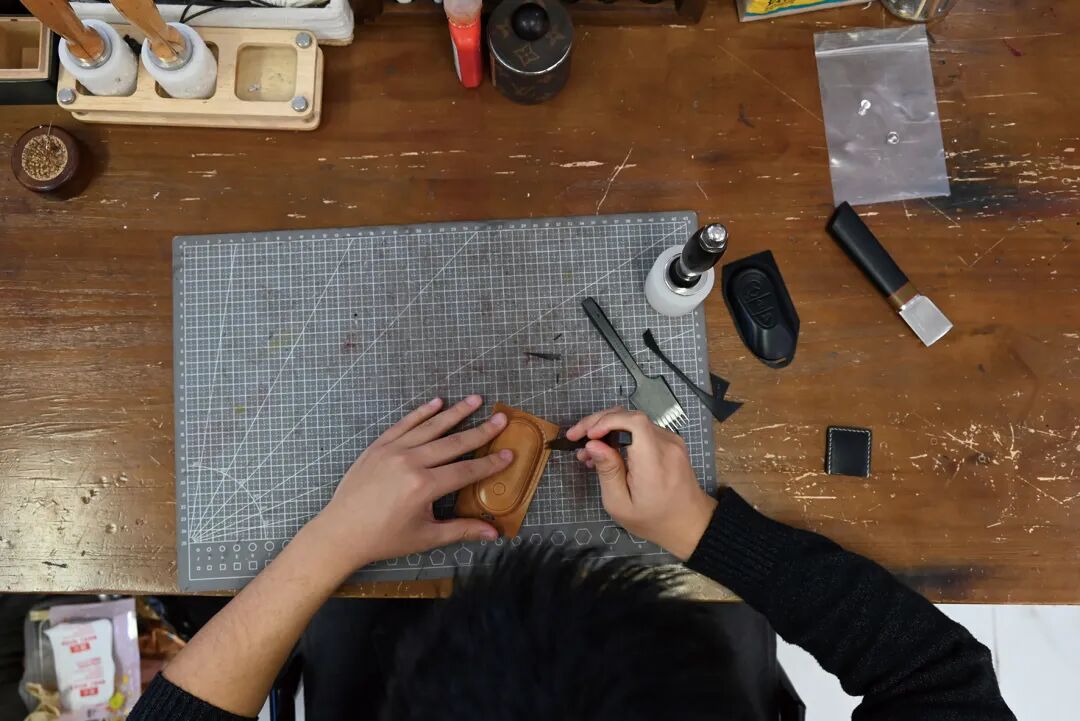
December 6, 2023, Chengdu, Sichuan. The owner of a handmade leather brand is crafting a car key cover. (Photo / CFP)
People visit craft shops not necessarily because they are passionate about a specific technique. For fuse beading, crochet, pottery, and cream glue art, the real appeal often lies not in the final product, but in the process — the state of devoting your full attention to a single thing. Rather than saying young people are obsessed with handicrafts, it is more accurate to say they are searching for a way to take control of their time and results, even if only for a short while.
This trend has even permeated the milk tea industry, which is a typical example of efficiency-focused consumption. Traditionally, the logic of fast-moving consumer goods is to pursue maximum standardization and the fastest possible service speed. A few years ago, the "hunger marketing" tactics and long queues at some milk tea brands were widely criticized by consumers, who did not want to wait an extra minute for a drink. But in recent years, more and more brands have taken the opposite approach, extending the "making process" by adding interactive design sessions that customers can participate in before receiving their drinks.
The most common examples are DIY cup stickers and cup sleeves. Before picking up their drinks, customers can choose stickers, drawing tools, or fun stamps to personalize blank cups and sleeves. Many stores have even launched semi-open blending experiences, letting customers mix their own tea base, sweetness level, and topping ratios, becoming "limited-edition drink masters." The milk tea itself remains the same, but customers gain an extra sense of joy from participating in the creation process.
This perfectly reveals the subtle shift in consumer psychology. In an environment where more and more choices are pre-determined by algorithms, even the small act of deciding the sweetness level of a milk tea or sticking a sticker on a cup becomes amplified into emotional compensation.
03 Selling Experiences, Not Products
From early cross-stitch and paint-by-numbers, to later tufting and fluid bear painting, to today's popular fuse beading, pipe cleaner crafts, cream glue art, and crochet among young women and students, the unit price and forms of the handmade craft market are evolving. "In the past, people would spend two to three hundred yuan on tufting, vigorously stabbing the fabric for hours. Now the trend is moving toward 'lightweight' and 'everyday' projects," Zhuo Xiao, who runs a comprehensive craft studio in Guangzhou, told *New Weekly*.
Zhuo Xiao's studio is less than 50 square meters, and is fully booked every weekend. She says many projects require reservations one or two weeks in advance, and "for more complex projects like couple DIY bracelet making, we only accept bookings on workdays, as we are completely swamped during holidays." She has keenly identified the core of this business: it cannot be run like a retail store, as its essence is experience, and even psychological therapy.
Highly technical hardcore handicrafts have extremely high barriers to entry, deterring 90% of amateur hobbyists. Today's popular craft projects are different. Take fuse beading for example: customers only need to arrange colored plastic beads on a pegboard according to a pattern, then the staff will iron it with a heat press to create a beautiful keychain. The technical difficulty is minimized, while the entire creative process and the sense of achievement are fully preserved.
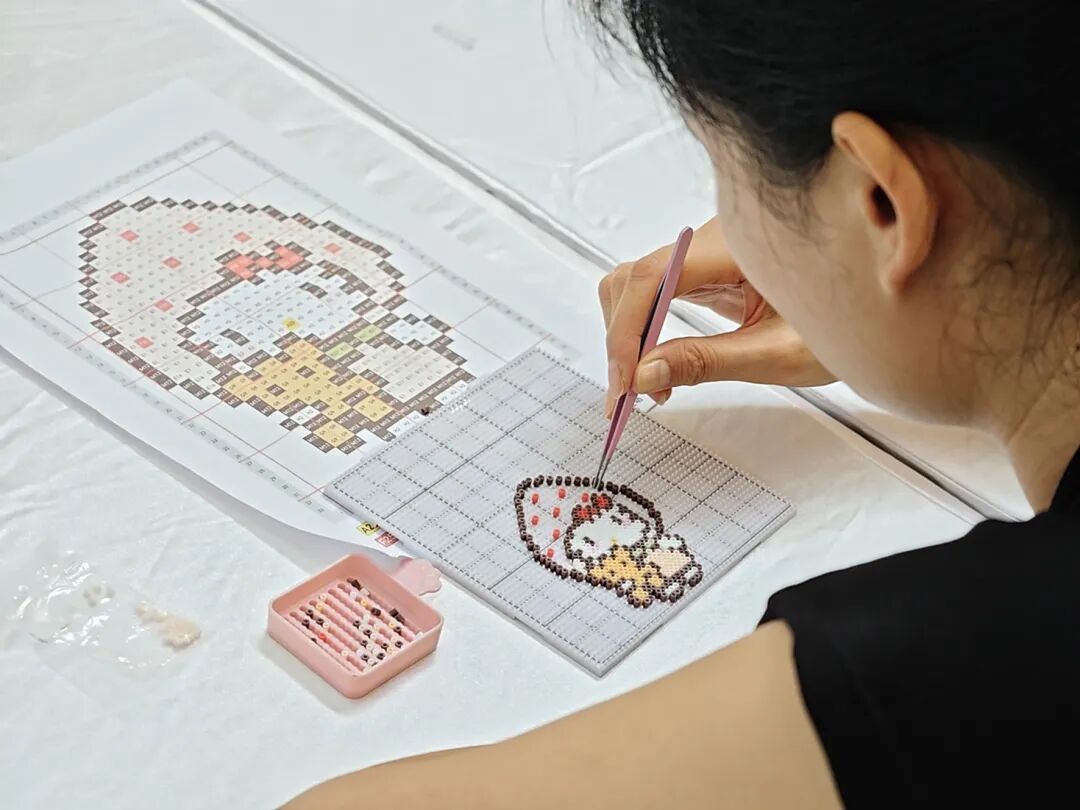
May 23, 2026, Wuhan. Wuhan Starlight Mall hosted a fuse bead challenge, with many couples and family teams participating. (Photo / CFP)
Without the ultra-low material costs and low technical barriers brought by advanced industrialization, this "anti-efficiency consumption" would never have become a popular mass-market stress-relieving activity. Handmade creation can bring pure aesthetic pleasure and psychological therapy to young people precisely because modern industrial supply chains have taken care of all the tedious, labor-intensive parts that no one wants to make by hand.
"Most customers come just for a new experience, and rarely return for a second visit," Zhuo Xiao says. To stay operational, shops must constantly attract new customers, but customer acquisition costs are extremely high in today's saturated traffic environment. The barriers to entry for most craft studios are very low, leading to severe homogenization. Once a fuse bead shop becomes popular, several identical shops will immediately open on the same street.
Physical stores also have to bear the "three high costs" — high rent, high labor costs, and high material waste — which cannot be avoided. To attract young customers, shops are usually located in prime commercial districts or artistic neighborhoods, leading to heavy rent pressure. Craft experience sessions also require staff to provide full guidance and clean up after each session, making their workload far heavier than in ordinary retail stores. At the same time, fierce commercial competition has driven experience prices down from the initial 100 yuan per hour to levels barely covering material costs, drastically squeezing profit margins. Caught between these two pressures, the vast majority of entrepreneurs who entered the market following the trend cannot avoid being eliminated once the hype fades.
Material costs are also a major issue. Fuse beading may seem simple, but shops need to stock enough beads in every possible color, with different quality grades, which is not cheap. To survive, many peers have pivoted to offering corporate team-building services. However, this path has hidden pitfalls: under normal circumstances, a shop only needs 3 to 4 sets of tools to serve individual walk-in customers, but to take on team-building projects, they need to prepare dozens of sets of tools, and also upgrade service quality and material grades. If the pivot fails, individual shop owners will face massive sunk costs.
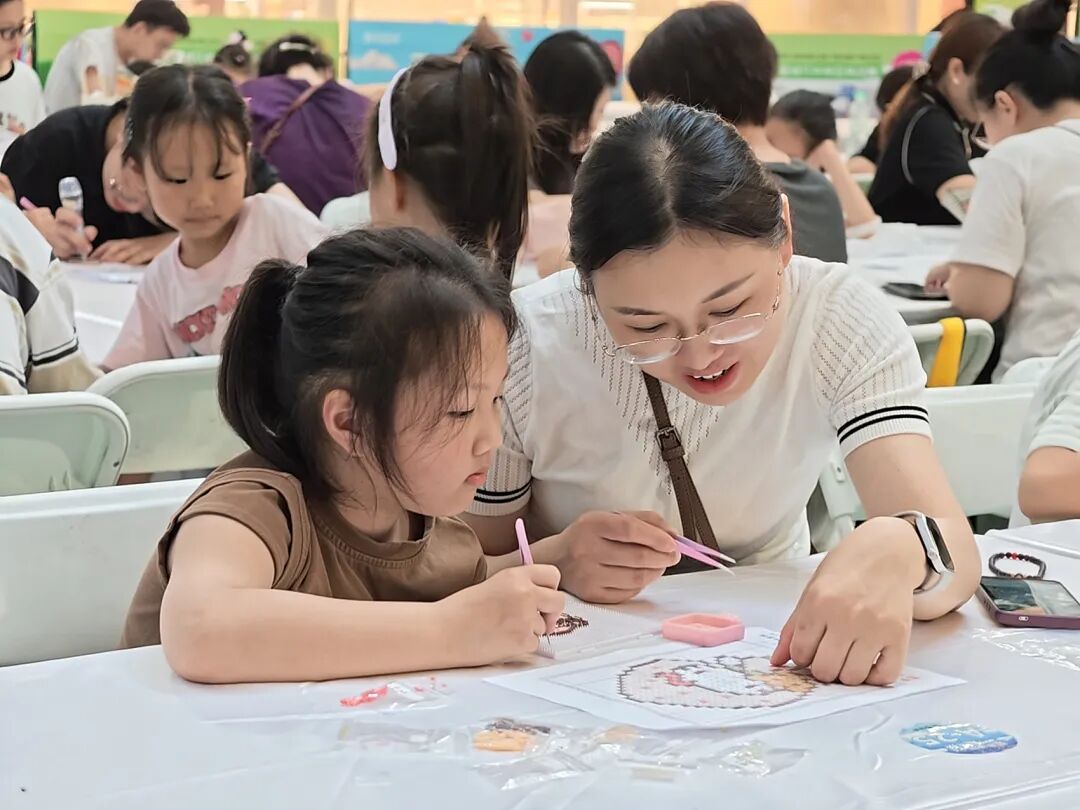
The "Bead Fun Creation, Crafting With Love" fuse bead challenge at Wuhan Starlight Mall.
Zhuo Xiao understands this deeply. After 3 years of running the shop, the number of projects offered has grown from the initial tufting, fluid bear painting, and acrylic painting to more than 15 different activities. In this industry, trends change on a monthly basis, with tools and materials iterating extremely quickly. If you fall even slightly behind, leftover stock will become dead inventory.
To break out of the one-time consumption trap, today's handmade economy is expanding into tourism and education scenarios, launching high-unit-price advanced craft courses such as traditional cooking classes at "Chiang Mai Grandma's Kitchen," weekend ceramic study tours in Jingdezhen, and short-term pet clothing design workshops.
In these new courses, the level of handmade involvement is higher, but their core is still precisely calculated "resort-style fast food." These courses usually last 3 to 10 days, perfectly matching the rhythm of modern office workers: as short as a long weekend, or as long as a week of annual leave plus weekends, giving customers the "deep immersion" of escaping their cubicles without the boredom that comes with overly long experiences.
This is the inevitable reality of the handmade economy today: while it rebels against standardization, it is forced to standardize itself to survive the pressure of the "three high costs." When "slowing down" is designed as a consumption package measured in hours, this business has become increasingly similar to the standardized work life it originally tried to escape.
However, as long as people still crave a temporary escape from standardized daily life, the handmade economy will not disappear. For shop owners to survive, they will need to develop a new kind of shrewdness. Handmade creation may never generate huge profits, but it will remain a sustainable, long-running small business.
(All interviewees in this article are using pseudonyms.)
Layout by: Chen Weihang