The "complementarity through opposition" between Wu Jinglian and Li Yining
Prologue
In 1930s Nanjing, the Qinhuai River continued to flow slowly. That year, two boys were born in this ancient city one after another: in January at the start of the year, the Wu family welcomed a baby boy named Jinglian; in November at the end of the year, the youngest son of the Li family was named Yining. No one could have imagined that half a century later, these two would become the most dazzling twin stars in the ideological history of China's reform and opening up under the titles of "Wu the Market" and "Li the Stock".
They were not only fellow townsmen, but also high school classmates, and the two scholars of their generation who had the greatest impact on China's reform; yet they stood at two ends of the reform path, one advocating an overall coordinated market-oriented transformation, and the other insisting on ownership reform through property rights restructuring. Their debates spanned more than 20 years, from the dispute over the main line of reform in the 1980s to the conflict over the capital market at the turn of the century. However, beneath all their differences lay a completely consistent foundation: a firm belief in the power of the market, unwavering adherence to the conscience of scholars, devoting their entire academic lives to offering advice for China's transformation, and profoundly influencing the course of China's reform and opening up. The so-called "unrivaled national scholar" has evolved into a much-told tale of "two peerless national scholars" in their case — complementing each other despite seeming opposition, they arrived at the same destination through different paths, and jointly inscribed the ideological rings of China's reform.
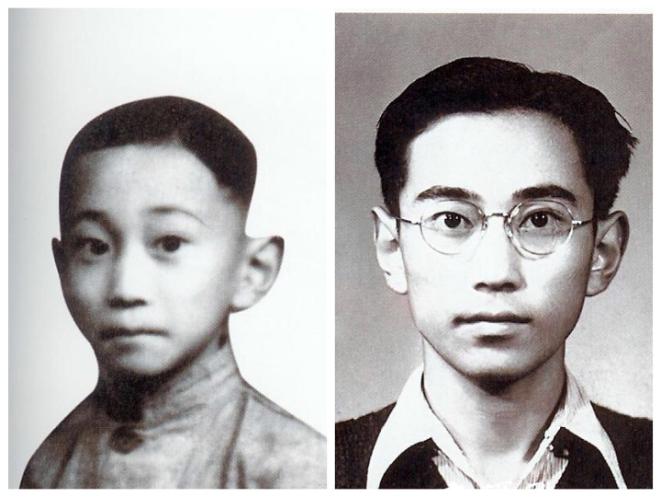
Li Yining during his primary and high school years (Image source: Official website of Peking University Guanghua School of Management)
In February 2023, Mr. Li Yining passed away suddenly. I attended the subsequent memorial service. Listening to everyone's speeches and looking at the teacher's works displayed at the scene, tears kept streaming down my face...
Experts see the underlying logic while laymen just watch the spectacle. What I first admired unexpectedly was Teacher Li's eloquence — he was exceptionally good at using easy-to-understand metaphors to explain profound truths. For example, he said state-owned enterprises suffered from both Alzheimer's disease and poliomyelitis; to maintain a certain growth rate, the economy is like riding a bicycle: going too slow will make you unstable and you will fall, and so on, to name just a few. Once, he said: In state-owned enterprise reform, we should prioritize large enterprises while loosening control over small ones, and let good girls marry first. As a brash young man, I stood up and asked: Why not prioritize large enterprises? He replied: Who can afford to marry them? The audience burst into laughter. Another time during a break, as a teenager of 18 or 19, I seized the opportunity when the teacher was resting, stepped forward and asked a very abrupt question: How can a country achieve long-term stability and peace? Teacher Li looked me up and down — his gaze gave no clue whether he thought I was a promising student or a hopeless one — then he left the four words "political reform" and turned away...
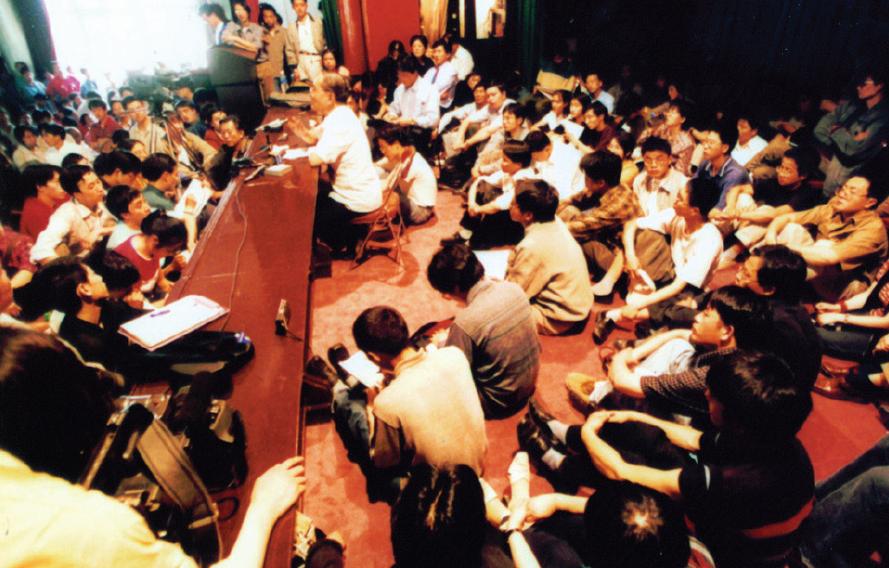
At the scene of Mr. Li Yining's lecture (Image source: Official website of Peking University Guanghua School of Management)
Teacher Li has passed away. Fortunately, Mr. Wu Jinglian is still alive. The nonagenarian is still thinking, writing, continuously paying attention to the future of China's reform, and speaking out from time to time, just as the saying goes: An old steed in the stable still aspires to a thousand miles, exerting all his strength until his last breath. I only had one close communication with Mr. Wu. One day in the mid-1990s, I went downtown for fun and unexpectedly ran into Mr. Wu on the bus, carrying a heavy desktop computer mainframe. No one recognized him, and no one offered him a seat. I came up and asked: Teacher Wu, where are you going? Mr. Wu smiled and said the computer was broken and he was taking it to repair. I asked: Is it heavy? Let me carry it for you. Mr. Wu smiled again and said it was not strenuous. To make small talk, I asked: What do you think of the recent debate between Lin (Yifu) and Zhang (Weiying) (the 1995 dispute over state-owned enterprise reform)? Mr. Wu smiled once more and began to talk at length: In essence, the debate between Lin and Zhang is a continuation of the debate between Wu and Li...
An Academic Life That Bursts Forth After Years of Quiet Cultivation
"Wu the Market"
Wu Jinglian studied at the High School Affiliated to the University of Nanking in his early years, and was admitted to the Department of Economics of the University of Nanking in 1948. During the 1952 national university department adjustment, the Department of Economics of the University of Nanking was merged into Fudan University, and he transferred to Fudan accordingly. He graduated officially in 1954 and then joined the Institute of Economics of the Chinese Academy of Sciences (now the Institute of Economics of the Chinese Academy of Social Sciences).
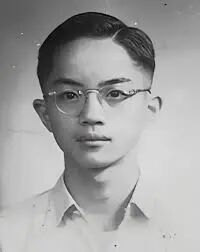
Wu Jinglian during his high school years
In his youth, Wu Jinglian followed a standard academic path within the system: he studied under the Soviet economist Birman in his early years, researching corporate finance and national public finance, and was a researcher of orthodox socialist political economy. His real ideological transformation took place during that special turbulent period. At the "May 7th Cadre School" in Xixian County, Henan Province, he got acquainted with Gu Zhun, who was later known as the "pioneer of Chinese market economic thought". In an era when everyone dared not speak out, Gu Zhun discussed with him the Greek city-state system, the cycles of Chinese history, and the possibility that "socialism can also have a market". Those conversations by the ridge of the fields and under the oil lamp became the ideological foundation of Wu Jinglian's entire life. He later often said that he was just "the successor of Gu Zhun's thoughts".
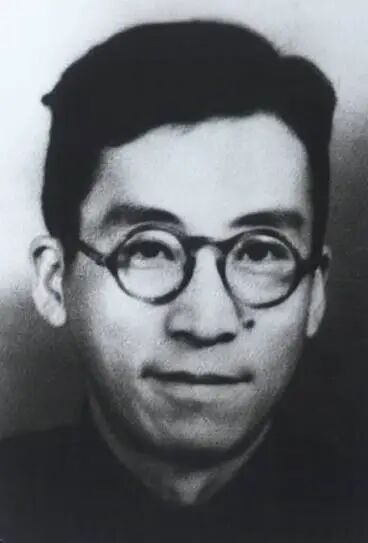
Gu Zhun (Image source: Institute of Economics, Chinese Academy of Social Sciences)
What Gu Zhun left to Wu Jinglian was not only the theoretical enlightenment of the market economy, but also the scholar's integrity of "dismantling his own ribs to make a torch". At the end of the 1970s, when the tide of reform was just starting, Wu Jinglian was already one of the earliest scholars in China to systematically reflect on the planned economic system and advocate market-oriented reform. He delved into the study of comparative economic systems, introduced the reform theories of Eastern Europe and the framework of modern mainstream economics into China, broke away from the old framework of "planning as the mainstay and market as the supplement", and pointed directly at the core goal of reform: to establish a competitive market system.
In 1984, he participated in writing "Rethinking the Socialist Commodity Economy", which provided important theoretical support for the Third Plenary Session of the 12th Central Committee to establish the "planned commodity economy"; in 1986, he served as Deputy Director of the Office of the State Council's Leading Group for Research on Economic System Reform Programs, presiding over the drafting of China's first comprehensive and coordinated reform plan. Since then, the title of "Wu the Market" has spread widely. In an era when "market economy" was still a sensitive term, this title was half a joke and half a recognition of his firm stance.
"Li the Stock"
Most of Li Yining's life was tied to Peking University. He was admitted to the Department of Economics of Peking University in 1951, graduated in 1955 and stayed at the university to work, and has remained there for more than 70 years ever since.
For a long time, Li Yining was not the figure at the center of the stage (in the Department of Economics of Peking University, which had many eminent scholars, he was like a marginal "sweeping monk"). In the more than 20 years after staying at the university, he worked as a data clerk and teaching assistant, burying himself in translating and sorting out Western economic literature and economic history materials, silently reading and thinking in the gaps of political movements. It was this period of "sitting on the cold bench" that allowed him to systematically master Western disequilibrium economic theory, and gain extremely deep insights into the micro-level problems of China's planned economy. He realized very early that the core problem of the Chinese economy is that enterprises are not real economic entities at all: they have no independent management power, and do not bear profits or losses. Even if prices are liberalized, enterprises will not respond to price signals (that is, what he said about state-owned enterprises suffering from Alzheimer's disease and poliomyelitis).
In 1980, at the National Labor Employment Conference, Li Yining publicly proposed for the first time: We can absorb employment by establishing joint-stock enterprises. This was the first time that "joint-stock system" officially entered the discourse of China's reform discussions, which was as shocking as a bolt from the blue at that time. The joint-stock system was regarded by many as "something capitalist", and the controversy over whether it was "capitalist" or "socialist" was overwhelming. But Li Yining did not back down. He theoretically demonstrated that the joint-stock system is just an organizational form of modern enterprises, which has no inherent ideological attributes, and public ownership can be fully realized through the joint-stock system.
In April 1986, at the "May Fourth" Scientific Symposium of Peking University, Li Yining said the famous quote that was recorded in the history of reform in front of thousands of listeners:
"The failure of China's economic reform may stem from the failure of price reform; the success of China's economic reform must depend on the success of ownership reform."
This sentence served as a watershed, officially kicking off the great debate between the "main line of ownership reform theory" and the "overall coordinated reform theory". Later, due to his outstanding contributions to the theory and practice of implementing joint-stock reform in Chinese enterprises, he was respectfully called "Li the Stock" by the world.
Li Yining had profound traditional academic accomplishments and was excellent at writing classical Chinese poetry. During the years of quiet cultivation, poetry was his spiritual outlet, which nurtured his "gentle yet firm" temperament. He never spoke sharply or harshly, but he never backed down half a step on the direction he had set his mind on.
Both of the two gentlemen had excellent eloquence (looking around, only Mr. Huang Qifan in the present era can be comparable), and neither of them wasted words. They never used prepared speeches: they would start by saying "Today I will talk about nine issues", then analyze each issue one by one as if they were talking about their own treasures, making the audience feel as refreshing as drinking sweet spring water. Both of them gave lectures in the audio-visual lecture hall of Peking University, and I would go there early to grab a seat every time. The scene was really crowded with people: the lecture hall was packed so tightly that not even the ground on the podium was empty, with people sitting all over it. Some people even sat at the feet of the two gentlemen, listening to them with their heads raised.
The Dispute Over the Main Line of Reform
In the mid-to-late 1980s, China's reform reached a critical crossroads. The dividends of the rural household contract responsibility system had been fully released, and how to carry out urban reform and where to start became the core of debate in academic circles and decision-making levels. The differences between Wu Jinglian and Li Yining unfolded against this background, essentially representing different answers to "what is the core contradiction of China's transformation".
Li Yining: The Main Line of Ownership Reform Under Disequilibrium
Li Yining's reform logic was based on his "disequilibrium economic theory". His 1990 book "Disequilibrium in the Chinese Economy" is one of his representative works, and was selected as one of the "10 Economic Works That Influenced China's Economic Construction".
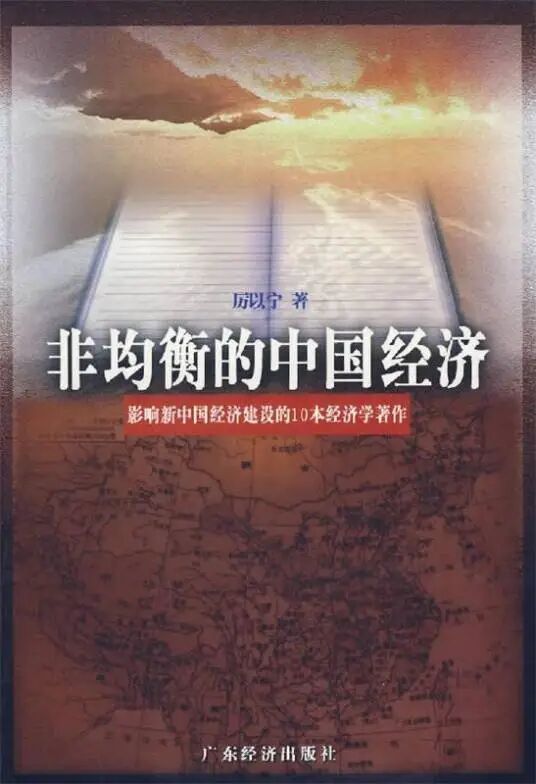
In the book, he divided economic disequilibrium into two categories: The first type of disequilibrium is the one usually discussed in mainstream economics — the imbalance between supply and demand caused by imperfect markets and inflexible prices, but enterprises are market entities that operate independently and take responsibility for their own profits and losses; the second type of disequilibrium not only features an imperfect market, but more importantly, enterprises are not independent market entities at all, lacking vitality and not taking responsibility for their own profits and losses. Li Yining pointed out sharply: The Chinese economy is a typical example of the second type of disequilibrium.
Based on this judgment, his reform logic was self-evident: Since the root cause lies in the micro-entities, the main line of reform must be ownership reform, that is, to reshape the property rights mechanism of enterprises. Without first transforming enterprises into real market entities that take full responsibility for their own profits and losses, even if prices are liberalized, enterprises will not adjust their production according to price signals, and the market mechanism cannot function at all. If price reform is carried out in a hasty manner, it will instead trigger inflation, disorder in the economic order, and even ruin the entire reform.
In his view, the joint-stock system is one of the key points for advancing ownership reform. Through the joint-stock system, large state-owned enterprises can achieve clear property rights and separation of government and enterprise functions, turning state-owned enterprises from appendages of the government into independent market entities; at the same time, through equity diversification, social capital can be introduced to solve the problems of corporate financing and governance. He did not oppose price reform, but believed that price reform can only be a supporting measure, not the main line. Just as the saying goes: If the skin does not exist, how can the hair stay attached? Without qualified enterprises, even the most perfect price system is meaningless.
Wu Jinglian: The Overall Coordinated Reform Theory for Systemic Transformation
Wu Jinglian viewed issues from the perspective of the "entire system". Deeply influenced by the study of comparative economic systems, he believed that the market economy is an organic system composed of the price system, enterprise system, macroeconomic regulation, and legal environment. It cannot be reformed piecemeal, but must be designed as a whole and promoted in a coordinated manner.
His core view is: The goal of reform is to establish a competitive market system, and the price mechanism is the core signal of the market. The rent-seeking space and "official speculator" chaos caused by the dual-track price system had become the biggest cancer in the economic order at that time. If prices were not rationalized and unified market rules were not established as soon as possible, even if enterprises reformed their property rights, they would act chaotically under distorted price signals, and even use the dual-track system for arbitrage, which would instead