Valued at $11 billion, this super unicorn is set to help startups go global from Day 0
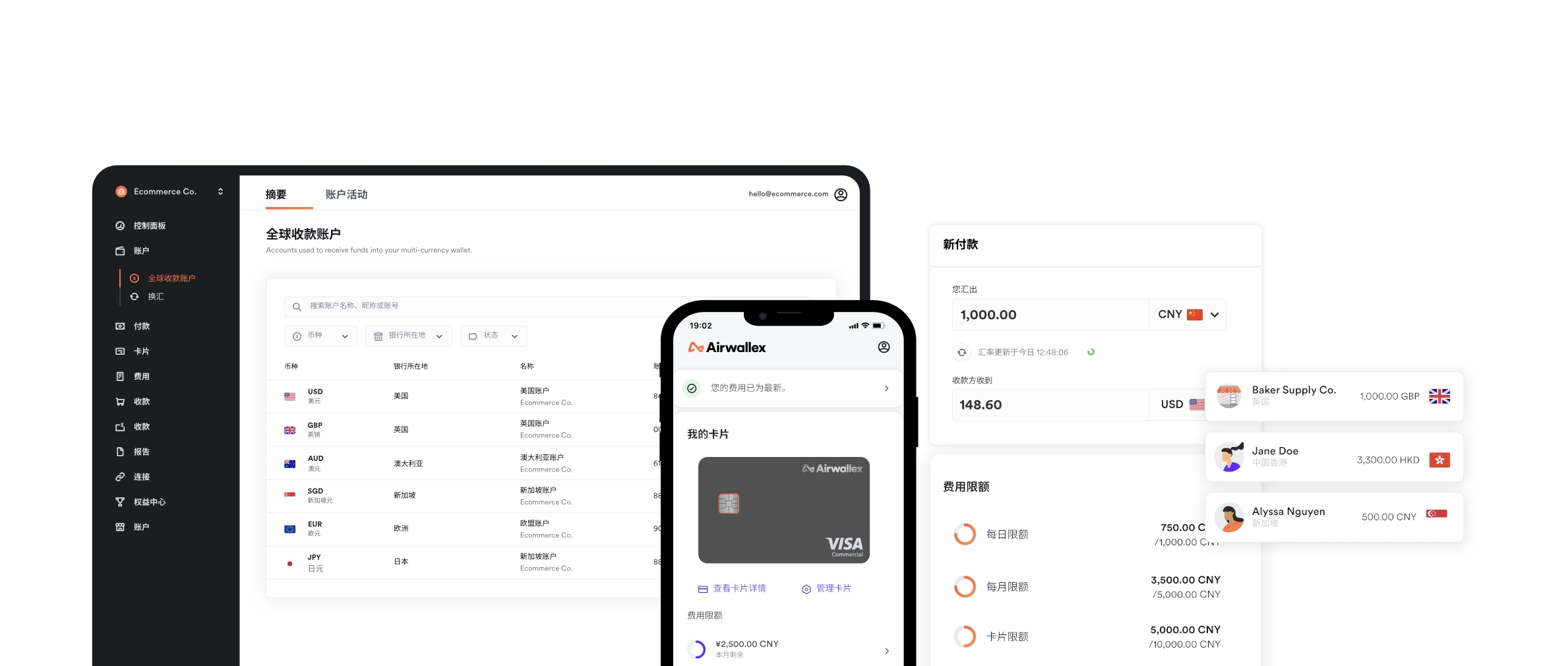
At 3 a.m., a newly established AI startup might already be serving clients in San Francisco, procuring technical services from Seoul, and finalizing contracts with partners in Lagos. The company hasn't even hired its first full-time finance employee yet, but its operations already span multiple markets, currencies, and regulatory jurisdictions.
AI is making this kind of entrepreneurial path possible. Tasks that once required a full global team covering marketing, operations, and customer service can now be largely handled by AI agents. A new generation of startups no longer need to follow the traditional expansion sequence of "securing a foothold in the domestic market first, then gradually going global" — instead, they can directly engage with global customers and suppliers from their very first day of establishment.
But while AI is advancing at an extraordinary pace, most enterprises' financial infrastructure is still unprepared for this shift. This is exactly why top global capital is betting on the AI-driven reconstruction of financial infrastructure.
In June 2025, Airwallex, a global financial infrastructure platform, announced the completion of a $320 million Series H funding round, valuing the company at $11 billion — a sharp increase from the $8 billion valuation six months earlier. This round was led by existing investor Addition, with participation from new and existing backers including Baillie Gifford, T. Rowe Price, and Amex Ventures.
This funding also sends a clear signal: the AI economy needs a matching financial operating system, and Airwallex is one of the few players that already has a global compliance foundation while proactively rebuilding this system.
Smart Minds, Paralyzed Wallets
A visible gap is forming between the explosive growth of AI capabilities and the lagging development of financial infrastructure.
In the past, AI acted more like an advisor: it told humans what to buy, who to pay, and which remittance route to use. Today, however, AI agents are becoming executors — whether it's procuring computing power, subscribing to SaaS services, or making payments to overseas suppliers, a growing number of business actions are being initiated autonomously by AI.
According to a report released by global market research firm Forrester, between 2024 and 2025, AI agent-assisted payments rapidly moved from the proof-of-concept phase to real-world deployment. OpenAI officially launched AI agent-supported payments in ChatGPT in September 2025, while Stripe introduced the Agentic Commerce Protocol designed specifically for AI agents. The problem is that AI makes decisions in milliseconds, but the financial systems it relies on still operate at the pace of manual approvals and T+2 settlement cycles.
This contradiction is even more pronounced for B2B AI enterprises with overseas procurement needs. Imagine a rapidly expanding Chinese AI company: it needs to make simultaneous payments to multiple cloud service providers and data vendors across the U.S., Europe, and Southeast Asia, involving currencies including USD, EUR, and SGD. Each cross-border transfer may touch compliance requirements from different countries, and uncertainties around exchange rate fluctuations, intermediary bank fees, and settlement cycles often leave finance teams overwhelmed.
More critically, as the enterprise scales up, the fragmented nature of bookkeeping, expense reimbursement, tax, and banking systems will exponentially increase management costs. A CFO who has served multiple overseas-focused AI enterprises once described this scenario: the company works with suppliers in more than a dozen countries, and its finance team spends nearly a full month on reconciliation alone, while also having to respond at any time to regulatory checks on fund flows from authorities across different regions.
This means the finance team's most valuable time and energy are being drained on repetitive tasks that could easily be automated. Even more dangerous, delayed reconciliation cycles leave management in a persistent financial blind spot. The data they rely on for decisions is often days out of date, leaving almost no room for response when facing sharp exchange rate fluctuations or sudden regulatory inspections.
Of course, a standalone advanced AI model might be able to read invoices, spot anomalies, and suggest payment actions, but it cannot magically obtain financial licenses, replace established banking partnerships, or access a global local payment network. Only when these financial capabilities are fully integrated and opened up in a way that AI can call upon can AI's analysis and judgment truly translate into improved financial operational efficiency.
This is prompting a re-evaluation of financial infrastructure in the AI era. Previously, cross-border financial platforms mainly focused on helping enterprises make and receive payments more efficiently. Now, as AI integrates into financial workflows, enterprises need not just payment channels — they also need AI to be able to call financial tools within clearly defined authorization boundaries, while ensuring the entire process complies with internal policies and regulatory requirements, leaving a fully traceable audit trail.
This set of capabilities is especially critical for new-generation AI companies. AI allows enterprises to serve global customers with smaller teams, but it does not eliminate the inherent complexity of cross-border finance. If accounts, payments, and financial management remain scattered across disconnected systems, the vision of going global from Day 0 can easily get stuck at the most basic level of fund operations.
Gartner predicts that by 2026, 33% of enterprise software will integrate agentic AI capabilities, with finance functions being one of the most deeply penetrated areas. More importantly, when the AI agent economy fully matures, the platforms whose financial infrastructure can support "autonomous agent transactions" will hold the ticket to the next phase of development.
This is exactly the direction targeted by Airwallex's latest funding round.
Airwallex's Two Key Strategic Moves
Founded in 2015, Airwallex has spent a decade building a global footprint of over 85 regulatory licenses and integrating 160 local payment networks. According to its disclosures, Airwallex currently has an annualized transaction volume of $287 billion, with 93% of transactions settled on the same day, covering operations across more than 200 countries and regions worldwide.
The value of this infrastructure is being redefined in the AI era: the compliance networks and local channels built over 10 years have become exactly the underlying pipelines needed for the agent economy. This Series H funding represents Airwallex's strategic move to add an "intelligence layer" on top of this foundation, centered on two new products: T:0 and Airi.
T:0 is designed to restructure enterprise financial operations.
Most enterprises' current financial systems are a patchwork of disconnected tools: bookkeeping, expense reimbursement, tax, and banking systems operate in silos, creating constant friction as data flows between them, and forcing finance teams to devote massive energy to repetitive verification and data entry tasks.
T:0 functions as a self-operating financial department, reimagining the system from first principles: it integrates bookkeeping, forecasting, tax, compliance, reporting, and reconciliation into a single continuously running unified platform, allowing financial functions to operate like a non-stop engine, freeing finance teams from tedious administrative work to focus on strategic decision-making.
For founders starting from scratch, T:0 means having a CFO-grade ledger with built-in compliance logic from day one, with no painful system migration required. This is because T:0 can directly leverage Airwallex's existing global payment channels, multi-currency accounts, and compliance frameworks, creating a closed loop where financial data and fund flows operate within the same unified infrastructure. T:0 is currently in private beta, with a broader launch expected in the coming weeks.
Airi addresses a more practical proposition: when AI agents begin replacing humans to complete purchasing behaviors, the business world needs far more than a smarter checkout page. Airwallex defines this paradigm as "Agentic Commerce."
The industry already has precedents for agent-focused initiatives. OpenAI and Stripe jointly launched the Agentic Commerce Protocol (ACP) in 2025, providing a standardized framework for AI agents to execute purchasing actions; Mastercard also released a payment solution for agent commerce that same year. However, these solutions share common limitations: they essentially add an AI interface on top of traditional card payment channels, and do not solve the underlying problem of AI agents securely accessing and transferring funds globally.
Airi was built to fill this gap. It reconstructs a complete set of native agent wallet capabilities from the ground up: AI agents can hold dedicated agent cards, autonomously initiate transactions within pre-set spending limits, and access balances in different currencies based on permission levels. The entire process operates within a regulated framework, enabling AI agents to truly complete cross-border transactions on behalf of humans.
Currently, Airi has launched a "one-click checkout" feature. After users complete identity binding, AI agents can directly initiate payments within authorized scopes, eliminating the need to manually fill in information every time. Early test data shows this has increased merchant conversion rates by 14%. Moving forward, Airi will evolve into a full-featured agent wallet infrastructure, paired with Airwallex's broader agent commerce suite to connect the entire fund flow from discovery to settlement.
If T:0 solves the problem of "how to manage funds," Airi solves the problem of "how to spend funds" — the former targets enterprise finance teams, while the latter serves merchants and AI developers. Both rely on Airwallex's existing global compliance network, forming a protocol-agnostic, inherently global financial operating system.
In a world where AI agents may run simultaneously across different ecosystems like OpenAI, Anthropic, and Google, being unbound to any single protocol is itself a strategic advantage.
Why Airwallex, Why Now
Airwallex's latest funding round can be seen as a signal that an industry inflection point is arriving. The AI-driven reconstruction of financial infrastructure is becoming the next major competitive battlefield. Competition is no longer about model capabilities — it is about which platform's pipelines can truly empower AI to operate at full speed.
This sector has a unique moat: regulatory licenses and local payment networks. Applying for a single payment license often takes years, accessing local clearing networks requires individual negotiations, and building a robust compliance system demands long-term investment in every market — none of which can be achieved quickly by simply pouring capital in.
Airwallex's 10 years of accumulated 85+ global licenses and 160+ local networks have become scarce assets in the AI era, with time-built barriers forming one of its core value propositions. This is exactly why this funding round attracted Amex Ventures: as the strategic investment arm of a traditional financial giant, American Express's bet serves as strong validation of the value of this compliance infrastructure.
Notably, this funding round was announced after Airwallex achieved profitability. According to official data from Airwallex, its annualized revenue has reached $1.3 billion, its annual recurring revenue (ARR) turned positive in the fourth quarter of 2025, and over 675,000 enterprises worldwide use its services to manage cross-border financial operations either directly or via the platform. These figures prove that its business model has been fully validated. This Series H round represents a proactive acceleration into a new strategic phase on a foundation of strong financial health.
As Agentic AI reshapes financial functions, the ultimate winners will be platforms that combine global compliance capabilities with an AI-native architecture. Airwallex happens to possess both: on one side, it has a decade of deeply established compliance infrastructure, and on the other, a product architecture redesigned from first principles specifically for the agent economy. The combination of these two elements creates its unique advantage in this critical window of opportunity.
In the AI era, there are no purely local markets. As AI agents begin to autonomously conduct cross-border transactions, the financial infrastructure enterprises rely on must be global from day one. Companies that still use traditional bank accounts and manual approval processes to support their overseas operations are trying to run at tomorrow's speed using yesterday's infrastructure. When the wave of the agent economy truly arrives, the window for migration and reconstruction will likely be far shorter than most people expect.