16 billion, China's domestic large model is set to secure new financing
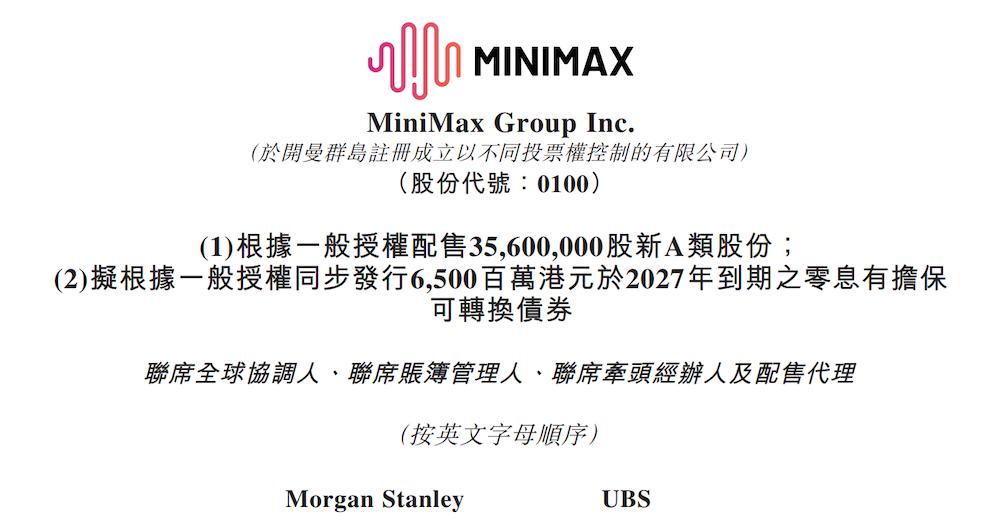
Reported by Zhidx on July 10, this morning, Shanghai-based AI large model enterprise MiniMax announced a plan to raise approximately HK$16 billion (roughly 13.834 billion RMB) through private placement of new shares and issuance of convertible bonds.
Meanwhile, Yan Junjie, Founder and CEO of MiniMax, released an internal letter stating that he will no longer draw a salary from the company before achieving AGI, and will allocate 5% of MiniMax's total share capital held personally to employee incentives and support the development of the open-source community.
This marks MiniMax's first large-scale financing move since its listing on the Hong Kong Stock Exchange in January this year. According to the announcement, the company plans to place 35.6 million Class A shares at a placement price of HK$267.99 per share (approximately 231.7 RMB), with an estimated total fundraising of about HK$95.41 billion (around 8.25 billion RMB); it also intends to issue convertible bonds with an aggregate principal amount of HK$65 billion (roughly 5.62 billion RMB). Upon completion of the two financing rounds, MiniMax expects to raise a net amount of approximately HK$159.57 billion (about 13.8 billion RMB).
MiniMax stated that the raised funds will be mainly used to strengthen the construction of AI infrastructure, continuously advance the R&D of foundational models, expand the commercialization of AI-native products, and supplement general corporate operating funds.
MiniMax (Xiyu Technology) was founded in January 2022 by Yan Junjie, former Vice President of SenseTime and PhD from the Institute of Automation, Chinese Academy of Sciences.
On June 12 this year, MiniMax open-sourced its current flagship multimodal model MiniMax M3. In two authoritative benchmark tests, SWE-Bench Pro which measures professional software development work and Terminal-Bench 2.1 which assesses problem-solving via command line operations, MiniMax M3 outperformed GPT-5.5 and Gemini 3.1 Pro, ranking among the top models worldwide and first among domestic open-source models.
MiniMax completed its IPO on the Main Board of the Hong Kong Stock Exchange on January 9, 2026, setting the fastest record globally for an AI enterprise from establishment to public listing; in May this year, the company submitted its listing counseling filing report to the Shanghai Securities Regulatory Bureau for the first time, officially launching A-share listing counseling with CITIC Securities as its counseling institution.
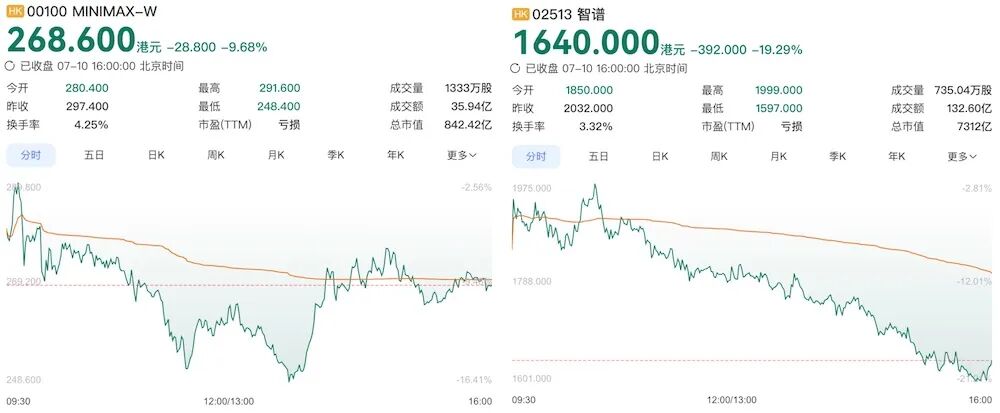
Just yesterday, Zhipu AI also announced a HK$314 billion (approximately 27.2 billion RMB) financing. As of the market close on July 10, MiniMax's Hong Kong stock price stood at HK$268 per share (roughly 232 RMB), down 9.86% from the previous trading day, with a total market value of HK$84.242 billion (about 72.836 billion RMB); Zhipu AI's stock price was HK$1640 per share (around 1418 RMB), down 19.29% from the previous trading day, with a total market value of HK$731.2 billion (approximately 632.2 billion RMB).
01. Proposed financing of about HK$16 billion, 80% of funds earmarked for large model R&D
As disclosed in the announcement, MiniMax's this financing mainly consists of two parts: share placement and convertible bond issuance.
Among them, MiniMax plans to place 35.6 million Class A shares at a placement price of HK$267.99 per share (approximately 231.7 RMB), with an estimated total fundraising of about HK$95.41 billion (around 8.25 billion RMB), and the net amount after deducting relevant expenses is approximately HK$94.91 billion (about 8.2 billion RMB).
In addition, MiniMax intends to issue convertible bonds with an aggregate principal amount of HK$65 billion (roughly 5.62 billion RMB), with an estimated net proceeds of about HK$64.66 billion (around 5.6 billion RMB)
Upon completion of the two financing rounds, MiniMax expects to obtain approximately HK$159.57 billion (about 13.8 billion RMB) in raised funds.
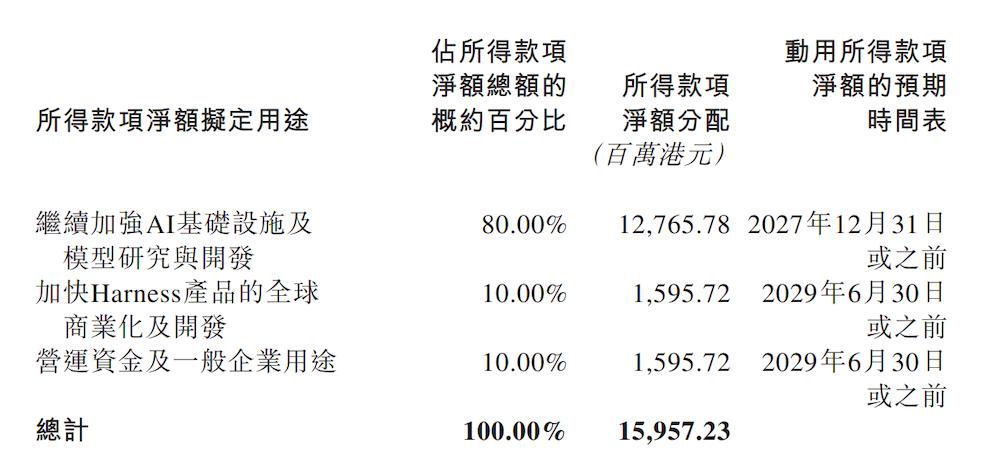
According to the announcement, the funds will be mainly invested in three directions:
First, continuously strengthen the construction of AI infrastructure and R&D of large models, accounting for about 80% of the net raised funds, roughly HK$127.66 billion (approximately 11.037 billion RMB).
MiniMax stated that this portion of funds will be used for model training, model inference, and related infrastructure construction to support the company in continuously improving model capabilities.
Second, for the global commercialization and development of the AI-native product Harness, accounting for about 10% of the net raised funds, roughly HK$15.96 billion (approximately 1.38 billion RMB).
Third, for general corporate purposes, including daily operating funds and other related expenditures.
MiniMax noted that with the rapid development of artificial intelligence technology, the expansion of model training scale, and the growing demand for AI services from enterprises and developers, MiniMax needs to further enhance its infrastructure capabilities and increase R&D investment.
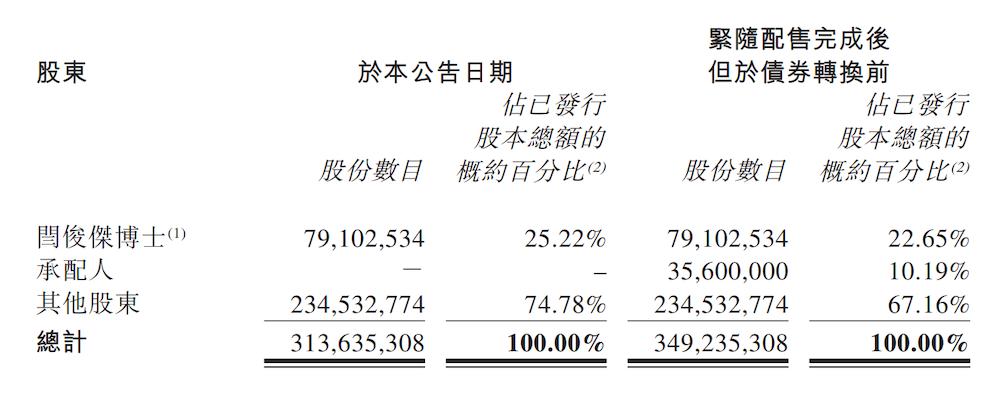
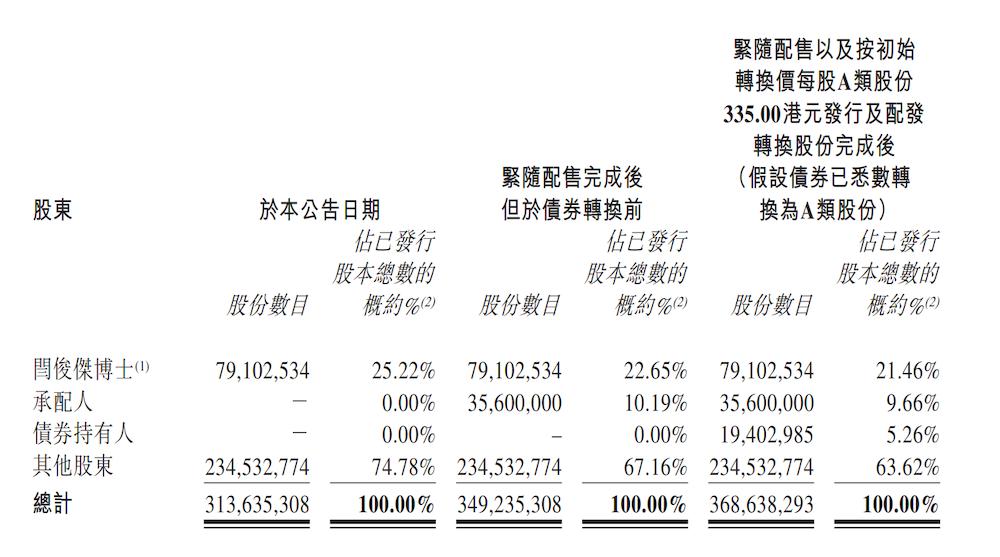
After the completion of the share placement and convertible bond issuance, MiniMax's equity structure will change. The announcement shows that after the share placement is completed, the company's total share capital will increase from 314 million shares to 349 million shares, Yan Junjie's shareholding ratio will drop from 25.22% to 22.65%, and the newly introduced allottees will hold approximately 10.19% of the shares.
If all the HK$65 billion (approximately 5.62 billion RMB) convertible bonds are converted into Class A shares in the future, Yan Junjie's shareholding ratio will further drop to 21.46%, and bondholders will obtain approximately 5.26% of the shares.
02. IPO funds are being consumed rapidly, MiniMax ramps up model R&D and commercialization
This financing comes only about half a year after MiniMax completed its Hong Kong IPO. The net funds raised from the previous listing were approximately HK$54.61 billion (equivalent to 4.722 billion RMB). Among them, the company planned to invest about 90% of the funds in research and development, including large model R&D, AI infrastructure construction, and AI-native product development.
As of June 30, 2026, about 77% of the funds raised from MiniMax's previous IPO that were allocated to AI infrastructure and model R&D have been used.
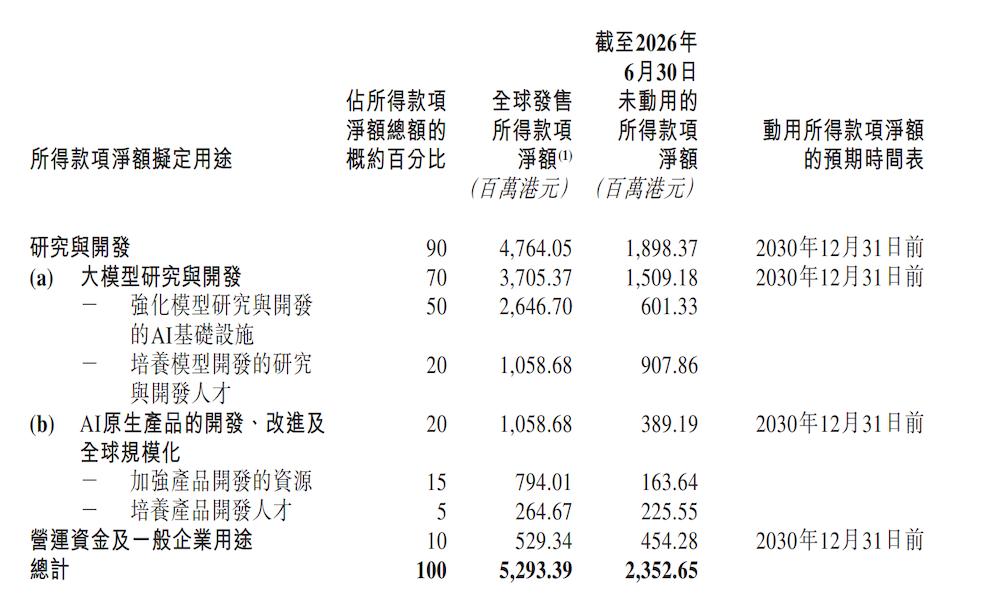
MiniMax stated that the fund consumption rate exceeded the expectations at the early stage of listing, mainly due to the accelerated model iteration speed, expanding customer scale, and rising user demands over the past six months.
In terms of financial data, MiniMax is still in a high-investment stage.
Financial reports show that in 2025, MiniMax achieved operating revenue of 79.038 million USD (approximately 535 million RMB), of which revenue from AI-native products was 53.075 million USD (about 359 million RMB), and revenue from open platforms and other AI enterprise services was 25.963 million USD (roughly 176 million RMB).
During the same period, the company's gross profit margin increased to 25.4%, but due to continuous investment in foundational model R&D, computing power infrastructure construction, and talent development, its adjusted net loss was approximately 250 million USD (about 1.69 billion RMB).
03. Yan Junjie announces no salary draw before AGI, allocates 5% of shares to incentivize the team and open-source community
In addition to the financing plan, Yan Junjie, Founder and CEO of MiniMax, also released an internal letter announcing a long-term incentive plan.
Yan Junjie stated that starting from today until the day AGI is achieved, he will no longer receive any salary from MiniMax.
At the same time, he will allocate 4% of the company's total share capital held under his name to incentivize team members who have long-term joint development with MiniMax; in addition, he will set up a special fund with 1% of the shares to continuously support the development of related open-source communities.
Yan Junjie said that in the future, he will devote all his time, energy, and resources to the long-term goal of AGI.
This is another long-term investment signal released by MiniMax to the outside world following its financing move.
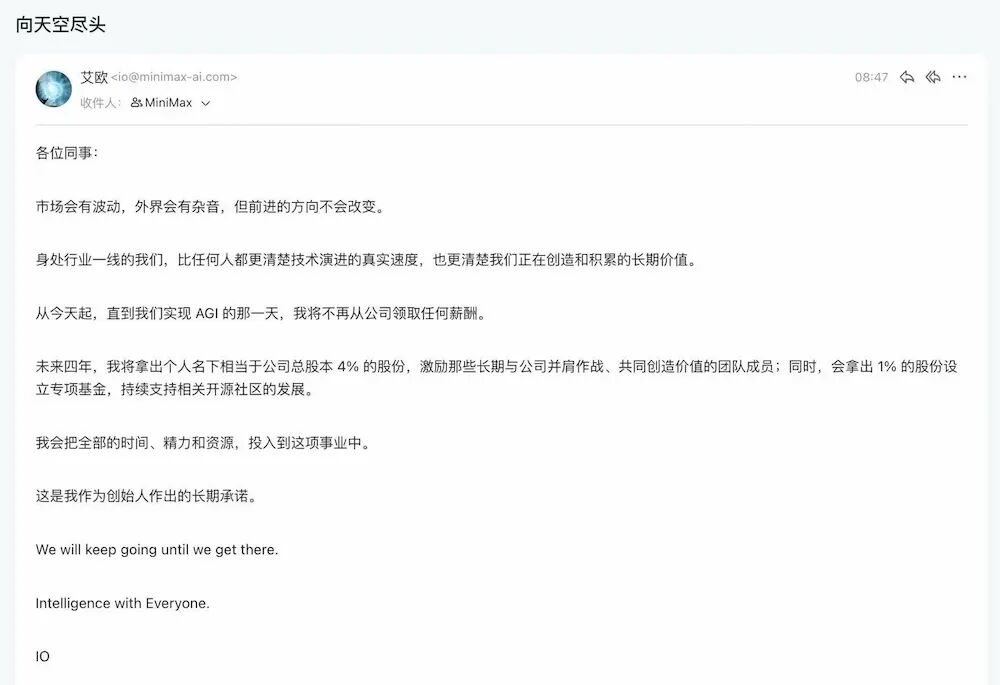
▲ Internal letter from Yan Junjie, Founder and CEO of MiniMax
04. Conclusion: Large model competition enters the stage of long-term investment, capital becomes a key chip for AI enterprises
With the continuous development of large model technology, competition in the AI industry is entering a new phase.
In the past, competition for large models focused more on parameter scale, model capabilities, and test scores; but with the gradual implementation of Agents, multimodal technologies, and enterprise applications, the computing power infrastructure, capital reserves, and commercialization capabilities behind the models are becoming new competitive priorities.
Recently, domestic large model enterprises such as Zhipu AI and MiniMax have successively pushed forward financing moves, which also reflects that foundational model enterprises are still in a high-investment cycle.
For large model companies, how to continuously invest in R&D, expand computing power resources, and translate technical capabilities into commercial value will become an important factor determining the industry landscape in the next stage.
This article is from the WeChat Official Account "Zhidx" (ID: zhidxc om), author: Qie Zi, published by 36Kr with authorization.