The automotive industry is rewriting the profit formula.
In 2026, the automotive industry no longer has a clear roadmap.
The most intuitive signal is two opposing forces pulling the industry in opposite directions simultaneously.
On one side, regulators have stepped in to call a halt to the price war. The Ministry of Industry and Information Technology and the State Administration for Market Regulation have jointly summoned two automakers for talks, ruling that their sales practices constitute selling below cost.
On the other side, upstream supply chains are constantly raising prices. The price of storage chips has jumped from 20 yuan to 100 yuan, and lithium carbonate has risen from 80,000 yuan to 180,000 yuan, pushing the overall cost per vehicle up by 6,000 to 14,000 yuan.
For automakers with a gross margin of only 10-15%, this blow has cut at least one-third of their gross profit.
Data from the China Passenger Car Association shows that the industry's profit margin in the first quarter of 2026 fell from 6.1% to 3.2%, and the gross profit per vehicle dropped from 23,000 yuan to 14,000 yuan.
Zhang Xinghai, Chairman of Seres Group, revealed that the cost per AITO vehicle has increased by 15,000 to 20,000 yuan.
After three years of the price war, the automotive industry has fallen to a historic low.
Between the push and pull of these two forces, with pressure from above and resistance from below, the automakers caught in the middle are having their retreat routes taken away one by one.
In the first quarter of this year, among 11 listed automakers, 5 made profits and 6 suffered losses. The number of automakers that can truly make money is getting smaller and smaller.
This is the cruelest truth of the automotive industry in 2026: the upstream has siphoned off profits, the downstream has blocked all retreat routes, and eventually, vehicle manufacturers have become the most passive link in this chain.
01. Who is Making Money?
The combined profits of 11 automakers, producing millions of vehicles, are less than those of a single battery manufacturer. Automakers are becoming the "poorest" players in this industrial chain.
Breaking down the numbers: the 5 profitable automakers made a total of 16.595 billion yuan, the 6 loss-making ones lost 8.528 billion yuan, leaving the 11 automakers with a net profit of 8.067 billion yuan. In the same period, CATL's net profit reached 20.738 billion yuan, making a net profit of 230 million yuan per day.
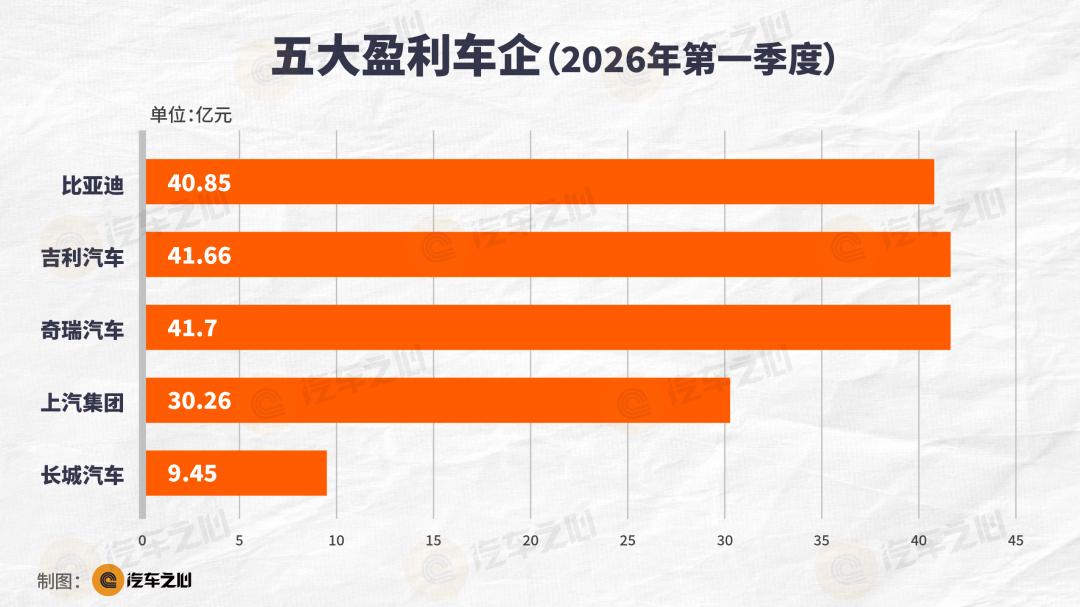
The gross margin of vehicle manufacturing cannot keep up with the net margin of battery manufacturing. This sentence is worth posting on the office walls of automakers.
When we step back and take a broader view, the underlying reality of these 11 automakers begins to emerge.
First, look at the group that relies on brand power. What is a brand? It is a way to create scarcity for oneself in a market with oversupply.
Geely's net profit in the first quarter was 4.56 billion yuan, a year-on-year increase of 31%, a growth rate that is unique in the entire industry.
Broken down to each vehicle, Geely's profit per vehicle exceeds 6,400 yuan.
The full-year picture is even clearer. In 2025, Geely's annual revenue reached 345.2 billion yuan, with a net profit of 14.41 billion yuan. With a sales volume of 3.025 million vehicles, its 36% profit growth rate outpaced its 25% revenue growth rate.
The comparison is easy to find. Last year, SAIC sold 1.48 million more vehicles than Geely, but its profit was over 4 billion yuan less.
Selling the right products is more valuable than selling more products. A multi-brand matrix combined with high-end positioning is Geely's profit amplifier.
Also relying on brand power to make profits, Seres took a different path: single-point penetration.
With a profit per vehicle of about 12,613 yuan, the highest in the entire industry, Seres is currently the only automaker that can both achieve strong sales and generate substantial profits.
The AITO M9 contributes the vast majority of profits. The profit from selling one M9 is roughly equivalent to selling 4 to 6 units of the M5 or M7, making it Seres' profit engine.
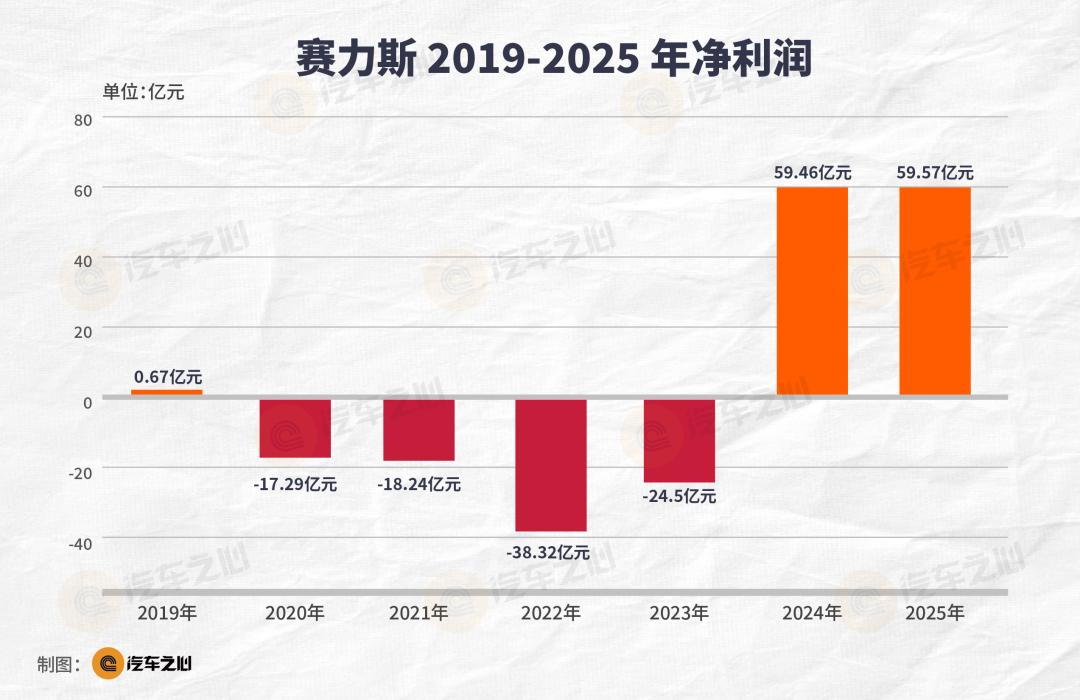
Seres' profit structure is not complicated. The most straightforward strategy is to sell and deliver more AITO M9 vehicles.
Last month, deliveries of the new AITO M9 exceeded 8,000 units, with an average transaction price of about 610,000 yuan. The high-end Ultra and Ultimate versions accounted for 80% of sales, with an estimated gross margin of 31% and a gross profit per vehicle of about 189,000 yuan.
Next, look at the group that relies on scale. In the era of fuel vehicles, scale was a profit amplifier; in the new energy sector, it is the foundation for survival.
BYD sold 700,000 vehicles in the first quarter, with a net profit of 4.085 billion yuan, and a profit per vehicle of 5,800 yuan.
In 2025, it sold a total of 4.6 million vehicles, with a profit per vehicle of 7,087 yuan. Large-scale production did not increase the profit margin, but it reduced costs.
The procurement bargaining power brought by 4.6 million vehicles is a bargaining chip that other automakers cannot obtain.
For the same steel plates, wiring harnesses, and glass, BYD can get lower prices than others. In 2023, BYD's total annual procurement exceeded 430 billion yuan, and the top five suppliers received a combined 88.1 billion yuan. Last year, its sales volume rose to 4.6 million vehicles, and its procurement scale continued to expand.
Exchanging volume for price is the most direct return on scale.
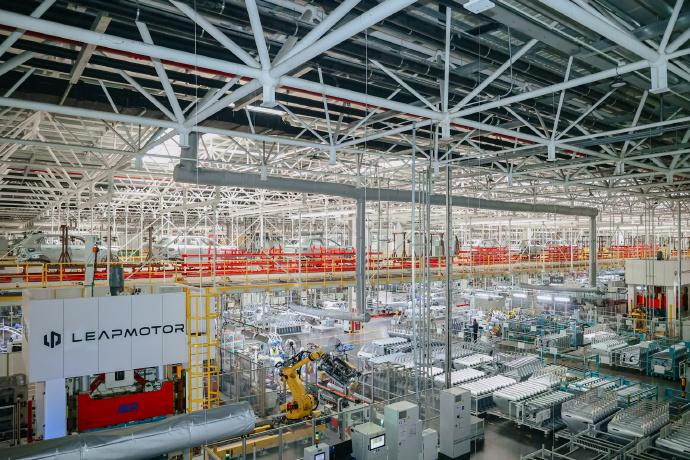
Leapmotor is a condensed version of this path. With 3 battery pack factories and 17 self-built component factories, Leapmotor uses its own production facilities to support its pricing power.
Leapmotor's net profit for last year was 540 million yuan, with a profit per vehicle of 905 yuan.
It is still walking a fine line, but Leapmotor was the only new EV startup to turn a profit in 2025, surviving on scale and spreading fixed costs to the minimum.
There is another group whose profit models have not yet taken shape. The break-even point in the automotive industry is a triangle supported by three pillars: volume, price, and cost.
Missing any one of the three pillars will lead to losses. Xiaomi achieved consecutive profitability in the third and fourth quarters of last year, and behind its full-year net profit of 900 million yuan, sales volume was climbing, the SU7 Ultra maintained a high average price, and costs were narrowing.
The trend reversed sharply in the first quarter of this year, with Xiaomi losing 3.1 billion yuan. The official explanation cited the impact of vehicle purchase tax subsidies, a drop in the delivery proportion of the SU7 Ultra, and rising prices of core components.
In plain terms: fewer high-margin models were sold, low-margin models were passively expanded in volume, costs rose, and profits were compressed layer by layer.
The profit validation cycle for new energy vehicle manufacturing is shorter than any other industry. A company that is profitable in one quarter could fall into losses the next.
Therefore, establishing a viable business model and maintaining it are two completely different challenges.
02. How Are Profits Made?
The secret to profitability lies in direction. Every automaker with sustainable profitability has a profit base behind it.
The first path is to position your products at a higher price point than competitors.
Scale determines basic viability, while average transaction price determines profits. The most typical examples are Geely and NIO.
Zeekr's average transaction price was rewritten starting with the 9X. Before the 9X was launched, Zeekr's average transaction price was around 240,000 yuan. After its launch, it rose above 360,000 yuan, a year-on-year increase of 52.4%, surpassing BMW and Audi.
Official data shows that the average transaction price of the Zeekr 9X exceeds 530,000 yuan, with 22,000 units sold in the first three months after launch. It has maintained the top sales position in the 500,000-yuan large SUV segment for six consecutive months.
Behind the rising average transaction price is the transformation of Zeekr's product structure. The 9X, 8X, and 009 flagship models together account for half of Zeekr's total sales.
This also reflects the changes in Geely's high-end product line: secondary products have become the main drivers, and the brand's average transaction price has been simultaneously elevated by the product structure.
The same logic has worked for NIO.
In the first quarter of this year, NIO's average transaction price per vehicle was 390,000 yuan, 50,000 yuan higher than BMW's, and nearly 1.5 times that of Audi.
Among them, the NIO ES8 accounts for more than half of total deliveries, with a gross margin per vehicle exceeding 20%. The overall vehicle gross margin rose from 10.2% in the same period last year to 18.8%.
The ES8 paved the way, and the ES9, which achieved 10,000 deliveries in just 30 days, will only raise NIO's performance further. Last month, NIO's average transaction price reached 443,000 yuan.
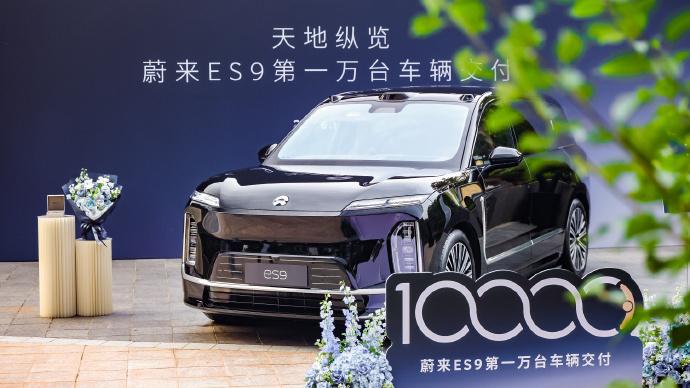
The gross margin of a large three-row SUV is 10% higher than that of a compact car, which is an industry consensus, and both NIO and Geely have verified this.
This path was once Li Auto's comfort zone. When the flagship L9 was the main seller, Li Auto made a net profit of 35,000 yuan per vehicle with a gross margin of 22.7%. But with the 250,000-yuan L6, Li Auto's gross margin in Q1 this year dropped to only 7.9%.
Now Li Auto is trying to reverse this trend. The new L8 removed one seat but increased in price by 50,000 yuan. The plan is to rely on the L8 and L9 to maintain gross margins, while the L7 and L6 ensure sales scale.
The second path is to simply shift to a different battlefield.
Chery has maximized this strategy. Chery began exploring overseas markets in 2001, but its real growth came in the past five years. Its export volume increased from 269,000 units in 2021 to 1.294 million units in 2025. For every 5 vehicles exported from China, 1 comes from Chery.
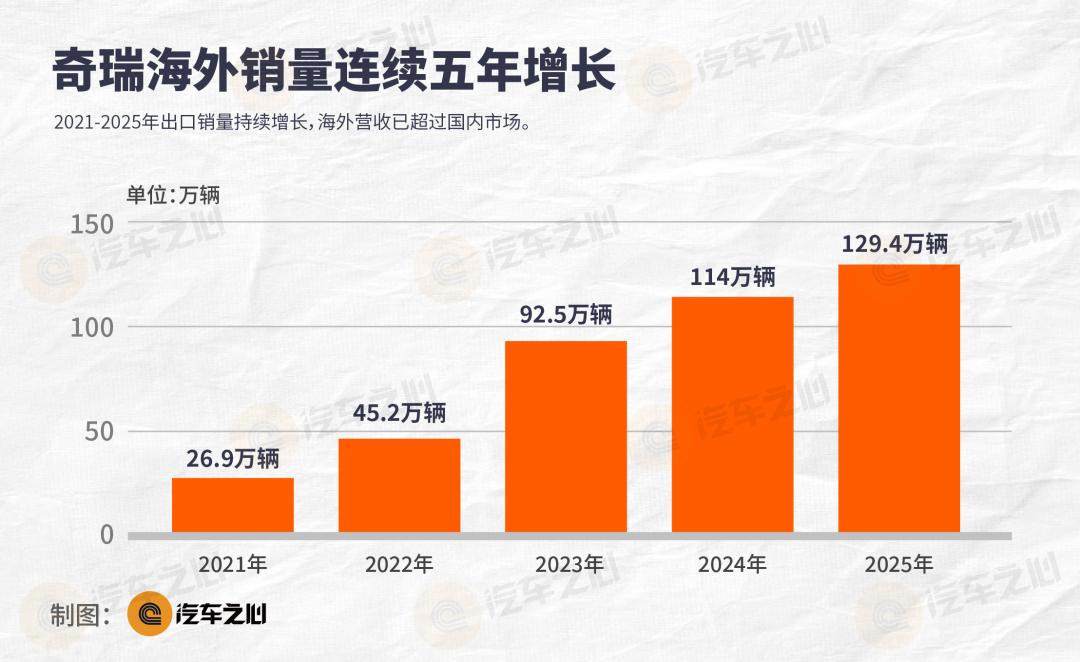
As scale increased, the profit structure also transformed simultaneously. Chery's net profit was 5.8 billion yuan in 2022, and it jumped to 19.5 billion yuan last year, with overseas revenue exceeding domestic revenue for the first time.
The first-quarter data is even more intuitive: 393,000 vehicles were exported, accounting for more than 60% of total sales, with a net profit of 4.17 billion yuan and a gross margin of 16.04%.
The profitability between domestic and overseas markets is vastly different. In the same period, BYD sold 700,000 vehicles and made 4.085 billion yuan, while Chery sold 100,000 fewer vehicles but made 4.17 billion yuan. The extra profit all came from the high gross margin of exports.
However, exporting is not a single business model—there are two completely different approaches.
As another major exporter, SAIC has taken root in Europe with its MG brand, winning the top sales position in Europe for 11 consecutive years. Last year, it exported 1.071 million vehicles, but under anti-subsidy tariffs, MG faces the highest tax rate, and its growth rate has slowed to 55%.
More critically, the profit gap is significant. SAIC's full-year net profit attributable to shareholders was 10.1 billion yuan, with a net margin of 1.54%. Its export volume is close to Chery's, but its profit is nearly half less.
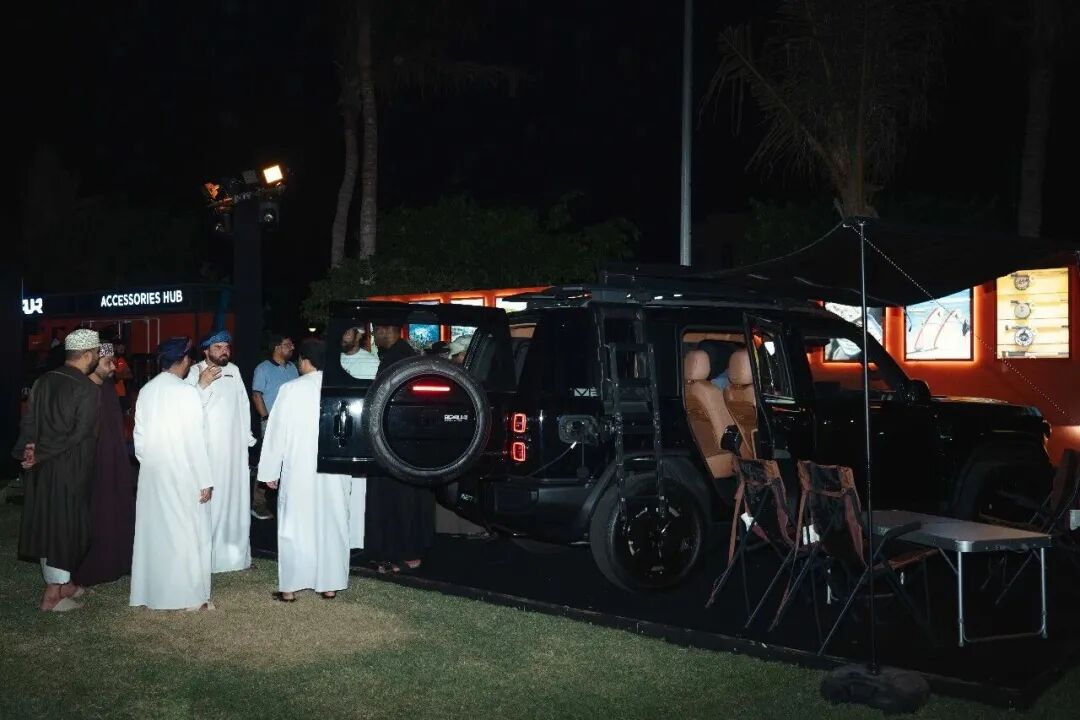
Chery plays a different card. It focuses its main markets on Russia, Latin America, and the Middle East, where the market base is still dominated by fuel vehicles. The overseas selling price of the same vehicle is generally 30% to 50% higher than in China, while the intensity of competition is far lower than at home.
In other words, the profit from selling one fuel vehicle overseas is equivalent to selling 2 to 3 vehicles in China.
In the words of Qi Shilong, Executive Vice President of Chery: China is a place to compete on technology, while overseas markets are where to pursue profits.
The third path is to