Who is reshaping the underlying logic of China's garment manufacturing?
Text by | Jing Xun
Ninety percent of China's garment industry consists of small, micro, and medium-sized factories. Scattered across numerous domestic industrial clusters such as the Pearl River Delta and Yangtze River Delta, they form the world's most comprehensively supported and densely concentrated textile and garment manufacturing network, underpinning China's industrial foundation as the world's largest garment exporter.
Yet the entire journey of a single garment, from the first stitch to reaching global consumers' wardrobes, is being rewritten.
The force reshaping this process is cross-border e-commerce, which has expanded rapidly over the past few years. As a representative of new foreign trade formats, the explosive growth of cross-border e-commerce and its deep integration with "cross-border e-commerce + industrial clusters" are bringing tangible transformations to traditional sectors like textiles and apparel.
Amid this shift, "chain leader" enterprises represented by SHEIN are pursuing a remarkably ambitious initiative.
Their goal extends far beyond simply shipping Chinese apparel and fashion products to broader markets. By embedding themselves deep within the industry, they are leveraging flexible on-demand production models, innovative technological tools spanning the entire industrial chain, and talent development programs covering both internal and external ecosystem stakeholders to reconstruct the fundamental logic of garment manufacturing, thereby building a more sustainable and healthy industrial ecosystem.
Reconstruction Starting from the Source
"We used to passively accept orders, but now we can proactively make data-driven judgments." The changes are tangible, and the growth is concrete. At Deng Ming's sportswear factory, a supplier based in Panyu, Guangzhou, their first viral product on SHEIN sustained repeat orders for over two years. Over five years, the factory's overall sales scale grew 15 times.
To understand SHEIN's industrial role, a key distinction must first be clarified. Its dual-engine model of "self-owned brand + platform" and its status as a "chain leader" in the fashion industry are critical markers that set it apart from other cross-border e-commerce platforms.
As an independent fashion brand, SHEIN operates a large-scale system of supplier factories, with deep involvement across the entire chain from product planning to production management. Simultaneously, it fulfills a platform function, serving as an international expansion gateway for select third-party merchants and brands.
This fundamentally differs from other e-commerce platforms whose primary function is transaction matchmaking. While platforms prioritize closing deals, a chain leader focuses on whether every upstream and downstream supplier can thrive. After all, the capacity level of suppliers directly defines the brand's own ceiling. This deep integration allows SHEIN to penetrate every capillary of the supply chain for targeted transformation.
The starting point of this transformation is the "small-batch, quick-response" flexible supply chain.
In traditional garment manufacturing, the unit of measurement is the "batch." Orders typically start at thousands of pieces, with payment terms stretching for months, and a single production line locked into one style for a quarter or even half a year. If products underperform, brands face inventory backlogs while factories struggle to collect payments.
The "small-batch, quick-response" model shrinks the production unit from "batches" to "individual pieces." Initial orders usually range from 100 to 200 pieces, with restocking decisions guided by real-time market feedback.
Compared to traditional garment manufacturing, this introduces unprecedented agility and speed. More profoundly, information flows shift from one-way transmission to a closed-loop cycle. Using SHEIN's freely accessible digital tools, real demand signals from the consumer side are transmitted instantly to the production floor, where adjustments immediately drive product iteration.
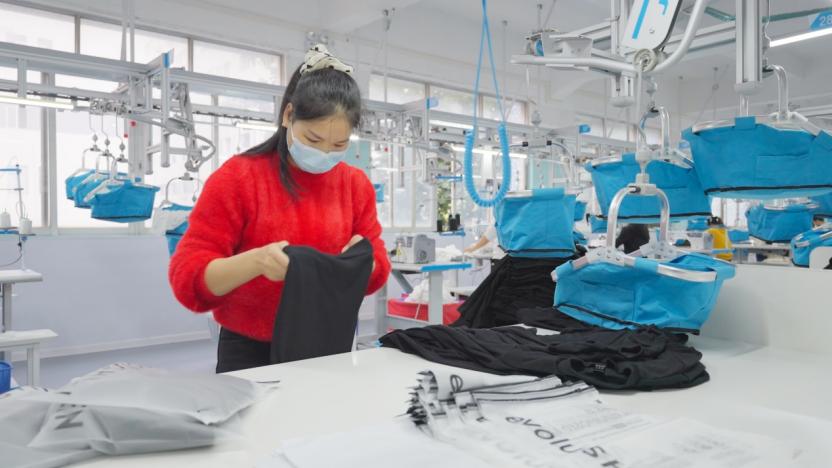
A supplier factory transformed through SHEIN's empowerment programs
"Previously, I produced exactly the number of orders customers placed, but I never knew how well the items sold or what the market response was," Deng Ming recalls his past operations. With years of experience in traditional foreign trade, he was accustomed to factories occupying a passive, execution-focused position at the end of the value chain. Once goods left the factory, beyond the lengthy waiting period for payments, the outcomes were out of his control—he remained unaware of sales performance or when new orders would arrive.
After becoming a SHEIN supplier in 2022, he made the decision to pivot from basic sportswear to more technically sophisticated athletic fashion, gaining direct access to this closed-loop system for the first time. On SHEIN's platform, he can track a product's complete lifecycle in the market, arrange subsequent production based on its growth trajectory, and refine manufacturing processes using key performance metrics and direct consumer feedback.
Factories have transitioned from passive order-takers to active decision-makers, with production shifting from "large orders, extended payment terms" to "agile responses, rapid payments"—this is the true value unlocked by small-batch quick-response systems. Underpinning this operational model are SHEIN's self-developed and continuously updated digital management tools. Through online production scheduling, full-process monitoring, and real-time data collaboration, suppliers are gradually building the foundational capabilities of industrial internet operations.
Zheng Tao, a supplier based in Jinjiang, Fujian—China's core swimsuit industrial cluster—boasted nearly a decade of traditional foreign trade experience. He admits he once avoided clients placing small-volume orders. But after partnering with SHEIN, the healthy order cycles, precise consumer trend matching, and efficiency-boosting production innovation tools revealed an entirely different growth logic. "Young people favor unique, stylized products, and this production model perfectly aligns with such consumer trends," he notes.
After initiating the transformation, Zheng Tao's factory reached a peak monthly shipment volume exceeding 200,000 pieces. Today, the facility can even fulfill "single-piece customization" requests. Once an order is confirmed, the partner printing shop completes the pattern instantly, the factory uses laser cutting for material preparation, and small teams handle manufacturing and quality checks to achieve rapid delivery.
Notably, this model extends beyond SHEIN's direct suppliers, reaching deeper into the broader industrial cluster ecosystem.
Under SHEIN's "Global Expansion of Industrial Clusters Across 500 Chinese Cities" initiative, third-party sellers can also access the flexible on-demand system. But can the same supply chain capabilities be replicated outside the self-operated ecosystem?
For this question, Wang Kai, owner of a Panyu soccer jersey factory, offers an affirmative answer. After nearly a decade specializing in soccer jersey manufacturing, he previously faced a typical six-month wait to gauge market response for new designs. Since joining the SHEIN platform in 2024, this cycle has been reduced to roughly 10 days.
During the recent U.S.-Mexico-Canada World Cup, he detected a sustained rise in orders for Mexico-themed jerseys, prompting rapid design iterations and further development aligned with platform trends.
Based on his projections, Wang Kai's factory will produce 150,000 items during this World Cup—more than double the 60,000 units made for the Qatar tournament. With the reformatted competition featuring 48 participating teams and an extended schedule, the resulting continuous consumer demand is being efficiently met by the digitally transformed flexible supply chain system.
Technological Innovation Drilling Deep Into the Industry
As production units shrink, factories gain significantly greater flexibility and agility, but new challenges emerge. How can traditional manufacturing systems keep pace with the market iteration speed and quality requirements of "on-demand production" while addressing the diverse and personalized fashion demands continuously emerging across global markets?
SHEIN's response is to embed technological innovation throughout the entire industrial chain.
Conventional wisdom holds that the more intricate a craft and the higher the product's added value, the more difficult it becomes for small and medium-sized factories to master.
This holds true in many cases. Techniques involving sequins, bead embroidery, and hotfix rhinestone fabrics were once almost exclusively found in formal gowns and haute couture. The extreme complexity of these processes leads to frequent needle breakage and fabric abrasion during sewing, while stitched edges risk skin irritation. No reliable commercial equipment existed, forcing artisans to complete these tasks through multiple manual steps. High technical barriers, long lead times, and inconsistent quality effectively locked small and medium factories out of this segment.
At SHEIN's Garment Manufacturing Innovation Research Center, efforts focus on converting universal process challenges into standardized tools. Using bead embroidery fabric as an example, traditional methods require breaking existing beads along the stitching path to resolve stuck or broken needles—a time-consuming process that easily damages materials.
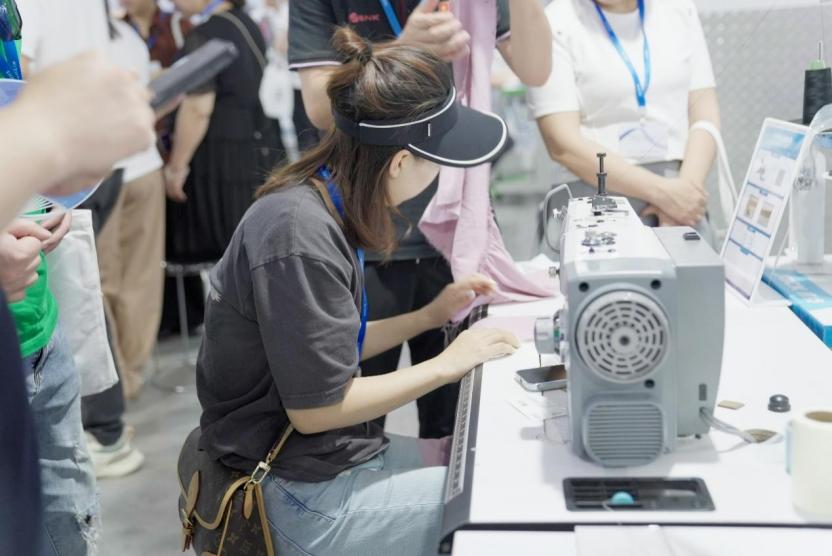
Suppliers testing innovative tools developed by SHEIN on-site
To address this, the research center developed the "bead embroidery presser foot"—a specialized component just a few millimeters wide, shaped like a bird's beak. As the machine sews, it automatically pushes beads aside to let the needle pass through gaps, protecting the embroidery while preventing breakage. First launched in 2024, this tool has undergone continuous iterations and gained popularity among suppliers. The adoption of these innovative tools has enabled the creation of differentiated viral products leveraging related craftsmanship.
Another example is the "compressed vacuum sealing packaging machine," a tool SHEIN designed specifically for voluminous categories like down jackets and plush toys. It effectively reduces product volume, directly cutting warehousing and logistics costs, and has similarly become a highly sought-after solution among suppliers.
By the end of 2025, SHEIN had developed over 180 innovative tools that convert "master artisan skills" into "standardized, low-threshold operations," delivering 7,500 units to suppliers and boosting efficiency in related processes by an average of 35%. In the first quarter of this year alone, an additional 1,200 self-developed tools and pieces of equipment were deployed to supplier facilities.
Of course, every factory faces unique, long-standing pain points that are nearly impossible to solve independently.
Supplier Wang Feng's factory specializes in high-complexity formal gowns, operating in a relatively niche market segment.
In this category, the boning technique serves as a core selling point, yet it has long represented a production bottleneck for Wang Feng: the boning structures he produced either turned out overly bulky and unrefined, or required additional processes that risked damaging the garments.
Previously, all industry-standard improved tools only supported double-needle sewing machines, which were incompatible with the interlock stitch machines in Wang Feng's factory. After becoming a SHEIN supplier in 2021, he directly presented this challenge to the R&D team at SHEIN's Garment Manufacturing Innovation Research Center. Following multiple iterative cycles, the technical barrier was successfully overcome through tool innovation.
The upgrading of tools, equipment, and processes ultimately expands the operational boundaries for factory owners.
"Previously, I could only say we couldn't produce a certain style. Now whenever problems arise, I can immediately reach SHEIN's team, and they can even customize tools based on my specific needs," Wang Feng explains. Beyond that, for factory owners like him, recruiting skilled workers poses a comparable challenge to technical complexity. Training a new employee typically requires at least six months. Tools that simplify processes and make techniques easier to learn directly resolve this bottleneck: "Newcomers can master the operation in just 30 minutes."
From universal tools to customized solutions and on-site technical support, small and medium factories are for the first time gaining capabilities that would be nearly impossible to develop independently.
According to Hu Qimu, Deputy Secretary-General of the China Digital-Real Integration 50 Forum, SHEIN has evolved beyond a mere brand or e-commerce enterprise. Through its "digitalization + tools" model, it has transformed into an enabling platform for the entire garment industrial chain, accelerating the digital and intelligent transformation of individual enterprises that previously lacked smart manufacturing capabilities, promoting broader industrial collaboration and fostering a more resilient industrial ecosystem.
This "full-chain" commitment is not just rhetoric. Public reports show that throughout 2025 alone, SHEIN engaged in deep collaborations with universities, third-party professional institutions, and related enterprises to advance green carbon reduction and process technology breakthroughs. On the materials front, it partnered with Donghua University to jointly develop a new generation of recycled polyester solutions, and built a joint laboratory with Transfar Chemicals to explore advanced fabric techniques. In logistics, it collaborated with Dongfeng Motor Group, Sinotruk, CATL, and others to deploy over 100 new energy logistics vehicles, achieving the industry's first large-scale implementation of green logistics...
It must be acknowledged that no single small or medium factory could independently establish such a deep technological foundation. In a sense, this is precisely the purpose of a chain leader: to convert manufacturing capabilities beyond the reach of individual enterprises into public resources accessible to the entire supply chain.
The Light of Talent Illuminating Industrial Clusters
While technologies can be innovated and tools iterated, nurturing human talent requires long-term investment over extended periods. This is precisely the most underrated yet most long-term valuable component of industrial upgrading.
SHEIN is normalizing talent development as a core industrial infrastructure component. Training programs for suppliers are frequent and highly practical. In the first quarter of 2026 alone, nearly 100 training sessions were conducted, with suppliers participating close to 8,000 times. The content extends beyond specialized production techniques to cover areas such as helping factories establish financial reporting systems and build profitability analysis capabilities.
Recalling his early transformation phase, Deng Ming notes, "We engaged in continuous learning covering defect rate management, production efficiency improvement, production scheduling, and quality inspector training certification."
Even more far-reaching is the expanding scope of training. Since 2025, SHEIN has partnered with multiple departments including the Guangdong Provincial Federation of Trade Unions to offer "zero-foundation" vocational skill training programs open to the public. Participants who pass assessments receive official skill certificates and gain priority for job recommendations at enterprises within SHEIN's supply chain ecosystem.
Huang Xi, a training participant, shared that from pattern making for skirts and dresses, to sewing, grading, and layout planning, "we all started from zero, truly mastering the complete end-to-end process of garment manufacturing."
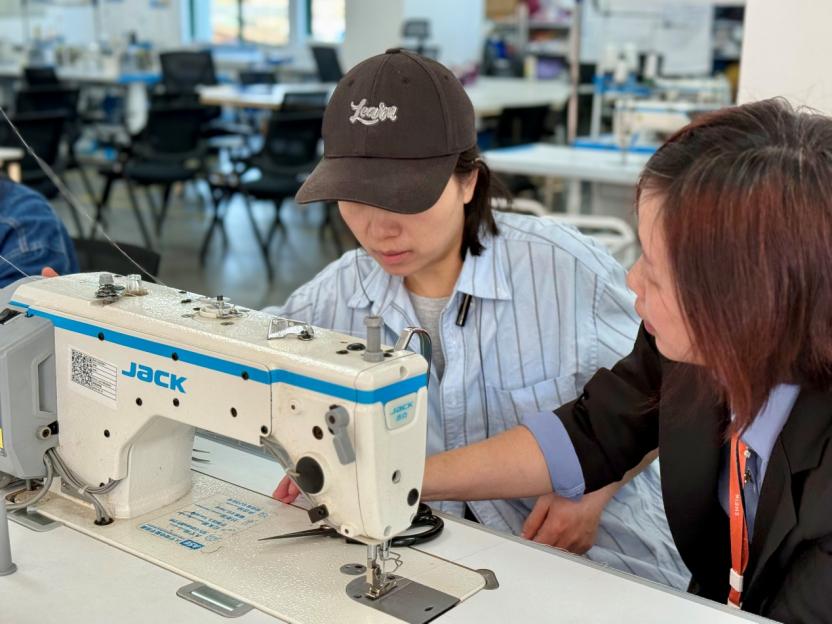
SHEIN's vocational skill training in session
Recently, registration opened for the 2026 Guangdong Provincial Garment Pattern Maker Vocational Skills Competition, co-organized by SHEIN to promote learning and practical training through competitive events.
Shifting from passively hiring existing workers to proactively cultivating new talent, expanding from within the chain to the broader community, this path's ultimate outcome is not just improved efficiency for a single enterprise—it ensures the entire industrial cluster can sustainably attract individuals willing to learn and capable of mastering the required skills.
As a chain leader, SHEIN collaborates with educational institutions and member enterprises to build an integrated four-in-one model of "job requirement definition + skill training + skill assessment + employment services," addressing the long-standing structural mismatch between talent supply and demand in the textile and apparel industry. This initiative establishes a talent foundation for the entire sector, accumulating enduring momentum for sustainable development.
When viewed together, the three pillars of production model innovation, technological tool advancement, and talent development make SHEIN's true role in the garment industry's transformation and upgrading readily apparent.
The more open the tools are, the more factories can utilize them; the broader training coverage extends, the more people can enter the industry.
From sportswear workshops in Panyu to swimsuit industrial zones in Jinjiang, from innovative tools on factory floors to new trainees touching sewing machines for the first time in zero-foundation classes, the fundamental logic of Chinese garment manufacturing is being reconstructed step by step.
When a chain leader's empowerment depth covers the full spectrum of flexible manufacturing, technological innovation, talent cultivation, and green transformation, the industry's narrative shifts accordingly: moving from scale-driven to value-driven development, from product export to capability export.
This is perhaps another story worth telling behind the global expansion of traditional industries.
(All individuals