Will Ctrip's next phase of development be fully powered by AI?
On June 25th, Ctrip released a seemingly good quarterly report, but the capital market's response was not positive.
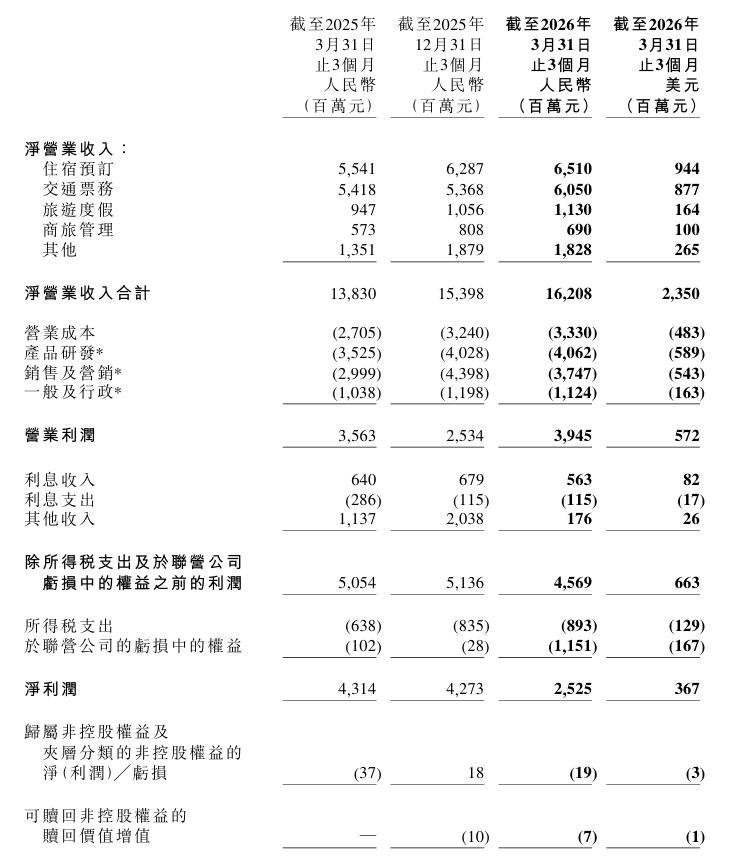
The financial report shows that in Q1 of 2026, Ctrip's net revenue was 16.2 billion yuan, a year - on - year increase of 17%; the adjusted EBITDA was 4.8 billion yuan, a year - on - year increase of 14%. All four major business segments achieved positive growth, and the cash - generating ability of the core business continued to improve.
However, what the market focused on were the three words behind the numbers: hard to sustain. With the tense international macro - environment and high regulatory risks, Ctrip gave a guidance that the year - on - year growth rate of net revenue in the next quarter would plummet to 3% - 8%.
Under normal business circumstances, Ctrip's revenue growth rate has never fallen below double - digits. This performance warning represents almost the slowest quarterly growth rate in its recorded history.
Under the combined influence of multiple factors, Ctrip's stock price in the Hong Kong stock market tumbled. It fell by 10.92% and 3.11% on June 25th and June 26th respectively, hitting a new low in the stock price. However, the good news is that by June 29th, Ctrip's Hong Kong stock price rose by nearly 6%.
Inbound tourism is booming, but not booming enough
On the surface, all four major business segments of Ctrip showed positive growth in Q1 of 2026. However, upon closer inspection, the slope of each growth curve is changing.
Accommodation booking is Ctrip's cornerstone. In Q1, the revenue was 6.5 billion yuan, accounting for 40% of the total revenue, with a growth rate of 17%.
However, behind this figure lies a shift in growth momentum. The main driving force has become inbound tourism. In Q1, the total bookings on the international platform increased by 65% year - on - year, and the inbound tourism bookings soared by 90% year - on - year.
Ctrip is heavily betting on this track.
In the past year, it has invested about 1 billion yuan to improve the inbound tourism reception capacity in more than 40 cities. Nearly 70,000 hotels and scenic spots have received inbound orders from Ctrip's overseas platform for the first time. Jackie Chan was signed as an inbound tourism ambassador, and Liang Jianzhang, the Chairman of Ctrip's Board of Directors, even said that in the next five years, Ctrip will invest 15 billion yuan and attract 200 million international tourists.
However, the increase in inbound tourism is not enough to offset the pressure on domestic business.
The growth rate of accommodation bookings shows the following trend: from the first three quarters of 2025, it gradually slowed down from 23% to 18%, rebounded to 21% in Q4, and then dropped back to 17% in Q1 of 2026. There is an increase, but it cannot fill the gap left by the slowdown in domestic business.
The growth of transportation ticket sales is more stagnant.
In Q1, the revenue was 6.1 billion yuan, a year - on - year increase of 12%. The growth rate has fluctuated by no more than 1 percentage point for four consecutive quarters. This is a locked - in growth curve.
Transportation ticket sales are essentially a traffic entry point with "high turnover and low profit". Its strategic value lies in cross - selling rather than independent profitability. The stability of this figure exposes the ceiling, and there is little room for growth.
Tourism vacation and business travel management also have limited contribution to the overall growth.
The former had a revenue of 1.1 billion yuan in Q1, a year - on - year increase of 19%. After hitting a trough of 3% in Q3 of 2025, it has maintained double - digit growth for two consecutive quarters, mainly driven by customized demands for outbound and inbound tourism.
The latter had a revenue of 690 million yuan, a year - on - year increase of 20%, the highest growth rate in the past five quarters. The structural impetus of Chinese enterprises going global has promoted the growth of this business.
However, the key point is that the total revenue of these two major business segments only accounts for 11% of the total revenue, and their scale is not large enough to change the overall situation.
While the growth rate of Ctrip's main business revenue has stalled, the growth rate of its costs and expenses has been continuously rising.
In Q1 of 2026, Ctrip's operating cost was 3.3 billion yuan, a year - on - year increase of 23%, outpacing the revenue growth rate of 17%. The sales and marketing expenses increased by 25% year - on - year, the fastest - growing among all expenses. Product R & D expenses increased by 15%, and general and administrative expenses increased by 8%.
Although the overall increase in costs has eroded the profit margin to some extent, Ctrip's economies of scale have provided a bottom - line, and the profit is still growing. In Q1, Ctrip's operating profit increased by 11% year - on - year, and the adjusted EBITDA increased by 14% year - on - year, indicating that the cash - generating ability and operational efficiency of the core business are still improving.
What really worries the market is the Q2 guidance.
While the revenue and profit in Q1 were positive, Ctrip gave an unoptimistic Q2 performance guidance. Ctrip expects the year - on - year growth rate of total net revenue in the next quarter to slow down to about 3% - 8%, which will also have an impact on the profit margin and profitability.
Since its listing, excluding the impact of the pandemic, Ctrip's revenue growth rate has never fallen below double - digits. If the growth rate really drops sharply from 17% to 3% - 8% as predicted, this will be almost the slowest quarterly growth rate in Ctrip's recorded history.
Proactively seek change in a headwind environment
For Ctrip, its international business is still growing, but the Q2 guidance seems pessimistic. Why?
In the financial report, Ctrip attributes the expected slowdown in Q2 growth to two factors: macro - headwinds and compliance adjustments.
Let's start with the macro - environment.
OTAs are inherently sensitive to the economic cycle.
In fact, in an unstable geopolitical environment, air ticket prices have risen, flight capacities have tightened, and some long - haul routes have been interrupted. As a result, the demand for domestic and international air travel has declined.
According to previous financial reports, international business accounts for 40% of Ctrip's broad - based overseas revenue, and it is also the fastest - growing business segment. Any changes in the macro - environment will amplify performance fluctuations.
In fact, judging from the situation in the second quarter, not only Ctrip, but almost all companies relying on cross - border mobility have seen their performance volatility amplified by geopolitical and route changes.
For example, Booking Holdings said at its Q1 earnings conference that affected by the Middle East conflict, the demand for cross - regional tourism and the cancellation rate have continued to rise, and the impact will be even greater in the second quarter of this year. Cathay Pacific also proactively pointed out the adverse impact of fuel price and exchange rate fluctuations on its performance at its earnings conference.
Obviously, as a company committed to internationalizing its business, Ctrip has also been greatly affected by the international macro - environment. This impact covers the entire tourism industry, and it is difficult for Ctrip to stay out of it.
Now let's look at the internal factor: compliance adjustment.
The starting point of Ctrip's current round of adjustment was in January this year when the State Administration for Market Regulation officially launched an investigation into Ctrip for suspected abuse of market dominance in accordance with the Anti - Monopoly Law.
To some extent, this investigation itself will not have a significant impact on the company's business operations. Ctrip also emphasized in its announcement that its business is operating normally. Of course, an unavoidable fact is that Ctrip's stock price has been declining under regulatory pressure for some time, and the capital market is closely watching the investigation results.
An investor also told Timelines: "We are just waiting for the dust to settle on this investigation."
It is worth noting that judging from the situation in the first half of this year, Ctrip has also actively cooperated with regulatory authorities in multiple aspects to adjust its business.

In March 2026, Ctrip confirmed that it had taken offline the "Price Adjustment Assistant" and stated that such automatic price adjustment tools widely used in the hospitality and travel industry no longer meet the current requirements for high - quality development of the industry. Therefore, it took the lead in taking such tools offline to reduce irrational price competition among hotels and expand the independent pricing space and profitability of merchants.
Ctrip also said that many merchants, limited by their manpower and operational capabilities, still objectively need the platform to provide pricing references and business guidance to improve operational efficiency and sales results. It will continue to provide suggestions and guidance to merchants through the "Business Guidance" and "Data Center" sections of E - Booking, and the relevant suggestions and guidance are only for reference.
At the earnings conference call this time, Ctrip's management also admitted that in the past few months, Ctrip has actively sorted out and optimized several business practices to further strengthen its internal compliance and governance framework. "These adjustments may have a certain impact on the recent business and financial performance."
Overall, it can be seen that Ctrip has actively given up some platform influence and short - term business performance in exchange for business compliance. This is the most practical development strategy for Ctrip in the current environment.
However, from a different perspective, although this round of active adjustment by Ctrip will affect its short - term business performance, in the long - term development, it is actually a new starting point for Ctrip to further standardize its business, survive the cycle, and move towards internationalization.
Ctrip's next battlefield
While the growth narrative is changing, Ctrip still has a card to play: AI.
From Liang Jianzhang listing "AI innovation" as one of the three major directions in 2026 to CEO Sun Jie highlighting "AI - powered solutions" as the core strategy in the Q1 financial report, Ctrip has placed a high priority on its AI strategy.
This is both an offensive and a defensive move.
The evolution speed of AI agents is threatening the survival logic of OTAs. Currently, the process for users to consume tourism products is: first have an idea, then open Ctrip/Meituan/Fliggy, search for the destination + date, and finally compare prices and make a reservation. OTAs are the traffic entry point and trading place in the entire chain.
However, AI agents are rewriting this process. In the future, users may directly tell AI, "Help me book a flight ticket and a hotel to Tokyo next week." OTAs may be reduced to inventory suppliers in the background, and the front - end user entry point and brand awareness will be cut off.
Ctrip rarely admitted this risk in its 2025 annual report: "With the development of assistant and agent technologies equipped with artificial intelligence, technology companies may directly provide search, price comparison, recommendation, and booking services for tourism products on their proprietary platforms, subjecting us to more intense competition."
This is a common fear for all OTAs.
Therefore, all platforms are doing the same thing: replacing the traditional "destination + date" search box with AI dialogue, hoping to keep users' decision - making within their own ecosystems.
Ctrip is currently advancing along two paths.
On the consumer side, the product has evolved from the "AI search box" to "AI transaction execution". The Agentic Booking function launched in March 2026 has enabled users to directly complete the purchase of eSIM in the dialogue interface.
At the same time, Ctrip has also started to open up its capabilities to third - party AI platforms. For example, in early June, it connected core scenarios such as hotel booking, flight ticket query, and tourism vacation to WeChat AI Agent.
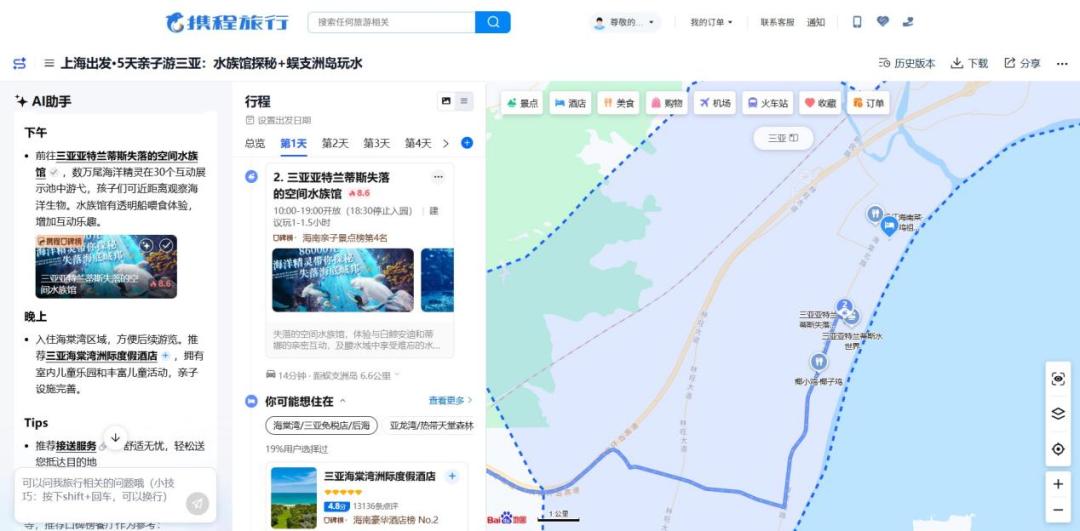
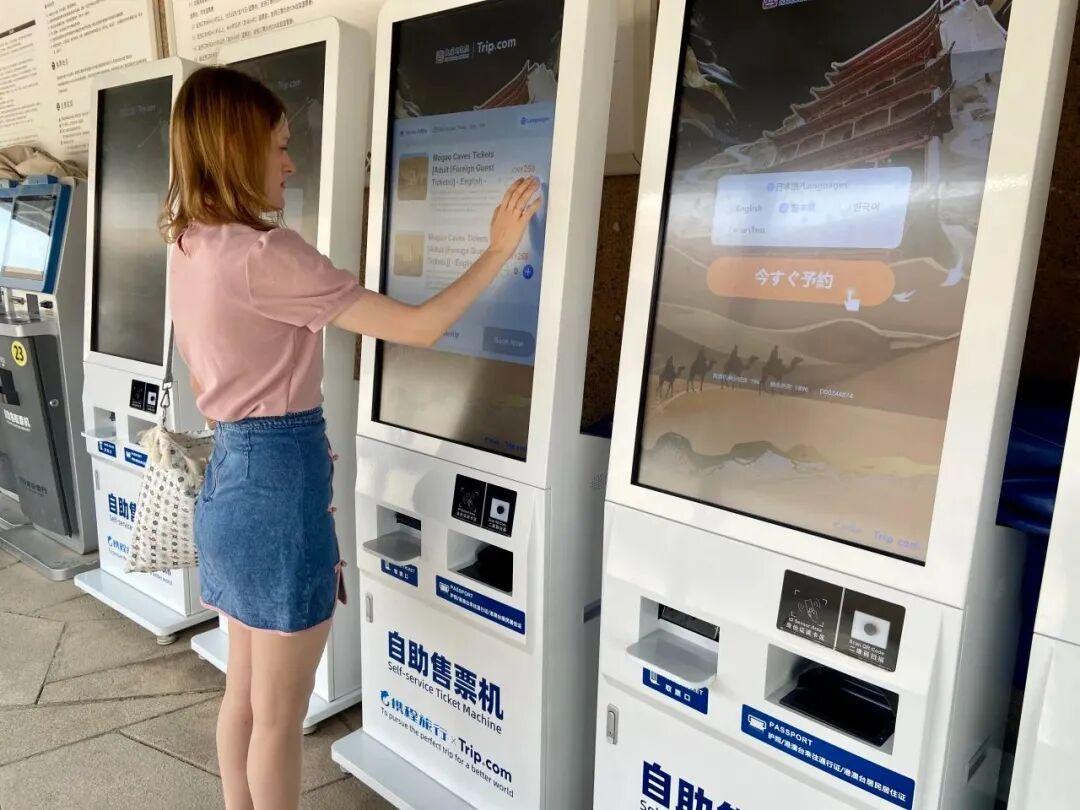
On the supply side, Ctrip provides real - time translation in 26 languages, deploys multilingual self - service ticket vending machines in 241 scenic spots, and uses AI to automatically generate hotel graphic and text content, etc., to improve the efficiency of the entire tourism service chain.
However, at the same time, the iteration speed of AI technology far exceeds the cycle of traditional industries, and its evolution path and final form are still full of uncertainties.
This means that it is almost impossible to make a definite judgment on the specific way, time, and intensity of the disruption to the OTA industry. For Ctrip, this adds a layer of uncertainty on top of its business fundamentals.
Generally speaking, Ctrip is in the midst of a transformation in terms of business and technology development. Its internationalization is still in progress, regulatory constraints are tightening, and the AI story is still on the table. This enterprise is standing at a real critical point.
In the past decade, its success has been based on two types of dividends: the scale dividend of the domestic OTA market and the commission - based dividend of the platform model. Now, the first has hit the ceiling, and the second has hit the regulatory wall.
Ctrip's choice is clear: to open up new markets through internationalization and reshape the old model with AI. However, both paths are difficult and are still in the investment stage, and their certainty remains to be seen.
In this context, how Ctrip can survive this cycle during the adjustment pain of the transformation from old to new growth drivers will be a key question that Liang Jianzhang, who has led Ctrip to bet on AI, must answer.
This article is from the WeChat official account "Timelines", author: Yu Yue. Republished by 36Kr with permission.