4 people whose destinies were "rewritten" by Jensen Huang
On the night of May 29, 2026, Shao Shuwei of Litong Electronics might not have slept well.
On that day, the stock price of Litong Electronics just reached its all - time high of 240.88 yuan. In the evening, the company issued an announcement: the customer concentration in the computing power business is high, with Tencent accounting for over 70%; the industry competition is intensifying, and there is a risk of price decline; there is a large deviation between the current valuation and performance.
In the next two days, Litong Electronics' stock price hit the daily limit down continuously, and its market value evaporated by nearly a quarter.
There are three other people in the same situation as Shao Shuwei: Ouyang Hua in Guangzhou, Zhou Chaonan in Langfang, and Geng Kangming in Shenzhen. By June 8, the stock price of Hongjing Technology dropped from the May high of 345 yuan to 159 yuan, almost halving in twenty days. Runze Technology fell 5.19%. Xiechuang Data fell 6.64%.
This is not a coincidence. "Gambling one's fate" in the new track is being re - evaluated by the market.
Winning in an Uncomfortable Way
Shao Shuwei, Zhou Chaonan, Geng Kangming, and Ouyang Hua are all engaged in the same business. They buy graphics cards from NVIDIA and rent them to Internet giants, making money from the price difference. It sounds simple, but in fact, it's not easy. NVIDIA raises prices, pushing up the cost; the giants lower prices, reducing the income. Squeezed from both sides, there is only a narrow margin left.
The top five customers of Zhou Chaonan's Runze Technology account for 95.52%, and ByteDance alone accounts for over 60%. Litong Electronics is even more extreme, with Tencent accounting for over 70%. Big customers give them a chance of survival but also hold their fate in their hands. Litong Electronics' real gross profit margin of 4.51% is what's left after being squeezed from both sides.
Now, customers like ByteDance, Tencent, and Alibaba are accelerating the construction of their own data centers. These four people are at the thinnest layer of the industrial chain, and their fate is in Jensen Huang's hands.
Each generation of Hopper, Blackwell, and Rubin chips has a significant leap in performance. When NVIDIA releases a new - generation chip, the rental price of the previous generation immediately collapses. The H100 was bought at 2.5 - 2.8 million yuan, and its resale price after three years is only 1.7 - 1.8 million yuan, depreciating by nearly half. The equipment in their hands is not an asset but a consumable.
NVIDIA is not just a supplier; it is the rule - setter. The NCP Preferred level is a license issued by it, and only Litong Electronics on the Chinese mainland has obtained it. However, the license is not permanent. NVIDIA decides when to change the rules, issue more licenses, or take them back. Every time a new - generation chip is launched, the rental price of the old cards plummets. The monthly rent of the A100 dropped from 28,000 yuan to 16,000 yuan. This rhythm is not determined by market supply and demand but by NVIDIA's product cycle.
NVIDIA does not bear any depreciation risk. The profit of each card it sells is already locked. The buyers bear the depreciation of the cards, and the lessors bear the decline in rent. NVIDIA stands at the top of the food chain and is the real landlord of this business.
Jensen Huang proposed a new concept at GTC 2026, the number of Tokens per watt. Computing power means income, and each Token represents income. This means that the competition in the computing power industry is shifting to a new track. In the past, it was about who had more cards. In the future, it will be about who can produce more AI services with one card. Technical ability is taking the place of resource ability, and technology is exactly what these four people lack the most.
On May 31, 2026, the U.S. Department of Commerce's BIS issued new guidelines. When exporting high - end AI chips to Chinese enterprises, it looks at the location of the headquarters rather than the delivery address. Even if Chinese enterprises buy Blackwell and Rubin chips through their overseas subsidiaries in Singapore or Malaysia, they still need to apply for a license from the United States. The approval principle is presumed denial. Runze Technology and Xiechuang Data rely on their NCP qualifications for business, and this new rule has blocked their procurement channels.
Here, NCP, NVIDIA Cloud Partner, is the highest certification that NVIDIA gives to cloud service providers. There are dozens of them globally and five in China. With this certification, enterprises can get priority quotas for high - end GPUs, direct factory supply prices, and faster delivery by half a year. Without it, they can only buy scattered goods at a higher price from middlemen, with the supply depending on luck and the price being unpredictable.
There are only five in the Chinese mainland (including Hong Kong), namely Alibaba Cloud, Tencent Cloud, Runze Technology, Aojia Software, a subsidiary of Xiechuang Data, and GMI Cloud (Taiwan). And Century Litong, a subsidiary of Litong Electronics, holds the Preferred - level distributor qualification for DGX servers within the NPN system, which is a general - channel certification, and there are over a hundred in China.
On May 31, 2026, the U.S. Department of Commerce implemented a new rule of in - depth supervision. Orders signed before May 31 are not affected. For new orders of top - level cards after that, Chinese - controlled entities will be subject to in - depth review, and licenses are presumed to be rejected. It means that the first half of the procurement channel is still flowing, but the second half has been blocked.
An even greater risk is that the window of supply shortage is closing.
On the supply side, NVIDIA's production capacity is being released, and a large number of Blackwell and Rubin chips are being shipped. Domestic companies like Cambricon and Huawei Ascend are also accelerating. In the first quarter of 2026, the domestic shipment volume of AI chips increased by 2.7 times year - on - year. On the demand side, the Internet giants are accelerating the construction of their own data centers. ByteDance raised its capital expenditure from 160 billion yuan in 2026 to over 200 billion yuan, with about half used to buy chips for self - built computing power infrastructure. Alibaba CEO Wu Yongming said that the investment in AI "may far exceed 380 billion yuan", and its self - developed GPU has been mass - produced. Tencent and DeepSeek are also increasing their investment. The logic of the giants has shifted from "making up for the short - board" to "seizing the leading position".
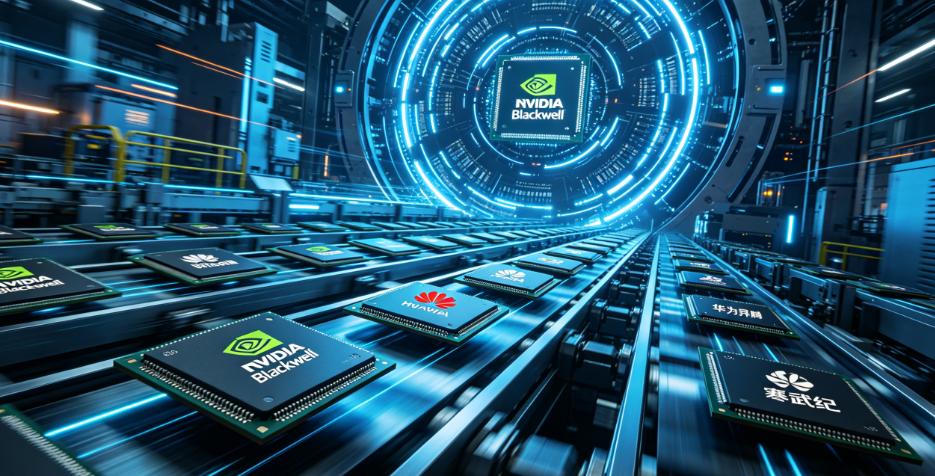
The computing power rental market is being stratified. The supply of low - end computing power is in excess. The monthly rent of the A100 dropped from 28,000 yuan to 16,000 yuan, a decline of over 43%. The supply and demand of high - end computing power are tight, and the rental price of the H100 has increased by nearly 40% against the trend. The giants are investing in their own high - end clusters and dumping their low - end cards into the rental market. The market is changing from overall rise and fall to a situation where high - end is in short supply and low - end is collapsing.
The current situation is not friendly to Shao Shuwei, Zhou Chaonan, Geng Kangming, and Ouyang Hua.
The Price of Changing One's Fate
Currently, the financial statements of Litong Electronics, Hongjing Technology, Runze Technology, and Xiechuang Data show a profit.
Shao Shuwei is 53 years old and has been making TV casings for 30 years. As the sales volume of LCD TVs declined, he never fell behind but also never really thrived.
Zhou Chaonan has also had a difficult journey. At 49, she planned a 1.34 - million - square - meter data center on the saline - alkaline land in Langfang. Her asset - liability ratio soared to 99%, and she waited for nine years without seeing a profit. During those nine years, the real estate market in China boomed three times, and the land price in Langfang increased many times. She could have made more money by buying a house at any time than by sticking to the unprofitable project, but she didn't dare to withdraw.
Geng Kangming's path is even narrower. After graduating with a master's degree, he worked on the assembly line at Foxconn for six years. Later, he started a storage OEM business, but the profit was so thin that customers could turn against him at any time. He had no bargaining power and no moat, just like Shao Shuwei.
Ouyang Hua has been on this path the longest. He worked in the office of the Shantou Municipal Party Committee for 15 years and then started a smart - city company after leaving the government in 1995. The company didn't grow much in over 20 years. At 63, he was still helping enterprises reduce losses.
For these four people, there is no light ahead and no way back.
In the first half of 2023, ChatGPT was launched, the AI industry boomed, and the global demand for computing power soared. The NVIDIA H100 was in short supply, and the delivery was scheduled for the next year. Internet companies had money but were conservative in the early stage and didn't want to invest in heavy assets. Chip companies had technology but didn't engage in infrastructure construction. The task of buying equipment, building computer rooms, and renting out the available computing power was left vacant. A rope dropped from the sky, and these four trapped people grabbed it.
Zhou Chaonan waited for nine years and finally got ByteDance as a customer. In 2025, the net profit attributable to the parent company of Runze Technology was 5.05 billion yuan, an increase of 182%. She turned the unprofitable project into nine computing power clusters, issued the first domestic data - center REITs, and recovered 4.5 billion yuan at once; Shao Shuwei invested 450 million yuan in Tencent's computing power network. In 2025, the net profit attributable to the parent company was 293 million yuan, an increase of 1088%, and he earned more in one year than in the previous seven years; Geng Kangming applied the strategy of "expanding production when there are orders" over the past 20 years to GPUs. The intelligent computing power revenue of Xiechuang Data was 2.761 billion yuan, an increase of 1727%.
Ouyang Hua took the biggest risk. In the first quarter of 2026, the revenue of Hongjing Technology increased by 958%, almost ten times in less than a year, and the stock price rose from 13 yuan to 111 yuan. A 63 - year - old man who should have retired finally made money.
However, changing one's fate comes at a price.
Shao Shuwei achieved the fastest turnaround. Litong Electronics doesn't have its own data center. It rents equipment from upstream suppliers and sub - rents it to Tencent, and only counts the price difference as income according to the net - method. When converted to the operator's standard, the gross profit margin is only 4.51%. Litong Electronics is more like a second - hand landlord. The chips are not his, the computer rooms are not his, and if Tencent doesn't renew the contract, it will be an empty shell. A man who has made TV casings all his life just changed the type of casing he makes.
Ouyang Hua took the riskiest path. In the first quarter of 2026, the interest expense was 35 million yuan, and the net profit was 30.26 million yuan. The interest was more than the profit. The asset - liability ratio was 89.82%. For a comprehensive credit line of 14.6 billion yuan, he personally signed a joint and several liability guarantee. At 64, the guarantee documents are much heavier than his personal assets. If the computing power can't be rented out, he won't even be able to keep his pension.
Geng Kangming's Xiechuang Data has cumulatively purchased 32.2 billion yuan worth of AI servers, more than six times its net assets. The H100 was bought at 2.5 million yuan, and its resale price after three years is 1.7 million yuan, a shrinkage of nearly half. The economic life of an AI chip is two to three years, while traditional equipment can be used for 20 years. The 32.2 - billion - yuan worth of equipment is depreciating every day, losing millions of yuan every day. Depreciation and interest eat up 80% of the profit. A contract - manufacturing boss trained on the Foxconn assembly line now wakes up every day owing interest, and the equipment depreciates when the lights are turned off.
Zhou Chaonan seems the most stable. However, ByteDance accounts for 60% of her income. Last year, ByteDance's capital expenditure increased by 60%, and a lot of it was invested in self - built computing power. The richer ByteDance gets, the less it needs her. She waited nine years for ByteDance, but ByteDance won't wait for her for nine years.
Behind these numbers, they are all using GPUs as collateral to increase leverage. When the leverage can hold, it's like wings. When it can't, it's like a chain. Hu Rong, the person in charge of the computing power industry in Wuhu, once said that the biggest bubble in the current computing power market lies in the financialization of heavy assets. Once the delivery of the new - generation chips is delayed, or the AI applications can't achieve large - scale profitability, the old - model GPUs hoarded at high prices will face the double blow of a sharp drop in rent and a shortage of liquidity.
But when the leverage is maximized, they can only move forward.
The Road Ahead is Difficult
Shao Shuwei, Zhou Chaonan, Geng Kangming, and Ouyang Hua won because of their heavy - asset investment. Shao Shuwei bought stamping machines, Zhou Chaonan built data centers, Geng Kangming managed the OEM production line, and Ouyang Hua handled the payment collection for government projects. Buying equipment, managing assets, and withstanding the business cycle are exactly what AI infrastructure lacks the most.
However, the seeds of defeat are hidden in the way they won. When most industries are just emerging, the core contradiction is about resources. Those who can acquire land, borrow money, and withstand losses will win. As the industry matures, the profit shifts from resources to technology. The advantages of outsiders are getting thinner day by day.
There are three paths in front of them.
Becoming insiders by upgrading from selling computing power to selling AI services. Xiechuang Data spent 510 million yuan to acquire Guangwei Technology and is moving towards full - stack integration. This is the most difficult path but the only one that can cross the industry cycle; Coordinating computing and electricity to get a cost advantage by tying up with the power industry. This path is stable but has a low ceiling; Going overseas is also an opportunity, as the computing power gap in Southeast Asia and the Middle East is even larger than in China. However, the new export - control rule of the BIS hangs over their heads and may fall at any time.
These three paths are difficult. If they stay where they are, on the left, NVIDIA under Jensen Huang controls the iteration and upgrade of chips, and on the right, the Internet giants are also building their own computing power centers. Tencent has cut the sub - rental of low - end computing power, and DeepSeek has cut the API price to 25% off. Small and