This $100 billion was supposed to be his: The tragic story of an FTX genius in prison
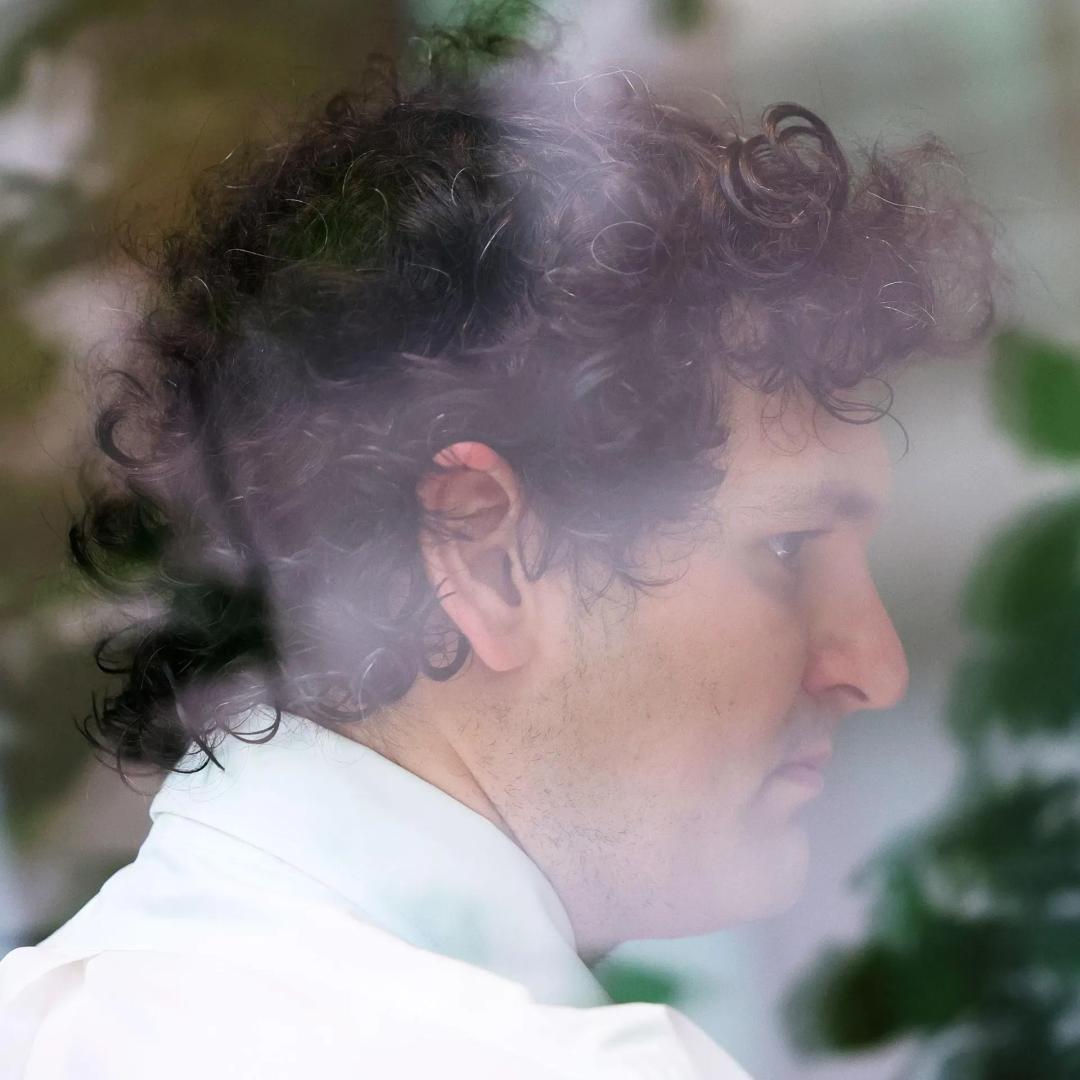
Image source: MICHAEL M. SANTIAGO/GETTY IMAGES
Before the collapse of FTX, Sam Bankman-Fried had built an investment portfolio with great foresight, and every project he bet on had sky-high returns. Among them were Anthropic and SpaceX. Now, this once-genius kid in the crypto circle will serve 25 years in prison, while those shrewd investors who picked up the bargains will reap amazing rewards.
Recently, when scrolling through the social platform X, you can always see many posts sighing that Sam Bankman-Fried's venture capital vision is "genius".
Many people believe that if FTX hadn't collapsed, this founder might have been regarded as one of the top venture capitalists in history. At the peak of his crypto business empire, Bankman-Fried made hundreds of large-scale investments. Anthropic, Cursor, and Robinhood were just a few of them.
Rory O’Driscoll, a partner at venture capital firm Scale Venture Partners, exclaimed: "Sam invested in Anthropic and Cursor early on. His vision is truly amazing."
01
The two companies he mentioned are already two top artificial intelligence companies in Silicon Valley.
The AI programming tool Cursor recently reached a cooperation with SpaceX, and its valuation may soar to $60 billion; the valuation of the leading artificial intelligence company Anthropic has even climbed to $900 billion. "After the industry bubble burst in 2021, he could accurately pick out the two most important companies. His vision is really unique. At that time, the ChatGPT craze hadn't even started, and most people were just watching and doubting the future of AI, but he dared to bet on new things. What judgment and courage!"
Of course, an unavoidable question is whether the money Bankman-Fried used for investment was his own. He was once hailed as "the next Warren Buffett", but now he will serve 25 years in a federal prison in San Pedro, California. He organized one of the largest financial fraud cases in history, embezzling more than $8 billion in FTX customers' funds, and part of it was used for these investments. Before his arrest in December 2022, he was also on the Forbes list of richest Americans, with a personal wealth of up to $24 billion at his peak.
FTX was founded in 2019 and raised about $2 billion in venture capital in total. It quickly became one of the largest cryptocurrency exchanges in the world. At that time, the price of Bitcoin soared to about $69,000, and FTX made a fortune by charging transaction fees for each trade. Bankman-Fried's trading company, Alameda Research, also acted aggressively, serving as a market maker in the crypto and other fields and frequently betting on high-risk projects.
After getting hold of a large amount of cash, Bankman-Fried started a crazy investment mode.
As an early investor in the Solana blockchain, he hoarded nearly 60 million SOL tokens between 2020 and 2021. A few months before the collapse of FTX, he spent $500 million to acquire a 13.56% stake in Anthropic (after several rounds of financing by the company, his shareholding ratio was diluted to about 8%). He was also one of the earliest investors in Cursor, spending only $200,000 to acquire a 5% stake in the company. In addition, FTX invested $700 million in venture capital firm K5 Global, of which about $200 million was invested by K5 in SpaceX. One of his last major investments was to buy a 7.6% stake in Robinhood for $648 million.
If the liquidators of FTX's bankrupt assets hadn't sold off these investment assets, these few core holdings would be worth about $100 billion today.
Based on the recent upper limit of Anthropic's valuation in the private market at $1 trillion, the value of Bankman-Fried's stake alone could reach $80 billion, 160 times the initial investment of $500 million. In addition, there are the SpaceX shares indirectly held through K5 Global. The value of this asset could reach up to $15 billion, about 75 times the original investment (depending on how K5's shareholding is valued). SpaceX is preparing for the largest initial public offering in history, with a target valuation of $2 trillion.
The investment in Cursor is now worth $3 billion, with a return rate of up to 15,000 times. SpaceX recently announced that it has obtained the right to acquire Cursor for $60 billion later this year. Based on Robinhood's current market value of $66 billion, Bankman-Fried's stake is now worth about $5 billion. The market value of the Solana tokens he hoarded is also close to $5 billion, with an investment return of about 27 times.
Michael Burry, a well-known investor who accurately predicted the subprime mortgage crisis and profited from it, posted: "If Sam Bankman-Fried hadn't broken the law, he might have become the greatest venture capitalist in history. But now, he can only post from a federal correctional institution."
02
In November 2022, FTX fell into a liquidity crisis, and users rushed to withdraw their funds. Bankman-Fried, who had built an image of a kind and genius young man in the crypto circle for years, resigned as CEO, and the company filed for bankruptcy.
Subsequent investigations by investigators and bankruptcy lawyers found that this was no longer just a failure of the exchange's operation, but a capital shortfall of $8 billion. Prosecutors then accused Bankman-Fried of treating customers' deposited funds as his personal vault, embezzling funds for venture capital investments, political donations, purchasing luxury real estate, and covering the losses of his trading company, Alameda Research.
The subsequent liquidation work was mainly taken over by the bankruptcy lawyer team of Sullivan & Cromwell, a law firm that had also provided legal services to FTX before its bankruptcy. Between 2023 and 2024, the team gradually sold off the remaining assets of Bankman-Fried's business empire, including these investment projects.
In this most shocking bankruptcy case in modern financial history, this wave of asset liquidation was initially regarded as a rare bright spot. The value of some of FTX's assets soared significantly, and users might even get back more money than their principal locked in the exchange in the end, which is almost unprecedented in large-scale bankruptcy cases.
But many investors believe that the liquidators were eager to recover cash and sold off assets in a hurry at low prices, erasing hundreds of billions of dollars of future appreciation potential.
The sale of the Anthropic shares is the most typical example. FTX sold this stake to a group of institutional investors for about $1.3 billion, including a subsidiary of Abu Dhabi's sovereign wealth fund Mubadala, Bankman-Fried's former employer Jane Street, Fidelity, and HOF Capital. This deal seemed profitable at the time, but in hindsight, as Anthropic's valuation soared, this bargain investment has clearly become one of the most profitable bottom-fishing deals in history.
The liquidators also sold off their SOL tokens at a significant discount, mainly because these tokens had a four-year lock-up period. The buyers were all senior institutions in the crypto and venture capital fields, including Galaxy Digital under billionaire Mike Novogratz, Pantera Capital, Brevan Howard Digital, and the Solana Foundation, which is responsible for the ecological development of the Solana blockchain.
Bankman-Fried's stake in Robinhood was seized by the U.S. Marshals Service and later repurchased by Robinhood. His 5% stake in Cursor was also sold at the original pre-seed price in 2022, and the identity of the buyer was not disclosed. FTX once sued K5 Global, which had invested in SpaceX, in an attempt to recover the investment funds, but finally chose to retain its stake in this venture capital firm. Once SpaceX goes public with a valuation of $2 trillion, this stake can still bring billions of dollars in returns to the bankruptcy trust fund and ultimately be paid to creditors.
During the trial, Bankman-Fried's lawyers also tried to use this as a defense. They argued that the significant appreciation of FTX's assets meant that users would probably get back all their principal, which was sufficient proof that the actual losses were not as serious as the prosecutors had alleged. But compensating in full does not mean being absolved of guilt.
When Forbes previously estimated Bankman-Fried's net worth, his wealth mainly came from FTX equity, the FTT tokens issued by the exchange, and various crypto assets. Now, FTX equity and FTT tokens are basically worthless. In addition, some of the crypto assets under Bankman-Fried's name may actually be controlled by Alameda Research, which embezzled FTX customers' funds according to his instructions. Therefore, it is difficult to accurately calculate how much wealth he should have now.
It can be said that if FTX had survived smoothly, Bankman-Fried would very likely be among the world's top billionaires today. But this assumption avoids the most core fact: his impressive investment portfolio was attached to a fraud from beginning to end and was essentially a by-product of the fraud.
This article is translated from: https://www.forbes.com/sites/ninabambysheva/2026/05/05/how-sam-bankman-frieds-venture-bets-would-have-made-him-100-billion-richer-had-he-stayed-out-of-prison/
Original title: "How Sam Bankman-Fried's Venture Bets Would Have Made Him $100 Billion Richer Had He Stayed Out of Prison"
This article is from the WeChat official account “Forbes” (ID: forbes_china). Author: Nina Bambysheva; Translator: Lemin. Republished by 36Kr with authorization.