BYD officially announced a price increase. Its overseas sales soared by 55% in the first quarter, with one out of every two cars sold being exported.
BYD officially announces price increase.
Starting from May 1st this year, for some models in BYD's Dynasty Network, Ocean Network, and Fang Cheng Bao, the price of the optional Divine Eye B assisted driving laser version will be raised from 9,900 yuan to 12,000 yuan.
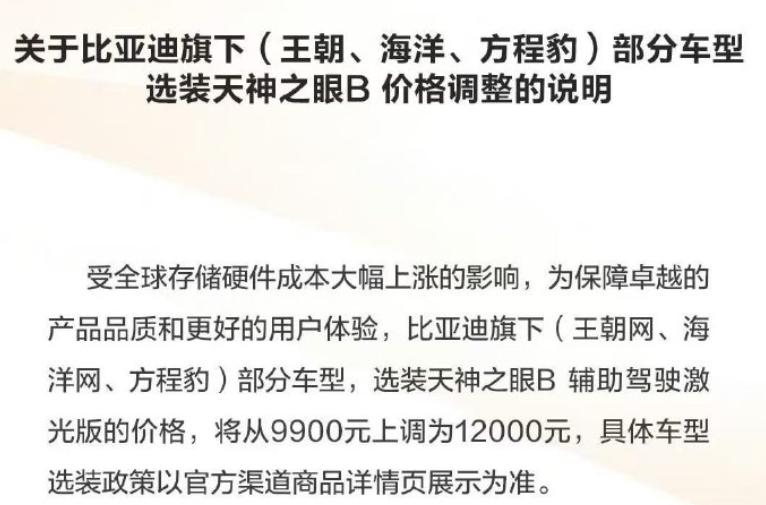
According to BYD, the price adjustment is affected by the rising cost of storage hardware. But it may also be related to BYD's performance entering a "stable period" in the first quarter of this year:
In Q1 2026, the company's sales volume was 700,000 vehicles, a decline of nearly 30%; both revenue and profit in the financial report declined. Total revenue decreased by 12%, and net profit was directly halved.
Surprisingly, despite the "cooling down" of the financial report and the official price increase announcement, after the opening of the market today, BYD's stock price has been rising all the way. The A-share price once rose by more than 3%, and the H-share price rose by more than 4%.
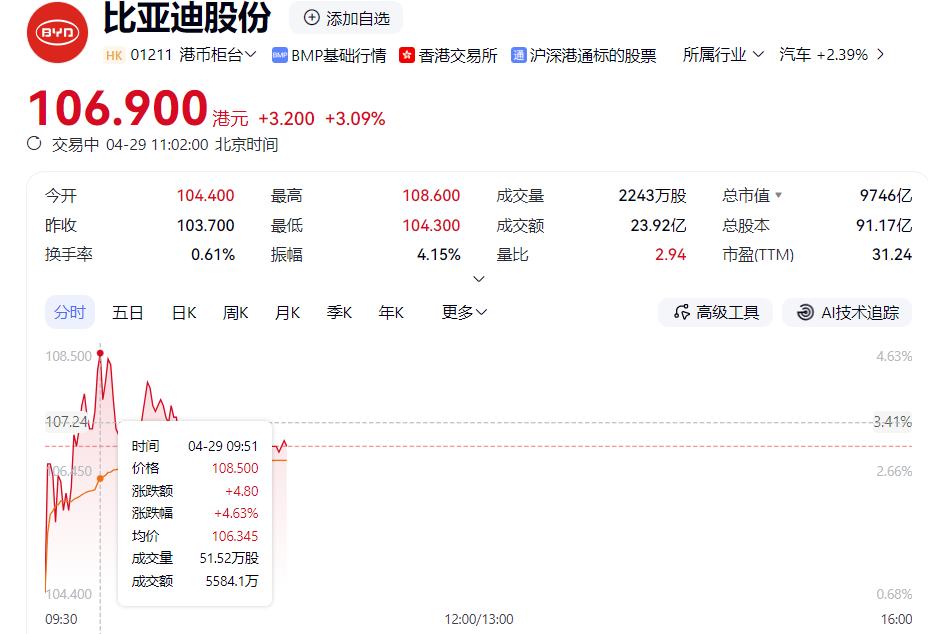
Why is this the case?
BYD's Q1 financial report is released
In the first quarter of this year, BYD's total sales volume was 700,500 vehicles, a year-on-year decrease of 30%. This downward trend is actually roughly in line with external expectations.
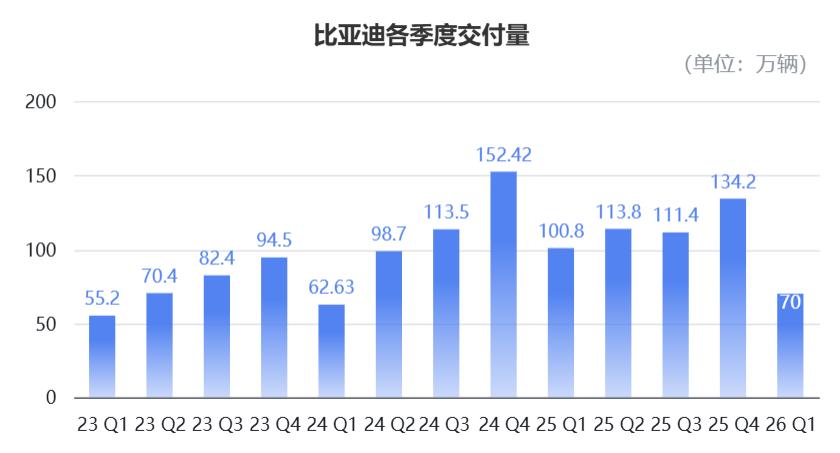
In 2026, the new energy vehicle purchase tax policy in China was adjusted, resulting in weaker market demand than in 2025. At the same time, the competition among car companies has become more intense. Nearly 70 models in the domestic market were involved in price competition in the first quarter.
Affected by multiple factors, the performance of most mainstream car companies was worse than that in the same period of 2025.
BYD naturally did not escape this trend. And the decline in sales directly affected the growth rate of BYD's financial report indicators.
In the first quarter of this year, BYD's total revenue was 150.225 billion yuan, a year-on-year decrease of 11.82%, but higher than the market expectation of 140.4 billion yuan.
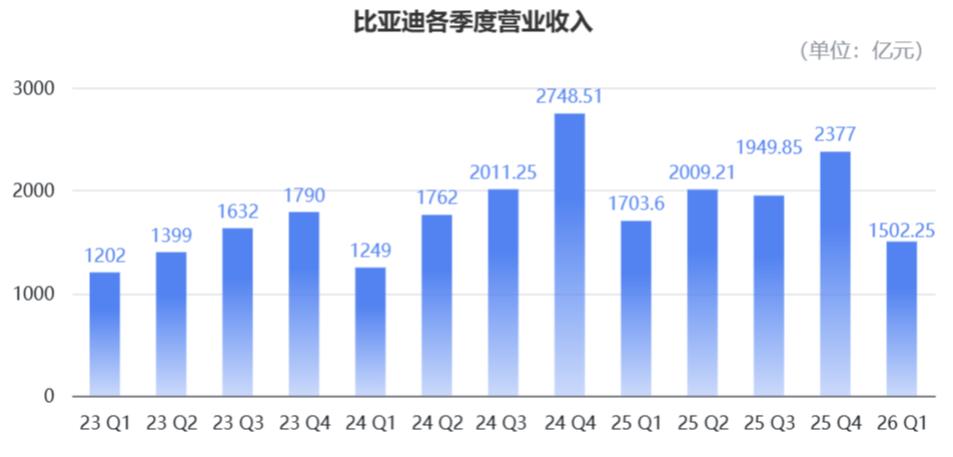
In addition to being affected by the decline in sales, the decline in revenue also comes from the product structure being in a transition stage -
Q1 was in the "window period" of promoting and clearing inventory of old models and new models about to be launched.
However, due to the excellent performance of overseas sales, to a certain extent, it alleviated the impact of the decline in domestic sales on total revenue, making the decline in total revenue smaller than that in total sales.
Looking at the automobile business again, BYD's automobile sales revenue in the first quarter was 112 billion yuan, a year-on-year decrease of 16.1%, also higher than the market expectation of 100.6 billion yuan. The average price per vehicle in the first quarter was 160,000 yuan, a year-on-year increase of 20%.
As for why the average price per vehicle increased significantly, we'll keep it a secret for now and talk about it later.
In terms of profit, the company's comprehensive gross profit margin in Q1 was 18.8%, a decrease of 1.3 percentage points compared with the same period last year, but a 1.4-percentage-point increase from the previous quarter, reaching the highest level in the past four quarters.
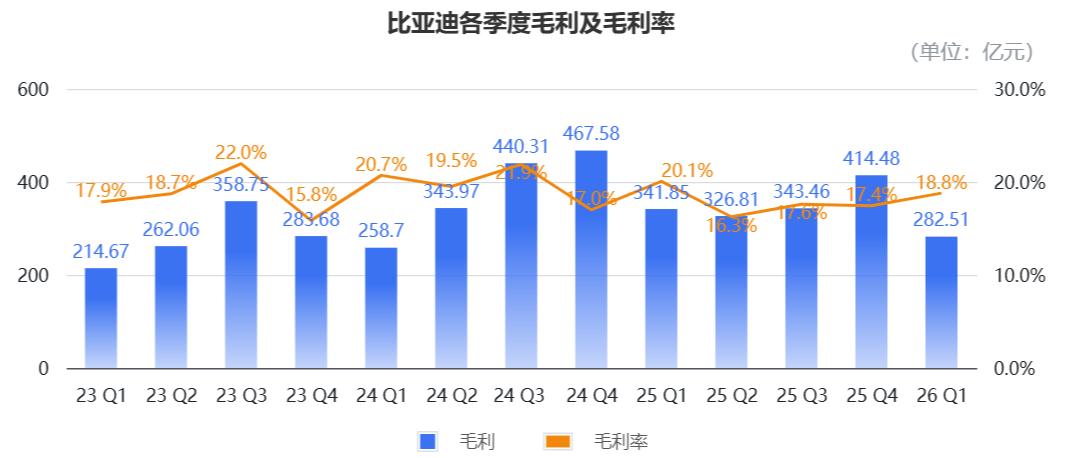
During the same period, the gross profit margin of the automobile business was 23.4%, also a 1.8-percentage-point increase from the previous quarter.
However, BYD's net profit attributable to shareholders in Q1 was 4.085 billion yuan, a year-on-year decrease of 55.38%; the net profit attributable to shareholders after deducting non-recurring gains and losses was 4.148 billion yuan, a year-on-year decrease of 49.24%.
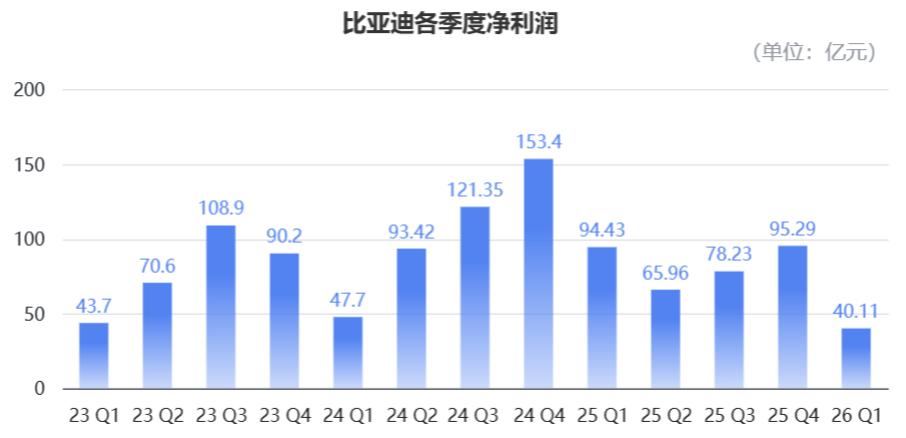
The halving of net profit is actually largely affected by exchange losses:
Due to the significant appreciation of the RMB against the US dollar and the euro, the overseas income converted into RMB has shrunk.
In Q1 last year, the RMB exchange rate fluctuations brought BYD an exchange gain of about 1.9 billion yuan, but in Q1 this year, there was an exchange loss of 2.1 billion yuan. The difference between the positive and negative amounts was 4.008 billion yuan, directly eating up most of the profit.
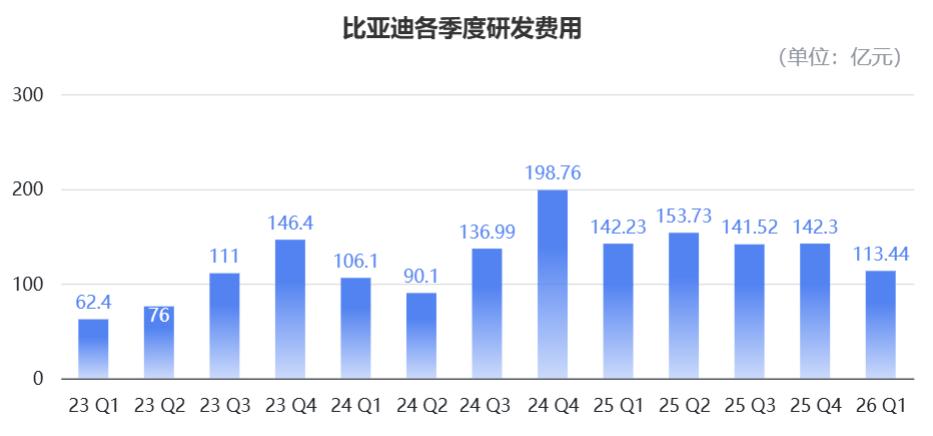
In terms of expenditure, BYD's R & D expenses in the first quarter were 11.344 billion yuan, a year-on-year decrease of 20%, but still far exceeding the net profit in the same period, remaining at a high level.
Finally, looking at the cash level, as of the end of the first quarter of 2026, the ending balance of BYD's cash and cash equivalents was 73.408 billion yuan.
Overall, compared with the "rapid development" trend last year, BYD's financial performance was indeed under pressure in the first quarter of this year.
However, through the financial report and market information, BYD has also released some positive long-term signals.
BYD starts its long-term growth trajectory
From the perspective of the domestic market base, although the auto market is facing periodic pressure, by March, the market demand has shown signs of recovery.
BYD's total sales volume in March returned to 300,000 vehicles. Although it was less than the 377,400 vehicles in the same period last year, it had rebounded by 57.9% from the previous month.
At the same time, the sales volumes of mainstream self-owned brands such as Great Wall and Geely in March also emerged from the previous slump, and the month-on-month growth momentum was very obvious.
From BYD's own business rhythm, with the implementation of a series of new technologies and the launch of new products, the company's performance in the domestic market is expected to gradually improve.
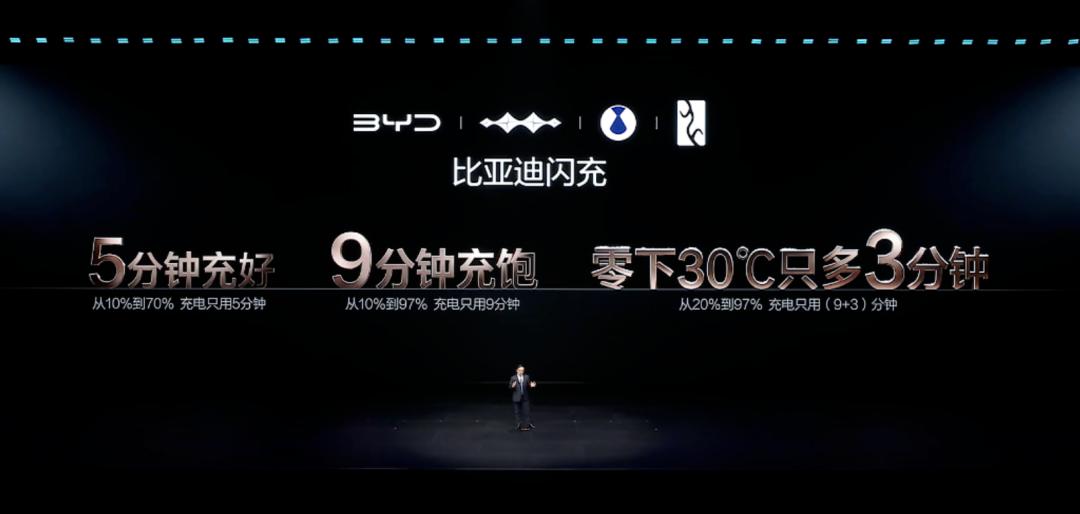
First, at the technological level, at the beginning of March this year, BYD released the second-generation blade battery and flash charging technology, which is regarded as the "final work of the first half of electrification".
This technology can achieve charging from 10% to 70% in 5 minutes and from 10% to 97% in 9 minutes at room temperature. Even in an extremely low-temperature environment of minus 30 degrees Celsius, the charging time is only 3 minutes longer than at room temperature, successfully solving the two major problems of "slow charging" and "difficult charging at low temperatures".
The supporting "Flash Charging China" strategy of BYD was also launched simultaneously:
The company plans to build a total of 20,000 flash charging stations across the country by the end of 2026, including 18,000 "flash charging sub - stations" in urban areas and 2,000 "flash charging highway stations" covering highway service areas.
As of April 28th, which just passed, BYD announced that it had built more than 5,500 flash charging stations in total, covering 311 cities across the country.
According to the data officially announced by BYD on April 9th, there were 5,193 flash charging stations built at that time. It means that more than 309 flash charging stations were built in 19 days, with an average of more than 16 stations built per day, which is an amazing speed.
Perhaps by the end of the year, BYD will be able to form a real "minute - level energy replenishment" three - dimensional network.
This can systematically reduce users' range anxiety and further consolidate BYD's technological moat.
Next, at the product level, BYD's new car lineup began to be intensively launched in the second quarter of this year.
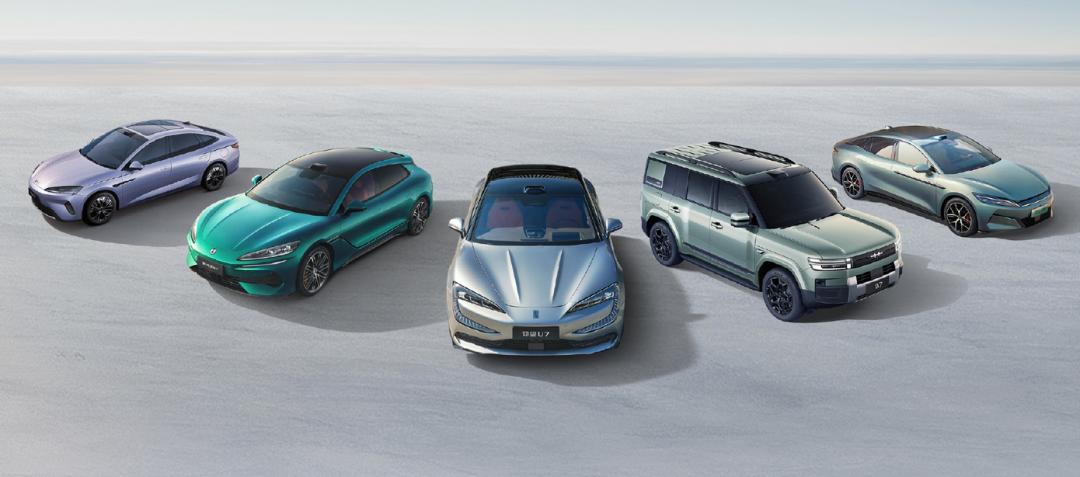
At the recently bustling 2026 Beijing Auto Show, BYD rented the entire E3 hall. The "five networks and four brands" of Dynasty, Ocean, Fang Cheng Bao, Denza, and Yangwang were all assembled, making a grand scene.
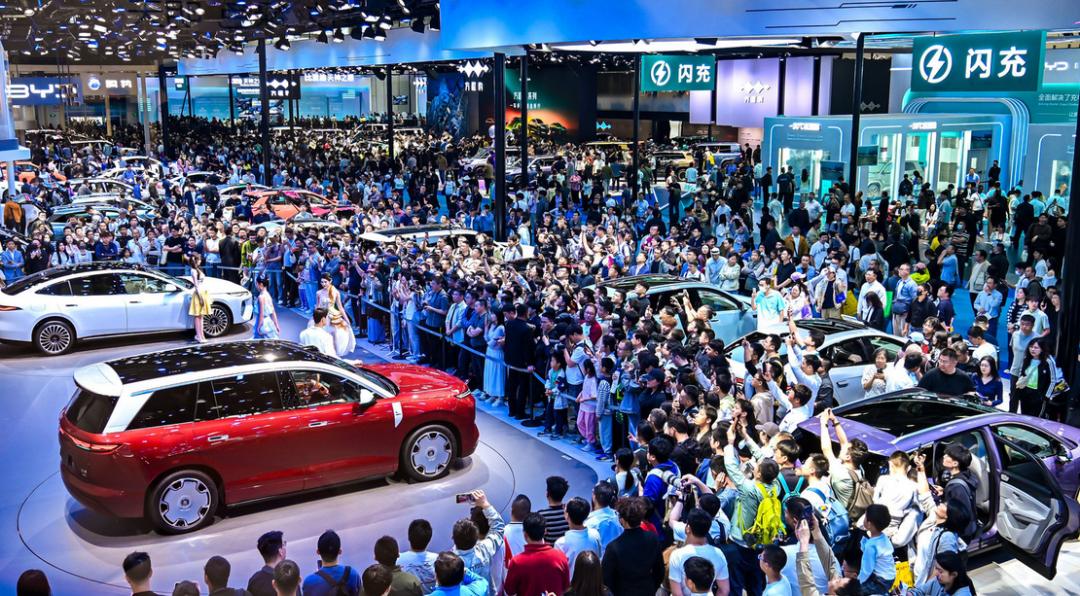
During the auto show, BYD's Ocean Network globally launched the "dual flagships of the 8 - series" equipped with flash charging technology - Seal 08 and Sea Lion 08, with a price range of 300,000 - 350,000 yuan, targeting the high - end new energy family market.
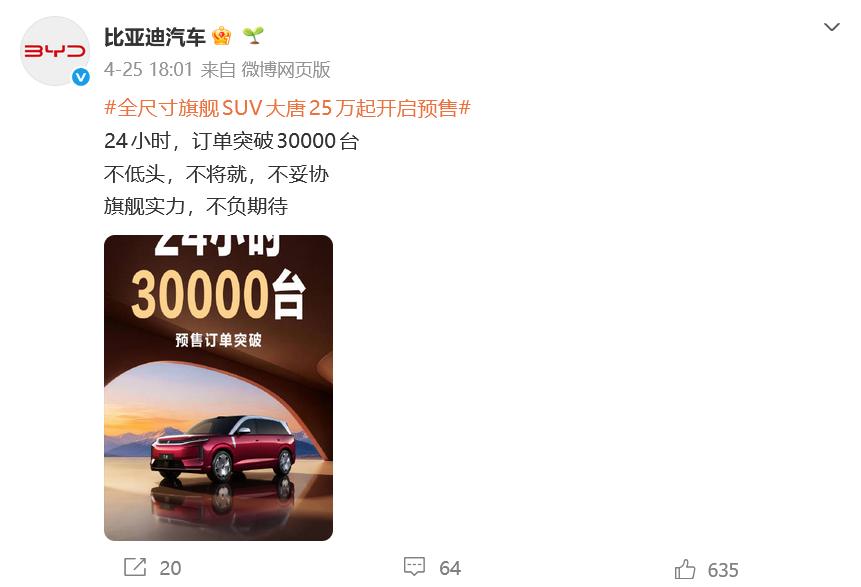
The large - scale flagship SUV Tang EV also started pre - sales, with a price range of 250,000 - 320,000 yuan.
According to BYD, within just 24 hours after the pre - sales of Tang EV started, the order volume exceeded 30,000 units, setting a new pre - sales record for BYD.
In addition, heavy - weight models such as the third - generation Yuan PLUS, Denza Z super - car, Fang Cheng Bao S, and Yangwang U9X also made their appearances.
This shows that in the next three quarters of 2026, at each segmented node, BYD has absolutely sufficient "ammunition" to seize market share and form a stable product cycle ladder.
And the most eye - catching and strategically significant growth curve for BYD this year is undoubtedly the soaring performance in the overseas market.
In the first quarter of 2026, BYD's overseas sales volume reached 319,800 vehicles, a year - on - year increase of 55%, and its proportion in the total sales volume has climbed to 46%.
This means that for every two cars BYD sells, one is destined for overseas.
At the same time, the overseas models generally have higher unit prices and gross profits than those in the domestic market.
Therefore, the explosion of overseas business not only contributes to scale growth but also becomes a key support for BYD's profit, which also explains the increase in the average price per vehicle this quarter.
