The 9X series takes the lead. SAIC Volkswagen is reinventing its products and reorganizing its organization.
Refine strict engineering discipline into the competitiveness of new energy vehicles.
After the pre - sale press conference of SAIC Volkswagen's 9X, General Manager Tao Hailong took out a universal characteristic curve chart.
This technical chart, which usually only appears in internal meetings of engineers, was used by him to explain to us the power coverage advantage of the EA211 engine when used as a range extender. At a power of 100kW, the engine speed only needs to be between 3500 and 4000 revolutions, while competitors' engines need 4500 or even 5500 revolutions.
"The higher the speed, the louder the noise," Tao Hailong told us. "This is the reason why many competitors have poor NVH performance. 'To obtain power, the engine (range extender) has to increase the speed and work strenuously.'"
It was unimaginable three years ago that a general manager of a joint - venture car company would spend a lot of time talking about the universal characteristic curve of the engine, the calibration differences between ABS and ESP, and the engineering logic of braking response time.
At that time, the new energy press conferences of joint - venture car companies were more like brand ceremonies, which were short, decent, and did not involve too many technical details. Because core technology decisions were all made at the overseas headquarters, the Chinese team had little to talk about.
But the Volkswagen 9X is different. The product definition of this car was completely completed in China. The battery comes from CATL, the intelligent driving system uses Momenta's solution, and the R7 world model will be launched for the first time in the future.
This six - seat range - extended SUV with a pre - sale price of 329,800 to 379,800 yuan is defined by SAIC Volkswagen as "the first product of the implementation of Joint - venture 2.0." A new car is just the most superficial change. To make this car competitive and sell well, SAIC Volkswagen is simultaneously transforming its product logic, engineering process, and sales system.
The difficulty of these three things increases in turn, and the last one has not been completed yet.
Explore the way with a flagship car
SAIC Volkswagen's decision to lead with a flagship model is a counter - intuitive one.
For a brand with low recognition in the new energy market, a more conservative approach would be to first launch an affordable volume - selling model to lower the threshold for consumers to try and build trust through sales.
Last year, the Dongfeng Nissan N7 and GAC Toyota Bozhi 3X, which were very popular, took this path. Among them, the starting price of the Bozhi 3X is 100,000 yuan, and it sold 80,000 units in 9 months after its launch, becoming the best - selling new energy model of joint - venture brands last year.
But SAIC Volkswagen did the opposite. The first Joint - venture 2.0 product is priced above 300,000 yuan, competing with the Li L8 and Wenjie M8.
Tao Hailong explained this choice. Launching the 9X first is based on brand strategy considerations, "using the flagship product to pave the way." He places the 9X in a high - level coordinate system. It is the most high - end model of Volkswagen after the Phaeton and Touareg in the fuel - vehicle era.
The mission of the 9X is not just to sell cars. Fu Qiang, the Executive Deputy General Manager of Volkswagen's sales and marketing, told us that he hopes the new car can "drive the rejuvenation of the Volkswagen brand in the new energy market and pull it upwards." But he also set an ambitious sales target, aiming to enter the top three in the same - level range - extended vehicle segment.
If the flagship product can gain a foothold, the subsequent mid - and low - priced models will have brand momentum; if the flagship fails, the following battles will be even more difficult. Volkswagen will launch 6 new energy products this year, and the 9X is just the first in the series.
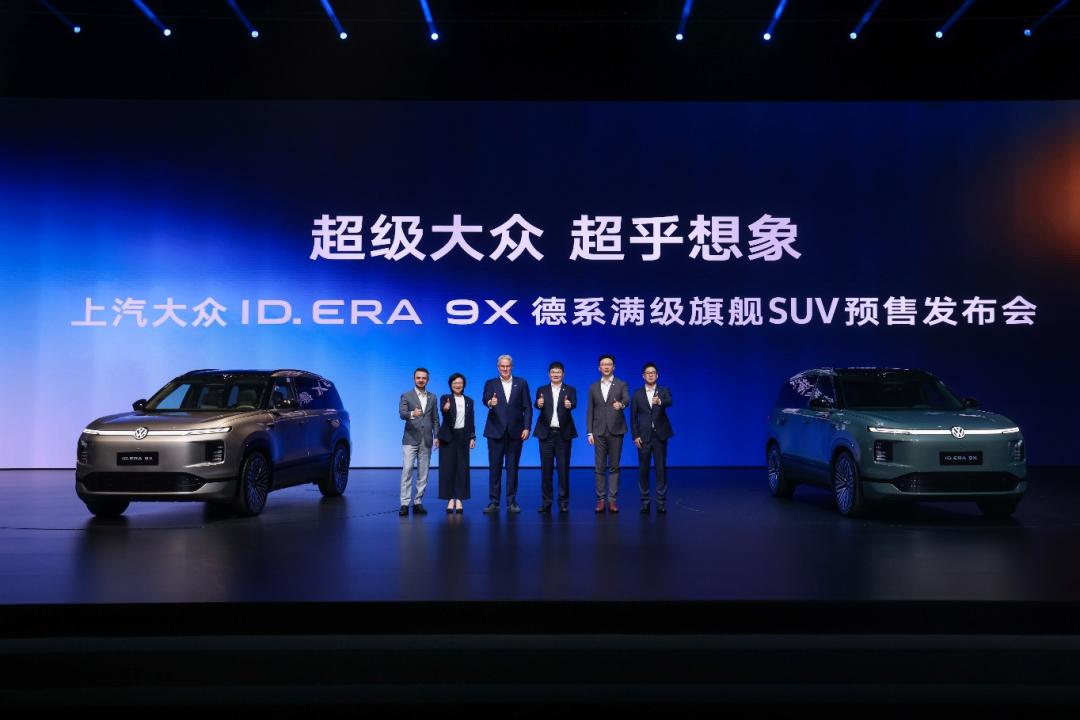
For SAIC Volkswagen, there has been no shortage of new energy products in the past few years, as evidenced by the ID. series launched as early as 2021. But SAIC Volkswagen lacks a set of product logic that can convince the market again. Volkswagen's dominant position in fuel vehicles is beyond doubt. In the new energy era, what changes first is not the power form, but the product definition right.
The value of German - made fuel vehicles is understood as the traditional mechanical capabilities of the engine, gearbox, and chassis, as well as the brand premium derived from them. In the new energy era, intelligence has become the most obvious consideration for users when making choices, which used to be a technical barrier for SAIC Volkswagen to make good new energy vehicles.
What's more troublesome is that besides the technical barrier, new - force car companies also have a product definition ability based on user needs. Li Auto and Wenjie have turned this into an obvious advantage, which Volkswagen was not good at in the past. In terms of efficiency, cost, and iteration speed, SAIC Volkswagen has been far left behind by new - force car companies.
Fu Qiang told us that consumers have always known that SAIC Volkswagen is making new energy vehicles, but they don't believe that SAIC Volkswagen can do it well.
Therefore, SAIC Volkswagen needs a product with sufficient presence to clearly explain this round of transformation within the company and the competitive strategy of SAIC Volkswagen's new - generation new energy vehicles.
The 9X undertakes several tasks, and the most important one is to capture users' minds. Fu Qiang told us that he hopes the new car can bring back the customers who were snatched away by new - force car companies.
Change the product competition logic
In the fuel - vehicle era, SAIC Volkswagen's development model was to adapt global models from the German headquarters to the local market.
Adding chrome trim strips, softening the suspension, and lengthening the body. The decision - making power regarding the core product form, technical route, and market positioning always remained in Germany. Even minor modifications to the models had to be reported to the headquarters one by one.
Today, more and more of the most sensitive and user - perceptible capabilities in the new energy vehicle competition come from China. Capabilities such as intelligent cockpits, assisted driving, supply - chain integration, and local product definition are all concentrated in China's industrial ecosystem.
Therefore, SAIC Volkswagen's first step was to break the past model, and the product definition right returned from Germany to China. It's not just about deciding what kind of cars to make, but the entire product development process needs to be re - structured. The Chinese team defines the products, the Chinese supply chain supports the intelligence, and the Chinese market determines its rhythm and presentation.
Doing these things well can get SAIC Volkswagen back to the game, but it's not enough to win. Because Tesla, NIO, Li Auto, XPeng, and Wenjie have already achieved this. Almost all the new energy players remaining in the market, such as Geely, BYD, Changan, and Voyah, can do it.
SAIC Volkswagen needs new selling points and a new way of product definition. The 9X is re - organized in this regard. While integrating China's cutting - edge intelligent capabilities, it compresses Volkswagen's inherent advantages into another set of capabilities.
More mature vehicle integration, better chassis tuning, and more conservative but more consistent engineering verification ultimately result in a lower long - term error probability. What SAIC Volkswagen really wants to sell is not another new intelligent concept, but a judgment that the same Chinese solution should be more competitive when integrated into Volkswagen's vehicle system.
But the question is, is this value scarce enough today to convince users to pay again?
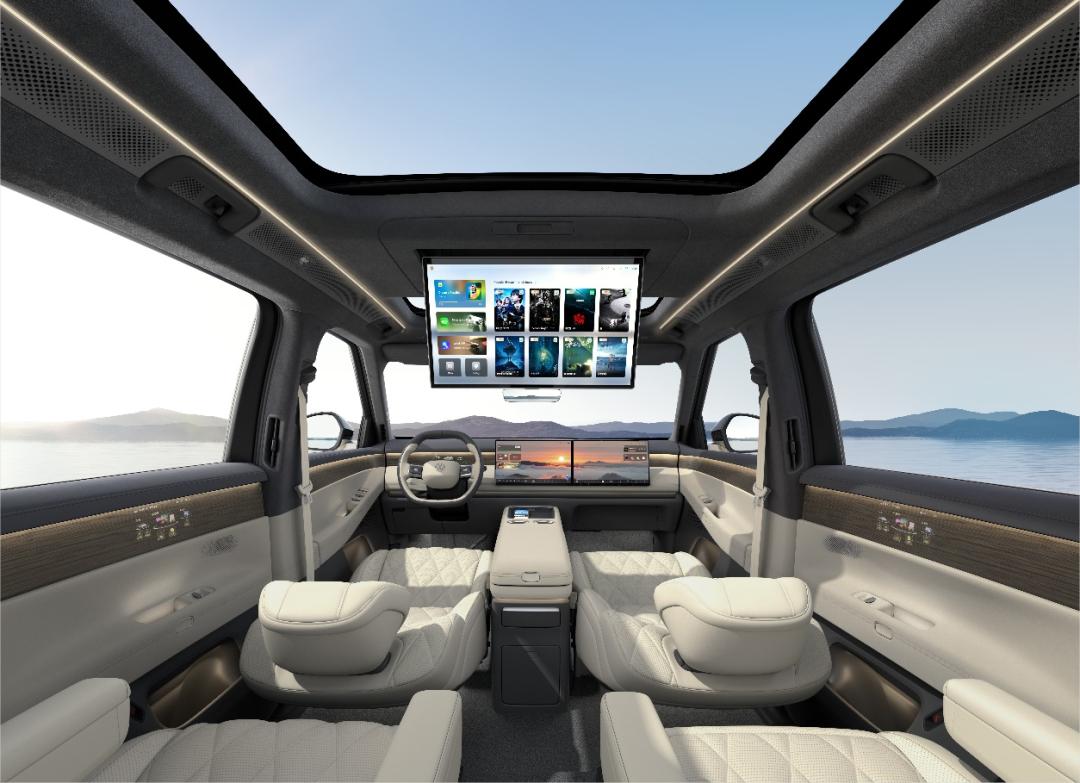
9X cockpit
Tao Hailong spent a lot of time explaining this. When talking about intelligent assisted driving, Tao Hailong didn't focus on the upper limit of the solution's capabilities, but on the "lower limit." He told us that the same Momenta intelligent driving solution may have completely different effects when installed in different cars. It needs to be re - calibrated and re - tested.
The difference lies not in the algorithm, but in vehicle integration. For example, when the assisted driving system brakes, whether the braking system can adapt, whether the steering system can give a consistent response, and whether the ABS and ESP are calibrated properly. These require a large amount of test data and experience, which determine whether the performance of an intelligent assisted driving system installed in a car is smooth or rough.
This relatively conservative development process may be regarded as inflexible and inefficient in the discourse system of new - force car companies. But in the context of traditional automotive engineering, it is the basic discipline of quality control.
SAIC Volkswagen is trying to turn this discipline itself into a differentiated strategy for new energy products.
There is a contradiction here. The differentiation that SAIC Volkswagen hopes to achieve is precisely the most difficult to be quickly perceived and quantified. They are slow - changing variables.
Due to the battery life limitation of new energy products, few car companies dare to offer lifetime warranties, but the 9X does. Li Jun, the Executive Director of Volkswagen's brand marketing, told us that the purpose of doing this is to transform the implicit quality advantage into an explicit and user - perceptible product competitiveness.
It is relatively easy to transform the product logic, which took two years. But to make consumers accept this logic, more things need to be changed than just a car.
The most difficult layer to change
The "Joint - venture 2.0" that Tao Hailong mentioned represents a new division of labor commonly adopted by joint - venture brands at present. The directions of R & D decentralization of Toyota, Nissan, and Volkswagen in recent years are basically similar. The differences only lie in who moves faster, who decentralizes more thoroughly, and whether they can really adhere to the standards.
But at the user level, word - of - mouth cannot be built only through long - term accumulation. Users' brand perception is not changed by a press conference, but is accumulated through every touchpoint from entering the store to test - driving, from purchasing to after - sales. Most of these touchpoints are in the hands of dealers.
SAIC Volkswagen has more than a thousand dealer stores across the country. This is its largest channel asset, but also its biggest transformation burden.
Tao Hailong told us that he publicly asked the management at a cadre meeting, "Are you brave enough to carry out the corresponding system reform?" The fact that a general manager needs to ask this question in public itself shows that there is quite a lot of resistance.
Fu Qiang divided the reform into three levels.
The first level is the change in the physical touchpoints of the channel. In the past, customers could only go to 4S stores to look at cars. Now SAIC Volkswagen is increasing touchpoints by building new satellite stores and about 160 pop - up stores in shopping malls.
As the first joint - venture car company to enter China, SAIC Volkswagen has a very solid channel network foundation, but the other side of the solid foundation is the heavy burden. The operating costs, personnel configuration, and thinking inertia of more than a thousand 4S stores cannot be offset by opening a few pop - up stores.
SAIC Volkswagen's marketing system has started to learn the IPMS process. This is a process popular in the Huawei system, where production and sales are bound at key nodes, and the density of marketing contact with users is increased.
The pre - sale of the 9X is a practical test of the reconstruction of the marketing process. On the day after the pre - sale started at the end of March, all test - drive vehicles were transported to the dealer stores. After the car was launched at the end of April, it was necessary to achieve immediate delivery upon launch.
This means that at the pre - sale and official launch nodes, production, logistics, and dealer inventory must all be in place. This kind of rhythm was impossible in the past for SAIC Volkswagen.
The second level is more difficult. The relationship between the manufacturer and the dealer needs to change. Fu Qiang told us that in the past, car companies handed the cars to dealers, dealers sold them to customers, customers communicated with dealers when they had problems, and only when the dealers couldn't solve the problems would they feedback to the manufacturer.
Now the thinking has completely changed. The communication channel between customers and car companies needs to be opened up, and all the rights and interests announced by the manufacturer are directly targeted at consumers. The authorization model of car companies to dealers has changed. It's not just about authorizing to sell cars, but about purchasing services from dealers.
The core of the change is to take back a part of the customer relationship from the dealers to the brand side. New - force car companies have been doing this since their birth. Under the direct - sales model, user data, service standards, and pricing power are all in the hands of the brand side.
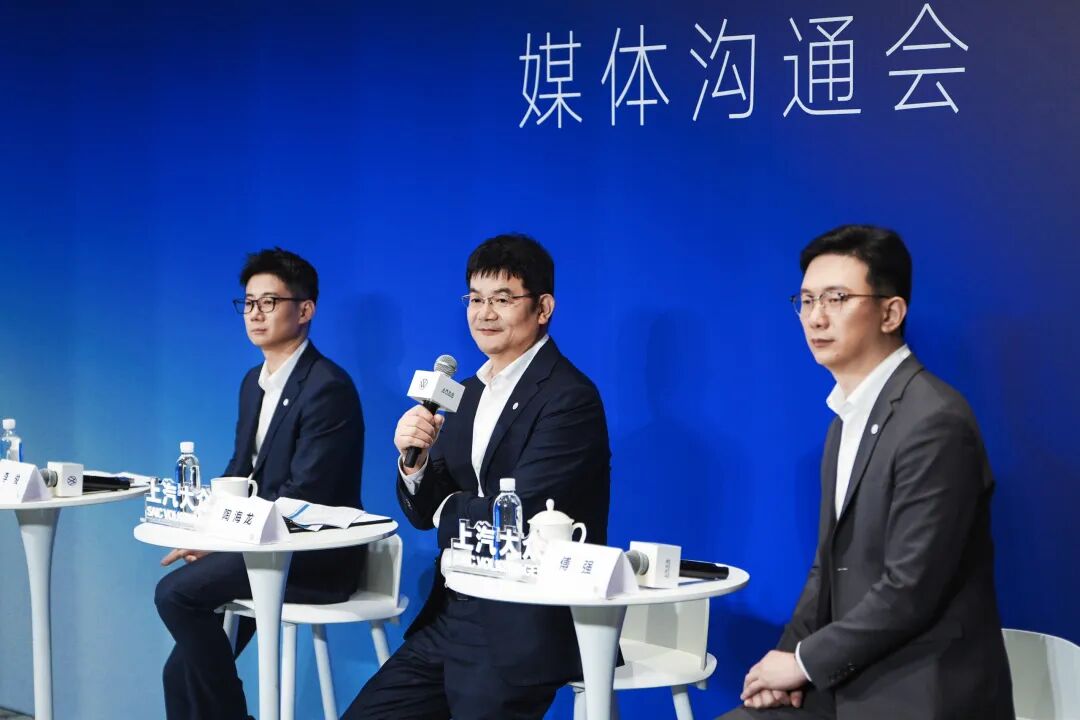
From left: Li Jun, Tao Hailong, Fu Qiang
But for a joint - venture car company with a forty - year history of cooperation with dealers, this change affects the interest structure.
Fu Qiang provided a buffer mechanism. SAIC Volkswagen stopped pressuring dealers to stock up a year ago, and the dealer inventory coefficient has returned to a healthy level of around 1.5, "many dealers are below 1.5."
In return, the focus of the assessment of dealers has changed. It has shifted from looking at sales volume in the past to looking at consumer satisfaction. "If a dealer provides good service but the sales volume is still not ideal, we will look for reasons from ourselves, such as whether the publicity is not in place or the product design has problems." Fu Qiang told us that the purpose of these measures is to let dealers shift their attention from inventory pressure to service quality.
Whether it can really be changed depends on determination and methods, but to maintain it, it tests the standards.
This year, SAIC Volkswagen sent more than 200 supervisors to 4S stores to clarify all touchpoints with customers and establish process standards. From product introduction to test - drive service, and finally to the sense of ceremony in the car - delivery process, etc. The entire life cycle of all touchpoints with customers needs to be standardized.
The ratio of 200 supervisors to more than a thousand stores itself shows the scale of the problem. Many SAIC Volkswagen dealers are a bit older and may have difficulty memorizing product features, and there are many complaints on social media.
Even though there is a lot of resistance, it has to be done. When customers from new - force car companies return to SAIC Volkswagen stores, they should not encounter the old Volkswagen that only talks about German - made quality, but a new Volkswagen that can clearly explain new technologies and provide good new experiences.
This is also the most difficult layer to implement in Joint - venture 2.0. Products can be iterated in two years, but organizations cannot. Users will not immediately believe that Volkswagen has learned to make a Chinese - style new energy vehicle just because of a universal characteristic curve chart at a press conference.
For SAIC Volkswagen, what the 9X really needs to improve is the entire set of capabilities from product definition to the sales system. As long as any link still remains in the old era, Joint - venture 2.0 will still