The "godfather" of HSG in the United States is back.
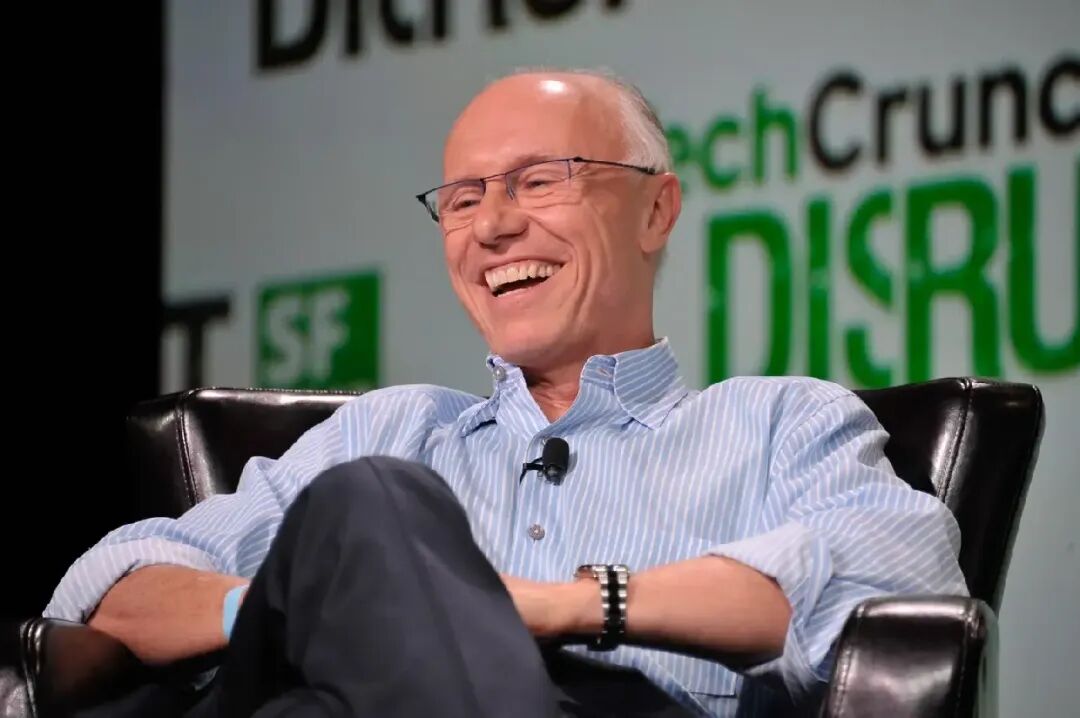
Doug Leone of Sequoia Capital. Image source: GETTY
Three years after officially stepping down, this investor who made it onto the Forbes list of the world's top venture capitalists has returned to a top Silicon Valley venture capital firm, taking on the role of partner and overseeing investments.
In 2022, Doug Leone announced his departure from the position of senior executive partner at the legendary venture capital firm Sequoia Capital in the United States, marking the end of an era. Since the founder, Don Valentine, stepped back from the front - line in 1996, this billionaire venture capital titan has joined hands with Mike Moritz to lead Sequoia.
Sequoia Capital announced on March 31st that after four years, Leone will return to the firm, taking on the newly established position of chairman and re - engaging in investment transactions.
Before Leone's return, Sequoia went through a turbulent period. Back then, with one year to go before reaching the mandatory retirement age of 65 at the firm, he handed over the management to his successor, Roelof Botha. However, Botha faced public pressure as Sequoia's China business was questioned by the US political circle. In 2023, Botha led the separation of Sequoia's China business from its India business, which invests in Southeast Asia.
In November last year, Botha suddenly resigned from the position of senior executive partner. Alfred Lin and Pat Grady jointly took on the helm.
Grady wrote in an announcement on social platform X: "Doug handed over the baton a few years ago, but he never really left. He is often in the office, participates in the board work of many companies, and offers advice to the new - generation management. We realized that Doug is still full of energy and resourceful, so we invited him to return and resume his role as a front - line investor at Sequoia."
Leone was born in Italy. Before stepping down, he invested in companies such as ServiceNow, NuBank, and the Israeli cybersecurity firm Wiz, and led Sequoia's global expansion. After stepping down, he didn't fade away and continued to serve on the boards of many invested companies. Recently, he achieved the most significant result in his career: Wiz was acquired by Google for $32 billion, setting a huge exit record in Israel.
Leone is also an Italian immigrant. He was nicknamed "Pasta" in high school. He initially worked in jobs like cleaning toilets and repairing boats, but eventually took the helm of one of the most prestigious venture capital firms on Sand Hill Road. Although his net worth is estimated to be as high as $1.2 billion, he is still deeply influenced by his early tough experiences, which also have a profound impact on his investment philosophy.
"We're looking for people from humble backgrounds who are hungry for success," he said in a 2014 interview with Forbes. Leone also emphasized that Sequoia's office space reflects the company's philosophy. Partners don't have luxurious offices (nor are there any fancy artworks). Instead, all investors share an open - plan office space and use standing desks. Leone attaches great importance to language. He never uses the word "deal" to refer to invested companies.
The following is an excerpt from a Forbes interview with Leone ten years ago:
Forbes: How is the venture capital industry developing nowadays?
The venture capital industry is both dynamic and highly competitive. When we called Fred Luddy, the then - CEO of ServiceNow, almost all venture capital firms had already called him. So we had to work twice as hard to convince him that we were different and could help him build a successful business. Four years later, ServiceNow's market value reached $4.5 billion. Everyone in the venture capital industry says the same thing, but only a few companies can truly deliver on their promises.
Forbes: How do you promote your ideas to entrepreneurs?
This is not strictly a sales pitch, but a deep understanding of business operations. You meet with the CEO or founder, discuss topics such as sales, engineering, and product management, and offer some ideas or suggestions. The founder will quickly realize that you can truly help them at the operational and strategic levels. Through these conversations, you can build trust. This is not just about telling the founder how great he is or how wonderful the company is, but having an honest conversation to build trust. In this way, he begins to truly believe that you can help him. That's why he chooses you as a long - term investor and business partner.
Forbes: Last year, Michael Moritz announced that he would step down from the management position at Sequoia Capital. What changes has this brought here?
Actually, not much has changed. We've always been committed to building Sequoia Capital with a long - term perspective, which is also a quality we value highly when choosing partners. When Sequoia Capital was founded 40 years ago, it wasn't called Valentine Ventures. It didn't even have a name at the beginning. We've done our best to ensure that there is no single point of failure in the company. In the past 15 or 16 years, Michael and I have been the two managing partners of the company.
So, when Michael decided to reduce his investment due to health reasons and spend more time on startups, we already had a backup plan in place. Therefore, not much has changed. He is very actively involved in the company's affairs. The only things he doesn't do are all the paperwork and the management and cooperation with India, China, and Israel. Basically, he doesn't handle much administrative work. He leaves all that to me.
Forbes: What's your way of working with entrepreneurs?
We take the building of each company very seriously. We take our cooperation with founders and management teams seriously. We don't adopt a "spray - and - pray" strategy, investing in thirty or forty companies, making many promises that we can't keep, and then only investing time and energy in four or five truly promising companies. Therefore, we sincerely invest in each company we cooperate with, whether it's a seed - round investment or many other projects. We invest a great deal of time.
For a company like Meraki, we made a Series A investment. We went through four generations of business plan revisions and had weekly meetings until we finally finalized a workable business plan. Just a few months ago, we sold Meraki to Cisco for $1.2 billion together with the founder and CEO. The reason we call ourselves "business partners" rather than "investors" is simple: we'll accompany them throughout the process and grow together.
Forbes: How do you view the recent heavy use of marketing or public relations means by venture capital firms?
To be honest, I'm very embarrassed about this. Because our business purpose is to help founders, CEOs, etc. build great companies, not to appear in the media. I don't understand why these companies do this. Maybe it's for vanity, or maybe they think it will bring more investment opportunities. But founders and management teams are the ones who have really put in 95% of the effort, and they should be the focus. Moreover, if founders and companies become public figures, they are more likely to get customers. So, I really can't understand why many venture capital firms issue press releases within seconds as soon as they achieve results. As I said, I'm very embarrassed about this. Sequoia Capital will never follow this practice.
Forbes: You used to prefer working behind the scenes. Has the situation changed now?
We've been very low - key for a long time. Until we learned that some people who often appear in the media were re - positioning us. Many CEOs came to us and hoped that we would have more of a voice. In some cases, they even said that they were tired of defending us, so they hoped that we would speak up more. Therefore, the reason we can speak up more now is just to let people know what we do and the company's philosophy. But this is not to show off or take credit in front of CEOs and founders.
Forbes: What aspects of the venture capital industry do you think still need improvement?
The venture capital technology industry has evolved, and we've realized that some areas need to be automated or streamlined. For example, we can adopt a more structured approach to recruit and help the companies we invest in. As for the investment process - that is, having some people with different backgrounds make investment decisions and then applying the resources of these outstanding people to the company - I don't think this part needs to change much.
Forbes: Has the service you provide to enterprises changed?
I think we were one of the first companies to set up an in - house marketing department and really help client companies with recruitment. Our approach is "train the trainers". We're happy to help companies recruit the first three, four, or five engineers, but we firmly believe that recruitment is a core competency that companies should master. If we help a company recruit the first thirty or forty engineers, they'll never learn how to recruit. Google has excellent recruitment capabilities, which are worth learning from. Therefore, we're committed to helping companies continuously recruit the first three or four engineers and then showing the management team how to recruit the next ten engineers.
Forbes: What don't people really understand about Sequoia?
I think people don't understand the extent of our commitment to the success of each company. Our structure is designed for the long - term. We strive to recruit partners and young investors who share the same philosophy as the founders. We like people who are talented, have achieved a lot, and have a strong desire to win (not just a craving). Many of them come from humble backgrounds, and many are immigrants. Many of our founders are immigrants, such as Jerry Yang of Yahoo!, Nir Zuk of Palo Alto Networks, and Keerti Melkote of Aruba Networks.
Moreover, we're not momentum investors. We'll invest regardless of whether the market is good or bad. Some of our most successful investments, such as LinkedIn, Airbnb, and Cisco, were born during economic downturns when many of our peers had to lock their checkbooks and wallets in drawers.
Forbes: How do you view your company?
We take our work very, very seriously. That's why we're extremely careful with our words. Words like "coach", which imply that we're superior to the founders - we'll never use them. Words like "deal" and "investment" are also completely off - limits. We believe that we're business partners, aiming to help founders and management teams build great companies that can develop in the long - term. This is our philosophy and our code of conduct, and we'll even make sure to use the right words. I often tell entrepreneurs to listen carefully to what others say. Pay close attention to every word they use. This will give you a deeper understanding of the potential partners you're about to work with.
Forbes: How do you arrange the office space?
The design concept of our office space stems from our corporate culture and values. We're a very flat - structured company, and we call everyone "partner". If we hire a young investor, and I'm an older employee in the company, I'll call him/her "partner". This concept is also reflected in our open - plan office space. We divide the seats by theme, such as mobile, internet, and infrastructure themes. This open - plan office environment and standing desks have greatly promoted the exchange and collision of ideas, which has really surprised us. The reason is simple: we believe that standing while working can promote blood circulation and make our thinking more agile. We love open spaces and the sharing of ideas. This actually stems from our flat organizational structure.
Forbes: You must expect all partners of a top - tier venture capital firm to have their own offices, right?
Sequoia Capital doesn't have fancy artworks. We only have some souvenirs or posters of the companies we've invested in. All we want is to remind ourselves of our past successes and failures - because we want to be honest and learn from the past eight or nine hundred investments.
Forbes: In such a highly competitive industry, how can a company stay ahead?
Sequoia has always been looking for people like me, people from humble backgrounds. As I said, some of us are immigrants, and maybe we've experienced some changes in our early years, and our life trajectories have been impacted. So we have an incredible desire to get ahead and achieve success. This motivation will accompany me throughout my life. Many, if not all, of the people we hire seem to have the same motivation - that's why I get up at 4:30 a.m. every morning to exercise. I just want to make sure I stay in good shape.
This article is translated from: https://www.forbes.com/sites/iainmartin/2026/03/31/billionaire-vc-doug-leone-returns-to-sequoia-in-chairman-role/
Original title: "Billionaire VC Doug Leone Returns to Sequoia Capital in the US, Resumes Investment Business as Chairman"
This article is from the WeChat official account "Forbes" (ID: forbes_china), author: Iain Martin; translation: Lemin, published by 36Kr with authorization.