The third battle between TiMi and Photon
The auto - battler game market, which has remained stable for nearly seven years, is finally about to undergo changes.
Since the end of December last year, "Honor of Kings: Chess of All Realms" has been conducting a more than one - month "Winter Test", which is coming to an end. The game is now preparing for subsequent tests and its official launch.

This casual competitive game, backed by the "Honor of Kings" IP, has been regarded as a strong challenger in the auto - battler market since its first announcement. The reason why the market is optimistic about "Honor of Kings: Chess of All Realms" is simple. Its product positioning and development logic are very similar to the successful paths of the almost only leading auto - battler games in the market, such as "League of Legends: Teamfight Tactics" and "Teamfight Tactics: Arena". That is, leveraging the IP and assets of a national - level MOBA game with a large DAU to create a casual competitive auto - battler game. This not only provides a casual gaming option for existing MOBA players but also caters to competitive players who have left the game due to factors like age.
Of course, this doesn't mean that "Honor of Kings: Chess of All Realms" is guaranteed to succeed. "Honor of Kings" once launched an in - built auto - battler mode called "Honor of Kings: Simulation Battles" when the auto - battler genre was booming, but it didn't achieve remarkable results.
It's not just "Honor of Kings". Popular big - IP products like NetEase's "Onmyoji" and "The Warlord: Rebellion" mobile games have also incorporated in - built auto - battler gameplay. This was a common choice among game manufacturers during the first round of auto - battler competition starting in 2019, as both "Idle Battles" and "Teamfight Tactics" achieved success in this way.
However, in terms of the results, most attempts at in - built gameplay could only serve some existing in - game users and were difficult to attract external users to download the entire game just because of the auto - battler gameplay in a particular product. It shows that the IP is not the only factor determining the success of an auto - battler game.
After the precipitation and experimentation of the first - generation products, major leading game manufacturers are once again deploying in the auto - battler market. They are launching a second - round assault on the auto - battler market by combining their mature IPs, independent product forms, and differentiated gameplay. Most of the new auto - battler games, such as Tencent Games' "Honor of Kings: Chess of All Realms", NetEase Games' "Feng Hua: Battle of Champions" and "Yao Yao Chess", miHoYo's "Honkai: Fetter Sprites", and Giant Network's "The Full Moon: Master Duel", follow this approach.
Facing the new competitive landscape in the auto - battler market, "Honor of Kings: Chess of All Realms" still needs to answer two core questions. Firstly, why should existing players abandon "Teamfight Tactics" and "Teamfight Tactics: Arena", which they are more familiar with and have invested a considerable amount of time and effort in, to play "Honor of Kings: Chess of All Realms"? Secondly, what kind of product form can effectively convert the large general user base of "Honor of Kings" into players of "Honor of Kings: Chess of All Realms"?
After this test, "Honor of Kings: Chess of All Realms" seems to have found a relatively clear answer.
Redefining the Fun of Auto - Battlers
After in - depth experience, we believe that the core of the answer provided by "Honor of Kings: Chess of All Realms" lies in a comprehensive reconstruction of the fun of auto - battlers through a complete "addition and subtraction" formula.
For a long time, any new auto - battler game has always faced the problem of a "relatively high understanding threshold". This threshold is not caused by the cross - over of common game categories but is the result of the large equipment synthesis table, the complex synergy system, and the calculation of operating interest inherent in traditional auto - battlers.
For "Teamfight Tactics" and "Teamfight Tactics: Arena", they successfully overcame these problems through players' learning desire in the early stage, the enthusiasm for the new gameplay genre, and the appeal of the "League of Legends" IP, and built a relatively deep moat.
However, for new late - comer auto - battler games, players have to re - learn relevant content to get started. Even though the official has been constantly reducing the burden by providing one - click lineup suggestions and synthesis tables, the experience of repeated learning still makes players lack the motivation to switch.
Therefore, Timi Studio's reason for players to choose "Chess of All Realms" is to lower the entry threshold, deepen the mid - to - long - term strategic experience, and create a "easy to start, hard to master" flow experience.
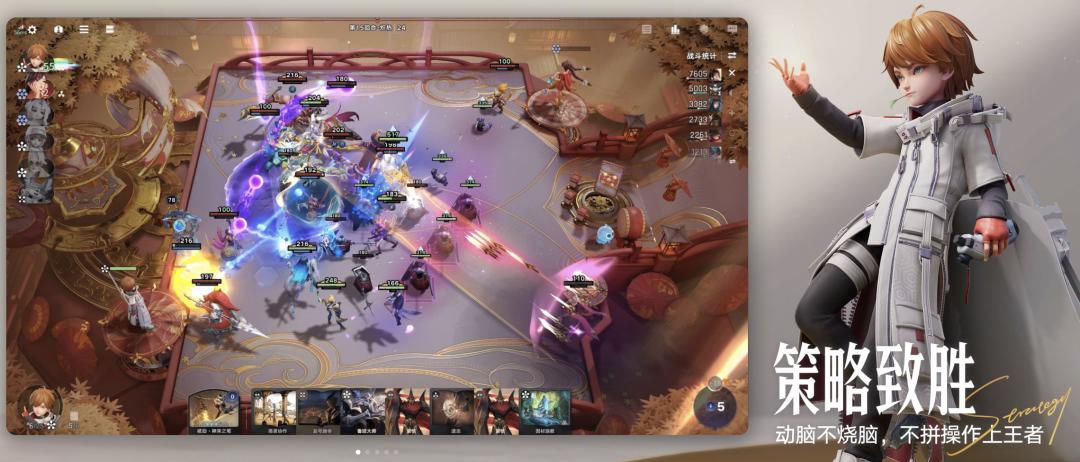
"Honor of Kings: Chess of All Realms" doesn't choose to make minor improvements to traditional gameplay but directly changes the game track and removes the entry barriers. Starting from the underlying gameplay, the game has comprehensively "reduced the burden" in core aspects such as heroes, synergies, economy, and equipment. It integrates and innovates the gameplay of "Hearthstone: Battlegrounds" and existing auto - battlers. This not only successfully changes the interaction logic of traditional auto - battler games but also readjusts the core fun of the game.
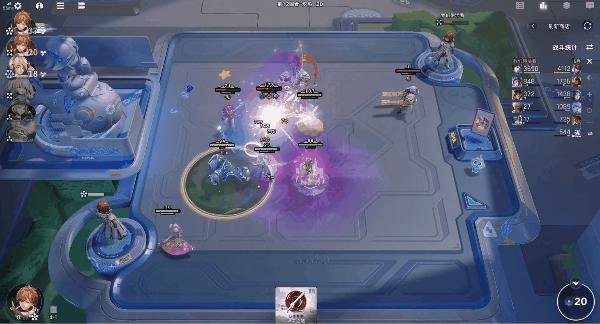
For example, in terms of the core hero pieces, "Honor of Kings: Chess of All Realms" directly abandons the traditional "three - in - one" star - up rule and adopts a linear level - up system. Every time a player plays a card of the same hero, the hero's level and combat power will be directly increased. Players can quickly boost combat power by continuously playing cards. This experience is similar to the pleasure of seeing the stats (attack/health) of minions in "Hearthstone: Battlegrounds" skyrocket in the late game. However, the game also retains the fun of star - up. Players only need four cards of the same hero to awaken the hero and unlock stronger keyword abilities.
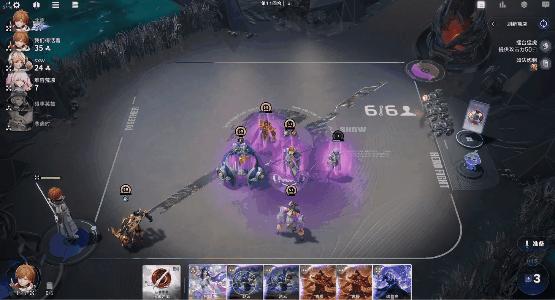
In addition to the regular ultimate skills, heroes in "Chess of All Realms" also have keyword abilities similar to those in "Hearthstone: Battlegrounds", such as the "On - Play" effect triggered when a card is played, the "Prepare" effect triggered at the beginning of each round, and the "Engage" effect triggered after the start of the battle. This is also the biggest innovation of "Honor of Kings: Chess of All Realms" in the synergy system. The game doesn't get entangled in learning the complex mixed synergies of traditional auto - battlers like "4XX + 3XX+ 2XX", nor does it completely abandon the system and adopt the arbitrary mixed - race system of "Hearthstone: Battlegrounds". Instead, it focuses on a straightforward "keyword interaction" system within a single camp.
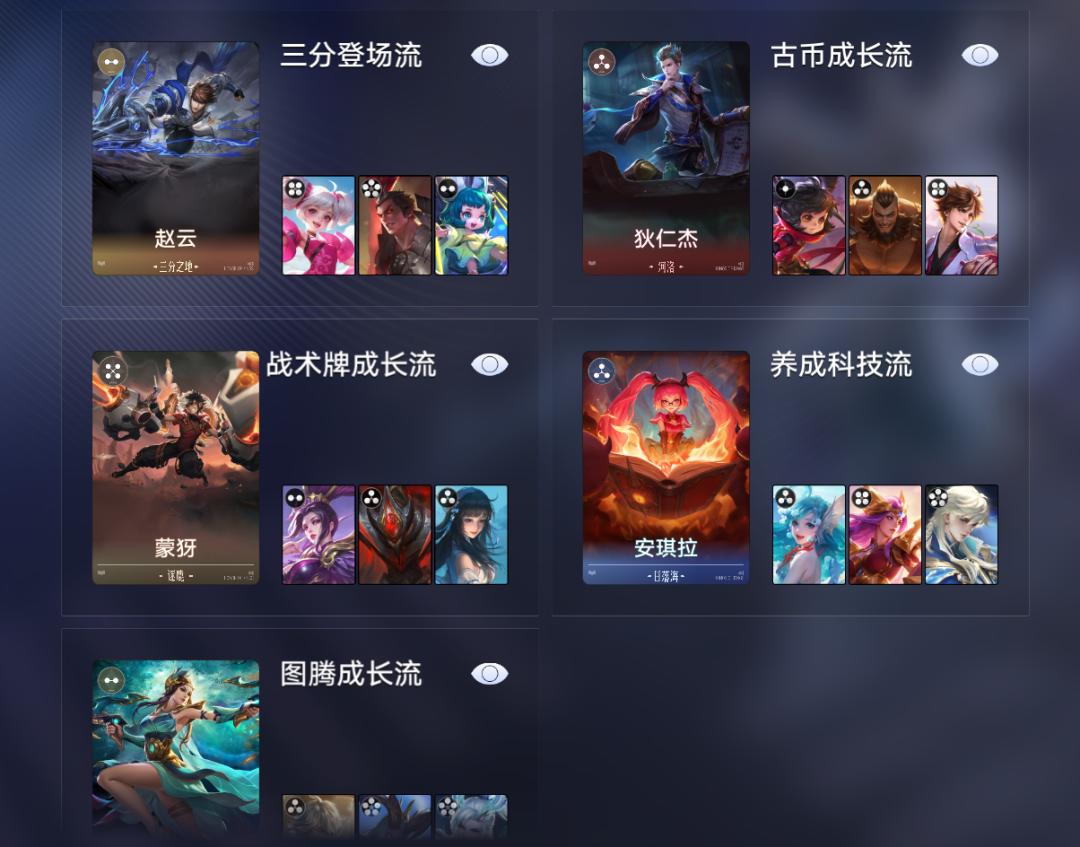
Most of the system - recommended lineups are mainly from the same camp.
Take the "Three Kingdoms" camp that the author often uses as an example. After awakening, Diaochan's "On - Play" effect can increase the level of heroes in the same camp by 2. Zhao Yun can increase the level of himself and two random heroes by 2. Cao Cao's "Prepare" effect can randomly trigger the "On - Play" effects of two heroes in the same camp, and Xiao Qiao can increase the level of all heroes by 1 whenever a hero triggers an "On - Play" effect. Just Cao Cao can bring a total level increase of more than 25 to the team every round. Moreover, there are also many powerful effect cards for a single camp in the game.
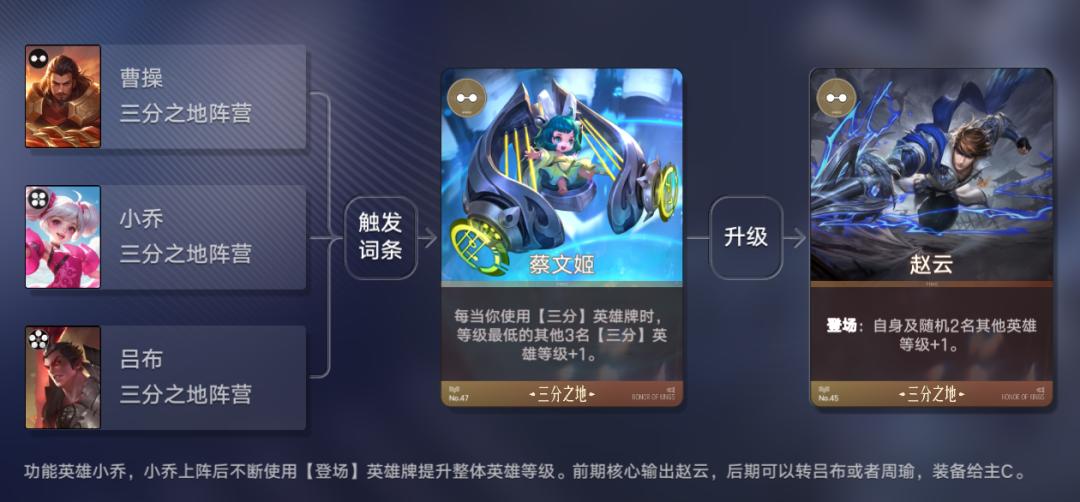
The official recommends the core combination of the "Three Kingdoms On - Play" lineup.
This gameplay design may seem "simple and mindless" at first. Players only need to pick cards from the same synergy and keep playing them on the field. However, as players gain more experience, they will find that the order of playing cards also matters. Different orders will directly affect the upgrade range of the cards. Players need to understand the whole system to gradually maximize the benefits of each choice.
In other words, "Honor of Kings: Chess of All Realms" actually wants to build a "step - by - step" learning curve. It should allow most users to play smoothly with only a basic understanding of the gameplay design and allow most users to stay at this level for a long time. At the same time, it should set certain advanced skills for various systems to give core users enough growth feedback.
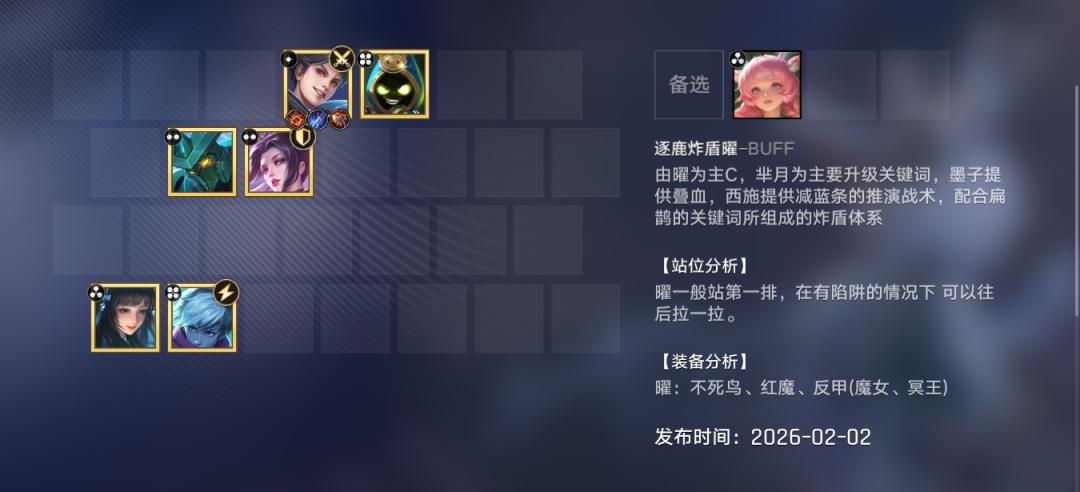
Apart from the official - recommended lineups, there are actually many lineups to discover in each camp.
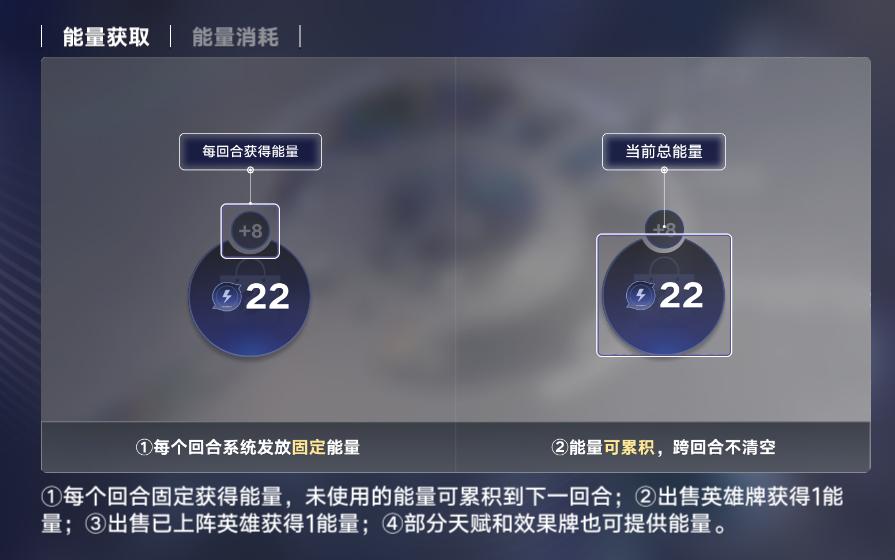
A similar design is also reflected in the economic system. The game abandons the conventional win - streak and loss - streak rewards and interest settlement and adopts a fixed energy allocation system similar to that in "Hearthstone: Battlegrounds" (6 energy points in the first 3 rounds, 8 points in rounds 4 - 7, 12 points in rounds 8 - 11, and 15 points after round 12), as well as a unified price of 3 coins for all - level heroes, a unified selling price, and different prices for effect cards according to their effects.
The difference is that the energy in "Honor of Kings: Chess of All Realms" is not reset every round but can be retained. This actually adds an extra strategic dimension of "economic management" in the process of players' skill improvement. For example, for some cards without multi - round stacking effects, players should "selectively abandon" them after awakening the cards.
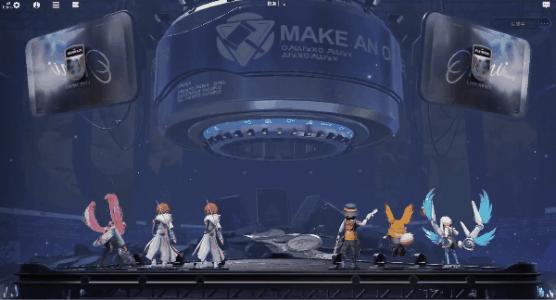
Meanwhile, in the "auction" phase (comparable to the draft in "Teamfight Tactics: Arena") where all players participate, the leading player can use the energy advantage saved in advance to grab the core cards. The energy consumed in the auction will be redistributed to all players according to their HP rankings. This allows the trailing players to disrupt the auction and drive up the prices, ensuring the fairness of the game while also leaving a glimmer of hope for a comeback.
In an economic system where the purchase price is higher than the selling price, the cost of changing lineups midway is relatively high. This means that the game encourages players to choose a lineup at the beginning of the game and continuously explore the depth of the lineup within a single game rather than the breadth. It also helps players avoid the problem of having to memorize multiple lineups according to the "dealer's mood" in the early stage of getting started.
Complementary to this are the equipment system and the chessmaster design. "Honor of Kings: Chess of All Realms" cancels the equipment synthesis formula. The basic equipment players obtain can be directly "forged" into four types of finished equipment. For example, the "Storm Sword" can be transformed into the "Infinity Edge" that increases critical strike chance, the "Windseeker" that increases attack speed, or the "Pure Heaven" that increases spell power. In addition, these equipment can be freely moved between pieces without the need for specific disassembly items.
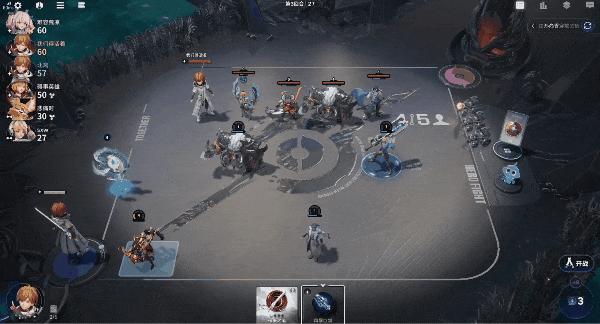
The chessmasters (little heroes) in the game also have their own skills. For example, Bai Ge can obtain additional cards through hero synthesis, Yao can summon a tank, Xiang Xiang can attack enemies at the start of the game, and Chang Xiao'e can randomly increase the level of heroes. These skills can be continuously upgraded during the game and often work better when paired with specific lineups. This design, where a single lineup is extremely powerful, is to encourage players to choose a lineup at the beginning of the game, reduce the amount of thinking required during the game, and allow players to directly experience the joy of lineup building.
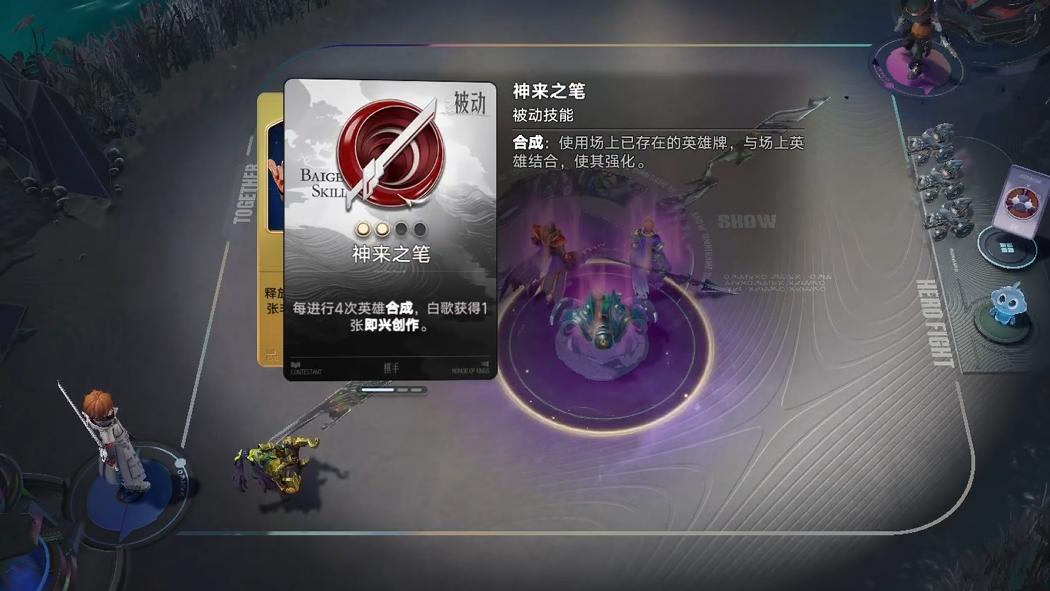
To further reduce the thinking burden on players in the early experience, the game locks the maximum level of chessmasters at level 6 (unlocking talents at each level) and the maximum population at 7 by default. These restrictions make the game more focused and reduce a lot of forced operations and choices. However, to some extent, it also sacrifices a bit of strategic depth.
