Uncovering the Capital Backers Behind the Largest Financing of the "Six AI Tigers"
A Large-Scale AI Model Financing Exceeding 5 Billion Yuan
On January 26, 2026, a financing deal worth over 5 billion yuan refreshed the record for the single-round financing amount of large model startups in the past 12 months. Not long ago, on the last day of 2025, the large model startup Dark Side of the Moon officially announced a new round of financing of 500 million US dollars.
The company that set this record is Step Star, one of the few large model startups in the market.
According to "Intelligent Emergence", the over 5 billion yuan Series B+ financing it recently completed involved institutional investors such as Shanghai Guotou Leading Fund, China Life Equity, Pudong Venture Capital, Xuhui Capital, Wuxi Liangxi Fund, Xiamen ITG, and Huaqin Technology, as well as old shareholders like Tencent, Qiming Venture Partners, and Morningside Venture Capital, who further participated in the investment.
"The large number and strong lineup of shareholders are quite rare," an insider commented. He told "Intelligent Emergence" that it only took half a year from the start of the Series B+ financing process to its completion.
Following the Hong Kong IPOs of Zhipu and MiniMax and the financing announcement of Dark Side of the Moon, Step Star continued the capital myth in the large model track at the beginning of the year.
This company, known for its low - key and mysterious style, began to fully show its edge. Besides the high - profile financing amount, another important move of Step Star was to officially announce Yin Qi as its leader.
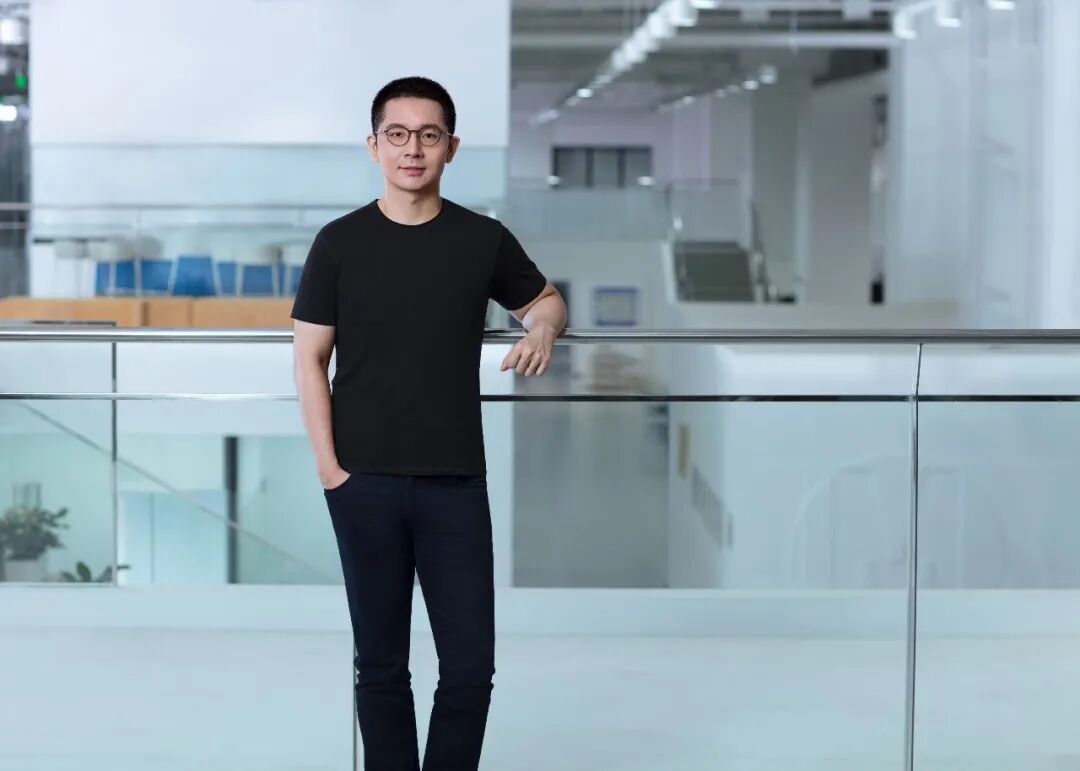
Yin Qi, Chairman of Qianli Technology & Step Star
Previously, Yin Qi, the chairman of Qianli Technology, appeared in Step Star's circle as a strategic partner in the automotive field. Now, he steps forward as the "Chairman of Step Star", and the significance is self - evident.
Step Star has a more well - known spokesperson in the technology, capital, and industrial chain circles. Yin Qi's full control of Step Star's direction also means that the technical system, operational experience, and business resources he accumulated at Megvii and Qianli will serve as ammunition for Step Star in the final battle of large models.
With the listings of Zhipu and MiniMax, there was once a view in the market that the primary market could no longer support the financing of large model startups, and listing would become the dividing line between success and failure.
However, it is obvious that the successive large - scale financings of Dark Side of the Moon and Step Star have sent positive signals to the primary market and startups: the primary market still has the ability to support the development of large models; the development of foundation models continues, and investors are still willing to bet on them.
Meanwhile, the aggressive entry of ByteDance, Alibaba, and Tencent, and the undetermined new model of DeepSeek have also made the investment criteria of the primary market for large models more stringent.
An industry insider told "Intelligent Emergence" that the primary market's main considerations for large model startups are whether an independent large model has room for survival, whether the commercialization logic is unique, and whether the quality of commercialization is competitive.
At this time, Step Star's new financing worth over 5 billion yuan is particularly valuable.
To understand this round of financing, we can look at the two aspects that the primary market values most: technology and commercialization.
First, let's look at technology. Few people realize that Step Star is the only company among the Six Tigers that truly focuses on multi - modality.
Then, in terms of business, the uniqueness of Step Star lies in its entry into the terminals of the physical world.
An executive of Step Star described to "Intelligent Emergence" that while others want to be "China's OpenAI" or "China's Anthropic", Step Star is more like "China's xAI + Tesla".
The unique ecological niche in the large model track has also created a stable capital structure behind Step Star: the diversification and balance of US dollars, state - owned capital, and industrial capital.
Among the Six Tigers of large models, Step Star emerged the latest and kept a low profile. Interestingly, Step Star, which is collectively bet on by the three types of capital, has always been a company with a non - consensus spirit in the large model track.
Step Star Made the "Non - Consensus" Choice in the Consensus
Step Star, founded in April 2023, didn't really appear in the industry until nearly a year later.
In the recollection of an insider, Step Star emerged "late", "so late that the other large model startups had almost attracted all the attention of the primary market."
At that time, the hottest target in the market was "Beyond Light Years" founded by Wang Huiwen, who returned to the arena. The co - founder of Meituan's comeback instantly attracted more than 10 first - tier institutions and individual investors. As a result, the large model startups that came after Beyond Light Years didn't have a very smooth start because Beyond Light Years absorbed a large amount of funds from the primary market.
This also led to the fact that Step Star's first - round financing almost came from the "friend circles" of several co - founders: Sequoia Capital China, Qiming Venture Partners, and IDG.
However, in the eyes of many Step Star employees, being "late" was worth it. Jiang Daxin, the CEO of Step Star, once mentioned in an interview with "Intelligent Emergence" that Step Star's "latency" was due to thorough preparation:
"We wanted to accumulate energy to build a large model with trillions of parameters." This energy included computing power, algorithms, data, and the system that was not yet in the spotlight at that time. At that time, Step Star found Zhu Yibo, who had experience in operating clusters of tens of thousands of graphics processing units (GPUs) from ByteDance, to be responsible for the system construction of Step Star.
Meanwhile, a clear path to Artificial General Intelligence (AGI) was formed in the minds of the team: single - modality - multi - modality - unified multi - modal understanding and generation - world model - AGI (Artificial General Intelligence). Later, no matter how the industry landscape changed, this path, as firm as a tattoo, remained unchanged.
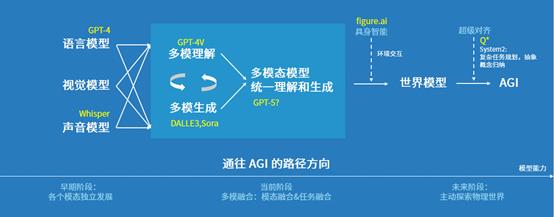
"At that time, the team basically filled up their energy reserves," an early member said. "The market will judge the teams most capable of building large models." Even at a less favorable financing time point, Step Star's debut made it the only company among the Six Tigers to become a unicorn through its first - round financing.
Facts have proved that thorough preparation enabled Step Star to train a large model with hundreds of billions of parameters, Step - 1, in less than two months, and it was successful on the first try.
This also gave Step Star an optimistic start for its second - round financing. It can be seen that the lineup of this round of financing, whether in terms of the number of participants or the diversity of funds, far exceeded that of the first round: there were both US dollar funds represented by Morningside Venture Capital and Shunwei Capital, and strategic investments such as Lenovo Capital and Incubator.
After the eventful start, the next two years in the large model track witnessed a rapid progress. Consensus and the Fear of Missing Out (FOMO) quickly formed as a few companies and products broke through, and then quickly disappeared as the bubble burst.
Among them, the most tempting was the advertising investment war in 2024. With a quarterly advertising investment budget of about 100 million yuan, Dark Side of the Moon's Kimi and ByteDance's Doubao emerged.
Advertising investment not only brought considerable data and expanded market influence but also money. In 2024, Dark Side of the Moon once became the company with the fastest - growing financing among the Six Tigers:
At the beginning of the year, a financing of over 1 billion US dollars led by Alibaba and followed by investment institutions such as Lisi Capital instantly raised the valuation of Dark Side of the Moon to 2.5 billion US dollars.
After that, Dark Side of the Moon carried out a rapid rolling financing in 2024, pushing its valuation to the highest among the Six Tigers, driven by the popularity of its consumer - facing application Kimi.
The sentiment in the primary market was also affected by Alibaba's entry. "At that time, almost all investors thought that the era of foundation models was over, and it was time to compete in products," an industry insider recalled.
The Series B financing that started in mid - 2024 was considered by many insiders to be the most difficult round for Step Star. "Why not invest in advertising?" an insider revealed that this was the most frequently asked question by investors at that time. Even some members of the team were in a dilemma: whether to allocate hundreds of millions of yuan for growth.
In the consensus of advertising investment, the above - mentioned insider said, "it was exactly the time to test one's faith." He remembered that the team at Step Star had many first - principle discussions about consumer - facing products:
First, current consumer - facing products have no marginal effect. The more they are used, the greater the losses. Second, the data generated by consumer users can only be used to build user profiles and is of little help to actual model training. Third, the economic model of advertising investment is not viable, and product retention cannot be guaranteed.
The final conclusion pointed to caution regarding consumer - facing products and advertising investment. "Even though the product data was good, they were very restrained with consumer - facing products," the above - mentioned insider told "Intelligent Emergence". Step Star only used a small amount of resources to verify the products.
At that time, Step Star's internal judgment was still to focus on foundation models, especially multi - modality. To achieve AGI, the model not only needs to be smart enough but also be able to "see", "hear", and perceive and understand everything.
An employee recalled that in 2024, Step Star's core goal was to follow the AGI path determined on the first day of its establishment and strive to move from native multi - modality to integrated multi - modal understanding and generation. This was a more difficult path that required a longer R & D cycle.
This also means that the shareholders who participated in the Series B financing also faced a test of faith. An investment manager who participated in the Series B financing said that the investors in this round were attracted by the trillion - parameter language model Step - 2 and the multi - modal understanding large model Step - 1.5V released in July 2024.
This group of model believers included the newly - entered Shanghai State - owned Capital Investment Co., Ltd. and its affiliated funds, HKIC from Hong Kong, Tencent Investment, and some old shareholders who continued to invest.
"Step Star is steady and not radical enough in all aspects, which may cause it to miss some time windows," an executive of Step Star commented. "But time will prove that being steady is a valuable advantage."
One year later, the Series B+ financing that started in July 2025 became a rich reward for Step Star's perseverance in its beliefs.
During this period, there were various hot topics in the market such as Reinforcement Learning (RL), Coding, and Agentic, and the FOMO sentiment was widespread. At the World Artificial Intelligence Conference (WAIC) in July 2025, among a group of models focusing on Coding and Agentic, the model presented by Step Star was a bit "different":
It was an inference model integrating multi - modal capabilities, Step - 3, the third - generation base model of Step Star. Due to its special design at the system level, the inference efficiency of Step - 3 was 300% that of the once - popular DeepSeek - R1.
Behind this lies another non - consensus choice of Step Star. It is the only startup team that has made large - scale investments in building its own AI infrastructure. Its emphasis on enabling models to be truly scalable and cost - effective through system capabilities also reflects its pragmatic side.
Multi - modality remains Step Star's technological belief and the inevitable path to AGI. "No matter how the industry changes, Step Star has never deviated from the path to AGI since its establishment," the above - mentioned executive told "Intelligent Emergence".
This has also brought a very special shareholder structure to Step Star: most shareholders either only invested in Step Star among the Six Tigers or invested the most in Step Star. "Those who love Step Star really love it," he summarized.
From the Exhibition Match to the Elimination Round
The still - booming model track and the ever - changing industry landscape leave little time for the players on the field to catch their breath and be complacent. After three years of trial and error, the exhibition match decorated with beautiful data is over. To gain the recognition of the primary and secondary markets, model companies must show real performance.
At the beginning of 2026, the capital has made its final choice. With the IPOs of Zhipu and MiniMax and the financings of Step Star and Dark Side of the Moon, the four companies remaining in the final round all have similar amounts of cash on their books and are all stockpiling ammunition and preparing for the battle to stay in the game.
For Step Star, it is also time to bid farewell to its low - key style and show its strength. It can be seen that since 2025, several core technical experts of Step Star have actively stepped forward to share their insights.
"Most companies only have their CEOs as spokespersons, but Step Star has more than one soul figure," an employee of Step Star described.
Step Star's technical capabilities are supported by Jiang Daxin, the CEO who once led the R & D of well - known products such as Bing and Microsoft 365 at Microsoft; Zhu Yibo, the CTO who was once the head of AI infrastructure at ByteDance; and Zhang Xiangyu, the chief scientist of Step Star and the core author of ResNet (the most cited paper globally since the 21st century). An investor once told "Intelligent Emergence" that even if Step Star's core talents started their own businesses independently, they would be popular targets in the market.
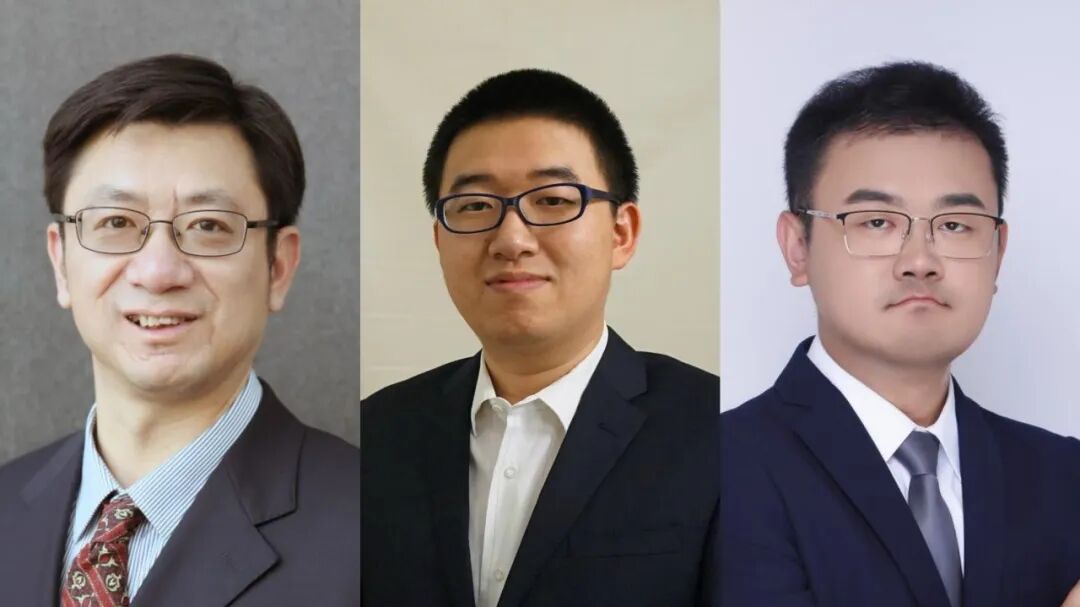
From left to right: Jiang Daxin, CEO of Step Star; Zhu Yibo, CTO of Step Star; Zhang Xiangyu, Chief Scientist of Step Star
With Yin Qi's return, Step Star may enter a more determined and long - term final - battle mode. The team has both top - notch talents aiming for AGI and a sober helmsman who has experienced tough battles and the cold winter of the Four Little Dragons.
Next, actual commercial performance will be crucial. Currently, following in the footsteps of OpenAI and Anthropic, most companies in the final round are playing it safe in terms of business models: Zhipu focuses on the B2B market, while MiniMax and Dark Side of the Moon target the C2C market and develop software products.
The most mainstream commercial narratives in the large model track are consumer - facing subscriptions and B2B API sales and model customization. Currently, the other three large model startups remaining in the competition, Zhipu, MiniMax, and Dark Side of the Moon, have all chosen similar commercialization paths.
Step Star, which follows the "AI + Terminal" route, seems a bit different.
An insider told "Intelligent Emergence" that Step Star made a rational elimination in the mainstream business models:
The consumer - facing user subscription and advertising models have a low ceiling in the domestic market where users have a low willingness to pay. B2B API sales will inevitably lead to price wars with cloud