While restaurants like Nanchengxiang are aggressively expanding, small and medium-sized restaurant owners are worried: Can stir-fry machines really save the day?
People are the biggest problem.
At the junction of the old and new years, rather than simply indulging in nostalgia, we hope to capture the underlying logic that determines the future amidst the changes.
In this year, the power of technology is deeply penetrating into the kitchen. When stir - fry robots are no longer just a gimmick, the AI wave is substantially reshaping the efficiency boundary of the catering industry; the competition in various sectors is becoming more specific. Whether it's the in - depth development of the Chinese rice fast - food chain, the cost - performance analysis in the hot pot sector, or the self - innovation of tea, coffee, and baking industries under extreme involution, all reflect the process of market reshaping.
We not only deconstruct business but also record real individuals. In this year - end special project, we will also have conversations with industry pioneers and record the daily operations of ordinary catering workers. These vivid portraits of the public form the most stable foundation of the catering industry and explain why this industry can always achieve resilient growth.
This article is one of the year - end special projects of Red Meal Network.
Under the wave of AI, stir - fry robots, as representatives of the "intelligentization" of the kitchen, are presenting two completely different aspects.
On one hand, it is a trillion - dollar blue ocean in the eyes of investors, with a rush of hot money; on the other hand, small and medium - sized catering bosses are worried about the "iron lumps" in the kitchen, and the pay - back period seems far away. Some people bluntly evaluate that stir - fry robots "are well - received in theory but not in sales."
Can stir - fry robots really be used?
01
Farewell to the "Iron Lump" Era:
The New Generation of Stir - Fry Robots Has Become "Attractive"
Liao Siheng may be the catering boss in his circle of friends who most highly recommends stir - fry robots.
In Dongguan, he runs 9 restaurants. The scale is not large, and they are basically located near factories, schools, and industrial parks, mainly offering group meals or self - selected fast food. The customer flow is stable. The 9 stores together serve more than 10,000 people per day on average, and the daily turnover can reach 150,000 - 170,000 yuan.
As early as 2022, Liao Siheng purchased the first batch of stir - fry robots. However, these machines had many drawbacks. They were bulky and took up a lot of space. Moreover, they required a working voltage of 380 volts, which the original circuit in the kitchen could not meet. This meant that if the machines were to fully exert their effectiveness, not only the kitchen layout needed to be renovated to make room for the machines, but also the electricity system had to be re - installed.
These bulky "iron lumps" did not play a significant role, but Liao Siheng kept an eye on the development of stir - fry robots.
Until last September, he came into contact with the new generation of stir - fry robots and found obvious changes. The most intuitive one was that the size became smaller. "It's only as big as a microwave oven" and can operate on the countertop. It has a working voltage of 220 volts, low power, and can be supported by household electricity.
He bought 8 machines at once, spending more than 200,000 yuan, and installed them in 4 stores, two in each store.
These stores are located in industrial parks and communities, offering self - selected fast food. They need to "serve small - batch meals and replenish meals multiple times." The output volume and functions of the new machines can just meet such requirements.
Currently, fast food and group meals are the most common scenarios for the application of stir - fry robots. The "World Stir - Fry Robot Industry Development Report" released by the China National Food Industry Association predicts that by 2028, the penetration rate of stir - fry robots in group meals and fast food can reach about 50%.
There are also a number of chain brands in the market that publicly use stir - fry robots, such as Bawan Covered Rice, Laoxiangji, Sumanxiang, Xiaonv Dajia, and Nanchengxiang.

△Photo source: Taken by Red Meal Network
The most representative one is Bawan Covered Rice. This fast - food brand started in Hunan in 2018, focusing on "fresh on - site stir - frying." It has opened more than 1,100 stores in 7 years. Its self - developed stir - fry machine is one of its most prominent labels. It claims that it took 6 years and 3 iterations. Now, the latest generation of the stir - fry machine only occupies half a square meter. An ordinary person can operate 4 machines after 3 minutes of training, and the average meal preparation time is 2 - 5 minutes.
In addition, Wang Guoyu, the founder of Nanchengxiang, told Red Meal Network that currently about 200 stores are being renovated and upgraded. Some stores are adding stir - fry product lines to highlight on - site stir - frying in the open kitchen, while others are planning to change to the self - selected fast - food model. No matter which renovation method is adopted, the company plans to focus on the intelligentization of the kitchen.
For this reason, the company invested in a stir - fry robot project this year. "We cooperate with the manufacturer, put forward our requirements to them. After the manufacturer produces the product, we test it in our stores. After the test, we put forward new requirements."
So far, this robot has not been mass - produced, but it has been tested in about 20% of Nanchengxiang stores. The requirements put forward after the test include increasing the power, improving the way of using buttons, increasing the operation surface, and changing to a non - stick pan. It is being improved step by step. Wang Guoyu revealed that it is expected to complete all the renovations next year.
As the functions are continuously iterated, stir - fry robots are covering more and more scenarios.
Liu Zijian has many years of work experience in star - rated hotels and has also opened his own restaurant. Now, he is the director of the Cooking and Nutrition Department of Guangzhou High - tech Medical and Food Technician School. He found that stir - fry robots can do much more than he imagined.
In November this year, at the First China Guangzhou Robot Chef Competition held in Panyu, Guangzhou, he participated in the competition as a contestant and saw many works of robots.
"There was a braised pork made by a robot. The color and the effect of thickening the sauce were both very good. It was quite remarkable," he said. The deep - fried shrimp in fermented breadcrumbs made by a robot from another manufacturer also impressed him deeply. The reason is that this is a classic Cantonese dish, while his previous perception of stir - fry robots was limited to Hunan cuisine, Sichuan cuisine, etc.
Jiang Yi, a columnist of Red Meal Network and the founder of Hao Xia Chuan, pointed out that theoretically, no matter which cuisine it is, as long as it is stir - fried dishes, stir - fry robots can handle them.
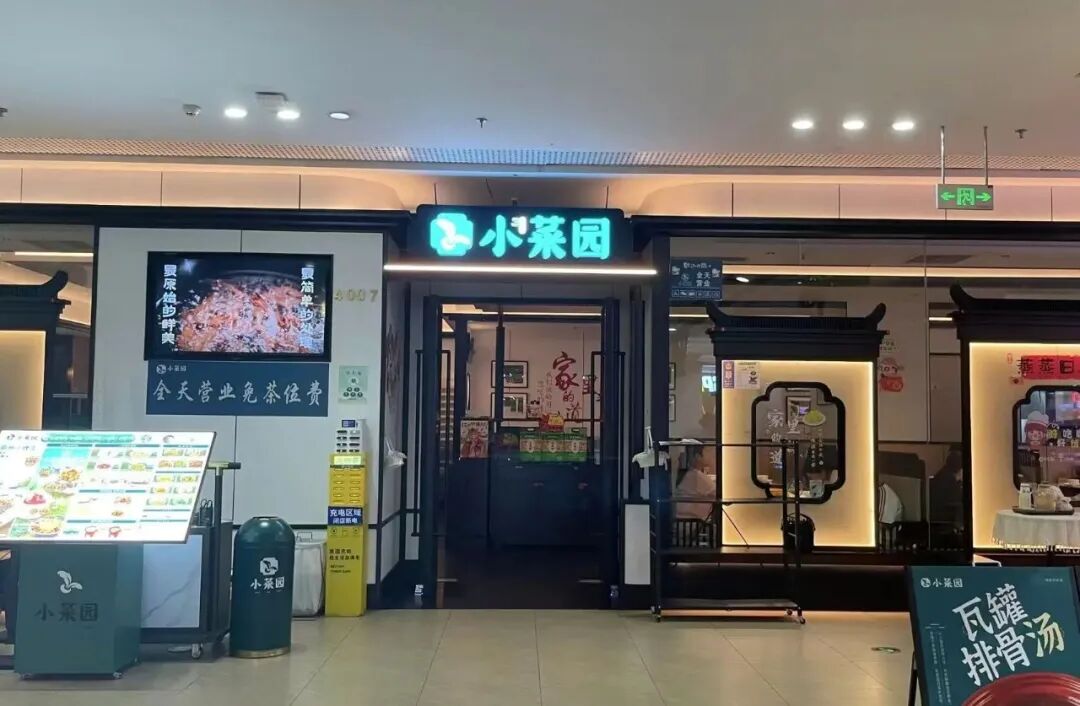
Moreover, stir - fry robots are gradually penetrating from fast food to full - service restaurants. For example, Xiaocaiyuan, a chain full - service restaurant brand from Anhui, introduced stir - fry robots in 2023.
Huang Tianyong, the founder of Xiongmao Master, an intelligent stir - fry robot company, told Red Meal Network that its customers are mainly full - service restaurant brands, with the average per - capita consumption mostly between 50 - 70 yuan, and some customers can reach 80 - 100 yuan.
△Photo source: Taken by Red Meal Network
02
Large Chains vs. Small Restaurants:
An Unprofitable Economic Account?
Can stir - fry robots really reduce costs and increase efficiency? The answers may vary greatly when asking different people this question.
For chain brands, the answer is often yes.
Before founding Xiongmao Master, Huang Tianyong was also the founder of Qiujin·Sichuan - style Stir - fried Dishes, a chain fast - food brand. At its peak, it had about 150 stores across the country. He said that in restaurants using his company's stir - fry robots, the salary cost can be reduced by about 70%.
"Previously, one stove needed one chef. Now, one person can monitor 4 machines, and there is no need for a chef. Just a junior worker with a salary of four or five thousand yuan can handle it. The cheapest salary for a chef is at least six thousand," he said.
Xiaocaiyuan also mentioned in its prospectus that after introducing stir - fry robots, the profit cycle of new stores has been greatly shortened.
The cost saved by stir - fry robots can be used to further build a low - price advantage and seize market share.
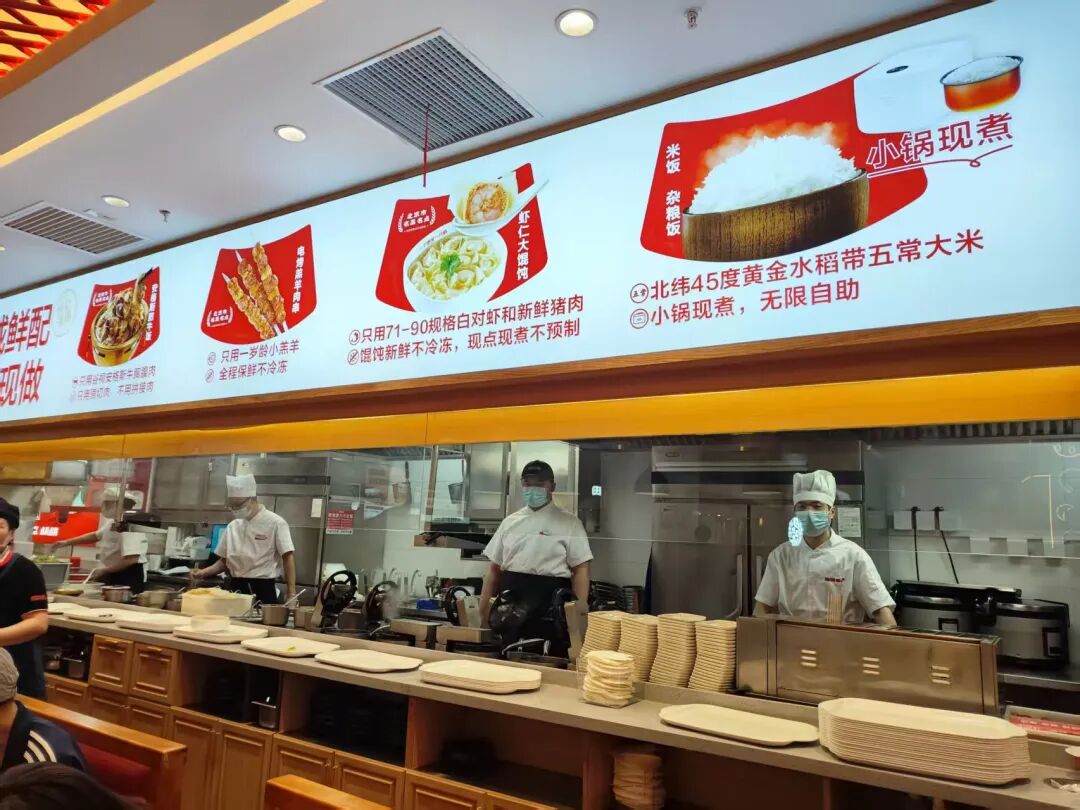
Wang Guoyu mentioned that after the stir - fry machines were put into use, the labor cost decreased, and the efficiency of the stores changed greatly. "For example, during lunch, the price of a dish we sell now is only half or even one - third of that in a Chinese full - service restaurant. But even at this price, I can still make a profit."
He gave an example. After the renovation, the Xiaomachang store of Nanchengxiang in Beijing "became popular." Although the average customer spending decreased by 3 - 5 yuan compared with the original, the total net profit increased by nearly 5 times. He believes that in the future, as stir - fry robots become more and more popular, the average per - capita consumption of Chinese fast food will further decline, and only by increasing the volume can they be profitable.
△Nanchengxiang; Photo source: Taken by Red Meal Network
However, at the same time, for most small and medium - sized catering bosses, the price threshold of stir - fry robots is high, and the pay - back period is long.
Taking the three main products of Xiongmao Master as an example, the lowest price is about 14,000 yuan, and the highest is 25,800 yuan. "A store needs to install at least two machines, which costs at least 30,000 - 40,000 yuan. For individual businesses, the cost is still relatively high," Huang Tianyong said. The company is also considering developing more low - priced products to meet the needs of small businesses.
Fan Ning, the co - founder and vice - president of Red Meal Network, pointed out that affected by multiple factors such as intensified competition and sluggish consumption, the life cycle of catering stores has been continuously shortening, from 2.1 years in 2015 to 16.9 months in 2024. It is expected that the average survival period of catering stores in 2025 may further shorten to about 15 months.
However, most stir - fry robot manufacturers claim that the pay - back period is about 12 - 18 months. This also means that some catering businesses that purchase stir - fry robots may close down before they can get their investment back.
In Liao Siheng's restaurants, the investment in stir - fry robots has not been recovered yet.
Currently, the dishes cooked by the stir - fry robots in the store only account for about 25% of the menu. "(But) only when it reaches 35% can it form a positive cycle. Otherwise, the input and output of the machines are not proportional." And his expectation is 60% or even higher.
Buying the machines is only part of the cost. Catering bosses also need to consider a series of renovation and operation costs brought by the introduction of stir - fry robots.
Wang Guoyu mentioned that one of the main contents of store renovation is the renovation of the kitchen layout, such as removing the bar, knocking down the pillars, and eliminating the corners. The purpose is to facilitate the chefs to operate the stir - fry robots. The renovation cost of different stores varies slightly, but generally ranges from 200,000 to 300,000 yuan.
Liao Siheng also said that the layout of most existing restaurant kitchens is still designed for manual on - site stir - frying. Although small - sized stir - fry machines do not require major renovation of the kitchen layout, they still need space for the additional land required for pre - preparing ingredients in advance and by portion.
△Photo source: TuChong Creative
03
What's Harder to Deal with Than Technology Is the Mindset of Kitchen Staff
Although stir - fry robots have not helped Liao Siheng make money yet, he doesn't plan to give up. On the contrary, he believes that stir - fry robots are the future of the intelligent kitchen. "Once used well, it will be amazing."
In his opinion, stir - fry robots can cook meals quickly and efficiently, which just meets the needs of the restaurant. The standardized operation can also more accurately control the amount of ingredients and seasonings, thereby reducing costs.
If so, why not increase the utilization rate of stir - fry robots? Liao Siheng said that the problem lies not in the machines but in the people.
"If I don't hold meetings every day to emphasize it and don't supervise them, they will definitely go back to manual stir - frying." He said that among the existing chef teams in the restaurant, there are not a few people who are resistant to or have prejudices against stir - fry robots, especially older and more experienced chefs. "Their acceptance level is quite low."
At the same time, stir - fry robots have relatively high requirements for the standardization of ingredient preparation, such as size, length, thickness, shape, etc. This also goes against the habit of manual ingredient preparation, and some chefs are reluctant to adapt.
Liu Zijian told Red Meal Network that the mainstream attitude of chefs towards stir - fry robots is still skeptical. "On one hand, chefs are afraid that the boss will replace them with machines. On the other hand,"