Peter Thiel, known as the "Godfather of Silicon Valley," is committed to building the underlying infrastructure that influences the world's operating rules.
In many people's perception, Peter Thiel is more like a philosopher possessed by a "prophet" than an investor.
In the Silicon Valley of the United States, a land hailed as the "global engine of technological innovation", there has never been a shortage of entrepreneurs who disrupt industries and investors with unique insights. Peter Thiel, known as the "Godfather of Silicon Valley", is perhaps the most prominent "outsider" among them.
Different from other tech leaders who are keen on developing consumer - grade products, he is more committed to building the underlying infrastructure that influences the rules of the world. This unique strategic vision perhaps stems from his profound understanding of "mimetic desire" and "creative monopoly".
In fact, in many people's perception, Peter Thiel is more like a philosopher possessed by a "prophet" than an investor.
To understand this, we must start with Palantir, the company he founded.
Palantir: An Ambitious Blueprint for Building the Digital World
Shortly after PayPal went public successfully in 2002, it was acquired by eBay for $1.5 billion. As one of the co - founders, Peter Thiel, like other core members, chose to cash out and look for the next blue ocean.
At that time, Silicon Valley was immersed in the boom of developing social applications and high - tech products, and capital poured into these seemingly promising sectors.
However, Thiel set his sights on a more fundamental question: How to build the underlying worldview in the digital age.
In his view, many companies in Silicon Valley were indulging in imitating each other, chasing similar business models and product forms, and the entire industry had fallen into the "mimetic desire" trap proposed by French thinker René Girard.
Girard believed that human desires do not originate from internal needs but are formed by imitating others. Excessive imitation will lead to the loss of originality and inhibit true innovation.
During his studies in philosophy and law at Stanford University, Thiel was deeply influenced by his teacher Girard's theory and developed a persistent pursuit of "creative monopoly". He advocated that enterprises should not only compete in the existing market but should open up new fields through fundamental innovation and build unique digital infrastructure.
This concept eventually became the spiritual origin of his founding of Palantir.
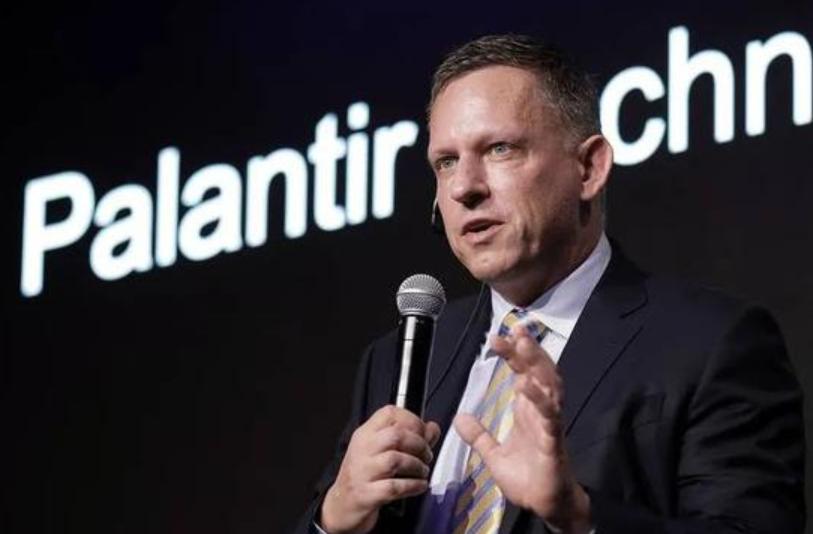
In a sense, Palantir can also be regarded as the physical manifestation of Thiel's philosophical thoughts. Its name "Palantir" is derived from the crystal ball in "The Lord of the Rings" that can foresee the future , implying the creation of a digital mirror that can perceive and shape the real world.
Different from the popular virtual concepts such as the metaverse at that time, Thiel always insisted that the digital system must be rooted in the real world. Therefore, instead of chasing hot trends, Palantir chose a more difficult but solid path: Focus on government intelligence analysis and enterprise - level big data processing.
This field has a very high professional threshold, and few companies are involved, which just provides Palantir with the space to build a "creative monopoly". Behind this layout is precisely Thiel's persistent pursuit of "creative monopoly". This kind of "monopoly" is not obtained by suppressing competition but is a natural market - leading position formed by solving fundamental problems.
By continuously integrating multi - source heterogeneous data into a semantic network that machines can understand, Palantir gradually established a "world model" that can evolve continuously and has predictive capabilities. This system not only serves government agencies such as the CIA and the FBI but is also adopted by industry giants such as JPMorgan Chase and Merck.
This is also why during the later explosion period of AI technology, such as the rise of large models, Palantir, with its solid underlying architecture, was able to quickly transform new technologies into practical applications, while other companies were still struggling with how to make AI understand real - world logic.
This strategy of "laying the foundation first and then building the building" has also made Palantir gradually become a new Silicon Valley force that combines technology with the power structure of the real world, gradually forming a powerful flywheel effect and almost insurmountable technological barriers.
It is worth mentioning that, different from Elon Musk, another member of the "PayPal Mafia", who has a flamboyant style, Thiel always chooses to stay behind the scenes and leaves the daily operations of Palantir to co - founder Alexander Karp.
This arrangement, seemingly low - key, is actually a carefully designed strategic choice.
By deliberately keeping a low profile, Palantir was able to quietly build digital infrastructure without excessive attention. When the public began to realize its importance, Palantir had already become an indispensable presence in this field.
If we want to deeply study Peter Thiel's unique investment philosophy, we must trace back to his time at Stanford University and the period when he founded PayPal.
Thought Tracing: The Transformation from Campus to Business Practice
In the late 1980s, Stanford University was filled with various ideological restlessness.
At that time, because of his pursuit of his teacher Girard's "mimetic desire" theory, Thiel not only vigorously promoted it on campus but also co - founded the conservative student newspaper "The Stanford Review" with his classmates, using it as a platform to promote the spirit of innovation.
However, through continuous in - depth discussions and learning, Thiel gradually realized that truly valuable innovation should not be simply imitating and competing but opening up a new path.
This idea, like a seed, began to take root in this young man's heart.
Although these thoughts had nothing to do with business, they laid a solid foundation for his later unique investment perspective and were finally put into practice for the first time when he founded PayPal.
In 1998, the wave of the Internet was just emerging. While other fintech companies were imitating the traditional banking model, Thiel and his partners chose a different path: Create a new online payment method.
This process was not smooth sailing, but the final success made him more convinced that avoiding homogeneous competition and creating a new market is the truly sustainable development path.
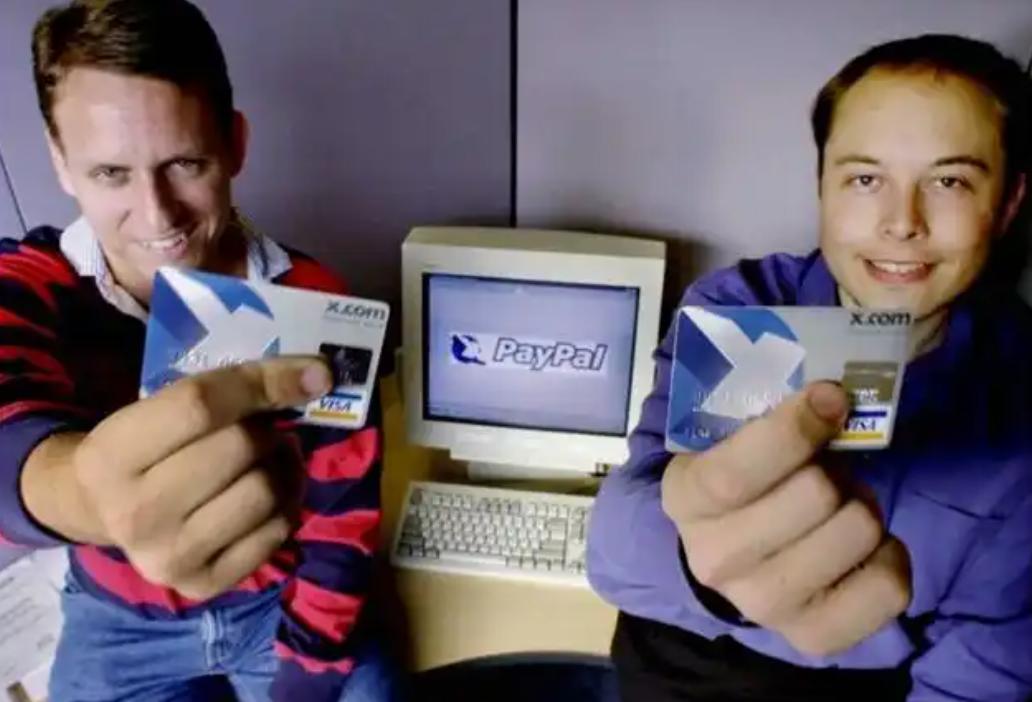
After PayPal was acquired, while other partners were actively involved in new entrepreneurial projects, Thiel chose to take a temporary break. He often sat alone in a California coffee shop, recording his thoughts on the underlying architecture of the digital age in his notebook.
These quiet thinking times led him to co - found Palantir with his friend Alexander Karp in 2003.
It was not long after the burst of the Internet bubble, and the entire industry was conservative about ToB business. However, with his unique foresight, Thiel saw the most essential needs of the data age. He believed that behind any seemingly chaotic data, there were actually the most real market demands.
So, in the year after the founding of Palantir (2004), when most people regarded social networks as "toys" for young people, Thiel made a decision that puzzled his peers: He became the first investor in Facebook with an investment of $500,000.
This decision not only stemmed from his deep understanding of the digital age but also reflected his unique investment philosophy: Discover truly valuable new things before others notice.
At that time, the social market urgently needed a real and trustworthy connection platform, and Facebook's campus social model based on real - name system just met the needs of the younger generation for real identities and stable relationships.
In fact, whether it was the founding of Palantir or the decision to invest in projects such as Facebook, Thiel's investment philosophy was never a sudden inspiration but was gradually formed based on long - term learning, thinking, and practice.
Compared with those flamboyant entrepreneurs, Thiel always maintains a unique and calm way of thinking. This calm personality allows Thiel to always go beyond the interference of short - term hot trends and see the truly innovative opportunities with long - term value.
As he later elaborated in his classic book "Zero to One": "Progress comes in two forms: horizontal progress, which is copying things that work—going from 1 to n, and vertical progress, which is doing new things—going from 0 to 1." (Progress has two forms. One is horizontal progress, which is copying known models; the other is vertical progress, which is exploring new possibilities.)
It is also based on this concept that after Palantir laid the foundation for the digital world, Peter Thiel began to expand his "creative monopoly" concept to a broader field.
Investment Layout: Building a Multifaceted Value Network
Different from ordinary investors, Thiel's investment layout always revolves around building a unique and irreplaceable value network.
In fact, investing in Facebook not only brought him huge financial returns but more importantly, it allowed him to enter the decision - making core of the social empire and gave the "PayPal Mafia" behind him a powerful public opinion platform.
The so - called "PayPal Mafia" is actually a joking term from the media, referring to a close - knit group composed of early PayPal employees such as Peter Thiel, Elon Musk, Reid Hoffman, David Sacks, Steve Chen, Chad Hurley, and Keith Rabois. They later jointly created many successful enterprises, and their relationship is as close as a "mafia family", but their influence goes far beyond financial investment.
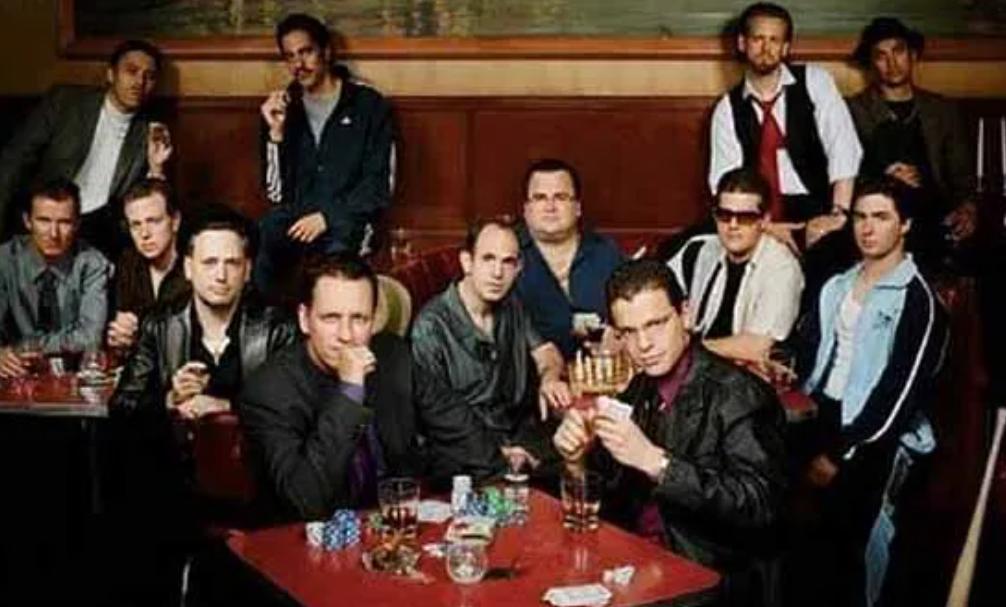
This investment logic also has Thiel's "style", that is, any investment should not only obtain financial returns but also control the flow of information and strategic high - ground.
During his tenure on the Facebook board, he was able to deeply understand the data operation mechanism of social networks, which provided valuable experience for him to build Palantir's data analysis system later.
In order to prove the correctness of his criticism of "mimetic desire", he has always been looking for breakthrough innovation fields.
Different from investors who chase short - term hot trends, Thiel only focuses on long - cycle and high - risk projects because he firmly believes that the real monopoly value comes from solving fundamental problems.
For example, in the biotech field, his investment layout is quite bold: from companies like Unity Biotechnology, which is committed to eliminating senescent cells, to the highly controversial human cryonics technology, he has invested huge amounts of money in these seemingly science - fiction fields that may not yield returns in the short term.
Thiel once said bluntly: "Death may be the last 'technical problem' that humanity faces, and solving this problem will create the greatest value." This attempt to apply the "creative monopoly" thinking to the ultimate human problem precisely shows his unconventional investment vision.
Thiel's ability to layout in the political field also shows his mature investment vision.
In 2016, when the entire Silicon Valley elite class was avoiding Donald Trump, Thiel went against the trend and publicly supported this "political newcomer" who was not favored by the mainstream public opinion.
This decision caused a huge controversy in Silicon Valley at that time, but it once again reflected Thiel's investment philosophy: Make early layouts when the value is not yet widely recognized.
Surprisingly, he not only supported Trump but also quietly began to cultivate his own political successor. By assisting best - selling author J.D. Vance, helping him start a company, and introducing him to Trump's inner circle, he finally successfully pushed Vance onto the vice - presidential seat.
In fact, this is also the essence of Thiel's investment wisdom, that is, the "actively building cross - field synergy" mentioned in his book "Zero to One".
Through political investment, he skillfully transformed political capital into a booster for his tech business. For example, when he needed to promote certain policies, his tech strength became an important bargaining chip to influence decision - making; when his company (such as Palantir) needed to expand government business, his political connections opened the key door for it.
This dynamic value cycle not only consolidates his business empire but also makes him the real "Godfather of Silicon Valley". In many people's eyes, Thiel is not only a shrewd investor but also an "architect" who tries to define future rules through "creative monopoly".
However, this all - round influence layout has also triggered deeper thinking.
Especially after Thiel built a value network spanning technology, biology, and politics, it makes people wonder what the ultimate goal of this "Godfather of Silicon Valley" really is?
Ultimate Goal: A Philosophical Practice of Reconstructing the World Order
The answer may be hidden in his unique worldview and investment philosophy, especially his belief in the "power law" and his persistent pursuit of the "ontology" level.
The power law, also known as the "80 - 20" rule, was proposed by economist Vilfredo Pareto in 1906. It means that in any system, about 20% of the key factors dominate 80% of the results, showing a distribution law where scale is inversely proportional to frequency.
Simply put, in many cases, a few factors often produce the vast majority of the results.
Thiel has elaborated on his "power law" concept on many occasions: Truly important investment returns often come from a very small number of key decisions.
If explained in more general terms, Thiel is on the one hand making careful investment layouts and on the other hand looking for a grand and unified theory to understand and counter a world that he believes is becoming increasingly homogeneous and intellectually barren.
This makes it easy to understand why his investment projects always seem so different. Especially when most people are trying to diversify risks, he is always looking for those "key nodes" that can have an exponential impact.
From his early bet on Facebook, to the layout of Palantir, to his public support for Trump, almost every decision reflects his pursuit not of quantitative success but of qualitative and decisive influence.
This is also the biggest difference between Thiel and other Silicon Valley investors. What he pursues in his life is not just simple financial returns but a reconstruction of the real world at the "ontology" level.
The so - called "ontology" is actually a theory in Western philosophy history that takes the opposition between ontology and phenomenon as the core. It advocates studying transcendental ontological problems with a dogmatic attitude, and its prototype can be traced back to ancient Greek philosophy.
As a top student majoring in philosophy at a prestigious university, while pursuing investment returns, Thiel also hopes to truly interpret these philosophical propositions through the world he constructs.
For example, through Palantir, he tries to redefine the way data is organized; through biotech investment, he hopes to re - interpret the essence of life; through political operations, he expects to influence the basic rules of social operation.