Two brothers from Hunan started their business in Dongguan, successfully brought their shoe factory to IPO, and recorded an annual revenue of 5.8 billion yuan.
For every pair of shoes sold, the factory only earns 5 yuan.
This is the performance sheet submitted by Guangdong Longxing Tianxia Technology Co., Ltd. in its prospectus: it sold 51.75 million pairs of sports shoes in 2025, with a revenue of 5.834 billion yuan and a net profit attributable to shareholders of 258 million yuan. If the net profit attributable to shareholders is evenly distributed, the net profit per pair of shoes is only about 5 yuan.
According to statistics from Frost & Sullivan, as a foundry behind Li Ning, Anta, Adidas, Under Armour and Decathlon, Longxing Tianxia ranks 7th globally with a global market share of 1.78% and first in sales volume in the Chinese market. However, its comprehensive gross profit margin in 2025 was only 18%, at least 3 percentage points lower than its peers Huili Group and Yue Yuen Group.
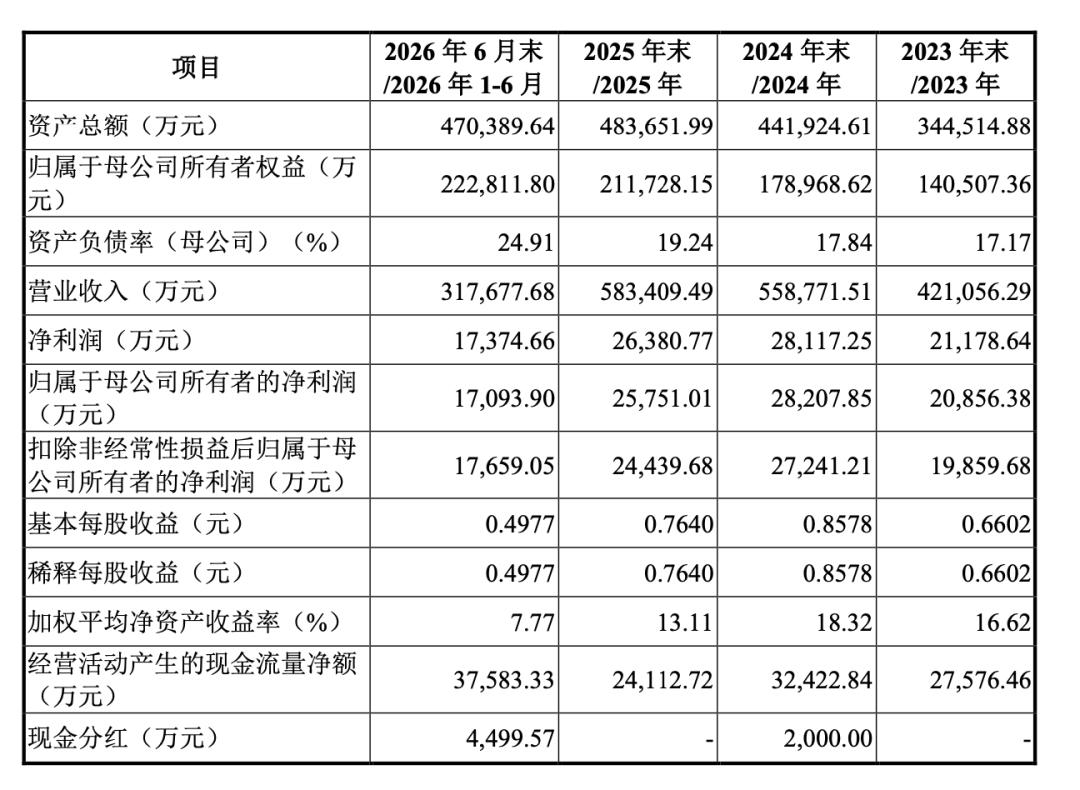
Key financial data of Longxing Tianxia, source: prospectus
Behind this set of figures lies the unavoidable structural dilemma of the OEM business. Over 90% of the company's revenue comes from sports shoe OEM, and more than 80% relies on the top five customers, with the pricing power mostly in the hands of brand owners.
That is why even after Longxing Tianxia successfully passed the listing review, the Shanghai Stock Exchange still focused its inquiries on "the stability of operating performance". The company also voluntarily cut 300 million yuan of supplementary working capital funds, reducing the total fundraising amount from 1.409 billion yuan to 1.109 billion yuan.
Facing the profit ceiling, Longxing Tianxia put forward the solution of "capacity expansion in Southeast Asia + intelligent manufacturing". According to the fundraising investment plan, more than 500 million yuan will be invested in production capacity and supporting bases in Indonesia and Vietnam, and the remaining funds will be used for the automation upgrading of domestic production lines. In 2025, the company's capacity utilization rate has reached 91.65%, close to full production.
But the funds are not only used for expanding production capacity. Overseas bases and domestic automation point to the same goal: to increase the profit of each pair of shoes — reducing cost through overseas layout, and improving efficiency through domestic transformation. As for whether the gross profit margin can be raised, the answer will not come out until the first full fiscal year after the new production capacity is put into operation.
Annual revenue hits 5.8 billion yuan, ranking first in sales volume nationwide
In the highly fragmented global shoe OEM market, the core advantage for Longxing Tianxia to achieve scale effect lies in its nearly 30 years of deep cultivation in vertical collaboration of the whole industrial chain and deep binding with top clients.
The starting point of this manufacturing territory can be traced back to 1998. At that time, the brothers Long Shuchu and Long Jinchu from Taoyuan, Hunan, together with Chen Tongju, founded "Zhansheng Mould Factory" in Dongguan, Guangdong, entering the industrial chain from the upstream shoe mould processing. The mould factory served brand development centers directly. Before making a finished pair of shoes, Longxing Tianxia has been embedded in the development chain of brands such as Adidas and Skechers.
In 2011, Longxing Tianxia expanded its business from moulds to outsoles, uppers and finally finished shoes; in 2016, it launched its first overseas factory in Vietnam; in 2018, it established Jfyi Automation Company to develop self-developed equipment and digital solutions, and gradually built a full-chain layout covering "development and design — 3D printing mould — new material outsoles — finished shoes".
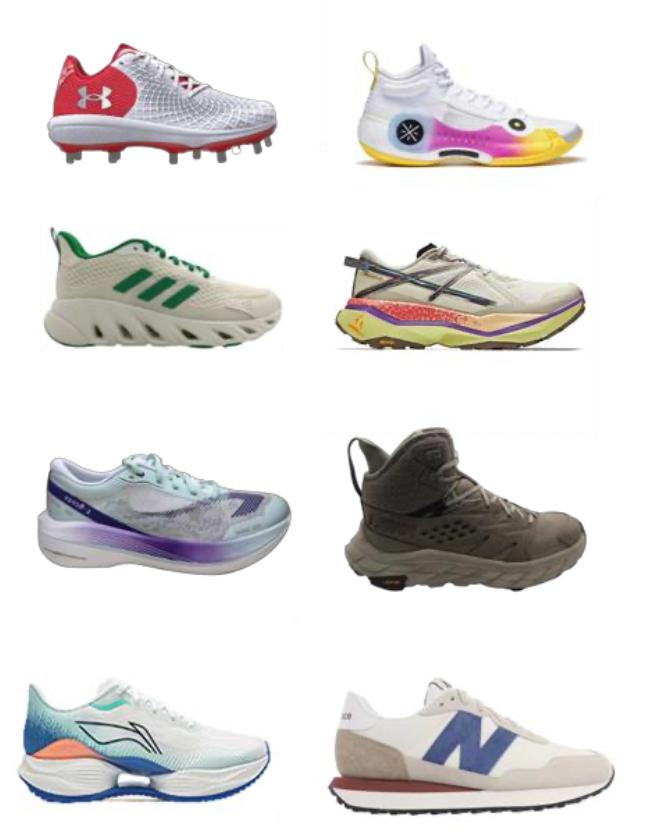
Sports shoes manufactured by Longxing Tianxia, source: prospectus
The full-chain manufacturing foundation has finally formed long-term order barriers from top brands. According to statistics from Frost & Sullivan, Longxing Tianxia's sports shoe sales reached 51.75 million pairs in 2025, ranking first in the Chinese market and 7th in the world with a global market share of about 1.78%. With its stable mass delivery capability, the company has deeply cooperated with top domestic and foreign sports and outdoor brands including Adidas, Skechers and Vibram.
Looking back at its financial track, from 2023 to 2025, the operating revenue of Longxing Tianxia rose steadily from 4.211 billion yuan to 5.834 billion yuan, and the revenue in the first three quarters of 2026 also reached 4.52 billion yuan.
However, the huge shipment volume has not automatically turned into equivalent profit quality. Data from the prospectus shows that the net profit attributable to shareholders in 2025 was only 258 million yuan, with a net sales profit margin of about 4.52%, which was significantly lower than the 5.03% maintained for two consecutive years in 2023 and 2024.
In 2026, the performance seemed to usher in a round of "recovery" on the surface, with the net profit attributable to shareholders in the first half of the year reaching 171 million yuan, equivalent to 66% of the total amount of last year.
But looking at the performance by single quarter, the improvement is far from solid. The revenue in the first three quarters of 2026 only increased by 3.58% year on year, the revenue in the third quarter alone decreased by 6.23% year on year, and the non-recurring profit deducted net profit decreased by 28.17%. The company expects the annual revenue growth rate to be only 1.13% - 4.56%.
Scale is a moat, but it may also become the ceiling of profit margin; the real hidden worry of Longxing Tianxia is hidden in its self-disclosed growth curve.
Only 5 yuan profit for selling one pair of shoes
Under the aura of large scale, Longxing Tianxia is trapped in a typical structural constraint of low gross profit margin.
According to the prospectus, although the company's revenue increased slightly by 4.41% in 2025, the net profit attributable to shareholders fell year on year to 258 million yuan, which translates to a net profit of only about 5 yuan per pair of shoes; the ex-factory average price of its core category running shoes also dropped from 105.41 yuan per pair in 2023 to 93.38 yuan per pair in 2025, a drop of more than 11% in two years.
At the same time, the company's comprehensive gross profit margin has long hovered in the range of 17% to 19%, which is significantly lower than the industry level of over 21% generally achieved by Huili Group and Yue Yuen Group. The reason behind this is not complicated: 15 of Longxing Tianxia's 26 factories are located in China, with higher labor and land costs, while the local fast-response orders have smaller batches, making it difficult to spread fixed investment.
The root cause is the lack of pricing power under the pure OEM model. The prospectus shows that about 91% of Longxing Tianxia's revenue comes from sports shoe OEM, and the revenue from the top five customers accounts for more than 86% for three consecutive years. In 2025, Li Ning and Adidas alone contributed more than 44% of the total revenue together.
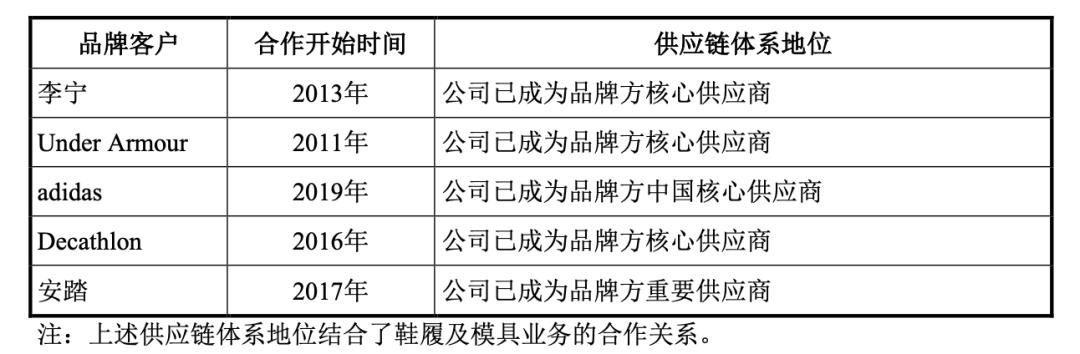
Top five customers of Longxing Tianxia, source: prospectus
When more than 80% of the revenue comes from the top five customers, the pricing power is in the hands of brand owners, the ex-factory average price is continuously suppressed, and the performance is extremely vulnerable to the downstream destocking cycle.
The loss of OEM profit not only appears on the income statement, but also on the balance sheet. The "production based on sales" model dominated by large customers protects orders, but reduces capital efficiency: by the end of 2025, the company's accounts receivable reached 1.253 billion yuan, accounting for 42.20% of current assets, and the unsettled accounts of Adidas alone reached 320 million yuan. The inventory reached 1.021 billion yuan, accounting for 34.36% of current assets, and the two items together accounted for more than 76% of current assets.
The operating efficiency also lags behind accordingly. Its accounts receivable turnover rate dropped from 4.54 times to 3.98 times, while the average of comparable companies is 6.52 times. The inventory turnover rate is only 4.94 times, which is also lower than the industry average of 6.25 times.
In the final analysis, this is the unavoidable ceiling of the OEM model: 91% of revenue comes from sports shoe OEM, more than 86% comes from the top five customers, the pricing power is always in the hands of brand owners, and the ex-factory average price is continuously suppressed.
1.1 billion yuan fundraising, betting on the two-wheel drive of "Southeast Asia + automation"
Facing the irreversible trend of the global shoe manufacturing industry chain shifting to Southeast Asia and the rising domestic labor cost, Longxing Tianxia allocates its IPO fundraising to expand production capacity in Vietnam and Indonesia, with the logic of undertaking the fifth industrial transfer of the shoe manufacturing industry and hedging domestic cost pressure through overseas layout.
First look at the heavy bet on overseas markets. Of the 1.109 billion yuan fundraising, 519 million yuan will be invested in the first phase of the second factory in Indonesia and the outsole automation base in Yule, Vietnam. On the other hand, the remaining funds will be used for the automation upgrading of bases in Hunan, Zhongxiang of Hubei and Dongguan, introducing supercritical foaming integrated molding, automatic sewing machine and lasting equipment.
This layout of "overseas to guarantee cost, domestic to focus on intelligent manufacturing" has realistic urgency: according to the prospectus, the current domestic production capacity accounts for more than 67%, the labor cost structure is passive, and the capacity utilization rate in 2025 has reached as high as 91.65%.
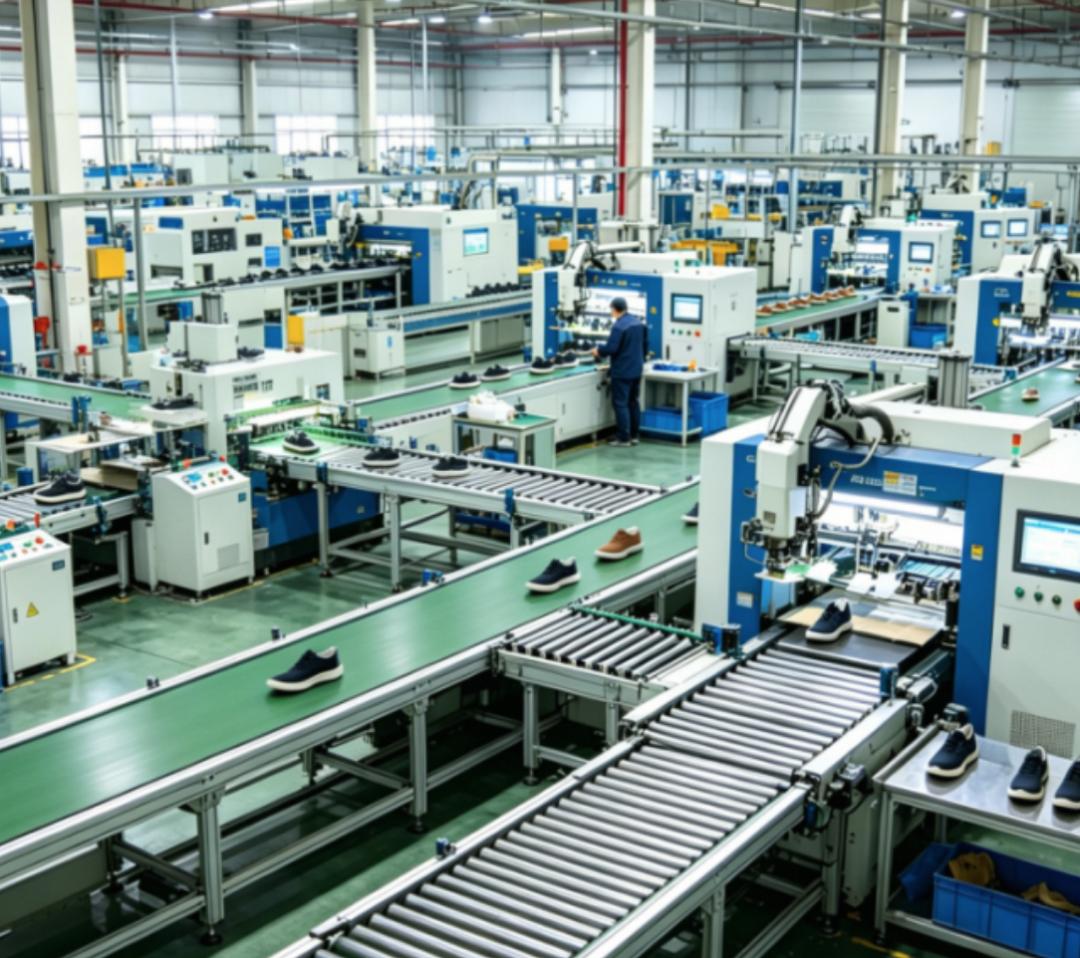
Longxing Tianxia factory, source: official website of Longxing Tianxia
After all the fundraising projects are fully put into operation, the company will add 8.4 million pairs of new finished shoe production capacity (total production capacity increased to 58.4 million pairs) and nearly 60 million pairs of outsole production capacity, which can not only reduce labor costs through Southeast Asian bases, but also undertake the localization demands of international brands and fast-response demands of domestic fashion brands through domestic "machine replacement".
To support the valuation narrative of "upgrading of Chinese manufacturing", Longxing Tianxia has presented its solid technical advantages. The prospectus shows that the company holds 436 patents, realizes full-process digitalization through self-developed MES/QMS2.0 system, its supercritical foaming upper and outsole integrated molding process greatly simplifies the shoe manufacturing process, and the 3D printed metal mould technology even compresses the traditional 15-day mould opening cycle to 48 hours at the limit.
This is the capital that makes Longxing Tianxia different from ordinary OEMs and tries to tell the story of "upgrading of Chinese manufacturing".
However, the rationality of capacity expansion and the certainty after capacity expansion are two different things. Data from Frost & Sullivan shows that the growth rate of the global sports shoe market has dropped to 3.1% in 2025, and the overall industry market is cooling down. Longxing Tianxia itself also warned of the risk of new capacity digestion in its prospectus.
The deeper problem is that when the industry shifts from scale dividend to efficiency dividend, can an OEM with a net profit margin of just over 4% really raise its comprehensive gross profit margin from the current 18% level with the technical narrative of automation, 3D printing and "making a whole shoe with two processes", instead of facing more rigid fixed asset depreciation pressure and thinner unit profit after capacity expansion.
In the final analysis, what Longxing Tianxia raises in this IPO is not "more production capacity", but an ultimate test of manufacturing efficiency; what the capital market finally prices is not how many pairs of shoes it has sold in the past, but whether it can earn more than 5 yuan for the next pair of shoes.
This article is from WeChat official account "World Wide Web Business" (ID: txws_txws), written by Zhou Xiaoqi, authorized to release by 36Kr.