Gree Veteran Ramps Up Investment in Philips Air Conditioners
Business is akin to a battlefield, and the most dramatic scenario is none other than former long-time partners becoming new rivals today.
Tianyancha shows that Anhui Enbili Electric Appliance Co., Ltd. (hereinafter referred to as "Enbili"), the Chinese operator of Philips air conditioners, has recently completed a series of industrial and commercial changes, with the legal representative of the company changed from Xu Ligen to Xu Zifa.
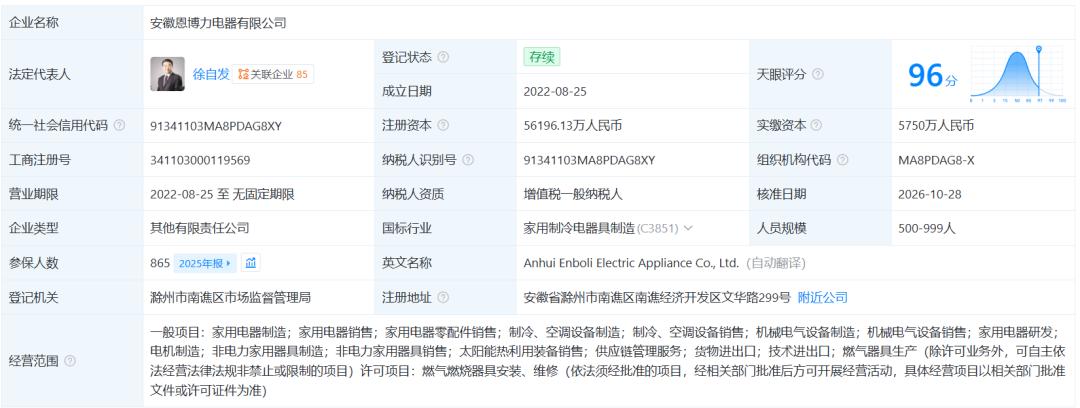
In August this year, Hebei Gree Electric Appliance Marketing Co., Ltd. subscribed to contribute 460 million yuan to take shares in Enbili, becoming its largest shareholder with an 82.2% stake.
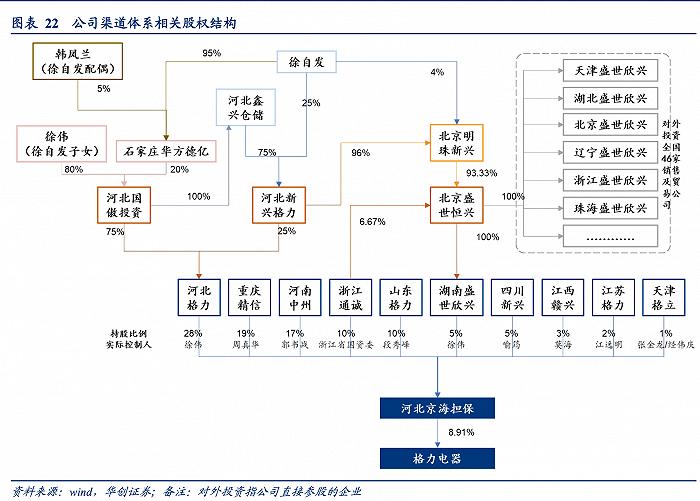
According to Tianyancha, Hebei Gree Electric Appliance Marketing Co., Ltd. is jointly held by Hebei Guoao Investment Group Co., Ltd. and Hebei Xinxing Gree Electric Appliance Sales Co., Ltd. Xu Zifa holds 25% of the shares of "Hebei Xinxing Gree", and indirectly holds 20% of the shares of "Hebei Gree Electric Appliance Marketing" through Shijiazhuang Huafang Deyi Renewable Resources Development Co., Ltd.
After this round of capital increase and share expansion, Xu Zifa has obtained actual control of Enbili and become the leader of Philips air conditioner business in China.
What is more thought-provoking is that Xu Zifa was originally the general distributor of Hebei region and also a long-time partner under Dong Mingzhu. However, the two parted ways in 2022, and before that, Xu Zifa had intervened in the Chinese business of Philips air conditioners as an investor.
Now four years later, the entire air conditioning industry is having a hard time, but Xu Zifa has chosen to increase his investment against the trend. What on earth is this veteran who has served Gree for most of his life betting on?
The Gree Veteran Left to Start His Own Business
In the distribution system circle of Gree, Xu Zifa is an unavoidable name.
In 1999, Xu Zifa took over Hebei Xinxing Gree Electric Appliance Sales Co., Ltd., which was later renamed Hebei Shengshi Xinxing Gree Trading Co., Ltd., and he has been serving as its general manager ever since.
As can be seen from the name of the company, it is an enterprise focusing on business related to Gree, mainly engaged in the distribution business of Gree air conditioners in Hebei, including wholesale, sales, maintenance and other related services.
As is known to all, the strong market position of Gree in the air conditioning industry largely benefits from its huge distribution network. By cooperating with secondary and tertiary distributors to stabilize the market, it quickly expanded its territory in the stage of rapid and unregulated growth of the home appliance market.
In 2007, the relationship between Gree and its distributors went a step further.
In order to deeply bind the interests of distributors, Gree transferred 10% of its equity in the company to Hebei Jinghai Guarantee Investment Co., Ltd., which was established by 10 key distributors. Xu Zifa became a strategic shareholder through Hebei Gree Electric Appliance Marketing Co., Ltd. (hereinafter referred to as "Hebei Gree"), and was the one with the highest shareholding ratio among all, which fully demonstrates his important status.
In 2015, Xu Zifa joined the board of directors of Gree Electric as a director; in the same year, Dong Mingzhu attended the annual sales meeting of Hebei Gree Electric Appliance, and Xu Zifa even made an impassioned speech, saying "All of you here owe the livelihood you enjoy in this life to Gree."
However, this was also the last "honeymoon period" between Gree and Xu Zifa. In 2017, Xu Zifa stepped down as the legal representative of "Hebei Gree"; the next year, his son Xu Wei became the new actual controller of "Hebei Gree" through indirect shareholding.
But the giant wheel of business rolls forward, and personal affection cannot beat reality after all.
In 2019, Gree made up its mind to reform the traditional channel system, reducing the intermediate links of distribution channels to cut sales costs, while increasing investment in live-streaming e-commerce and online sales channels.
This is also the inevitable trend of transformation in the home appliance industry. After more than 20 years of development, the traditional channel model has gradually become redundant, and it is difficult to quickly respond to the end-user demands in the e-commerce era, so a thorough "slimming" reform is required.
But this reform also touched the "cake" of the traditional distribution channels. In this year, Duan Xiufeng, the former general distributor of Shandong, and Miao Peiyuan, the former sales director of Shandong Gree, announced their resignations one after another, and some core staff of the Henan sales company also switched to Midea.
Xu Zifa had his own plans. According to reports from Yicai, Xu Zifa had become an important investor in the Chinese business of Philips air conditioners in 2021. In 2022, the production base of Philips air conditioners was officially settled in Chuzhou, Anhui, and Xu Zifa was present at the scene.
Gree is hardly unaware of this series of layouts, but the reform of distribution channels is a matter that affects the whole body when one part is pulled, so Gree has to be extremely cautious.
But the contradiction between the two sides intensified after all.
After the Philips air conditioners were put into production, industry insiders revealed that Xu Zifa had begun to recommend Philips air conditioners through his own channels; Gree also put pressure on distributors, making it clear that they could only choose one between Gree air conditioners and Philips air conditioners.
In August 2022, Hebei Shengshi Xinxing Gree Trading Co., Ltd. issued a notice saying that its after-sales service platform was suddenly shut down by Gree Electric; subsequently, Gree announced that it had authorized Zhuhai Huange Digital Technology Co., Ltd. as the new agent in Hebei Province.
At this point, Xu Zifa's more than 20-year "Gree career" officially came to an end.
How Competitive Are Philips Air Conditioners?
Philips has become Xu Zifa's new battlefield.
It needs to be clarified that the current Philips air conditioner business is not the same entity as the Dutch Philips that manufactures shavers and electric toothbrushes, but operates under a brand licensing agreement.
Philips entered China in the 1980s, mainly operating personal care products and home appliances in the domestic market.
After entering the 21st century, Philips began to downsize its business, selling part of its home appliance business to GL Ventures and signing a long-term brand licensing agreement. As for categories such as air conditioners that it does not operate on its own, it handed them over to third parties for operation in the form of brand licensing.
This is also the opportunity for Enbili to obtain the authorization of Philips air conditioners. In 2018, Philips air conditioners were introduced to China by Nanjing Zhipu Supply Chain Management Co., Ltd., whose senior management team includes Huang Hui, former executive president of Gree, Hu Wenfeng, former assistant to the president of Gree, and other former Gree executives.

After several changes, Enbili became a shareholder of "Nanjing Zhipu" in 2022, obtaining the authorization to independently develop, produce and sell Philips air conditioners, and Xu Zifa thus stepped to the front stage.
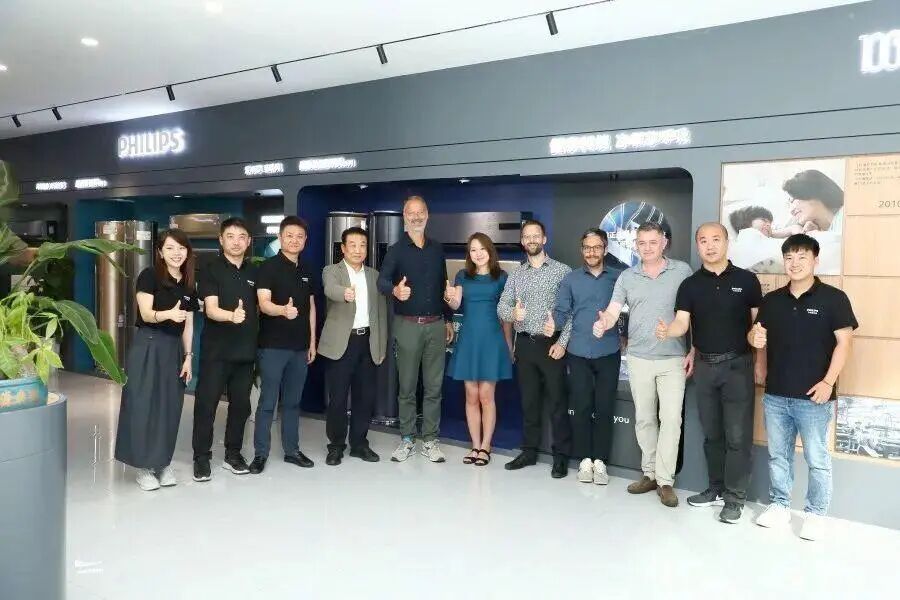
In June 2022, Xu Zifa and Huang Hui accompanied a group of people from the Dutch Philips Group to visit the Philips air conditioner R&D and production base. Xu Zifa stood in the middle of the group photo, with the title of "Vice Chairman";
At the new product launch of Philips air conditioners held in August of the same year, Xu Zifa also attended as a shareholder representative. The official WeChat account of Philips once published an article mentioning this matter, but later deleted the words "shareholder representative Xu Zifa" probably because they did not want to be too high-profile.
However, Xu Zifa's network layout for Philips air conditioners is not completely hidden. The figure of this key associated person has long been an open secret in the industry.
According to a report by *Time Weekly*, Hong Sheng, a person close to Xu Zifa, mentioned that Xu Zifa's strategy is the traditional "offline first" approach: the price of offline channels will be lower than that of online channels, and distributors can get higher gross profit margins.
Some Gree agents said that the gross profit margin of selling Philips air conditioners is as high as 20%, which is about twice that of most Gree products. For some low-cost online best-selling models, distributors even only have a gross profit margin of 5%.
Xu Zifa's strategy is completely different from the mainstream home appliance market's strategy of "low price online and flatten distribution channels", and it has quickly won over a group of distributors who are troubled by the air conditioner price war.
In August 2023, Xu Zifa disclosed publicly that Philips air conditioners already had about 8,300 sales outlets across the country. In March this year, according to a report from Anhui Economic Network, Enbili's products have entered more than 15,000 sales outlets nationwide.
In addition, the production base of Philips air conditioners has gradually reached a certain scale. According to a report by *Anhui Daily* in August this year, 7 production lines in this base have been put into operation, with an annual production capacity of 2.5 million to 3 million units.
However, the completion of production capacity and channel layout only means that the supply side is ready. Whether Philips air conditioners can truly enter consumers' homes depends on actual sales performance.
In an interview with Aiken Home Appliance Network in 2024, Xu Zifa revealed that in 2023, the shipment volume of Philips air conditioners in the domestic market exceeded 1.2 million units; in 2024, the shipment volume achieved a year-on-year doubling growth.
But if we look at this figure in the context of the entire air conditioning industry, it is still only a tiny fraction of the total market.
According to data from Aiken Home Appliance Network, the total shipment volume of the domestic air conditioning market in 2024 is about 102 million units. Calculated based on the shipment volume of about 2.4 million units of Philips air conditioners in 2024, its market share is only about 2.4%.
To be fair, the Philips brand has a certain popularity foundation in China, and Xu Zifa's appeal in the offline air conditioning channels cannot be underestimated. But the fact that distributors are willing to take delivery of goods for the sake of profits does not mean that the air conditioners can naturally flow to consumers.
In the end, whether consumers are willing to buy Philips air conditioners depends on their comparison of different options, including price, quality and after-sales service. Relying solely on distributors to push goods out through stores and personal connections cannot create real brand traction in the stock competition market.
How Long Can the Brand Licensing Model Last?
However, according to consumer feedback, the public seems to have little recognition of Philips air conditioners.
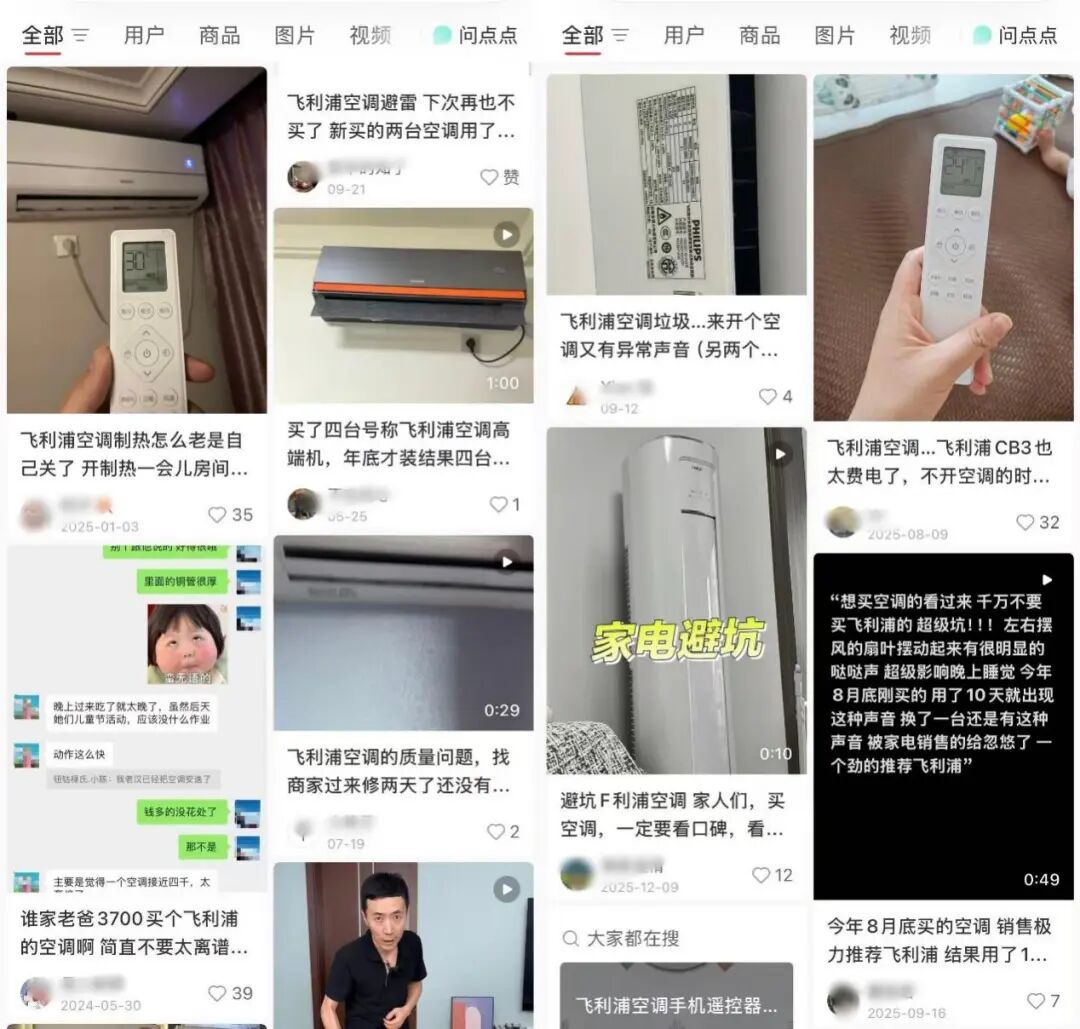
On social platforms, many consumers said they would avoid Philips air conditioners, complaining that the products have poor quality, often with problems such as high power consumption and abnormal noise. Some consumers said that even after getting a replacement through after-sales service, the same problems still exist, and the price is not cheap.
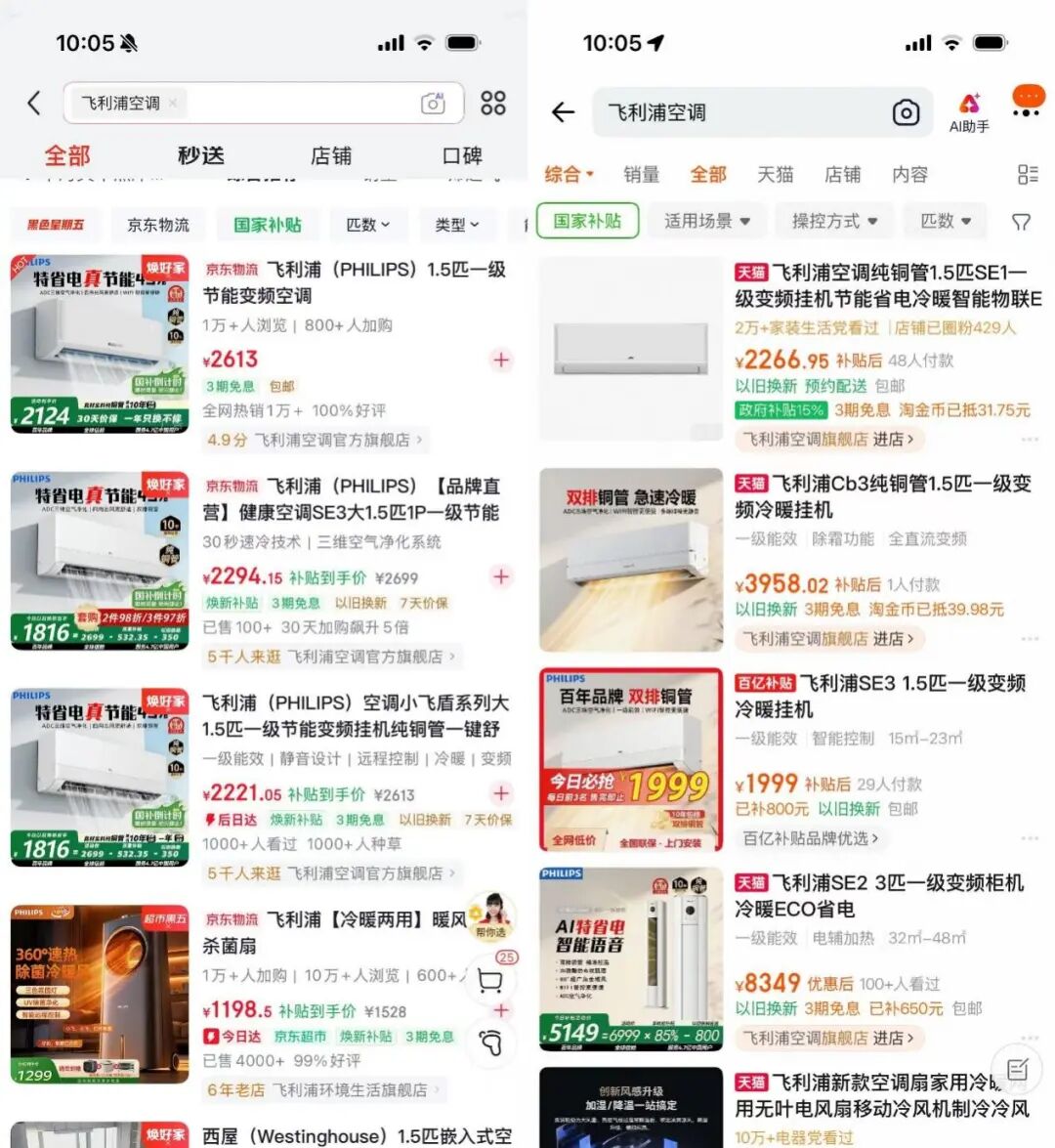
When searching for Philips air conditioners on JD.com and Tmall, although there are models priced at around 1,000 yuan, the general price range is 2,000 to 4,000 yuan, while the main brands of Gree and Midea have many models priced at around 1,000 yuan for consumers to choose from.
More importantly, Xu Zifa started his business from the traditional distribution sector, so technology is after all a key shortboard for Philips air conditioners.
In 2022, Gree sued Nanjing Zhipu, the Chinese operator of Philips air conditioners, in court. Gree claimed that multiple models of air conditioners manufactured and sold by "Nanjing Zhipu" contain all the technical features of Gree's patented invention "motor fixing structure and air conditioner with the motor fixing structure", which infringed Gree's patent right.
In response, "Nanjing Zhipu" stated that the involved products were manufactured by Skyworth. However, the court finally ruled that "Nanjing Zhipu" lost the lawsuit and must immediately stop manufacturing and selling the related products.
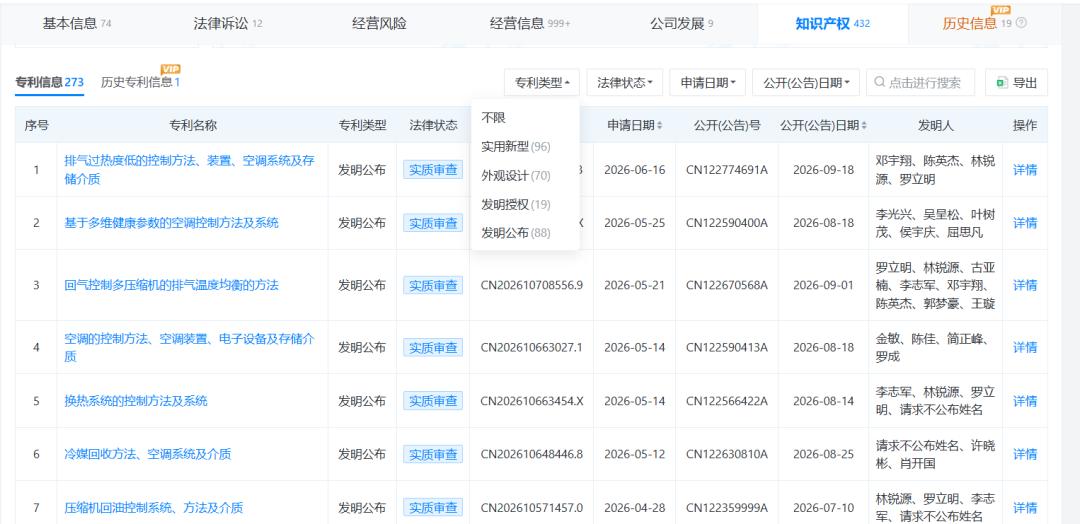
According to Tianyancha, Enbili currently has a total of 273 patent information entries, of which 19 are invention authorization patents. The absolute number is not small, but in the highly mature air conditioning industry, the innovation capability of Philips air conditioners is far from leading.
This is also the long-standing challenge of the brand licensing model. Although using other people's brands saves trouble, it is always difficult to build your own user mind without truly differentiated products.
Besides, the air conditioning industry has been extremely "cold" in recent years. According to data from AVC, the retail sales of China's air conditioning market in 2025 is about 235.66 billion yuan, a year-on-year decrease of 0.4%; the retail volume is 76.043 million units, a slight year-on-year increase of 4.7%, showing a trend of "volume increasing while price decreasing".
But at this very moment, Xu Zifa chose to increase