Wang Hong has won another major mathematics award, and behind the name of the award lies the story of another legendary woman.
Wang Hong has won another award again!
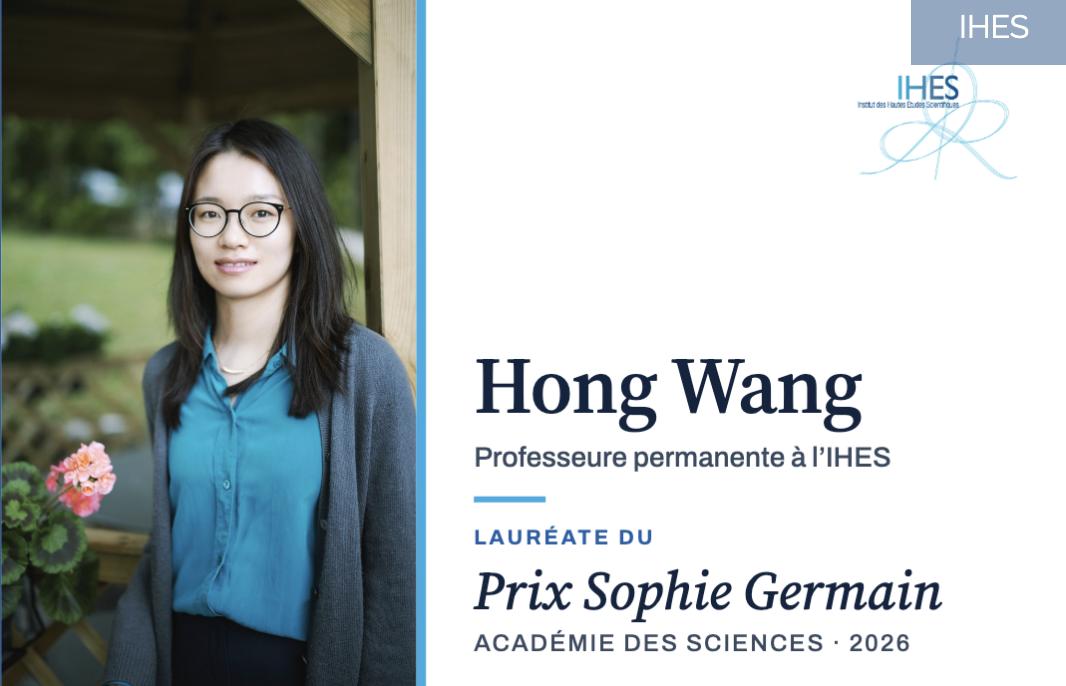
Less than half a year after winning the Fields Medal, this 35-year-old Chinese mathematician has claimed the 2026 Sophie Germain Prize.
△
Established by the French Academy of Sciences in 2003 and awarded once a year, this prize aims to recognize mathematicians who have made outstanding contributions in the field of fundamental mathematical research, with a bonus of 8,000 euros (equivalent to about 58,500 RMB).
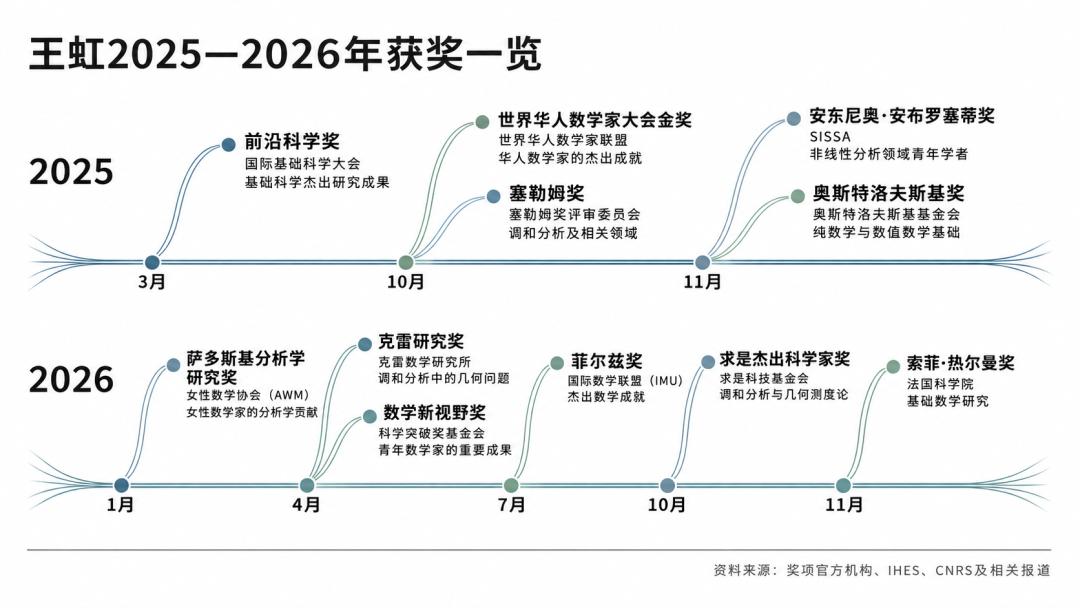
Calculated in this way, this year alone in the fields of mathematics and general science, Wang Hong has won at least 6 awards.
The Year of Wang Hong's Grand Award Harvest
Wang Hong is the second Chinese national to win the Sophie Germain Prize.
The last one was 9 years ago, Ma Xiaonan, who was then a professor in the Department of Mathematics at Paris Diderot University. He joined Nankai University on a full-time basis in 2024, and took office as the director of the Chern Shiing-shen Institute of Mathematics of Nankai University this April.
This Sophie Germain Prize is awarded to recognize Wang Hong's outstanding contributions in the fields of harmonic analysis and geometric measure theory, especially her breakthrough result in proving the 3-dimensional Kakeya conjecture together with Joshua Zahl.
In fact, since Wang Hong proved the 3-dimensional Kakeya conjecture in February last year, mathematics awards from all over the world have come in succession.
According to incomplete statistics, since 2025, Wang Hong has obtained at least 11 academic honors.
In 2025, Wang Hong successively won the Frontiers of Science Award, the Antonio Ambrosetti Prize, the Gold Medal of the International Congress of Chinese Mathematicians, the Salem Prize, and the Ostrowski Prize; in 2026, Wang Hong respectively won the Sadosky Research Prize in Analysis, the New Horizons in Mathematics Prize, the Clay Research Award, the Fields Medal, the Qiushi Outstanding Scientist Award, and this Sophie Germain Prize.
△
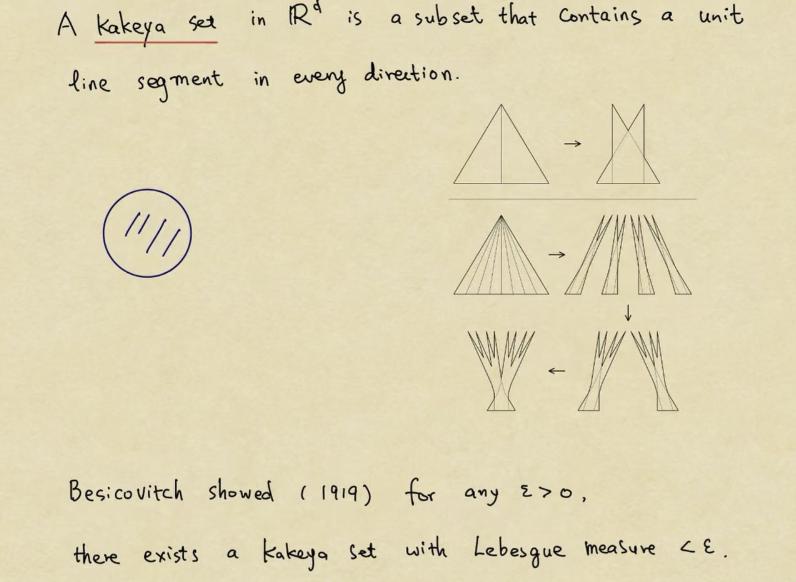
Earlier this month, Wang Hong also received the Qiushi Outstanding Scientist Award at the Chinese University of Hong Kong, and explained the Kakeya conjecture to teachers and students on site with a fully handwritten PPT.
So many major mathematics awards are really amazing, Wang Hong is incredibly outstanding!
But many people may still wonder why Wang Hong was able to win so many awards so intensively in the past two years?
This has to mention the special status of the Kakeya conjecture proved by Wang Hong in the mathematics community.
The special feature of this problem is that it looks like a purely geometric problem, but it is closely connected with many core difficult problems in harmonic analysis, a major branch of mathematics.
For example, when mathematicians study the propagation of waves, they need to understand how waves from different directions intersect and superimpose in space (the local smoothing conjecture);
When studying the frequency composition of signals, they need to understand what kind of spatial distribution will be formed by combining waves of specific frequencies and different directions (the Fourier restriction conjecture);
When studying the reconstruction of complex functions, they need to understand how to accurately restore the original function by gradually adding frequency components (the Bochner-Riesz conjecture).
These seemingly different mathematical problems all involve the same geometric question behind them: to what extent can a large number of slender tubular structures from different directions overlap and gather?
It can be said that what Wang Hong and Joshua Zahl conquered is a key problem at the intersection of multiple difficult mathematical problems, and the mathematical tools they developed in the proof process also opened up new paths for the study of other related problems.
△
On the other hand, the 3-dimensional Kakeya conjecture is also a concentrated outbreak of Wang Hong's mathematical research over many years in the past.
In 2018, Wang Hong, who was still pursuing her doctoral degree at the Massachusetts Institute of Technology, made important progress on the 3-dimensional Fourier restriction problem.
In 2019, she cooperated with Larry Guth and Zhang Ruixiang to solve the local smoothing conjecture for the wave equation in 2-dimensional space.
In 2023, she cooperated with Kevin Ren to prove the 2-dimensional Furstenberg set conjecture.
In 2025, she and Joshua Zahl jointly conquered the 3-dimensional Kakeya conjecture.
Over the years, Wang Hong has been exploring the relationship between geometry and analysis. The solution of the 3-dimensional Kakeya conjecture brought Wang Hong to the surface, under a huge, dazzling spotlight. Before that, she had dived deep in the ocean current at the intersection of geometry and analysis for many years.
More than 200 years ago, she could only study mathematics under a man's name
Back to the Sophie Germain Prize that Wang Hong won this time, there is a "dramatic" story in the history of mathematics behind the name of this award.
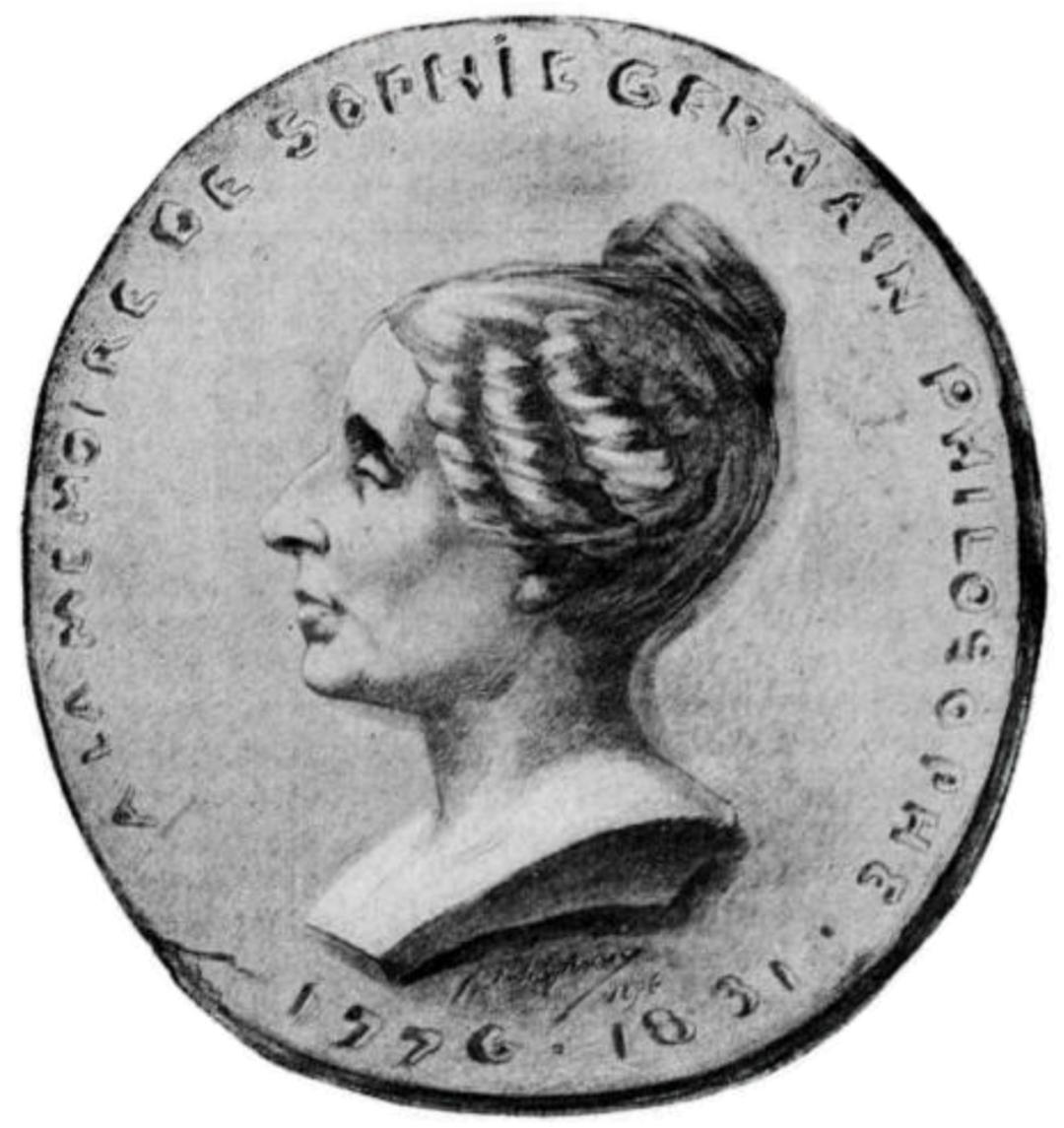
On April 1, 1776, Sophie Germain was born. When she was 13 years old, the French Revolution broke out, and the situation was turbulent. Germain hid in her father's library, reading the story of Archimedes, the ancient Greek mathematician — it is said that when the Roman army invaded Syracuse, Archimedes was drawing on the ground to study mathematical problems, refused or asked to wait a moment, and was killed after angering the soldier.
What is mathematics? That makes people so obsessed? Germain thus developed a very strong interest in mathematics.
△
In 1794, École Polytechnique was founded, and this university only admitted men.
Therefore, at that time, 18-year-old Germain borrowed the name "Antoine-Auguste Le Blanc" to obtain the course handouts of the school, and submitted her own math homework in his name.
Soon, this student named Le Blanc attracted the attention of the mathematics master Lagrange. He found that the mathematical results submitted by this student were quite excellent, so he proposed to meet him. It turned out that the other party was a young girl. Lagrange was not angry at all, and encouraged her to continue her mathematical research.
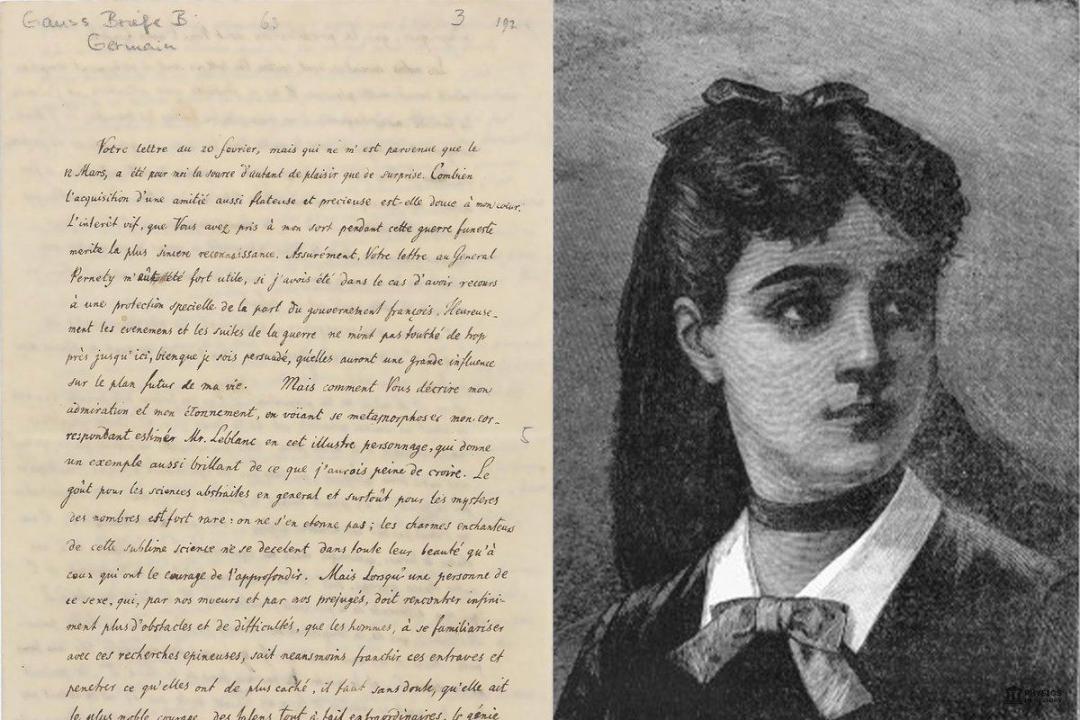
A few years later, Germain used the name Le Blanc again to write to another mathematics master Gauss, discussing number theory problems with him. Gauss appreciated the mathematical talent of this young man very much. Until 1806, Napoleon's army occupied Brunswick, Gauss's hometown. Germain asked a French general who was familiar with her family to take care of Gauss, and wrote to confess that she was the Le Blanc who had corresponded with him for many years.
After learning the truth, Gauss praised Germain greatly in his reply.
"A woman, who due to our customs and prejudices, must encounter infinitely more difficulties and obstacles than men to familiarize herself with these thorny problems. If she can still surmount these obstacles and penetrate into the most hidden mysteries of them, then there is no doubt that she possesses the noblest courage, extraordinary talent, and superior genius".
△
One of Germain's most famous contributions is the research on Fermat's Last Theorem. She proposed a set of proof strategies that tried to deal with infinitely many prime exponents, and obtained a series of important phased results.
There is still a class of primes named after her in mathematics, Sophie Germain primes, which are primes that are still primes after being doubled and added by 1.
In addition to number theory, Germain is also one of the pioneers of elasticity theory. She once tried to mathematically explain a wonderful physical phenomenon: why scattered sand grains will automatically arrange into regular geometric patterns on a vibrating thin plate?
Around this problem, Germain challenged the prize-winning problem of the French Academy of Sciences three times, and finally won the grand prize in 1816, becoming the first woman to receive this honor.
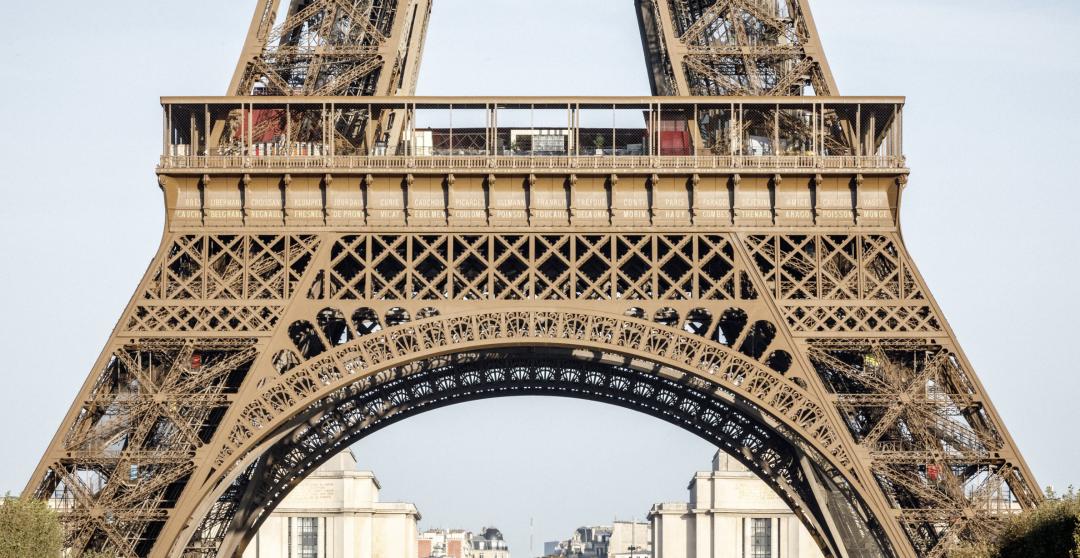
However, 73 years later, when the Eiffel Tower rose from the ground, this mathematician who laid the foundation for modern elasticity theory and also contributed to the construction of the tower did not leave her name on the tower.
Since its completion in 1889, the outer edge of the first floor of the Eiffel Tower has been engraved with the names of 72 French scientists, mathematicians and engineers, including Lagrange, Laplace, Cauchy and others.
Until January 26 this year, the Paris municipal government announced another additional engraving list containing 72 female scientists. The list includes Marie Curie, who won the Nobel Prize twice, Alice Le Gall, a pioneer of French computer science and artificial intelligence, and Sophie Germain is also on the list.
△
It is also in this year that Germain and Wang Hong, separated by more than two centuries, "meet".
In 2010, Wang Hong entered Germain's alma mater, École Polytechnique, to study.
And this year, this university awarded her an honorary doctorate degree.
Coincidentally, this year is also the 250th anniversary of the birth of Sophie Germain.
This article is from the WeChat Official Account "QbitAI" (ID: QbitAI), author: Focus on cutting-edge technology, released with authorization from 36Kr.