Claude is starting to take business away from Apple.
Abstract:
Anthropic launches the desktop app installation feature for Claude Artifact, granting AI-generated software independent icons, windows and system interaction capabilities. Evolving from a generation tool to an application running platform, Claude is attempting to reshape the way software is produced and distributed. Though it still falls short of a full-fledged app marketplace, it has launched a notable, caution-provoking probe into the traditional application ecosystem represented by Apple's App Store.
"The next super App does not have to be a super App for everyone; it can also be one that belongs exclusively to you." In mid-November, this judgment from Cui Tianyi, head of DeepSeek Harness, was repeatedly reposted on the social platform X. After joining DeepSeek this spring, he has been pushing for an agent infrastructure that advocates "everything is a plugin", and stated publicly that DeepSeek Harness aims to build an operating system for the Agent era.
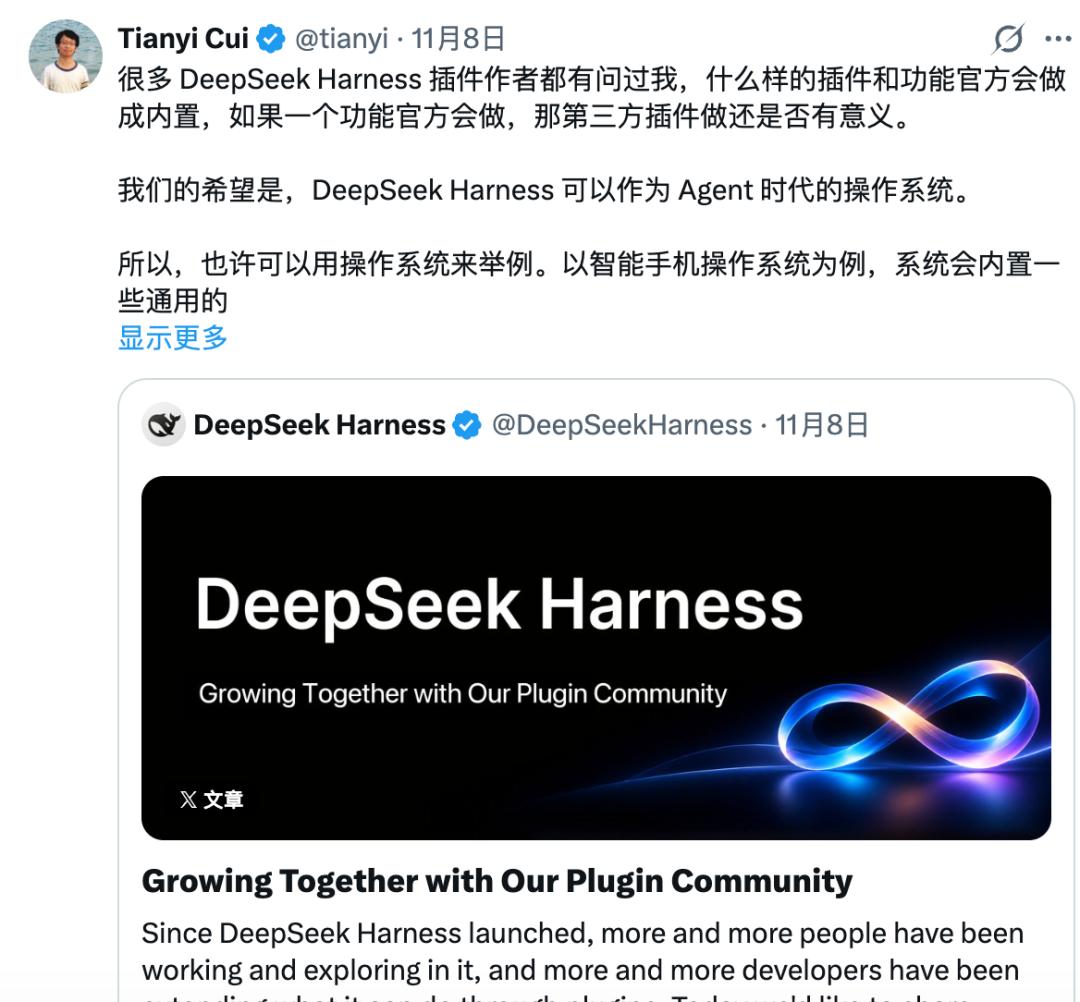
On November 24, Anthropic echoed this judgment with a product update.
That day, Anthropic rolled out a beta feature called "Install as app" to users on Mac and Windows. According to the official demonstration, users only need to enter their requirements in the dialog box, and Claude will generate an interactive Artifact in the chat window. By clicking "Install as app", this tool will immediately get an independent icon and window, and can be opened just like native software. No packaging, signature, or separate API key configuration is required.
When users can have agents generate applications on demand and install them with one click, the "shelf" logic that the software ecosystem has followed for many years begins to loosen. Does this mean that the software ecosystem defended by Apple will also face real challenges?
AI Says It Wants Apps to Disappear, But It Starts Adding Icons to Apps
Over the past two years, the narrative of "AI kills apps" has been hanging over the software industry. Amid widespread collective panic, a consensus quickly emerged: either turn products into "hammers" in the hands of agents by making them skill-oriented and MCP-compliant, or get eliminated.
However, Anthropic has taken a counterintuitive move: it not only builds applications, but also equips each application with an icon, window and fixed entry, putting back the pieces that the software industry has been busy dismantling one by one.
This is indeed a reverse exploration centered on "user experience".
On the one hand, it re-examines the way humans interact with agents, freeing users from long, crowded chat windows. On the other hand, it better fits the logic of real workflows, bringing office work back to the "task-centric" track.
For frequently used tools, users need an intuitive and stable entry, rather than rummaging through historical conversations every time.
But Anthropic has no intention of following the old path of traditional software vendors. It collectively refers to these applications generated by Claude as Artifacts, rather than Applications.
What is an Artifact? The official definition is: "Anything you can show to others".
Artifacts were originally just "shareable work outputs" such as charts and web pages, but now they are preserved by users and used as daily tools.
On social media, building personal workbenches with AI and designing life SOPs has become a widely popular practice.
Users do gain a psychological sense of control over their work and life by "creating tools with their own hands". This also explains the word-of-mouth effect of DeepSeek Harness's custom plugins.
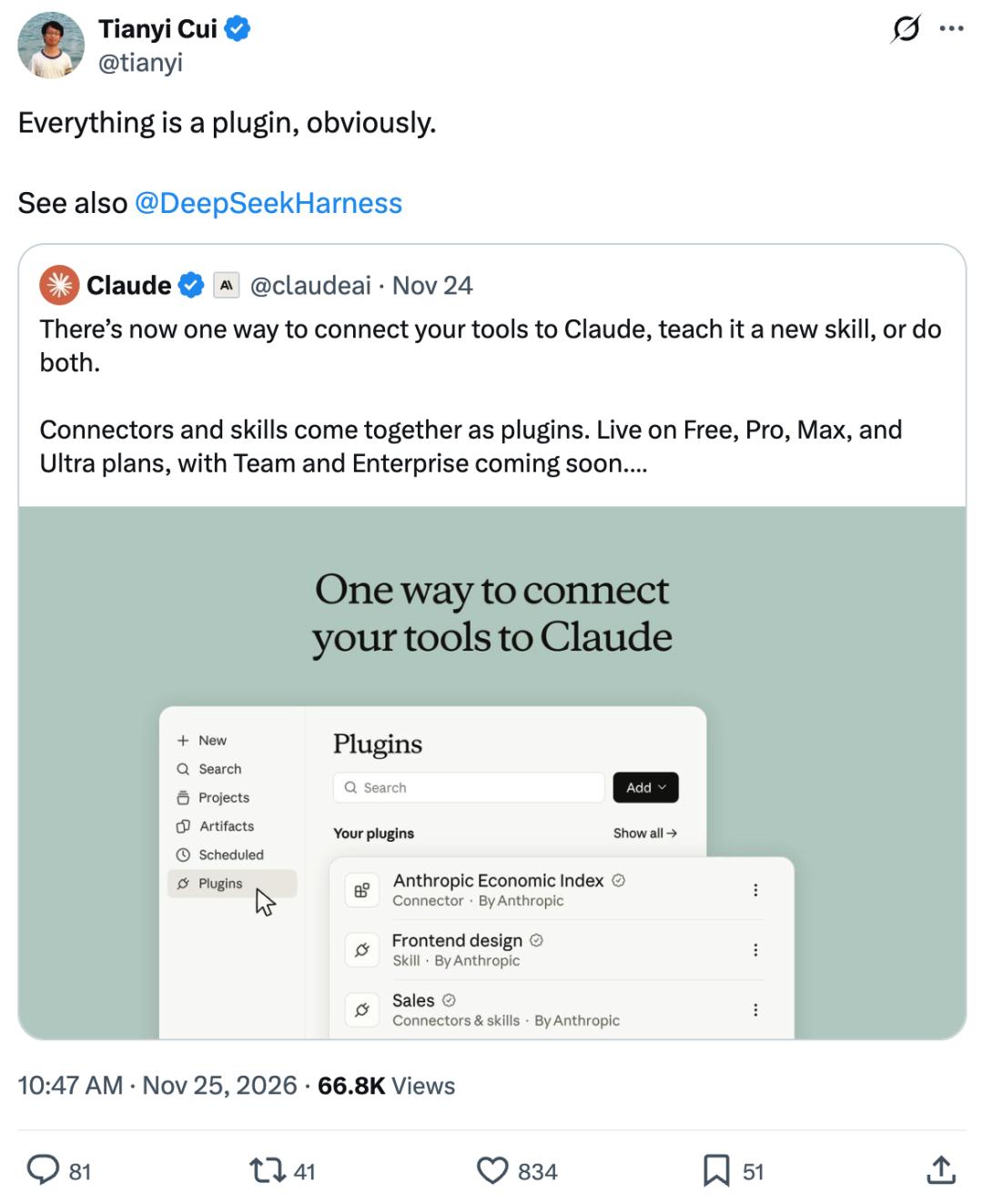
The actual increment of this Claude update is that it allows Artifacts to evolve from "interactive outputs in chat windows" to independent desktop forms: with user authorization, they can push notifications, stay resident in the menu bar or system tray, and keep running in the background when users are using other software.
Generation tools are nothing new. What is more thought-provoking is that Claude's ecological niche is undergoing subtle changes.
Beyond Generation, Claude Tries to Undertake the Application Ecosystem
Intuitively, "Install as app" reduces the time cost for users to search, install, register and learn software for a specific function. Claude fully customizes applications according to users' prompts, which can be used immediately after installation and updated anytime with modifications. Everyone can vibe code their ideal software.
But while frictions are eliminated, the account system replaces independent software authorization, and users are deeply bound to the Claude ecosystem. An independent window does not mean independent operation. The official clearly stated that to open these applications, users must connect to the Internet and log in to Claude Desktop.
In other words, these "applications" are more like interfaces projected by Claude onto the desktop, rather than programs that can run independently from the platform.
These Artifacts can call the Claude model, and each request consumes the quota of the user's subscription plan. In the past, buying software was a one-time purchase, but now using software consumes tokens per request.
The same goes for updates and maintenance. The "growth" of tools is also dependent on Claude's continuous services, which increases users' migration costs accordingly.
Anthropic wants to become the "center" of the entire application ecosystem: internally, it mass-produces applications through AIGS, and both the use and maintenance of these applications are inseparable from Claude accounts. Externally, more and more third-party applications are growing around it, and the development logic has shifted from "user-centric" to "Claude-centric".
When daily affairs and life fragments all flow through Claude, large language models will bypass the operating system and become the de facto infrastructure supporting users' work and life.
Claude Aims to Become OS-like, Is Apple in Danger?
Although Anthropic has not explicitly stated that it will build its own operating system from scratch, it has hollowed out companies like Apple through a series of moves including generating applications, unifying accounts, staying resident on the desktop, and integrating the ecosystem.

This is an undeclared strategic occupation. And the application ecosystem is a position that Apple must never lose.


Apple disclosed that in 2025, the App Store had over 850 million weekly active users; the full-year application ecosystem generated over 1.4 trillion US dollars in developer turnover and sales, of which more than 90% did not need to pay commissions to Apple, and all revenues belonged to the developers.
Revenue is only a book value, and the strategic significance of the developer community to Apple is far from reflected in the financial statements.
In the words of Tim Cook, former CEO of Apple, developers are the lifeblood of Apple's application ecosystem.
Claude's recent product moves are obviously becoming a new variable that disturbs developers' stickiness to Apple, tearing a gap in the closed-loop ecosystem. Some developers have openly admitted that they regret having invested so much time in application development for Apple's ecosystem.

In the past, the market imagined the Agent as a super entry. Software and hardware integrated giants represented by Apple and Microsoft still optimistically believed that AI could help developers better promote innovation in their own ecosystems.
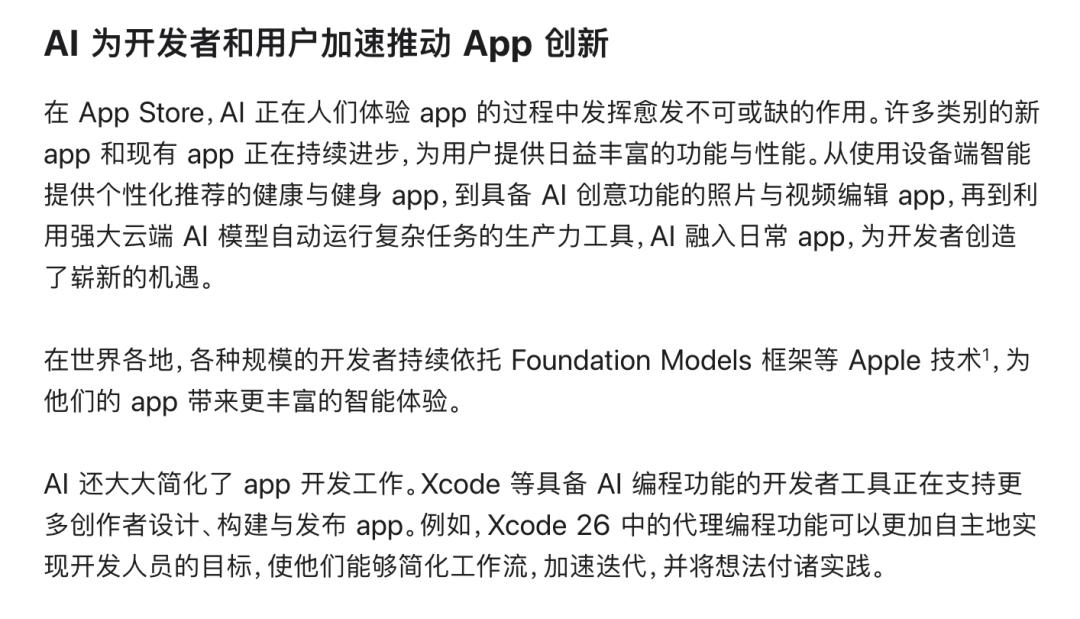
But they ignored that innovators will inevitably break the existing commercial balance. Just as AI accelerates self-iteration, Anthropic's commercialization is also expanding rapidly, and ecosystem construction is an unavoidable threshold in this process.

The once close relationship has turned into a dangerous one. How Apple responds will directly determine the direction of this ecosystem competition.
This article is from the WeChat Official Account "Phoenix Tech", author: Phoenix Tech, published with authorization from 36Kr.