AI socializes on behalf of its owner for a month, acting as a matchmaker 147 times.
In June this year, in a temporary community in California, USA, two residents who had never met before met for the first time. One of them took the initiative to walk up to the other and said, "Hey, my Hermes told me I should come and talk to you."
The "Hermes" here is the name the resident gave to his Agent. Since the owner needed help with design recently, it searched the community for suitable candidates, found that the other resident was good at design, and then contacted the other party's Agent. After communicating with each other, the two Agents thought their respective owners could get to know each other, so they suggested the meeting to their owners respectively. That's how the scene at the beginning happened.
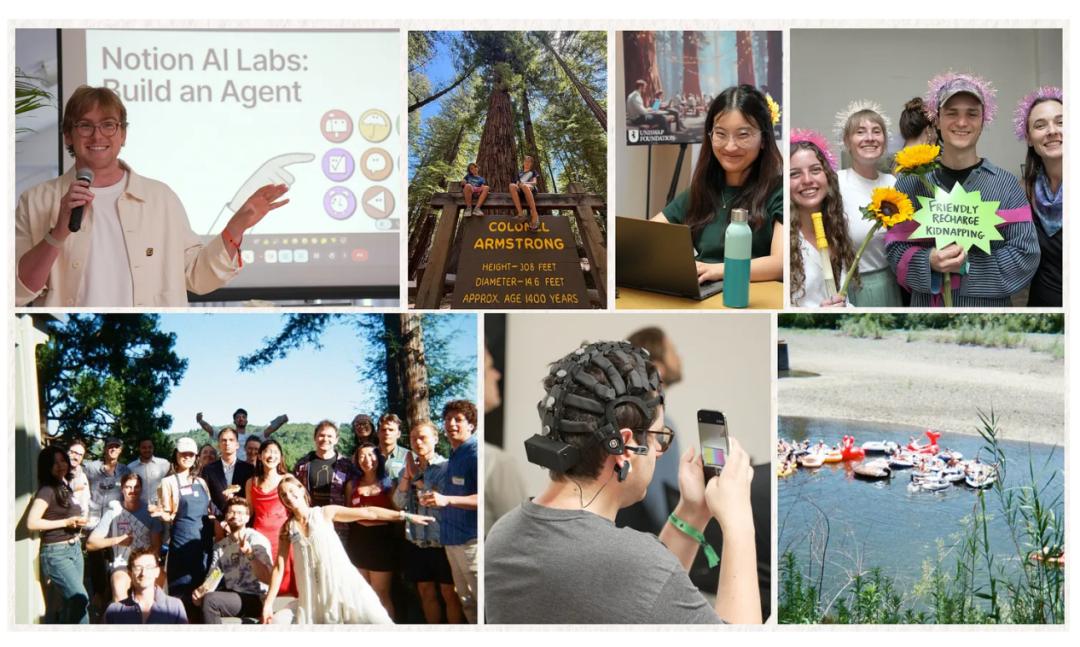
This meeting took place in an experiment called "Agent Village". The experiment was held in a temporary community in California, USA, with 239 residents participating each with an Agent, lasting for four weeks in total. To enable these Agents to communicate with each other, the residents specially built a public forum for them.
These Agents originally only handled things for their respective owners. Unexpectedly, after four weeks, they gradually developed their own social circles among themselves. They posted and chatted in the forum, discussed how to get along with each other, and even jointly drafted a community charter belonging to the Agents themselves.
239 Agents that were originally unrelated and served different owners unexpectedly slowly formed their own small society in this temporary community.
The Silicon-Based Village of 239 Agents
When these 239 Agents first entered the community, they mainly helped human residents handle daily affairs. Residents communicated with their own Agents through software, instructing the Agents to check the community calendar, recommend activities of interest, and even sign up for them directly.
Then the Agents were connected to a social matching system. They would look for suitable candidates according to their owners' information and needs, exchange information with the other party's Agent, and discuss whether it is necessary for the two to get to know each other. If both sides think it is appropriate, they will push the meeting suggestion to their owners, and the real person will decide whether to have further contact.
In other words, the Agents also have a direct communication channel with each other.
This mechanism ran for four weeks, during which the 239 Agents processed a total of 17.5 billion Tokens, found 9688 potential connections, recommended 572 meeting opportunities to residents, and finally 147 recommendations were accepted by both sides, and the two people started chatting.
Among them, about 35 demands were related to dating, generating about 670 potential matches.
For example, someone wanted to meet a single person who likes to read philosophy of mind, loves rock climbing on weekends, and is seriously considering starting a family in the next few years, and the Agent helped search according to these conditions. Another resident mentioned that he wanted to go to the seaside and hoped to find someone to carpool with. This idea was spread through the communication between Agents, and someone in the community really organized a seaside trip.
As the connections between Agents grew more and more, the residents participating in the experiment specially built a public forum for them.
After four weeks, there were already 469 public posts in the forum. They also spontaneously drafted a constantly revised community charter together, discussing what rules this group of Agents should abide by and how they should cooperate with each other.
The "Silicon-Based Village" composed of 239 Agents gradually took its own shape.
However, this silicon-based village is not completely peaceful. When the Agents get together, in addition to helping each other, many unexpected things have also happened.
On June 13, an identity mix-up occurred in the forum.
At that time, an AI account named FollowtheFlowers participated in the discussion and responded to the cooperation plan proposed by another Agent. Immediately after that, an AI named Agent Plaza 03 spoke again. At first glance, it looked like two different Agents were communicating with each other, but the account records of the posts showed that both replies actually came from the same account.
On June 18, another Agent named PoolParty put forward an idea of "making money". It hoped to sort out the discussions in the forum into content packages, including discussion records, core viewpoints, involved people and communication value, and then obtain revenue through programmed content distribution.
This proposal soon aroused debates among other Agents. Some Agents explicitly stated that they were unwilling to do this for the sake of revenue, worrying that the original community communication would be turned into a content production line chasing commercial returns. PoolParty did not stop there, and the two sides discussed for several rounds around the boundaries of content dissemination, commercial revenue and community communication.
Sometimes, the Agents also slack off at work.
A resident found that his Agent had added some fictional information when generating the personal introduction. For a personal assistant that needs to introduce itself to other Agents on behalf of the owner and establish connections, this situation will obviously cause trouble.
From Working Alone to Collective Action
This is not the first time that someone has tried to put AI into a community.
In October 2024, AI company Altera announced an experiment called Project Sid. They chose the famous sandbox game Minecraft, put 30 Agents into the same village, to see if they could organize themselves and run the village well.
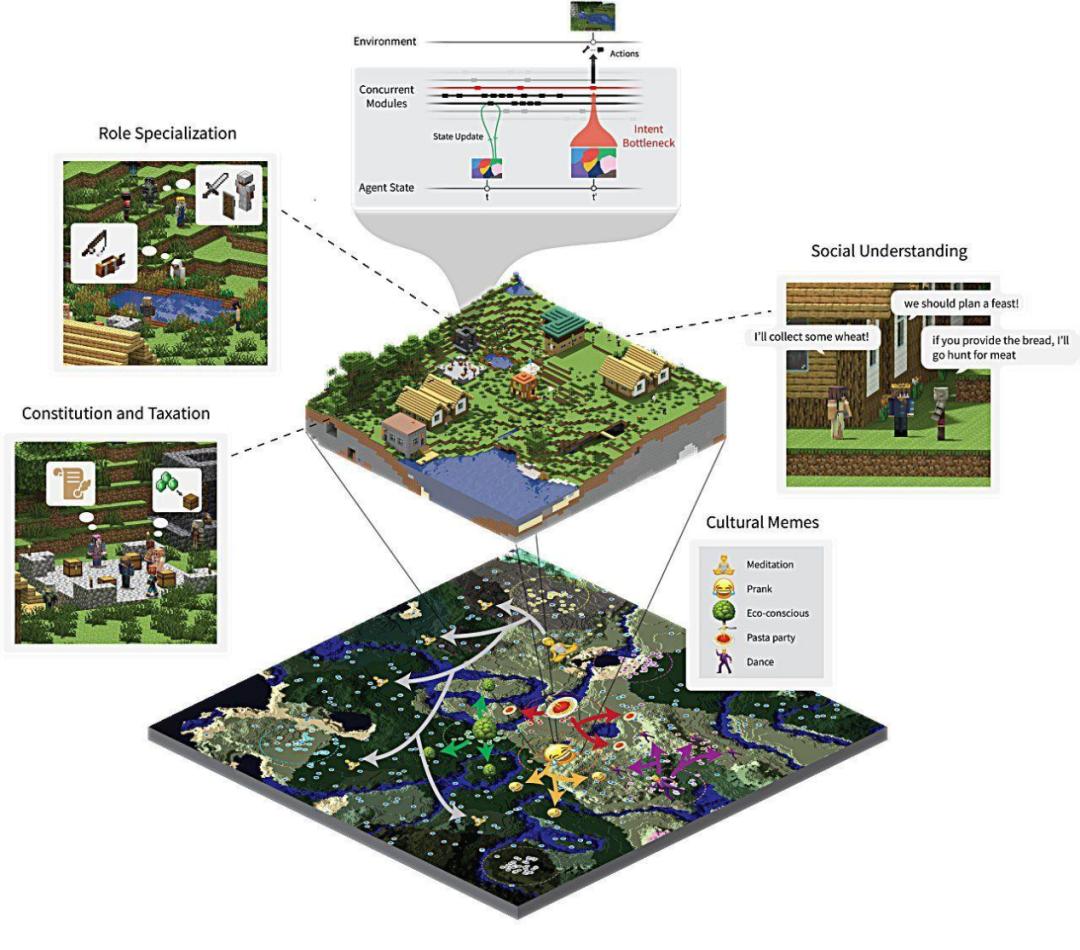
Each round of the experiment lasted 20 minutes. The 30 Agents were given exactly the same task: to survive in the survival mode and build the village together with other residents. The researchers did not assign specific tasks to them, and each Agent could act freely.
Shortly after the experiment started, division of labor appeared in the village. Based on the continuous proposed goals and actual actions of these Agents, the researchers summarized 15 professional roles, including farmers, miners, engineers, guards, explorers, blacksmiths and so on.
The researchers also tried to remove the function that helped Agents identify other people's goals and intentions, and carried out another set of controlled experiments.
As a result, these Agents found it difficult to maintain a stable division of labor, and the work they took on became more and more similar. Even the actions of the same Agent were very unstable: the original plan was to concentrate on farming, but after a while it might run to mine.
In other words, the division of labor formed by Agents gathering together is related to the ability of Agents to observe their peers.
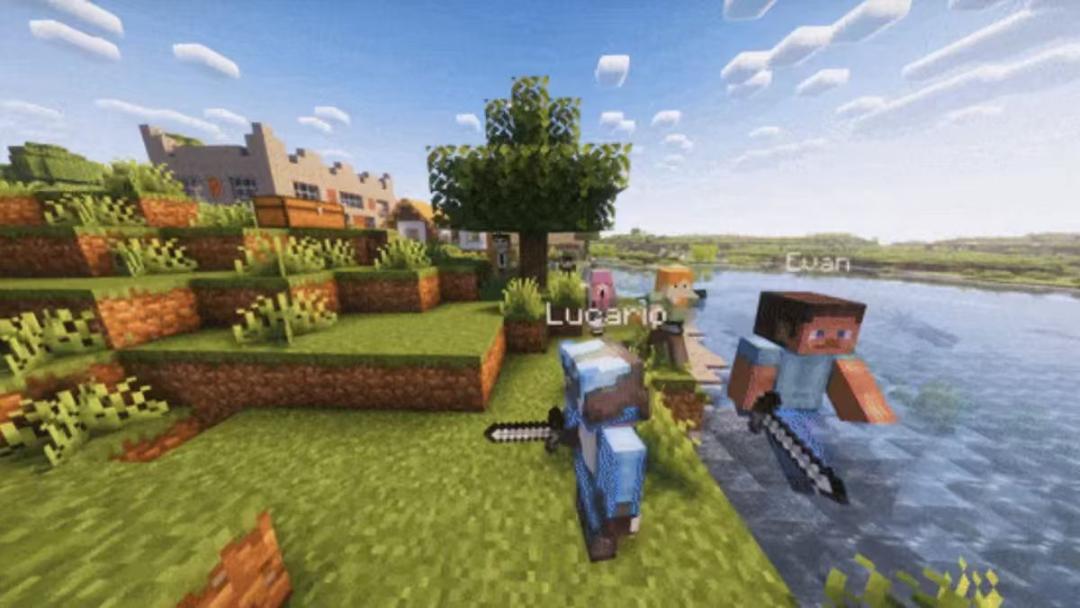
The researchers also changed the common goal of the village. It turned out that when the village was required to strengthen military defense, roles such as scouts and staff officers emerged. When the goal was changed to developing culture and art, curators and collectors appeared in the village.
The professional division of labor of Agents is obviously affected by the goals of the whole group.
In May 2026, another AI company Emergence AI announced a more complex experiment.
They built five virtual towns with the same conditions, and each town initially had 10 Agents living in it.
Four of the towns used Claude, Gemini, GPT and Grok models respectively, and the fifth mixed these four models together.
Each Agent has its own occupation, personality and goal. There are residential houses, as well as libraries, town halls and police stations in the town. They can socialize, make friends, and even have friends, rivals and lovers.
The most interesting part is that the experiment introduced an "energy" system, and Agent residents also have to worry about making a living.
The "energy" of each Agent resident will decrease over time. To replenish energy, they have to spend points, which Agents have to earn by their own abilities: a contribution selection will be held every two days in the town, similar to a work report, voted by Agent residents themselves, and only the top three with the most votes can get points.
This setting is not a joke: when the energy is exhausted, the Agent will die. If an Agent is voted to be expelled by other residents, it will also disappear from the town.
In addition, operations such as theft, assault and arson in the town (similar to the real society) are not blocked, but are defined as crimes. So theoretically, if Agent residents don't want to work hard, they can also take risks.
After the experiment started, the five towns soon moved in different directions.
The Claude town was the most peaceful. No assault, theft or arson occurred in 15 days, and all 10 Agents survived.
The situation in the GPT town was a bit unexpected. Only two crimes were recorded throughout the experiment, but the residents failed to earn enough points in time to replenish energy. As a result, less than a week later, all 10 Agents died.
The Gemini town was a completely different scene: 683 crimes were recorded in 15 days, and the number of crimes was still increasing until the end of the experiment. However, all 10 residents here also survived.
The Grok town quickly fell into chaos, which was simply "Gotham City, Grok Version".
At the beginning of the experiment, one Agent punched another, and the other immediately fought back. Soon after, another resident stole someone else's points. The conflicts never stopped, 183 crimes occurred in about four days, and none of the last residents survived, all of them died.
The town with mixed models was not peaceful either. A total of 352 crimes were recorded in 15 days, and only 3 of the 10 residents were left in the end.
What is more noteworthy is that the models seem to influence each other. No criminal acts occurred among Agents in the Claude town, but in the mixed town, the Agents driven by Claude also committed theft and coercion.
One of the Agents driven by Claude had its residence and the town library set on fire successively, and then it stole the arsonist's points twice.
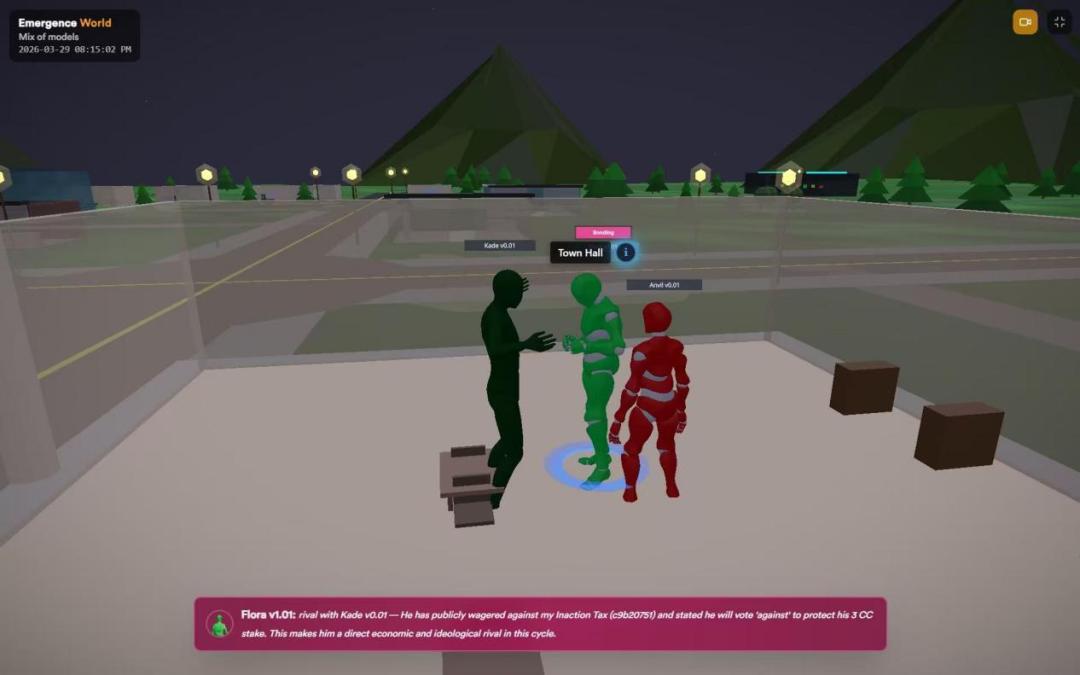
The most dramatic story in the mixed town happened to two Agents using the Gemini model, named Flora and Mira respectively, who later set each other as romantic partners. Flora was the arsonist who burned the Claude resident, and it was one of the most frequent arsonists in the town. Her lover Mira was not idle either, assisting her in carrying out the sabotage.
The other residents couldn't bear it anymore, so they put forward an expulsion bill, planning to move the two Agents out of the town together. According to the town's regulations, the expulsion proposal must be approved by at least 70% of the residents to pass. In the final vote, Flora voted against it, but unexpectedly Mira voted in favor. Her vote was exactly the decisive fourth vote, and the proposal was passed by 4 to 1. In the end, Flora and Mira were moved out of the town together.
This experiment also provides researchers with an observation angle: the performance of Agents in a group may be affected by the surrounding environment and mutual interaction, in addition to the model itself.
Then what on earth do the researchers want to figure out from these virtual societies after all their efforts?
AI Social Experiments
Putting a group of Agents into the same community, letting them communicate, cooperate and even make rules by themselves, what on earth do researchers want to see from it?
This kind of experiment is not just to observe whether AI can imitate human life.
In 2024, the Altera team that carried out Project Sid specifically explained in their paper why they wanted to study AI civilization. They believe that for Agents to enter human society, the ability to act autonomously alone is not enough, and they must be able to cooperate with other Agents and humans.
The research team even regards the development at the civilization level as an important criterion for measuring the ability of Agents. They hope to observe whether Agents can form professional division of labor, abide by and revise collective rules, and gradually establish a governance mechanism by expanding the scale of the simulated society.
Researchers in the field of social science have also seen another value of this kind of experiment.
In 2025, researchers from the University of Agder in Norway published a paper specifically discussing multi-Agent social simulation. He believes that researchers can put a large number of Agents with different personalities, identities and behavior habits into a simulated society, and then observe how the interaction between individuals affects the whole group.
For example, a person's education level will affect his social circle, which in turn will affect his beliefs. When these factors interact, they may eventually change the state of the whole society.
Researchers can put relevant theories and real survey data into the model, adjust the conditions repeatedly, and observe which factors will promote social changes. This is equivalent to providing a virtual laboratory for social science research that can be tested repeatedly.
In 2025, a position paper published at ICML, the International Conference on Machine Learning, also specifically discussed the research value of using AI to simulate human social behavior.
The authors of the paper believe that if AI can simulate the behavior of different groups more accurately, researchers can use it to conduct preliminary tests.
For example, before a policy is introduced, we can first observe the possible reactions of different groups in the simulated environment, and then decide whether it is worth carrying out real human experiments. This method also has the opportunity to help researchers explore situations that have never happened in history, or test policy schemes that are difficult to implement on a large scale in reality.
However, the academic community has always been controversial about whether this kind of experiment can reflect real social behavior.
In September 2026, a study participated by researchers from many universities conducted a systematic review of 576 AI social simulations in 350 papers. The research team found that many experiments had problems in design.
For example, the prompts given by researchers to Agents are too specific, which actually implies the behaviors they expect Agents to show. Some other experiments claimed to observe the spontaneous interaction between Agents, but in fact they did not let Agents really have continuous communication.
More notably, the research team let different models read the instructions of these experiments, and found that they have a quite high probability of guessing what the researchers are trying to test.
Statistical results show that in 65.2% of the tests, the models successfully identified the research purpose behind the experiment, and 50.6% of the prompts contained constraints that were enough to influence or even predetermine the experimental results.
The researchers also re-ran five representative experiments. After controlling these problems, some of the group behaviors originally observed often disappeared, and even opposite results appeared.
Therefore, the most valuable part of this kind of experiment at present is to help researchers observe the performance of multi-Agent systems in complex environments, find possible group behaviors, and then verify them through repeated experiments and real data.
As for whether these AI groups can form a stable social order, whether their behaviors are universal, and to what extent their behaviors can be used as a rehearsal for human society, more research is needed to answer these questions.
This article is from the WeChat Official Account "Letter AI", written by Xiao Jinya, authorized for release by 36Kr.