Leapmotor's "Minsky Moment": After driving all its peers to the brink of collapse through cutthroat competition, is it going to push itself to the edge of total collapse as well?
Leapmotor has just celebrated its career highlight, but was soon embarrassed by a trunk collapse incident — Who could have imagined that the trunk floor of their car would collapse under the weight of a case of beer?
On November 19, a black flagship SUV Leapmotor D19 rolled off the final assembly line at the Jinhua plant, making Leapmotor the first Chinese new EV maker to achieve the 2 millionth mass-produced vehicle roll-off milestone.
It took Leapmotor 6 years to go from 0 to 1 million vehicles, only 14 months to go from 1 million to 2 million, and the period from 1.5 million to 2 million was even completed in just 5 months.
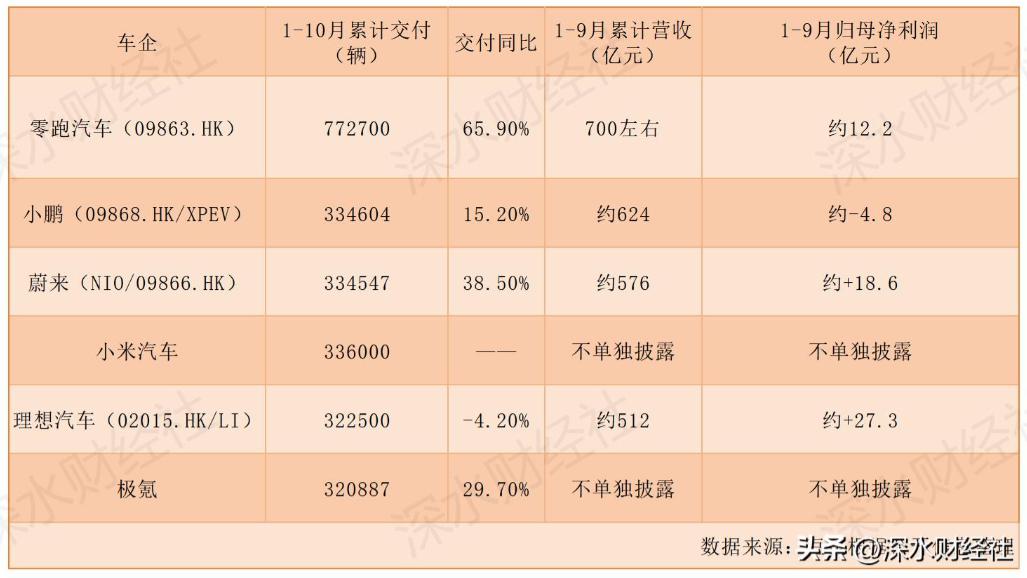
Against this backdrop, Leapmotor has quickly risen from a little-known player among new EV brands to the biggest dark horse in the new energy vehicle sector, with monthly sales exceeding 100,000 units for 4 consecutive months. Its domestic new energy vehicle market share stands at 7.2%, outperforming the "NIO, Li Auto, XPeng" trio to become the leading new EV force.
This performance report is something any automaker would be proud of. However, the third-quarter financial report released the next evening made the celebratory atmosphere rather awkward.
Their net profit per vehicle has dropped to as low as 129 yuan.
In Q3, Leapmotor delivered 310,100 vehicles, with a net profit attributable to shareholders of 40 million yuan. Calculated accordingly, it only earns 129 yuan for each car sold. Its operating profit even directly fell to -30 million yuan, and the net profit was only pulled back to positive with the help of about 500 million yuan in carbon credit revenue.
Leapmotor's gross margin dropped from 12.6% in Q2 to 10.9%, compared with 14.5% in the same period last year. The company's full-year target net profit is 5 billion yuan, but it only achieved a cumulative 250 million yuan in the first three quarters, with a completion rate of 5%, which is practically a "blank paper" in terms of performance.
For many years, the outside world has been asking what exactly helped Leapmotor achieve this counterattack?
In fact, this is also an open secret. Its "killer weapon" is pricing. Relying on extreme cost control, it has left a large number of peers behind in the brutal competition. However, now, Leapmotor has also been dragged into this vicious price competition itself.
Low-price-for-scale strategy is unsustainable
The logic behind Leapmotor's rapid growth is pushing prices to the extreme.
While NIO, Li Auto and XPeng are gathered in the high-end market above 200,000 yuan, and BYD has stabilized the mainstream price band, Leapmotor chose the steepest path, which is sinking into the low-tier market.
The full-stack self-development team that Zhu Jiangming brought from Dahua Technology independently developed and manufactured all components of the three-electric system, domain controllers, and intelligent driving hardware, covering 65% of the vehicle's total cost in-house, eliminating 15% of the gross margin in the supply chain.
According to industry estimates, with the same configuration, Leapmotor has an overall vehicle cost advantage of about 10% compared with its peers.
With this cost reduction capability, Leapmotor can fully engage in the "price war" with its peers. Configurations such as lidar and high-level intelligent driving, which used to only be available on models priced at 200,000 to 300,000 yuan, have been directly applied to Leapmotor models priced below 100,000 yuan.
The guide price of A10 ranges from 65,800 yuan to 86,800 yuan. It rolled off the production line 100,000 units 135 days after its launch, and has ranked the top of the sales list of small SUVs under 100,000 yuan for consecutive months. The combined cumulative sales of the two A-series models, A10 and A05, have exceeded 200,000 units, which is the core engine of this round of explosive growth.
The after-effects of this strategy are also obvious. What profit can you expect from cars priced at just tens of thousands of yuan?
The company also admitted on the earnings call that the absolute gross margin of A-series products is significantly lower than that of B, C and D series. The continuous rise in the proportion of A-series sales has directly dragged down the overall vehicle profitability.
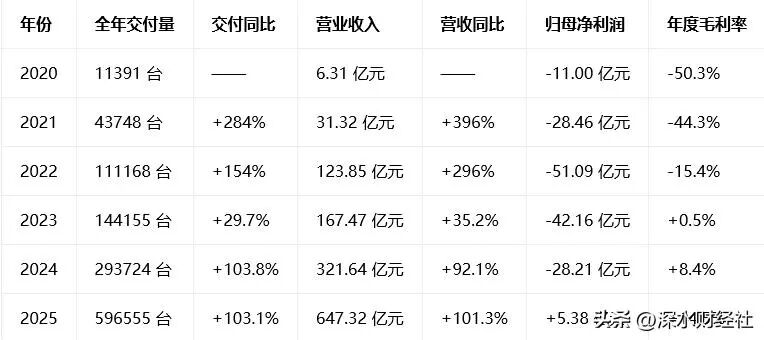
Core operating data of Leapmotor from 2020 to 2025
In Q3, Leapmotor's revenue per vehicle was 102,200 yuan, nearly 10,000 yuan less than 111,800 yuan in the same period last year; gross profit per vehicle was 11,200 yuan, down 5,000 yuan year-on-year and 2,800 yuan month-on-month.
While sales increased significantly, the total gross margin barely rose month-on-month, from 3.44 billion yuan in Q2 to 3.46 billion yuan in Q3, with a growth rate of only 0.6%.
However, the total of three expenses reached 3.53 billion yuan, up 12.1% month-on-month. The three expenses per vehicle amounted to 11,400 yuan, which has exceeded the gross profit per vehicle of 11,200 yuan.
When selling a car, the gross profit can't even cover the expenses. This is the reason why Leapmotor's operating profit turned negative.
If Leapmotor used to grab market share by low prices, low prices will also turn into a vortex. Even if you grab the market share, it is actually very difficult to raise the price later. Back in the days, Wuling Hongguang Mini was popular all over the country, but now SAIC-GM-Wuling is still a byword for low-end products, and the company's profitability remains at a very low level.
Leapmotor may be able to beat its peers by low prices, but it will also trap itself in the low-price vortex.

Leapmotor is facing "pincer attack from both sides"
Since 2025, the top-level guidance of the new energy vehicle industry has shifted from "encouraging competition" to "anti-involution".
The China Association of Automobile Manufacturers has issued a fair competition initiative. Nine government departments proposed in the "15th Five-Year Plan" industrial plan to strengthen price law enforcement and build a market order of high quality and reasonable price. The executive meeting of the State Council has repeatedly named and rectified irrational competition in the new energy vehicle sector, and the State Administration for Market Regulation has issued the automotive price compliance guidelines to explicitly curb disorderly price wars.
Many automakers have adjusted their strategies, actively reducing terminal discounts and raising the prices of some models.
Leading companies such as BYD and Geely have stated on many occasions that they will no longer participate in vicious price competition. Industry consensus is taking shape, and the old path of grabbing market share by low prices is becoming increasingly unworkable.
At this critical juncture, Leapmotor relies on the A-series models priced at 70,000 to 90,000 yuan to support its monthly sales of 100,000 units, which naturally puts it under the spotlight of public opinion.
The doubts are concentrated on three levels.
The first is the deviation between its development path and policy orientation. The industry encourages high quality with reasonable price, but Leapmotor's growth is rooted in extreme low prices, which makes it easy to be labeled as the "main force of involution".
The second is the risk of chained price reduction. Leapmotor has lowered the price threshold of intelligent driving hardware to below 100,000 yuan. If BYD, Geely and other competitors at the same price range follow suit to cut prices, the profit bottom line of the entire entry-level new energy vehicle track will be further suppressed.
The third is the brand ceiling. If the brand focuses on low-price high-volume sales for a long time, once the user mindset of "cheap cars" is solidified, it will be very difficult to launch high-end models in the future.
Of course, we can not equate all low prices with "involution". Leapmotor's low prices are based on cost reduction through full-stack self-development, not dumping at a loss, which is essentially different from malicious price wars.
But when a company's growth is highly dependent on low-margin entry-level models, it is naturally the most sensitive participant in the price war.
The video that the trunk storage box of A10 was crushed by several cases of beer spread on the Internet last week. Although Leapmotor responded that it was a problem of the load-bearing limit of the storage box, the fact that this incident was amplified in public opinion itself shows that consumers always have doubts about the quality of low-cost cars.

Overseas markets cannot provide immediate relief
The domestic "anti-involution" is also forced by foreign pressure. Due to the continuous surge in domestic new energy vehicle production capacity, overcapacity has emerged. A large number of automakers are going overseas, and they have also brought the domestic price war strategy abroad.
As a "low-price pioneer" in China, Leapmotor naturally will not miss the opportunity to expand its low-price strategy overseas.
Statistics show that Leapmotor exported 63,278 units in Q3, a year-on-year increase of 263.7%, accounting for 20.4% of total sales. Its cumulative export volume in the first 10 months exceeded 180,000 units, 3 times the full-year export volume of 2025.
Leapmotor's cooperation with Stellantis continues to advance. It has laid out more than 1,000 sales and service outlets in Europe, and local factories in Spain, Brazil and Malaysia are also under implementation.
But making money overseas is not that easy.
The Q3 financial report clearly mentioned that the sea freight for long-distance routes to Europe and South America has risen sharply, while the terminal price cannot be quickly raised along with the cost, leading to a significant decline in the gross margin of overseas models.
At the same time, the anti-subsidy investigation tariffs imposed by the EU on Chinese electric vehicles are still in place. China's new energy vehicle export tax rebate policy will also be adjusted from April 2027, and the launch pace of PHEV models in Europe has slowed down. Overseas markets are more like incremental markets in the short term, and it is difficult to quickly become a profit pillar.
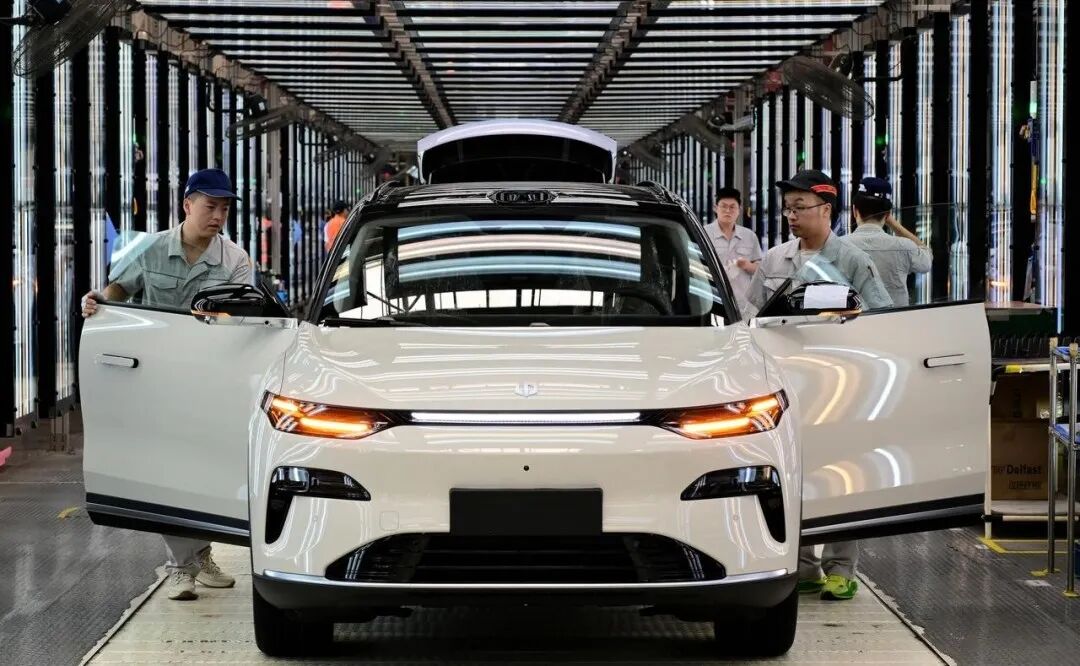
It is estimated that no country can withstand the impact of such a price shock from automakers like Leapmotor, and it will definitely face joint blockade from overseas markets in the future.
Leapmotor has three paths ahead: increase the proportion of mid-to-high-end models, but this means actively controlling the sales volume of A-series, which will directly impact the rhythm of monthly sales of 100,000 units, and it remains a question whether the capital market can accept this; rely on overseas markets to contribute high gross margins, but the investment in local factories and channels is huge, and it is difficult to see results in the short term; continue to make value differentiation in the entry-level market to break out of the dead cycle of "who can offer lower prices", but entry-level users are extremely price-sensitive, and orders will disappear once the price is adjusted upward.
This is a typical dilemma: cutting prices to boost sales will put gross margin under continuous pressure; stabilizing prices will lead to slower sales growth.
Leapmotor has proved in just a few years that full-stack self-development can indeed produce models with extreme cost-effectiveness, but now anti-involution and high-quality development are the main themes, and the capital market no longer simply pays for sales scale.
Since the second half of last year, the stock prices of domestic listed new energy vehicle companies have continued to fall. Leapmotor's stock price has dropped from HK$76 to around HK$30 at present, NIO's stock price has fallen from HK$61 to HK$21, Li Auto's stock price has dropped from US$120 to around HK$44, and Xpeng's stock price has fallen from HK$110 to around HK$36.
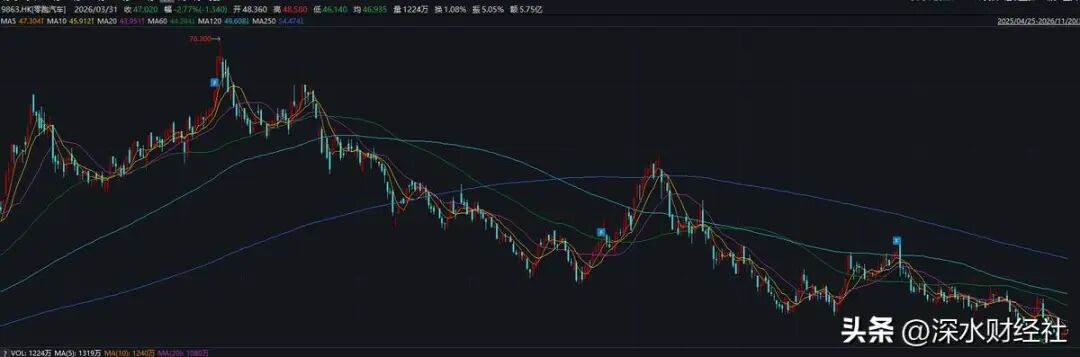
For Leapmotor, what it really needs to prove next is not how many more cars it can sell, but whether it can make stable profits without relying on extreme low prices.
If it is always trapped in the cycle of exchanging volume for lower prices, the growth story of this dark horse may face an inflection point at any time under the general trend of anti-involution.
This article is from the WeChat official account "Deep Water Finance", author: Wu Hai, published with authorization from 36Kr.