Peng Xiaozhou, CTO of Zhongtai Juneng: The Value of One Robot Running on Two-Shift Schedule | 36Kr 2026 WISE King of Business Summit
This year, when robots move beyond demonstration and step into real application scenarios, the problem of implementation has taken on a new look: in the past people asked "can it be achieved", now they ask "dare we use it, is it cost-effective, and how to cooperate". On November 26, the "Embodied Intelligence & Culture, Business and Tourism" sub-forum of WISE2026 Business Summit was held in Yizhuang, Beijing. Operators of shopping malls, amusement parks and hotels, together with representatives of embodied intelligence enterprises, investment institutions, law firms and banks gathered in the same venue, to discuss technology trends in the most specific consumer scenarios.
What makes this sub-forum distinctive is that it does not focus on how advanced the technology is, but on how to make the business viable: when robots are introduced into shopping malls, do they replace human staff or add new posts? Can the cost be sustained, and who takes responsibility if problems occur? Only when the service system of rules and capital is established before robots are deployed, can the implementation of robots have a solid foundation.
Next, 36Kr, as a loyal recorder on site, will fully document all the calls and responses of this day — every participant in the industry deserves to be recorded word for word.
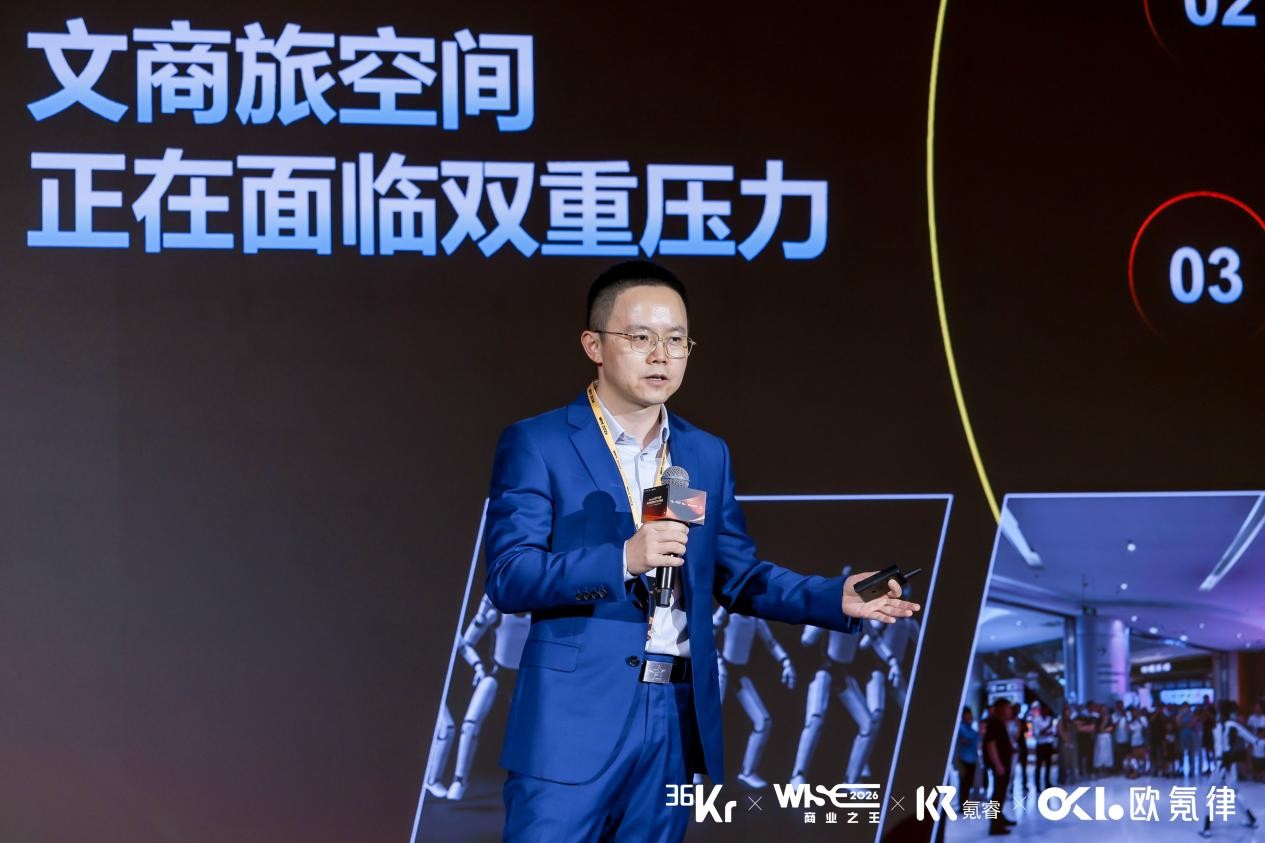
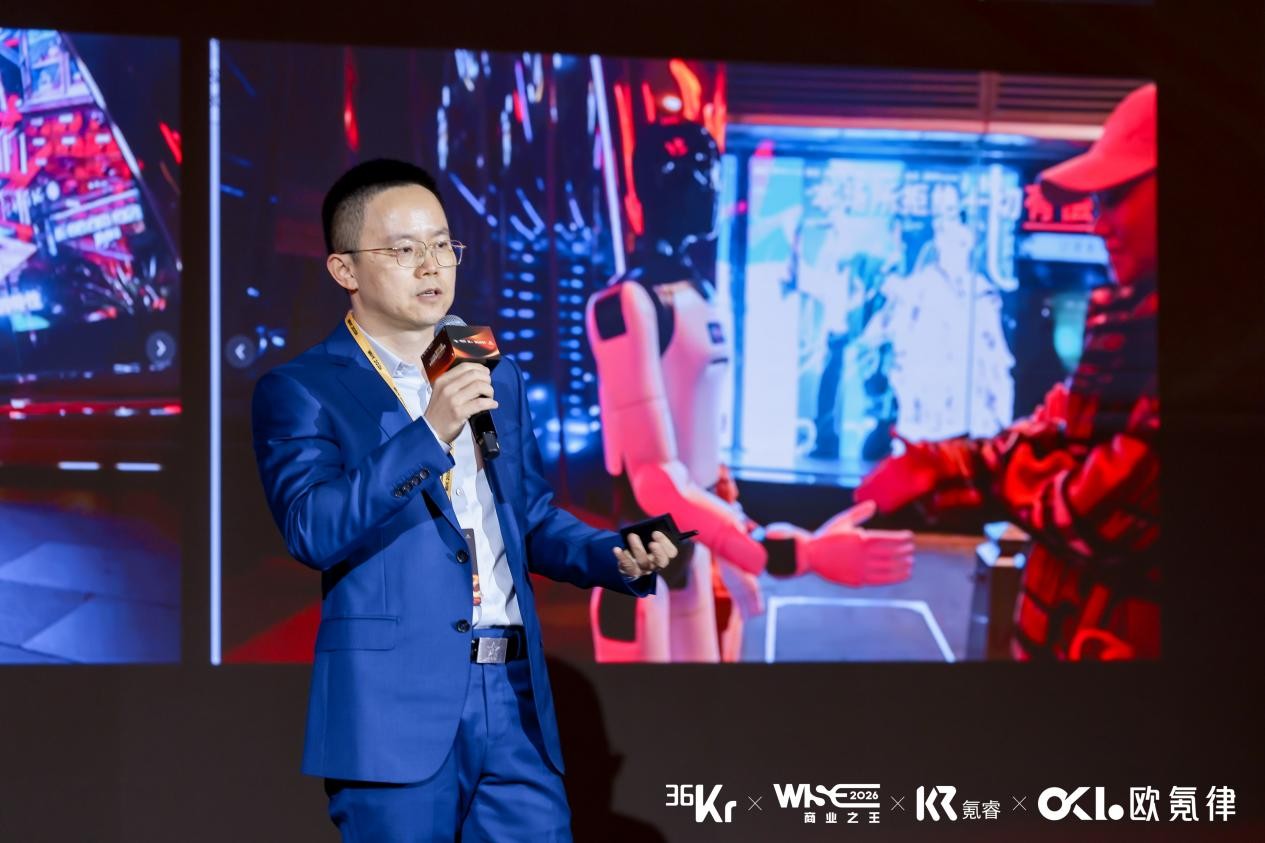
Speaker: Peng Xiaozhou, CTO of Zhongtai Juneng
Good afternoon, distinguished guests on site and friends online! I am from Beijing Zhongtai Juneng. Our company started with inspection services for energy and warehousing scenarios. Over the past two years, we have carried out a lot of valuable explorations in realizing value in physical and real scenarios.
The theme of my sharing today is the value of one robot working two shifts: from electric power operation and maintenance to culture, business and tourism scenarios, how robots operate, and how we realize the integration of operation and maintenance modes.
Before I start the sharing, I would like to raise a core question for everyone: many current robots are competing for extreme performance and data, and most of them are focused on industrial production line scenarios, especially humanoid robots, quadruped robots and wheel-legged robots. But when we look at the offline physical spaces of culture, business and tourism, such as the crowded exhibition scene today, what on earth should our robots be? Are they just machines for exhibition and check-in interaction, or real production tools that can continuously generate benefits and solve customer pain points?
My following sharing is divided into four parts: first, the current characteristics of the industry; second, our solution, and why we bring our power-grade technical base to the culture, business and tourism scenarios; third, sharing of real cases of current implementation; fourth, customer value and future direction.
First of all, as we are all familiar with the scenarios of culture, business and tourism, they are currently facing dual challenges between the two systems of physical maintenance and operation.
On the maintenance side, large venues, such as the park space, shopping malls and hotels where we are located today, have scattered machine rooms, equipment and various fire protection points inside the buildings. The cost of manual inspection at night is very high, with many missed inspections, and hidden dangers are difficult to detect in advance.
On the front-end operation side, as we all know, the demographic dividend has peaked, customer acquisition costs are rising, and traditional marketing is suffering from audience fatigue. How to reduce costs and find a new carrier with built-in communication attributes that can retain customer flow? This year, humanoid robots have obviously emerged as a star of technology.
But how to operate them? The biggest dilemma in the industry at present is that there are two departments, two sets of budgets and two sets of equipment, which operate separately. Most of the hardware is idle for a long time, with high investment and low utilization. At present, this is a common problem we face when robots, especially humanoid robots, enter physical scenarios.
Our solution is a differentiated approach: integrate the two into one, the same robot operates in the daytime and performs maintenance at night, automatically switching between the two modes according to time. During the day, the robot acts as the carrier of interactive space, undertaking the functions of tourist guidance, check-in, traffic attraction and activity broadcast; at night, it will automatically switch to inspection mode, complete infrared temperature measurement, defect identification and fire inspection, realizing 7x24 hour unmanned inspection. Therefore, the essence of our solution is that one piece of hardware supports two independent business operations, and one humanoid robot can complete the dual KPIs of the marketing department and the engineering department — this is what we call the value of one robot working two shifts.
Speaking of which, many friends in the industry have asked me where our technical base comes from. The base comes from the strict practice of the power grid. We are jointly developing corresponding products with the Electric Power Research Institute, and have accumulated a number of patents and intellectual property rights, and have obtained batch certification for inspection in power scenarios. Including our participation in the embodied intelligence competition of China Southern Power Grid, we are also the only biped humanoid robot that conducts corresponding training at the final site to solve practical operation problems.
On this basis, we have extracted five layers of capabilities. Friends engaged in technology may be familiar with our features: first, the general mobile ontology, which can adapt to the complex environment in the venue, including slopes, low stairs, elevator linkage, and carpet environment, and can operate normally; second, multi-sensor fusion, with infrared thermal imaging and high-definition vision, which can realize temperature measurement and environment perception.
Third, the industrial-grade AI recognition model. We have developed a small model for culture, business and tourism scenarios, which can handle various situations that need to be dealt with in the on-site environment, and our robots do not need remote controllers — at the beginning of this year, when we deployed in Joy City and several other shopping malls, two or even more people were needed to test one machine, now our robots can fully complete this function independently; fourth, we have built open data capabilities, because when it comes to generating productivity, we have completed corresponding data layer sorting for the docking with customers' current smart commercial systems and smart property systems; the fifth layer is the full-scenario compliance system — as for the problem of how robots avoid obstacles in elevators, we have made professional optimizations to ensure human-machine safety in scenarios with multiple people.
Therefore, our core idea is to use the hard-core safety base of power level to support the flexible commercial space of culture, business and tourism.
I would like to share several practical cases we have implemented in the past two years.
First of all, the shopping mall environment that everyone is very familiar with. We can often see automatic sweeping robots in shopping malls, and humanoid robots that enliven the atmosphere. Our robots not only perform the functions of guiding merchants, broadcasting activities and automatically spreading traffic during the day, but also automatically switch to inspection mode at night, walk into the machine rooms, power distribution rooms and corresponding fire protection points of the shopping mall to identify hidden dangers, including automatic alarm for defects — traffic attraction and inspection are completed by one single device.
This is the case deployment we have carried out in a broader cultural tourism space. In bars, as we all know, the lighting is complex and the crowd is dense, and fire protection compliance is a bottom-line requirement. Our differentiated feature is that the robot first attracts traffic for the bar, is equipped with corresponding themes and lighting effects, can interact deeply with customers during the business hours of the bar, and can also broadcast corresponding drink discounts. At the same time, the robot itself undertakes the inspection function. While interacting, it can also identify whether there is channel blockage, temperature abnormal alarms (such as smoking), and equipment abnormal alarms, achieving second-level response.
This is our scenario in hotels. For the dual-format space of hotels and conference venues, robots can do a lot of work. During the day, we provide welcome and customer assistance services in Jin Jiang Group's Fujian Building; at night, it will replace night inspection workers to inspect the corresponding machine rooms and fire protection points of the hotel. The same applies to exhibition venues: at the exhibition site, we can realize the functions of robot guidance and robot Q&A; during the exhibition preparation window period, the robot can act as an inspection safety officer for exhibition planning, to inspect corresponding fire protection points and check equipment safety.
For broader public spaces, including parks (we have deployed in Wenyuhe Park), schools (we have deployed in Beijing No.2 Experimental Primary School), and transportation hubs (we have deployed in Daxing International Airport, subway stations and some high-speed railway stations), we have also carried out corresponding practice of multi-function of one robot, including explanation of fire protection knowledge, safety knowledge and popular science education. Our goal is to make the same robot undertake inspection security, popular science education and tourist service functions at the same time, which can connect the budgets of multiple departments, has strong replicability, and forms a broader commercial space.
Under these scenarios, to truly realize commercial value, we also share four core mechanisms that can be implemented in a standardized way. First, we have unified survey standards, configuration process standards, and quantifiable acceptance quality; second, the robot will automatically switch at different time periods, and the operation and maintenance reports can be split independently; third, we have also launched a standardized implementation guide for commercial scenarios. According to our previous cases, the robot can be put into work in basically four weeks to one month. Therefore, our current cases have covered five categories of scenarios: shopping malls, hotels, entertainment venues, exhibition venues, public parks and transportation hubs, and we basically have the foundation for batch replication.
The value we bring to customers — although we have been deeply engaged in the inspection market for many years, focusing on robots, quadruped robots and inspection services — our value positioning is far more than just inspection, far more than simple 7x24 hour inspection. It is more about how to achieve operational revenue growth: create communication points at low cost to trigger social traffic attraction; and propose budget reuse, so that one piece of hardware can share investment across multiple departments, to solve the problem of redundant procurement and idle waste of equipment.
Finally, our positioning is a mobile intelligent operation partner for physical spaces. First, we are continuing to standardize this dual-mode, and we hope that our robot can come to the scene to provide services for everyone at the next similar exhibition. Second, we will add lightweight operation capabilities — as we all know, now robots are not only required to find problems and report them, next year our key focus is to realize simple on-site disposal. We have also completed corresponding tests in the power grid, and we are the first company in China to realize corresponding operations by humanoid robots in 110kV substations.
When replicated to culture, business and tourism scenarios, we are confident that we can realize simple on-site deployment. The robot in this case is a distributed perception node on site, and we will output real-time data of people flow, equipment and environment, to support real data twin, and realize the connection with the currently popular physical models in the industry, so as to truly realize intelligent robot operation.
Going back to the question we raised at the beginning of the sharing: now robots in this track are competing for performance, but the essence of business must be to calculate accounts clearly and create real revenue, otherwise it cannot develop for a long time. Therefore, the market does not need expensive and idle exhibition robots. What is really needed is an implementation solution that can create operational benefits during the day, ensure safety at night, and especially can clearly calculate ROI for our customers, which we are practicing in these scenarios.
Starting from the strict scenarios of the power industry, we have crossed borders and taken root in the culture, business and tourism sector. We always firmly believe that scenario value comes first, so that embodied intelligence can truly serve the real economy in the near future.
That's all for my sharing, thank you!