Memory stocks crush South Korean retail investors
The global memory chip market is experiencing a rare wave of price hikes.
AI data centers are making massive memory purchases, and the production capacities of Samsung Electronics, SK Hynix, and Micron Technology have been booked in advance. The prices of some memory chips have risen 10 times over the past year. Electronics manufacturers are scrambling to find suppliers to secure stock, and some products even have to raise prices and reduce configurations.
While the industrial chain is rushing to snap up goods, the capital market is selling off memory stocks.
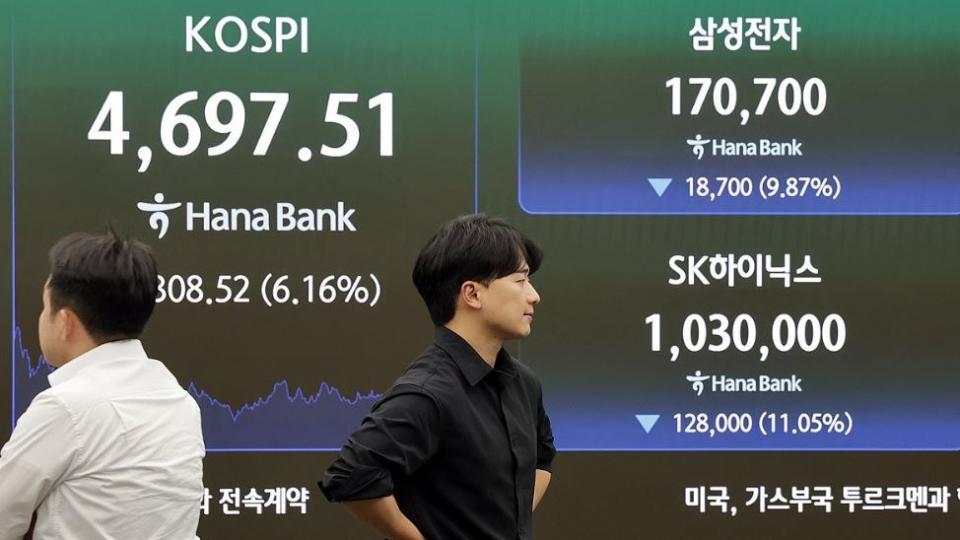
On local time November 25, SK Hynix's share price fell by 11.05%, Samsung Electronics dropped by 9.87%, and the Korea Composite Stock Price Index (KOSPI) fell by more than 6%. Memory stocks that previously benefited from the continuous rise in AI demand suddenly encountered concentrated selling.
On one hand, chips are in short supply, with manufacturers' orders scheduled for several years later; on the other hand, investors are worried that high profits will not be sustainable. Institutions such as Goldman Sachs and Morgan Stanley have set their sights on 2028 to assess the possible changes in memory prices and corporate earnings after the release of new production capacities.
AI demand is still driving up memory chip prices, but the stock market has already cooled down this boom cycle in advance.
01 How Long Will the Memory Chip Shortage Last?
The most direct driving force behind this round of memory shortage comes from AI data centers.
Large tech companies continue to build AI infrastructure and need to purchase a large amount of DRAM and High Bandwidth Memory (HBM). Compared with traditional consumer electronics customers, cloud computing giants have more abundant capital and larger procurement scales. To ensure supply, they are willing to sign long-term contracts and even lock in production capacities for the next few years in advance.
SK Hynix is exactly one of the main beneficiaries of this round of demand growth. The company occupies an important market share in the HBM field, and the demand for high bandwidth memory from AI chip manufacturers such as NVIDIA has brought it a large number of orders. As AI servers continue to expand, the production capacity in the hands of memory manufacturers is getting tighter and tighter.
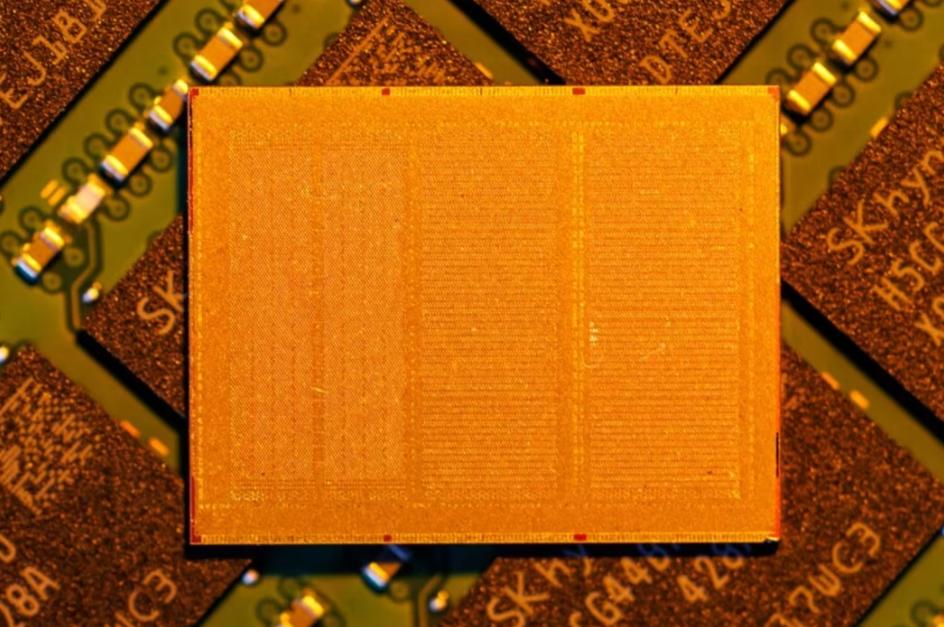
SK Hynix's memory chips are mounted on memory sticks
The pressure brought by AI demand has also spread to the traditional memory market. Due to the higher profit of HBM, manufacturers are investing more production resources in this field. However, HBM manufacturing involves complex processes and packaging links, and the production resources, equipment and capital investment are in competition with traditional DRAM, so the ordinary memory required by consumer electronics manufacturers is also squeezed.
Expanding production capacity also cannot quickly alleviate the shortage. Although Samsung Electronics, SK Hynix and Micron Technology are all increasing investment, the construction of new wafer fabs needs to go through plant construction, equipment installation, process debugging and capacity ramp-up, and it takes a long time from capital investment to the formation of effective supply.
The Wall Street Journal reported on November 25 that some electronics manufacturers have set up special teams for memory chip procurement, and even gone to second-hand trading platforms such as eBay to look for inventory. Some enterprises have to readjust their procurement plans in order to secure supply from Samsung Electronics and SK Hynix.
The memory price hike has also spread to the consumer market. Apple raised the price of some MacBook models, and the starting price of the iPhone 18 Pro series increased; products such as Microsoft Xbox, Amazon Echo Dot and Meta Quest are also facing cost pressure. Some manufacturers choose to reduce the memory configuration of devices: the storage capacity of some Motorola models has been reduced from 256GB to 128GB, but the selling price has not decreased accordingly.
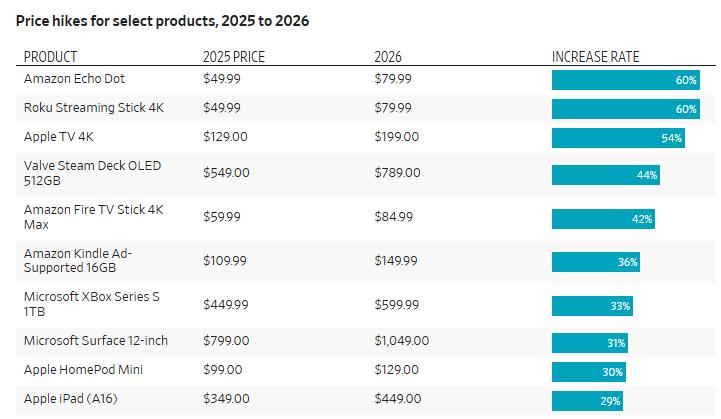
Some best-selling electronic products have raised their selling prices due to rising memory costs
However, demand is not growing synchronously in all fields.
The memory industry report released by GF Securities on November 26 cited data from TrendForce, saying that Chinese cloud service providers have slowed down the pace of procurement recently, and insufficient GPU supply is one of the reasons. The adjustment of related server DRAM orders accounts for about 1% of global DRAM demand, and the procurement of US cloud service providers is expected to fill this gap.
The situation in the consumer market deserves more attention. Some customers cut orders for enterprise solid-state drives (eSSD), and consumer electronics manufacturers also began to reduce memory configurations, so the demand for consumer DRAM weakened, and DDR4 was particularly significantly affected.
Accordingly, GF Securities lowered its forecast for DRAM contract prices in 2027. Previously, the institution predicted that the prices would rise by 10%, 7%, 5% and 3% quarter-on-quarter in the four quarters of next year respectively; the latest forecast has been reduced to 6%, 3%, 0% and 0%. According to this forecast, DRAM prices will continue to rise in the first half of next year, and will remain basically flat in the second half of the year.
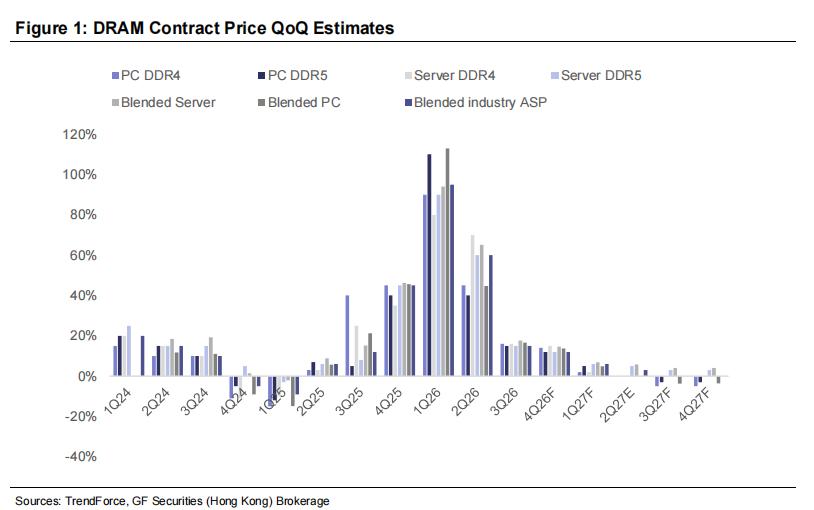
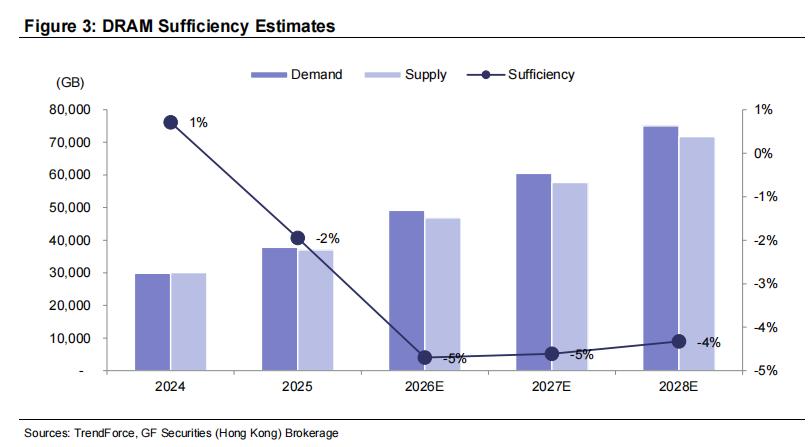
The slowdown in price increase does not mean that the supply is sufficient. GF Securities still predicts that there will be supply gaps of 5%, 5% and 4% in the DRAM market from 2026 to 2028 respectively. HBM continues to occupy wafer production capacity, and major manufacturers remain cautious about the expansion of traditional DRAM production capacity, so the overall supply is still tight.
The shortage is also reflected in the order cycle of manufacturers. SK Hynix has previously sold out its DRAM production capacity up to 2029, and Micron has also locked in a large amount of supply in advance through multi-year contracts. Kim Woo-hyun, chief financial officer of SK Hynix, previously said that the supply-constrained situation may last until 2030.
However, institutions still have different judgments on how long the supply shortage will last. Nomura Securities believes that the construction of AI infrastructure will continue to support memory demand, and the supply shortage may continue until 2028. Goldman Sachs predicts that the DRAM supply-demand gap will narrow from 5.1% in 2027 to 1.2% in 2028, and the prices of traditional DRAM and NAND may fall by about 20% respectively at that time.
02 Divergence Between Share Price and Demand
Memory chips are still rising in price, but SK Hynix's share price has fallen sharply. Behind the two trends are different judgments on the current demand at the industrial end and the future earnings of the capital market.
The memory industry has obvious periodicity. When supply is tight, manufacturers can raise quotations, and profits will grow accordingly; when new production capacity is gradually released, the supply-demand relationship may reverse, and chip prices and profit margins will also fall accordingly.
What investors are worried about is exactly this change. Although SK Hynix benefits from HBM demand, its traditional DRAM and NAND businesses still affect overall performance. If traditional memory prices fall in the next few years, it is still uncertain whether the growth of HBM business can fully offset this impact.
GF Securities' calculation for 2028 shows the possible downward space for memory prices.
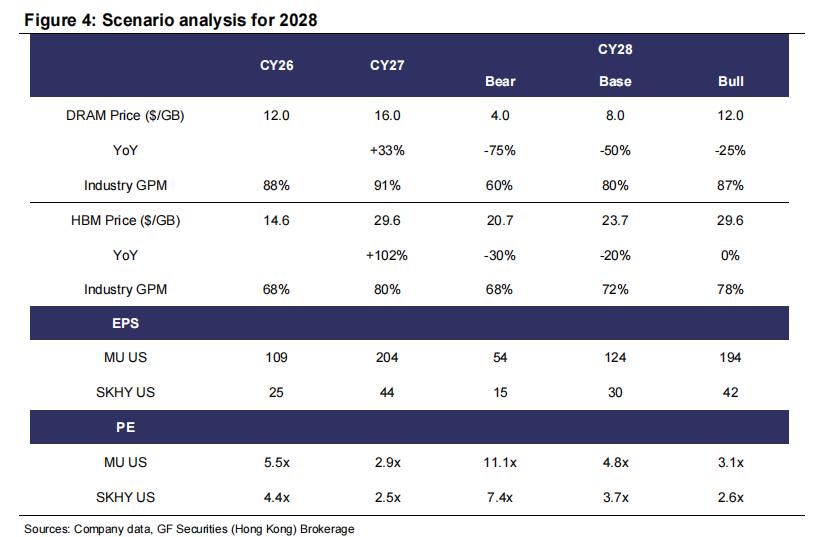
The institution took US$16 per GB of traditional DRAM in 2027 as the benchmark and calculated three scenarios: if the price returns to the level before the AI demand explosion, it may drop to US$4 per GB; estimated at the long-term contract price, it is about US$8; if demand remains strong, it may stay at US$12. The corresponding declines are 75%, 50% and 25% respectively.
HBM prices also have room for reduction. GF Securities predicts that the price per GB in 2028 may be between US$20.7 and US$29.6, which is 0 to 30% lower than the US$29.6 in 2027.
However, GF Securities is not bearish on major memory manufacturers. The institution remains optimistic about Micron, SK Hynix and Samsung Electronics, and believes that if demand continues to weaken and prices begin to fall, major manufacturers may control supply by cutting production to avoid further price drops.
Expectations for investment in AI infrastructure have also seen significant adjustments recently.
On November 26, research institution SemiAnalysis released a report that significantly lowered its forecast for future AI computing power investment. The report predicts that the global capital expenditure on AI accelerators in 2028 will drop from the previously predicted US$1.04 trillion to US$758 billion, a decrease of about 28%; the chip expenditure in 2030 will drop from US$1.53 trillion to US$923 billion, a decrease of 40%.
The report also lowered its judgment on chip shipments and energy demand. According to the latest forecast, from 2026 to 2030, AI chip shipments will be 17% lower than previously expected, and HBM shipment expectations have been lowered by 30%.
Korean brokerages have diverged in their judgments on the market outlook.
Daol Investment & Securities believes that the recent stock price adjustment is too drastic relative to corporate fundamentals, maintains the buy rating for SK Hynix, and gives a reasonable value of 2 million won. BNK Investment & Securities lowered its target price to 1.05 million won, predicting that customers and distributors will begin to adjust inventory in the second and third quarters of next year, and memory chip prices may fall sharply.
Overseas investment banks are also lowering their expectations. Goldman Sachs lowered SK Hynix's target price from 3.5 million won to 2 million won, but still maintains a buy rating. Morgan Stanley lowered its target price from 2.6 million won to 1.6 million won, and warned that a "Profit Cliff" may appear in 2028.
Morgan Stanley also lowered its forecast for SK Hynix's long-term average operating margin from 2029 to 2035 from 53% to 28%, reflecting its concerns about the long-term profitability of the memory industry.
Not all institutions are bearish. Nomura Securities still maintains SK Hynix's target price of 4.7 million won, believing that the demand brought by AI infrastructure construction is sufficient to support a long period of supply shortage.
The core divergence among institutions is not whether AI still needs memory chips, but whether demand growth can continue to outpace supply expansion, and how long the high profits formed during the shortage period can last. Share prices have begun to reflect this concern, but the shortage at the industrial end has not changed yet.
03 Who is Facing Margin Call?
The drastic fluctuations of memory stocks have also made Korean leveraged investors who bet on rising prices pay a heavy price.
On November 25, several SK Hynix single-stock leveraged ETFs in the Korean market fell by more than 21%. The RISE SK Hynix single-stock leveraged ETF fell by 22.78%, the KIWOOM SK Hynix futures single-stock leveraged ETF fell by 22.21%, and similar products under SOL and KODEX fell by 21.84% and 21.72% respectively.
This is not the first time that Korean retail investors have suffered heavy losses in leveraged trading of memory stocks.
According to data submitted by the Financial Supervisory Service of Korea to the National Assembly, from the launch of single-stock leveraged products on May 27 to August 14, individual investors' cumulative losses on single-stock leveraged and inverse products related to Samsung Electronics and SK Hynix reached 6.313 trillion won. Among them, the realized loss was 2.3242 trillion won, and the paper loss of products not yet sold was 3.9888 trillion won.
Investors of all age groups have been affected. Investors in their 40s have a cumulative loss of about 2.053 trillion won, the largest scale; investors in their 50s lost about 1.8655 trillion won. Investors over 70 years old lost an average of about 29.94 million won per account.
The drawdown of a single product is even more astonishing.
Korean financial media Edaily reported on November 6 that the SOL SK Hynix single-stock leveraged ETF closed at 3,340 won that day, down about 91% from the high point set on June 22; similar KODEX products fell from 44,000 won to around 4,000 won, with a decline of more than 90%; the drawdown of TIGER products is close to that level.
Korean media previously reported that some retail investors continued to buy leveraged products during the decline of memory stocks, hoping to wait for a rebound by averaging down costs. The concentrated selling on November 25 once again caused such investors to suffer greater losses.
Special translator Jin Lu also contributed to this article
This article is from "Tencent Technology", author: Su Yang, editor: Xu Qingyang, 36Kr released it with authorization.