The underlying resilience of SHEIN
Author | Ming Yin
For SHEIN, which just went public via listing bell ceremony in September, the third quarter carries special significance.
This is its first full quarterly financial report after listing, and also the quarter with the most concentrated external policy shocks. The impact of the EU's cancellation of tariff exemption for low-value parcels ran through the entire reporting period, the US business was still in the post-tariff recovery process, and global consumption continued to trend toward prudence.
SHEIN's Q3 financial report also provides us with a sample to observe how globalized enterprises and the cross-border industry maintain resilience in response to changes in external conditions.
In such an environment, SHEIN's performance report for this quarter shows obvious differentiation. In the third quarter of 2026, SHEIN achieved a net revenue of 10.271 billion US dollars, a year-on-year decrease of 5.9%, mainly affected by the new tariff policy in the European market; the total number of fulfilled orders was 264 million, compared with 272 million in the same period of the previous year, which also stemmed from demand adjustment after price increases in the European market.
However, the trend on the profit side exceeded expectations. During the reporting period, SHEIN's adjusted net profit increased by 26.8% year-on-year to 790 million US dollars, with a quarter-on-quarter increase of up to 246.5%. After excluding one-off factors such as tariff refunds, the proportion of adjusted net profit in net revenue also more than doubled quarter-on-quarter, reaching 4.7%. The reason lies in the flexible adjustment of expenses, such as reallocating marketing investment according to ROI, and continuing to optimize fulfillment efficiency.
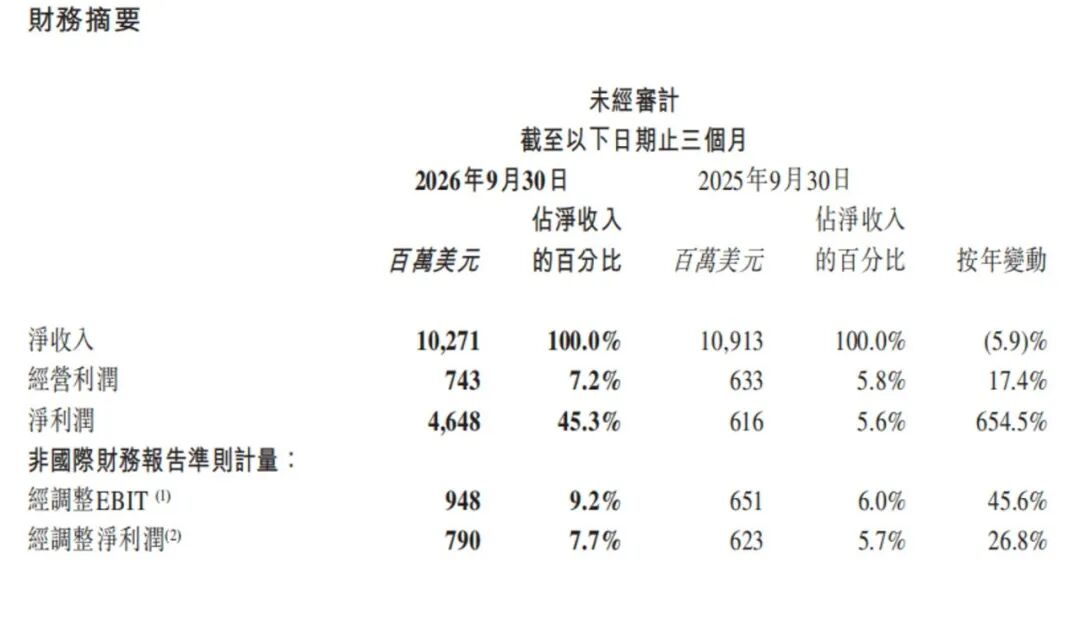
In addition, in the 12 months ending September 30, 2026, the number of active customers of SHEIN increased from 265 million in the same period of last year to 291 million.
On the post-earnings conference call, analysts' questions focused on the European market, oil prices, fulfillment costs, etc., which also constitute the biggest concerns of the outside world about the company at present: in response to external changes, how does SHEIN maintain profits and achieve growth?
"Maintaining cost agility and directing resources to the best demand opportunities is our way of operation." In the passive situation, SHEIN has shown the maximum subjective initiative — raising prices to cover new costs, reallocating marketing investment according to ROI, and accelerating the layout of local fulfillment. "Every move is an active choice after trade-offs," said Chris Xu, CEO of SHEIN, on the post-earnings conference call.
For SHEIN, changes are nothing new. Fashion itself is one of the industries with the fastest global demand iteration, and coping with changes is almost engraved in the company's DNA. Taking the initiative as much as possible, quickly adjusting operation strategies, maintaining strict cost control, and doing everything possible to do well is SHEIN's way of response. In the Q3 financial report, signs of breaking away from external influences and moving towards growth have emerged.
The Old World and the New Continent, Each Sees Glimmers of Hope
Europe is the core that SHEIN cannot avoid in the third quarter.
This quarter, after the EU canceled the tariff exemption for parcels under 150 euros and levied a 3-euro tariff on each category of goods, SHEIN chose to raise prices and reallocate marketing investment according to ROI. Given these two points, the purchase of price-sensitive users was affected in the short term, and the temporary decline of order volume in the European market during the quarter was also within the company's expectation.
One of the meanings of price increase is to cover new costs, but at the same time, it also tests whether a company has real consumer value. On the conference call, SHEIN's management mentioned that high-value customers in the European market are still making continuous purchases. Based on experience in other markets, they believe that as long as they continue to provide differentiated and competitive products, consumers will return to SHEIN in the medium and long term.
SHEIN's most critical and longer-term response to the European market is "small-batch fast stock preparation".
In Europe, SHEIN is shifting from the previous B2C direct mail model to the local fulfillment solution of "small-batch fast stock preparation" — goods are centrally warehoused and sorted in China, relying on sales forecasts with a cycle of several days, multi-category goods are integrated into large parcels, transported to Europe in the form of bulk cargo, and then distributed to consumers from local warehouses. Different from the traditional cross-border e-commerce overseas warehouse model of stocking a large number of goods, the warehouse for small-batch fast stock preparation only stores goods for several days, the main line transportation is still dominated by air freight, and the overseas warehouse is responsible for distribution rather than hoarding, which is more similar to the front warehouse of domestic fresh e-commerce. This solution adapts to the operation mode of "Large-scale Automated Rapid Response for Small Orders" (LATR), taking into account efficient supply and low-inventory operation.
In the third quarter, "small-batch fast stock preparation" has covered more than 40% of SHEIN's European delivery volume, more than doubled compared with the second quarter. It is expected that the coverage rate will reach about 50% by the end of the year, and become the fulfillment method for most orders in Europe in the second half of 2027.
The effectiveness of this investment has already appeared. From the data point of view, the goods fulfilled through "small-batch fast stock preparation" have shorter delivery time, lower cost, and are significantly better than cross-border fulfillment in conversion rate and per-unit profit. This is the reason why it is worth continuing to invest, and it is also the foundation for SHEIN to re-improve European pricing and consumer experience in the longer term.
Since November 1, the EU will additionally levy a 2-euro handling fee on each category of goods. Short-term demand and operating costs will still be under pressure, and the scale and coverage of "small-batch fast stock preparation" are still in the climbing period. The management expects that the gradual recovery in Europe will not come until the second half of 2027, when a more complete local distribution network is expected to support its long-term annual revenue growth of more than 10%.
The current European market is more like a throe, exchanging the concession of short-term scale for a set of cost and fulfillment structure that is more adapted to new rules. This takes time, but local fulfillment is exactly the "difficult but correct" path, which brings better user experience, more efficient cost allocation, and also means a brand new and promising European market.
In the US, another major market of SHEIN, demand has recovered significantly, the most difficult stage has passed, and the dawn of growth is emerging.
In the third quarter, SHEIN's revenue in the US market was 2.369 billion US dollars, and the trend still showed a year-on-year decline. However, the financial report specially mentioned that the gap between revenue this quarter and the same period of last year mainly comes from the "caliber problem", that is, the proportion of marketplace (3P) orders has increased, and under the marketplace model, SHEIN only recognizes service revenue for part of the product sales price, so the revenue caliber is naturally smaller than that of self-operation.
In other words, the book revenue gap in the US market is more structural rather than demand loss. On the contrary, the total number of fulfilled orders of SHEIN in the US this quarter even achieved a mid-single-digit growth. The management judges that after the recovery stabilizes, the normal annual growth of the US market is expected to remain at a high single-digit level. The driving force behind this is that SHEIN's current share in the US women's clothing market is still only at a low-to-mid single-digit level, and the space is still considerable. "Consumers will always return to the side that truly provides value," said Xu Yangtian.
Beyond the huge European and American markets, more new continents are taking over the growth baton. In the third quarter, SHEIN's revenue in other regions increased by 17.7% year-on-year to 4.925 billion US dollars, accounting for 48% of the total revenue, rising from the third echelon to the largest region accounting for nearly half within a year. Among them, Latin America performed particularly prominently; demand in the Middle East was once suppressed by regional situations, but order volume has returned to positive year-on-year growth and is gradually recovering.
This is not just a story of "going wherever grows fast". For SHEIN, different markets are in different maturity stages, and their consumption cycles and policy environments are not completely synchronized. Therefore, diversified layout has become a necessary buffer mechanism. Reducing dependence on a single market is a more certain experience for SHEIN after experiencing this round of policy changes, and it is also the cornerstone for its longer-term growth.
A Richer Price Band, Another Growth Potential
In addition to the diversification of regional markets, SHEIN's answer to "who we are" is also becoming clearer. If regional rebalancing is diversification in the geographical sense, the spillover in the capability sense is the other half of the narrative that SHEIN is forming.
SHEIN is opening up its supply chain capabilities accumulated over years to more brands and suppliers. In the third quarter, brands such as KIZN and AiiRZ achieved strong year-on-year revenue growth, continuing to enrich SHEIN's mid-price band product portfolio.
Behind them is the upgraded SHEIN Xcelerator program launched in October 2025 — SHEIN opens flexible supply chain production, inventory management, global fulfillment and sales channel support to third-party brands of different sizes around the world. Brand parties can focus on core links such as creative design and brand IP construction, without heavy asset investment in building factories and self-built global logistics systems, to push creative designs to the global market on a large scale. This means that design and inventory risks are reduced accordingly, and the new product launch cycle is shortened at the same time.
"A richer price band" is one of the three strategic priorities proposed by SHEIN in its 2026 mid-term report, and brand empowerment, like the private brand matrix, is its path to extend to higher price bands. SHEIN's business model has strong operating leverage. As the product portfolio expands to higher price bands, the increase of the platform's average selling price is expected to be effectively converted into the improvement of profitability. This means that the growth of cooperative brands and suppliers in their respective links will eventually feed back SHEIN's own product richness and growth space.
At present, the scale of SHEIN's brand empowerment business is still relatively small, covering more than 20 brands. The management also admits that finding suitable brand partners and running in with each other takes time. But its significance lies in that SHEIN's supply chain capabilities accumulated over the years have the opportunity to transform from the operation efficiency of private brands into an industry "infrastructure", and become a key profit driver in the long run.
At the same time, the management made it clear that 1P self-operation will always be the core business, and this point will not change; within the 3P business, the growth rate of brand empowerment in the future is expected to be significantly faster than that of the marketplace business, and the overall structure will tend to be stable.
The changes on the supply side itself are also deepening. In the third quarter, SHEIN continued to deepen cooperation with suppliers upstream and downstream of the supply chain, jointly improve quality standards, and extend to products in higher price bands. The management said, "The feedback from suppliers is encouraging" — more and more suppliers regard this kind of cooperation as a win-win situation, which not only improves their own capabilities, but also expands revenue space.
By the end of September this year, SHEIN has cumulatively developed more than 200 innovative tools and intelligent equipment, delivered 12,000 pieces to suppliers, covering core production links such as weighing, cutting, sewing, packaging, and quality inspection, driving the efficiency of corresponding processes to increase by about 80% on average. In the first three quarters of this year, 440 empowerment training sessions for suppliers have been held, with more than 44,000 supplier participations.
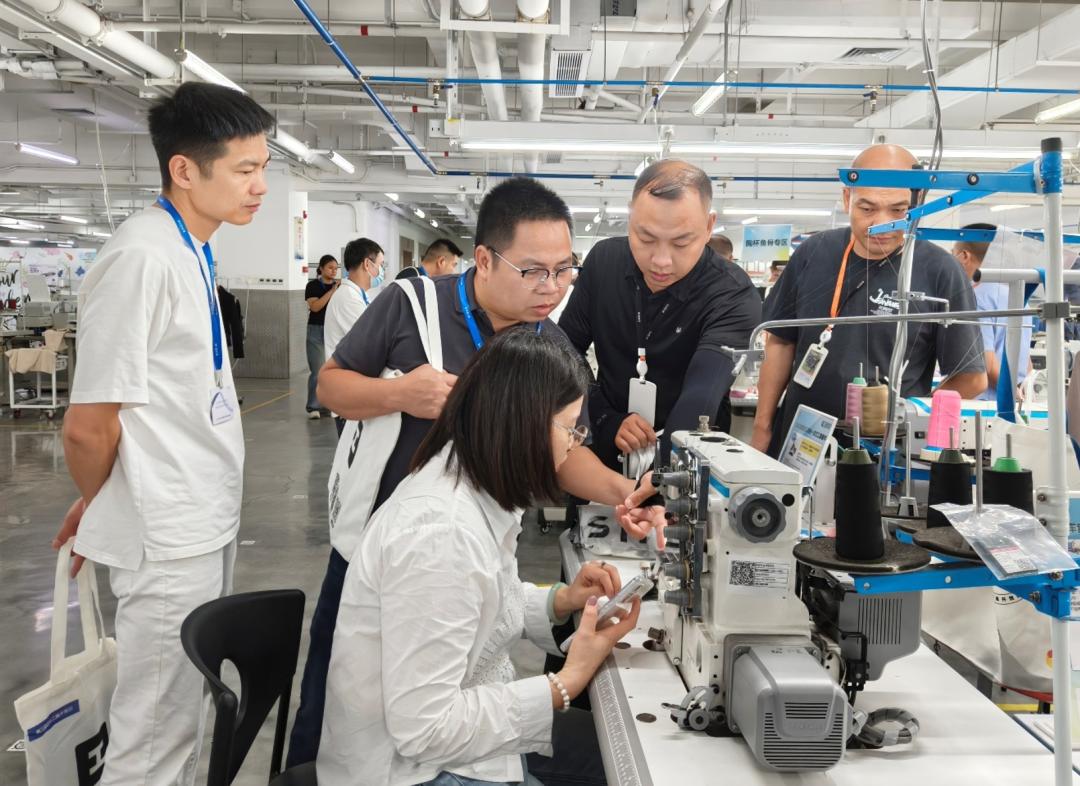
Suppliers experience tools and equipment at the scene of SHEIN's 3rd Craftsmanship Tool Day
A very representative example is Li He, a women's clothing supplier in Humen, Dongguan. When he transformed from the dress business to take SHEIN's formal dress orders in 2025, the first problem that stumped him was the sequins densely pressed on the cutting line on the beaded fabric. The cutting knife could not cut through, so he could only knock off the sequins one by one manually. At the most difficult time, the cutting bed stopped working, and all available workers in the factory gathered to knock off the sequins. SHEIN Garment Manufacturing Innovation Research and Development Center developed a bead-crushing flat sewing machine for this process. After the kit is installed on the flat car, it can directly crush the sequins, improving the efficiency by nearly ten times. In more than a year, the monthly output of this factory has risen from hundreds of pieces to nearly 20,000 pieces.
From flexible production of small-batch test styles and 5-day order replenishment to continuous output of tools, training and quality standards, LATR is evolving from SHEIN's own operation method into a reusable capability base in the fashion industry.
The Resilience Underpinning of SHEIN
In the first half of 2026, the superposition of rising oil prices, global transportation capacity shortage and Middle East demand fluctuation suppressed SHEIN's profits. At that time, the management judged that these were temporary costs rather than structural changes, so they chose to absorb them through profits first, rather than passing them on to consumers immediately.
Coming to the third quarter, the impact of rising freight rates has weakened significantly; after excluding one-off factors, the fulfillment cost per order has improved significantly year-on-year.
This way of thinking is reflected in most decisions made by SHEIN — in the face of structural problems, transform the structure to cope, such as firmly implementing "small-batch fast stock preparation" in the European market; in the face of cyclical fluctuations, maintain patience and prudent optimism, such as the change of oil prices.
The unique LATR model provides the basis for every flexible adjustment of SHEIN. Its value lies in that from design, production to fulfillment, SHEIN has enough agile adjustment space for the entire vertical link.
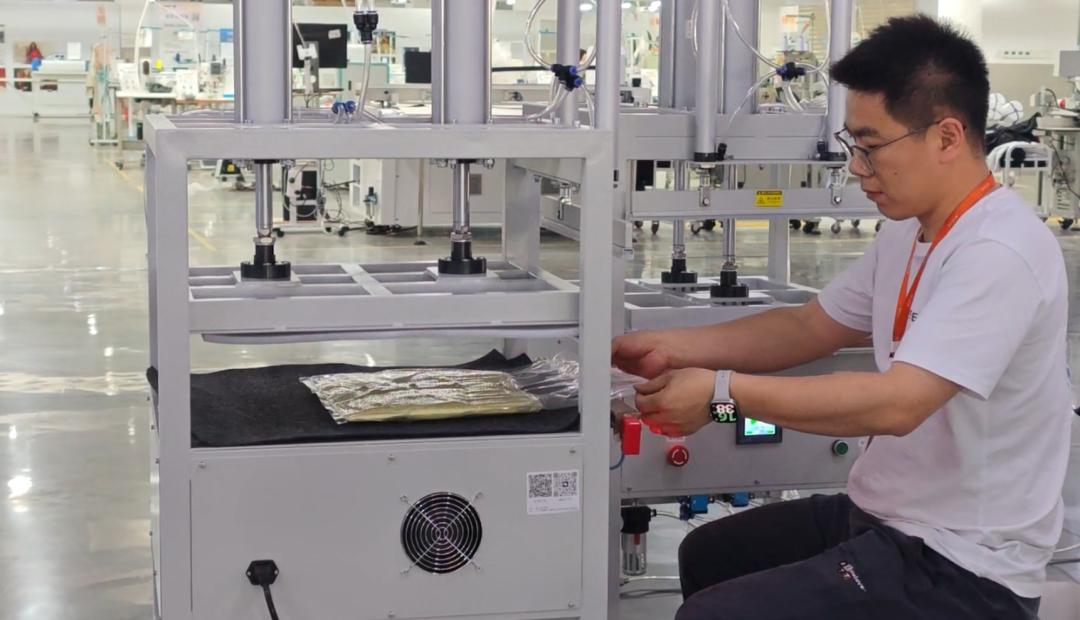
The vacuum compression sealing machine independently developed by SHEIN
Looking further away, this set of capabilities just falls at the turning point of the consumer era.
On the conference call, SHEIN's management mentioned many times that consumers are becoming "more rational and prudent". This is not a change that only applies to SHEIN. People are no longer refraining from buying fashion, but comparing the combination of design, quality and price more carefully. In such a market, growth piled up by traffic and low prices will become more and more expensive, while supply that can stably deliver the optimal combination to consumers will become more and more scarce.
Therefore, what SHEIN's Q3 financial report really answers is not the profit problem of a certain quarter, but a bigger question: when external dividends that once supported cross-border e-commerce, such as tax exemption quota and cheap traffic, recede one by one, where can certainty come from?
"From ourselves" is the answer that SHEIN is practicing now.
A richer price band, higher quality and compliance level, and more strategic consumer communication — the three strategic priorities that SHEIN is accelerating to implement, its ability to retain agile actions and create differentiated supply amid uncertainties, as well as the reflected resilience underpinning, make it worthy of more expectations from the market.