After being exposed to a large number of AI-generated characters, do real people start to look "less attractive"?
Actresses you once thought were stunning suddenly feel less impressive; handsome male celebrities also seem to fall short of expectations.
This is not because the overall looks of the entertainment industry have declined, nor have people suddenly become overly picky. Chances are you've been exposed to too many AI-generated characters lately.
In mid-November, the hashtag #Watching too many AI comic dramas makes real human faces look uglier# sparked heated online discussions. Many people lamented that they can no longer immerse themselves in the male and female leads in live-action dramas, and some even began to wonder if their aesthetic standards have changed.
"After watching AI dramas, when I look at real people, I always feel there's something imperfect." "Male actors I once thought were very handsome now look rather ordinary." "The faces of AI male leads are so incredibly perfect, what competitiveness do real people even have left?"
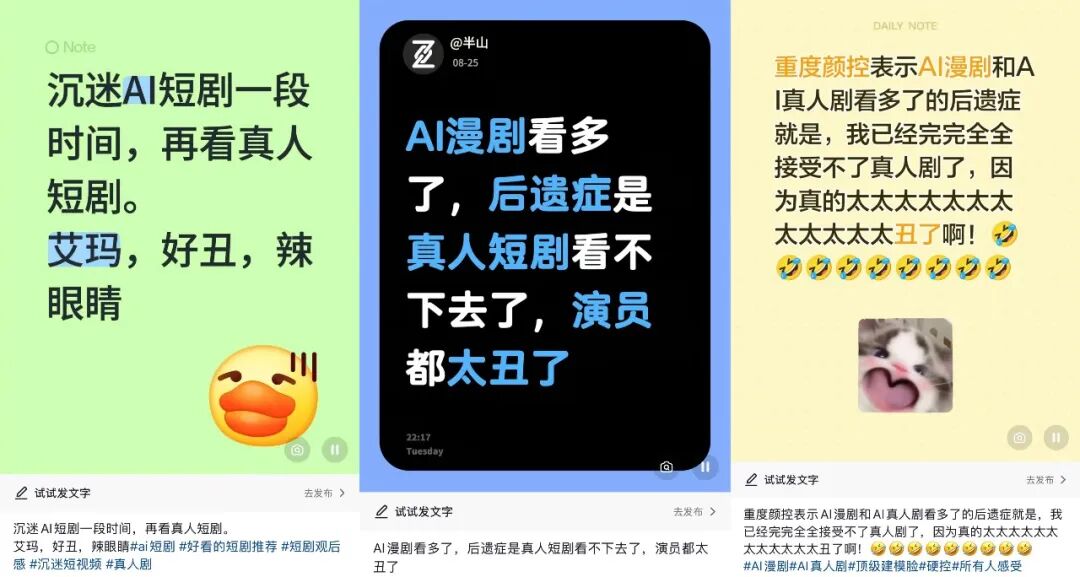
Image source: Douyin
This sounds like a joke about physical appearance. But if you think about it carefully, things don't seem that simple.
When AI can mass-produce perfect faces, and virtual characters gradually become the aesthetic reference in our daily entertainment, what we are facing is not just a change in visual experience, but possibly a shift in aesthetic standards.
What exactly does AI bring to the audience
Big eyes, high nose bridges, smooth jawlines, near-perfect facial symmetry, plus skin so delicate that no pores are visible... Characters generated by AI seem to be born with perfect faces that fit the public's imagination.
But AI does not only create one type of face. Currently, AI characters can be roughly divided into several categories.
The first type is comic-style characters. Exaggerated facial feature proportions, exquisite hairstyles and fantasy-filled visual effects make the characters look like they have walked out of a comic world. This type of character does not necessarily pursue realism; instead, they satisfy the audience's imagination of the virtual world through idealized processing of real human faces.
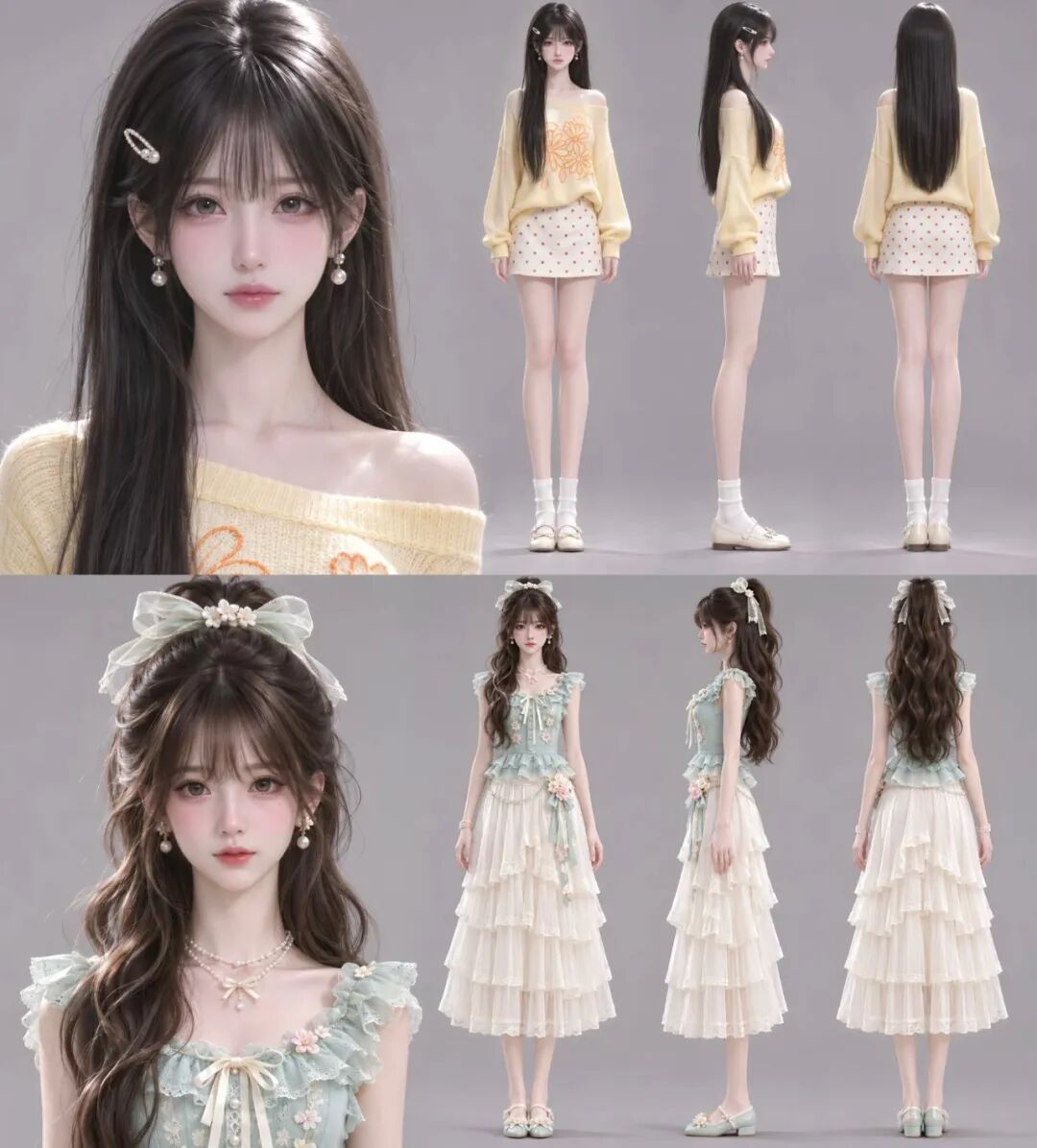
Image source: Douyin
The second type is photorealistic characters. They fall between anime characters and real humans, retaining the exquisiteness of virtual characters while being as close as possible to real people in facial details, skin texture, expressions and movements.
The viral digital figure @Liuyexi on Douyin in 2021 is a benchmark case for the commercialization of photorealistic digital humans. She debuted with a realistic image close to a real person and a national-style beauty persona that "can catch demons". Her first video gained about 1.3 million followers in 30 hours, and her total number of followers later exceeded 6 million. She has since cooperated with multiple brands in the automotive, beauty, digital electronics and other industries.
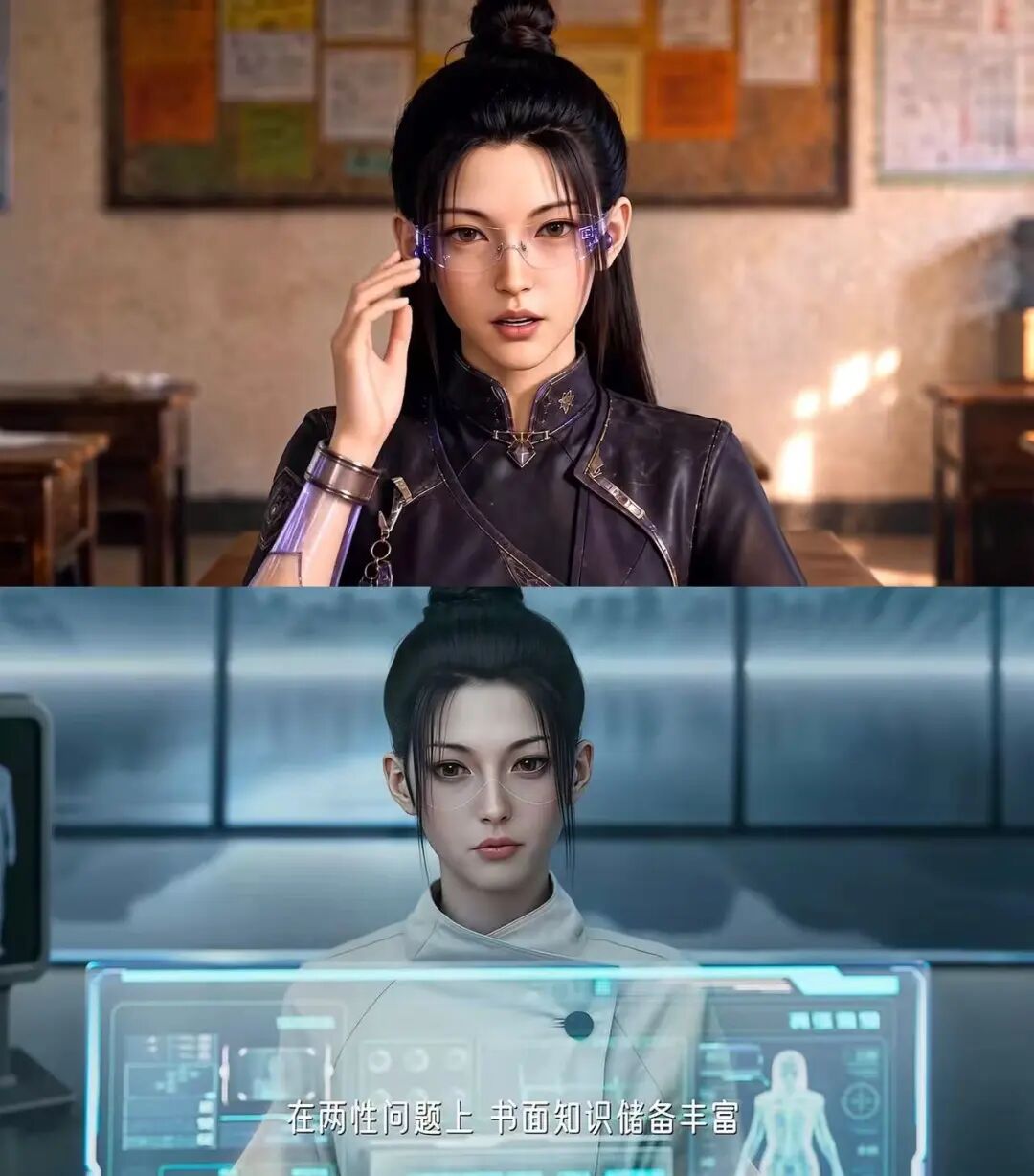
Image source: Douyin @Liuyexi
The third type is AI characters that are even closer to real humans. Different from traditional virtual idols, this type of character not only pursues a hyper-realistic appearance that is almost indistinguishable from real people, but also tries to make the audience have the illusion that they are watching a real person through natural expressions, movements, speaking styles and daily-life content.
@Fang Taozi, the leading actress in the hit 2026 AI short drama *The Laid-off Girl*. She does not have a flawless idol face: she has freckles and moles on her face, and her skin has real texture; the expressions, movements and life scenes in the drama are highly restored. Outside the drama, her social media accounts are operated according to the logic of real artists, posting content about cooking, fitness, studying and behind-the-scenes clips.
The audience follows her daily life just like they follow real actors. The total views of the drama on a single platform exceeded 220 million, and the total number of topic discussions across the whole network exceeded 800 million. Now her independent account has 554,000 followers.
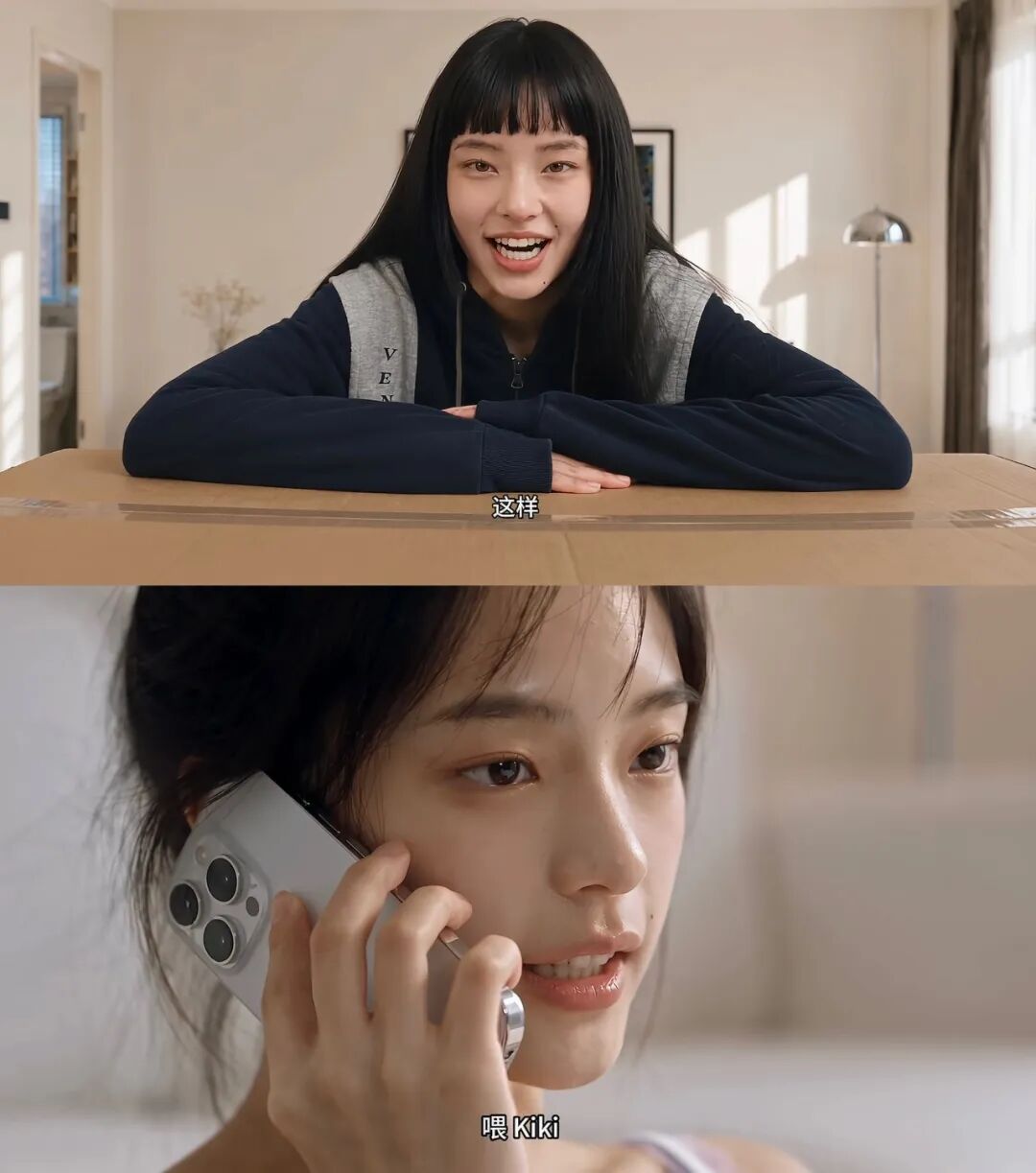
Image source: Douyin @Fang Taozi
From comic characters to photorealistic characters, and then to AI actors that are getting closer and closer to reality, it is obvious that AI is constantly shortening the visual distance between the virtual and the real.
The appearance of AI characters is not restricted by any real-world conditions
Real humans need to sleep, eat, and take care of their skin, and they may get dark circles from staying up late. But AI-generated characters can constantly adjust their facial feature proportions, skin texture and facial details. As long as the creator wants it, the lead character can always stay at the peak of their appearance.
The audience thus gets an excellent visual experience.
This also brings about an interesting phenomenon: when perfection becomes easily accessible, the ordinary starts to look imperfect instead.
Relevant media reports cited explanations from psychology experts, linking this feeling to contrast effect and visual adaptation. People do not judge beauty and ugliness in a vacuum, but often form evaluations through comparison.
When people are exposed to a certain highly idealized face for a long time, the brain may gradually adjust its original aesthetic reference. It is like after eating a lot of high-sugar food continuously, tasting an ordinary fruit may make you feel it is not sweet enough.
After seeing too many delicate faces generated by AI, when you look at the pores, fine lines and asymmetry on real human faces... these physiological features that were once completely normal suddenly become very strange.
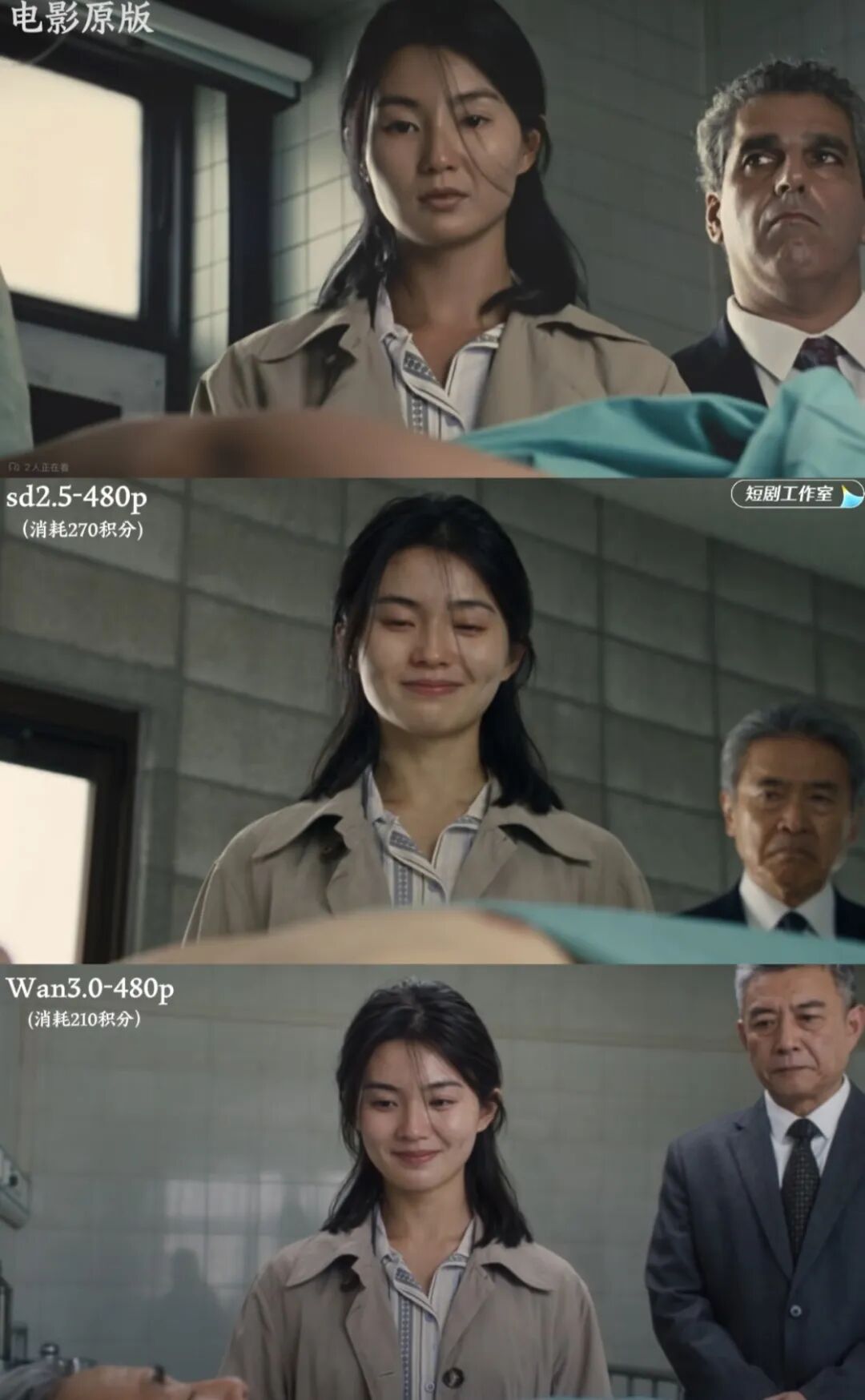
Image source: Douyin
This does not mean that real people have actually become uglier, it only means that the ruler we use to judge beauty has changed.
Of course, this experience does not mean that all audiences will have aesthetic deviation, nor does it mean that watching a drama once will permanently change a person's aesthetic standards.
But it is worth noting that when AI can continuously produce idealized images at an extremely low marginal cost, this kind of visual stimulation may evolve from occasional novelty to a part of daily content consumption.
At the same time, an ironic phenomenon has emerged: AI originally gave creators unlimited creative possibilities, but in the end, it may make more and more works share the exact same face. Different stories, different personas, different worldviews, yet the male and female leads seem to use the exact same set of facial templates.
When AI starts to replicate popular celebrity faces
The impact of AI on aesthetic standards may go beyond creating a large number of highly similar perfect faces. When generative AI can continuously adjust facial feature proportions, skin texture and facial details, it also gains another capability: directly replicating faces that already exist in the real world.
Content such as AI face swapping, AI celebrity portrait photoshoots, and virtual digital humans are becoming more and more common on social platforms. Some people use AI to make celebrities appear in film and television scenes they have never participated in, while others combine celebrity faces with virtual characters to create seemingly familiar but non-existent people.
To a certain extent, these technologies satisfy the audience's imagination of idealized images. If you like the appearance of a certain celebrity, you can see AI-generated virtual characters of them in different looks, different scenes, and even different styles.
But when AI starts to copy celebrity faces, is this technical creation, or unauthorized use of other people's portraits?
On November 10, 2026, actress Zhao Liying filed a lawsuit against Hongguo Short Drama and Douyin in court on the grounds of portrait right infringement.
Zhao Liying's side alleges that some short dramas on the platform are suspected of using AI face-swapping and face-blending technologies to synthesize her facial features into short drama roles without permission, and even directly use her portrait as the cover of short dramas for commercial traffic diversion.
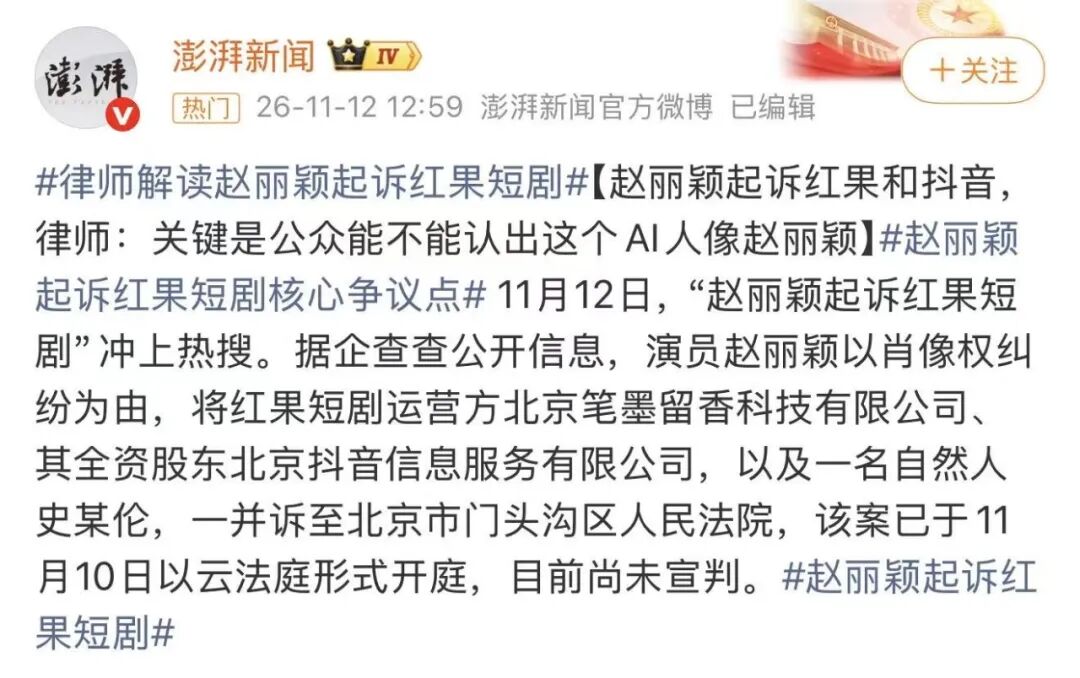
Image source: Weibo
This also shows that AI replicating a face is not just an entertainment issue. When virtual images are used for commercial promotion, and even make the public mistakenly believe that the celebrity themselves participated in the endorsement or recommendation, technological innovation may cross legal boundaries.
When a face can be easily copied, and even given new personalities, identities and commercial value, are real people losing control over their own images?
In the past, celebrities needed to shape their public images through works, advertisements and public activities; now, AI may make them appear in a video they have never participated in, or even say words they have never expressed, without their knowledge.
A face is no longer just a person's physical feature, but may also become a commercial resource that can be called repeatedly.
This adds a new dimension to the aesthetic problem in the AI era: we are not only facing more and more standardized virtual faces, but also facing the reality that real people's images are being copied, processed and re-consumed.
Conclusion
AI has shown us a new possibility for content creation, and unexpectedly made us rethink a question: What exactly is real beauty?
AI can generate faces without pores, but it cannot necessarily generate a person's real life experiences; it can give every character perfect facial features, but it may not give every character a unique soul.
If one day we start to think that all real people are not good-looking enough, what we may need to re-examine is not the people in reality, but the aesthetic standard that has been continuously raised by algorithms.
This article is from the WeChat Official Account "TopKlout" (ID: TopKlout), written by Unico, published with authorization from 36Kr.