What is the current global ranking of Chinese automobiles?
According to data from the China Association of Automobile Manufacturers, in the first 10 months of this year, China exported 9.271 million vehicles, a year-on-year increase of 65.1%, and the full-year figure is expected to exceed 11 million.
So, what is the global ranking of Chinese automakers?
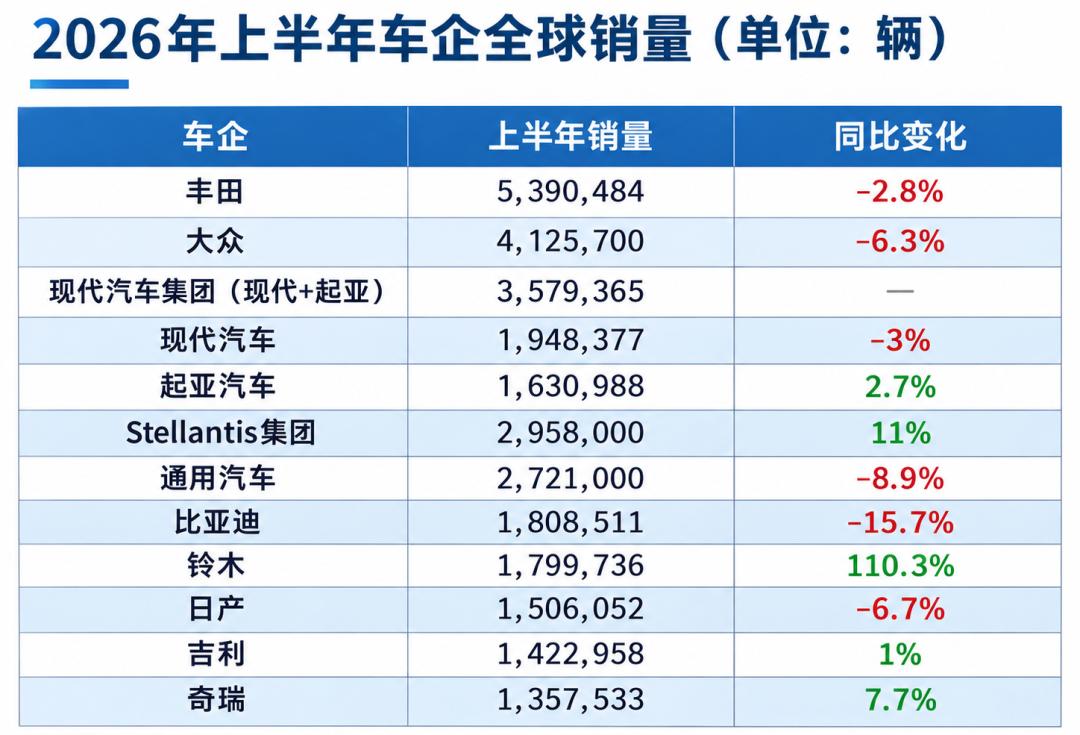
The following is the global automaker sales ranking for the first half of 2026.
The top 3 are Toyota, Volkswagen, and Hyundai.
The highest-ranked Chinese brand is BYD, which ranks 6th.
Cross-verify with different data sources.
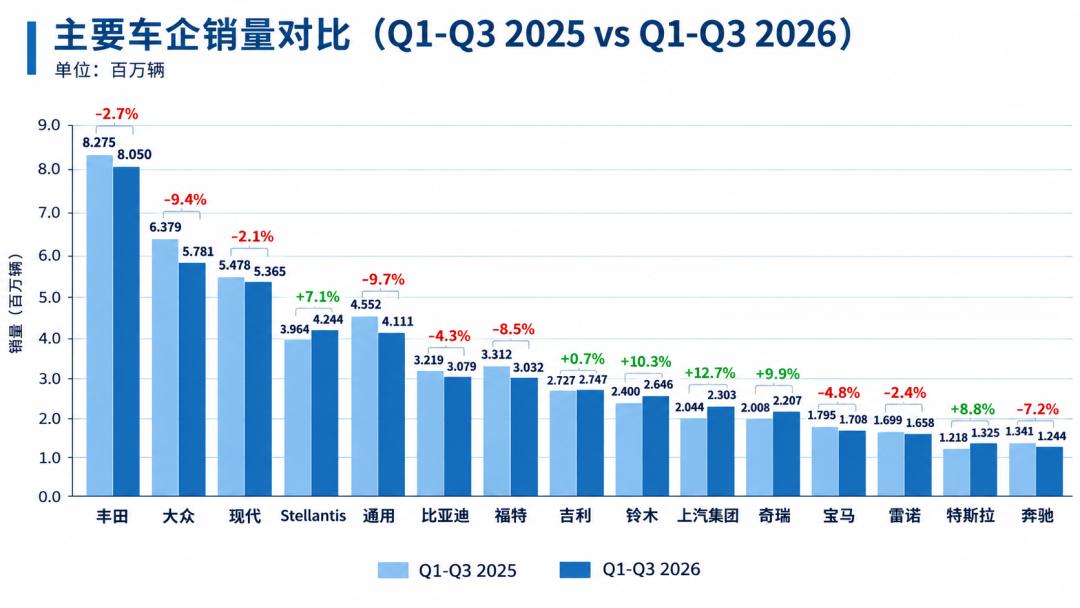
According to a survey of 15 mainstream automakers conducted by CAM, the German Automotive Management Center, the top names on the global ranking remain the same:
Toyota ranks firmly at the top with 8.05 million units sold, holding a global market share of about 11%; the Volkswagen Group ranks second with 5.78 million units; Hyundai Kia ranks third with 5.37 million units.
Among Chinese automakers, BYD, the brand with the highest sales volume, also ranks 6th.
Why is the gap still so large?
01 Selling vehicles is never as simple as it seems
When we first discussed Chinese vehicles, we always believed that sales volume was the top priority.
But this is actually an oversimplification of the vehicle selling business.
Behind every vehicle transaction, consumers may need to pay in installments, the vehicle needs insurance, someone needs to provide warranty service when it breaks down, and there is the issue of residual value when the owner wants to replace the vehicle after a few years of use.
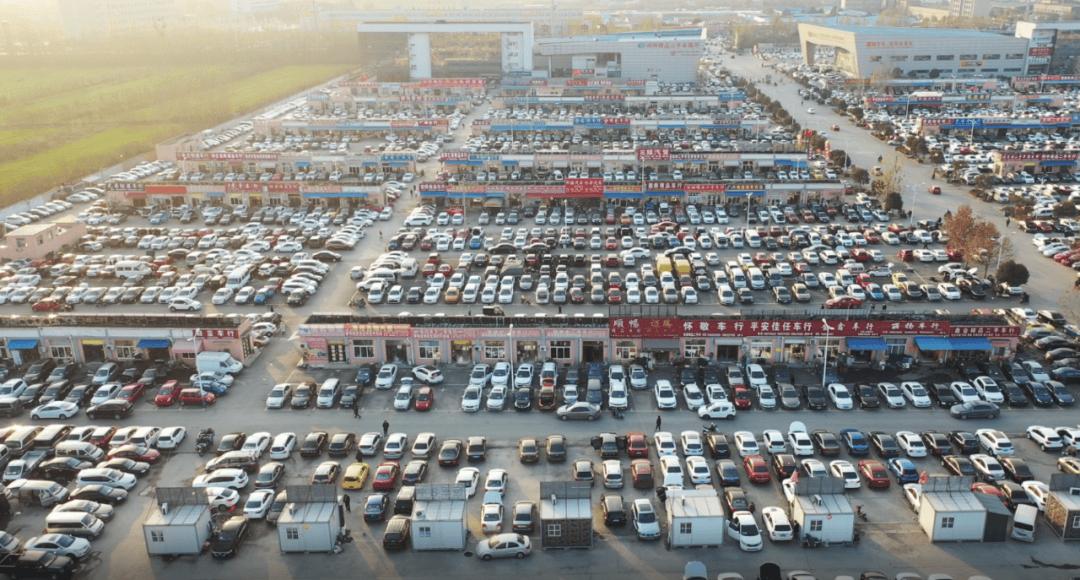
China's largest used car market
These things we take for granted are a set of operating models that the Western automotive industry spent decades to perfect.
As early as 1902, Bosch produced independently tradable high-voltage ignition components, and provided standardized parts for assembly plants and independent repair shops.
In other words, from the very beginning, vehicle maintenance was not entirely the responsibility of automakers, but was carried out by brand vehicle assembly plants and independent repair shops at the same time, with the support of component manufacturers.
The large-scale involvement of automakers in after-sales services was driven by another factor: insurance.
In the 1960s, Japanese vehicles entered the US market and adopted the "5-year/50,000-mile warranty" as a differentiated competitive strategy.
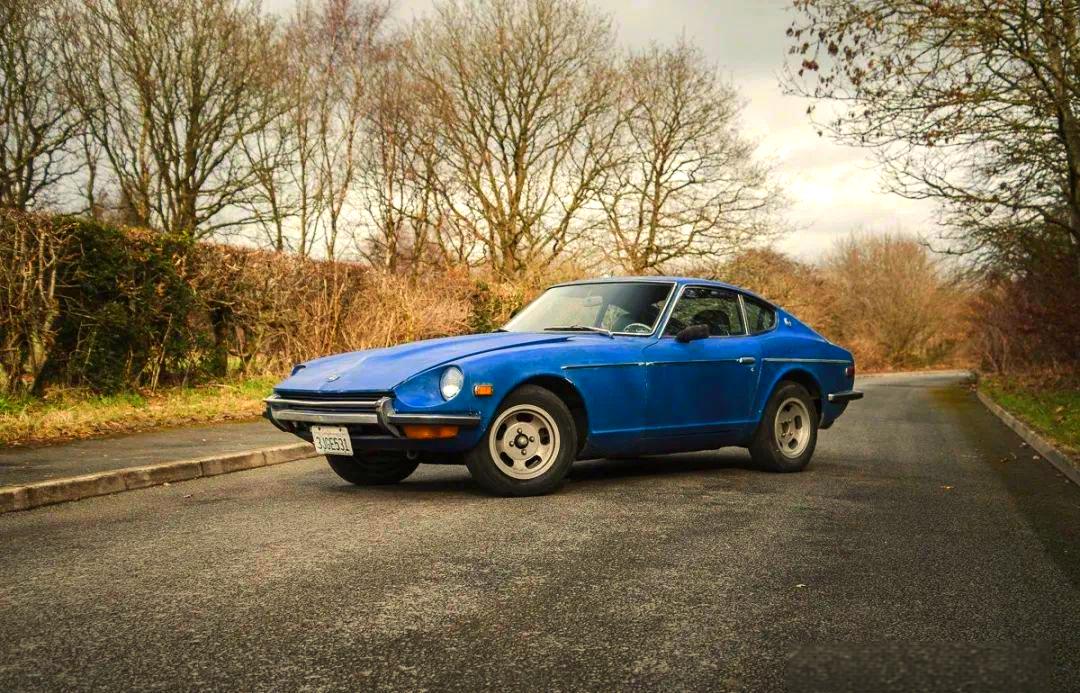
Nissan's classic model Datsun 240Z
At that time, American vehicles only offered a 1-year warranty.
In stark contrast, the sales of Japanese vehicles skyrocketed.
To stay competitive, automakers gradually incorporated strong after-sales support into their vehicle sales systems.
As the warranty period was extended, automakers were forced to build extensive after-sales service networks.
You don't have to go to a 4S store for vehicle repairs, but you have to go to a 4S store for damage assessment and claims settlement when filing an insurance claim.
Take a look at the distribution of service outlets in key regions for the world's best-selling automotive brands, Toyota and Volkswagen:
Toyota and its sub-brands have nearly 1,500 authorized dealers in the US, about 3,000 authorized retailers in Europe covering 53 countries, and about 250 to 350 authorized dealers each in Thailand and Brazil;
Volkswagen has more than 600 independent authorized dealers in the US, and before 2020, the total number of Volkswagen dealers and service outlets in Europe reached about 5,400.
If we only look at the Chinese market, Japanese brands including Toyota, Honda and Nissan each have about 1,500 4S stores; the Volkswagen Group has about 3,500 4S stores/after-sales outlets in China.
After more than a century of development, these service networks have long been deeply embedded in the social service infrastructure of the countries where they operate.
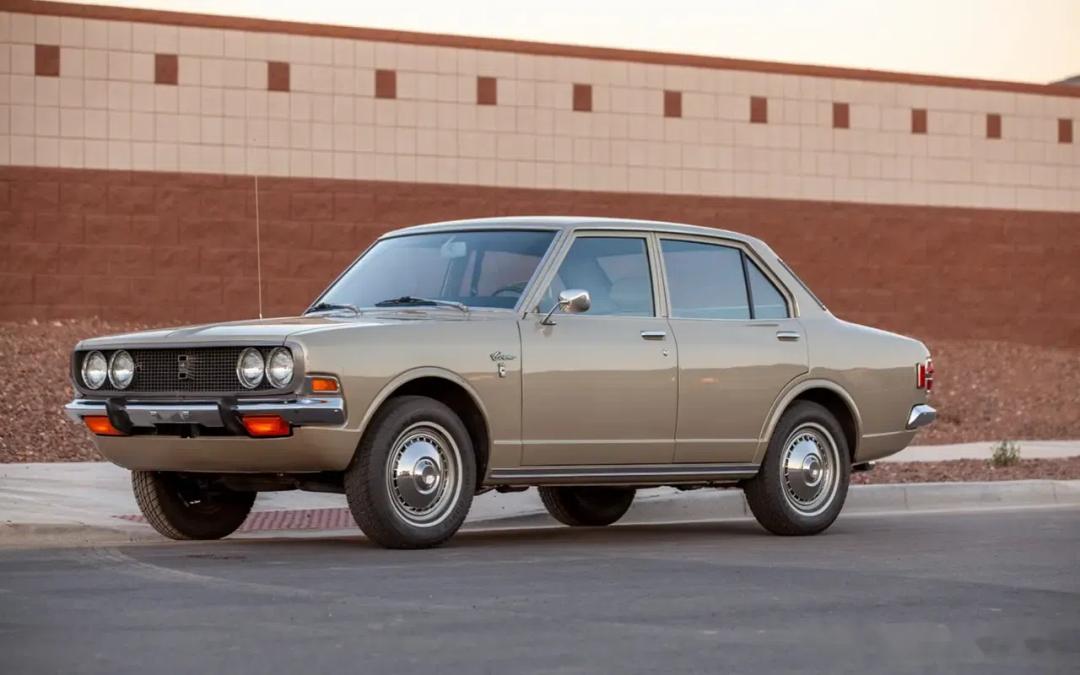
1970 version of Toyota Corolla
Developed in parallel with branded after-sales services is automotive finance.
In 1919, General Motors established the world's first automotive finance company, named General Motors Acceptance Corporation (GMAC).
In its early days, this company was mainly responsible for two core businesses:
The first business was to act as an intermediary to advance funds for dealers to purchase vehicle inventory.
In the early years, dealers who wanted to sell vehicles had to pay the full amount to the factory to pick up the vehicles first, which led to large inventory backlogs and poor capital turnover.
GMAC stepped in to sign loan agreements, allowing dealers to use GMAC's funds to pick up vehicles first, and repay GMAC after the vehicles were sold.
The second business was to provide loans to consumers for vehicle purchases.
Through GMAC, consumers did not have to pay the full amount at once, and only needed to pay monthly installments to GMAC.
Later, based on this system, the automotive industry designed residual value management mechanisms inspired by used vehicle transactions and parts recycling. If a vehicle still has residual value after a certain period of loan repayment, consumers can trade in their old vehicle for a new one, or even pay in installments only for the portion of the vehicle price excluding residual value before purchasing the vehicle.
This set of operations was brought to Southeast Asia by Japanese automakers in the 1960s, which helped them open up the local automotive market.
At the very beginning, vehicles in Thailand were not driven by ordinary people, but by US military personnel, employees of American enterprises, British bankers, wealthy Chinese businessmen, and local nobles.
Therefore, vehicles in Thailand were mainly American military vehicles, British vintage cars, and German Beetles, almost all of which were imported as complete units, with total annual sales of only more than 3,000 units.
However, Toyota vehicles were rugged and durable, and could be used to transport grain and construction materials.
With the assistance of the Thai branch of Mitsui Bank, Toyota established a subsidiary in Thailand to help local dealers pick up vehicles on credit, or use financial instruments such as forward checks to solve dealers' capital turnover problems.
By the end of the 1960s, Toyota had set up about 60 dealership service points in major towns in Thailand, delivered more than 10,000 vehicles to the country, and achieved a 22% market share.
By 2012, Toyota reached its sales peak in the Thai market, selling more than 500,000 units in a single year.
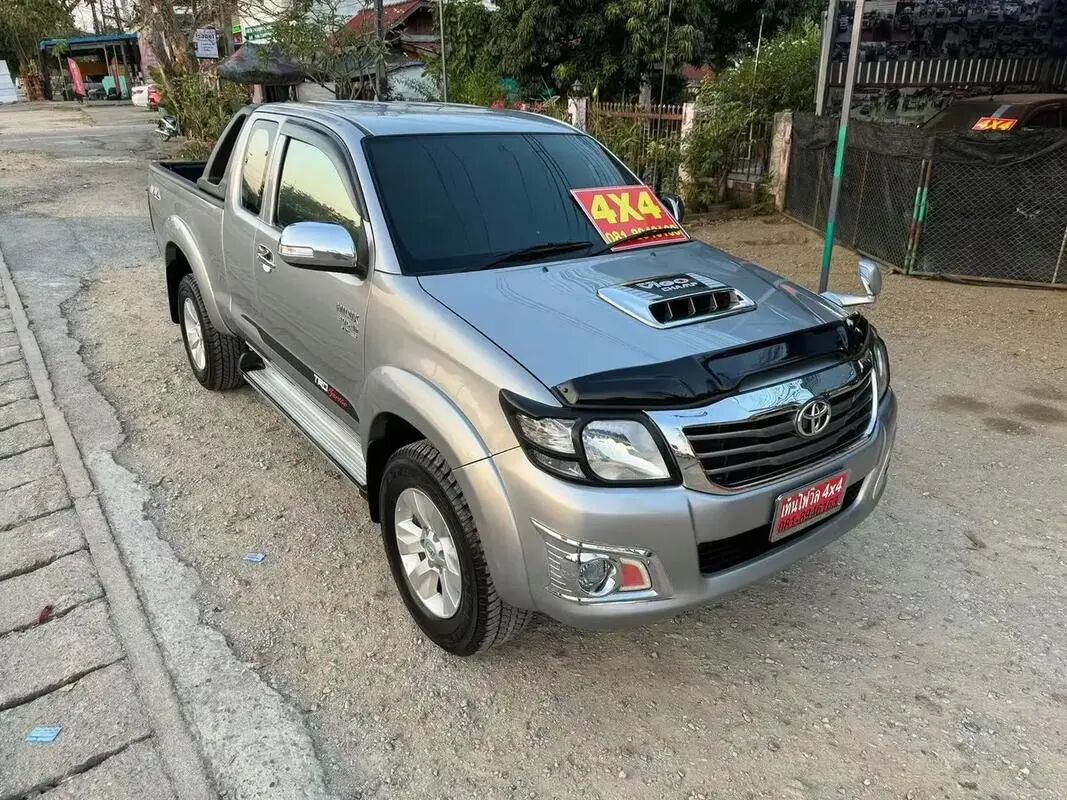
The 7th generation Toyota Hilux
It can be said that it was the combination of perfect after-sales service and financial support that drove Thailand to transform from a backward agricultural society into an era of widespread vehicle ownership.
02 What stage has Chinese automakers reached in their global expansion?
Our domestic automakers are actually fully capable of implementing all these strategies used by leading multinational automakers.
The real problem is the uneven development across different regions.
In key countries and regions, our leading automakers are building new factories at a very fast pace.
In August 2022, BYD partnered with local Thai dealer Rever, renamed its domestic best-selling model Yuan PLUS to ATTO 3, and launched it in the Thai market.
Two years later, it built its first wholly-owned overseas passenger vehicle factory in Rayong, Thailand, with a designed annual production capacity of 150,000 units, and 95% of the 6,000 employees in the factory are local Thai residents.
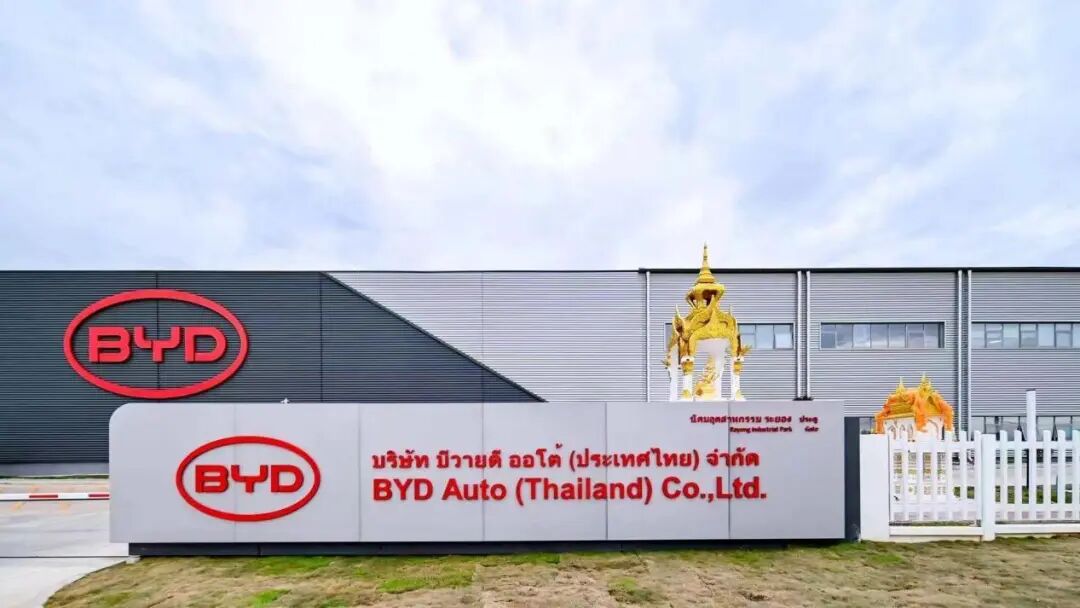
BYD Thailand Factory
In 2025, BYD's Camacari factory in Brazil was put into operation, with a first-phase annual production capacity of 150,000 units, which is expected to be expanded to 300,000 units by the end of 2026.
In the fourth quarter of this year, its factory in Szeged, Hungary will also be put into operation, with a planned annual production capacity of 300,000 units, which is BYD's first complete vehicle factory in the European Union.
As supporting facilities for these factories, BYD has rapidly expanded its after-sales service network layout.
We use Toyota as a benchmark to look at BYD's outlet data:
By mid-2026, Toyota had more than 451 internationally certified service centers in the Thai market; BYD and its premium brand Denza had a total of 171 showrooms and service centers covering major provinces in Thailand, 156 of which are equipped with maintenance functions.
In Brazil, Toyota has more than 300 dealers, while BYD has deployed 217 dealership outlets in 2026, and the number is expected to reach 250 by the end of the year;
In the European market, Toyota has 14 parts logistics centers supporting overnight delivery; BYD has signed more than 250 sales and service points in Germany, 143 in the UK, 107 sales points and 86 authorized workshops in Spain, and it is expected that BYD will deploy a total of 2000 outlets across Europe by the end of this year.
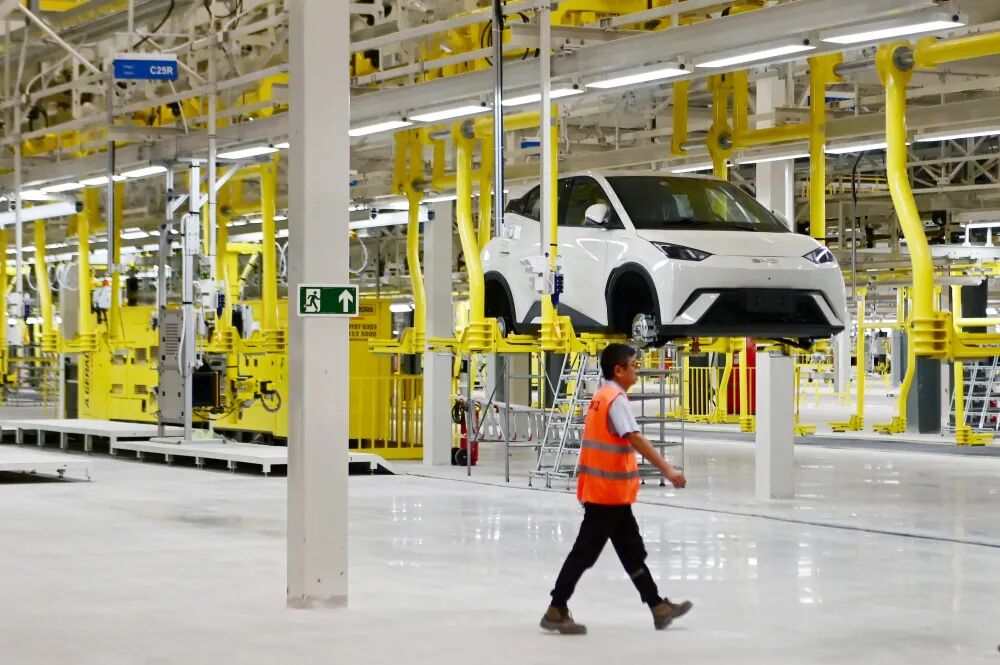
BYD Brazil Factory
From the data, BYD is rapidly narrowing the gap with Toyota.
Compared with the last century, the major automotive markets now have relatively complete financial systems, so our automakers do not need to bring their own affiliated finance companies, which actually brings more sense of security to consumers.
Even so, if we compare Toyota and BYD's sales data and growth data, we cannot simply conclude from the mathematical relationship that BYD will take a very long time to catch up with Toyota.
Because simply selling vehicles across national borders is only the first step of global expansion.
Long-term high-quality after-sales service is the most difficult part of the global automotive business.
Data from the China Automotive Maintenance and Repair Trade Association shows that Chinese automakers currently have about 30 spare parts centers overseas, while the corresponding number for international brands is more than 600.
This gap is very difficult to close in a short period of time.
03 The "Last Mile" of Automakers' Global Expansion
True global expansion requires at least three conditions: owning local factories or assembling vehicles using local production lines, having regional spare parts warehouses and after-sales networks, and having certain financial compliance capabilities.
Among these three conditions, owning a local factory or spare parts center is just the starting point.
Therefore, among Chinese automakers, the ones that have truly achieved global expansion are roughly the following: BYD, Chery, SAIC Motor, Geely, Great Wall Motors...
Among these brands, all of BYD's factories in Thailand, Brazil, Indonesia and Hungary are fully-process factories built from scratch on land acquired independently, while the other brands own factories or build spare parts warehouses mainly through joint ventures, acquisitions and other methods.
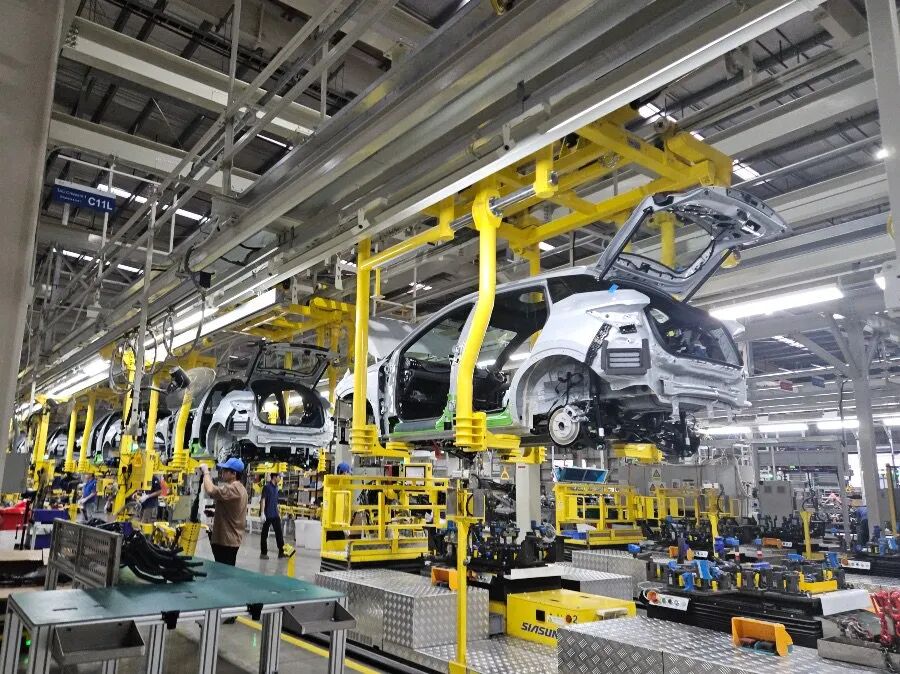
New power automakers, such as Li Auto, XPeng, NIO, and Leapmotor, have also sold their vehicles to major overseas automotive markets.
It can be said that they have the most basic sales and maintenance capabilities, but there is still much room for improvement in user experience.
The world's best-selling automotive brands have maintenance shops spread all over every regional market, just like capillaries.
The key is to extend services to sinking markets.
However, the regions that Chinese automakers can currently reach are mainly the first-tier cities in key target countries.
Here we take Chery as an example.
As one of the earliest Chinese automakers to go global, Chery exported its first-generation Fengyun sedan to Syria as early as 2001.
