Did the 100-billion-yuan hydrogen energy plan ebb overnight? China Huadian Engineering Co., Ltd. has revoked and merged its alcohol and ammonia business division, and the 100-billion-yuan hydrogen energy plans have started to go through rigorous screening.
The hydrogen energy industry is undergoing reshuffling and clearing, squeezing out fictitious overstatements to return to the essence of business.
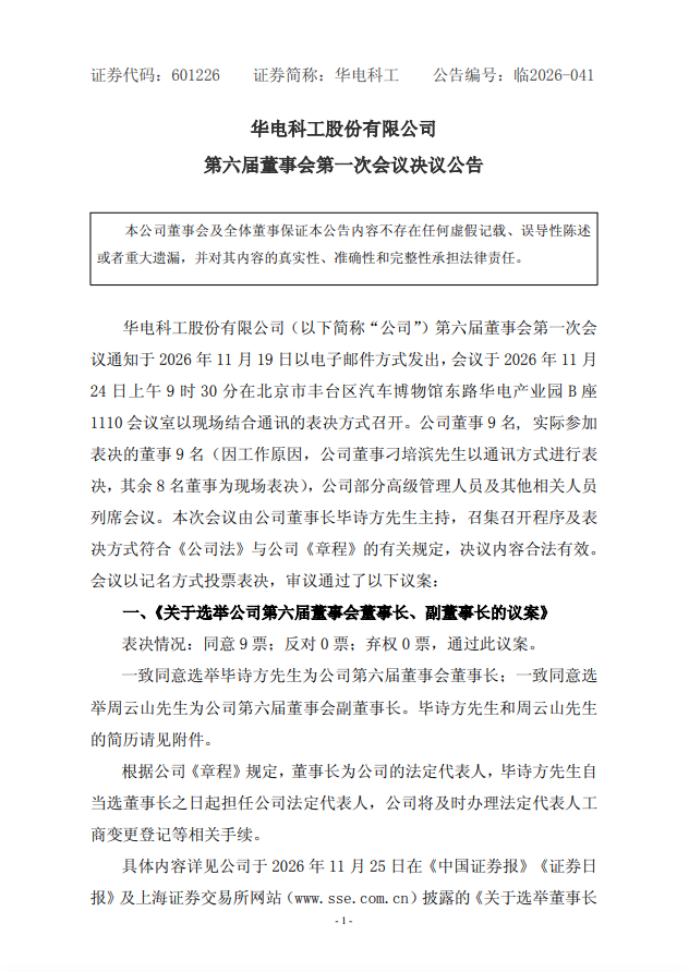
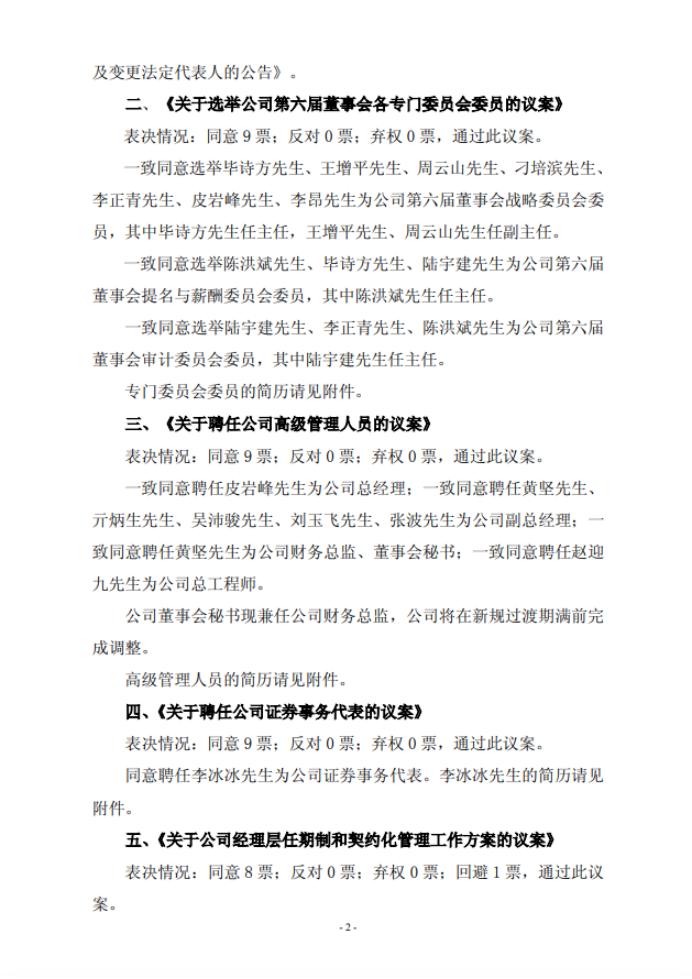
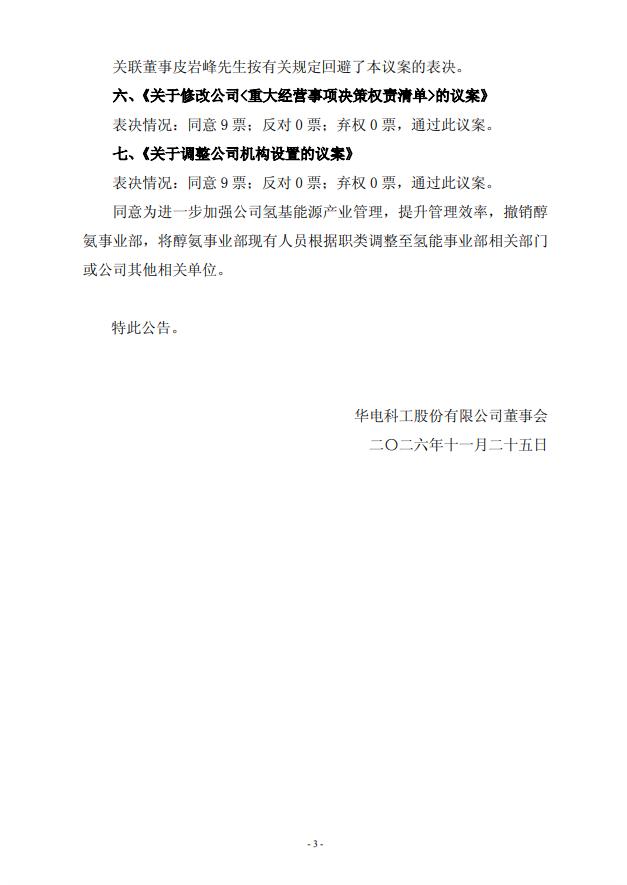
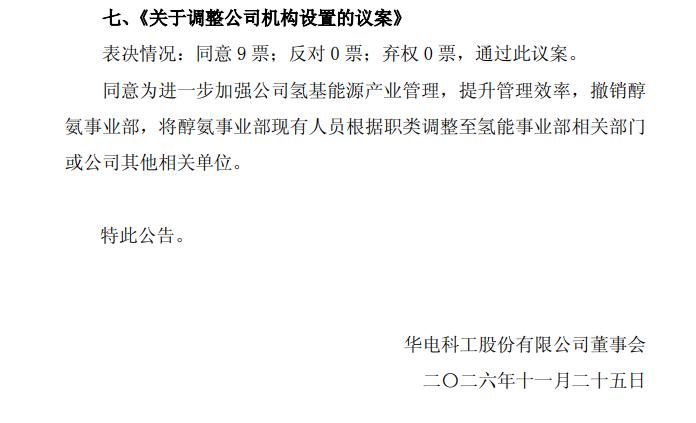
At 9:30 a.m. on November 24, in Conference Room 1110, Block B, Huadian Industrial Park, Fengtai, Beijing, the first meeting of the 6th Board of Directors of Huadian Engineering reviewed seven proposals. The last proposal decided to abolish the Alcohol & Ammonia Division, and personnel were transferred to the Hydrogen Energy Division by job category. The announcement was published in newspapers the next day, and the industry interpreted it as four words: Hydrogen Energy is axed.
This is a misreading, yet also an accurate intuition. The misreading lies in that what was abolished was the Alcohol & Ammonia Division, while the hydrogen energy department was actually consolidated; the accuracy lies in that over the past year, the 1GW wind-solar-hydrogen-ammonia project of China Energy in Alxa gave up its construction quota due to falling green ammonia prices, and SPIC Inner Mongolia Energy put 50% equity of Kubuqi Hydrogen Fertilizer up for transfer with a reserve price of 1 yuan.
Institutions are merging and assets are exiting, moving in opposite directions but converging on the same outcome: The sieve for the hydrogen energy sector has started shaking. By 2030, the policy requires 2 million tons of hydrogen produced from renewable energy, and the total number of fuel cell vehicles is targeted to reach 100,000. Only assets that can pass through the sieve holes are the real viable assets.
What Is Abolished Is Not Hydrogen Energy
The announcement of Huadian Engineering makes it very clear that abolishing the Alcohol & Ammonia Division is to "further strengthen the management of the hydrogen-based energy industry". Part of the personnel will be transferred to the Hydrogen Energy Division, and the rest will be taken over by other affiliated units.
The announcement did not mention suspension of ongoing projects, nor shutdown of the alcohol and ammonia business. The revenue of hydrogen energy business reached 203 million yuan in the first half of the year, a year-on-year increase of 1453.72%, accounting for 4.4% of the total revenue of 4.573 billion yuan. This proportion is not large, but the development direction is clear.
Looking at publicly retrievable announcements of listed companies and mainstream reports, the only case that explicitly mentions "abolishing the hydrogen energy division" is Yihuatong in March 2025, while the company was still pushing forward the acquisition of Xuyang Hydrogen Energy in the same period.
Looking at the moves of central SOEs and local state-owned enterprises, Aerospace Engineering renamed its Hydrogen Energy Division to Green Hydrogen Engineering Division, and set up a new Low-Carbon Metallurgy Division at the same time; the headquarters reform of China Energy Engineering Corporation involved nearly 20 departments, and the abolished divisions were the Capital and Finance Division and the Brand Management and Converged Media Division; China Energy Investment Corporation set up a new Hydrogen Energy Division at the beginning of the year, and Sinopec restructured its five divisions including Oilfield Exploration and Development, Oil Refining, Chemical Industry, Oil Product Sales, and Capital and Finance into four major sectors including Oil & Gas and New Energy, and hydrogen energy is classified into the new energy layout. The common point of these moves is to centralize power, consolidate statements and improve efficiency, rather than retreat.
What is actually being divested is assets. According to incomplete statistics, since 2025, more than 13 state-owned or state-backed enterprises have listed and transferred equity of hydrogen energy companies, and the reserve price of SPIC Inner Mongolia Energy's 50% equity transfer of Kubuqi Hydrogen Fertilizer is 1 yuan. Shandong Jiumu Hydrogen Energy's revenue fell to zero in 2024, and Zhejiang Shuntian Youli New Energy was trapped in a shareholder dissolution dispute. The China Energy Alxa project gave up its construction quota, and the China Energy Wuhai Xilaifeng wind-solar hydrogen production project applied for cancellation; the total investment of Huadian Damao Banner project was reduced from 6.765 billion yuan to 5.767 billion yuan, and the hydrogen production scale of CGN Hainan District project was cut by about 12%.
While new divisions are being established, equity is being sold at a reserve price of 1 yuan. It seems contradictory, but it is actually consistent: Institutions follow the strategy, and capital follows returns.
There Are Two Hands of Policy, But Subsidies Cannot Prop Up Real Demand
The comprehensive hydrogen energy application pilot notice issued by three ministries in March gave a set of figures: by 2030, the average terminal hydrogen price in urban agglomerations will drop to less than 25 yuan per kilogram, and strive to reach 15 yuan in advantageous regions; the total number of fuel cell vehicles nationwide will double compared with 2025, striving to reach 100,000. Compared with the 500,000 target predicted in the Technology Roadmap for Energy-saving and New Energy Vehicles (Version 3.0) released by China Society of Automotive Engineers, the target has shrunk by 80%.
The same document expanded application scenarios from complete vehicles to green ammonia & alcohol, hydrogen-based chemical industry, hydrogen metallurgy and hydrogen-blended combustion.
The "15th Five-Year Plan" for New Energy System Construction released in June set a 2 million tons annual hydrogen production target, and included the requirement of "reducing low-level redundant construction". On October 20, the National Development and Reform Commission stated that it is formulating plans targeting overheated investment in some segments of the hydrogen energy industry, emphasizing avoidance of blind investment and reckless spending.
The direction given by the policy has not changed, but the evaluation criteria have been adjusted. In the past, the industry competed for more project filings and larger signing agreements, but now three questions are asked: Is the electricity newly generated green power? Is the hydrogen qualified green hydrogen? Is there a long-term offtake agreement signed?
In layman's terms, consumption means that the generated electricity has a buyer, and certification means issuing a certificate to prove the "green origin" of hydrogen. Without this certificate, it is difficult for exported hydrogen to be counted into the local renewable energy target in the EU. Hydrogen will not find buyers on its own.
Local governments are also tightening regulations. Inner Mongolia stipulates that wind-solar hydrogen production projects must complete more than 45% of the planned investment within one year after approval, otherwise the new energy scale quota will be recovered; Gansu and Liaoning followed up with similar regulations. The pilot notice issued in March 2026 explicitly prohibits the construction of coal-based ammonia and alcohol projects in the name of green ammonia and alcohol, blocking the path of labeling fossil-based projects as green.
"All the world's bustle is for profit", which is not an exaggeration to describe the current hydrogen energy circle. Subsidies can support projects, but cannot support real demand.
When the Profit and Loss Account of Hydrogen Is Fully Disclosed
By the end of 2025, the planned production capacity of green methanol exceeded 50 million tons, and green ammonia exceeded 20 million tons, while the actual operation rate was less than 3%.
There are 8 commissioned green methanol projects with a total capacity of 610,000 tons, and 3 green ammonia projects with a total capacity of 700,000 tons. The cost of green hydrogen in the Three-North Region is 13 to 15 yuan per kilogram, and the total cost including storage and transportation is close to 60 yuan, while the cost of coal-to-hydrogen is less than 10 yuan. Electricity cost accounts for 60% to 80% of the total green hydrogen cost. The so-called high price of green hydrogen comes from expensive electricity, not the electrolyzer itself.
According to media surveys, the planned domestic electrolyzer capacity was 20GW in 2023, rose to 80GW by the end of 2025, and is expected to exceed 100GW in 2026, but the actual installed capacity in 2025 was only about 6GW, meaning the planned capacity is ten times the actual demand. The mainstream 1000 standard cubic meter alkaline electrolyzer was sold for up to 6.98 million yuan per set in 2023, and the bidding price of central SOEs in October 2025 has dropped to as low as 2.54 million yuan; an executive of a leading enterprise said that the gross profit margin has been compressed from 35% to 15%, and some low-price orders in the first quarter of 2026 will have negative gross profit.
Electrolyzers do not comfort themselves: negative gross profit is negative gross profit. Yihuatong, Guohong Hydrogen Energy, Guofu Hydrogen Energy and Re-Fire Technology recorded a total net loss of about 2.088 billion yuan in 2025, among which Yihuatong's attributable net loss reached 671 million yuan, and the gross profit margin of fuel cell systems was -19.82%.
It is reported that Jingcheng Co., Ltd. is expected to record a loss of 61.6 million to 73.6 million yuan in the first half of the year; GGII data shows that the number of registered domestic hydrogen fuel cell vehicles in June 2026 was only 32 units.
In the first half of 2026, there were about 80 newly signed green hydrogen and green fuel projects with a total capacity of 2.98 million tons per year, compared with 140 projects and 4.82 million tons per year in the same period of the previous year, representing a 43% drop in project quantity and a 38% drop in capacity; in the same period, the capacity of projects entering the bidding and construction stage rose from 840,000 tons per year to 1.09 million tons per year, an increase of nearly 30%. What is being cleared out is the fictitious paper capacity, not hydrogen itself.
Huadian sets the minimum internal rate of return on capital for hydrogen-based energy projects at no less than 6.5%, which is essentially the break-even line; with this line drawn, projects that cannot make financial sense will exit the market naturally.
According to statistics from the Hydrogen Council, at least 50 of the more than 1,700 clean hydrogen projects announced since 2020 have been cancelled in the last 18 months, 80% of which are early-stage green hydrogen projects. bp cancelled four projects in a row in 2025; ExxonMobil suspended the Baytown project that had already invested 500 million US dollars; the EU RFNBO rules are estimated to increase the cost by 1 to 2 US dollars per kilogram. The sieve in China is just one model of the same global sieve.
The sieve is still shaking. The remaining projects are those that can include electricity price, load, certification and offtake terms in the same contract; the eliminated ones are the paper capacities that only have a project filing number.
Hydrogen will eventually be sold by the kilogram, and sellers must recover costs from sales. This is not pessimism, but the starting point of business.