This type of store is exactly what shopping malls are most eager to snap up right now.
In the past, brands competed on the number of stores they opened and how deeply their outlets penetrated into lower-tier markets. Today, the competition has shifted to seizing iconic locations in cities and creating more memorable spatial expressions. A massive industry migration from "scale expansion" to "landmark occupancy" is restructuring the underlying landscape of China's entire retail and commercial sector.
More and more brands are breaking away from the path of standardized replication to build competitive barriers that are harder to imitate — the barrier of brand culture. As the core carrier of brand cultural assets, "landmark stores" are replacing standardized chain stores and becoming highly sought-after "stars" in mall investment attraction.
01.
Is Mixue "going upscale"? The country's first 24-hour, largest flagship store is a smash hit
The single-day turnover on the opening day exceeded 1.2 million RMB, and the cumulative turnover in the first 3 days of opening reached over 3.32 million RMB! "The world's largest Mixue flagship store" (officially opened on October 1) was as popular as tourist attractions during the National Day holiday. This is also Mixue's first 24-hour flagship store, with a store area of 2100 square meters. It is located around Luoyang's time-honored cultural and tourism block full of local life vibes, deeply integrating elements of the ancient Sui and Tang dynasties and the Snow King IP, and integrating desserts, cultural and creative products, drinks, retail and interactive experiences in one space.
According to the brand's plan, Mixue will also lay out brand flagship stores in key cities such as Beijing and Shenzhen, continuously polish and upgrade the mixed business model of "drinks + cultural and creative products + experience", while deeply cooperating with local cultural and tourism sectors to create brand landmarks featuring "one city, one store, one unique feature".
According to statistics from Winshang.com based on official data, as of October 1, 2026, Mixue has opened 28 flagship stores, covering 27 major cities including Zhengzhou, Qingdao, Suzhou, Chengdu, and Chongqing. Many flagship stores have also delivered impressive performance: the flagship store at the Zhengzhou headquarters has a monthly turnover exceeding 15 million RMB, the Chongqing flagship store generated over 3.5 million RMB in 8 days during the National Day holiday, and the Kunming flagship store exceeded 1 million RMB in revenue in just two days of trial operation... Many netizens exclaimed that "Mixue is going upscale"! Why is Mixue, which offers affordable prices, making efforts to open large-format stores? It is not abandoning its "affordable" positioning, but expanding its revenue sources by creating new consumption scenarios under the ceiling of a nearly 60,000-store network.
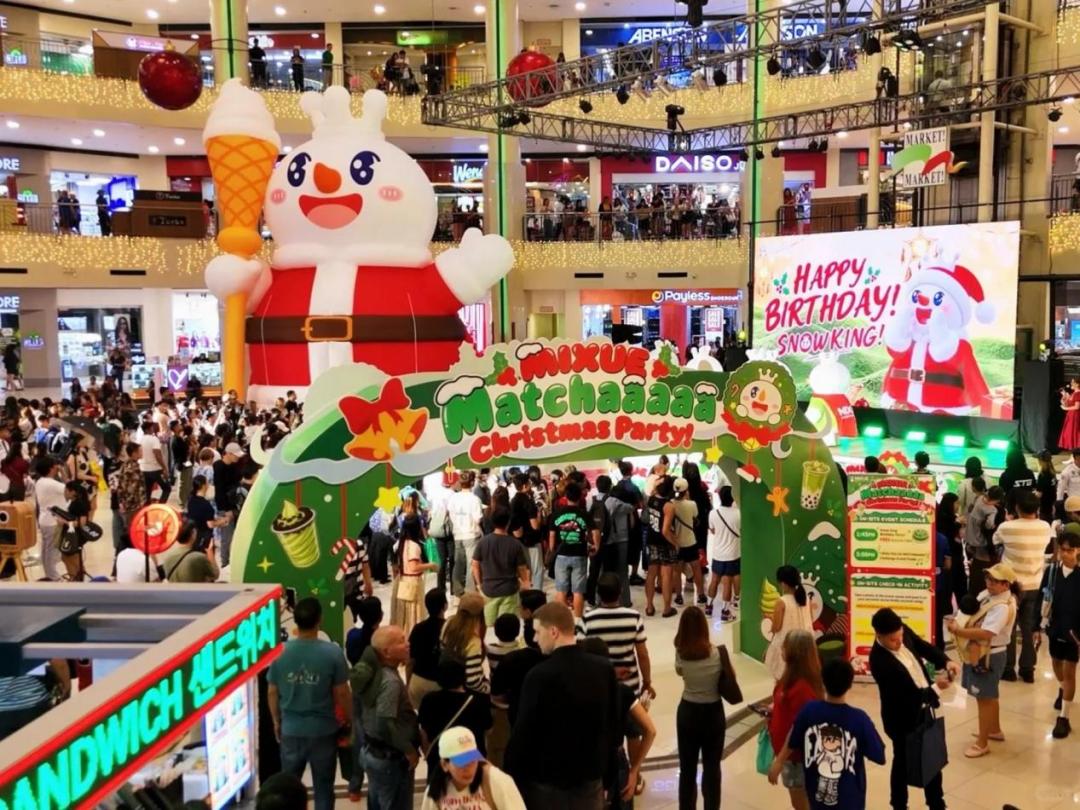
Image source: Mixue official Xiaohongshu account
02.
Luckin Coffee has opened multiple "landmark-style" stores, which come with a "luxury study room"
Luckin Coffee is also continuously increasing its investment in the "third space". Since the beginning of this year, Luckin has opened a number of flagship stores and large-format themed stores, such as:
■ Shanghai Garden Villa Themed Store: Located at Shanghai Lanhai International Plaza in Lujiazui, it has two floors and covers an area of about 100 square meters. With a retro arched door facade, floor-to-ceiling stained glass windows, carved iron spiral staircase, printed wallpaper, floral sofas, retro chandeliers and old-fashioned gramophones, it is full of retro old-money vibes, and is called "the most beautiful Luckin store" by netizens. It is worth mentioning that in addition to the comfortable seating area on the second floor, there are semi-enclosed independent small compartments separated by wooden partitions, which can be used as study rooms, libraries, shared offices, etc.
■ Luckin's first "Origin" Flagship Store: Located at Shenzhen Galaxy Twin Towers, it covers an area of 420 square meters and is Luckin's 30,000th store worldwide. Through wall art installations, origin flavor planet maps and interactive tasting spaces, the store showcases Luckin's global origin layout. In addition, the store has launched the brand's pioneering menu design around the global origin theme. The first floor features the "Taste the Origin" themed menu, and the second floor is the "Origin Specialty Lab", launching exclusive store special drinks and hand-brewed products.
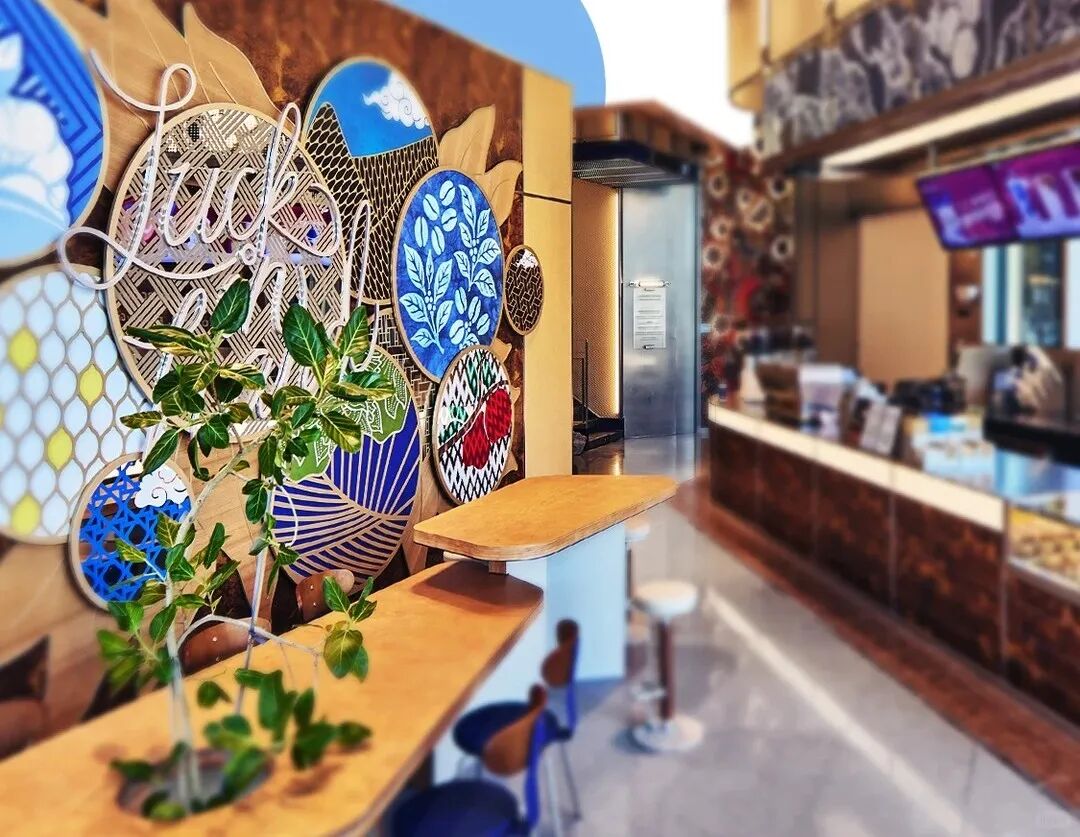
Image source: Luckin Coffee official Xiaohongshu account
■ The largest Luckin store in Guangzhou: Located at Guangzhou Financial City Plaza, it covers an area of 400 square meters. Its design concept deeply integrates Lingnan culture with the aesthetic order of the Financial City, such as the floor tiles patterned after ancient Chinese copper coins, and details incorporating Guangzhou Manchu window elements. Some netizens commented that it "does not look like a coffee shop, but more like stepping into an art exhibition hall".
Essentially, Luckin's move to expand its third space is a strategic choice to break away from pure low-price involution and make up for brand shortcomings after its scale reaches its peak. These landmark stores share the same logic in site selection and space design: they are located in prime core areas of cities, boast large store areas and strong thematic features, and undertake the functions of brand shaping and topic creation.
More importantly, most of these stores still maintain the 9.9-yuan price point for their products, thus creating a rare "affordable third space" on the market that combines "decent environment and low consumption threshold", converting users who originally only bought low-priced coffee into loyal customers who are willing to stay for a long time and make more repeat purchases.
03.
Bawangchaji no longer only sells tea! It has launched more than 1000 themed stores!
In September, Bawangchaji opened the country's first local tea variety themed store at Jin'an Wanda Plaza in Lu'an, Anhui Province. The tea picking and tea making techniques of Lu'an Guapian tea are reproduced in the space! The store adopts a hidden circulation line, moving all standardized tea preparation to the back area, and only retains the tea pickup area and the manual tea making experience counter in the front area, while dividing this process into multiple links according to the experience circulation line.
Earlier in July, Bawangchaji upgraded its Wuhan Xintiandi block store (the first store in Hubei) to the country's first museum-themed store. The store area was expanded from one floor to two floors, incorporating the styling language of the treasure exhibits of Hubei Provincial Museum into the spatial structure. The overall facade takes a wooden tea house as the spatial image, and the store sign is shaped after the outline of chime bells, which is highly recognizable.
Transforming from "a place to sell tea" to "a place to spread culture"! In fact, since last year, Bawangchaji has launched more than 100 themed stores in cities including Shanghai, Changsha, Kunming and Hong Kong. Beyond the mass consumer base covered by standard stores, Bawangchaji is carrying out strategic store upgrades with "scene complementation" as the core — using more scenario-based and localized spaces and experiences to reach segmented crowds of different circles.
04.
HEYTEA has no bottleneck in innovating store formats?
lab 2.0, Tea Workshop 2.0... The store format matrix is taking shape at an accelerated pace
Becoming the standout star at the "APEC Summit", is HEYTEA going to level up its brand positioning? From opening franchised stores to pausing franchising to avoid low-price competition, and then restarting franchising with strict screening rules. HEYTEA, which is stepping away from the pursuit of blind scale expansion, is refocusing on products and experiences. This year, the brand has made continuous new moves in store formats:
■ The first HEYTEA heytea lab 2.0 store nationwide: Located at Fengshengli, Shanghai, as HEYTEA's most high-positioned experimental store format, it brings together four major lab sections for the first time: tea lab, cake lab, gelato lab and bake lab. It explores around tea itself, and extends to different categories that pair well with tea, such as baking and Italian ice cream; at the same time, it deeply integrates Shanghai's local culture, incorporating urban characteristic elements such as Chongming rice wine and salted egg yolk into its products.
■ The first HEYTEA craft (heytea craft) store nationwide: Located at Shipaiqiao, Guangzhou, it is positioned as a "process experience store with R&D placed in the front". It removes the traditional back-kitchen partition, and takes an L-shaped open "long process bar" running through the whole store as the core, allowing customers to watch the whole operation process of tea makers. The store does not sell regular best-selling products such as Grape Boom, but focuses on 7 custom tea bases to create five new series including clay pot milk tea and craft dark chocolate special drinks.
The first HEYTEA · Tea Workshop 2.0 store nationwide: Launched at Shenzhen Central Book City, HEYTEA is now selling French fries and salted crispy chicken! After three years, it opens a new Tea Workshop store again, which is a product upgrade of the Tea Workshop business based on the "return to the essence of tea drinking". The store space is designed based on the prototype of Song Dynasty tea workshops, with corridors and bamboo pavilions integrated into the design, expanding from single drinks to a combined experience of "tea + light food + desserts", and launching two new product series: "Freshly Made Tea Food" and "Tea Ice Cream".
In addition to comprehensive flagship stores, HEYTEA has also split the "lab" concept into more focused themed stores, and will launch new store formats such as Ice Shaving Lab+ and Sherbet Lab+ in the second half of the year. Together with GO stores, Black Gold stores, DP stores... HEYTEA's store format matrix is taking shape at an accelerated pace. This exploration that relies on increasing customer unit price instead of blindly expanding store area may have more reference value than simply fighting price wars.
05.
POP MART launches the "large store battle", competing on "landmark sense" instead of store quantity
In the past decade, POP MART achieved scale growth relying on small stores + blind boxes. In recent years, it has also been making efforts to develop large-format stores, which not only provide display space for mid-tier and new IPs, reduce dependence on a single IP and maximize IP value, but also convert check-in users into high-repeat-purchase members through offline activities. Previously, POP MART has opened a number of large-format stores / flagship stores in core business districts of first-tier cities such as Beijing, Shanghai and Guangzhou.
In September this year, POP MART opened its largest flagship store in China at Hangzhou Hubin Intime in77, which is also its first flagship store in Hangzhou.
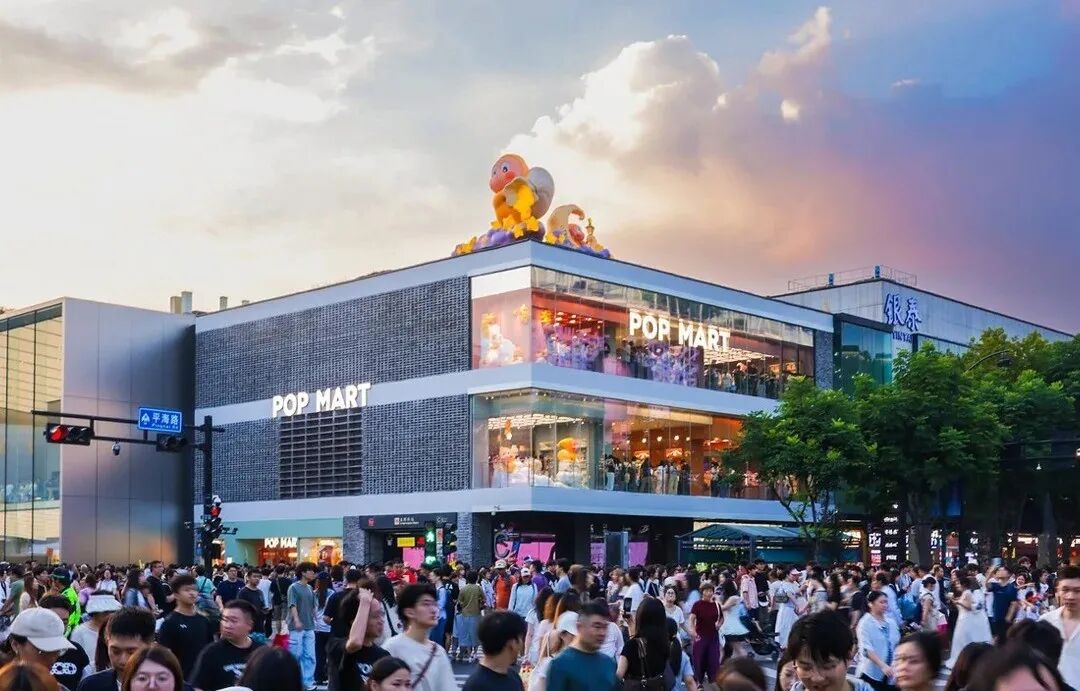
Image source: POP MART official Xiaohongshu account
This three-story flagship store creates a strong visual memory point from its facade — a huge Starman installation sits on the roof of the store, decorated with stars and the moon beside it, which is extremely eye-catching.
The store covers an area of over 1000 square meters, taking the IP "Starman" as the core narrative line, while integrating Hangzhou's local culture and West Lake elements into the store space, integrating display, interactive experience and limited-edition release in one space.
06.
Chiikawa has opened 6 flagship stores in 2 years
Adopting the strategy of "pop-up first, flagship follow-up"
As a phenomenal and highly popular IP that has become popular all over the world in recent years, Chiikawa adopts a "pop-up store + flagship store" two-wheel drive strategy to expand its stores in Chinese mainland. Through the mode of "pop-up first, flagship follow-up", it quickly occupies core business districts of cities, tests market popularity through time-limited experience methods, and after quickly accumulating fans, it launches long-term operated flagship stores and implements in-depth localized operations.
In September this year, Chiikawa landed at Guangzhou Tianhe City and Shenzhen Nanshan Coastal City Shopping Center, opening its first flagship stores in Guangzhou and Shenzhen at one go.
Image source: Alifish official Xiaohongshu account
Different from other flagship stores, both of these two stores take "Lingnan martial arts" as the theme, integrating local cultural elements such as Wing Chun and Lion Dance with the cute Chiikawa characters in an interesting way. The store is not only equipped with a Guangdong limited-themed area, but also features the first launch of the Guangdong Lingnan limited series.
In fact, Chiikawa has been laying out flagship stores in Chinese mainland since 2023. Up to now, the brand has opened 6 flagship stores in cities including Shanghai, Hangzhou, Nanjing, Sanya, Guangzhou and Shenzhen.
07.
ALO opens its largest time-limited experience space,
The "lulu alternative that offers better value" is growing rapidly in the Chinese market!
Following ALO's first offline time-limited experience space in Chinese mainland opened at Shanghai Zhangyuan, Shanghai's second time-limited experience space "Sunshine Realm" located on Huaihai Middle Road also opened to the public on November 20. This is also the brand's largest time-limited experience space to date! Covering an area of nearly 1200 square meters with three floors, the overall design is inspired by California's natural landscape, positioned as a "community-oriented Wellness (physical and mental health) exchange node", and has made improvements in space creation, retail experience and service configuration.
This time-limited space is regarded as an important step for the brand to continue expanding its offline retail footprint in China and deeply cultivate the Chinese market! The iAPM flagship store across Huaihai Middle Road is scheduled to open in the second quarter of 2027.
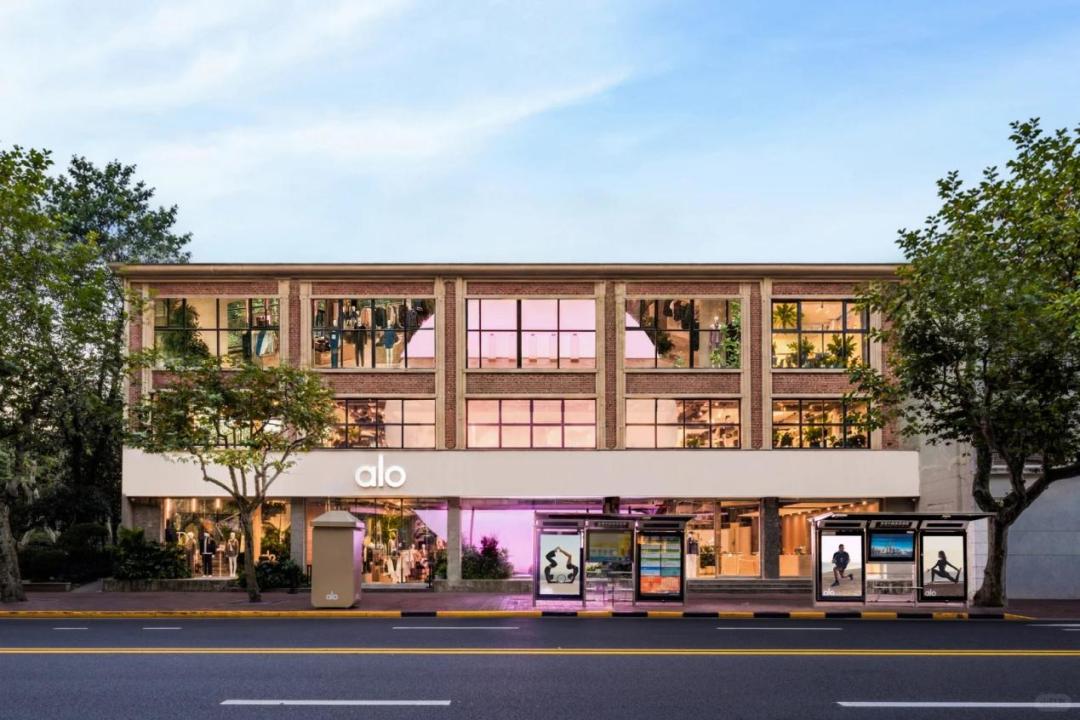
Image source: ALO official Xiaohongshu account
Earlier in September, ALO announced the launch of its first round of retail expansion in Greater China, planning to open 8 offline boutiques in 7 cities including Shanghai, Beijing, Hong Kong, Macau, Shenzhen, Hangzhou and Chengdu from 2026 to 2027, selecting locations in high-end retail landmarks such as Beijing China World Mall, Shanghai HKRI Taikoo Hui, Shenzhen Bay MixC, Chengdu Ta