Can the new wellness and healing narratives of ultra-luxury hotels hold water?
When property owners shift from the past "no return required" mindset for real estate supporting facilities to the current pursuit of space efficiency and profitability, this hotel format that has never relied solely on hardware to support its premium pricing needs to tell more growth stories to the outside world.
A recently prevailing trend is that many luxury hotel brands are paying close attention to whether their guests are "worn out". Luxury brands including Marriott, Hilton, and Aman have added a large number of new projects to help guests relax: forest therapy, infrared saunas, Indian SPA, and many more.
Turning "wellness" into a product line and vigorously developing therapy programs — is this a business reshaping of luxury hotel brands oriented to future trends, or just a "Emperor's New Clothes" story told unilaterally by the brands?
01. Pay 1000 yuan for a 2-day therapy class, what are luxury high-end hotels selling?
While everyone is just "living a plain life", people under consumption stratification have put forward higher requirements for traditional products and experiences. So do luxury high-end hotels. At present, across the Jiangsu-Zhejiang-Shanghai region, the experiences offered by luxury high-end hotels are gradually shifting.
Travel to Shanghai, stay at the Anandi Hotel, join the therapy workshop, and experience multiple programs including singing bowl shows, mandala chanting, and mindfulness practice. If there happens to be a platform discount, the cost is sometimes only over 1000 yuan. This arrangement has become a popular weekend travel choice for many netizens in Jiangsu-Zhejiang-Shanghai as the weather gets colder.
The Anandi Hotel is an urban wellness and therapy resort that focuses on the "healthy lifestyle". Guests will take an Ayurveda constitution test upon check-in, and the rooms are equipped with nano energy flooring, earth beds, sleep-aid devices, Himalayan salt lamps, and herbal bath packs, with more than ten types of pillows for guests to choose from.
This series of actions conveys the hotel's attitude — to build wellness experience into core competitiveness through both software and hardware facilities. More and more luxury high-end hotels are launching "relaxation" as a formal product and increasing their investment in this track.
Recently, the Lefay brand was officially listed on the luxury brand page of Marriott's official website. Lefay is an Italian luxury wellness hotel brand. Back in March this year, Marriott announced the establishment of a joint venture with it, incorporating it into its brand matrix, making it Marriott's first hotel brand dedicated to the luxury wellness sector.
At the end of August, Hilton released a new fitness space solution.
But in this project, it barely mentioned treadmills, and instead divided the space into two parts: one half for physical care, and the other half for emotional care. The physical section is equipped with infrared saunas, traditional saunas, immersive showers, and cold therapy rooms, while the emotional section has zero-gravity recliners, air pressure boots, and robot massage services will also be added.
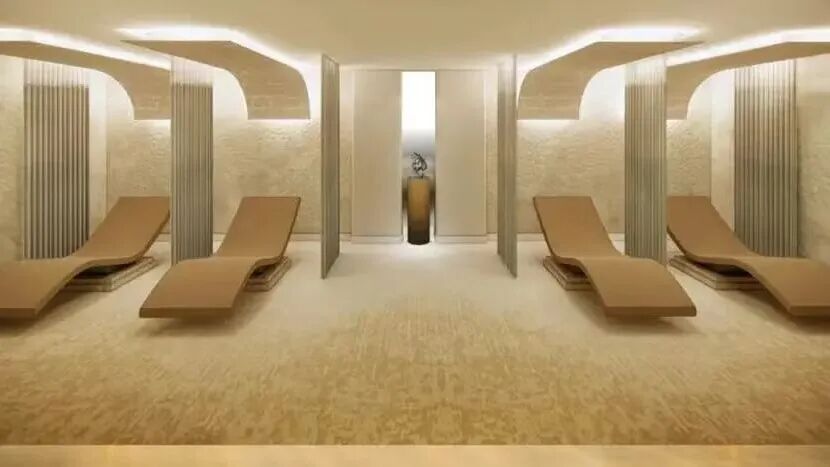
Rendering of Hilton Signia Restore physical recovery and reset zone Source: Better Life Asset Management
For these hotels, the past luxury was reflected in in-room dining and overnight shoe shining services, but now it has turned to the care for guests' emotions and physical conditions.
All these efforts are made with clear intentions.
The intention of luxury hotels is not complicated: as the real estate sector cools down, hotel businesses are shifting their focus to return on investment. Coupled with the fact that consumers are tightening their spending, the operation of luxury hotel projects and the expansion of luxury hotel brands have fallen into a dilemma.
For example, there are recent rumors that the St. Regis Ningbo is suspected of being rebranded to Four Points by Sheraton. The 249-meter Ningbo Tower at Sanjiangkou officially announced the introduction of the top-tier luxury St. Regis brand in 2019, which was originally scheduled to open to guests in 2024 but has not opened yet. It was removed from the Greater China list on St. Regis's official website in July this year, and there are recent rumors that it will be rebranded to Four Points by Sheraton, a select service brand under Marriott.
This is not an isolated case. During the same period, a number of landmark properties including Six Senses Hangzhou and New World Foshan have successively downgraded and rebranded during the pre-opening stage, which has become a collective move for property owners to control costs and recover cash flow during the real estate downturn.
When the brand positioning drops directly from top-tier luxury to mid-range select service, for luxury hotel brands, the stories they used to tell in the past may no longer work. They need to find a new storyline.
Some hotel groups have set their sights on wellness and therapy projects, trying to get consumers and property owners to pay again through spiritual dimension upgrading, and turn the intangible spiritual services into high premium for their luxury positioning.
But on the other hand, behind the craze of consumers checking in these projects, it may also indicate the future development trend of the "therapy" business in the hotel industry.
According to the *2025-2026 China Wellness Hotel Market Development Report* jointly released by Maitou Institute and Bosi Data, the market size of the general wellness hotel sector in China will exceed 1.5 trillion yuan in 2026, and the growth rate of the therapy track will reach 27.5%, far higher than the 8.2% of traditional hotels.
When wellness has become the most concerned demand at the moment, the "wellness strategy" has indeed brought actual and effective revenue growth to hotels. For example, Hyatt's Miraval Resort generates annual revenue of over 300 million US dollars per property, with non-room revenue accounting for 70% and a unit customer price of 20,000 yuan per night.
However, it remains to be seen whether this is a unique case of top-tier hotels or an emerging new trend that is about to come.
02. Guests say "not worth it" while hotels claim "premium pricing", where is the new story stuck?
Open the comment section of a hotel known for "therapy", you will see all kinds of negative reviews everywhere: "Some classes are fully booked and impossible to reserve", "The Indian teacher has shouted his voice hoarse", "Therapy uniforms require extra payment". On social platforms, netizens who have experienced therapy services show a dismissive attitude that "it's nothing special".
The wellness and therapy trend has been blowing in the hotel industry for a long time, but most of its good reputation only exists in people's imagination, and many consumers give low evaluations after actual check-in experiences. Some more radical critics even believe that it is nothing more than an upgraded version of SPA.
Behind this lies a critical flaw that the "wellness" track is currently facing — the lack of a set of professional, convincing and scientific methodology. Most projects are still focused on creating an atmospheric vibe, with overly broad concepts.
Judging from the projects that have already been launched in the market, hotel practitioners are also trying to find a solution to maximize the value generated by the premium pricing.
There are mainly three approaches at present:
The first one is the "medical-focused school". They convert the hotel's physical therapy rooms into hyperbaric oxygen chambers, NAD+ therapy rooms, sleep diagnosis laboratories and other facilities, trying to present all experiences with quantifiable data.
The second one is the "culture-focused school", which is more widely adopted by local domestic hotels. For example, the Qingxia Mountain Residence in Qingcheng Mountain fully integrates local Taoist culture into a closed-loop therapy experience route.
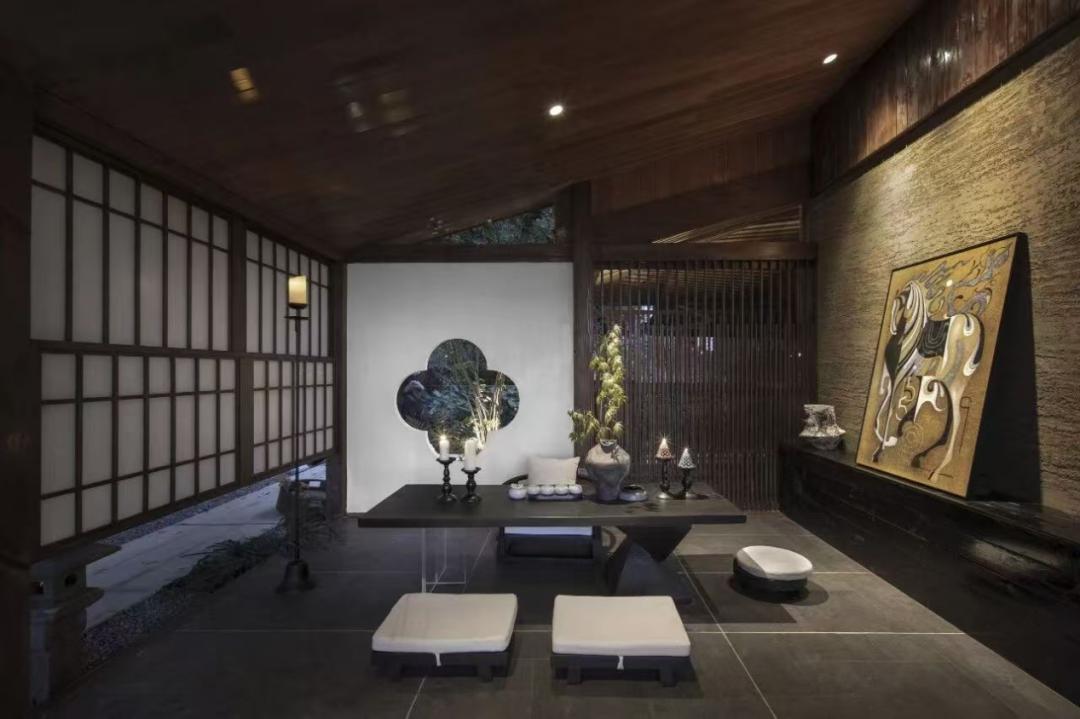
Qingxia Mountain Residence Source: Garden Collection
Starting from the moment guests enter the mountain, they will first attend an incense burning and hand cleaning ceremony, take a sleep constitution test when checking in, and then be matched with different room aromatherapy, pre-sleep drinks and activity schedules for the next day according to their physical conditions.
In the morning, guests can practice Tai Chi with a Taoist priest in the mountains, do sound therapy in the valley in the afternoon, and enter sleep mode at night, experiencing cultural immersion throughout the whole day.
The third one is the "system-focused school". For example, Chiva-Som in Thailand has 120 health experts on its payroll, providing 171 different therapy services, forming a complete closed loop covering sports rehabilitation, dietary conditioning and psychological counseling.
These approaches that turn "wellness care" into specific data or practical activities have brought actual revenue results to these hotels. For example, the annual occupancy rate of Qingxia Mountain Residence stays stably above 70%, it achieves full occupancy during peak seasons such as May Day and New Year's Day, and the peak price of its presidential suite is nearly 10,000 yuan per night.
However, the successful case of a single hotel is still difficult to solve the common problems faced by the "therapy hotel" category. If you only move SPA services into hotel rooms or offer a few therapy classes, it will be difficult to support continuous repurchase and stable experience.
In addition, there is another unsolvable bug in the therapy track — it has no functional or practical result attributes. Consumers pay for the experience, and what they feel is just the atmosphere, with all the premium reflected on the "concept".
Against the backdrop of a consumption downturn, the "concept" is hardly enough to support a hundred-billion-yuan market.
03. From Anandi to The Sili Hotel, who will be the first to make therapy chain operations work?
Some pioneering brands are trying to implement the wellness concept, create the value of "experience economy", and explore a chain operation path that fits the domestic market environment, instead of only focusing on the high price of tens of thousands of yuan per night.
The Sili Hotel, founded back in 2013, has developed a number of small yet popular hit projects in the Yangtze River Delta and Yunnan. Relying on natural scenery and local culture, it also leverages its ability to arouse consumers' emotions and lead guests to have in-depth experiences.
For example, its Sili · Shannan Diaoying Garden project in Feixi, Anhui takes "enter the realm of solitude, break out of the siege of loneliness" as its spiritual core. Through the "loneliness test" and 108 loneliness scenarios including the "Solitude Grocery Store" and "Loneliness Ranch", supported by therapy facilities such as herbal bath hot springs and idyllic SPA, it turns "loneliness" into an immersive experience journey.
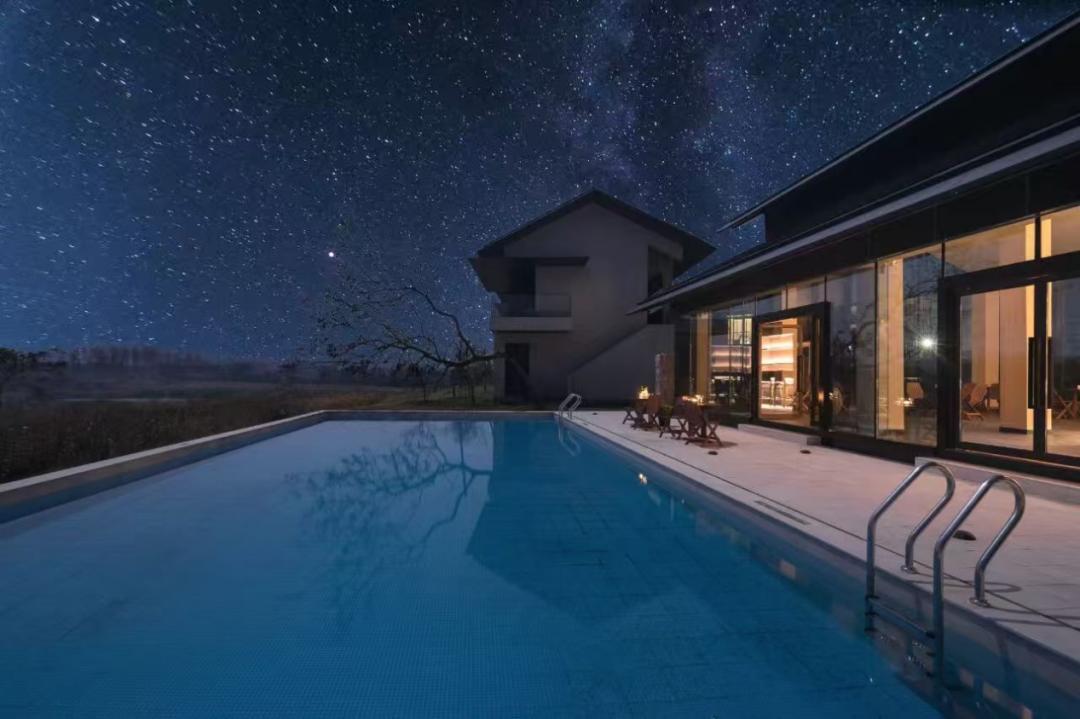
Real shot of Sili · Shannan Diaoying Garden in Hefei Source: The Sili Hotel Group
Huajiantang has cooperated with BYMB, a well-known domestic yoga brand. BYMB provides content and IP including yoga, meditation and sound therapy, while Huajiantang provides offline hotel scenarios, to jointly build a sustainably operated wellness therapy IP.
Some other hotels are combining with traditional Chinese medicine to break through the "function" difficulty. For example, the Haitian Financial Center Hotel in Qingdao has cooperated with a local traditional Chinese medicine hospital to build a TCM wellness station in the hotel, connecting herbal drinks, TCM physical therapy, wellness meals and convenient medical services, driving multiple types of consumption in catering and medical services.
All these layouts bypass the luxury experience of high-end luxury hotels, and form differentiated competition with international hotel groups with content as the carrier.
However, there are still very practical problems in this track: first of all, low replicability. The wellness and therapy business is highly dependent on local ecological resources, professional therapy instructors and unique cultural heritage. As an industry that has not yet undergone commercialized development, all these carriers are scarce resources, which limits the possibility of large-scale development.
Secondly, there is almost no standardization. Clear SOP service procedures can be established in hotel rooms, but experience-based products cannot be standardized, and there is no unified evaluation system for therapy effects across the industry.
Finally, the renovation of existing hotel projects is highly difficult. Property resources, renovation costs, and the payment habits of high-net-worth customers may all face a reshuffle, making it difficult to become a mass renovation method for luxury high-end hotels.
At present, the chain renovation projects are mainly combined with wellness. For example, the Beijing Legendale Hotel was taken over by Ping An Life after closing down. Instead of carrying out blind luxury upgrades, it was built into a high-end wellness community relying on the medical radius adjacent to Peking Union Medical College Hospital, accurately targeting high-net-worth elderly customers with medical needs.
But for luxury high-end hotels that want to turn "wellness" into value, no matter they take the therapy route or enter the wellness track, what restricts their development is not the business type, but whether they can find their own precise customer groups and match the surrounding resources.
Perhaps for luxury hotels at the current stage, therapy is more suitable to be a good companion in this "plain living" era, attracting guests with the promise of "no tiredness", and then polishing the product system slowly over time.
After all, when "prioritizing wellness" is still just a goal for people, "therapy" can only be a scarce resource.