Wrapping up the Guangzhou Auto Show, the automotive industry is relearning how to weather the winter.
Today (November 27), the 24th Guangzhou International Automobile Exhibition officially opens.
As the last Class A auto show in China this year, with 1106 exhibited vehicles, 115 world premiere new cars, 707 new energy vehicles, and a 220,000-square-meter exhibition venue, including 73 press conferences on the 27th alone, even if the weather in Guangzhou is not as warm as usual and the public complains that the importance of this year's Guangzhou Auto Show has decreased, the bustle will not be absent.
However, if you only focus on the excitement, who attended and who did not, and who did not launch an entirely new model at the auto show, you will miss the most essential takeaway that should be understood from this year's Guangzhou Auto Show.
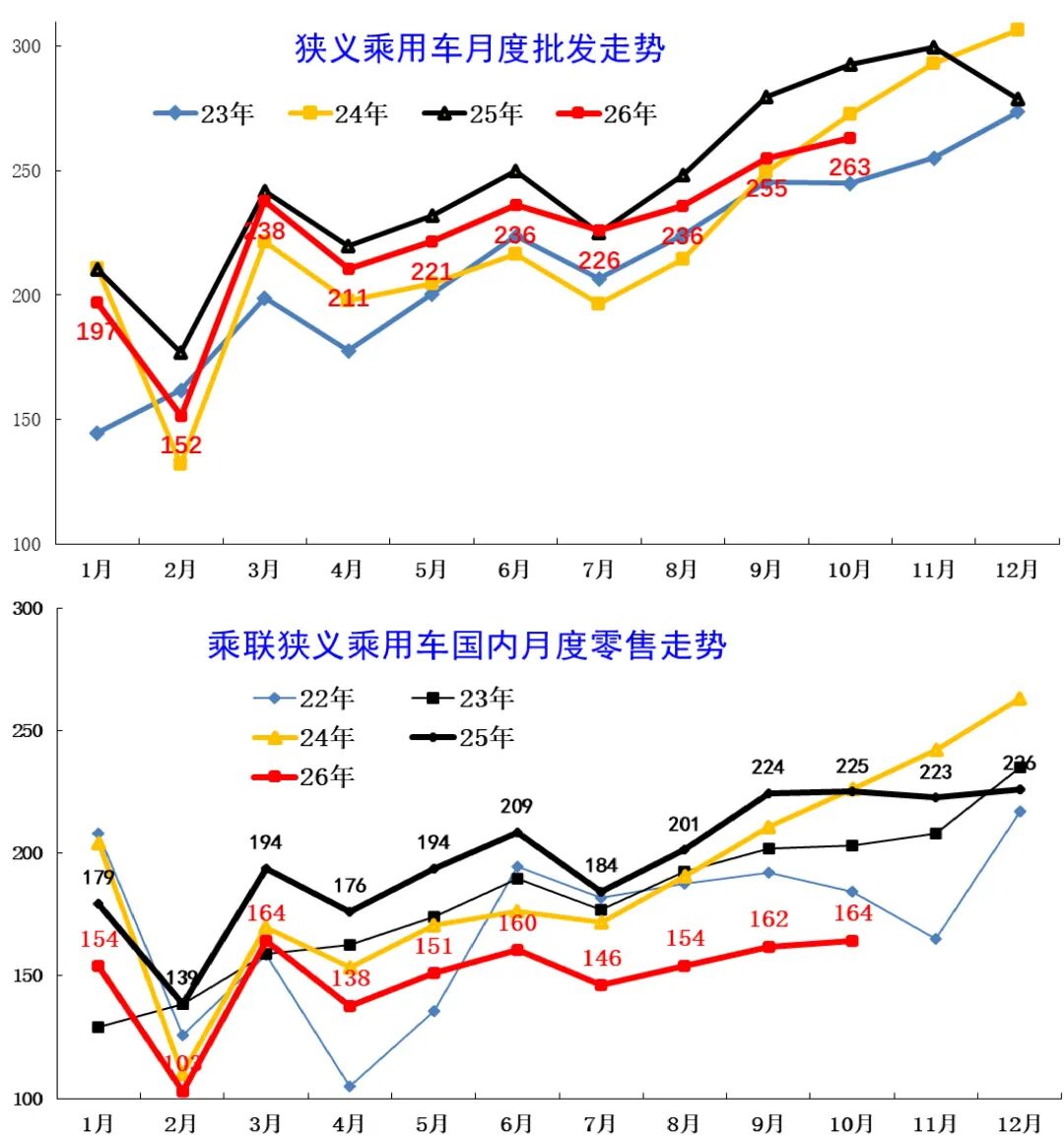
Against the overall background of the automotive industry, this year is arguably the most difficult one in the past 10 years. The traditional "golden September and silver October" peak sales season has basically disappeared this year and is unlikely to return in the future. Retail sales in September fell by 28% year-on-year, and retail sales in October reached 1.643 million units, down 27.1% year-on-year. The fact that the peak season is no longer booming is undeniable.
The cumulative retail decline in the first ten months exceeded 20%. According to the forecast of the China Passenger Car Association, the total annual domestic retail sales will be around 18.5 million units, almost returning to the level 12 years ago.
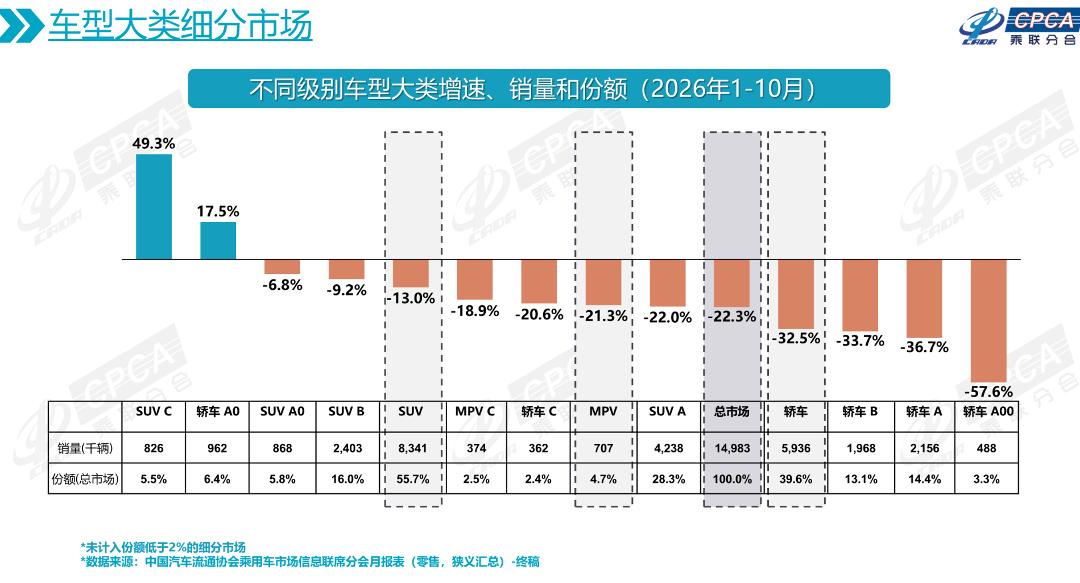
Retail sales of fuel vehicles in October reached 530,000 units, down 45% year-on-year, almost halved; new energy vehicles reached 1.109 million units, with the penetration rate soaring to 67.5%. In the first half of November, the penetration rate has exceeded 70%, making it the only resilient segment in the entire market.
Looking at the Guangzhou Auto Show and this year's closing battle in such a market situation, the mindsets of automakers, media, and dealers are completely different from previous years.
In previous years, the focus was on concentrated new model launches, snatching orders, and competing for public attention. This year is more like a more in-depth review: not only reviewing the gains and losses of the whole year at the end of the year and testing the market water level for next year, but also pressing the brake pedal so hard for the first time after more than a decade of rapid development of the automotive industry, allowing the entire industry and every participant to re-examine the development and future of the sector.
Hitting the brakes: the industry enters the era of diseconomies of scale
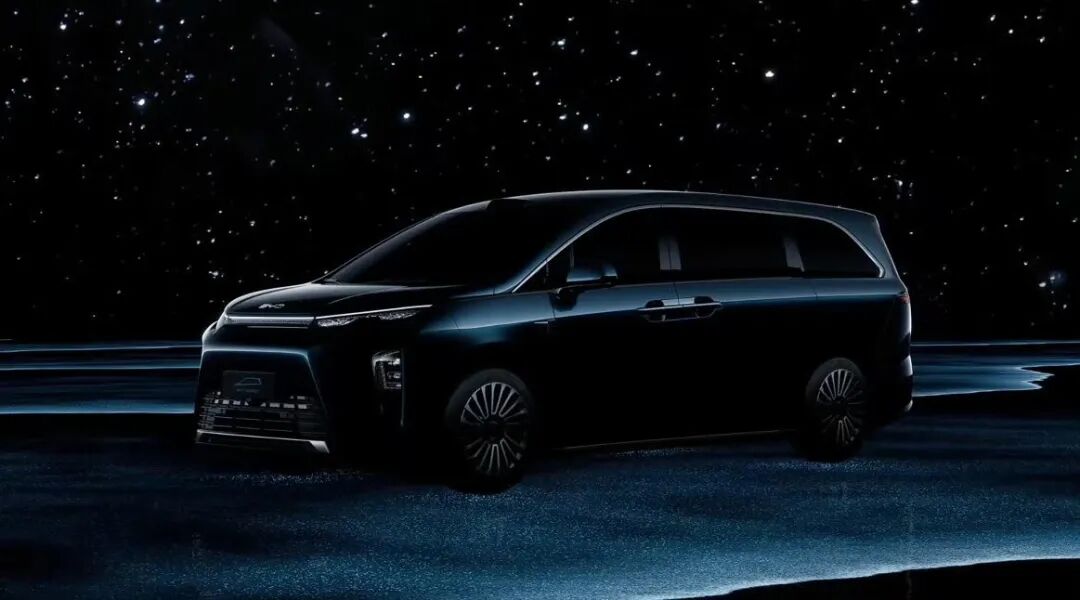
The most intuitive change at this year's auto show is that there are not many brand-new models. Apart from models such as Yangwang Dingyao, Audi Q9, Lexus TZ, Avatr T09, and the Ocean Network flagship MPV, the protagonists on the booths are mostly annual updated and facelift models.
Including the new car announcements in the last two batches released by the Ministry of Industry and Information Technology, there are only 5-6 truly brand-new models in each batch, and the overall pace of new car declaration has slowed down significantly.
It is well known that Chinese brands have broken the 2-3 year R&D rhythm of new cars adopted by European and American enterprises, shortening the cycle to just over a year, making China the country with the fastest car-making speed. However, the slowdown of the new car rhythm is not because automakers lack R&D capabilities, but because the industry is reaping the bitter fruits of high-frequency iteration. The label of "quickly assembled cars" is severely damaging China's automotive industry and the entire ecosystem.
At present, some enterprises have begun to reflect on the pace of new car launches. At this Guangzhou Auto Show, leading automaker Geely Auto and Geely Galaxy do not plan to hold press conferences. The pre-sale meetings for Xingyue L PLUS and Galaxy M8 have already been held before the auto show. Even within Geely, the new product rhythm for the fourth quarter of this year has been postponed, with part of the launch schedule moved to early next year.
At Li Auto's third-quarter earnings call a couple of days ago, the official clearly announced to the public that the model update rhythm has been adjusted from the previous annual facelift to about once every two years. In 2027, only 1 to 2 independent brand-new models will be added, and large-scale facelifts will no longer be carried out.
Li Xiang explained that excessively fast iteration is not good for users, suppliers, or automakers themselves. Only by extending the cycle can products complete full verification, and the supply chain can arrange production stably. Behind this is Li Auto's reflection on the fact that the popularity of product updates for models such as the L9 and L8 only lasted 2 to 3 months in the past.
Behind the consistent adjustments of these enterprises, a previously unspoken logic of the industry has been broken: the scale effect of the automotive industry has gradually failed in the involution environment, and we have entered the stage of "diseconomies of scale".
Leapmotor is a typical example. It is one of the few leading domestic automakers that maintained retail growth this year, with continuously rising delivery scale and record-high revenue in the third quarter. However, the financial data shows the other side of the risk: the higher the sales volume goes, the more the gross profit margin continues to decline, and the operating profit turns from profit to loss. After excluding the carbon credit income, the main vehicle manufacturing business is under obvious pressure.
The core crux lies in the excessively fast iteration speed of software and hardware, with continuous changes to platforms, components, and electrical and electronic architectures. Each facelift requires re-investment in development, verification, and production line adaptation costs. The dividend of diluting fixed costs through sales volume is eaten up by continuous iteration investment. The larger the scale, the more difficult it is to reduce the average R&D cost per vehicle, and the scale effect fails.
In the past incremental market, the "sea of cars" tactic was effective. The market maintained double-digit growth every year, and one more new car meant one more piece of the market share. Now the overall market is continuously shrinking, and the hot sales window for a new car is only 3 to 6 months, after which the popularity drops rapidly.
Many brands launch new models every month and iterate every year, piling up a large number of new products, but ultimately do not bring much incremental growth, only diverting their own existing user groups from each other. The endless price war and configuration involution are essentially the result of being driven by high-speed iteration.
When the marginal benefit of launching new models approaches zero, hitting the brake becomes a rational choice.
Joint ventures stage a comeback, new power players need new narratives
The most noteworthy contrast at this Guangzhou Auto Show is that joint venture brands are making a real comeback, while leading new power players have reached the stage where they need to find new growth stories.
For a long time in the past, joint ventures such as Volkswagen, Toyota, BMW, and Mercedes-Benz left the market with the impression of slow transformation, sluggish localization, and overpricing. However, the launch rhythm in the past two months, plus the products that made their concentrated debut at this auto show, are completely different from their previous state.
Both FAW-Volkswagen and SAIC Volkswagen launched two to three new energy vehicles in the second half of the year. FAW-Volkswagen ID.AURA T6, ID.AURA L5, and the pure electric M6 of the Jetta brand have been launched to the market one after another. Among them, the ID.AURA T6 achieved a monthly sales volume of 12,000 units in its first full sales month, with first-time buyers accounting for nearly 80%, and the market feedback far exceeded expectations.
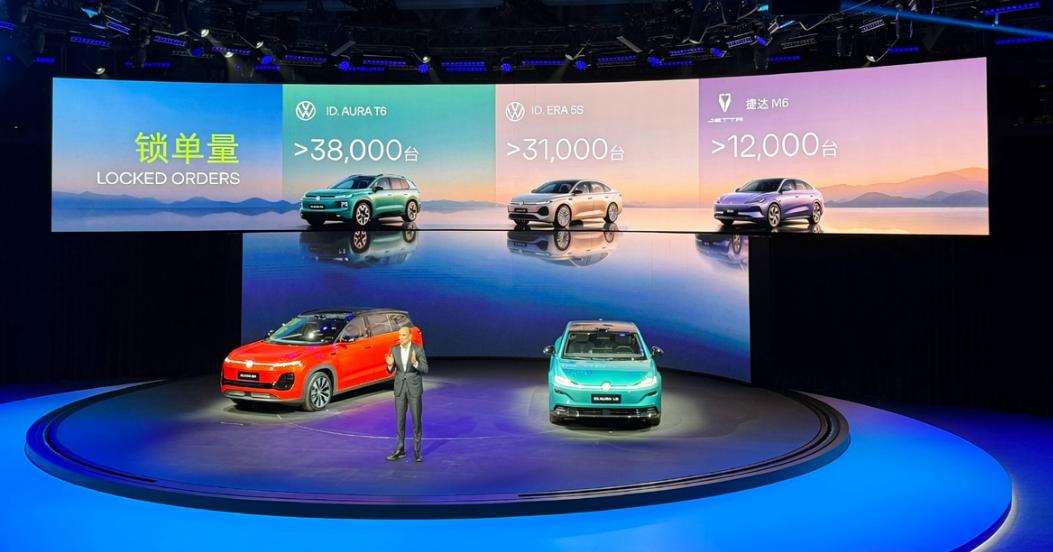
SAIC Volkswagen ID.ERA 5S has exceeded 7,000 units in sales for two consecutive months, opening a new rhythm for joint venture new energy vehicles. Including the ID.ERA 5X, which directly set the starting price at 99,900 yuan, this pricing has unreservedly penetrated into the core price hinterland of domestic independent new energy brands.
The luxury camp is also lowering its stance. The BMW Neue Klasse iX3 has continuously received orders in the past two months. The starting price of 269,900 yuan for the iX3 has changed the previous high threshold of luxury pure electric vehicles. Channel feedback shows that many stores have full order books, and many users no longer only focus on domestic independent pure electric vehicles, but are willing to re-evaluate the value of luxury brand electric vehicles.
The underlying change supporting the pricing of joint ventures and luxury brands is that they have successively completed more thorough localized implementation, fully switched their supply chain systems to domestic suppliers, and are no longer bound by the cost chain of the global system. They finally no longer carry the previous arrogant premium attitude, and can treat Chinese consumers equally.
While a large number of joint ventures are fully moving towards pure electric vehicles, Toyota's thinking has its own perseverance. At the Guangzhou Auto Show, Toyota will announce the name of the range-extended Highlander, and there is also a plan for the range-extended Sienna. Although the growth of range-extended models is weak, Toyota still chooses to make up for the electric driving experience of large-sized family models, to meet the domestic users' needs for quiet, smooth, low-cost commuting while taking into account long-distance travel.
Nowadays, although the overall share of joint ventures has fallen back to 30%, they have not given up the Chinese market. Instead, they have re-understood the competition logic here, connected the local supply chain, made product definitions fit domestic users, returned pricing to the market, and continuously output differentiated product solutions.
For consumers, having one more choice is a good thing in itself. The relatively strict system of joint ventures leading and breaking the pattern in the market is a correction to the downward involution of automotive competition.
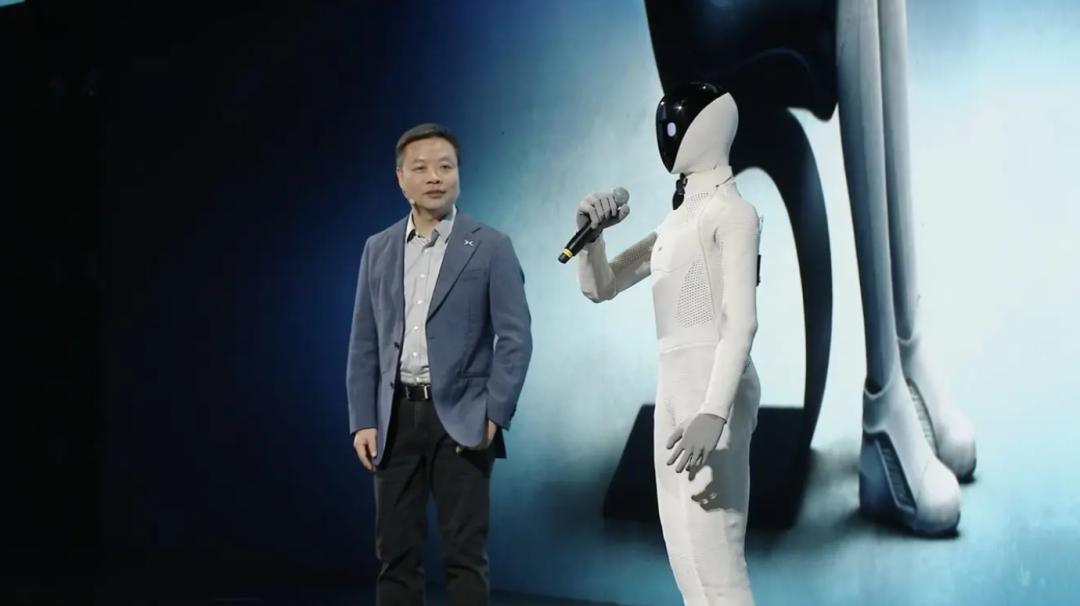
In sharp contrast, leading new power players such as Xpeng, NIO, Li Auto, Xiaomi, and Leapmotor have hardly launched any heavyweight brand-new models at this Guangzhou Auto Show. On the other hand, their sales or financial performance have all shown stagnant growth.
Xpeng and NIO simply held their separate tech days on the eve of the auto show, avoiding the new model launch track. The main line of Xpeng Tech Day is Turing AI intelligent driving, humanoid robot IRON, and Robotaxi, talking about the long-term layout of physical AI; NIO NIO IN Tech Day focuses on the AI-native organizational structure and the long-term iteration of the energy replenishment system, embedding AI into the entire business chain of R&D, manufacturing, and services.
Indeed, just like Li Auto, no matter how the products are updated and how much new products are enhanced, the total volume is already difficult to increase further. Therefore, the biggest test for new power players now is how to build a system that meets higher sales demand, and think more systematically about the operation and development of the enterprise.
The current propositions for the two types of players are completely different. Joint ventures are making up for the missed lessons before, and regaining market share with products; new power players have to say goodbye to the old narrative of "new models equal growth", and find a path to stable operation that does not rely on high-frequency new model launches.
Pure electric vehicles take half of the market, power routes move towards diversified layout
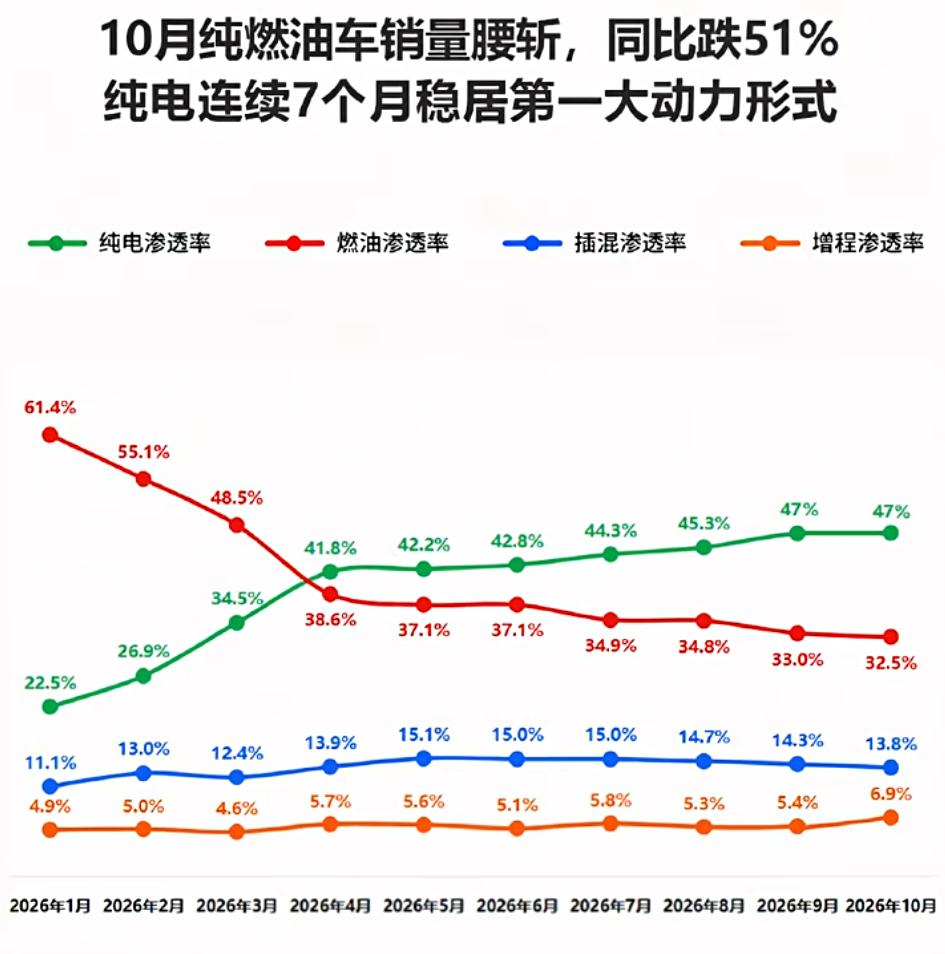
Judging from the penetration rate data since the beginning of this year, the pure electric penetration rate has reached 47%, and it is the industry consensus that it will approach 50% next year. With the continuous launch of joint venture pure electric models, pure electric will steadily become the largest power track in the domestic market.
However, the main line of penetration rate does not mean that all enterprises have to go all-in on pure electric. At this Guangzhou Auto Show, we can clearly see the differentiated layout of power routes by various enterprises, as well as strategic choices from a broader global perspective.
Toyota launched the range-extended Highlander, using the range-extended technology to solve the energy consumption and energy replenishment pain points of large-sized SUVs; Geely Lynk & Co 900L chose the plug-in hybrid route, taking into account performance, range, and long-distance scenarios.
The Geely Xingyue L PLUS hybrid model made its debut, focusing on stability and low usage cost; Great Wall Motors even launched the HEV family intensively at the auto show, with multiple hybrid models including H6L HEV, Dargo PLUS HEV, and Menglong HEV making their simultaneous appearance, taking hybrid as an important fundamental product.
In the past two years, the consumption structure of the domestic automotive market has basically been dominated by models at both ends: high-end mid-sized or large SUVs are growing rapidly, while on the other end, the market demand for low-end entry-level small cars is very strong. This reflects that automobile consumption has entered a stage dominated by replacement and additional purchases, with first-time buyers continuing to shrink.
First-time buyers value low-cost commuting, for which pure electric is naturally suitable; but a large number of replacement users have diverse family travel scenarios, and the demand for long-distance and cross-regional travel still exists. Range-extended, plug-in hybrid, and HEV models still have a stable living space. Diversified power forms will definitely become the general trend of China's diverse market. It is just that the market has been overdrawn this year, making the tilt of the market balance more obvious.
Especially behind the increasingly fierce price war of pure electric models, it is becoming more and more difficult to create unique brand value and premium. This requires other plus points to bridge the gap in consumers' minds, which can be the engine, or battery swapping.
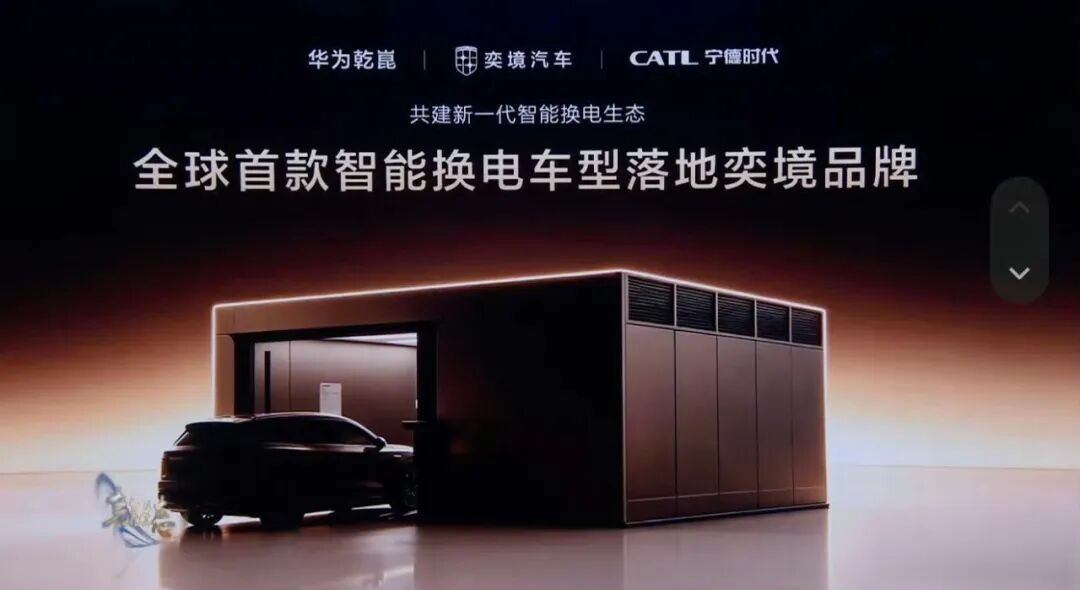
Nowadays, it is not only the NIO ecosystem that is deeply cultivating the battery swapping track. Arcfox, Yijing, Yipai, Wuling, as well as Avatr and Geely which have not