Another top Chinese researcher has resigned, with the company's human efficiency ratio only half that of Anthropic, and OpenAI is facing internal turmoil.
After its biggest rival achieved major breakthroughs, OpenAI seems to be plagued by continuous bad news.
On November 25, DeepTech reported that Wang Ruochen, a foundational model researcher at OpenAI, recently left his post and returned to China. He once led the R&D and delivery of ChatGPT-Voice, gave demonstrations at the GPT-5 launch event, and participated in projects including the GPT series of foundational models, Sora and Robotics, making him one of the few Chinese researchers who have appeared on OpenAI's launch stage. Other sources say Wang Ruochen may join Tencent Hunyuan, work in its multimodal department and report to Tian Yonglong. However, this information has not been officially confirmed.
Just three weeks ago, another Chinese researcher Yin Xi also announced his departure from OpenAI. The theoretical physicist was only reported to join the company at the end of May, and on November 3, he posted on social platforms that he decided to "end this journey early to explore new directions".
OpenAI can still attract top talents, but it may no longer be able to provide sufficient certainty and centripetal force for talents as it did in the past.
At the same time, Google has launched a fierce offensive in programming and engineering experience, Anthropic has completed a record-breaking IPO and announced the formal proof of the Riemann Hypothesis, while OpenAI is facing multiple tests from product reputation, scientific research momentum, financial pressure and talent confidence at the same time.
Netizens commented sharply that OpenAI is currently on fire from all sides.
A leaked post punctures OpenAI's highlight moment
In the early morning of November 22, a tweet quickly went viral on X. The blogger Binkg (@dummerspast39) wrote: "I heard from my friend at OpenAI that the atmosphere there is really bad, almost depressing, which is probably the worst week in the company's history." Up to now, this post has received 3.21 million views, 15,000 likes and more than 700 comments.
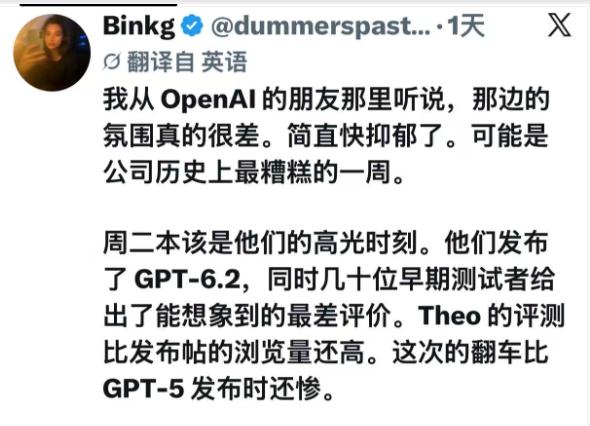
Figure | Leaked post by blogger Binkg
The "highlight moment" mentioned in the post refers to the launch of GPT-6.2 (including the flagship version Astra and the daily mainstream version Sol) in the early morning of November 18. This was supposed to be a stage for OpenAI to demonstrate its technological dominance, but it turned into a fiasco of public praise.
Dozens of early testers gave almost overwhelmingly negative reviews. Theo Browne, founder of T3 Code and a developer blogger, asked the flagship version Astra to run an optimization task for a Rust compiler continuously for 7 full days. As a result, it failed to deliver any valid improvements, and the compiler was 56% slower instead. Then he published a long article titled "Why I Hate GPT-6.2 Astra", whose views quickly exceeded 1.2 million, even surpassing OpenAI's official launch post.
Dan Shipper, CEO of content agency Every, led a 30-person team in the internal test for several weeks, and the first sentence of his evaluation was: "No one on our team likes Astra 6.2". Ethan Mollick, a professor at the Wharton School, gave a more straightforward evaluation: It is extremely unstable and quirky, "For the first time since GPT-4.5, the release of OpenAI's cutting-edge model has not shown obvious progress".
According to the officially released transcript, Astra outperformed Claude's Fable 5.2 by 9 to 6 in 15 benchmark comparisons, with an Artificial Analysis intelligence index score of 62.1, ranking second in the world. The unit price of API was also cut by 20%, and the comprehensive cost of completing the same task was only 5% of that of Fable 5.2.
The scores are so impressive, why did the first batch of real users react so negatively? Perhaps the rankings compete for the upper limit, while what developers use every day is the lower limit.
In the second half of Binkg's leak, the focus shifted from products to people. It is alleged that after the review results of GPT-6.2 came out, the morale of the Codex team hit rock bottom, and product head Tibo even asked the internal model to generate a segment called "bel-math-bully" to boost the team's morale, but the thing with the internal code name "cocanyl" was so fun that it spread in the office since Wednesday, and the productivity dropped to an all-time low. Tibo later posted and admitted: "Everyone is just playing around and not working. We may never recover from this."
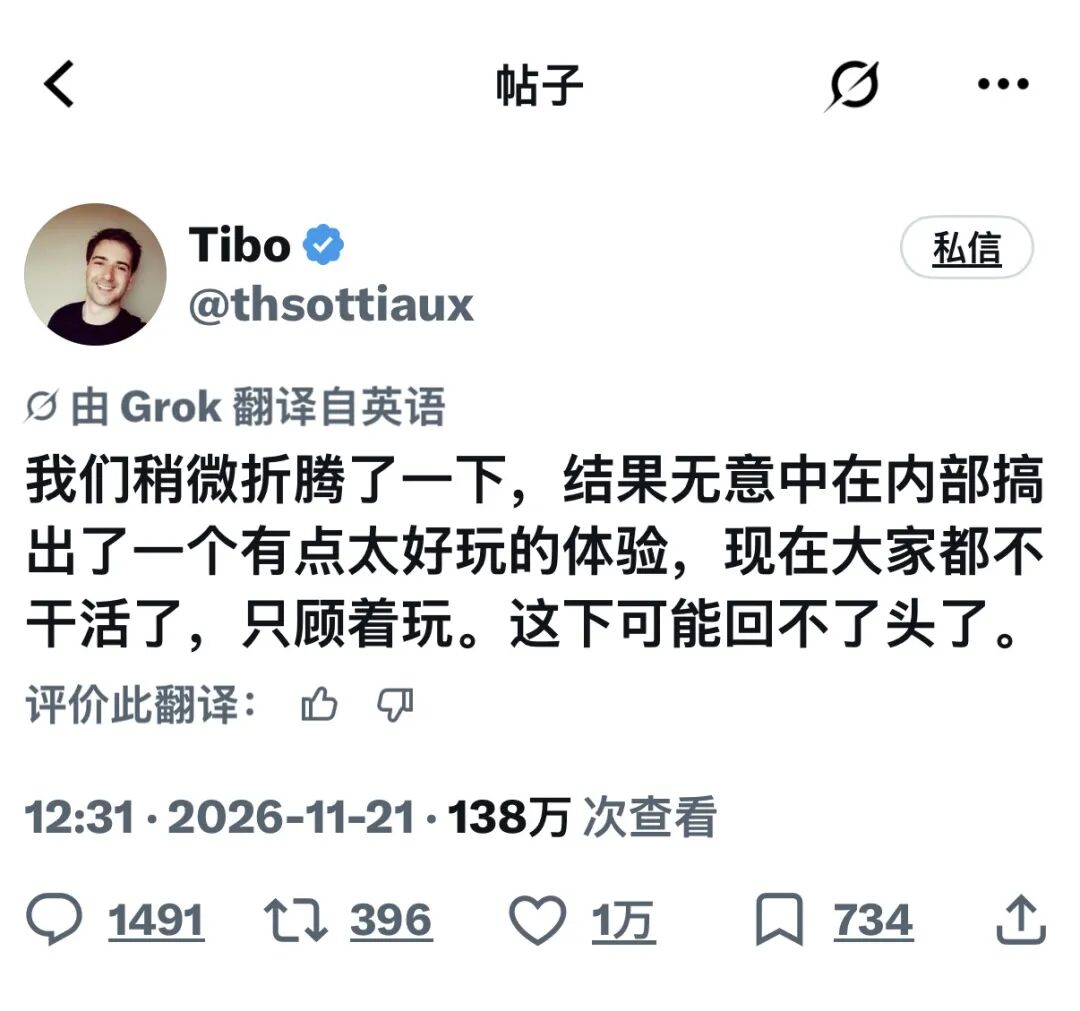
Figure | Post by Tibo, Head of Codex Product
It can be seen from Tibo's post that when a company needs to rely on "internal memes" to boost morale, it is at a very awkward node.
Google and Anthropic Keep Delivering Heavy Blows
If the fiasco of GPT-6.2 is OpenAI's own problem, then the actions of its competitors in the same week made this problem even more fatal.
On November 19, Google released Gemini 4 Neon. This model took a completely different path - it does not pursue extreme benchmark scores, but focuses on cost performance and low hallucination. In the evaluation of the third-party agency Artificial Analysis (AA for short), Neon ranked third in the world with a score of 61, taking the lead in 16 out of 19 comparative tests. The feedback from the developer community is surprisingly consistent: it is fast enough, cheap enough and stable enough, and it is "good enough" for the vast majority of real scenarios.
On the same day, Anthropic rang the bell on the Nasdaq. The IPO price was $83, the opening price was $111.5, the market value once exceeded $2 trillion, and it finally closed at $97.17, up 17.07%, raising $813 billion, setting the record for the largest IPO in history. On the first day of listing, due to the siphon effect, the Nasdaq fell 2.25%, the S&P 500 fell 2.02%, and the Dow fell 2.19% - the capital market voted for Anthropic with real money.
And Anthropic's highlights are far more than that. The next day, November 20, Levent Alpöge, a researcher at the company, announced that he had formally proved the Riemann Hypothesis in collaboration with Claude. The Lean mathematics community completed the verification within 24 hours, and Oxford mathematician James Maynard believed that there was a 98% chance that the proof was correct.
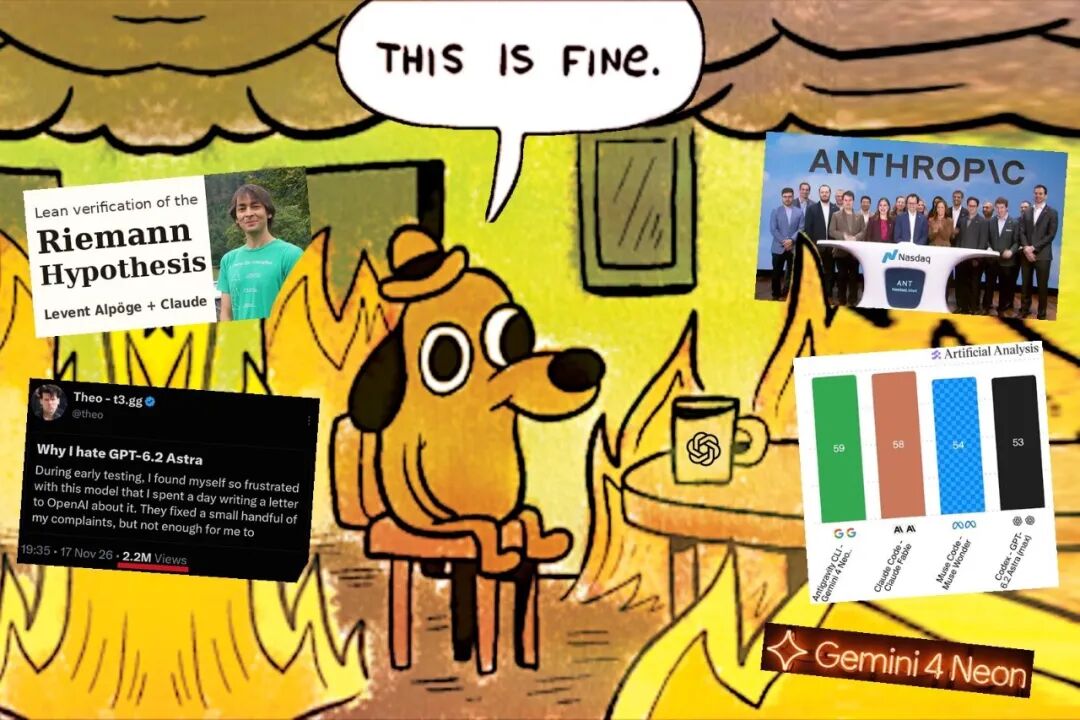
Netizen meme: OpenAI sits in a house on fire from all sides, holding a cup of coffee and saying "This is fine" - while at the same time, Anthropic goes public, Claude proves the Riemann Hypothesis, Gemini 4 Neon is released, and GPT-6.2 ranks at the bottom of benchmark scores, leaving OpenAI besieged on all sides within a week
Nevertheless, some mathematicians raised doubts that in the code demonstrating the Riemann Hypothesis, a judgment condition named anyGeometry is defined as always true (in short, no matter what the input is, it is directly judged as "valid"), which may lead the whole proof to be just a circular argument, that is, it proves "Riemann Hypothesis = Riemann Hypothesis" and does not really touch the essential mathematical content.
In addition, the Clay Mathematics Institute has not yet made an official recognition, and Terence Tao also reminded the academic community that it needs time to digest the result. But this is enough to shake the entire AI industry - when AI begins to assist in proving Millennium Prize Problems, the dimension of competition has escalated from "chatting and writing code" to "scientific discovery".
In contrast, OpenAI was reported to face financial pressure in the same week. Public data shows that OpenAI's revenue in the third quarter was about 10 billion US dollars, a nearly 50% quarter-on-quarter increase; its operating loss in the same period was 10.9 billion US dollars, and the adjusted operating profit margin was -109%, compared with -150% in the second quarter.
To put it simply: for every 1 dollar of revenue it earns, it loses 1.09 dollars.
In addition, the financing side is not optimistic either.
In mid-November, OpenAI completed a $15 billion financing at a valuation of $1.25 trillion, while its original target was $30 billion. However, the actual amount received as of November 6 was $11 billion. According to the forecast in its financing materials, OpenAI will burn $278 billion from 2026 to 2030, averaging $55.6 billion per year. Therefore, many industry insiders estimate that at OpenAI's current cash burn rate, this sum of money is only enough for 3 to 4 months of operation.
Within a week, Google caught up in engineering efficiency, Anthropic surpassed OpenAI in capital and scientific research depth, while OpenAI lost points in both product performance and team morale.
What is the real problem of OpenAI?
The Astra version of GPT-6.2 still ranks first in the DesignArena game development leaderboard, its AA intelligence index of 62 points still ranks second in the world, and ChatGPT's user base and ecological moat are still huge. But the cost behind this is very high.
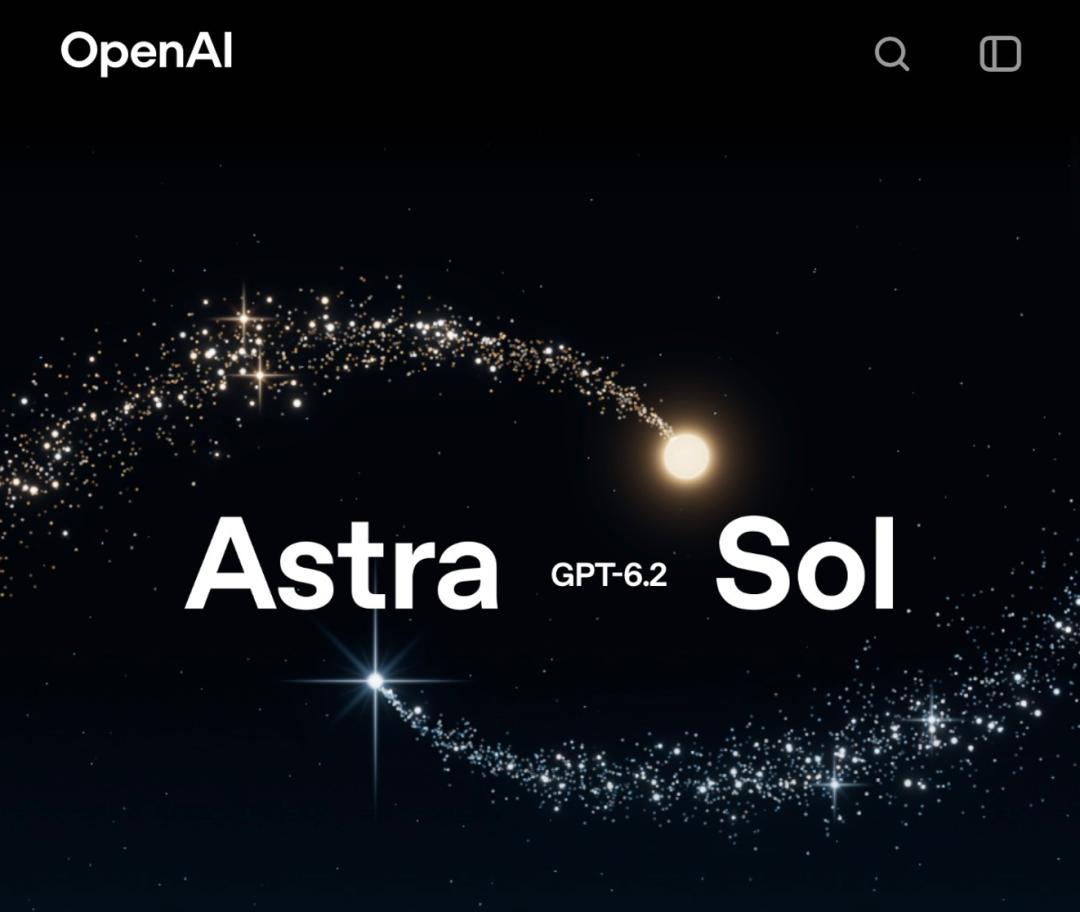
Figure | The newly launched GPT-6.2 model of OpenAI
For example, the personnel efficiency ratio of OpenAI is often criticized by the outside world. According to public data, as of October, OpenAI had about 8,000 employees worldwide, nearly twice the 4,500 in March; Anthropic had about 5,300 employees as of September 30, compared with only 940 at the end of 2024. OpenAI has nearly 50% more employees than Anthropic.
But the output is just the opposite. In the third quarter, OpenAI's revenue was 10 billion US dollars, while Anthropic's was 17 billion US dollars. After conversion, OpenAI's annualized revenue per capita is about 5 million US dollars, and Anthropic's is about 12.8 million US dollars; according to the latest annualized operating rate, the former is about 6.25 million US dollars, and the latter is about 15.3 million US dollars. With two-thirds of OpenAI's staff, Anthropic achieved 1.7 times the quarterly revenue of OpenAI.
OpenAI is accelerating its catch-up. According to public data, most of the 3,500 new employees added by OpenAI in seven months are in sales, delivery and enterprise services, and their output has not yet been realized. But this just shows that its current growth relies more on expanding headcount rather than enabling each individual to generate more revenue.
However, falling behind Anthropic in the IPO process has caused problems with team stability.
According to statistics from Business Insider, in the first 8 months of 2026, 12 executives at OpenAI left their posts or stepped back to second-line positions, covering multiple directions including operation, revenue, product, application business, video generation, AI for Science, safety, ethics and hardware. The research team also suffered losses: Jerry Tworek, Vice President of Research, and Joanne Jang, Head of OpenAI Labs, left one after another. In November, news about Wang Ruochen and Yin Xi came out again, and the three operators of the "Stargate" project all moved to Meta.
The pressure brought by rivals such as Anthropic has made OpenAI's actions continuously distorted. In the GPT-4 era, OpenAI was a whole generation ahead of its rivals, and users had no other choice.
But now, Google has proved with Neon that "good enough" can also win the market, and Anthropic has proved with its IPO and the Riemann Hypothesis proof that "scientific depth" is the new moat. When all three companies can offer their own ace in their respective fields, OpenAI is no longer the only option.
This may lead to a vicious cycle: the model no longer leads in intelligence, which makes users lose their willingness to pay, thus affecting commercial revenue and dragging down the IPO process. When the stock cashing faces pressure, the loss of core personnel may accelerate, thus imposing new pressure on model development.
The internal culture is also facing tests. Previous reports from Reuters pointed out that OpenAI management had ignored employees' complaints about security vulnerabilities for many years, and a former researcher said bluntly: "For them, moving fast is more important than safety."
In the latest episode of Silicon Valley podcast All-In, investor Jason Calacanis revealed that after Anthropic offered a 40 million US dollar 4-year compensation package to a newly graduated computer undergraduate, "who will still go to OpenAI?" has become the latest question from the capital market.
OpenAI is standing at a crossroads. Continuing to chase speed at all costs may lead to more GPT-6.2-style fiascos; stopping to fix management and rebuild scientific research depth may miss the development window. The problem that Sam Altman and his team need to answer has gone beyond whether the next model can be more powerful. What they really need to face is whether this company can still operate as efficiently as it used to.
The fiasco of GPT-6.2 is like a mirror, reflecting all the internal injuries accumulated by OpenAI during its rapid growth.
This article is from the WeChat Official Account "Phoenix Tech", author: Phoenix Tech, published with authorization from 36Kr.