The interactive film and game track has ushered in the "hundred-shovel battle", can the next LibTV stand out amid the fierce competition?
In the past few years, from *The Invisible Guardian* to *Whoa! I'm Surrounded by Hot Babes!* and then to *Flourishing Age*, a phenomenal work emerges in the market every once in a while, repeatedly proving that users are willing to pay for interactive narrative content. However, the industry has never been able to avoid a core question: Where will the next breakout hit come from?
The turning point came in the second half of this year. Since September, content platforms have no longer only focused on top-tier teams, but have ramped up efforts across the whole chain from distribution entrances, revenue-sharing policies to creation tools. Douyin and Kuaishou have opened up independent distribution entrances for interactive film and games, and raised the guaranteed minimum revenue and revenue sharing ratio. Mango TV and Jianying have successively launched creation tools. Entering November, NetEase Tianma and Tencent Photon Studio have successively launched their dedicated Apps, making the distribution of interactive content start to have independent entrances.
The full-scale push of content platforms on the mobile side means that interactive film and games are stepping out of the niche market dominated by the Steam channel, and entering the field of vision of hundreds of millions of mass users.
The heavy investment of major manufacturers has also ignited the entrepreneurial and investment enthusiasm in the upstream of the industrial chain. Companies such as Zhiling Interactive and Huying Technology have intensively laid out new products, and relevant entrepreneurial teams have also begun to attract capital attention. The interactive film and game industry seems to be ushering in its own "hundred-shovels battle" era.
However, when content platforms are competing to build their own closed loops of "tools - content - distribution", and interactive content forms are deeply bound to platforms, it means that the interactive content track can hardly replicate the gold rush myth in the AI video field.
Major manufacturers ramp up efforts at the same time, third-party tools see explosive growth, and interactive film and games usher in the "hundred-shovels battle"
In the past, the mainstream channel for interactive film and games was the Steam platform. Limited by the high live-action shooting cost and the threshold of the one-time purchase system, it has long remained in the niche circle of core players.
As the duration of short video consumption peaks, Internet platforms are in urgent need of a new content form with stronger immersion, longer user retention and inherent payment attributes to find new growth points. At the same time, the continuous improvement of AIGC capabilities has broken the bottleneck of industrialized production of interactive content. The resonance between supply and demand makes interactive content the next blue ocean in the market.
Since late October, Douyin, Kuaishou, Baidu, and NetEase Tianma have almost simultaneously increased their investment in interactive content, and begun to provide clearer distribution positions and commercial support for this category.
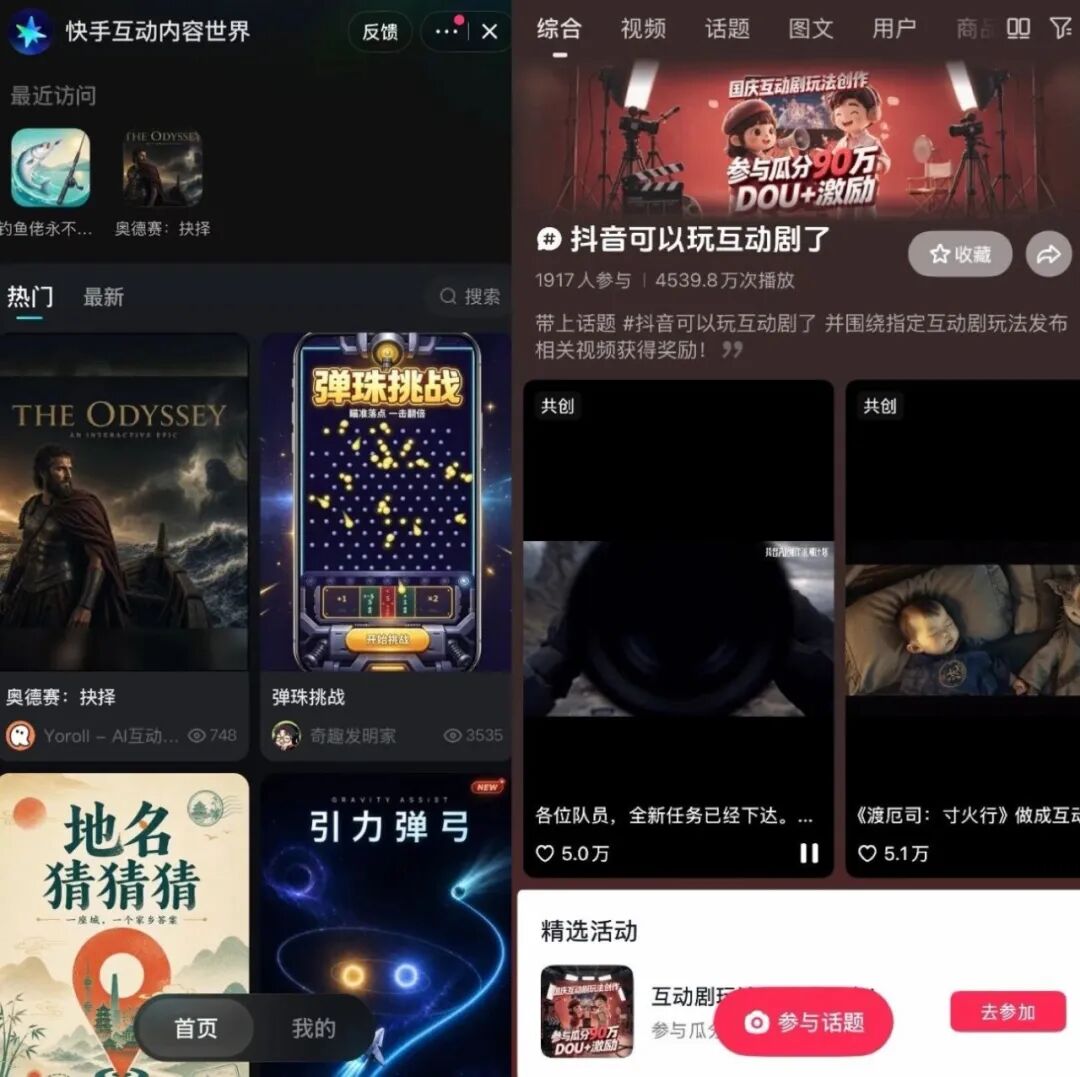
Kuaishou has launched the independent mini-program "Interactive Content World", opening up a special content entrance for interactive works, and offering a maximum guaranteed revenue of 100,000 yuan. Douyin is advancing both interactive content distribution and short drama copyright support, hosting content through the interactive space square, and raising the guaranteed minimum revenue for high-quality single dramas to 200,000 yuan. The Baidu App launched AI interactive dramas and interactive applications at the end of October, and simultaneously launched a creation league to support creators with millions of cash and hundreds of millions of levels of traffic.
If embedding entrances in the main station is still a trial with the help of the existing traffic pool, then the intensive launch of independent Apps means that major manufacturers have begun to build exclusive consumption scenarios for interactive content.
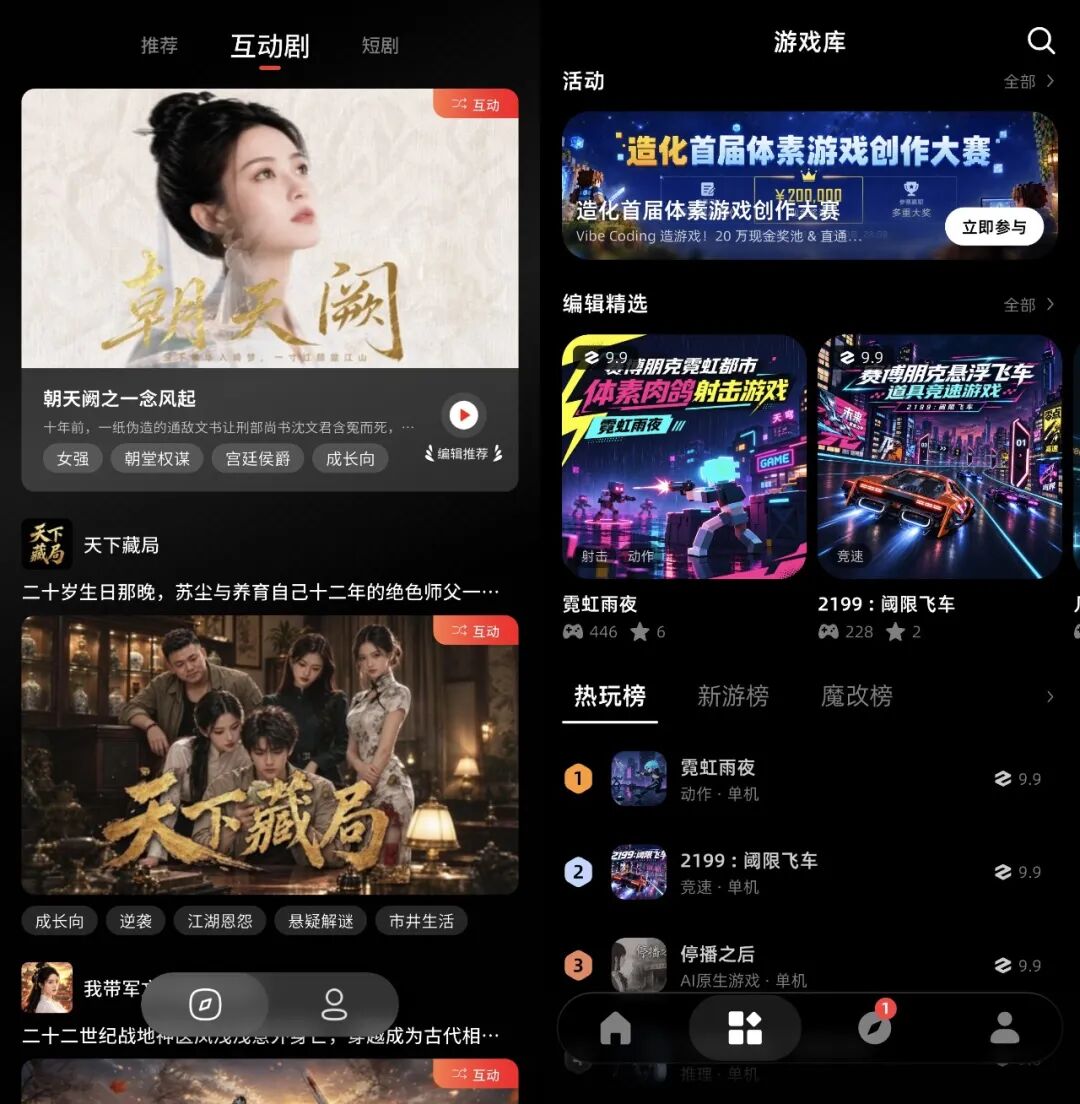
Left: NetEase Tianma Right: Zaohua Workshop
On November 17, NetEase Tianma launched its independent App on both iOS and Android, bringing interactive dramas and short dramas into the same entrance. A week later, on November 24, on the basis of accumulating more than 600 pieces of interactive content, "Zaohua Workshop" from Tencent Photon Studio also launched dual-terminal Apps, officially expanding its user group from professional creators to mass users.
However, traffic and guaranteed revenue alone are not enough. Interactive film and games involve multiple links such as branch design, video production and interactive arrangement. To expand content supply, it is also necessary to lower the production threshold and improve production efficiency. This has also made creation tools another main line of platform layout.
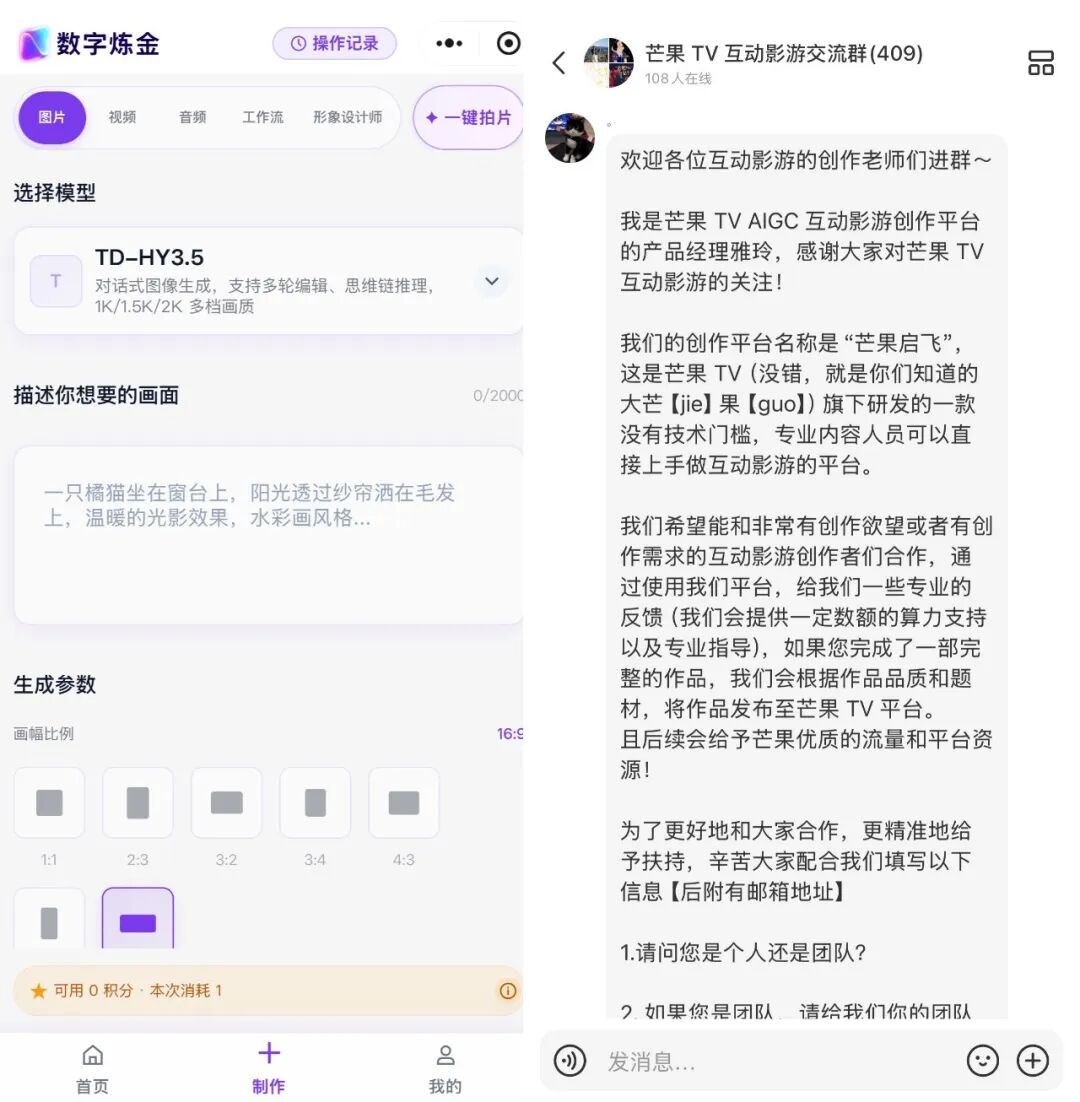
Left: TDream by Konghu Right: Mango Qifei Exchange Group
Tencent has fully opened TDream by Konghu, which focuses on To C one-stop creation. Mango TV has launched creator recruitment for its self-developed creation platform "Mango Qifei". ICG Studio, which Jianying has been in internal test since September, is also accelerating its connection with Douyin's interactive content ecosystem. While launching the App, NetEase Tianma also launched the supporting creation tool Tianma Workshop.
Although these platforms have different positioning, they are all trying to toolize the production process of interactive content to allow more creators to participate.
The collective efforts of head platforms in channels and ecosystems have quickly transmitted to the upstream of the industrial chain, and entrepreneurial teams are seizing opportunities to grab market attention.
In mid-November, third-party tools ushered in a round of intensive updates: LuxReal under Juhuang Technology upgraded its homepage, added an interactive film and game production line, and offered a maximum guaranteed support of 200,000 yuan to attract creators. Zhiling Interactive launched Ctrl Video, and Loopcat created by the FlowGPT team was launched on the same day. AltFlow from Huying Technology started the second phase of internal test, while Qixiang Wuxian iterated to version 2.0 and opened the industrial production pipeline.
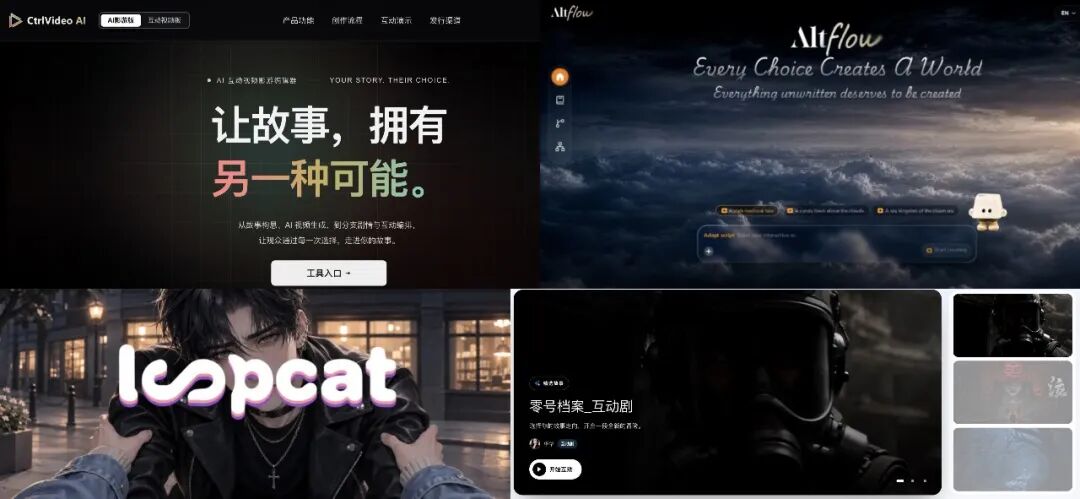
Capital also has a keen sense of smell, and the investment focus is rapidly shifting from content producers to creation platforms.
In November, Anorak, which focuses on real-time generative interactive video, secured $5 million in Pre-seed round financing, backed by well-known institutions such as Play Ventures, Backed VC and Supercell. Future Sequence, founded by veterans from Tencent AI Lab and *Mini World*, also recently received millions of dollars in seed round financing led by Lighthouse Founders' Fund.
The intensive convergence of entrances, revenue sharing policies, tools and hot money in just two months means that interactive film and games are bidding farewell to the past "handicraft workshop" stage of betting on breakout hits, and turning to a new cycle driven by infrastructure construction to drive large-scale supply.
Major manufacturers dominate both tools and distribution, and third-party platforms seek survival through differentiation
The industrial chain seems to be taking shape, but players in different positions have never calculated the same account from the very beginning. Although they are all making interactive film and game tools, the starting points of major manufacturers and third-party companies are different.
For content giants such as ByteDance and Tencent, creation tools are first and foremost an extension of platform business. They hold distribution channels, user traffic and underlying models. The purpose of launching tools is to attract creators, increase content supply, and then keep works on their own platforms to complete distribution and monetization.
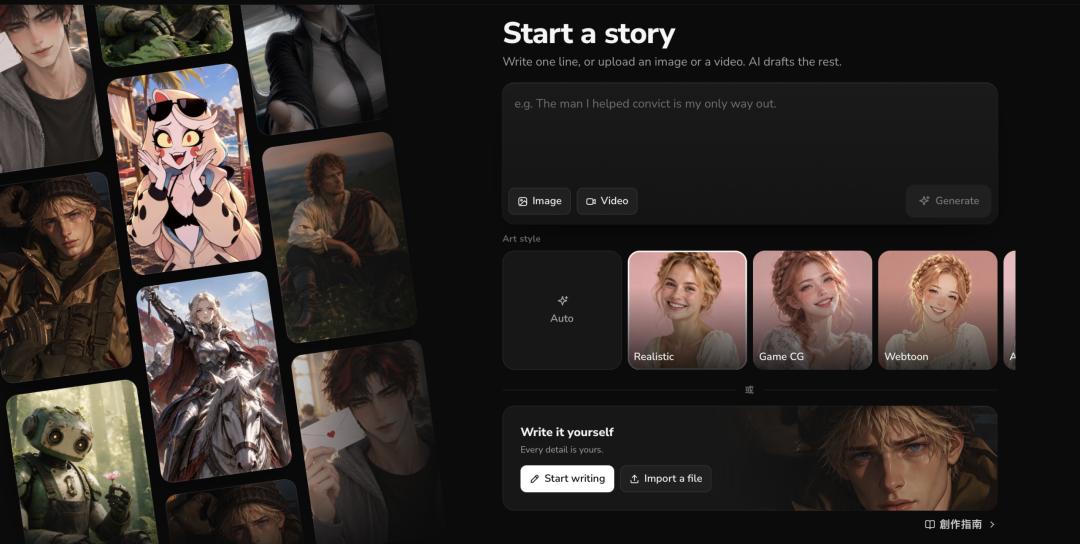
ByteDance's layout is very typical. Jianying ICG Studio is oriented to ordinary creators and small and medium-sized teams, lowering the production threshold through functions such as conversational branch generation and global asset management, and connecting with the Douyin interactive space square. On the other hand, Volcano Engine opens the Seedance model API to third-party teams such as Qixiang Wuxian and Shuying Weilai to provide underlying capabilities for medium and heavyweight projects. The former helps Douyin expand the supply of interactive content, while the latter allows more external teams to use ByteDance's models and computing power.
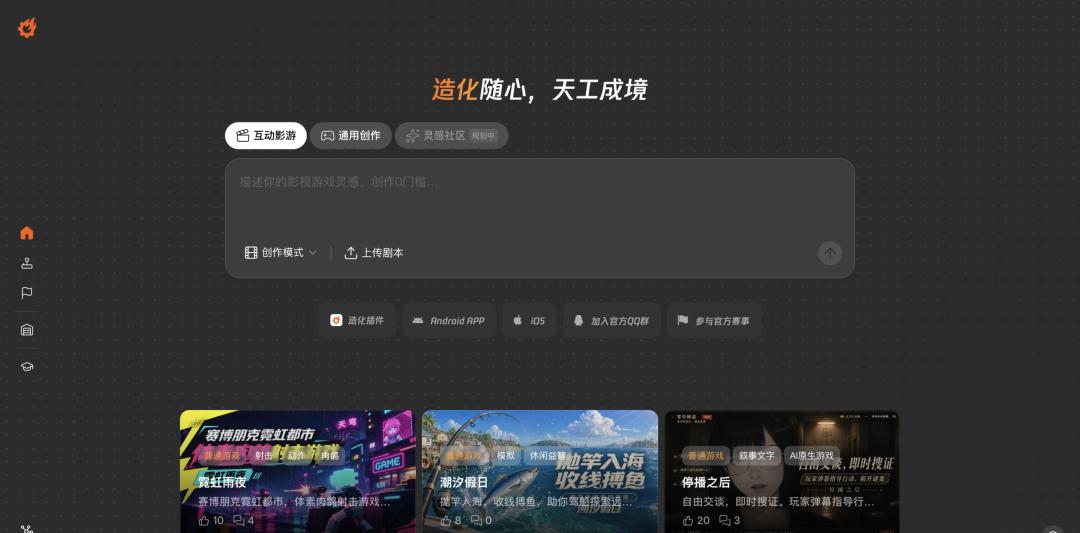
Tencent continues its consistent "horse racing" strategy. TDream by Konghu focuses on zero-code and one-sentence generation, with more than 17 built-in interactive gameplay, which is responsible for lowering the threshold to the lowest level and stimulating the creative desire of ordinary users. "Zaohua Workshop" cuts into game-oriented light interactive narrative, and has gathered a professional creator community through four creator competitions. WorkSolo serves professional film and television teams, and tries to connect with Tencent's long video membership system.
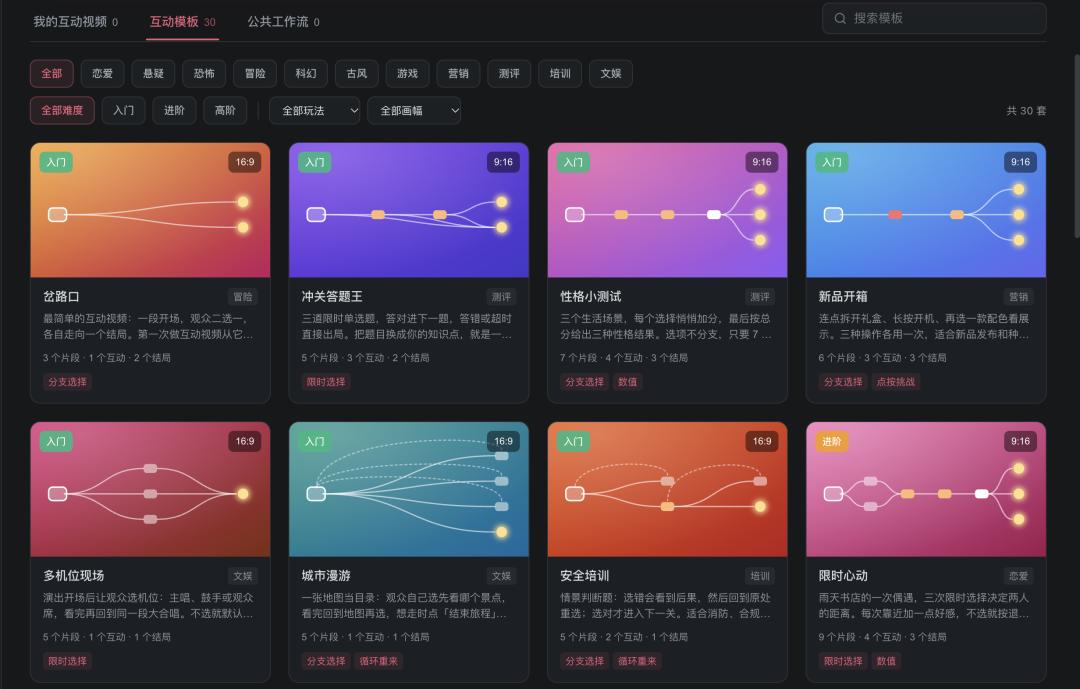
Mango TV's thinking is more focused. "Mango Qifei", built on the Mango Lingchuang AIGC base, is not in a hurry to become a general tool for everyone. Instead, it hopes to attract creative and capable professional creators to convert self-owned variety and drama IPs such as *Singer* and *Great Escape* into interactive content.
This also means that platform self-owned tools will often prioritize serving their own ecosystems, and it is difficult for third-party companies to compete head-on with major manufacturers in the same direction. Independent tool vendors need to find demands that platforms cannot take into account for the time being, or are unwilling to invest too many resources in.
Cross-platform distribution is a relatively realistic entry point. Creators hope that one work can enter Douyin, Kuaishou, Hongguo and even overseas markets at the same time, but the distribution specifications and technical requirements of each platform are different, which gives third-party tools room to play.
Even though Qixiang Wuxian 2.0 is connected to Volcano Computing Power at the bottom, it still emphasizes its positioning as an independent third party. Through "one-time production, multi-terminal packaging", it adapts to the distribution specifications of multiple domestic channels, as well as overseas platforms such as TikTok, Reels and Google Play.
Zhiling Interactive, which has many years of experience in producing live-action interactive film and games, is also helping mature short drama teams lower the threshold of interactive arrangement, and supports exporting launch packages adapted to Douyin, Kuaishou and Hongguo.
In addition to cross-platform distribution, professional production is also a field that third-party companies can delve into. For projects such as long web novel adaptation and mixed live-action and AI production, simple templates and one-sentence generation are difficult to meet the requirements. Creators need to deal with a large number of characters, scenes and plot branches, and tools must also have stronger content disassembly and project management capabilities.
Huying Technology chooses to start with scripts and narrative structures. The team that previously produced *The Buddha Head Origin of Antique Bureau* and *Escape from Room 13* has introduced multi-agent collaboration capabilities into AltFlow. According to its introduction, the system can mobilize 64 agents to work in parallel, disassemble a 500,000-word novel in 125 seconds, and extract interrelated plot structures.
The NEX engine of Future Sequence brings together the core screenwriter and chief planner teams of *The Invisible Guardian* and *Flourishing Age*, focusing on solving professional problems in industrialized narrative adaptation.
Juhuang Technology starts with space production, introducing years of accumulated spatial data and 3D technology into LuxReal. By building a 3D virtual studio first and then rendering the picture, it solves the problem that scenes and shots are difficult to keep consistent in multi-branch shooting. With the team's experience in AI companion products, Loopcat integrates first-person perspective and character bond development into interactive content, exploring gameplay beyond the traditional "video plus option" mode.
The question is, how big is the differentiated living space for third-party tools? Can these gaps support the growth of LibTV-style startups?
Why can't the "shovel seller" model of Video Agent work in the interactive film and game industry?
In the past two years, the AI video track has produced extremely impressive entrepreneurial stories.
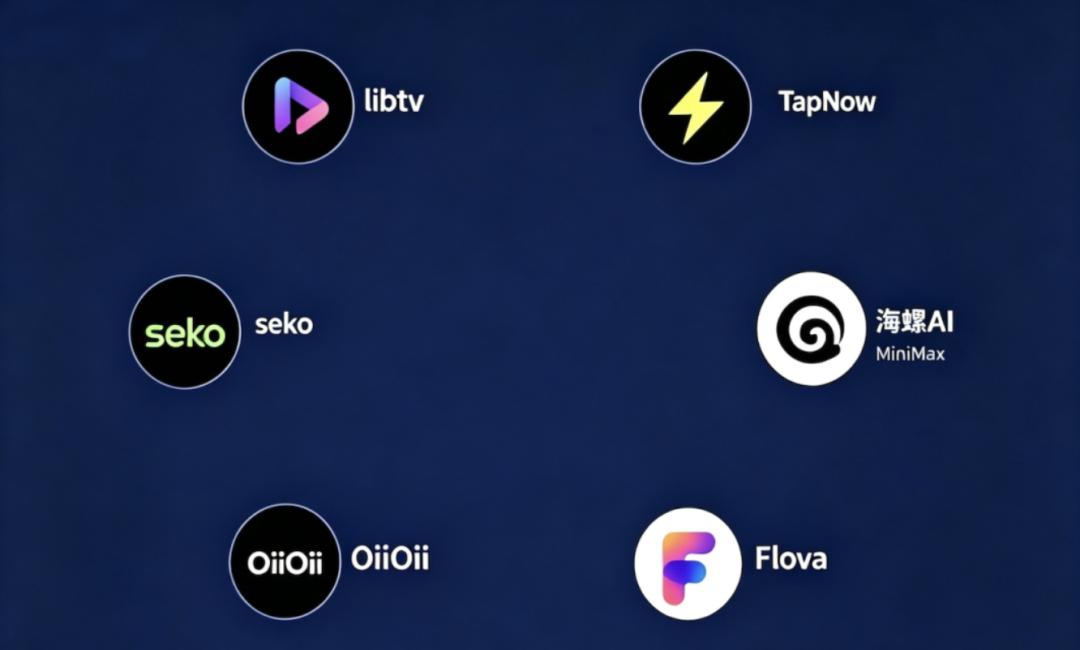
With the popularization of the capabilities of underlying models such as Keling and Seedance, third-party platforms such as LibTV, TapNow, Flova and OiiOii have grown rapidly relying on multi-model aggregation, canvas workflow and Agent collaboration capabilities, and have also won heavy investment from capital: In June this year, LibTV's parent company Yanyu Technology completed nearly $300 million in B+ round financing, with a post-investment valuation exceeding $2 billion. In July, Aishi Technology, which owns products such as PixVerse, completed the overall C round of financing, with cumulative financing reaching 2.98 billion yuan.
However, this set of "shovel seller" model is difficult to replicate in the interactive film and game track.
The biggest difference between the two tracks lies in whether production and distribution can be relatively independent. In the AI video field, content is decoupled from platforms, and a piece of video can be distributed on multiple platforms at the same time. For model manufacturers, third-party platforms can also act as distribution channels to help models reach more creators.
Interactive film and games are different. What it delivers is not a piece of video, but a complete set of content including plot branches, interaction nodes, character status and payment mechanisms. This means that platforms not only provide traffic entrances, but also determine the form in which interactive works run