Xiaomi's overseas expansion of its electric vehicle business is scheduled for Q3 2027. Faced with mounting performance pressure, will the overseas market become its second growth driver?
The final timeline for Xiaomi Auto's overseas expansion is confirmed!
During the Q3 earnings call of Xiaomi Group held on November 24, the management disclosed that Xiaomi Auto is expected to enter the German market first in the third quarter of 2027.
In addition, the overseas launch models will also be sent to Sweden, Germany, Spain and Italy, where high-speed and functional verification will be completed at seven test sites across the four countries.
At a time when the mobile phone business is under sustained pressure due to rising memory prices and the auto business has not yet turned a profit, can expanding into Europe bring new vitality to Xiaomi?
Mobile Business Under Pressure, Auto Business Loss-Making: Xiaomi Is Poised to Enter European Market Amid Heavy Headwinds
The recently concluded Q3 of 2026 is likely one of the relatively sluggish quarters for Xiaomi in recent years. Although the long earnings chart released externally shows all data is performing well, the actual earnings figures paint a completely different picture.
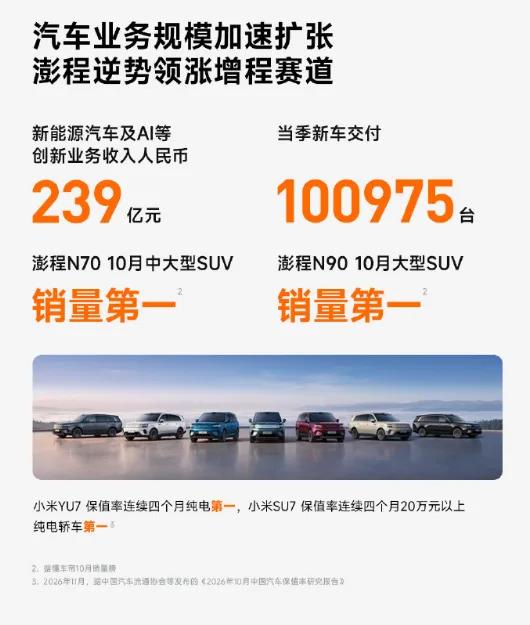
(Image source: Xiaomi)
Affected by the continuously growing demand for memory and storage driven by AI and the continuous rise in related prices, Xiaomi's core mobile phone business has also been impacted: mobile phone shipments in Q3 fell 29.1% year-on-year, and gross margin dropped to 9.2% from 11.1% in the same period last year.
In addition, the new energy vehicle and AI and other innovative businesses (formerly "smart electric vehicle, AI and other innovative businesses") recorded a loss of 3.4 billion yuan, compared with a profit of 700 million yuan in the same period last year. The combined impact of the two dragged Xiaomi's adjusted net profit in Q3 down 56.8% year-on-year. Even Lu Weibing, President of Xiaomi, said bluntly that this is "the most challenging quarter since I started my career".
Some people may ask: Didn't Xiaomi just launch the Pengcheng series in September? Why is the Q3 earnings still not optimistic?
It should be noted that September is the last month of Q3. The four Pengcheng models were launched and delivered gradually after their debut on September 7, and the production capacity ramp-up still takes time, so the contribution to sales volume in September is naturally limited. In addition, most of the upfront investments in channels, marketing and production capacity were made in Q2, so the unsatisfactory financial data in Q3 is reasonable.
At the same time, the overall decline in sales volume of the automotive industry will inevitably transmit to Xiaomi Auto. Lu Weibing revealed during the earnings call that retail sales of domestic passenger vehicles in Q3 fell 24% year-on-year, and admitted that "the pressure in Q3 is extremely high". As for the 550,000-unit sales target set by Xiaomi at the beginning of this year, only 52% was completed by the end of September, so the possibility of meeting the target this year is very slim.
With the mobile phone business under pressure and the innovative business still making losses, Xiaomi Auto's overseas expansion pace has not stopped — does the future of Xiaomi Auto really rely on overseas markets?
In the view of Dianchetong (ID: dianchetong233), overseas expansion of automobiles cannot help Xiaomi Auto turn losses into profits in the short term, and instead will require additional capital investment in channel construction, testing and certification. But this does not mean that overseas expansion is meaningless.
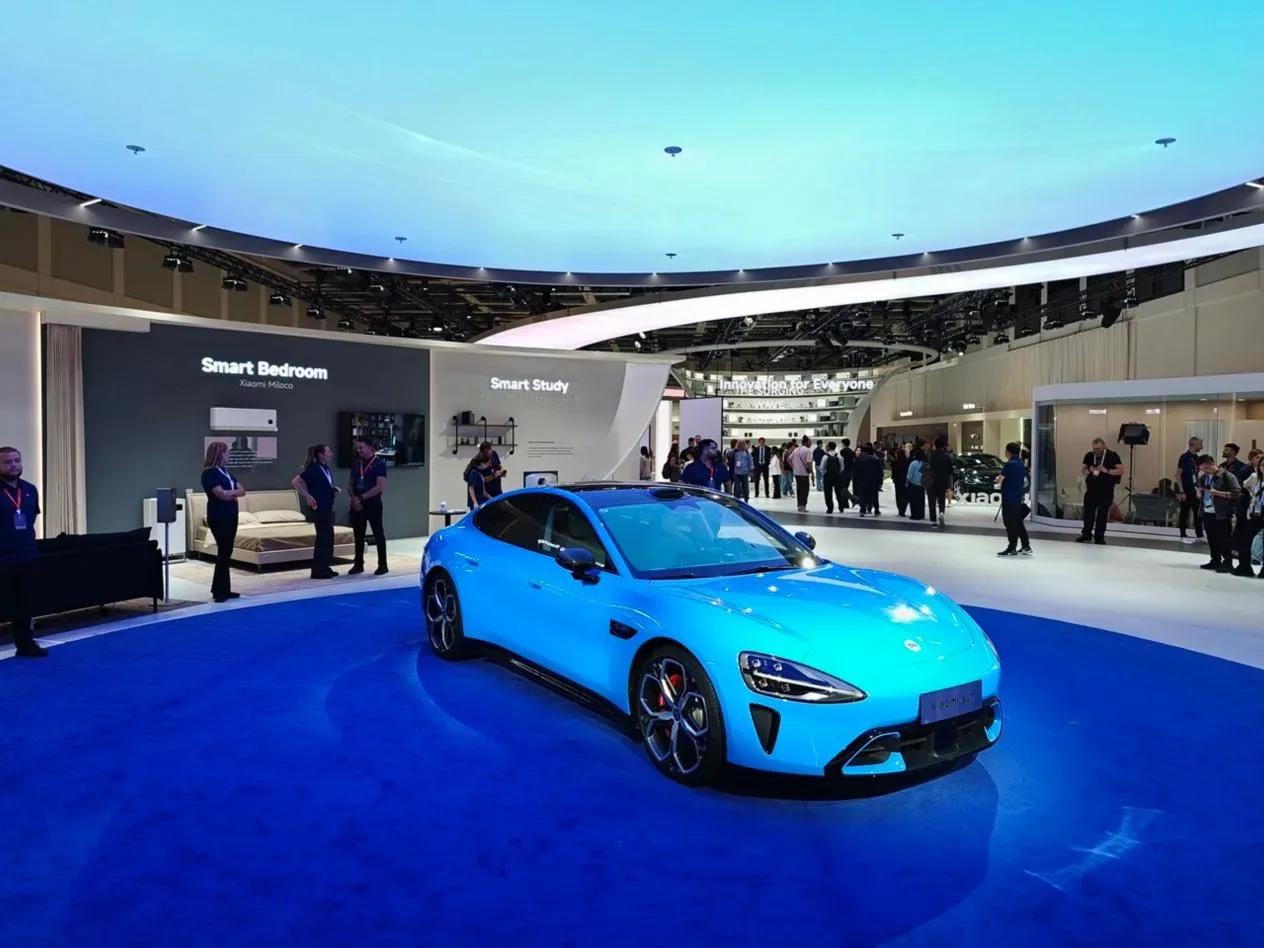
(Image source: Photographed by Dianchetong)
First of all, for Xiaomi itself, its full "human-vehicle-home" ecosystem is still missing a key component in overseas markets, which is the automobile.
Nowadays, Xiaomi's consumer electronics and large home appliance businesses have delivered relatively outstanding performance in overseas markets. In the mobile phone × IoT business in Q3 this year, overseas revenue accounted for as high as 49.1%. However, while the "human" and "home" parts are fully deployed overseas, if the "vehicle" part never goes overseas, the full "human-vehicle-home" ecosystem cannot be truly established. If other enterprises seize the opportunity during this gap, it will be a case of "starting early but arriving late".
Secondly, looking at the entire automotive market, competition on the domestic supply side is becoming increasingly fierce while demand is shrinking, so it is almost an inevitable choice for automakers to go overseas to find new markets.
Therefore, although Xiaomi's overseas expansion will not contribute much to revenue and profits in the short term, it can drive its further development in the long run — we cannot just refuse to explore new opportunities overseas just because "distant water cannot quench present thirst".
With Mobile Phone and Home Appliance Businesses Paving the Way, Can Xiaomi Auto Achieve "Speedrun" Mode in Overseas Expansion?
Looking back at the overseas expansion process of several Chinese new EV makers, there have been many setbacks. Channel construction and brand building are unavoidable hurdles for automakers: after the sales network and after-sales network are finally built, and vehicles are shipped overseas, people find that very few units have been sold, which is rather awkward.
For example, Xpeng only entered Norway, Sweden, Denmark and the Netherlands in Europe between 2020 and 2023. By September 2023, the total number of its European stores was only 10, and it did not enter the high-speed development period of overseas expansion until 2024.
NIO's situation is somewhat different. Since it entered Norway in 2021, it has been replicating the direct-sale store + battery swap station network model from the domestic market to the European market, trying to trade infrastructure supporting facilities for sales volume. However, despite NIO's beautiful vision, the reality is somewhat unsatisfactory. According to data disclosed by *Manager Magazin* in Germany, NIO had 1,263 registered vehicles in Germany in 2023, but its net loss was as high as 58 million yuan.
At that time, NIO was also facing pressure on sales volume and revenue in the domestic market, so NIO later adjusted its strategy in overseas markets: the Firefly brand adopted the agency model in Europe, and the NIO brand carried out a certain scale of contraction, such as suspending the addition of new battery swap stations and closing some existing ones, closing some NIO Houses, and delaying the entry of NT3 platform models and the Leidao brand into Europe.
Compared with Xpeng and NIO, Li Auto has a much more cautious overseas expansion process. It did not officially announce its entry into Egypt, Kazakhstan and Azerbaijan until December 2025, and released its European market strategy at this year's Paris Motor Show, announcing that the Li6 (domestic model is i6) will be launched and delivered first in Norway and the Netherlands in Q1 2027.
To sum up the respective characteristics of NIO, Xpeng and Li Auto's expansion into Europe: NIO entered the market aggressively at first and was forced to scale down later; Xpeng made slow progress in the early stage and began to accelerate its development in the later stage; while Li Auto started its overseas expansion process after securing a firm foothold in the domestic market.
Then, compared with NIO, Xpeng and Li Auto, what will be different about Xiaomi's overseas expansion?
First of all, in terms of brand building, Xiaomi's work will be much easier at least. Thanks to the long-term layout of its consumer electronics and large home appliance businesses in the European market, European consumers already have a certain level of awareness of the Xiaomi brand. In addition, the testing of Xiaomi SU7 Ultra at the Nürburgring and its appearance in the well-known racing game *Gran Turismo 7* have enhanced the popularity of Xiaomi Auto in the European market to a certain extent.
As for channel construction, although Xiaomi signed a memorandum of cooperation with 8 leading local German dealers at this year's IFA exhibition, the construction of sales network and after-sales network still requires continuous investment from Xiaomi. How to integrate the auto business with its consumer electronics and large home appliance businesses in the European market, and better demonstrate its full "human-vehicle-home" ecosystem to European consumers, is also something that Xiaomi needs to focus on and advance step by step.
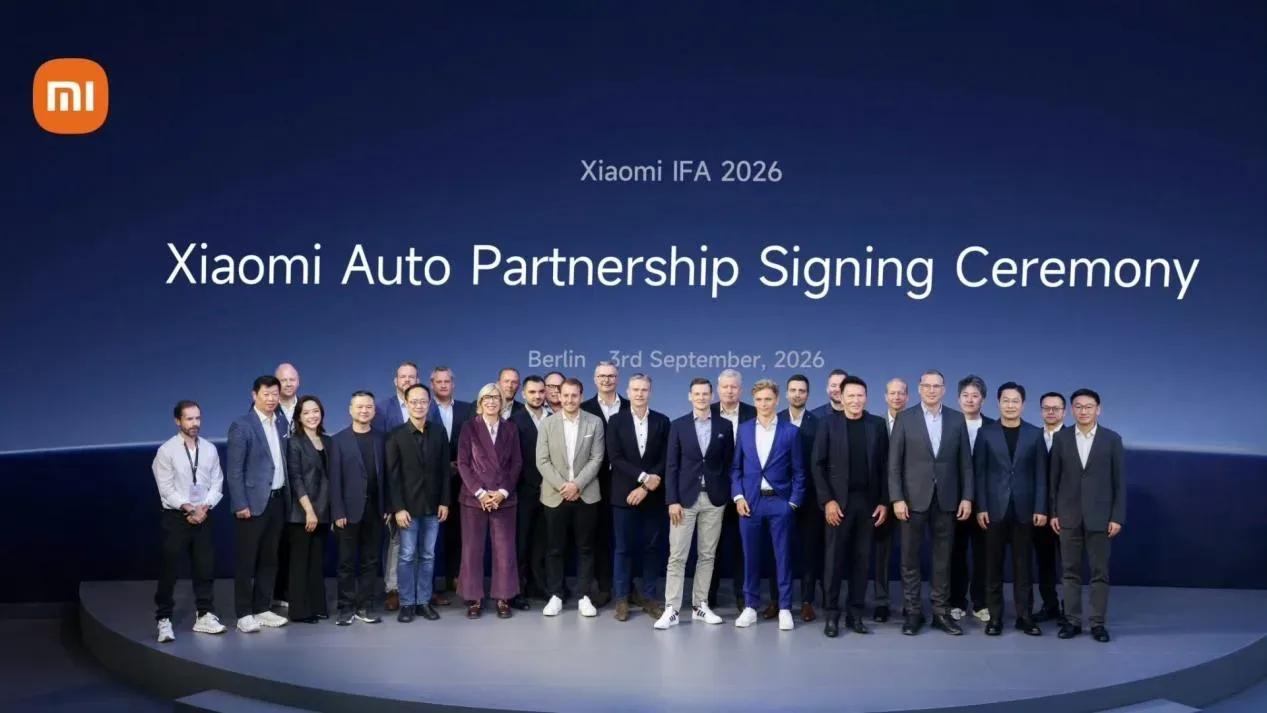
(Image source: Xiaomi)
All in all, in the view of Dianchetong, overseas expansion, just like car manufacturing, has no "speedrun" mode. Xiaomi has brand awareness advantage in Europe, but to make European consumers truly recognize and accept Xiaomi Auto, it still needs continuous investment; Xiaomi will most likely step into the same pitfalls that other new EV makers and independent brands have encountered. However, as long as the direction is correct, the rest is just a matter of time.
Can Xiaomi Handle the Debuffs Brought by Overseas Expansion?
Looking back at the overseas expansion cases of Chinese automakers, almost every one of them has encountered various kinds of troubles. The most high-profile recent case is Jaguar Land Rover suing BYD for design infringement involving the Fangchengbao Bao 7 model.
In June this year, Jaguar Land Rover filed a lawsuit at the Hague District Court in the Netherlands, claiming that the Fangchengbao Bao 7 infringes the registered design right of the Land Rover Defender in the EU, and filed another case in Rotterdam alleging copyright infringement, suspecting that BYD conducted reverse engineering on the Defender.
On November 20, the Hague District Court issued a temporary injunction through summary procedure, preliminarily ruling that the Bao 7 infringes the relevant rights, prohibiting its import, production and sales in the 27 EU member states. The injunction also covers BYD's factory in Szeged, Hungary, which is also prohibited from producing this model.
At present, BYD has stated that it will file an appeal, and the tug-of-war between the two parties is expected to continue. However, it is not difficult to see from this incident that Chinese automakers will inevitably encounter various degrees of obstruction from local forces when expanding overseas, and it is unknown whether Xiaomi is fully prepared.
Taking appearance design as an example, there have been domestic jokes that Xiaomi's SU7 and YU7 are "Porsche Mi" and "Ferrari Mi". It is still unknown whether such jokes will be used by local European automakers as a weapon to attack Xiaomi and even affect Xiaomi's normal sales. However, the lawsuit filed by Jaguar Land Rover against BYD has sounded the alarm for Xiaomi and other automakers that are expanding overseas: how to prevent and deal with various negative factors after going overseas has become an unavoidable topic for automakers at present.
Just imagine, if Xiaomi is sued by Porsche or Ferrari, resulting in a sales ban of its vehicles in Europe, all the preparations it has made in Europe before will be wiped out overnight — which is obviously a result no one wants to see.
Therefore, whether it is Xiaomi or other domestic automakers, they must have the awareness of crisis prevention, and be able to protect themselves or even fight back when overseas competitors set obstacles for them. Only in this way can they avoid being hurt by the "debuffs", and even launch a brilliant offensive and defensive battle to enhance their influence in overseas markets.
Business is war, and automakers expanding overseas should always stay cautious.
This article is from the WeChat official account "Dianchetong", author: Dianchetong, authorized for release by 36Kr.