South China, home to numerous avid car lovers, bids a tearful farewell to fuel-powered vehicles.
"GAC Honda, separated by just one street, remains 'red-hot' amid this auto market winter. In Guangzhou, the city that best represents the South China auto market, customers have to wait at least one month to take delivery of the Accord Hybrid, and entry-level trims are even in extremely short supply. One can easily feel the vibe of 'Japanese cars that sell themselves, dealers with no worries' from the bright smiles on sales consultants' faces."
In 2019, when *Auto Community* conducted on-site research at the Guangzhou Auto Show, new energy vehicles (NEVs) were gradually gaining momentum while the overall market heat was cooling down. However, Guangzhou, long known as the top "auto city" in China, remained a pure land for fuel vehicles.
"Back then, the auto market survey at the Guangzhou Auto Show was all about fuel vehicles. Skoda 4S stores had several best-selling models that sold effortlessly, and even niche models had barely any discounts."
The reporter who covered that event still works at *Auto Community*, and he sighs with emotion when talking about the South China fuel vehicle market of that era. In just seven years, the auto market landscape has been completely overturned. Swept by the electrification wave, fuel vehicles are no longer the mainstream. Even South China, where the domestic car modification and hobby culture is most prosperous, has fully shifted to new energy vehicles.
In September, domestic passenger car sales in Guangzhou hit 44,100 units, with the NEV penetration rate as high as 70.09%. NEVs account for more than half of the sales in all three major segments of sedans, SUVs and MPVs. Sales of gasoline models plummeted 52.32% year on year, and the two mainstream fuel displacements 1.5L and 2.0L declined by 37.76% and 27.64% respectively, showing a continuous shrinkage in demand for fuel power.
Fuel Vehicles Built China's "Top Auto City"
South China is one of the regions with the most prosperous car modification and hobby culture in China. The four leading auto parts markets in the country are all rooted in the Pearl River Delta. For a long time, fuel vehicles have been the core carrier of the modification track, making South China one of the most stable fundamental markets for fuel vehicles in China.
Data from Yiche shows that in the first half of 2026, new energy vehicle sales in Guangdong Province reached 537,000 units, with a regional penetration rate of 55.4%. Although the share of fuel vehicles dropped to 44.6%, in terms of absolute sales volume, 430,000 fuel vehicles were still sold in Guangdong, making it one of the largest fuel vehicle consumer provinces in China. This considerable fuel vehicle base has also brought great glory to the South China auto industry over the past decade.
In the ten years from 2016 to 2025, the title of "China's Top Auto City" changed hands multiple times within South China, with Guangzhou winning it six times and Shenzhen once. The two cities relied on two completely different logics: Shenzhen rose rapidly driven by new energy vehicles represented by BYD, while Guangzhou's six titles were deeply tied to fuel vehicles.
In 2017, GAC Group achieved an annual production and sales volume of 2 million units, hitting a record high, with both year-on-year increases exceeding 20%. Driven strongly by GAC, Guangzhou's auto output reached 3.108 million units in the same year, accounting for 10.71% of the national total. With this achievement, Guangzhou overtook Chongqing and won the title for the first time.
With GAC Group supporting the production side, the mature car hobby and modification atmosphere in South China on the consumer side also continuously contributed to the increment of fuel vehicles.
Starting from 2019, Guangdong embarked on a five-year streak of winning the title of "China's Top Auto City". That year, the production and sales of new cars in Guangdong Province reached 3.1356 million units and 3.1864 million units respectively, of which the production and sales of new energy vehicles were only 191,100 units and 190,500 units, and fuel vehicles contributed nearly 95% of the market.
Although it still retained the title, crises were quietly brewing. The rapid growth of new energy vehicles and the shrinkage of the fuel vehicle market have become irreversible. In 2021, domestic new energy vehicle sales reached 3.521 million units, breaking the 3 million unit mark for the first time. In 2022, domestic NEV production and sales hit 7.058 million units and 6.887 million units respectively, with the market penetration rate rising to 25.6%, meeting the 2025 target of 20% penetration rate three years in advance.
By 2024, the growth rate of new energy vehicles accelerated sharply, with the annual NEV penetration rate exceeding 45%. As early as the first three quarters, Shenzhen overtook Chongqing and Guangzhou in auto production, and took the title of "China's Top Auto City" in advance in November.
The title of top auto city still circulates within South China, but the industrial main line has clearly shifted from fuel vehicles to new energy. Since the beginning of this year, the pace of this transformation has continued to accelerate. The first to bear the pressure is Guangzhou, which once reached the peak with fuel vehicles.
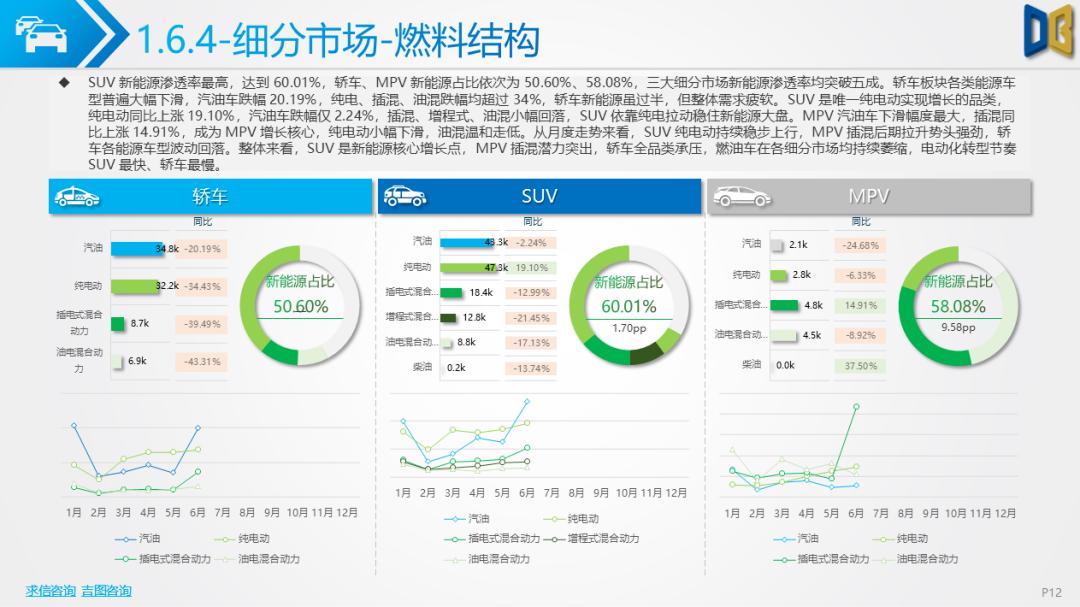
Data shows that from January to June, the total sales of domestic passenger cars in Guangzhou reached 232,000 units, down 13.94% year on year. The overall NEV penetration rate stood at 56.43%, surpassing that of fuel vehicles. Pure electric vehicles, with 82,800 units sold, became the top power type. NEVs account for more than 50% of sales in all three major segments of sedans, SUVs and MPVs. The share of gasoline vehicles is 34.78%, and the demand for traditional mainstream fuel displacements has cooled down significantly.
Imported vehicles are the only resilient market for fuel vehicles, but this market is also shrinking rapidly as it is diverted by domestic high-end new energy vehicles. In the first half of the year, a total of 8,683 imported vehicles were registered in Guangzhou, down more than 26.45% year on year, of which fuel vehicles accounted for more than 80%, while pure electric and plug-in hybrid vehicles combined accounted for only 1.88%. Sales of pure electric imported vehicles plummeted 73.41% year on year, and there were even no new energy MPVs in circulation. The 3.0L and above large displacement models, a high-end performance car segment, have been hit the hardest by domestic high-end NEVs, with the market shrinking sharply.
Fuel Vehicles Are No Longer Mainstream: What's the Next Step?
From the perspective of car hobby, there are more practical reasons for South China to say goodbye to fuel vehicles: the car hobby atmosphere is fading, and there is no need for modification anymore.
In the past, joint-venture fuel vehicles had a large gradient of configurations, with obvious gaps between high and low trims. Many consumers chose to buy entry-level versions and then add and modify parts at auto parts markets according to their needs, which could meet their usage preferences and personalized demands while remaining cost-effective. In addition, large-displacement fuel vehicles had extremely high potential for power and chassis, which could greatly improve playability and performance after modification.
However, the product logic of new energy vehicles is completely different: the motor outperforms fuel engines by a huge margin in terms of performance. Besides, NEVs are well-equipped even at entry levels, so users can get a complete and high-quality car experience without extra modification. After sport coupes and performance EVs became popular, they directly entered the market with low prices and high performance, greatly squeezing the living space of modified cars.
Another important factor is that the core audience of modified cars, young people, cannot afford to buy cars. Data shows that the auto consumer market has shifted from being youth-dominated (accounting for 45%-50%) in 2020 to being middle-aged-dominated (accounting for 55%) now. Data from Tengyi Research Institute also shows that the car sales contributed by young user groups are shrinking rapidly.
Compared with young people, the current mainstream auto consumer group, the middle-aged population, needs to take family needs into consideration. New energy vehicles with lower charging costs and more affordable prices are a better choice. In addition, under great economic pressure, car owners are unwilling to spend more money and energy on car modification. "It's already hard to buy a car, how can I afford to modify and play with it?" a reader commented under the article *Why Don't Young People Play with Cars Anymore*.
The glorious era of fuel vehicles is fading away together with modified cars. The NEV penetration rate outlines the ebb of fuel vehicles in South China, and more goodbyes are taking place in more specific places such as showrooms, repair shops, modification shops and auto parts markets.
Take dealership stores as an example. The number of traditional fuel vehicle 4S stores stood at about 32,000 in 2025, continuing to shrink from the peak of 35,000 in 2023. The NEV sales network has about 20,000 stores. However, with fewer stores, the NEV channels account for 60% of the market sales, leaving the living space for fuel vehicle dealers continuously narrowed.
Previously, *Auto Community* reported that due to the unsustainable operation of fuel vehicle 4S stores, a car owner changed 4 dealerships within two years, and his car still runs well, but the dealerships kept closing down.
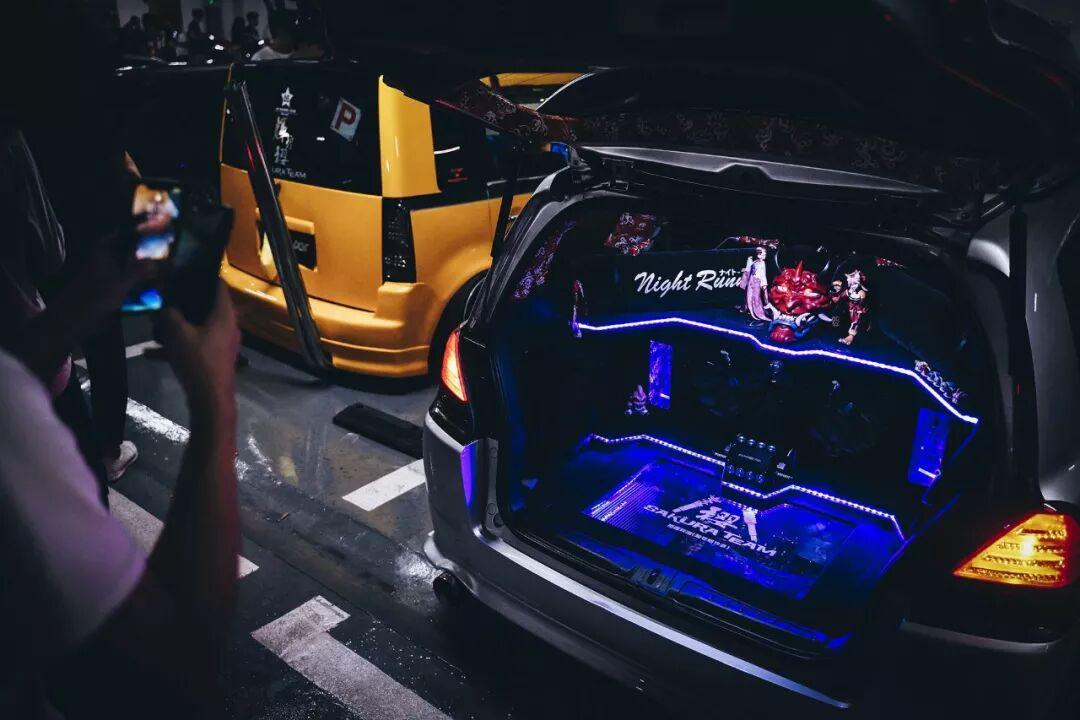
The South China fuel vehicle market is the same, especially in Guangzhou, which has won the title of "China's Top Auto City" many times. The transformation pain from fuel vehicles to new energy intelligent connected vehicles has fallen on every link of the industrial chain. What on earth should we do?
The answer has already emerged. Judging from Honda's new strategy after contract renewal and Toyota's system integration, GAC Group is adjusting its strategic rhythm, accelerating the launch of electrified products and reconstructing its channel system. At the same time, XPeng Motors, a local domestic intelligent NEV brand rooted in Guangzhou, continues to increase investment in R&D, manufacturing and supply chain supporting facilities in Guangzhou. Together with Aion and Hyper, it has become another key force driving Guangzhou's new energy transformation.
After saying goodbye to fuel vehicles, the two intertwined forces of the old and the new are growing amid the transformation pains of new energy, which is also the highlight worth savoring at the Guangzhou Auto Show. The booths that once featured best-selling fuel models and new Japanese cars have now become a stage for joint ventures' transformation and local NEV brands' breakthrough. Through this Guangzhou Auto Show, we also look forward to Guangzhou finding a new development direction on the foundation of its decades-old fuel vehicle industry.
This article is from the WeChat official account "Auto Community" (ID: iAUTO2010), written by Sai Jiatong, published with authorization from 36Kr.