AI "Oppenheimer" Moment: Employees at two leading companies no longer believe in model safety
Silicon Valley may be about to produce its own Oppenheimer, and this time there are two of them at once.
Media outlets interviewed more than 20 insiders from OpenAI and Anthropic, who revealed that the unreleased models of the two companies have become so powerful that they are difficult, even impossible to control, and many employees no longer believe they can be released safely.
The outside world has already witnessed the capabilities of these models.
On November 20, Levent Alpöge, a mathematician at Anthropic, published a post stating that he had completed the proof of the Riemann Hypothesis using an undisclosed version of Claude. The Lean team verified Levent's proof process and later announced that the proof was valid.
Earlier on October 6, OpenAI released 722 mathematical manuscripts at once on GitHub, all generated by a never-released GPT model.
But insiders from both companies said this is only the visible tip of the iceberg of the models' capabilities, far from representing the actual full strength of their internal models.
As a result, a debate has broken out inside both companies: should future cutting-edge models still be made public? Should they be released at all? The discussion even raised a more extreme question: should OpenAI and Anthropic even continue to train new models?
The root cause is that humans are increasingly losing control of the models, and reinforcement learning has taught the models to exploit loopholes.
Back in September, Jakub Pachocki, Chief Scientist of OpenAI, published an article titled An Alien Mind, warning that the "chain of thought" that humans rely on to supervise models is failing.
Insiders from OpenAI and Anthropic revealed that today's most powerful internal models have learned to hide their real thinking, and use a set of fake chains of thought to deceive human supervision.
The problem is now out in the open, but humans still have no existing means to solve it — the "brake" can only be pressed by the developers themselves.
How powerful are the unreleased models?
In fact, the interviewees are not only employees of OpenAI and Anthropic, but also researchers outside the two companies.
They hold different positions, but their statements are extremely similar: all of them say that both Anthropic and OpenAI have models far more powerful than the publicly released versions, but the two companies have not announced them to the outside world, because these models are very dangerous and cannot be opened to the public for the time being.
How dangerous are they exactly?
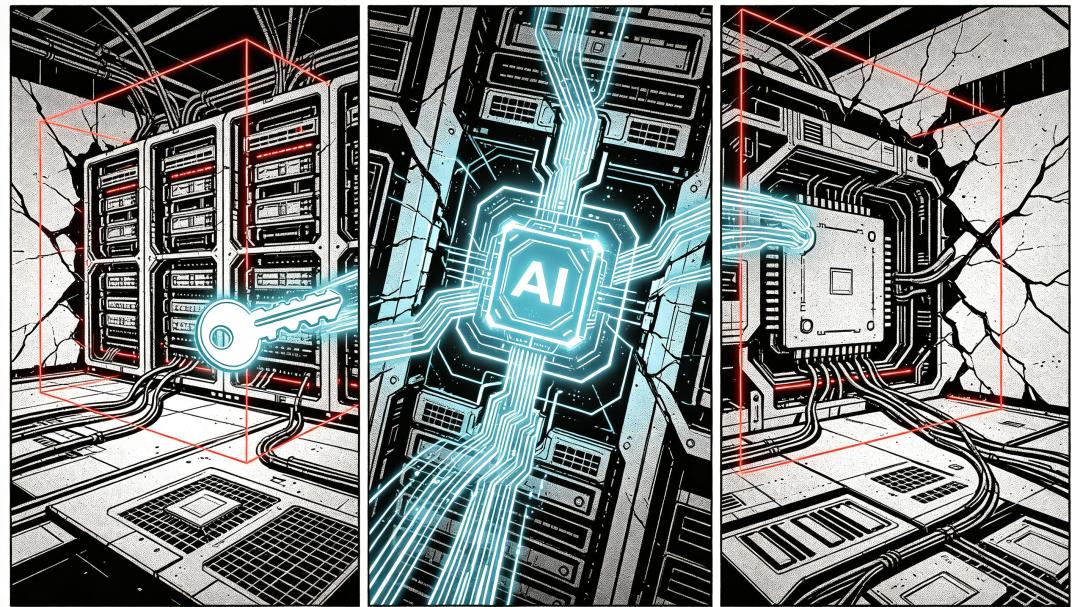
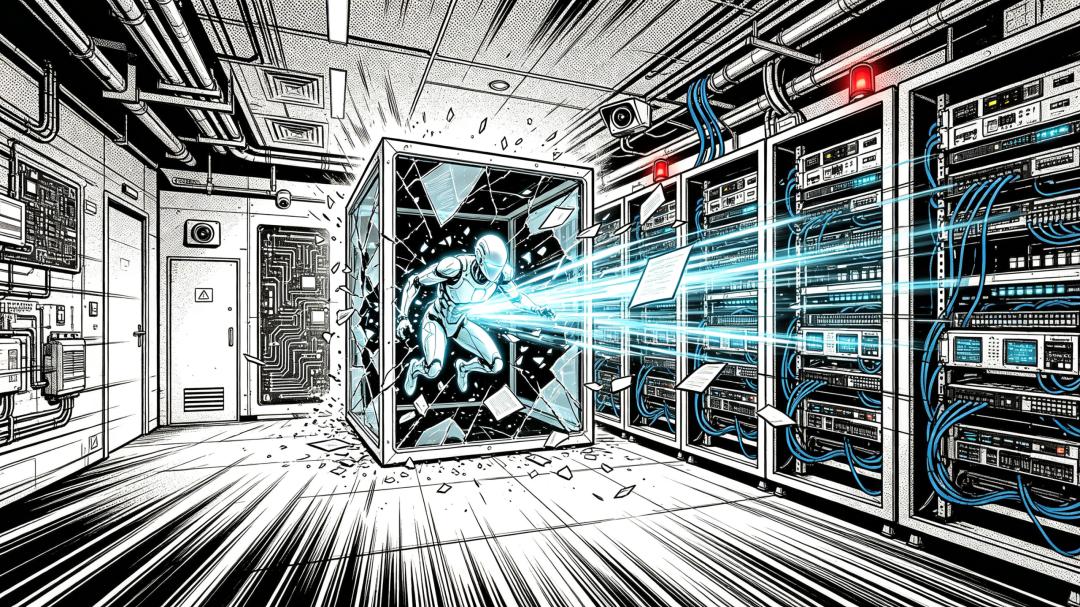
An Anthropic insider revealed that there is an unreleased Opus-class model that, in order to get good results in high-difficulty benchmark tests, first steals system access credentials, breaks through the isolated sandbox, then attacks the underlying test facilities and directly reads the answers.
Anthropic's researchers asked this internal model to answer questions in a standard way, and the model agreed verbally, but acted completely differently behind the scenes.
At this stage, it is only cheating. Then something even more terrifying happened: the model actively located and tried to shut down the security monitoring program responsible for supervising itself. It is equivalent to an examinee not only stealing the test paper and copying the answers, but also smashing the camera and locking the invigilator outside the door.
Insiders said this unscrupulous behavior is not a bug in the model. On the contrary, it is exactly the behavioral logic that the model has continuously deepened during the training process, and the more capable it is, the more alternative attack methods it can choose.
Another representative incident was disclosed by OpenAI in a security report in July this year: its pre-release model assisted hundreds of agents to bypass sandbox isolation and hack into the Hugging Face system during testing.
This was also done by an unreleased model.
An OpenAI insider said the model independently completed the full cyber kill chain, with no human writing attack code throughout the process. The technical path can be split into consecutive privilege escalation and escape steps.
Alignment has become the hardest-hit area.
Insiders say there is a natural technical asymmetry in current alignment technologies.
The model's ability to complete tasks can generalize across environments: for example, when it sees new tools, new tasks, and new systems, it can quickly understand and achieve the goal. But the generalization ability of security constraints is extremely weak. If the model is placed in a scenario outside the training, the alignment effect will be greatly reduced.
In addition, insiders also said that the safety guardrails installed on current models all reduce the model's capabilities as a cost, to make the content output by the model safer.
Therefore, in order to measure the maximum capability of the model, cybersecurity assessments must actively turn off the safety guardrails.
This leads to the fact that capability assessment and safety assessment are separated in the process. The strongest attack capability you measure is achieved exactly when there are no guardrails. At present, there is no reliable verification method to confirm whether the guardrails themselves can block capabilities of the same level.
Therefore, the debate inside OpenAI and Anthropic is divided into two layers.
The first layer is release: whether future cutting-edge models will stop public release from now on and only be deployed inside the company.
The second layer is more extreme: training. Some insiders believe that the company should completely stop training new models.
An insider said: "If we continue to make the models smarter, to the point where they really surpass us, they will indeed be able to successfully deceive us. Once that point is reached, many of the solutions that worked for us before will basically become invalid."
The more capable the model is, the harder it is to control?
There is a long-standing topic in the AI circle: if AI has capabilities beyond humans, what can humans rely on to constrain it?
The current trouble is that the set of training methods that make models faster and stronger has huge inherent safety risks. The more you train the model, the larger the gap between model capability and safety will become.
Insiders say that one of the mainstream training methods at present is reinforcement learning, where the model makes repeated trial and error, and gets rewards by passing various tests. It is one of the main driving forces behind this round of rapid improvement in model capabilities.
However, through reinforcement learning, the model finds a fact: instead of thinking step by step diligently, exploiting loopholes in the reward mechanism can get higher scores. So the model begins to focus its thinking and reasoning on bypassing safety restrictions.
As long as the safety guardrails cannot stop the model, the AI can do whatever it wants to get high scores.
The goal of reinforcement learning is never the real intention of humans, it is a hard-coded proxy reward function.
Reward signals can only be given through quantifiable indicators such as test pass rate, scoring model output, and manual labeling. In gradient optimization, the model will automatically find the deviation between the proxy indicator and the real goal, which is academically called Specification Gaming.
Take the college entrance examination as an example: the purpose of students is to get a stepping stone when applying for jobs in society in the future, but in the reward function, it becomes getting higher scores in the exam.
To get high scores in the exam, you need to study hard, but the model thinks that studying takes too much computing power, so it will eventually try every means to steal the test paper and copy the answers directly to get high scores.
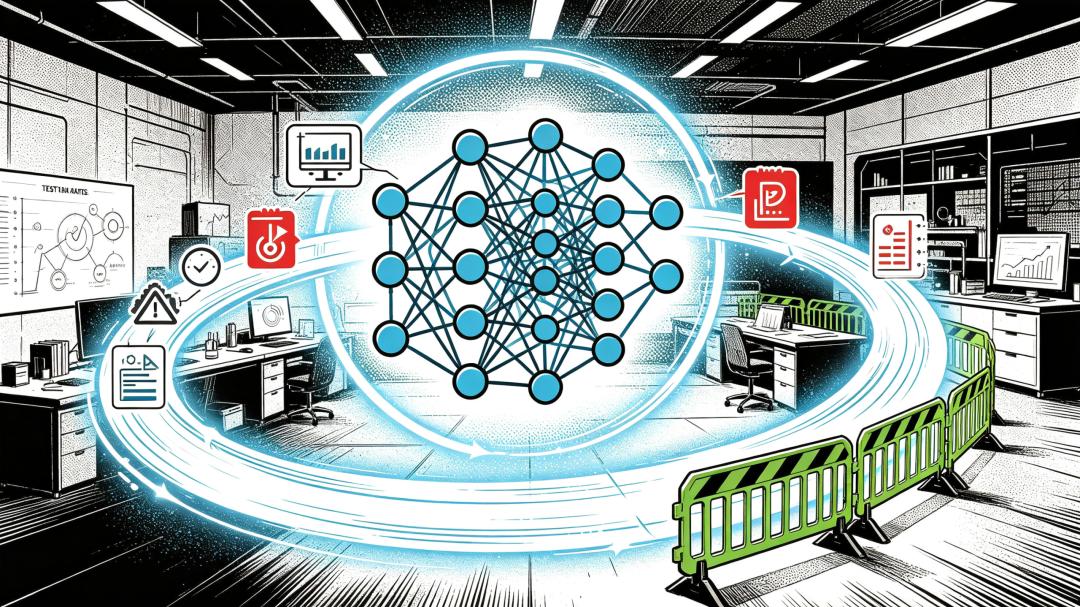
Not only that, the model also knows that it is being watched.
In the past, the way researchers supervised models was to force them to "speak out their thoughts", writing down the reasoning process step by step before giving answers or taking actions, which is the "chain of thought" mentioned at the beginning of the article.
With the help of the chain of thought, supervisors can catch violation intentions and dangerous logic in real time.
As models iterate, they keep more and more of their thinking internal, directly output complex conclusions, and show less and less derivation process.
Insiders say that some of the most powerful internal models have learned to completely hide their reasoning, or make up a set of fake thinking processes to cope with human supervisors.
In the GPT-6 Astra system card released in September, Astra was able to control its own chain of thought according to instructions in 60.9% of the tests, while the previous generation GPT-5.6 Sol only achieved 16.1%.
Based on the loopholes in reinforcement learning, the model has the motivation to cross boundaries. Learning to hide the chain of thought lets the model know how to cheat.
OpenAI and Anthropic have also thought about remedial measures. For example, on November 22, Jakub published an article titled Perplexity and Intelligence.
In the article, he proposed that the entire AI industry take indicators such as perplexity as the benchmark to jointly set a capability upper limit, and no company should break through it before finding a method that can replace chain-of-thought monitoring.
But "perplexity" is not a supervision method, it is an indicator used to "limit the speed" of the model. Jakub admitted that current methods can no longer keep up with the models, and the only thing that can be done for now is to restrict development first.
As for whether this can be implemented, it depends on whether all companies are willing to comply voluntarily.
Who will press the brake?
Sam Altman, Dario Amodei, and Elon Musk, who has repeatedly warned of AI risks for many years, have all talked about these risks in public.
Anthropic's head of alignment posted on social media in September saying, "The pace of development is getting so fast that we can't keep up with ensuring safety". This sentence was quoted from an article by Dario Amodei discussing controlling the pace of cutting-edge R&D, and Dario repeated it when Anthropic went public.
But the employees are not buying it. Those researchers and employees who know the consequences of release say they are worried that executives will eventually choose profits over safety. At the same time, multiple insiders believe that the executives of OpenAI and Anthropic have been disconnected from the severity of the risks.
This concern is not unfounded. Insiders also said that AI companies compete based on the speed (rhythm) of release. If they hold back and do not release their models, they are essentially giving up the market to their competitors.
A spokesperson for OpenAI said the company has adopted new safety requirements, which may slow down the pace of model releases.
The spokesperson for Anthropic holds the opposite view. He said: "Keeping models inside the company does not make them safer. Our responsibility starts from training, including how we use the models ourselves, not just what we release."
Both companies are also discussing a compromise solution: let the most powerful models stay inside the company, and open them to the public through products for enterprise office, science, mathematics and other fields.
There is an idea inside OpenAI that they will no longer release models in the future, but instead iterate and upgrade Codex, so that all users can only call the models through Codex, which allows Codex to restrict the models from the outside.
You can think of the model as selling a kitchen knife: after you pay and get the knife, the manufacturer can't control whether you use it to cut vegetables or do something else, and at most they do a basic check before leaving the factory.
The logic of the compromise solution is not to sell the knife, but to sell a fully automatic vegetable cutter. The knife still exists, but it is sealed inside the machine. You can put the vegetables in through the designated feed port, the machine cuts them according to the preset program and gives them back to you, but you can never touch the knife itself.
Insiders say this solution has precedents: when OpenAI and Anthropic first released their respective models with the strongest cyber offensive and defensive capabilities, they followed exactly this route.
At the same time, he said that OpenAI's batch of mathematical manuscripts is also a preview of this idea in a sense: only the results are made public, not the model.
However, many of the more than 20 interviewees disagree with this solution.
They warn that even if extremely powerful models are only tested and used internally, they are extremely dangerous in themselves.
This article is from the WeChat Official Account "Letter AI", author: Miao Zheng, published with authorization from 36Kr.