Why are Chinese companies scrambling to snap up the Brazilian cement maker that suffered a loss of 80 million in half a year?
Chinese cement going global
A battle for cement assets spanning half the globe has finally revealed its buyer.
Not long ago, Chinese cement giant Huaxin Building Materials planned to invest about 10.9 billion yuan to acquire 99.99% equity of CSN Cimentos, the second largest cement producer in Brazil, hereinafter referred to as "CSN Cement".
Previously, China Cement Net disclosed that China National Building Material and Anhui Conch Cement were also once on the list of potential buyers.
What is more notable is that this Brazilian company is still in a loss-making state, yet it once attracted a number of leading Chinese cement enterprises to participate in the bidding.
Cement cannot be transported over very long distances, but cement enterprises can expand far beyond their home markets.
What exactly has Huaxin bought with this 10.9 billion yuan?
## Aiming for 21% of Brazil's cement market
What Huaxin has acquired first is the complete asset portfolio of CSN Cement.
It owns 7 kiln production plants and 6 grinding stations, with an annual cement production capacity of 17 million tons and a market share of about 21%.
Its plants mainly cover the two major cement consumption markets in southeastern and northeastern Brazil, with about 2.2 billion tons of limestone reserves underground.
According to data from the Brazilian Cement Association, total cement sales in southeastern and northeastern Brazil reached about 45 million tons in 2025, accounting for roughly two-thirds of the national market.
The core production capacity of CSN Cement precisely covers these two regions with the most concentrated demand.
Apart from the plants, what Huaxin has also obtained is a sales radius close to population and economic centers.
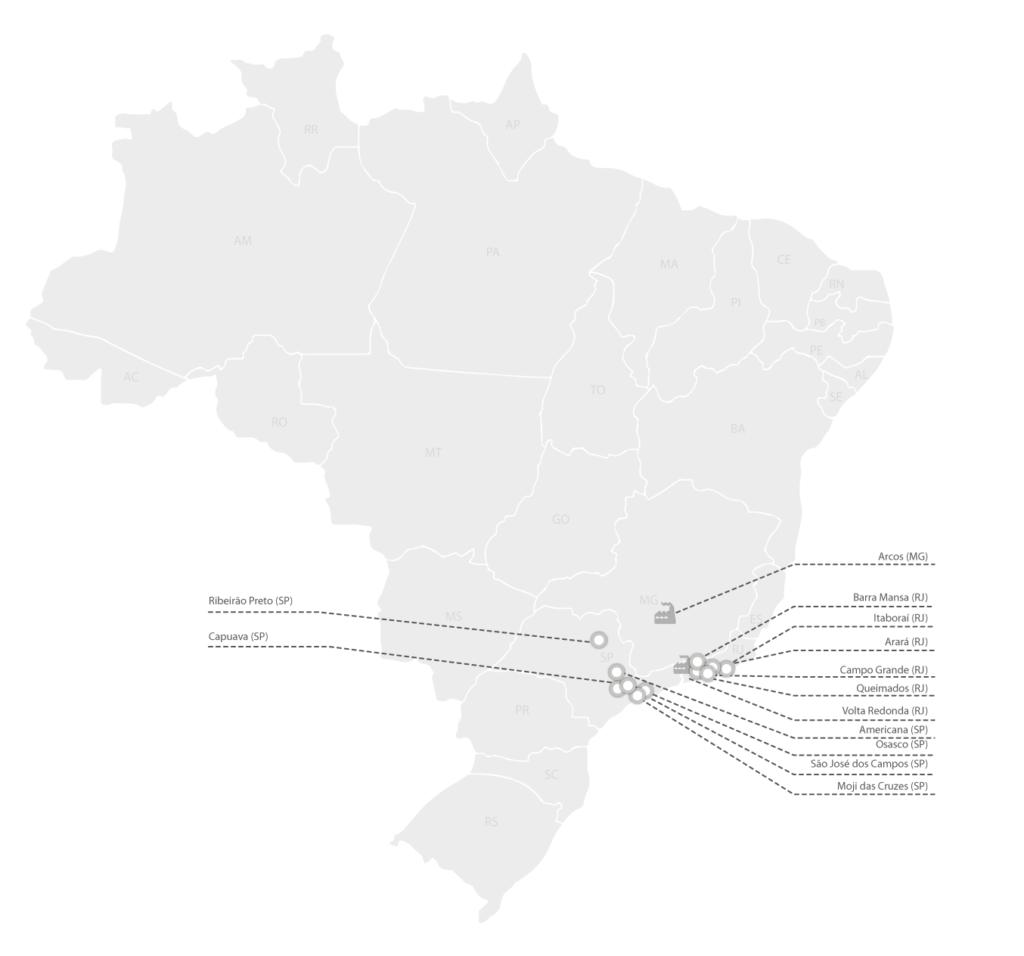
Distribution of part of CSN Cement's distribution centers in southeastern Brazil
However, the reason why this company can rank second in Brazil's cement industry relies heavily on acquisitions to a large extent. According to the sorting out of the Cement Big Data Research Institute, CSN Cement successively acquired Cimento Elizabeth, and spent 1.025 billion US dollars in 2022 to take over LafargeHolcim's cement assets in Brazil, which rapidly expanded its market share.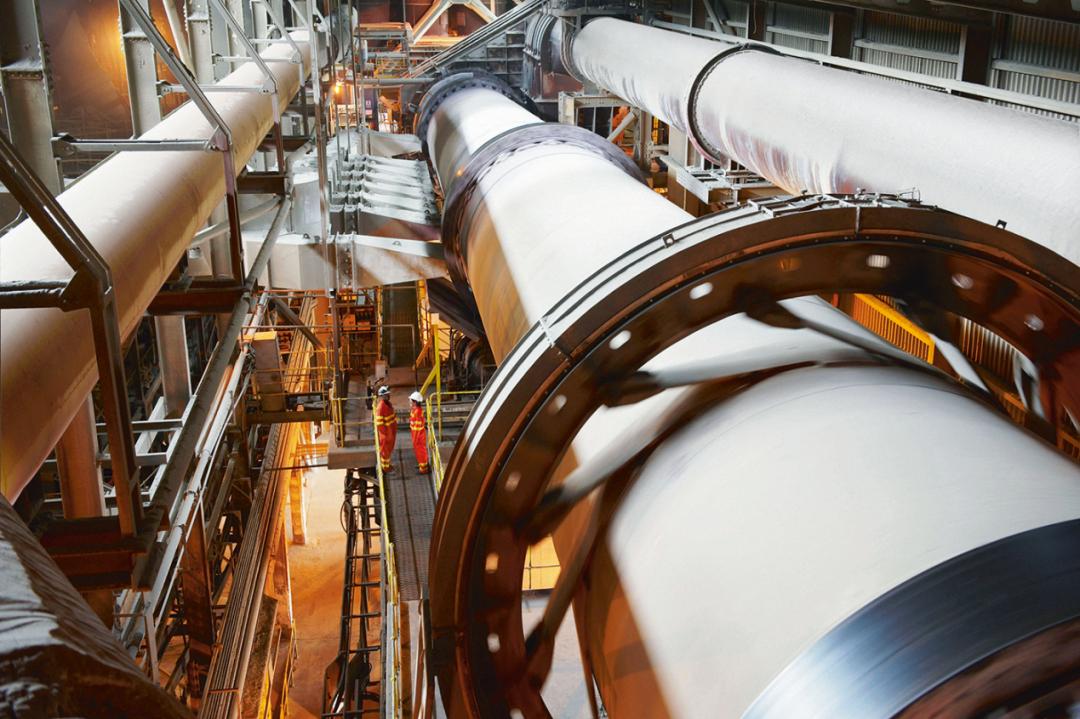
Production site of LafargeHolcim's Brazilian cement business
Its scale is built through acquisitions, and debt pressure has also accumulated accordingly. Over the past few years, its parent company CSN, namely Companhia Siderúrgica Nacional, has expanded in the cement, energy and logistics sectors at the same time, and the group's debt pressure has continued to rise. Affected by the parent company, the financing cost of its subsidiary CSN Cement has remained high. In the first half of 2026, CSN Cement recorded a net revenue of 510 million US dollars, with EBITDA reaching 159 million US dollars and an EBITDA margin of 31.1%, but it finally posted a net loss of 11.81 million US dollars, equivalent to about 78 million yuan. The loss comes from debt, not the cement business itself. The parent company CSN is eager to sell assets to recycle funds, while Huaxin plans to replace high-interest loans after the transaction is completed, to release the profits that were previously eroded by interest expenses. The same enterprise is a bargaining chip for debt repayment in the seller's hands, but for Huaxin, it is a ticket to enter the local cement market. ## Domestic cement output dropped by nearly 70 million tons in five years An important background for Huaxin to dare to take on this 10-billion-yuan transaction is that the growth space left for cement enterprises in the domestic market is getting smaller and smaller. Let's look at a set of data first. In 2020, China's cement output was 2.38 billion tons. By 2025, it dropped to only 1.693 billion tons. Nearly 70 million tons less in five years, hitting the lowest level since 2010.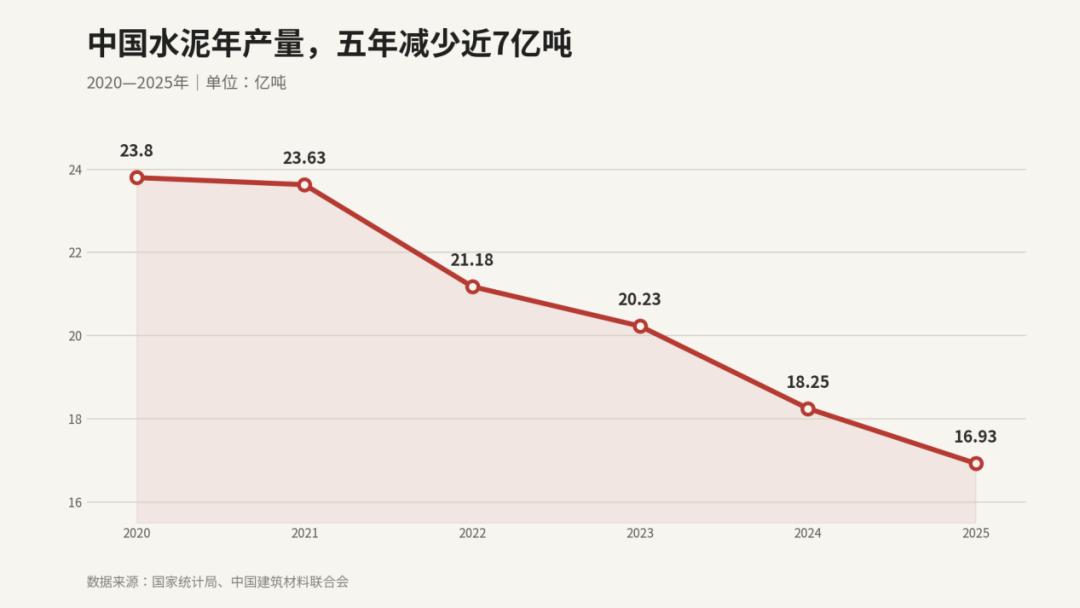
Trend of China's cement output · Chart by Zhengjieju
When compared with Brazil, this gap is more intuitive. In 2025, the total sales volume of the entire Brazilian cement market was about 67 million tons. The annual cement output that China has lost in five years is close to 10 times the size of the Brazilian market. The market may shrink, but kilns cannot disappear out of thin air. Industrial economics refers to this phenomenon as "exit barrier". Cement kilns require huge investment and have highly specific assets. Once production is suspended, a large number of equipment, mines and supporting facilities can hardly be repurposed for other uses. The high sunk cost determines that the withdrawal of production capacity is often slower than the decline in demand. Especially with the decline in real estate investment and the slowdown of infrastructure growth, more enterprises can only crowd into the smaller domestic market to compete for orders. The more intense the price competition, the stronger the motivation to seek incremental growth overseas.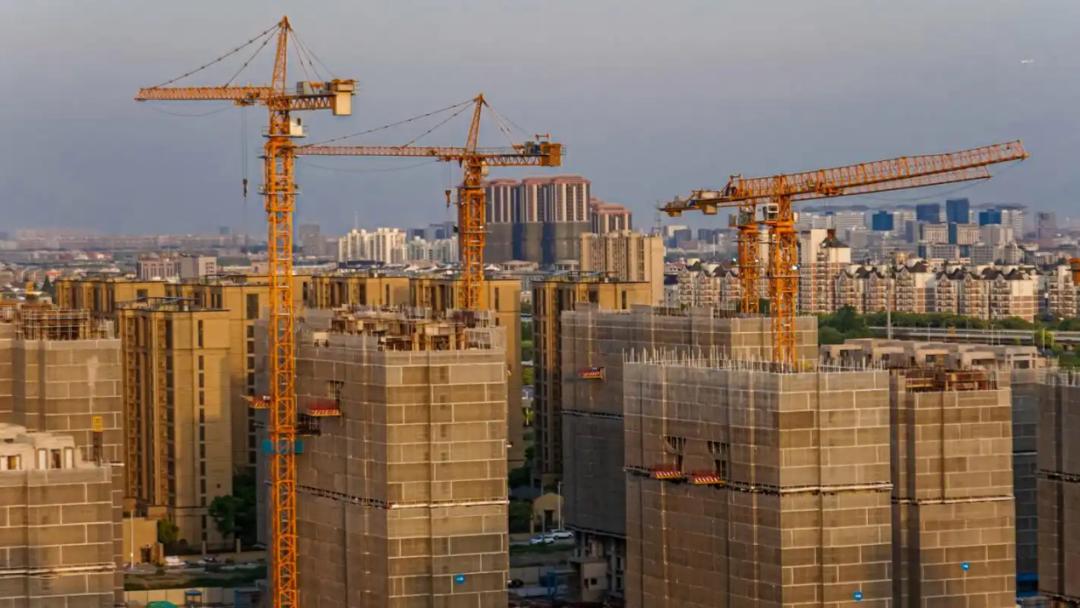
Construction site of a domestic real estate project
But going global for the cement industry is different from that of the automobile and home appliance industries. Cement is heavy with low unit value, and its road transportation radius usually does not exceed 300 kilometers. It is not cost-effective to transport large quantities of domestic cement to overseas markets over long distances. If enterprises want to enter overseas markets, they usually need to deploy their production capacity locally, either by building new plants on their own, or by directly acquiring existing local plants. By the end of 2024, many Chinese enterprises including Huaxin Building Materials, Anhui Conch Cement, China National Building Material, Hongshi Group and West China Cement have invested in the construction of 49 cement clinker production lines in 21 overseas countries, forming a cement production capacity of 98.2 million tons. Among them, in the first half of 2026, Huaxin's overseas cement business revenue reached 8.542 billion yuan, while its domestic cement business revenue was 4.44 billion yuan. Overseas cement revenue is nearly twice as much as domestic revenue.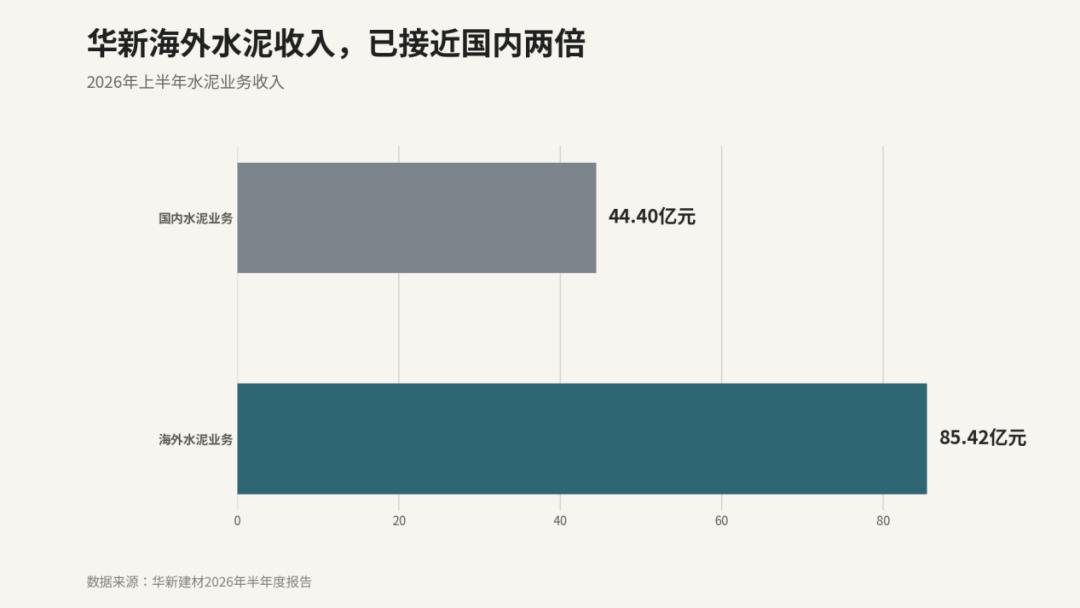
Revenue of Huaxin Building Materials at home and abroad
Huaxin's cement revenue structure has obviously tilted towards overseas markets. More and more Chinese cement enterprises have taken overseas markets as their second battlefield. ## Leading Chinese cement giants are accelerating the acquisition of overseas plants Between the two paths of self-construction and acquisition, many Chinese enterprises have chosen the latter. In 2024, Jidong Cement acquired 51% equity of South Africa's Mamba Cement; in 2025, Huaxin completed the delivery of the Lafarge project in Nigeria; in 2026, it successively promoted two large-scale acquisitions in the Philippines and Brazil. Taking Huaxin as an example, the consideration of the completed Nigeria project is about 774 million US dollars; the consideration of the ongoing first-phase Philippines project and Brazil project is about 527 million US dollars and 1.642 billion US dollars respectively. The three transactions span Africa, Southeast Asia and South America, with a total consideration of nearly 3 billion US dollars.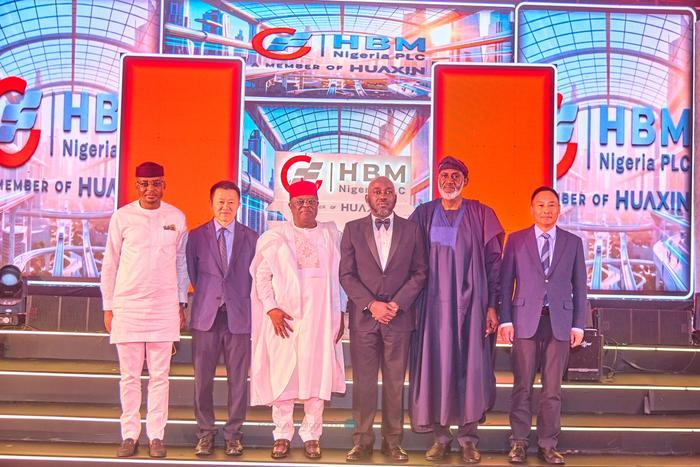
Site of Huaxin's acquisition of Nigerian assets
The overseas expansion of Chinese cement enterprises has also begun to shift from focusing on self-construction to parallel development of self-construction and mergers and acquisitions. Direct acquisition first buys time. It usually takes several years for a cement plant to go through processes such as looking for mines, applying for permits, constructing kiln lines, and laying transportation and sales networks. By acquiring mature enterprises, buyers can take over production capacity, mines, channels and customers all at once. The two approaches also have different impacts on local supply. Building a new plant adds new production capacity; while acquiring a local leading enterprise redistributes the existing market share. It should be noted that Brazil itself does not lack cement production capacity. In 2025, Brazil's cement production capacity was about 94 million tons, while the actual sales volume was about 67 million tons, and the nominal production capacity was about 27 million tons higher than the market sales volume. The top five local cement enterprises occupy about 80% of the production capacity, while cement exports only account for 0.09% of the total sales volume. This is a highly localized industry with a basically formed market pattern. If Huaxin builds a new plant from scratch, it will only increase the local supply; by acquiring CSN Cement, it can directly enter the local top tier without increasing the total local production capacity.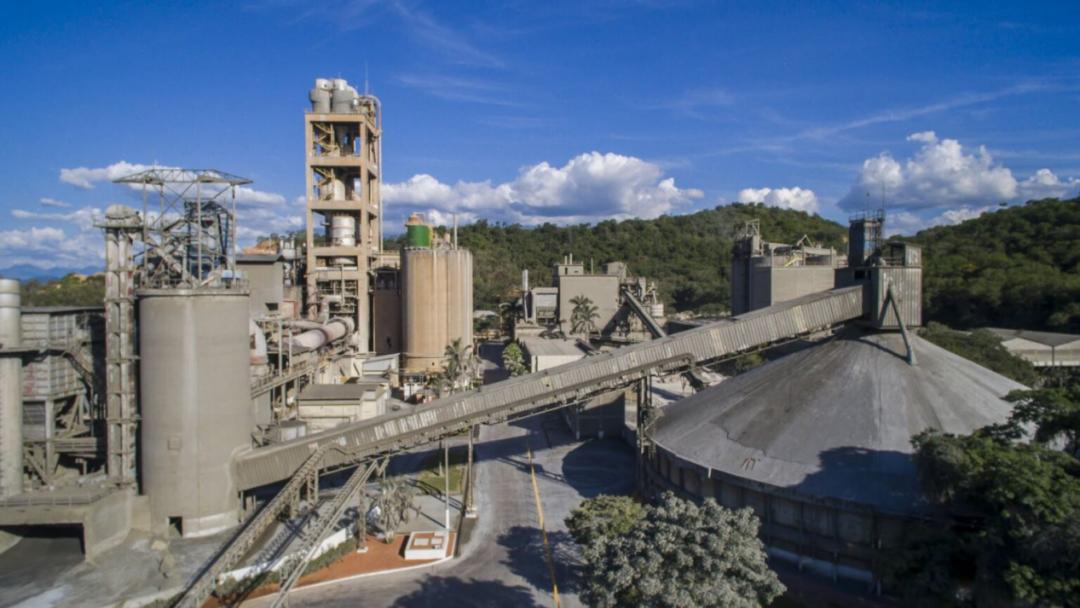
CSN Cement's cement plant located in Cantagalo, Rio de Janeiro, Brazil
However, while acquisitions shorten the time required, they also concentrate risks in the early stage. The consideration of Huaxin's this acquisition is about 10.9 billion yuan, nearly 4 times its attributable net profit in 2025; the planned M&A loan to be applied for can reach up to 70% of the target enterprise's value. On the first trading day after the announcement, Huaxin Building Materials' share price fell by 8.52%. Moreover, this transaction has not yet been completed, and it still needs to complete the filing for overseas investment by Chinese authorities, foreign exchange registration, and obtain approval from Brazil's antitrust and electricity regulatory authorities. Even if the delivery is completed smoothly, exchange rate fluctuations, trade union relations and local management are still long-term problems that Huaxin needs to face. A more realistic risk is that once the local demand fails to meet expectations, high leverage will amplify operating pressure. The larger the overseas territory, the higher the requirements for operating capabilities. For leading Chinese cement enterprises, it is not difficult to buy plants, but the real challenge is to maintain profitability in the local market ten years later. This article is from the WeChat official account "Zhengjieju" (ID: zhengjieclub), written by Zhengjieju, and published with authorization from 36Kr.